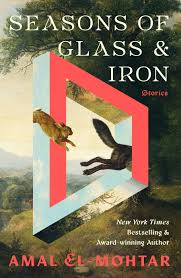
Seasons of Glass & Iron Review

Book: Seasons of Glass & Iron
Author: Amal El-Mohtar
Publisher: Tor Publishing Group
Year: 2026
Rating: 5 out of 5 stars

Synopsis : “Full of glimpses into gleaming worlds and fairy tales with teeth, Seasons of Glass And Iron : Stories is a collection of acclaimed and awarded work from New York Times bestselling author Amal El-Mohtar.”

Review : Seasons of Glass & Iron is a lyrical, deadly, and captivating peek through the looking glass into worlds unknown; full of whimsy and wonder, joy and horror, it is a dream and a nightmare tangled in the same web, woven and unwoven, creating a gleaming portrayal of humanity and, at times, something a bit other than humanity. El-Mohtar has deftly curated a collection of perfectly layered stories, giving the reader just enough to whet their appetite before moving swiftly on to the next. As someone who prefers long-form, I cannot speak highly enough of how intentional this collection is, how smooth the transitions, and how seamless the tie-ins. El-Mohtar shares in the introduction that this book may not have much of a “coherent aesthetic argument”, rather, it’s a love letter to women. Regardless of whether the introduction is read or not, you cannot simply pick this book up and not come to the conclusion that the author has a profound love for womankind in all her forms.

Seasons of Iron & Glass is queer, sapphic, and beautifully pro-Palestine. It wiggles a little deeper under the skin with each story, like an ear worm attaching itself in your brain, hooking it’s little fingers into your heart and tugging at just the right moments. It is a profound work of love and loss and becoming and undoing and redoing all over again. There are gorgeous poems written to those surviving the genocide in Gaza, retellings of Welsh fairy tales, stunning creations of fantasy, and incredible stories of unbelievable creativity and artistry. When I read the final words, I cried.

I fear my words do a disservice to how artfully and skillfully crafted this collection is. El-Mohtar states that these works were written between the years of 2008 and 2023 and there are stories that I can easily align myself with, the energy and understanding of them being laid out on LiveJournal or Tumblr feels so visceral I can almost taste it. Yet, each story weaves a broader narrative that cannot be unseen – despite ranging broadly in time, in place, and in content. There are stories I desperately wish were part of a broader narrative, stories I crave to know more of, and still each story is carefully wrapped up in the end, perfectly beginning and ending in ways that, while imperfect, as short stories are, is truly perfect. At the end of the day, try as I may, I can hardly come up with the words to do this book justice, all I can simply say is read this book.

Advice : If you have any interest in Welsh folklore, in short stories, in fantasy, in reading tales of women, then this book is for you. If you want to read folklore that takes the narrative out of the hands of awful gods and puts it back firmly in the hands of the so often downtrodden and abused women in them, this book is for you. I genuinely believe everyone should read it. It’s perfection. Mark your calendars for March 2026, place an order ahead of time, you don’t want to miss this one.
Speedy Reviews

To be honest, I fully intended to give each of these books their own individual reviews, but time got away from me and here we are! Let’s dive in :

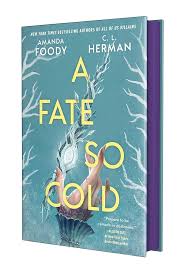
Book: A Fate So Cold
Author: Amanda Foody & C. L. Herman
Publisher: Tor Teen
Year: 2025
Rating: 4 out of 5 stars

Synopsis : “For most of the year, Summer reigns peacefully over Alderland. Then, for six brutal weeks, Winter rages, obliterating towns and wreaking casualties. Magicians bond with powerful wands of Summer to defend the nation, a duty that costs many their lives.
Domenic Barrow never wanted such responsibility – but destiny hasn’t granted him a choice. The greatest Summer wand has awakened for the first time in a century, warning that any icy cataclysm looms on the horizon. And despite his reputation as the last suited of his classmates, the and chooses Domenic to wield it.
Ellery Caldwell spent years striving to be a perfect Summer magician – and burying her fears of her own power. But her worst suspicions are proven true when she accidentally creates the first ever Winter wand.
Now, as the unprecedented Chosen Two, Domenic and Ellery must thwart the oncoming cataclysm together. And in trying to fulfill their destinies, they wonder if they were brought together for a second fate : to fall in love.
Until they discover the unthinkable truth. The Chosen Two aren’t fated allies, but eternal rivals, and the only way to save their home is for one of them to slay the other.”

Review : A Fate So Cold is a quick and enjoyable page-turning ‘chosen one’ fantasy that left me wishing book two would come out already! Told between bouncing perspectives, it guides the reader through the winding world of Summer and Winter – and teases the idea that a peaceful world where Summer reigns for 90% of the year might not actually be the ideal. When our protagonist and budding antagonist are chosen by their wands, we fall headfirst into a sweet and idealistic closed-door romance that feels like just enough personal story in the midst of heart racing suspense. This is certainly no cozy fantasy story, so if a sweaty palm fantasy isn’t for you, you might want to skip this one. I found the story to be unique and enjoyable, though I did find small reminders and little hints toward outside inspiration like the Magicians trilogy, the obvious “Winter is coming” of it all as we might have read (or watched) in Game of Thrones, and the wand ceremony from Harry Potter. And while there were small reminders and hints to outside works, none of them felt like direct replicas or served to remove me from the story. All told, this was a fast paced and fun fantasy read with just enough suspense and just enough of a cliffhanger at the end to leave me ready for the next book.

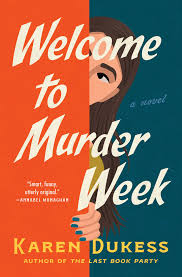
Book: Welcome to Murder Week
Author: Karne Dukess
Publisher: Scout Press
Year: 2025
Rating: 4.5 out of 5 stars

Synopsis : “When thirty-four-year-old Cath loses her mostly absentee mother, she is ambivalent. With days of quiet, unassuming routine in Buffalo, New York, Cath consciously avoids the impulsive, thrill-seeking lifestyle that her mother once led. But when she’s forced to go through her mother’s things one afternoon, Cath is perplexed to find tickets for an upcoming “murder week” in England’s Peak District: a whole town has come together to stage a fake murder mystery to attract tourism to their quaint hamlet. Baffled but helplessly intrigued by her mother’s secret purchase, Cath decides to go on the trip herself—and begins a journey she never could have anticipated.
Teaming up with her two cottage-mates, both ardent mystery lovers—Wyatt Green, forty, who works unhappily in his husband’s birding store, and Amity Clark, fifty, a divorced romance writer struggling with her novels—Cath sets about solving the “crime” and begins to unravel shocking truths about her mother along the way. Amidst a fling—or something more—with the handsome local maker of artisanal gin, Cath and her irresistibly charming fellow sleuths will find this week of fake murder may help them face up to a very real crossroads in their own lives.
Witty, wise, and deliciously escapist, Welcome to Murder Week is a fresh, inventive twist on the murder mystery and a touching portrayal of one daughter’s reckoning with her grief, her past—and her own budding sense of adventure.”

Review : I absolutely adored Welcome to Murder Week! I had no idea a book about a fictional murder mystery game would be exactly what I needed in my life, but it turns out it was. I did refrain from a 5 star review, though, due to the slow start. I found myself moving at a snail’s pace as the book began, but once things got rolling, boy did they. Sweet, wholesome, and a wonderful good time, Welcome to Murder Week is perfect for anyone who grew up watching Poirot movies, reading Agatha Christie, enjoying Murder She Wrote, or lives for a cozy mystery in book, tv, or movie form. As three strangers work together to solve a fictional murder mystery in a quaint English town, they find themselves growing together as close friends. What began as a quirky tourist trip, though, quickly becomes a deeper and more meaningful adventure for our protagonist, Cath, that we could even have expected. In moments of tenderness, we find Cath retracing steps that seem strangely familiar, despite having never visited the English countryside; we witness the healing of generational trauma, and we experience the joy of watching her story completely turn on its head and unfold in the most beautiful way. This book will make you laugh out loud while simultaneously making you cry. It’s everything I didn’t know I needed and more. Absolutely well done.

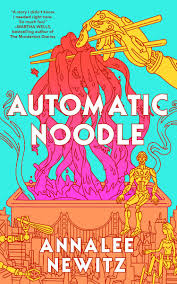
Automatic Noodle Review

Book: Automatic Noodle
Author: Annalee Newitz
Publisher: Tor Publishing Group
Year: 2025
Rating: 4 out of 5 stars

Synopsis : “You don’t have to eat food to know the way to a city’s heart is through its stomach. So when a group of deactivated robots comes back online in an abandoned ghost kitchen, they decide to make their own way doing what they know : making food – the tastiest hand-pulled noodles around – for the humans of San Francisco, who are recovering from a devastating war.
But when their robot-run business starts causing a stir, a targeted wave of one-star reviews threatens to boil over into a crisis. To keep their doors open, they’ll have to call on their customers, their community, and each other – and find a way to survive and thrive in a world that wasn’t built for them.”

Review : Automatic Noodle is a sweet, quick, low-stakes read that I managed to get through in under a day. Weighing in at just 160 pages (in ARC form), when I tell you this is a quick read, I mean it; while Automatic Noodle tells one small story quickly, it isn’t without substance or a deeper meaning. Newitz has done what I have found happening with regularity these days, they’ve disguised within their robot novel a story with a greater meaning, taking a group of othered people and mirroring them to our current world, perhaps not in a perfectly seemless manner, but with dedication that pays off.

In a world where robots have been granted some, albeit small, level of rights (particularly if they’re of a sentient class of robot) following a brutal war between California and the rest of the United States, we enter this novel to find that the sentient robots don’t have much in the way of rights after all. Living either slaved or indentured to corporations or woken to find they’ve been created by a debt that’s strapped not to who created them but to the robot themselves, most sentient robots have little to no choice about the life they must live. They may also find themselves the subjects of hate speech, disgust, cancel culture, and worse due to the nature of their capitalistic society that created a thing to do a job that a human would otherwise have been hired to do. I’ll admit, it was hard for me to wrap my mind around the first layer of this novel, which is, at face value, robotphobia, given the horrific misuse and abuse of generative AI in our current world; destroying the planet, replacing jobs, and demolishing our creative abilities all in one fell trendy swoop. It feels as though Automatic Noodle might be a look through time at ourselves if we don’t get behind human beings pretty immediately. And that’s where our second layer comes in.

Automatic Noodle is a clever mask for a narrative driven by the gross inequities people of all creeds and backgrounds face even in 2025, particularly our queer, trans, neuro-spicy, and non-white friends. Empathy is the thread Newitz binds this story together with, putting the reader into the shoes of sentient robots who just want to live and thrive in a world where others are so able to live and thrive within. In a world where they are outcast and othered simply for being exactly who they are, they find a way to engage with each other, with their community, and to find their own personhood in the midst of everything. Without needing to ask their community for assistance, it’s freely given to them because in Newitz’ world, empathy exists in the majority of people and for those who seem incapable of seeing a person as a person, they appear to be the minority, enraged and bated by targeted online attacks from those with outdated ideas of what might make a country great. Uncanny, huh?

If you want to know how a society is functioning, simply look to the sci-fi and fantasy world to tell you. It’s no coincidence that the last two books I’ve read in this realm have emphasized the concept of empathy. In a world where we forget that people are people and our humanity makes us inherently more alike than different, it’s no surprise to find stories that allude to the hate and vitriol that’s being spewed with more and more vehemence and frequency. Automatic Noodle does an excellent job of relating a futuristic scenario to our present-day troubles, all while cultivating a narrative of joy, peace, friendship, and community despite and because of our differences. Love is a greater force than fear and hate and we see it time and time again in sweet novels such as this. And while I didn’t find the flow of robotic narration my favorite to follow (in fact, I enjoyed Newitz’ writing the best in their letter to the reader), Automatic Noodle is a book I’ll be recommending to friends in the future. It’s a joyous journey into the world of savory noodles, found family, and community support despite raging phobias and hate over a group of people who are simply trying to live their lives in peace. We are all deserving of a peaceful, joy-filled life. Full stop.

Advice : If you’re looking for a quick, cozy read in the vein of A Psalm for the Wild Built, I think you’ll really love Automatic Noodle. If you enjoy a reclamation story, found family, or how food gets made, this is definitely for you!

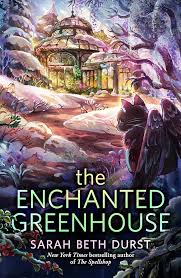
The Enchanted Greenhouse Review

Book: The Enchanted Greenhouse
Author: Sarah Beth Durst
Publisher: Bramble
Year: 2025
Rating: 4.5 out of 5 stars

Synopsis : “Terlu Perna was lonely, so she broke the law. She cast a spell and created a magically sentient spider plant. As punishment, she was turned into a wooden statue and tucked away in an alcove in the North Reading Room of the Great Library of Alyssum. And that was the end of her story. Until…
Terry wakes in the cold of winter on a nearly deserted island full of hundreds of magical greenhouses. She’s starving and freezing and the only other human on the island is a grumpy gardener. To her surprise, he offers Terlu a place to sleep, clean clothes, and freshly baked honey cakes – at least until she’s ready to sail home.
But Terlu can’t return home and doesn’t want to – the greenhouses are a dream come true, each more wondrous than the next. When she learns that the magic that sustains them is failing – causing the death of everything within them – Terlu knows she must help. Even if that means breaking the law again.
This time, though, she isn’t alone. Assisted by a gardener and a sentient rose, Trull must unravel the secrets of a long-dead sorcerer if she wants to save the island – and have a fresh chance at happiness and love.”

Review : I’ll be the first to admit that the concept of anything talking that wouldn’t normally talk is one of my least favorite fantasy tropes – I find talking animals to be disconnected from my expectations and there’s rarely a time when I feel differently. So the concept of a book in which most of the characters are talking plants was immediately something I entered into with trepidation. I love a fun new world of fantasy novels, but for some reason, I just cannot generally get on board with talking creatures. I’m happy to report, however, that The Enchanted Greenhouse is the exception. Durst has successfully created a fantasy world with this novel that needs very little extra work – the entirety of the novel takes place in a massive series of enchanted and magical greenhouses, on an island with just one other inhabitant beyond our protagonist (Terlu Perna, purple skin, purple eyes…human). The plants we encounter in the greenhouses, while some seem to be otherworldly, largely reflect what we might find in our own world, and while there is a flying cat and several magical creatures spelled to do some work in the greenhouses, there’s little beyond the inherent magical quality of the book that wouldn’t be found in our own world.

I realized about a chapter into The Enchanted Greenhouse that this is in fact a sequel to a previous book that I haven’t read, but the mark of a great book is that it can stand alone without much explanation needed, and Durst certainly achieved that feat. Had I not read the letter from the author, I would never have known this wasn’t a stand alone novel, the recap at the beginning of the book felt less like a recap and more like the necessary introduction to Terlu Perna and the magical world she resides within. And though the world she lives in is magical, it’s also filled with rules about who can and can’t do magic – for good reason, as magic can be dangerous – only trained sorcerers are allowed to even attempt to perform spells. However, Terlu casts a spell to create sentience in a plant friend of hers, and in doing so finds herself made an example of and is turned to wood. During her years as a statue, though, the Empire falls and the rules of what magic is and isn’t allowed are changed. To save Terlu from the fires of the resistance, Terlu’s old boss ships the statue formerly known as the living Terlu (along with the spell to awaken her from her statue slumber) to a remote island of greenhouses run by a lone gardener named Yarrow. Having sent letters to the government begging for help with his magically failing greenhouses, Yarrow believes Terlu is a sorcerer sent to help him. When Terlu awakens and Yarrow realizes she’s just a girl who cast a spell one time, he becomes sullen and grouchy. But the greenhouses continue to fail, and Terlu is determined to help.

I’ve read several books over the last few years that have billed themselves as being similar to Legends and Lattes by Travis Baldree, and while some have come close to the cozy fantasy he’s crafted in his series, none have really been what I would compare to his works. While The Enchanted Greenhouse wasn’t labeled as such, had it been, it would have been the first book I’ve read since Legends and Lattes that made me feel the same way Baldree did. Durst has created a cozy, low-stakes fantasy with the most wonderful cast of characters. It did have a slow start, hence the 4.5 stars, but once I got into it, things really picked up in a sweet, cozy, romantic sort of way. And it’s worth saying that even though this book was published by Bramble, it is definitively not a romance novel – it’s a love story. And who would have though I’d have spent an entire novel crying my eyes out over a lovable rag-tag crew of talking plants? Not me, that’s for sure. But cry I did. Durst has created something truly magical with this work, weaving the concept of empathy into her tale in such a way that I can’t imagine anyone who read this book could walk away unchanged. Not only is it a beautiful tale of found family, it’s also a deeply political tale as well, and perfectly timed, at that. I won’t spoil it for you, but know that it doesn’t read as political, it’s just that you cannot come away from this book on the side of the oppressor. You simply can’t.

Advice : If you enjoy quiet, cozy, low-stakes fantasy novels with flying cats and miniature dragons and honey cakes…well, do I have news for you. Add this one to your list, pre-order it now before it’s release in June. Trust me.

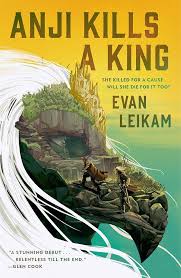
Anji Kills a King Review

Book: Anji Kills a King
Author: Evan Leikam
Publisher: Tor Books
Year: 2025
Rating: 1 out of 5 stars

Synopsis : “Anji works as a castle servant, doing laundry for a king she hates. So when a rare opportunity presents itself, she seizes the chance to cut his throat. Then she runs for her life. In her was, the kingdom is thrown into disarray, while a bounty bigger than anyone could imagine lands on her head.
On her heels are the fabled mercenaries of the Menagerie, whose animal-shaped masks are magical relics rumored to give them superhuman powers. It’s the Hawk who finds Anji first: a surly, aging swordswoman who has her own reasons for keeping Anji alive and out of the hands of her fellow bounty hunters, if only long enough to collect the reward herself.
With the rest of the Menagerie on their trail, so begins an alliance as tenuous as it is temporary – and a race against death that will decide Anti’s face, and may change the course of a kingdom.”

Review : A couple things to note right off the bat: if you’ve been around for a while you’ll notice that I gave Anji Kills a King the lowest score I’ve ever given – a score I extremely rarely dole out – 1 star. I also want to preface this review by telling you I did not finish (DNF) this book, I made it as far as page 107 (out of 348 in the advanced copy) before I called it quits. I generally try to give a book it’s fair shot by finishing it, and as you’ll note, over the last year I only DNF one other book out of approximately 30 that I received. Anji Kills a King was one of the most upsettingly bad books I’ve attempted to read in quite some time; I chose to DNF and shelve it rather than forcing myself through something I genuinely did not enjoy. Let’s get into it.

After spending years reviewing books online, Anji Kills a King is Evan Leikam’s debut novel and I found it an incredible disappointment to encounter such a poorly written book by a fellow reviewer. Anji Kills a King is being billed as a recommendation for fans of Joe Abercrombie’s work, and as someone who literally just finished a massive tome by Joe Abercrombie, I feel uniquely qualified to say : no. There is simply no universe in which I’d compare Leikam’s writing to that of Abercrombie’s. It is a far, far cry from the dry, witty, enjoyable work of a master talent like Abercrombie, to say the very least. Anji Kills a King begins with, well, Anji killing a king. There’s absolutely nothing to ease us into the story, there’s no lead-up, there’s just Anji, the king, and spurting blood. It’s from the very get-go that we go awry as the pacing absolutely stumbles headfirst through our entry into this fantasy world Leikam has created – and I use the term “created” loosely, as I could hardly tell you what the world was like, I have no idea what it was called, and couldn’t even begin to picture it if I tried. So many aspects of the book feel rushed, almost as though they ended up on the page by mere accident, yet simultaneously we find ourselves trapped in Anji’s inner world for an excruciating amount of time. It makes for a stilted and unenjoyable read from the very first page and doesn’t get better over the next 106 pages, either.

It’s hard to understand why Leikam wrote Anji the way he did, as I found her to be wildly unlikeable. It doesn’t make sense to create a book in which your reader is forced to endure nearly 400 pages with a protagonist who is intolerable to read. Anji is entitled, she’s brash, and she’s incredibly annoying. The annoying aspect is something I’d like to address, because I believe it comes down to poor writing, rather than an intentionally annoying character. Either way, Anji cannot seem to keep her damn mouth shut, and by that I mean Leikam has written dialogue that relentlessly travels the same ground over and over and over, making Anji appear to be dimwitted, though she isn’t written to appear dim outside of dialogue so I have to assume this is the sign of poor dialogue development, and not so much a character trait. The dialogue was so difficult to read I nearly stopped several times prior to page 107, but stubborn me, I wanted to get through it so I could give you a clear idea of the totality of this work – ha!

Sadly, Leikam’s work is not the breakneck fantasy book I was lead to believe it was. Instead, it was intentionally disgusting, not in any way that might have furthered the plot, but in a way that made me feel that Leikam chose to lean on the crutch of foul descriptors and disgusting scenes in order to bring grit to the book he created and instead made this reader feel nausea. Rather than the dark, gritty tone someone like Abercrombie might have achieved through a balance of humor and dry wit, Leikam instead managed to merely create something needlessly gross. With a narrator I couldn’t stand to read, pacing that made no sense, and absolutely no semblance of world building, it’s no wonder that by the time Leikam brutally killed not one, but two animals in his storyline, I closed the book and said “No more.” I couldn’t stomach another page of this truly unenjoyable book. As someone who holds onto the advanced copies they receive, whether good or bad, I hope I can impress upon you exactly how I feel by sharing that this book will go where it belongs : in the recycling.

Advice : If you enjoy Joe Abercrombie’s work, this is not for you. If you like fantasy books that include world building, that paint a picture for you, and that do the work of actually creating systems of magic that actually make sense, this is not for you. Don’t waste your time, it isn’t worth it. Avoid this one at all costs.

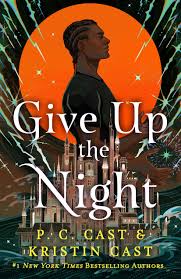
Give Up the Night Review

Book: Give Up the Night
Author: P.C. Cast and Kristin Cast
Publisher: Wednesday Books
Year: 2025
Rating: 3 out of 5 stars

Synopsis : “Since becoming Moonstruck on her eighteenth birthday, Wren Nightingale has found herself thrust into a world filled with deception, danger, and murder. Uncovering that their magic was fractured and limited when the original Moonstruck ritual was broken by Selene, Wren is determined to find a way to restore it. But the Elementals are split into two factions – some want the ritual completed and their freedom – and others are so terrified of change that they’re willing to end Wren before she can reach the center of the island where the ritual Selene ruined can be completed.
Between his overbearing father’s arrival, Rottingham delegated him more and more responsibility, and Celeste taking a special interest in him, Lee Young has been struggling to find his own path. As much as Lee wants to take his place in the Moonstruck hierarchy, he knows something’s not right at the Academia de la Luna. He thinks if he can talk some sense into Wren and get her to return to the Academia, that everything will turn out alright.
As Wren and Lee both battle for what they believe is right, they’ll have to uncover who their true allies are…and if they’re even on the same side of this magical fight.”

Review : Dear reader, to be completely honest with you, I’m not sure how I ended up with this early copy. Not only is Give Up the Night a sequel, to a book I didn’t read, mind you, but it’s been co-authored by two people I’m familiar with; if you’ve been here for a little while, you may remember that I reviewed the first and second books in a different trilogy written by P.C. Cast and Kristin Cast, and if not, you can find them here and here – as an aside, I didn’t realize the earlier of the two reviews was written all the way back in 2021 and now I must sit in shock that I’ve been receiving review copies for four years before I can continue on.

I make a point not to request sequels, and after my last two not-so-kind reviews of the Cast’s work, I’m a little more than surprised to find this book sitting in front of me. I must have made a mistake. Nonetheless, much like last year, my plans for this year include reading and reviewing every advanced copy that comes my way, so I did read Give Up the Night even though I didn’t read Draw Down the Moon, the inaugural book in the Moonstruck trilogy. To their credit, the Casts made it easy for someone to jump in without needing a total refresher of the first book – enough details were organically rehashed by the characters within the first chapter that I didn’t struggle to understand what was happening, despite jumping in at a pivotal moment. However, I do find it difficult to review a sequel without having read the first book, so this review will likely be quite short.

I find the Casts to be adequate writers, and by that I mean they do just fine if you’re not bored with a tired trope, ready for fresh material, or want a truly new, enticing, or compelling story. It’s just fine. Nothing more. I realize this is an advanced copy, but this book was riddled with errors, something I don’t tend to see in the more well put together books I receive – so that’s worth noting. Reading this book had me wondering how much might change between an advanced copy and a first edition; for example, if you have a nonbinary character, it might be worth your time as an author to ensure that you get your own character’s pronouns correct. It might even be worth your time to figure out the pronouns of the magical beings you’ve written into your novel, wouldn’t you think? Rather than jumping around confoundingly between he and she with no real clear reasoning as to why it’s jumping around – no, this is no gender fluid creature, it’s simply poor writing. The storyline matched every damn fantasy storyline you might be familiar with and that felt like an insult to the reader : young woman in a magical world finds herself bestowed with incredible! unbelievable! magical powers after spending time thinking something is wrong with her because her peers are developing their powers as normal while she lags behind; magical creature becomes magically attached to said young woman; young woman becomes marked as special, must go on magical quest to set things right / free everyone / do something spectacular that no one else has ever been able to do before. The “quirky” and “special” angle feels wildly overplayed – I can think of four books without even trying that fit the same mold. It’s overdone.

Lastly, I did find the majority of Give Up the Night to be fairly compelling, inasmuch that I continued to turn pages for a while before I got bored. I’ve said it before and I’ll say it again, a book doesn’t have to be well written to be compelling. Poorly written books with compelling storylines still turn pages. As we neared the ending of this book, however, things took a turn. The clear-cut narrative turned muddled, the geography became redundant, and the quest the characters found themselves on turned on it’s head in a way that made no clear sense. It felt like writing for the sake of wrapping up a book with a wild and crazy twist, not like something necessary to the storytelling at all. It was all a ploy to introduce book 3, which is fine, but not for me. Anyway, like I said…this book was fine. No more.

Advice : If you’re familiar with the Casts’ work already and enjoy it, I’m sure you’ll enjoy Give Up the Night. If you’re not or you’re looking for something that doesn’t read like a watered down Fourth Wing…try again. This one won’t be for you.

The Queen of Days Review

Book: The Queen of Days
Author: Greta Kelly
Publisher: Harper Voyager
Year: 2023
Rating: 3 out of 5 stars

Synopsis : “For Balthazar and his family of thieves, stealing a statue during the annual celebration of the god Karan’s was just a good bit of fun…or a way to stick it to the governor who murdered his parents. And yeah, the small fortune in reward doesn’t hurt – even if his boss also hired the mysterious Queen of Days to join the crew as “the weapon of last resort…”
Whatever that means.
But Bal doesn’t know the ceremony isn’t simply the empty words and dusty tradition; it’s true magic. The kind of magic that rips open a portal for the god himself. Only the idol that Karan’s planned on using for a body now lies broken at the Queen of Days’ feet. And half of it is missing.
With the aid of a lovable brawler, a society lady turned bomb maker, a disgraced soldier, and a time-eating demon, Bal must hunt down the missing half of the statue if he has any hope of earning his money, keeping his crew alive…and perhaps even saving all of humanity. But as his journey sends him racing through the city – and across realities – he discovers that doing all this might just doom the city.

The city be damned. It’s time to kill a god.”

Review : The Queen of Days bounces between two points of view; Balthazar (Bal), the leader of a crew of thieves called the Talion gang; and Tassel Janae (Tass), aka The Queen of Days. Bal and his crew have been commissioned by a mysterious patron for what’s supposed to be a simple smash and grab at a largely symbolic ceremony of ruling class elites within Bal’s home city of Cothis. We learn early on that Bal and the members of the Talion gang are not only related to each other, some through illegitimate affairs on Bal’s father’s behalf, but were once the children of the previous ruling elite of Cothis themselves – before Bal’s family was ousted (and killed) by the members of the city for a superstitious belief that they had angered the god of water, Karanis. Several years of drought will do that.

Though the Talion gang are a crew of experienced thieves with years of work under their belts, their patron has a singular request : they must hire and work with the Queen of Days, a masked mercenary with a reputation that precedes her. She’s rumored to be able to defy the laws of nature, to have extraordinary powers, and worst of all, to be a demon of the Nethersphere. She comes to the Talion gang rather mysteriously herself, all but proving the rumors true and creating fear and suspicion within the gang, particularly when she asks for payment in days off their lives rather than in coin. As Bal, Tass, and the rest of the crew work to layout a plan, they become increasingly fractured and disorganized and it takes the remainder of the book to bring them back together into a family unity again.

Spoilers Ahead

As the crew attempts their simple robbery (with a huge payout, mind you), they almost immediately come to find it isn’t quite as simple as they were promised. When the symbolic ceremony turns anything but, Tass takes matters into her own hands and smashes the statuette they were commissioned to steal. Realizing that the ceremony was designed to draw down the god Karanis from the Nethersphere, Tass acts without explanation, saving the youngest member of the Talion gang, Bal’s sister Mira, and escaping the ceremony. When Karanis arrives and finds his vessel destroyed, he takes possession of the current city’s ruler (and Bal’s father’s usurper) Paasch – a move that will not allow Karanis to exist within this world for long. He must find the statue, it must be restored, or he will wreak unstable and unmeasurable damage upon the world. What ensues is about 300 pages of Bal, Tass, and the crew working to figure out what’s really going on, where the pieces of the statue may have ended up, and how they can save themselves in the process.

I chose to give TQOD 3 stars because I found this book to be quite long and difficult to get through. I don’t actually mind an almost 400 page book, I enjoy a lengthy tale, particularly if it’s something I can’t stop thinking about, but that’s exactly the problem I had with this one. I’ve often said that it doesn’t take quality writing to create a compelling story, there have been many books I’ve found lacking when it came quality that kept me turning pages simply because I couldn’t stop thinking about what was going to happen. Unfortunately, TQOD didn’t hit the mark for me. I found myself distinctly disconnected from the characters, I would put the book down and easily walk away, I found myself thinking of other things when I was reading and often had to go back and reread passages in order to figure out what was happening because I was so lacking connection. There were about 100 pages right at the end that found me turning pages to see what was going to happen, but sadly the 200 something pages that preceded it were so uninteresting enough that the final 100 weren’t enough to make me want to give this book a higher rating.

I will say, it was written quite well and utilized a trope many people thoroughly enjoy : found family. I found the world building to be fair, but not great, as I had a lot of unanswered questions about the world Kelly created. It didn’t help that I was so disconnected from the story, I think had I found more connection with the characters I might have found more connection with the world, but there still remain many unanswered questions about the world, what it looks like, and how it interacts with the characters, and why it does the way it does – for example, Kelly mentions a flood mythology that exists within this world, much like exists within our world. I have questions. Fortunately for readers, TQOD is very clearly the first of at least two books so there will be time and room for questions to be answered, but that does rely on readers finding their own connections that will compel them to continue reading, and of that I’m not sure they will.

Advice : If you enjoy fantasy, the found family trope, and don’t mind reading several hundred pages, you just might like this one. I personally found it lengthy and difficult to get through, but if you like a series, enjoy thievery and magic and gods who aren’t really gods, I think this would be worth the time.

Witch King Review

Book: Witch King
Author: Martha Wells
Publisher: Tor
Year: 2023
Rating: 5 out of 5 stars

Synopsis : “Kai-Enna is the witch king, though he hasn’t always been, and he hasn’t even always been Kai-Enna!

After being murdered, his consciousness dormant and unaware of the passing of time while confined in an elaborate water trap, Kai wakes to find a lesser mage attempting to harness Kai’s magic to his own advantage. That was never going to end well.

But why was Kai imprisoned in the first place? What has changed in the world since his assassination? And why does the Rising World coalition appear to be growing in influence?

Kai will need to pull his allies close and draw on all his pain magic if he is to answer even the least of these questions.

He’s not going to like the answers.”

Review : Martha Wells is no first timer at the fantasy rodeo, her list of past works spans an entire front page in Witch King, including several long-term series, and honestly you can tell this is the work of a person deeply familiar with the inner workings of creating a successful fantasy world. It was a joy to read.

Like many of the advanced reader copies I receive, Witch King came with a little letter from the author. In it, Wells explains her motivation for creating this book: it was conceived in the early months of the pandemic, attempting to visualize what it would look like to see a “conquering genocidal attacker” ultimately defeated by an uprising of ordinary people (or semi-ordinary). She wanted to visualize what that world would look like during the attack and several decades later, hence the perfect setting for a fantasy novel full of immortal beings and beings who can live incredibly long lifespans.

Witch King is written from a singular point of view, but it’s told by jumping back and forth between the present (several decades following the defeat of an attacker) and the past (during the actual uprising). Kai-Enna is an immortal underworld demon prince inhabiting a mortal body, the only way he is able to exist in the upper world. Thanks to a treaty that his half mortal-half immortal grandmother brokered between the Grass Kings, a nomadic people group in the upper world, and the demons of the underworld, Kai is able to partake in a sacred ritual that allows him to enter into a recently deceased mortal body. This ritual allows the loved ones of the deceased to hear the final thoughts and words of their beloved while also giving them a demon who will both learn the ways of the upper world in order to fully understand and appreciate mortal life, and bring protection to the clan they’ve entered into a relationship with. Because Kai is still a demon, he will be able to live as long as he pleases inside a mortal body without being wounded thanks to his ability to heal inordinately fast, and the only real give-away that he isn’t mortal are his all black eyes.

Kai is still a young demon (and living in a young mortal body) when the Heirarchs, a ruling class of people from an unknown land, take over and conquer the known world. The Grass Kings fight back, but being a nomadic group of people, they are unaware of the reach the Heirarchs have, the weapons they’ve acquired, and the magical tools at their disposal. The Heirarchs, unbeknownst to Kai or his mortal family, have a super weapon that can knock the life out of a mortal and inflict incredible pain on an immortal, allowing demons to be captured and imprisoned.

*Spoilers Coming*

Wells returns us to these moments of war throughout the book, jumping back to Kai’s former body, his former life, and his fight to overturn the Heirarchs. In the present moment, some 60 years in the future, we see that the Heirarchs have been defeated, the passage from the upper world to the underworld permanently blocked, and Kai, though a demon, is referred to as the Witch King. As the book begins, we find Kai’s consciousness awakening outside of a deceased mortal body he’s been occupying for several years – no longer the young body of the Grass Kings. His body has died, but he has been imprisoned in a tower of water, the only real achilles heel for a demon. Because of this prison, he’s been in a suspended state, unaware of how much time has passed or where his friends and chosen family are located. We spend the rest of the book reuniting this family and seeking the remaining members who have gone missing, all the while eerily retracing his steps from the past when he worked to defeat the Heirarchs.

Wells has created a book that functions on multiple fantasy levels; it can be read alone, it ties up nicely in the end, and we get to see how Kai defeated the Heirarchs in the past, and worked to defeat a growing world alliance that’s attempting to create an empire in the present; I believe it will also function as an excellent book one of several and I look forward to seeing where Wells goes in the future. And I hope she does, because while this book didn’t end on a cliffhanger or leave you wishing for more of the story, there are pieces and parts of the past that remain untold, certain adventures to be had now that the family is reunited, and we make it to the end of the book without finding out definitively how Kai came to earn the monicker “Witch King”. While it can be inferred, I’m craving the full story and I have hope that Wells will add another book to this title and make it a series.

Advice: If you love fantasy, if you enjoy getting wrapped up in a world of unearthly creatures, if you love an excellent retelling of past events, this is it. It’s well written, it’s easy to understand, and it resonates with current events without being in your face or even hard to read. This book uses gender-neutral pronouns for several characters without being fussy about it and exhibits a great deal of inclusivity as well, making it a must read for so many reasons. I highly recommend it.

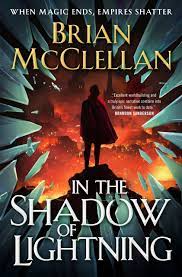
In the Shadow of Lightning Review

Book: In the Shadow of Lightning
Author: Brian McClellan
Publisher: Tor
Year: 2022
Rating: 4.5 out of 5 stars

Synopsis: “Magic is a finite resource – and it’s running out. Demir Grappo is an exile. A failure as a general, as a leader, and as a son. But when his own mother is brutally murdered, he must return to take his seat as the head of the family. Because she was killed for a secret, a secret so large it threatens the social order, the future of the empire, and the fate of the world: The magic is running out and no one knows how to stop it.
A war is coming, a war unlike any other. And Demir is the only thing that stands in the way of the end of life as the world knows it.”

Review: In the Shadow of Lightning is one of those books I finished and immediately regretted. I regretted plowing through it as fast as I did, knowing full well its pub date is June of 2022 and as the first of several, I’ll have to wait a year (at least) to read the next installment. I was a little hesitant to pick this one up at first, after all it’s a 560 page behemoth of a book, and a fantasy novel on top of that. After The Bone Orchard, which left me feeling a little frustrated with fantasy, I wasn’t sure I was ready to dive into another unknown world on a wing and a prayer that the author would paint a picture I could get lost in. McClellan, however, as a seasoned pro with at least six other fantasy books under his belt came through with a fantasy world I saw clearly and understood with ease. It was a joy to read this book.

ITSOL is told from multiple viewpoints, bouncing back and forth between a few different interlocking storylines to unveil a broad, detailed view of all angles of the story – within reason, of course. There are aspects of the story that unfold slowly, only coming to light as we begin to find the book winding down, clearly setting the reader up for the second book, but there’s plenty unraveling throughout the entirety of the book that I wasn’t left feeling frustrated that I was able to figure the plot points and twists out before we even got into the good stuff, but at the same time I wasn’t left feeling like any part of the story was dragging on needlessly. Every plot point and twisting turn seemed to further the story and the development of the characters in a way that felt satisfying and well thought out.

Each character is developed in a way that feels organic and without being told how each person sounds I found myself creating voices for them in my mind as I read, which is not something that happens often for me with books – a truly well written book, yes. Demir is an enjoyable character known as a glass dancer, or someone who can move glass at will with a rare and dangerous telekinetic power, who is fighting to overcome both the perceived personal failings of his youth, and the stigma that comes with being one of a minority of people with a dangerous and, at times, deadly power. In a world where magical glass, godglass, has the power to augment reality, the word glass takes on a deeper meaning. “Glassdamn” takes the place of many a swear word in Demir’s world and the use of the word glass in this way does a great job of emphasizing it’s importance in the lives of the people of this world. It seems to span multiple countries and/or continents (being an ARC, my copy of ITSOL doesn’t have the maps that will be included in the published copy so I’m not sure what the exact geography is), each people group using the godglass for similar purposes. They do make reference to illegal forms of godglass that may be used to torture or perhaps even change the physical appearance of a human, and I’m fascinated to see where that takes us in the next book.

This book, like many fantasy novels, takes place during a period of war. In fact, the entirety of this massive book only takes place over the span of a couple days, a week at most, successfully at that! But, with the mention of war, I did want to touch briefly on the potentially triggering imagery in the book. There are depictions of gruesome deaths and murder, death of animals, and war time fighting. It’s not nearly as graphic as it could have been, though I don’t think it should have been, but it does hang out in these realms of blood and death for a good portion of the book, so that should be noted.

The reason I’ve chosen to give this book 4.5 instead of 5 comes down to a few nit-picky things. It’s written exceptionally well, but McClellan does seem to rely on the use of the word “spat” throughout. I love when a character spits words at someone, it’s such a visceral descriptor that I tend to dwell on it more than other words. Unfortunately, so many characters in this book are constantly spitting their words at others that it begins to grow redundant and annoying by the time you reach the end of the book. I think this is an easy fix, though. My second issue deals with the wording of a handful of sentences that I felt were confusing in their wording. I bookmarked all pages where I found one of these sentences, and the book is simply littered with bookmarked pages from front to back. The storyline is detailed and winding, so I think some of the problem lies in trying to get the point across, but there were several instances where I had to re-read a sentence several times to understand what McClellan was trying to get across. Neither of these are deal breakers for me or even big issues, especially with an ARC, but they were enough in volume to take half a point.

Advice: If you love fantasy that’s done well, that leaves you wanting to know so much more, that brings you into a brand new world and gives you a full view of the intricacies, then this book is for you. If you don’t enjoy depictions of war, this is probably not going to be your cup of tea. If you love a good, slowly unfolding mystery, twists you can’t predict, and the idea of monsters and magic in a foreign land, run to your nearest bookstore this month and grab a copy.