Suffer A Witch Review

Book: Suffer A Witch
Author: Joy McCullough
Publisher: Dutton Books
Year: 2026
Rating: 4.5 out of 5 stars

Synopsis : “Joy McCullough’s earliest memories are of time spent in church, moments when she climbed the steps to recite from the pulpit, just like her preacher father. But when she was a teenager in San Diego in the 1990s, her connection to her family and church were forever altered when a youth pastor groomed and sexually assaulted Joy.
In her debut memoir, McCullough recalls both her abuse and its ongoing aftermath as she seeks healing and justice in a country that rewards men for sexual abuse and still insists “girls these days will say anything.”

Review : I would be remiss if I didn’t make it clear from the start that Suffer A Witch discusses sexual assault and on-going abuse of a minor, discussions of an eating disorder, abuse of power, religious domination, and police proceedings involving pressed charges as well as broad disbelief of women’s testimony and abuse within the church, past and present.

Suffer A Witch has come to me in the most unlikely of circumstances as I have no memory of requesting this advanced copy. Just two days before cracking the spine, I sat listening to Switchfoot’s new release, Darkness, for the first time, feeling waves of grief crashing through my body as I heard the words :

“In a prearranged marriage
The youth pastor from my parish
Pledged to marry the 10th grade girl from down the street
Strange way to start a song
Even stranger to belong
To that same youth group when I was just fifteen

McCullough, a pastor’s kid, or PK, in the 1990s at a Presbyterian church in San Diego, was sure she would grow up to become a pastor herself one day. Through verse narration and alternating essays on women witches through history and across the globe, she paints a picture of what so many women who grew up in the church know deeply in their marrow: That we are not, and will never be, safe among men in power. Suffer A Witch hit me like a punch right in the gut, as I also grew up in a Presbyterian church in the 1990s in the clutches of purity culture and male figures hell bent on keeping those who do the most harm safe from any form of justice. I read, enraptured by the truth telling McCullough was able to stomach, and felt the sick churning in my stomach knowing that had things gone even slightly differently, her experience could have been mine, too. Knowing, further, that her experience mirrors that of an incalculable number of other women and children in the church for what has now been thousands of years. The gross reality is that what has been shared in this work is not unique, that the words McCullough has cut from her own flesh is only an echo of what so many have struggled with from time immemorial.

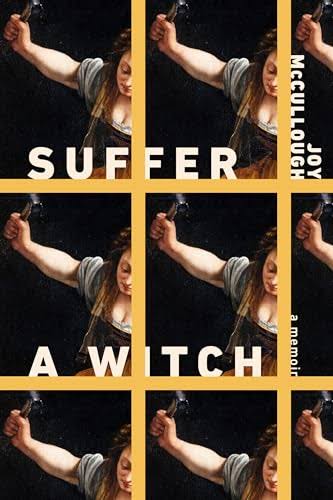
McCullough, as though reading my own life story, has chosen a painting by the Italian Baroque painter Artemisia Gentileschi for the cover of her memoir; a painter whose image emblazoned a shirt I once owned that said “Artemisia AF”, purchased sometime in the last ten years in response to a particular president’s sexually graphic depictions of women and a particular supreme court justice’s rape allegations that went without any moral repercussions. If you haven’t been introduced to the feminist icon Artemisia, I highly recommend seeking her story out, though you will certainly be introduced to her through McCullough’s evocative description of the story – a woman raped and abused, whose father only pressed charges against the offender out of offense that his property, Artemisia, had been damaged. McCullough threads the needle of her story with short essays dedicated to shedding a light and sharing the importance of a number of accused witches throughout history, and pulls tightly to bind us together in a shared space of injustice and raging iniquity. If you weren’t mad before, you most certainly will be after reading this incendiary work. You should be feeling the flames of rage licking at your feet.

While not everything flows perfectly, McCullough has brought her unwavering perspective to the narrative and done what so many women know is the nearly impossible task of clearly stating her abuse, delving the emotional depth that comes with reliving her most harrowing traumas, and presenting the long-term, historical, and outrageous neglect of women and children at the hands of the church . Suffer A Witch made me so full of fury it’s almost hard to put into words. It is my story in so many ways, my own abuse while not at the hands of the church, wielded by a man who came from the church, who snuck into communities that refused to protect the most vulnerable, and who continues to exist in those spaces to this day with no repercussion. The church I grew up in was so deeply entrenched within the purity culture of the 90s that it felt almost unrecognizable compared to McCullough’s experience, and yet my teenage years were marked by dress codes meant to keep the men of the church from straying because the temptation was too strong, while children were offered no further protection beyond the incessant quest to cover our shoulders, legs, and midriffs. “What was she wearing?” may as well be the anthem of my youth group experience.

McCullough’s experiences are a funhouse mirror of my own, the experiences she had as a teenager while attempting to navigate the current of abuse and danger she experienced at the hands of every adult in her orbit, so relatable and understood by my own; the incredulity, the feelings of being unworthy, the shame, and the fear are all so palpable in my own life that I felt like I was having a conversation I could barely manage to have. Much of what McCullough details of her inner world are indeed exactly what I’ve worked so long to navigate in therapy as an adult. Suffer A Witch feels like a kindred spirit in the most soul-crushing and gut-twisting sense. I don’t wish McCullough’s experience on anyone, but I do wish this book into the lives of the women who grew up in the church, who weren’t protected, whose stories haven’t been believed, those who have deconstructed, who watched their former youth leaders date their former students while being gainfully employed by the church that sees no harm in the abuse of power, and those who have had their own stories to tell who have felt incapable of doing so on their own. This book is for us.

McCullough tells her story and no more, the fine line tightrope we survivors of abuse know intimately, as the laws are changing and our own stories are often not even safe for the sharing anymore (see Marilyn Manson, see Johnny Depp, see Donald Trump). She does make mention of her father, the pastor of her church who was ousted for his own infidelity and abuse – of power, of women – and while she doesn’t mention him by name, she does offer enough information for me to track down his own memoir and see that it sells for nearly $200. Endorsed by Desmund Tutu and with 4.2 stars on Amazon. Remarkable, indeed that a man’s story of redemption despite being an abuser can garner such words of praise from so many. I hope for us all that a woman’s story of truth and abuse at the hands of men in power can do the same. But I, too, know better than that. In my bones. In my marrow.

I hope you give this a read in spite of the difficulty of the content. These are the wounds we do best not to look away from. This is how we heal. By screaming the truth and keening and grieving and never letting it happen to another person again.

Advice : If you are okay with the content warnings, I cannot recommend this book highly enough. This is for those of us who have deconstructed, who have found Mary Magdalene and Artemisia and Sue Monk Kidd and Chanel Miller, who have spent hours in therapy dissecting feelings of worth, and who have ripped the old skin from our bodies in order to become something new. This is for the PKs, the Bible College dropouts, the silenced, and the loudmouths. It’s a quick read, not an easy read, but a good read. If you don’t want to find yourself galvanized, angry, or overwhelmed, this may not be for you. But if you’re ready, if you feel the rage licking at your feet, if you want to hear a voice giving words to that which you have felt unable to speak, this is very much, emphatically for you.
Peck & Peck Review

Book: Peck & Peck
Author: Bonnie Garmus
Publisher: Scribner
Year: 2026
Rating: 5 out of 5 stars

Synopsis : “It’s 1982, New York City. Crime is on the rise, muggings are in the streets, and Batter Gray, recent college graduate with a skill that no one wants – an “ear” for poetry – is worried about his future. While all his friends have real jobs, he’s folding T-shirts at the Gap. As for love? No. Not unless you count Sallie Mae, the student loan tyrant. He hears from Sallie all the time.
But when Batter gets a dream job at Peck & Peck, the most prestigious poetry quarterly in the world, his life moves into the literary fast lane. Soon Batter is knee-deep in the secret war between the two Editors in Chief, the famous Peck brothers – twins and enemies – as well as being privy to the private affairs of their thirty-nine editors, whose professed mission is the same: Find originality. Reward creativity. Burn the rest.
And by “burn,” they mean incinerate. Because at Peck & Peck, “good” isn’t good enough, “interesting” doesn’t cut it, plagiarists aren’t tolerated, and parolees run the mailroom. Still want to submit your poem? Go with God.”

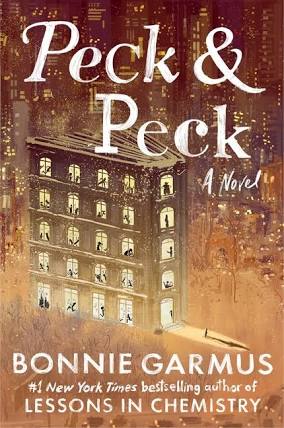
Review : Peck & Peck is a book about poetry. Kind of. It’s also a book about the 1980’s. Kind of. And about twins. Kind of. What Peck & Peck emphatically is, wholeheartedly and without reserve, is a book about the wild and wonderful things that make us so uniquely human and all the ways in which we share this experience together. And while it’s set in the 1980’s, it’s also a 400-something page, profound yet subtle, argument in opposition to AI; that which can never know our shared humanity.

Batter Gray has a strange name. People get it wrong more than they don’t. His boss at Peck & Peck, Salton, calls him Beater. Most people think it’s a nickname or mistake it for something like Baxter. In fact, it’s a family name, one that was passed down from his mother’s dog. Peppered throughout much of Peck & Peck are glimpses into Batter the dog’s history by way of implausible stories shared by Batter the human’s mother. These stories are miraculous and nonsensical and carry a well-worn whimsy that remind me of movies like Big Fish or Secondhand Lions – the magical stories you might tell a child about what your life was like or what grand adventures your childhood dog got into; stories that serve some function or purpose in the grand scheme of learning life’s lessons. But what if Batter the dog really did do miraculous things and go on grand adventures a dog could not seemingly go on? What if the magical and miraculous inspire us to cling to the human belief of hope?

Peck & Peck is a book about obsession. Obsession with poetry. Obsession with type face. Obsession with history. Obsession with finding the truly remarkable. Obsession with becoming something. It’s a book that peels back the layers of the mundane and shows the reader what might lie just beneath the surface, the ways in which we experience life’s little miracles: The way the light shines through the branches, or how strong an egg shell must be to protect the life within, the color of the sky at dawn, or what it feels like to sit next to someone on an airplane and hear them speak about your favorite book in a way that makes you rethink everything. It’s a book about yearning and longing and love lost. It’s about the duality of man, the good and bad all wrapped up into one simple package, the human experience.

Peck & Peck is a brilliant, wild, unputdownable ride through the magical and the mundane. It’s a series of contradictions at times and at others it’s a perfectly fitted puzzle piece. Garmus wields words like a master craftsman, bringing me into the world of Jay Gatsby’s rolling parties at times and taking me back in my own experience to some of the worst jobs I’ve ever worked. She has created something that is both wholly unlike my own life and somehow completely relatable to my own experience. It is a masterstroke that invites us all into remembrance of that which makes our existence so spectacular and wonderful. Peck & Peck is a book about the shared human experience.

Advice : I think if you enjoy poetry it might make this book just that little bit more enjoyable but it’s not a requirement! If you have hobbies and gifts and experiences you love with all your heart, this book with strike a cord in your heart. If you love a well crafted narrative, winding tale, and expertly maneuvered plot, this is going to be a must-read. Go ahead and pre-order it! You’ll want to read this one.

Ghost in the Night Review

Book: Ghost in the Night
Author: Tiffany D. Jackson
Publisher: Scholastic Press
Year: 2026
Rating: 3 out of 5 stars

Synopsis : “Harmony Roundtree is obsessed with ghosts. She’s not entirely sure they’re real, but she has her suspicions. When visiting Savannah, Georgia – known as the most haunted city in America – Harmony goes on a ghost tour…and she sees something that night, in the window of an abandoned house. Was it a ghost? Or a trick of the light? With two new friends, Harmony sets out to investigate…and stumbles upon shocking clues that lead to an unsolved murder.”

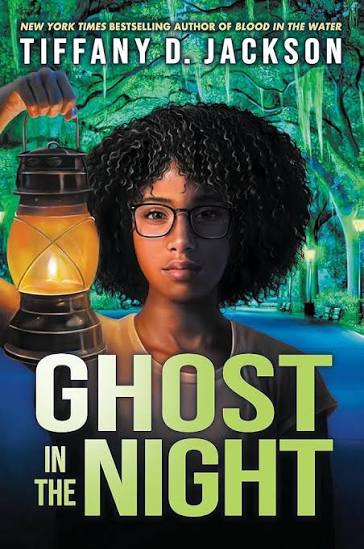
Review : This is my third middle grade ARC from Scholastic Press in the last two years and I’m beginning to notice a theme. The first two, books 1 and 2 in The Last Resort series, follow a young girl navigating the death of her grandfather while investigating a series of ghostly apparitions while she’s out of town. In Ghost in the Night, a completely different book unrelated to the aforementioned series, we find Harmony, a 12-year-old, navigating the death of her grandmother while investigating a ghostly apparition while she’s out of town. It’s a striking resemblance to the structure and framework of an entirely different book written by totally different people. I took issue with The Last Resort series when the kids were normalized meeting up with a stranger they’d been speaking to online and once again I find myself taking issue with Ghost in the Night for similar reasons. While Harmony and her friends do not actively speak to strangers online and then go out into the real world to meet those strangers (as we see happen in The Last Resort), Harmony and her 10-year-old companion Robby do indeed seek out an adult male online and find him in person. When it all goes down, Jackson even goes so far as to write in a little internal conversation that this is basically a walking advertisement for meeting strangers from the internet. I’m getting really tired of reading about little kids meeting strangers from the internet, particularly adult men. I think middle grade authors can do a hell of a lot better than that. Kids deserve better than that.

I think it’s a worthwhile device to navigate death and grief in a kid’s book by introducing ghosts, but it’s beginning to feel a bit done already, especially coming from the same publishing house less than a year apart from each other. I want Scholastic Press to do better, to push for different storylines, and to try a little harder. I think they did Jackson dirty by publishing this story right on top of another series that’s doing the exact same thing with the same time frame. It’s worth noting that while the structure of the story was the same, the contents were different, but not different enough that I wasn’t thinking back to the other series throughout.

Ghost in the Night was a quick read with a heartwarming found family trope nestled within, but it was also wrapped up in a lot of fear mongering around ghosts, which felt like a slightly off-kilter take in a book about ghost hunting. It was just fine, but like I mentioned, it has already been done, and kids seeking out adults they met online will absolutely never sit right with me. There were aspects of the story that were left dangling, but not in a way that leads me to believe there will be a follow-up book, more so in the way that leads me to feel that they were accidentally left loose.

Advice : Once again, I have to caution parents to do their research with these Scholastic Press books. If you aren’t interested in your kids reading about how to find adult men online and then meet up with them in the real world, I can’t in good conscience recommend this book to you.

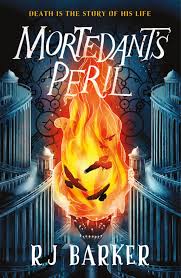
Mortedant’s Peril Review

Book: Mortedant’s Peril
Author: RJ Barker
Publisher: Tor Books
Year: 2026
Rating: 3.5 out of 5 stars

Synopsis : “In a city of ancient automata, strange spirits, and sleeping gods, a cleric of death is about to find his own life on the line…unless he can find his apprentice’s killer first. This thrilling fantasy murder mystery is the first in a perilous new series from the acclaimed author of The Bone Ships and Age of Assassins.”

Review : Mortedant’s Peril is a winding, twisting, murder mystery wrapped in a fantasy novel set in a strange world filled with blood magic, old gods, and strange lands across the sea. It follows a Mortedant, that is, a death worker whose job is to read the final thoughts of those who have passed, named Irody Hasp as he embarks on a quest to not only seek out his apprentice’s killer but to take vengeance on those who may have, in fact, killed his apprentice on accident while attempting to kill Hasp himself. Hasp embarks on the journey with the help of his apprentice’s young sister, Mirial, and his assigned bodyguard, Whisper, a sea person warrior with potentially royal family ties. What follows is a classic murder mystery with winding back roads, secret passageways, poison berries, death cults, and magical beings who seemingly control the city and, indeed, seem to control Hasp’s own fate.

Mortedant’s Peril gets off to a slow, so very slow, start. It was difficult for me to find my way into the world of Elbay, the city Hasp resides within, and even more difficult for me to wrap my head around all the different creatures, spirit forms, and even the way people are addressed within the world. It didn’t feel like a smooth dive into a new world and the world building felt a bit stunted. There were several instances where I found myself reading and rereading passages, trying to make sense of Barker’s descriptors, often times leaving things without an image in my mind. There’s a sweet spot with fantasy novels where the reader doesn’t have to work too hard to imagine what’s being introduced and this book missed the mark a bit in that regard. However, while a slow start, once I got into the meat of the novel, I found it hard to put down. If you can make it through the first hundred pages or so, you’ll be well into an enjoyable mystery.

While a fantasy first, this book is at it’s heart a mystery so I do want to tell you that I was able to solve the mystery – though, not the mechanics – long before the book reached it’s zenith. On top of that, Barker introduces the reader to so many different religious sects, cults, and names I found difficult to connect to, that the mechanics of how the murder took place and who exactly was involved felt hard for me to piece together in the end. It didn’t keep me from enjoying the reveal, but it did take something away from the experience.

I struggled a bit with the broader picture of what this book was ultimately about. At first, I believed this was a fantasy novel written to reveal to the reader the dangers of racism and an us vs them perspective, as Hasp, and truly so many people in this book, relies heavily on what I could only call racism (though, in this fantasy world we’re talking about the distinction between people of land vs people of sea, rather than people of differing skin colors) and it’s that very racism that made me recoil at the first bit of the book. The use of “it” as a pronoun is difficult to stomach, to say the least. But the anti-racist plotline doesn’t really pan out beyond Hasp’s subtle move from using “it” to “she” when referring to Whisper, though notably, not when he refers to other creatures. There’s also a strange “guns don’t kill people, people kill people” argument made toward the end of the book that didn’t sit well with me, either.

All in all, I enjoyed the overall plot of Mortedant’s Peril, I was able to figure out the mystery before the end of the book, and there are several questionable themes throughout the book that don’t resolve in a way that feels good. I found myself returning to the book over and over again to turn the pages and see how things would play out, so this was better than it wasn’t, but it was still not my favorite nor was it a truly successful fantasy book.

Advice : If you love fantasy, or dark and dystopian worlds, if you don’t mind doing extra work where world building lacks, and like the idea of a mystery fantasy novel, this will be a great read for you! If you don’t want to do the work, you might skip this one or check it out from your local library rather than buying it outright.

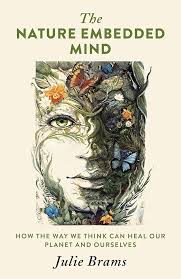
The Nature Embedded Mind Review

Book: The Nature Embedded Mind
Author: Julie Brams
Publisher: Changemakers Books
Year: 2025
Rating: 4 out of 5 stars

Synopsis :The Nature Embedded Mind explores some of the most vital questions our culture is facing, regarding the broken relationship between humans and nature. Our persistent and shared delusion that we are different from the rest of nature is at the heart of why we behave in ways that destroy our own habitat. Focusing on our personal and collective beliefs, The Nature Embedded Mind shows how we can begin healing the most important relationship we have, our relationship with Earth. These pages combine the latest scientific research, personal stories, and writing prompts that will allow you to expand your own thinking. Challenging Western psychology, this book aims to prioritize its offered repair as the new foundations for mental health and social wellness.”

Review : The Nature Embedded Mind, while written by a psychotherapist and geared toward therapists and allied professionals, is ultimately a book for everyone. You might think a book about letting our collective repair with that natural world expand outward into the repair necessary with other humans would be specifically for those who already feel a deep connection with the Earth, but realistically, the message of this book is for every person on this planet. That message is namely that if we can begin to reframe our human perception of the Earth and the other-than-human beings who live here with us as being less about hierarchy and more about coexistence with our siblings, we may very well be able to find ourselves in a place that is less caustic, less inflamed, and less ill.

Over the years I’ve read several books on the benefits of Forest Bathing and how one might go about participating in such an event. Brams has created a work that does more than delve into the positive impact Forest Bathing might have on a person’s psyche; she’s created a work that’s gathered scientific data around how we as humans interact with the natural world and how we not only gain benefits from it, but how we might benefit the world around us in a relationship of equal exchange. If you’re a fan of Robin Wall Kimmerer, not only will this concept not be new to you, it will likely be quite welcome to read. While not overt, Brams readily suggests a concept that will be familiar to anyone who’s studied yoga : we are the microcosm of the macrocosm. Meaning? What happens in the natural world is reflected within our own being and vice versa. Brams suggests that we’re experiencing a collective awakening and desire to return to something we may have only experienced in childhood, a freedom that comes from an unfettered connection to and collaboration with the world around us. When we stop viewing the world and the non-human life that exists within it as separate from ourselves, Brams says, we can start to experience the necessary perspective shift for a new way of life to unfold.

The Nature Embedded Mind reads like a both manual for reshaping and reframing our collective ideals about the natural world and an introduction into the world of Forest Therapy (Brams is certified by the Association of Nature and Forest Therapy, or ANFT, and regularly leads walks for those in her area). There are periodic writing and experiential prompts throughout the book that are geared toward gently shifting the reader’s mindset away from our standard collective idea that humans exist on a hierarchy outside of nature, somehow both separate from it and at the top of the pyramid within it. The prompts allow for playfulness and exploration, and paired with the way Brams speaks about nature, it’s a gentle shaking of the norms so that the reader has the freedom within a container to begin to safely consider how they think about and interact with the non-human world around them. Concluding with a prompt that comes directly from Nature Therapy, Brams has given the reader ample room to begin their own immersive journey into forest bathing techniques, or at minimum, to begin to explore the idea of what a deeper relationship with the Earth might look like outside of a modern, Western point of view.

I found this book to be incredibly necessary and timely. I’ve already recommended it to several friends : therapists, those in therapy, and other folks in allied professions that are doing the work on their own and beginning to question if the ways we interact with the world around us are truly serving our collective consciousness. I found Brams to be quite relatable as an author and enjoyed her perspective immensely. I expected as I dove into the book that I would already have a nature embedded mind, as I consider myself pretty connected to the planet, an outdoorsy kind of gal who views herself as part of nature rather than something disconnected from it, but Brams truly challenged my way of thinking and helped me turn some of my thought patterns around on their head. It’s easy to view humanity as the top of the food chain, sitting pleasantly at the top of a hierarchical caste of sorts, but the reality is that we live in tandem with the world around us, it’s completely intertwined and our own existence is reliant on the existence and persistence of the whole of the Earth. As we witness destruction on new and unparalleled levels each year, and seemingly worse each day, finding our way back to the understanding that we are no different than the other-than-human creatures who live on this planet feels imperative to the collective survival of, frankly, everyone and everything. If the soil is as similar to me as my own hand, wouldn’t I fight long and hard to keep the soil healthy? If I enjoy time in nature as I would time with a friend, wouldn’t I take the time to clean up some trash? To fight for legislation that keeps the body of Earth well? Wouldn’t I consider her my home rather than an object?

The Nature Embedded Mind is a quick read but it’s worth taking your time with. It explores the idea that we aren’t so different from the planet and that the planet isn’t so different from us. It’s a reminder that as humans we aren’t actually separate from nature at all, but truly part of nature just like everything else on this planet. And finally, it’s an invitation to explore ways in which you connect with the planet, inviting the reader to try their hand at simply existing with the planet, to forest bathe or to seek out forest therapy or to just sit and be connected with a friend (the Earth, her abundance, her creatures, and her cycles). It’s a necessary way forward. Perhaps it’s the only way forward.

Advice : If you experience the deep, unsettled feelings of doom connected to climate change, practice meditation, enjoy being in the woods or smelling flowers or watching bees flit from flower to flower, if you’re a therapist, a yoga or Ayurveda practitioner, an activist, or simply a human being navigating existence on a planet that feels daily more and more disconnected from your life, this book is truly for you. It’s a quick read but it’s packed full of insight and wisdom and filled with journal prompts and ideas for how you might connect more deeply with the world around you and ultimately reshape your understanding of the Earth and your relationship with it.

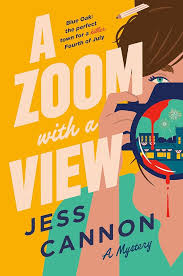
A Zoom With A View Review

Book: A Zoom with a View
Author: Jess Cannon
Publisher: Dutton
Year: 2026
Rating: 3.5 out of 5 stars

Synopsis : “Leo can’t believe she’s back in Blue Oak. Her small, quirky Texas hometown feels suffocating after trying to make it big as an English professor in New York – especially due to her strained relationship with her overly hair-sprayed mother, Karina. But with Leo’s career in academia in shambles, at least she’s able to work as a photographer for her godmother’s real estate business. And her best friend, Emily, is around to help her navigate through the mess – and maybe force her to reconnect with her old high school boyfriend, Mack.
But while at work, Leo makes a grisly discovery: the dead body of rival real estate agent and social media influencer Chaz. Even worse, Leo and Emily have been secretly running a snarky Reddit page making fun of Chaz’s cringe-inducing advice and duck-faced selfies. When someone Leo loves is accused of the murder, she finds herself flung headfirst into a dangerous investigation, teaming up with a local detective who grew up to be quite attractive. Meanwhile, Karina has been acting stranger and stranger, as if all her hair hides a big secret…”

Review : A Zoom with a View is a cute, sort of cozy, I-just-moved-back-home mystery I love. I extra love that it’s a mystery with a female protagonist who is neither drunk, nor having a mental break. It’s the perfect break from the (ugh) normalized unreliable female narrator trope. We need that. An entire genre of modern mystery books needs that. Jess Cannon has created a fun, hard to put down narrative of twists and turns and fun characters that feel like they stepped right out of your own lived hometown experience, and I genuinely enjoyed reading this book for all of those reasons.

Once I got into the meat of the novel, the plot was easy to follow and the mystery was fun to unravel. I did figure out whodunnit fairly early on, but I will say that the motive was unclear to me until close to the end of the book, so while you may be able to narrow it down early, it doesn’t necessarily take away from the plot. I won’t give the ending away for you, but I will tell you that I thought the villain would have a different motivation and felt the ending suffered a bit from a fairly reductive character. The final reveal felt semi-believable, but I wanted a little more depth than we were given. There’s still time, I think…

Cannon lost me early on, and I want to warn you, reader, that A Zoom with a View has an incredibly slow start and hasn’t been smoothed out in a way that felt easy to read. While it does get much better as you get into the meat of the book, the plot is a bit meta, if you’ll pardon the pun, and this is the real problem with Cannon’s rocky start. In attempting to lay the groundwork for her novel, Cannon has set herself up for some tricky narrative and it doesn’t seem to me that she’s entirely succeeded in making it something everyone will be able to follow. The main character, Leo, runs a snark subreddit centered around someone she went to high school with, Chaz, who as grown up to become a wellness influencer. Leo, and subsequently Cannon, spends a great deal of time explaining the subreddit, running through the cast of characters in Chaz’s universe, and laying out a lot of Chaz jargon. All of this feels true to life, but it’s not written in a way that brings ease to the reader. Snark subreddits aren’t new to me and I still found myself going back and rereading paragraphs, trying to wrap my head around what Cannon was attempting to describe. There’s a sweet spot you find in books where the words flow and the narrative unfurls in your mind and you don’t have to do much work as a reader, and it isn’t really until about halfway through the book that I found that sweet spot here. The first good bit requires you to work for it, and that’s hard for me to argue for. I don’t think it’s necessarily due to the content, though it’s not an easy task to describe a subreddit and an entirely made-up world, but fantasy writers world build all the time. Sometimes it reads easily and sometimes it doesn’t. This was the latter.

Once I got into the swing of things and found the rhythm of A Zoom with a View, I found myself really enjoying how things were unfolding. Like I said, I had the mystery solved pretty early on, but I enjoyed going with Leo to interview each character, seeing how things were happening in Blue Oak and in the broader Chaz snark subreddit world, and seeing my own suspicions confirmed. What really let me down, though, was the ending. I’ve found myself frustrated in recent years by suspense and mystery books that spend 90% of the novel building up to a climax, revealing the villain, and then wrapping the whole book up in the last couple of pages and unfortunately, that’s exactly what A Zoom with a View has done. It’s only in the final few pages of a pretty hefty book that we finally find out the truth behind Leo’s Mom’s secrets and as soon as we learn her secrets, the book ends. It’s a gnarly cliffhanger, if it actually is a cliffhanger. I can’t find any information online about whether this is the first of a series or at least the first of two books and the ending is so nebulous, yet still ties everything up, that I have no idea if it was meant to leave me feeling confused or it was an intentional set-up for the next book. I have to hope it’s a set-up, and I would surely read book two if there were to ever be a sequel, but it felt disjointed and rushed. The ending unraveled fast. I wanted more. So much more. I think much of what I found off-putting about this book would be a non-issue in a sequel now that the groundwork has been done. Ultimately, Cannon is an enjoyable writer who’s created an enjoyable universe and I have questions I’d like to see answered in a second book. Sign me up.

Advice : If you like a well-written mystery that doesn’t feature an unreliable female narrator, I think you should stick out the slow start and give this book a chance! It was fun and enjoyable and once I got into it I found myself swiftly turning the pages. It’s worth the read.

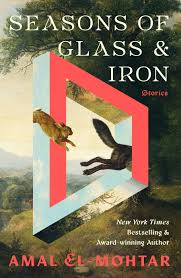
Seasons of Glass & Iron Review

Book: Seasons of Glass & Iron
Author: Amal El-Mohtar
Publisher: Tor Publishing Group
Year: 2026
Rating: 5 out of 5 stars

Synopsis : “Full of glimpses into gleaming worlds and fairy tales with teeth, Seasons of Glass And Iron : Stories is a collection of acclaimed and awarded work from New York Times bestselling author Amal El-Mohtar.”

Review : Seasons of Glass & Iron is a lyrical, deadly, and captivating peek through the looking glass into worlds unknown; full of whimsy and wonder, joy and horror, it is a dream and a nightmare tangled in the same web, woven and unwoven, creating a gleaming portrayal of humanity and, at times, something a bit other than humanity. El-Mohtar has deftly curated a collection of perfectly layered stories, giving the reader just enough to whet their appetite before moving swiftly on to the next. As someone who prefers long-form, I cannot speak highly enough of how intentional this collection is, how smooth the transitions, and how seamless the tie-ins. El-Mohtar shares in the introduction that this book may not have much of a “coherent aesthetic argument”, rather, it’s a love letter to women. Regardless of whether the introduction is read or not, you cannot simply pick this book up and not come to the conclusion that the author has a profound love for womankind in all her forms.

Seasons of Iron & Glass is queer, sapphic, and beautifully pro-Palestine. It wiggles a little deeper under the skin with each story, like an ear worm attaching itself in your brain, hooking it’s little fingers into your heart and tugging at just the right moments. It is a profound work of love and loss and becoming and undoing and redoing all over again. There are gorgeous poems written to those surviving the genocide in Gaza, retellings of Welsh fairy tales, stunning creations of fantasy, and incredible stories of unbelievable creativity and artistry. When I read the final words, I cried.

I fear my words do a disservice to how artfully and skillfully crafted this collection is. El-Mohtar states that these works were written between the years of 2008 and 2023 and there are stories that I can easily align myself with, the energy and understanding of them being laid out on LiveJournal or Tumblr feels so visceral I can almost taste it. Yet, each story weaves a broader narrative that cannot be unseen – despite ranging broadly in time, in place, and in content. There are stories I desperately wish were part of a broader narrative, stories I crave to know more of, and still each story is carefully wrapped up in the end, perfectly beginning and ending in ways that, while imperfect, as short stories are, is truly perfect. At the end of the day, try as I may, I can hardly come up with the words to do this book justice, all I can simply say is read this book.

Advice : If you have any interest in Welsh folklore, in short stories, in fantasy, in reading tales of women, then this book is for you. If you want to read folklore that takes the narrative out of the hands of awful gods and puts it back firmly in the hands of the so often downtrodden and abused women in them, this book is for you. I genuinely believe everyone should read it. It’s perfection. Mark your calendars for March 2026, place an order ahead of time, you don’t want to miss this one.

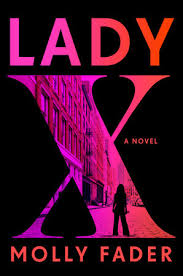
Lady X Review

Book: Lady X
Author: Molly Fader
Publisher: Ballantine Books
Year: 2026
Rating: 5 out of 5 stars

Synopsis :Los Angeles, 2024
Margot Cooper’s life explodes after she discovers that her A-list actor husband sent explicit photos to multiple girls on social media. Desperate to get away from the world – and the paparazzi – Margot flees to her childhood home, with her teenage daughter in tow.
But home isn’t the sanctuary Margot was hoping for. In a cardboard box in the corner of the attic, she and her sister find damning evidence about a mysterious vigilante named Lady X, including a blurry newspaper photo from the 1970s of a woman who looks an awful lot like their mother. It turns out that Margot’s husband isn’t the only family member harboring secrets.
New York City, 1977
Ginger Daughtry is living her best life with her two beloved roommates, until one of them is assaulted. Astounded by the lack of response from the police, the young women take things into their own hands and find themselves igniting a movement that suddenly takes New York City by storm.
Soon what began as a little bit of revenge against terrible men – vandalism here and there, singed collectively as Lady X – starts to take on a life of its own. Their enigmatic reputation spirals beyond their control with copycat criminals running amok under the guise of the enigmatic Lady X. When a body is found fallen – or pushed – from five stories high, the hunt reaches a boiling point.
But Lady X has vanished into thin air.”

Review : Lady X is not for everyone. Lady X is a novel full of thick, intoxicating, divine rage that fills your chest cavity, runs down your fingers, and sizzles off your skin as you recount the statistics of women who will be assaulted by men in their lifetimes; as you field yet another “you should smile”; as unwanted fingers run up your arms and legs to touch tattoos without consent; as you recall being asked, by a man, if you’re on your period. It’s the rage of thousands of years of patriarchy; the idea that feminism somehow has nothing to do with global atrocities, and being told that it’s worse somewhere else, so you should be grateful. Lady X is a heralding beacon in a bleak, dark, inky black night sky. It’s timely in a way that this subject will never not be timely without radical, dramatic, civilization altering change – it’s pointed, it’s aggressive, it’s feral, and yet it’s deeply soft, prodding the softness of your humanity and heart with fingers that gently turn your head and say “don’t look away”.

Lady X is a vigilante masterclass on how meekly our culture has shifted over the last fifty years, revealing the dark truth that while women have only had access to bank accounts and credit cards without their husband’s approval since 1974, the culture of men doing so much more than taking advantage of women has hardly changed in all that time. While the culture has certainly shifted, at least in part thanks to #metoo, the truth is that women still make a fraction of what men make in the workforce, are continuously being legislated against, often without exception for medical emergencies or anomalies, and still face the backroom absurdities and assaults that happened in the 70s. Only now, with a president who has openly spoken (and been found guilty of!!) about assaulting women; with younger generations of young men coming into the political field with open misogyny and a bloodlust for the voting rights and the bodily autonomy of women. Molly Fader has perfectly encapsulated the energy that sizzles and dances through every person who has ever been assaulted or harmed at the hands of men who have let their belief in male superiority take complete control. She’s written a novel that hits the button labeled “Rage” that sits in the very center of my chest and flung it right where it hurts. And it’s perfection.

Written between the perspective of Ginger Daughtry in 1977 and her daughter, Margot Cooper in 2024, Lady X jumps between narratives with ease, only ever leaving me frustrated at critical points in the story arc. The unfolding mystery of who Lady X is and what might have happened to her is a thread tying two generations of women together as they simultaneously navigate what it’s like to live in a world where men take and take and take. And before you get upset at how misandrist this sounds, Lady X is the perfect embodiment of the understanding that while not all men are the cause of assault, all women have been or know someone who has been assaulted by a man. Lady X became a folk hero, during a time when New York City was embroiled with the Son of Sam, labor shortages in the police force, and a rolling, city-wide blackout. Created perfectly to fit into our real world, Lady X could have easily come to fruition in real time in 1977, or 2024, or 2025. Lady X became a vigilante figure who gave entire groups of people, not just women, the sense that they could speak up, they could point the finger at their abusers, those who have continuously gotten away with cruelty, and that they could enact real change that might make the world a better, softer place for themselves and other marginalized folks.

Fader has created a world that feels so real, that speaks so pointedly to the time we’re living in and all that’s come before us to get us to where we are, that she goes so far as to write in a Lady X campaign that, fictionally, took place during Trump’s second inauguration. It was so pointed, so necessary, so perfectly, seamlessly correct for the time that I found myself weeping. This is not for everyone. It’s for those who have a belief that a better world could exist, those who dream of a matriarchy, of a third way forward, those who have been hurt and know people who are hurting, and those who wish, desperately, for there to be some small measure of justice in this world. Or, maybe not so small justice. Lady X is a guttural scream in the night, a shattering of that hard exterior shell that keeps you safe and looking the other way, it’s our survival instinct screaming, crying out that yes, this is how it changes.

Advice : I would be remiss not to mention content warnings before sending you to the bookshelves in May 2026. Lady X mentions sexual assault, rape, physical abuse, battery, police brutality, harassment, stalking, catcalling, solicitation of a minor, sexual exploitation, cheating, and vigilante violence. That being said, if you feel you can read the above list in a safe way, this book is an excellent read and perfect for anyone who would like to see the bad guys get what’s coming to them. I flew through this one and found it to be utterly unputdownable. I highly recommend pre-ordering it.

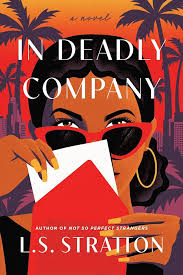
In Deadly Company Review

Book: In Deadly Company
Author: L.S. Stratton
Publisher: Union Square & Co.
Year: 2025
Rating: 4 out of 5 stars

Synopsis : “As the assistant to the CEO of a Fortune 500 company, Nicole Underwood has plenty of tasks on her to-do list – one of which is the blowout celebration for her nightmare, on-percenter boss, Xander Chambers. But when the party ends in chaos and murder and Nicole is one of the survivors, suspicion – from the investigators to the media – lands on her. Was she the reason for all the bloodshed?
A year after those deadly events, Nicole tries to set the public record straight by agreeing to consult on a feature film based on her story. However, while on set in Los Angeles, she’s sidelined by inappropriate casting and persistent, bizarre script changes – and haunted by persistent visions of her now-deceased boss. It seems clearing her name ins’t so simple when the question of guilt or innocence is…complicated.”

Review : In Deadly Company is an enjoyable, inventive, and easy to read thriller with a truly unique plot that doesn’t fall into the trap of the unreliable female protagonist trope so many thrillers seem to adore. It’s well written, quick moving, and leaves you guessing all the way until the end. While I did find the final reveal to be a bit obvious and contrived, it was still fun to get there in the end. I thoroughly enjoyed this read, found myself wanting to slow things down so it wouldn’t end quite so soon, and have been chewing it over since I finished it yesterday – all hallmarks of a good book.

The narration jumps a bit, and doesn’t hold fast to a set-in-stone pattern which I found to be unnecessary, but provided some texture and certainly helped give context to the way events played out. Between Nicole’s present day and her past, we watch the fateful events of her boss’s birthday party unravel, not only the alluded to murders (yes, plural), but the behind the scenes goings on in Nicole’s personal life that we are only granted glimpses of throughout the book. In the present, Nicole is watching and “consulting” on the movie retelling of the events of her boss, Xander Chambers’ birthday – she wields almost no say in how the story gets told, but she’s been hired by the production team and so she’s there, on set, watching the events play out once more despite very clearly having PTSD. In the past, we simultaneously watch the events play out in real time, catching little bits here and there that might reveal who ends up murdered and why, but never enough to fully catch on to the carnage that would eventually play out by the time the birthday weekend was over.

This review will be short and sweet, nearly anything else I have to say would include spoilers that might truly wreck the ending for you, so I’ll leave things where they are. I will say, however, that I wish the ending had taken a slightly different turn – without giving you the details, you’ll have to read those for yourself, the final twist at the end felt contrived and forced, giving the power of the novel a bit of a lackluster finish. It didn’t feel well thought out, but it did feel a bit messy. Things could have tied up in a nicer way, been a bit less all over the place, and not included one of the most obvious plot twists in history. Okay, that’s all. If I say more, I’ll spoil it for you!

Advice : This was such a fun read! If you’ve been disillusioned by thrillers written from a female perspective, I think you should really give this one a shot! Be warned, there are graphic descriptions of blood, gore, and death; the author describes PTSD flash backs; and there’s mention of the date rape drug as well as what happens when it’s used.

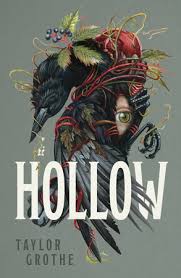
Hollow Review

Book: Hollow
Author: Taylor Grothe
Publisher: Peachtree Teen
Year: 2025
Rating: 3 out of 5 stars

Synopsis : “After a meltdown in her school cafeteria prompts an unwanted autism diagnosis, Cassie Davis moves back to her hometown in upstate New York, where her mom hopes the familiarity will allow Cassie to feel normal again. Cassie’s never truly felt normal anywhere, but she does crave the ease she used to have with her old friends.
Problem is that her friends aren’t so eager to welcome her back into the fold. They extend an olive branch by inviting her on their backpacking trip to Hollow Ridge, in the upper reaches of the Adirondacks. But when a fight breaks out their first night, Cassie wakes to a barren campsite – her friends all gone.
With sever weather approaching and nearing sensory overload, Cassie is saved by a boy named Kaleb, who whisks her away to a compound of artists and outcasts he calls the Roost. As Kaleb tends to her injuries, Cassie begins to feel – for the first time in her life – that she can truly be herself. But as the days pass, strange happenings around the Roost make Cassie question her instincts. Noises in the trees grow louder, begging the question : Are the dangers in the forest, on the trail, or in the Roost itself?
In a world where autistic characters rarely get to be the hero of their own stories, Cassie Davis’ one-step-back, two-steps-forward journey to unmasking makes Hollow as much a love letter to neurodiversity as it is a haunting tale you’ll want to read with the lights on.”

Review : This is a strange review for me; I spent the majority of my time reading Hollow absolutely certain this would be a 5-star-review kind of book. It was impeccably written, impossible to put down, and left me with so many questions bouncing around in my mind – waiting, waiting, waiting for the big reveal that would tie things up and explain the nuances and mystery of the book. Sadly, within the last quarter of Hollow, the plot completely fell apart, the twists and turns Grothe had to take in order to explain the strangeness became overly complex, and left me with so few answers I am almost totally baffled as to why and how it ended the way it did. The sharp turn toward confusion is something I’ve been mulling over for two days since reaching the ending and I’m having a hard time coming to terms with this as a purposeful choice and not a mistake in storytelling.

It’s worth saying that Hollow is genuinely so well written for the majority of the story, it’s a dark and winding suspense-filled mystery of a book filled with nuance and palpable anxiety as we experience Cassie’s world both externally as her camping trip goes horribly awry, and internally as we bounce back and forth between flash backs to a bullying incident at her last school and her present internal world as she navigates a new autism diagnosis. Hollow as a whole is a beautiful metaphor for the neurodivergent experience of masking, or putting on a face for each set of specific circumstances one might find themselves in during a day-to-day existence. Cassie returns to her hometown after living in the city with her family, following a mental breakdown that lead to an autism and trichotillomania diagnosis. She’s lost touch with her friends and upon returning, in an effort to rekindle their friendship, she’s invited on their annual backpacking trip into the Adirondack Mountains. Everything seems fine, at least on the surface, until the first night of their trip leads to too much to drink, blacking out, and waking to find half of her friends have left the group behind. With an imminent storm approaching, Cassie leaves the campsite behind to find and rescue her friends before something terrible happens. It’s during her initial panic as she searches for the rest of her group that Cassie stumbles, spraining her ankle, and finds herself being rescued by a strange boy she’s never seen before – Kaleb. This is where things begin to take a strange turn.

Kaleb and his mother Stasha live in a remote part of the mountains in a small, off grid community called the Roost. It’s here that Cassie is allowed the space to rest and recover while the storm rages around them, taking a break from searching for her friends until the storm passes and they can get radio signal to the rangers down the mountain. Within the Roost are several families, most of whom have stumbled across the community and have chosen to stay, each living in a small home that seems to have been built by Kaleb’s parents. While staying at the Roost, Cassie discovers that there’s a secret language everyone speaks, some strange mixture of different dialects and languages from across the globe. The members of the Roost seem pleasant, though there’s never quite a sense of ease, as they continue to speak in a foreign language Cassie is unable to get a grasp of, and the books are all written in some unknown tongue she’s equally unfamiliar with. Kaleb continuously tells Cassie how unfair it is that her friends have left her on the mountain to fend for herself and says repeatedly that they’ll have to pay for what they’ve done, which gives a nice sinister backdrop for the scene Grothe has created. While in the Roost, Cassie begins to notice that there are carved wooden dolls…everywhere. They seem to surround the Roost, filling buildings with their haunting, carved faces, peering down from rafters, and generally giving an air of strangeness to the entire community. There are so many instances like this where Grothe is clearly making a point about neurodivergence, the way humans interact with a known dialect and jargon that doesn’t always reach the people who might stand on the fringes or feel as though they can never quite get a foothold in with those who so easily adapt. There’s a profound message of accessibility and acceptance within this storyline, but there’s also a lot left to be desired when it comes to unfolding the story outward into an ending that makes sense.

*Spoilers Ahead* As the book begins to really unravel at the end, so much comes to light about the Roost and the community of people who live there – really driving the point home that Cassie has simply never felt as though she belong, that in wearing a mask she’s as wooden as the dolls who surround the compound. The masks neurodivergent people are often forced to wear are ill fitting and a source of tremendous discomfort and I think Grothe does so well in addressing this concept with simultaneously creating a super creepy drama through which it might unfold. It’s how things come apart at the end that really left me struggling for answers; as Cassie finally starts to put the pieces of the Roost’s strangeness together, she realizes (too late) that Kaleb is actually her good childhood friend, Blake. Yet, in all the time she’s spent at the Roost – and this is another issue I find with the actual storytelling of the book, as the time she’s spent there seems to range from a week to several months with zero explanation beyond perhaps some kind of magic?? – she never once recognizes Kaleb as Blake, literally one of the friends on her camping trip. And not only that, somehow Kaleb / Blake is supposed to have created the entire Roost on his own, carved all the members of the community, and also kidnapped several hikers? Over the course of how long? The time frame, the inexplicable inability to recognize even Blake’s voice or mannerisms or scent (which she mentions multiple times), and the complete lack of explanation for all of the above lead the ending of the book to ultimately fall to pieces on top of a well written few hundred pages. I think there’s a singular moment early on where Cassie mentions briefly that she’s been diagnosed with face blindness, which I think might explain being unable to recognize Blake as Kaleb on it’s most base level, but it’s never mentioned again and without working a little harder to tie things together, it feels loose and confusing at best.

The unknown language spoken in the Roost and the unfamiliar written language in the books are never really explained, and while I can appreciate that the spoken language serves as an analogy for how Cassie feels disconnected from neuro-normative folks, the written language being something totally foreign to her feels like an aspect of the book that was written initially and then forgotten about when it came time to wrap things up. The ending of the book is unclear, deeply confusing, and left me with more questions than answers, which is an unsatisfying way to end a suspenseful, magical novel. I really do appreciate the parallels Grothe draws between those who stand on the fringes of the world and Cassie’s experience at the Roost, I love that Cassie was written to give neurodivergent individuals a place to be the hero, but I don’t know that it was completely successful when everything was all said and done. Cassie spends a lot of time back-and-forthing between staying in the Roost and leaving, even when her friends are dying around her, so much so that it felt as though the point was being made, mistakenly, over and over and over again. It felt like Grothe was hammering it home a little too hard, and in doing so neglected wrapping up crucial elements of the plot. I wanted to give this book 5 stars so badly! I wanted the ending to be better than it was, to make more sense than it did, and to give more of a feeling of completion than I was left with. Sadly, the ending spoiled most the book for me and I had to go with 3 stars. I think there’s room to figure things out and make it make more sense, but I also think it’s not super likely to happen at this stage and I’m sad for that and for Cassie’s story.

Advice : I think this book had a lot of potential – if you like crows, if you like something vaguely sinister, if you want to see a neurodivergent person be the hero, wow! You’ll definitely have something to dive into with Hollow. However, I want to recommend that you don’t get your hopes up for the puzzle pieces to fit together at the end – they don’t. This one might be best checked out from your local library first.