Fruit of the Dead Review

Book: Fruit of the Dead
Author: Rachel Lyon
Publisher: Scribner
Year: 2024
Rating: 5 out of 5 stars

Synopsis : “Camp counselor Cory Ansel, eighteen and aimless, afraid to face her high strung single mother in New York, is no longer sure where home is when the father ozone of her campers offers and alternative. The CEO of a Fortune 500 pharmaceutical company, Rolo Picazo is middle-aged, divorced, magnetic. He is also intuited boy Cory. When Rolo proffers a childcare job (and an NDA), Cory diets and internal warning and allows herself to be ferried to his private island. Plied with luxury and opiates manufactured by his company, she tires to assure herself she’s in charge. Her mother, Emer, head of a teetering agricultural NGO, senses otherwise. With her daughter seemingly vanished, Ever crosses land and sea to heed a cry fro help that only she can hear.
Alternating between the two women’s perspectives, Rachel Lyon’s Fruit of the Dead incorporates its mythic inspiration with a light touch and devastating precision. The result is a tale that explores love, control, obliteration, and America’s own late-capitalist mythos. Lyon’s reinvention of Persephone and Demeter’s story makes for a haunting and electric novel that readers will not soon forget.”

Review : I was a little skeptical about Fruit of the Dead at first, feeling as though I was about to walk onto Jeffrey Epstein’s island with the back-cover synopsis, not so much a modernized retelling of Persephone’s descent into the underworld and Demeter’s journey to retrieve her. Oh, how wrong I was. Rachel Lyon has spun a masterful tale of persuasion, adoration, and tragedy; a poignant retelling and perfect stand-alone novel. Lyon has completely grasped the fever dream of drug use in such a way that left me feeling dizzy and unmoored as I read Cory’s descent into addiction – a powerful parallel to Persephone’s own descent.

Lyon brings Cory into alignment with Persephone, goddess of both spring and the Underworld, quickly and with ease, as she gets to know Rolo Picazo, her new employer. As the CEO of a big pharma corporation, he has access to medications, drugs, opiates that have not yet been granted FDA approval, most notably a small, gel coated, gleaming red pill called Granadone, Grannies for short. A perfect, ripe, shining pomegranate seed, the demise of Persephone herself. Picazo shares a drink recipe with Cory, a mixture of vodka, pomegranate juice, lime, and, you guessed it, the contents of a Granny; called? Fruit of the Dead. And with her first sip, not even 100 pages in, Cory is snared.

After having been camp counselor to Picazo’s seven year old son, becoming a live-in nanny for his son and slightly younger daughter is easy as can be. Plied with as much alcohol and Grannies as she wants, Cory finds Picazo’s island intocicating. And while Picazo himself (middle aged, bloated, sad) is intriguing to her, she only finds herself (eighteen, unsteady, uncertain) mildly attracted to him in ever-so-brief moments that feel more like the intrigue of someone who grew up without a father. Meanwhile, Picazo expresses clear interest in being both a father figure as well as a romantic partner to Cory right off the bat. And like all master manipulators, he removes his mask and reveals himself nearly immediately, declaring himself a narcissist and reading Cory for the perfect victim she, in fact, is. And like most victims, Cory brushes it all aside, looks beneath the lumpy exterior, and attempts to see the good within. All whilst sinking further and further into a fever dream of addiction and loss of control.

This seems as good a point as any to talk about some content warnings, because, believe me, this book is a walking content warning. Not only does the entire book revolve around the explicit experience and physical sensation of being high and / or drunk, it also speaks in detail about sexual assault, physical assault, and the trauma that results from both. This book is not for the faint of heart, nor should it be read lightly. And while it is written with breathtaking prose, if you do decide to read it, please be careful and gentle with yourself if any of the above are problematic for you.

Bouncing back and forth between an elder teen who does not yet know who she is, who has been the victim of sexual assault and has entirely lost herself because of it, who is then scooped up by a predator and fed mouthfuls of little red happy pills; and a devastated mother who begins to unravel and become feral when she cannot get in touch with her daughter, Fruit of the Dead is nothing short of a masterpiece. We not only glimpse behind the curtain of a well curated mother, a woman who manages an NGO, who hobnobs with google executives, who pulls a few strings and gets her daughter prized internship after internship, who works her magic and lands Cory a scholarship to an all girls private school in Manhattan, we are privy to her downward spiral into mania as she loses herself in the search for her missing daughter. While we find Cory grasping at the very idea of her own identity, we see Emer, Cory’s mother, whose identity no longer fits, a mask that slips, falls, and shatters. The two are wrapped together, entangled in a connection neither can escape.

As a true retelling of Demeter and Persephone, the book does not end with a neat little bow tied on it. After all, Persephone returns to the underworld once every six months, leaving our world to the decay of autumn and the darkness of winter. I won’t completely spoil the book for you, but just know that this is not a happy ending. It is a realistic ending. And for that I am profoundly grateful. A perfect, feral, fever dream of a book.

Advice : I encourage you to read my content warning before deciding if this book is for you. If, however, you read the warning and feel okay with the content, I think you should run as fast as you can to your nearest bookstore on March 5th, 2024 and buy a copy of this book. 

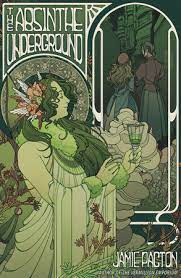
The Absinthe Underground Review

Book: The Absinthe Underground
Author: Jamie Pacton
Publisher: Peachtree Teen
Year: 2024
Rating: 3.5 out of 5 stars

Synopsis : “For Sybil Clarion, the Belle Epoque city of Severon is a wild, romantic dream, filled with cares, cabarets, and glittering nightclubs. Eager to embrace the city’s freedom after running away from home, she’s traded high-society soirees for empty pockets and barren cabinets. At least she has Esme, the girl who offered Sybil a home, and maybe – if either of them dared – something more.
Ever since Esme Rimbaud brought Sybil back to her flat, the girls have been everything to each other – best friends, found family, and secret crushes. While Esme would rather spend the night tinkering with her clocks and snuggling her cats, Sybil craves excitement and needs money. She plans to get both by stealing the rare posters the crop up around town and selling them to collectors. With rent due, Esme agrees to accompany – and more importantly protect – Sybil.
When they’re caught selling a power by none other that its subject, Maeve, the glamorous girl doesn’t press charges. Rather, she invites Sybil and Esme to the Absinthe Underground, the exclusive club she co-owns, and reveals herself to be a green fairy, trapped in this world. She wants to hire thieves for a daring heist in Fae that would set her free, and is willing to pay enough that Sybil and Esme never have to worry about rent again. It’s too good of an offer to pass up, even if Maeve’s tragic story doesn’t quite add up, and even if Sybil’s personal ties to Fae could jeopardize everything she and Esme have so carefully built.”

Review : The Absinthe Underground is a sweet and fun adventure, that, while not low stakes, somehow ended up feeling just low stakes enough that it didn’t trigger any anxiety while reading it. Pacton crafted a beautiful scene by introducing us to the world of Fae, showing us rather than telling us what an intoxicating other-world might look like to two girls from this world. However, where she did a fantasy world justice, I felt she let the reader down with her depictions of the city of Severon. With a name like Severon and very little explanation to the time frame of the book, I was at first convinced this story was not only fantasy but science fiction. It wasn’t until I read the author’s note (at the end, after finishing the book in it’s entirety) that I realized Severon was meant to be an 1890’s Parisian equivalent. Something got lost in translation, figuratively speaking.

Likewise, Pacton included real world names like Toulouse and Mucha when discussing poster artists whose work is often stolen for it’s one of a kind collector status, which lent a bit of confusion and complication that felt unnecessary to the story. Sybil and Esme live in the top of a clock tower in a made up city that contains real world artists, something that I have a hard time wrapping my mind around when it comes to necessity. Not enough of the pre-Fae exploration of TAU connected me to Paris in the late 1800s for the real world examples to make sense, Pacton could have made a more significant impact on the story by placing greater emphasis on the time frame and reality of the world Sybil and Esme live in, then trying to tie it to our world. She lost me there. 

Spoilers Below

That aside, the Absinthe Underground itself was beautifully described and the subsequent adventure Sybil and Esme embark upon is quite endearing. I did feel, though, that there were several loose ends Pacton left untied; it’s unclear whether they were left untied for a reason or because they were simply overlooked in the editing process. However, one seemingly purposeful loose end does find Sybil and Esme’s adventure into Fae and back into the real world marred by a broken promise to free a human they encountered in Fae and help her find her way back through the door – I find the prospect of another book exciting, I can’t wait to see what Pacton does next! She left several threads throughout the story, dropped like leaves, and I wonder if she’ll pick the all back up in the upcoming book or if we’re simply left to speculate why a forest hag might be frightened of a kitten, whether Sybil’s father was a magician, and why he tried so hard to marry her off and turn her into a “proper” young woman before she ran away. There were small explanations planted throughout the book, but not enough to satisfy the weight each of the aforementioned interactions had on the plot. 

TAU was a cute, low-ish stakes middle grade adventure book that has great potential for future iterations, I think there’s room for improvement, but that improvement could surely come in additional books. Overall, I found it easy to read and enjoyable, if not a little slow and sleepy at times.

Advice : If a low-stakes adventure through a fairy realm sounds up your alley, you’ll want to give this one a read when it debuts in February. If you like a bit of a nail biter or a faster paced adventure, this might not be your jam.

Camp Damascus Review

Book: Camp Damascus
Author: Chuck Tingle
Publisher: Nightmare
Year: 2023
Rating: 2.5 out of 5 stars

Synopsis : “Welcome to Everton, Montana: home to a God-fearing community with a heart of gold.

Nestled high up in the mountains is Camp Damascus, the self-proclaimed “most effective” gay conversion camp in the country. Here, a life free from sin awaits. But the secret behind that success is anything but holy.”

Review : I’ve been a little hesitant to review Camp Damascus because, well, I didn’t like it very much. Structurally, I couldn’t find much fault with it, even for a review copy. There were few errors and the narrative flowed well enough, at least for a middle grade read, which I don’t necessarily find this to be, but it was written that way, so it appears it may be. I’ve struggled with how to review this book knowing that it isn’t bad, but also feeling strongly that it doesn’t move the cultural narrative forward or do any work to provide any kind of cultural healing. Maybe that’s too much to put onto a book, frankly it’s what’s kept me from being able to concisely put my words onto the page, maybe I’m asking too much of a book like this. But Tingle himself said something in the note to the reader that makes me think that maybe it isn’t too much, maybe it’s just enough : “Currently, there are conversion therapy camps working hard to strip the personalities and inner truths from thousands of queer youths. These camps see one’s identity as something that can be ground down and chiseled away, creating a new and improved version of something that was never broken to being with. This barbaric attempt to crush the glorious reality of young LGBTQ people needs to end. It’s my hope that Camp Damascus can be a voice in the choir of artists and writers standing up to shout “no more”.”

Camp Damascus follows a 20-year-old autistic girl named Rose as she begins to unravel her known reality, living within the confines of a small town whose population largely attends church who hosts what’s known as the nation’s most effective conversion camp, boasting a 100% success rate. Early on, Rose notes that the commercials for Camp Damascus don’t have a need to hire actors because of their extremely high success rate, however no one that she knows who she’s spotted in the commercials have any recollection of having ever being participants at Camp Damascus. Tingle weaves a web of confusion and strangeness right out of the gate, creating a book that is immediately a horror novel, with Rose vomiting up piles of strange mayfly type bugs, witnessing a horrifying visage anytime she begins to feel anything that may resemble same-sex attraction (though this connection isn’t made clear to Rose until part-way through the book), and some bizarre breaks in reality where she remembers things as being other than they are.

Rose begins to tug at the thread of strangeness, unraveling the world around her, and in doing so she begins to lose her faith. As the object of her affection is murdered by what she grows to learn is a demon and her reality becomes more and more skewed, Camp Damascus becomes more and more of a supernatural horror / thriller. Rose grows to learn that she was, in fact, a former conversion therapy camp attendee, having had a previous relationship with another girl named Willow, but having little to no recollection of the relationship and absolutely no memory of attending the camp. Because she’s driven by the need to know more and more information, to structure her world into a way that makes sense, Rose is able to begin to parse what’s happening and methodically works her way through people who’ve been to Camp Damascus before, hoping to understand why they’re all witnessing demons and barfing up flies. Rose finds solace in a friend from camp (though she doesn’t remember him), Saul, and together they plot to take down Camp Damascus and help save those who’ve been through the program and have subsequently lost their memories and found themselves tethered to a demon.

The point of the demonic tethering in Camp Damascus is to bring about something truly terrifying and out of alignment with reality anytime the tethered human experiences any form of same-sex attraction, pushing them to avoid the feeling or avoid the person who has lead them to “sin”. While the concept is true of conversion therapy, the execution is obviously made-up, but it is in this execution that I find the biggest flaws with the book. Tingle is attempting to draw a parallel to the fear that Christianity uses to convert, “fire insurance” if you will, by using literal demons in his book as a means of fear based conversion. In Rose’s research, though, she’s able to determine that the Demons are real beings from another, perhaps alternate, world. They can walk through walls and disappear at will, but they are flesh and blood like people. She gets a glimpse at real deal hell, as well, and is able to see exactly how the demons torture humans who sin. It’s here that I take the most issue. Rose loses her faith because she finds what the church is doing to be completely out of alignment with the idea of love and salvation, but the prospect of real hell continues to exist for her. I think by continuing to draw lines to the idea of fear through hell being a real place really does a disservice to what Tingle and other authors are clearly trying to do. If Christians are using fear to convert and fear to turn anyone who identifies as other into their perfect idea of a “sinless” human, then Tingle is no different by (spoilers ahead) having the demons drag bigoted church members to literal hell in the end of the book.

While I believe Tingle is making a point to show that being gay isn’t a sin, by allowing for hell to be a real place and for the demons to really be torturing humans who sin, his work no longer moves the cultural narrative forward. I believe that Tingle’s book comes from a place of anger, and rightfully so, particularly as a member of the LGBTQ community. Tingle has every right to be angry. He even has every right to write a book out of that anger. BUT if Tingle wants to join the growing chorus of voices saying “no more” then I think the chorus of voices needs to create spaces for forward movement and instead what he’s done is create a space of convoluted anger and continued fear that by acting certain ways we’ll be dragged to hell and tortured for eternity. I think this book missed the mark in terms of saying “no more” and bringing spaces of healing and momentum toward something different and better into the world. Rather, Tingle perpetuated the idea of a literal Christian hell and continued to create spaces of fear and fear-based conversion (though, not conversion in the conversion camp sense), and to me that makes this book disappointing and sad, no different than movies that perpetuate the fear we have over war and disease during times of war and disease. I think collectively we need spaces where we can grapple with what cultural reality looks like, but (and this is coming from someone who has not been through conversion camp, so take my opinion with a grain of salt) I don’t think this was quite it.

Advice : If you like horror, particularly supernatural horror, you will probably find this fairly enjoyable. If you have any form of religious trauma or trauma surrounding conversion therapy, I would steer clear of this one. Although, it’s possible you may find it cathartic – but I think there are definite themes that would be potentially triggering to those with PTSD, so bear that in mind. It was a miss for me, but if you love horror it may be a hit for you.

The Saint of Bright Doors Review

Book: The Saint of Bright Doors
Author: Bajra Chandrasekera
Publisher: Tor Dot Com
Year: 2023
Rating: 5 out of 5 stars

Synopsis: “Fetter was raised to kill, honed as a knife to cut down his sainted father. This gave him plenty to talk about in therapy. He walked among invisible powers: devils and antigods that mock the shape of man. He learned a lethal catechism, lost his shadow, and gained a habit for secrecy. After a blood-soaked childhood, Fetter escaped his rural hometown for the big city and fell into a broader world where divine destinies are a dime a dozen.”

Review: Before I sat down to write this review, I made the mistake of reading some of the GoodReads reviews on The Saint of Bright Doors. The average review was 3.5 stars and they were littered with “did not finish” (DNF) reviews from people calling this book pretentious and confusing. Before I had even finished Saint, I vehemently told my partner this book needs to be a summer reading book for AP English students. NEEDS TO BE. I have to assume that those who were DNFing this book have never read Catch-22 or One Hundred Years of Solitude (and if they have, I would hate to see their impending reviews about how terrible they are), but I think that’s probably a rant for another time.

It has taken me several days since finishing Saint to finally get the nerve to sit down and write this. Chandrasekera has written an absolute masterpiece; it’s hard to know where to begin. The Saint of Bright Doors weaves a web of myth and legend, beginning with our protagonist, Fetter, losing his shadow as a newborn. His mother, Mother-of-Glory, in an attempt to make Fetter her perfect killing machine, rips his shadow from his body with a nail. This loss finds Fetter no longer tied to the laws of gravity, able to simply float upward at the slightest unclenching of a muscle in his abdomen. Mother-of-Glory spends the first twelve years of Fetter’s life preparing him to kill his estranged father, The Perfect and Kind, a mystical holy-person and the leader of a cult-like religion called The Path Above (not to be confused with The Path Behind or any of the other offshoots of The Path Above, each as convoluted as the next, professing completely opposing beliefs, assured they are each the correct way forward).

Spoilers Below

When Fetter is twelve, Mother-of-Glory throws him out of the house, assuming the world would make him hard, perfecting the process she has already begun. Fetter, however, finds his way to an island called Luriat, rejects the killing lifestyle, and attempts to live his life in a new way. We spend the remainder of the book in Luriat, for the most part, and watch as Fetter grows to love this strange and mixed up island. The political and religious system of the world Chandrasekera has created are confusing and complicated, often convoluted, and always at odds with whatever political or religious system has recently been overthrown, often seeing buildings and streets renamed for the new political or religious system in place, thus leaving spaces to be named and renamed and renamed over again, sometimes bouncing back and forth between names when one system overthrows another and is then overthrown by the previous system. It’s complex, I understand why some people found this difficult to process, but it only serves to show how strange the world Fetter lives in is.

We spend most of the book assuming that Fetter’s parents are otherworldly in some way because they’re both, seemingly, hundreds or thousands of years old. What we come to learn, though, is that, around the time of Fetter’s birth, The Perfect and Kind simply reshapes the world and in doing so creates thousands of years of political and religious systems in the memories of those alive, throwing Mother-of-Glory into a space where, though only 15-20 years old, she remembers her original homeland but also remembers all that has come to pass since then – false memories that were created with the reshaping of the world. In this reshaping, the island of Luriat comes into existence for the first time. I find this reshaping to be a fascinating part of this tale and I’ll tell you why! As I read through Saint, I kept thinking “this is an epic”, though it’s not necessarily an epic in the traditional sense. It covers a span of time, it’s a decently long book, but realistically we’re only spending about 30 years with Fetter from the start of the book, at his birth, to the end of the book. It doesn’t quite make it an epic, and yet…it’s an epic. Chandrasekera has created an epic in the same way that The Perfect and Kind has recreated the world, building history into something that is thousands of years younger than it seems. It’s nothing short of masterful.

The Saint of Bright Doors is a book about choosing our own destinies despite the destinies we may often find thrust upon us. It’s about autonomy in the face of somewhat mystical forces. Fetter joins a group of people in Luriat, a self help group if you will, called the Unchosen. People who come from all kinds of different mystical and mythical backgrounds, those with equally magical and powerful families and family members, people who came close to being the chosen ones, but just didn’t quite make it. Each person in the group has their own story and their own magical abilities, and they each set out to become something else. I suspect that at least one person in the group actually is a chosen one, but the story of their legacy is so muddled by the time it makes its way to them, that they are unable to fulfill their particular destiny. Fetter, similarly, has a legacy he is unable to fulfill at the time he finds the group because he’s never been introduced to his father and is unable to A) become the heir to The Perfect and Kind or B) kill is father as Mother-of-Glory has raised him to do.

Fetter spends much of the book wondering who he is, exactly. He slips into different personas in order to fit into the caste system of Luriat and do the work he wants to do, which is studying the bright doors around the city – doors which, if closed for too long and put under the right amount of pressure, will turn into something magical. No one knows or understands what the doors do, but Fetter can see that they are actually open doorways to other worlds and realities, through which devils can cross and enter the world Luriat exists in.

Fetter, appropriately named for one who is tied down, spends his life in this book attempting to escape the destinies that his parents see for him, to escape the destinies that are thrust upon him by institutions, political and religious systems, or even by those he considers his friends. He wonders who he is in relation to the secrets and lies he’s constructed in order to fit in, and I can’t think it’s a coincidence that he finds himself most at home on an island that shouldn’t even exist – an island that has simply chosen it’s own destiny. Fetter finds himself drawn to bright doors, turning into magical portals when given the time or attention to become what they want to be, again spending his time with creations that have chosen their own destinies. In the end, Fetter leaves us with this :
“‘Every lost past is a world,’ Fetter says. ‘I learned that from my…from the Perfect and Kind himself. I think it might be the only thing I learned from him that matters. Behind every bright door is a world full of lost hearts. It matters.’ […] “‘I need you to understand me, here. I know this isn’t your politics, and I swear to every devil I know I’m not turning my back on that, because I’m fucking here, aren’t I? I’m here, this time But I need you to understand what I mean when I say I am the world.’ Koel laughs, shortly. ‘And you’ve changed it?’ ‘And I’ve changed it,’ Fetter says.”

Advice: If you read One Hundred Years of Solitude and found it easy to keep track of the timeline, you will have absolutely no trouble keeping track of the intricacies of The Saint of Bright Doors. If you read Catch-22 and found the politics laughable and relatable, you will have absolutely no trouble seeing the politics in The Saint of Bright Doors for what they are. If you enjoy an epic, world building, myths, and strangeness, this is the book for you. If you can read critically and analyze what you’re consuming, dive the heck in! You don’t want to miss this one.

The Angel Maker Review

Book: The Angel Maker
Author: Alex North
Publisher: Celadon Books
Year: 2023
Rating: 3 out of 5 stars

Synopsis : “Growing up in a beautiful house in the English countryside, Katie Shaw lived a charmed life. At the cusp of graduation, she had big dreams, a devoted boyfriend, and a little brother she protected fiercely. Until the day a violent stranger changed the fate of her family forever.

Years later, still unable to live down the guilt surrounding what happened to her brother, Chris, and now with a child of her own to protect, Katie struggles to separate the real threats from the imagined. But then she gets the phone call: Chris has gone missing and needs his big sister once more.

Meanwhile, Detective Laurence Age is facing a particularly gruesome crime. A distinguished professor of fate and free will has been brutally murdered just hours after firing his staff. All the leads point back to two old cases: the gruesome attack on teenager Christopher Shaw, and the despicable crimes of a notorious serial killer who, legend had it, could see the future.”

Review : Why is it that the books that come with the coolest ARC packaging always turn out to be the biggest duds? The Angel Maker arrived with several envelopes, each with a sticker dictating after which chapter you should open each. Inside the envelopes were cute little references to the revelations in each corresponding chapter: a small card, a newspaper article, and a box of matches. I love getting ARC packages, they are always an extremely enjoyable aspect of receiving and reviewing books, but what I’ve come to notice is that if a book has a detailed and intricate package, it’s likely to be pretty rough reading.

The Angel Maker did not disappoint in terms of living up to the ARC package let-down. North, a former New York Times best seller, wrote a book with a unique story in a truly bizarre way. I found myself wondering several times if he had simply hit “replace all” for certain words, given the strange wording of so many of his sentences. There were many instances of sentences that seemed to go nowhere, that wove a strange web of words that didn’t go together, it felt almost as if it had been poorly translated into English. I found myself baffled more than not reading through this one – and I realize it’s an uncorrected proof so it’s probably pretty likely that by the time it’s available to buy these problems will have been corrected, but I think it speaks volumes when an ARC reads so poorly.

I will give North credit, though, the story he’s created is interesting and strange. It unravels at the speed you’d hope from a suspense/thriller novel. Told from the point of view of several people, it hops between the present and the past, unveiling more and more details as you read. Something North did that I didn’t enjoy, however, was relying on the unreliable female narrator trope – once again we see a female protagonist, Katie Shaw, who’s had two whole glasses of wine and suddenly no one around her can possibly believe a word she says, so what does she do? Investigates on her own, of course! What else could she possibly do? This is the trope. It’s old, it’s over done, it’s worn out, and it’s lazy. And I’m not exaggerating, she had two glasses of wine in one single scene and suddenly her husband no longer believes a word she’s saying. But let’s not even focus on the fact that her husband regularly leaves their five year old daughter alone to watch tv by herself while he makes music in the basement with the door closed, a fact that Katie finds bothersome and irritating while her husband, Sam, finds completely acceptable.

I find it hard to want to read a book that employs the aforementioned trope, particularly as a woman. Not only is it overdone, but it plays into a stereotype that honestly isn’t a good look coming from yet another male author. I was slow to read The Angel Maker for all of the above reasons, it took me longer than most of the ARCs I’ve read this year because, while the story was interesting, it was written so poorly and in such a lazy way that it was no longer even a compelling read. It’s unfortunate that an author can take a quality premise and mess it up so badly that it isn’t even worth turning pages to see the finale. I’ve said many times that a book doesn’t have to be well written to be compelling, and unfortunately The Angel Maker is neither well written nor compelling.

Advice: Unless Alex North is your favorite author, this is a pass for me. It contains depictions of attempted and successful murder, snuff films, houselessness, substance abuse, and gaslighting. If you enjoy a book with worn out tropes, you might actually like this one. If you don’t, this isn’t it.

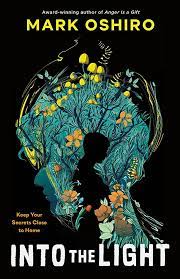
Into the Light Review

Book: Into the Light
Author: Mark Oshiro
Publisher: Tor Teen
Year: 2023
Rating: 4.5 out of 5 stars

Synopsis: “It’s been one year since Manny was cast out of his family and driven into the wilderness of the American Southwest. Since then, Manny lives by self-taught rules that keep him moving – and keep him alive. Now, he’s taking a chance on a traveling situation with the Varela family, whose attractive but surly son, Carlos, seems to promise a new future.

Eli abides by the rules of his family, living in a secluded community that raised him to believe his obedience will be rewarded. But an unsettling question slowly eats away at Eli’s once unwavering faith in Reconciliation: why can’t he remember his past?

But the reported discovery of an unidentified body found in the hills of Idylwild, California, will draw both of these young men into facing their biggest fears and confronting their own identity – and who ethyl are allowed to be.

For fans of Courtney Summers and Tiffany D. Jackson, Into the Light is a ripped-from-the-headlines story with Oshiro’s signature mix of raw emotions and visceral prose…but with a startling twist you’ll have to read to believe.”

Review: In both the ARC pamphlet I received with this book and the author’s note at the end of the book, Oshiro alludes to a childhood trauma that inspired and birthed this book, what I suspect, based on little tidbits throughout Into the Light, was conversion camp. The air of conversion, of being forced to undergo something dangerous, something heartless, and cruel at the hands of the people who should be the most loving and protective forces in your life, runs throughout this book. While it isn’t at all about that type of conversion, it is about the damage that the church causes at the hands of people who have no business holding positions of power.

Into the Light follows Manny, a young adult who grew up with his sister Elena, bouncing from foster home to foster home, seeing the worst of the worst, and finding that as he gets older the likelihood of seeing a real adoption happen grows smaller and smaller. Manny and Elena, however, find themselves being adopted blindly into a family with direct ties to a cult-ish christian community called Christ’s Dominion. The family quickly decides that Manny needs to participate in something called Reconciliation and sends both he and his sister to a three-day “retreat” in the Californian mountains. What Manny experiences at Reconciliation is not quite conversion camp, but it is detrimental, traumatic, and extremely dangerous. He arrives to find that all the families in attendance are white with adoptive children who are not, across the board, most have come directly from other countries, several from within the foster system, and all with something deemed wrong with them – whether that be their gender identity, their sexual preferences, or the color of their skin.

Into the Light is told from Manny’s perspective, jumping from the present, as he lives his life with the newly found Varela family traveling the country trying to find his sister Elena, to the past as he experiences Reconciliation, and yet from a third time period as he (known as Eli, having succeeded in Reconciliation in some ambiguous, nebulous way) lives his life at the compound in the mountains, sharing his success story with newcomers and their “wrong” children. I found this style to be confusing, as the chapters had no headings to tell you what point of view you would be reading – the perspective shift was shown by a slight change in font that got more confusing as the story ramped up and all three perspectives were being shared closer together than they had previously in order to get to the climax of Manny’s journey with Christ’s Dominion. I think some headers would have been a huge help particularly as the book wrapped up, jumping quickly from one perspective to another in order to round out the entirety of the narrative.

My biggest issue with this book is the plot twist at the end, I think it detracted from the weight of the story, took away from the very real issues being discussed in the book, and didn’t serve a function. We read through 90% of the novel as a realistic fiction book, yes quite troubling and pointed, but not a horror novel in that sense. With about 10% of the book remaining, the “truth” is revealed and the book becomes sci-fi or horror in an unrealistic kind of way, which I tend to enjoy but not when it shifts the entirety of the book into a new genre with no time to spare. I felt like there were some many important aspects of this book, so many important things being discussed in a first-person narrative that need to be spoken, that need to have a light shed on them, that when Oshiro changed the book with a strange plot twist that took Manny’s separation from Eli from being explainable as trauma, which he absolutely endured, to being explainable as a sci-fi impossibility it lessoned the weight of what Oshiro was trying to get across. Suddenly we have nothing more than a science fiction book with a weird ending that’s so disjointed from the majority of the book that I don’t know how to reconcile the two, and frankly I think that does a huge disservice to what Oshiro could have achieved.

With a rise in anti-LGBTQIA+ legislation, a rise in christian nationalism, and a rise in spoken hatred, books like Into the Light that share what children are really experiencing at the hands of people who should be doing their best to protect them are incredibly important. I found it disappointing that this book shifted in the way it did, that the twist wasn’t more seamlessly included throughout the rest of the book, and I left it thinking more about how disjointed it was than I did thinking about how realistic the rest of it was for thousands of teens and young adults across the country. Manny’s story, and by proxy, Oshiro’s personal story, deserve to be told and heard and believed with compassion and care and love. I fear that the twist has only served to detract from something so important.

Advice: This book contains depictions of the foster care system, of sexual harassment of a minor, of religious trauma, of conversion, of racism, of parental abandonment, of physical assault, and of very real trauma and ptsd experiences following. It is, however, a great read that moves swiftly and keeps you reading to see what’s going to happen. I think if you like a singular viewpoint told from multiple timeframes, you’ll probably read through this and really enjoy it. If you find that style to be confusing, this might not be the best or easiest book to read. If you have experienced religious trauma or conversion, this may be a pretty intense and difficult read for you as well.

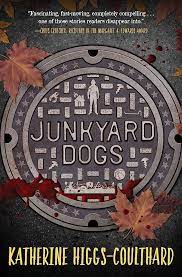
Junkyard Dogs Review

Book: Junkyard Dogs
Author: Katherine Higgs-Coulthard
Publisher: Peachtree Teen
Year: 2023
Rating: 5 out of 5 stars

Synopsis: “Josh’s father has gone missing without a trace. Now Josh and his 9-year-old brother, Twig, are stuck living with Gran in her trailer. Problem is, Gran didn’t ask to take care of any kids, and she’s threatening to call social services unless Josh can find his dad. After paying off his Gran to take in his little brother, Josh risks truancy and getting kicked off his basketball team to take to the streets and hunt for his dad. But when Josh digs too deep, he suddenly finds himself tethered to a liminal scrapping ring that his father was accomplice to. If Josh wants to keep Twig out of the system and return to some sense of normal, he’ll have to track his dad down and demand honest answers.”

Review: Set in a town not all that far from where I’ve lived, Junkyard Dogs feels eerily close to home. Set in South Bend, Indiana, this book tells the story of a pair of brothers experiencing houselessness during a brutal midwest winter. As I was on my way to a coffee shop to write this review, in fact, I passed a billboard that said 7,800 youth and young adults in my town would experience houselessness this year alone. It hits close to home in more ways than one.

Coming from the midwest herself, Higgs-Coulthard hits the nail on the head with her depictions of this part of the country, including how easy it is for many living in a semi-large city to absolutely miss the fact that so many of it’s residents are struggling and just barely scraping by. While this story centers around one particular incident with Josh and Twig, as Josh reminisces about the past with a mother who died when he was young and a father who ran a junkyard during Josh’s formative years, it’s clear that the blurred lines between temporary housing and houselessness are grey at best. This is a liminal space of transience, shifting from a junkyard house on the brink of condemnation by the city to a trailer owned by their Gran to an abandoned warehouse, to tent city under an overpass, to no shelter at all, we see all the ways in which someone without stability grapples to survive in a world that requires a lot of money and connections to get by.

Junkyard Dogs is somewhat infuriating in that as readers we’re privy to all the ways in which the world beats Josh down; from his Gran telling him he’s garbage and worse on a daily basis, to his dad who runs off early on in the book without even leaving Josh with enough money to pay for rent to keep him and his little brother housed at his Gran’s trailer, to the shelter that requires an adult for any minor to eat. It’s hard to read at times.

I think Higgs-Coulthard has created a book that’s deeply human, moving, and gripping; emerging us in a mystery that takes an entire book to unravel completely. While I was able to figure out the central twist pretty early on, I don’t think it ruined the book in any way, and I sort of suspect that Higgs-Coulthard meant for her readers to grasp the twist at least part way through the plot. While this book does end with a pretty neat ending that I think is unlikely to be reality for most unhoused youth, making it pretty unrealistic in my opinion, I did enjoy the way in which she chose to end the story. It isn’t easy, but it’s certainly the best case scenario. I think the book could have been more impactful by being more realistic in it’s ending, but I also think as a young adult read it almost demanded a hopeful ending. It ends by giving us some sense of hope for humanity, hope for the way people experience each other, and hope for the empathy the world might bestow upon people who are down on their luck.

Advice: If you are empathetic at all, this may very well not be a book for you, particularly if you don’t enjoy crying over books. If you enjoy a book with a hopeful ending, with hope for a better future in spite of a tough start, this might be the book for you! If you enjoy stories about real things, about real problems that impact real people, this is probably a great place to start.

Witch King Review

Book: Witch King
Author: Martha Wells
Publisher: Tor
Year: 2023
Rating: 5 out of 5 stars

Synopsis : “Kai-Enna is the witch king, though he hasn’t always been, and he hasn’t even always been Kai-Enna!

After being murdered, his consciousness dormant and unaware of the passing of time while confined in an elaborate water trap, Kai wakes to find a lesser mage attempting to harness Kai’s magic to his own advantage. That was never going to end well.

But why was Kai imprisoned in the first place? What has changed in the world since his assassination? And why does the Rising World coalition appear to be growing in influence?

Kai will need to pull his allies close and draw on all his pain magic if he is to answer even the least of these questions.

He’s not going to like the answers.”

Review : Martha Wells is no first timer at the fantasy rodeo, her list of past works spans an entire front page in Witch King, including several long-term series, and honestly you can tell this is the work of a person deeply familiar with the inner workings of creating a successful fantasy world. It was a joy to read.

Like many of the advanced reader copies I receive, Witch King came with a little letter from the author. In it, Wells explains her motivation for creating this book: it was conceived in the early months of the pandemic, attempting to visualize what it would look like to see a “conquering genocidal attacker” ultimately defeated by an uprising of ordinary people (or semi-ordinary). She wanted to visualize what that world would look like during the attack and several decades later, hence the perfect setting for a fantasy novel full of immortal beings and beings who can live incredibly long lifespans.

Witch King is written from a singular point of view, but it’s told by jumping back and forth between the present (several decades following the defeat of an attacker) and the past (during the actual uprising). Kai-Enna is an immortal underworld demon prince inhabiting a mortal body, the only way he is able to exist in the upper world. Thanks to a treaty that his half mortal-half immortal grandmother brokered between the Grass Kings, a nomadic people group in the upper world, and the demons of the underworld, Kai is able to partake in a sacred ritual that allows him to enter into a recently deceased mortal body. This ritual allows the loved ones of the deceased to hear the final thoughts and words of their beloved while also giving them a demon who will both learn the ways of the upper world in order to fully understand and appreciate mortal life, and bring protection to the clan they’ve entered into a relationship with. Because Kai is still a demon, he will be able to live as long as he pleases inside a mortal body without being wounded thanks to his ability to heal inordinately fast, and the only real give-away that he isn’t mortal are his all black eyes.

Kai is still a young demon (and living in a young mortal body) when the Heirarchs, a ruling class of people from an unknown land, take over and conquer the known world. The Grass Kings fight back, but being a nomadic group of people, they are unaware of the reach the Heirarchs have, the weapons they’ve acquired, and the magical tools at their disposal. The Heirarchs, unbeknownst to Kai or his mortal family, have a super weapon that can knock the life out of a mortal and inflict incredible pain on an immortal, allowing demons to be captured and imprisoned.

*Spoilers Coming*

Wells returns us to these moments of war throughout the book, jumping back to Kai’s former body, his former life, and his fight to overturn the Heirarchs. In the present moment, some 60 years in the future, we see that the Heirarchs have been defeated, the passage from the upper world to the underworld permanently blocked, and Kai, though a demon, is referred to as the Witch King. As the book begins, we find Kai’s consciousness awakening outside of a deceased mortal body he’s been occupying for several years – no longer the young body of the Grass Kings. His body has died, but he has been imprisoned in a tower of water, the only real achilles heel for a demon. Because of this prison, he’s been in a suspended state, unaware of how much time has passed or where his friends and chosen family are located. We spend the rest of the book reuniting this family and seeking the remaining members who have gone missing, all the while eerily retracing his steps from the past when he worked to defeat the Heirarchs.

Wells has created a book that functions on multiple fantasy levels; it can be read alone, it ties up nicely in the end, and we get to see how Kai defeated the Heirarchs in the past, and worked to defeat a growing world alliance that’s attempting to create an empire in the present; I believe it will also function as an excellent book one of several and I look forward to seeing where Wells goes in the future. And I hope she does, because while this book didn’t end on a cliffhanger or leave you wishing for more of the story, there are pieces and parts of the past that remain untold, certain adventures to be had now that the family is reunited, and we make it to the end of the book without finding out definitively how Kai came to earn the monicker “Witch King”. While it can be inferred, I’m craving the full story and I have hope that Wells will add another book to this title and make it a series.

Advice: If you love fantasy, if you enjoy getting wrapped up in a world of unearthly creatures, if you love an excellent retelling of past events, this is it. It’s well written, it’s easy to understand, and it resonates with current events without being in your face or even hard to read. This book uses gender-neutral pronouns for several characters without being fussy about it and exhibits a great deal of inclusivity as well, making it a must read for so many reasons. I highly recommend it.

The Carrefour Curse Review

Book: The Carrefour Curse
Author: Dianne K. Salerni
Publisher: Holiday House
Year: 2023
Rating: 3 out of 5 stars

Synopsis: “Twelve-year-old Garnet doesn’t know her family. Her mother has done her best to keep it that way, living far from the rest of the magical Carrefour clan and their legendary mansion known as Crossroad House.
But when Garnet finally gets summoned to the estate, it isn’t quite what she hoped for. Her relatives are strange and quarrelsome, each room in Crossroad House is more dilapidated than the last, and she can’t keep straight which dusty hallways and cobwebbed corners are forbidden.
And then she learns a terrifying secret/l the dying Carrefour patriarch fights to retain his life by stealing powers from the others. Every household accident that isn’t an accident, every unexpected illness and unexplained disappearance grants him a little more time.
While the Carrefours squabble over who will in heritage his role when (if) he dies, Garnet encounters evidence of an even deeper curse. Was she brought to Crossroad House as part of the curse…or is she meant to break it?”

Review: I don’t often read middle grade novels, but this looked too cute to pass up! I clearly didn’t retain the synopsis because when I found out our protagonist, Garnet, was 12 (about 3/4 through the book) I was shocked. While The Carrefour Curse reads like a mid-grade novel, Garnet reads as much older than 12. But, this could be how little I read books in this realm!

As the novel begins, we find Garnet in a very wizard-with-a-lightning-bolt-scar predicament: she’s spitting up frogs and has no idea how to reverse the effects of whatever has gone wrong. We find her riding in the car with her mother, Emerald, getting closer and closer to the old family home, Crossroads House. Convinced that this is a summoning spell gone wrong, Emerald brings her daughter to the family home she’s never before allowed her to visit, in the hopes that this will satisfy a magical spell she believes her siblings and cousins have placed on her daughter. As it turns out, the family has been experiencing their own fair share of mystical conundrums and once Emerald and Garnet arrive at Crossroads House, they find they cannot leave without experiencing some kind of physiological distress.

As the story progresses, we begin to get glimpses into a murky past that only Garnet is privy to. While each member of the Carrefour family has their own magical powers, Garnet’s are beginning to awaken now that she’s in the vicinity of the home. She’s always had a special connection to the element Earth, but the more time she spends at Crossroads House, the more she comes to realize that she can also see and walk in the past; a time traveler. It is this special gift that allows Garnet to begin to unravel the mystery of the old house, the original location of Crossroads House, believed to be built directly on top of magical lay lines. The current house sits off from the old ruins, as anyone who goes near the old house mysteriously vanishes. It soon seems as though Garnet is the only person who will be able to release the curse, and with it the missing people.

Salerni does a good job of creating a magical world in Carrefour Curse, she lays out the family tree in a way that’s easy to follow in spite of the fact that it spans multiple generations and several of the family members share the same name. I think it’s no small feat to not only make a confusing and convoluted family tree seem manageable, but to also take a mansion and make it’s layout feel understood. It’s helpful, of course, that she included both a house layout and a family tree in diagram form in the book, but I think, especially for a younger audience, this could have gotten confusing quick. It’s easy to step into this book and find yourself comfortably in the world Salerni’s created and I think that’s a huge positive!

The book itself feels like it misses a lot of opportunities for connections to be made, which on a positive note makes it harder to predict, but on a negative note makes it feel a bit frustrating at times. Salerni brings things up that you think will play out in a certain way based on context clues, but we find them unused pieces of information that don’t necessarily go anywhere. I think there’s some work that could have been done here to make the book even better, more rounded, and solid – for me. But all in all, it’s a fun and enjoyable mid-grade read with an ending I thought made sense, and that’s sometimes all you can hope for.

Advice: If you’re looking for a book that has a clearly built magical system in place, that feels light and fluffy to read, and that won’t make you frustrated, this is it! It’s a great read for a snow day in, it’s nice a quick, and it’s a good breather from other, more intense fantasy books. All around enjoyable and cute.

The Spite House Reveiw

Book: The Spite House
Author: Johnny Compton
Publisher: Nightfire
Year: 2023
Rating: 4 out of 5 stars

Synopsis: “Eric Ross is on the run from a mysterious past with his two daughters in tow. When he comes across a strange ad for the Masson House in Degener, Texas, Eric thinks they may have finally caught a lucky break. The “most haunted place in Texas” needs a caretaker. All they need to do is stay in the house and keep a detailed record of everything that happens there. Provided the house’s horrors don’t drive them all mad, like the caretakers before them.
A terrifying Gothic thriller about grief and death and the depths of a father’s love, Johnny Compton’s The Spite House is a stunning debut by a horror master in the making.”

Review:

The Spite House is Johnny Compton’s first novel and does a heck of a lot of work to lay the foundation for further moving novels in the future. While this book may not lend itself to sequels, the heart of the book gives me great hope for future works by Compton. Though the synopsis refers to this work as being about the “depths of a father’s love”, I think this book does so much more than that – I’m not sure it’s the theme I would point out for a review. This book is about the spite that drives and fuels us; the privilege and rage that keep us embittered and sour; the fear that turns each day into a waking nightmare of our own creation; perhaps this book is even about generational trauma that, when left unattended, may slowly poison an entire town. Yes, a father’s love knows no bounds, and Eric Ross, our protagonist, shows us just how far a father will go to protect his children and find answers, but it is not the theme of this book.


I’m finding myself having a hard time reviewing this book without writing what keeps turning into a book report. Due to the sheer strangeness of The Spite House, it’s a little hard to review without getting into the details of what happened. Eric Ross is a protagonist with a secret: when he was a child, he experienced the energetic imprint of a fire that had burned down most of his grandparents house long before he was born. The townspeople grew to have a healthy fear of his grandfather, a man they believed died in the fire and was reborn out of spite. As a Black man in a small southern town, Eric’s grandfather Fred, a man who had a tendency to say the wrong thing around the wrong people, found himself ticking off his neighbors. In the middle of the night, after making the wrong people mad, Fred’s house was burned to the ground by a group of white men from the neighboring town. After passing out in the burning house, Fred awoke to find himself safe, unharmed, and free of the house. The neighbors, rightfully so, began to fear that Fred possessed a paranormal ability to survive. In the years that followed the fire, every single one of the men who set fire to his house all met untimely deaths that could not be connected to Fred. Compton doles out little bits of Eric’s secret throughout the book, unraveling it in the best possible way. Not only do we not know that Eric’s secret runs much deeper than this, we don’t find out the totality of what that secret entails until nearly the end.

I found Spite House to be a compelling read, keeping me guessing through the entirety. It wasn’t predictable, it didn’t pander to the reader, and while it was technically a thriller, it didn’t keep me awake at night either. Compton has mastered the art of suspense with this book, weaving a tale that spans multiple generations, intertwining them with each other in ways that you don’t see coming. In my mind, this book was a clear success. My greatest criticism comes from the layout of the actual spite house that the tale centers around. I’d never heard of a spite house prior to this book, and upon a quick google search found that most spite houses share a similar style: tall, thin, and imposing. Built to be a visual representation of the spite someone feels toward their neighbors, spite houses are often built tall enough that they may actually block out the sun from the neighboring properties. I found myself wishing on multiple occasions that there was a drawn map showing the layout of the spite house in this book as I had a hard time wrapping my mind around the exact specifications. There’s an addition to this spite house on the second floor that comes in the form of a small hallway that I was never quite clear on. Where does it run between? I’m not sure.

For logistical reasons, The Spite House has earned 4 stars rather than 5, but for a first novel I found it excellent! I want to also note that in several advanced reader copies I’ve received, it’s turned out that there have been maps and other small additions missing that were included in the final copy, so it is possible this book will be published with some additional information regarding the layout of the house.

Advice: If you like a good mystery, a ghost story, or a slow burning suspenseful thriller, this is the perfect book for you! This book would likely not be a good fit for you if you are easily frightened, disinterested in ghosts, or have anxiety that makes suspenseful novels hard to read.