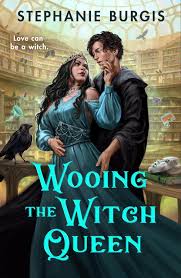
Wooing the Witch Queen Review

Book: Wooing the Witch Queen
Author: Stephanie Burgis
Publisher: Bramble
Year: 2024
Rating: 3.5 out of 5 stars

Synopsis : “Queen Saskia is the wicked sorceress everyone fears. After successfully wrestling the throne from her evil uncle, she only wants one thing : to keep her people safe from the empire next door. For that, she needs to spend more time in her laboratory experimenting with her spells. She definitely doesn’t have time to bring order to her chaotic library of magic.
When a mysterious dark wizard arrives at her castle, Saskia hires him as her new librarian on the spot. “Fabian” is sweet and a little nerdy, and his requests seem a bit strange – what in the name of Divine Elva is a fountain pen? – but he’s getting the job done. And if he writes her flirtatious poetry and his innocent touch makes her skin burn, well…
Little does Saskia know that the “wizard” she’s falling for is actually an Imperial archduke in disguise, with no magical training whatsoever. On the run, with perilous secrets on his trail and a fast-growing yearning for the wicked sorceress, he’s in danger from her enemies and her newfound allies, too. When his identity is finally revealed, will their love save or doom each other?”

Review : Wooing the Witch Queen was a cute, quick romantasy-ish book about two people who are ultimately misunderstood by those around them. I call it romatasy-ish because while it is a fantasy and it’s being published under Bramble, a romance novel imprint of Tor Books, the actual romance aspect of this book was…light. I think if this were a movie it might be rated PG-13 for implied nudity; the romance aspect of the book was mild, took the entire book to develop, and was about as closed-door as it gets without actually being a closed-door romance, take that how you will!

Outside the actual romance of the novel, which the synopsis seems to more than imply is the majority of the book, the actual plot of Wooing the Witch Queen centers around Saskia’s immediate threat to the throne she stole from her uncle – largely from her neighbors, seemingly under the order of the Archduke Felix.

** Warning, spoilers ahead! **

Being as quick as this read was, there’s very little I could say here that wouldn’t be a fairly immediate spoiler, so let’s just dive into it. What Saskia, or the rest of the surrounding kingdoms for that matter, doesn’t know is that Felix is simply a figure-head, someone who has been held prisoner, who has no formal diplomatic training, and who has no say in what his kingdom does or doesn’t do. On the night his traitorous family is poised to murder him and turn him into a martyr, Felix makes an escape to the only Imperial who has been able to hold off his in-laws : Saskia. Wearing what he doesn’t realize is the cloak of a dark wizard, Felix escapes while donning a swooping hooded cape. When he arrives at Saskia’s court, she assumes he’s a dark wizard answering her call for a temporary laborer to arrange her magical library. Without allowing Felix to get a word in edgewise, Saskia hires him and permits him to wear a mask – something that is, apparently, typical for dark wizards.

The remainder of the book follows this path : Felix bumbles his way through his task, only capable of organizing a magical library because he’s only ever been allowed to participate in the arts, Saskia falls for his gentle personality, and no one seems to be any wiser until he finally reveals himself to her at the end of the book. Ultimately, I found this story to be mildly cute but of no great importance or need to be told, the romance was more actually romantic than what you might expect out of a romance novel, and Felix’s character is written like the reversal of every female protagonist written by a man – deeply hard to believe, full of strange character traits that sound more like a woman who didn’t have any diversity in her beta readers, and not all that interesting when it’s all said and done.

Finally, I found the plot to be thin and weak, Felix’s background was never fleshed out, and I found myself with questions I didn’t ultimately find answers to. I think the trouble with writing a fantasy novel is you have to create a story that’s compelling enough that the reader finds themselves willingly reading about the politics of a world that is wholly made up – if you create a world the reader isn’t invested in, there’s then no incentive for them to involve themselves with the minutiae. Sadly, Burgis did not succeed in compelling me to care about the politics of the world she crafted and so during moments of political discourse (which comprised a good deal of the book), I found myself bored and uninterested. I was never given the chance to become invested in the world when the book moved so quickly and never fully explained the main characters backgrounds in a way that felt satisfactory. Overall, this book was fine.

Advice : If you pick up any romantasy you can get your hands on, maybe this will be for you! If you prefer more romance, more fantasy, more everything…well, maybe this isn’t going to be the one. It might be worth checking out from your local library.
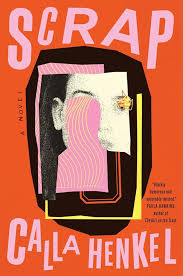
Scrap Review

Book: Scrap
Author: Calla Henkel
Publisher: The Overlook Press
Year: 2024
Rating: 3.5 out of 5 stars

Synopsis : “Recently dumped and stuck with the mortgage, artist Esther Ray wants to burn down the world, but instead, she reluctantly accepts a scrapbooking job from the deliriously wealthy Naomi Duncan. The scrapbooks, a secret birthday gift for Naomi’s husband, Bryce, trace the Duncan’s twenty-five-year marriage. The conditions : Esther must include every piece of paper she’s been sent, must sign and NDA, and must only contact Naomi using the burner phone provided. Otherwise, she’ll spoil the surprise.
As Esther binges true-crime podcasts and works through the nearly two hundred books of Duncan detritus, she finds herself infatuated with the gilded family – until, mid-project, Naomi dies suspiciously. When Esther becomes convinced the husband killed her, she uses the scrapbooks’ trove of information to insert herself into the Duncan’s lives to prove it. But the more Esther investigates, the further she is dragged back to the scorched earth of her own past in the art world.
Laced with pitch-black humor and conspiratorial unease, Scrap is a razor-sharp examination of wealth and power, art and truth, of the line between justices and revenge – and who gets to cross it.”

Review : Sigh. Dear reader, I have struggled with how to write this review. In fact, this is my second try – my first felt…not quite right. I think the struggle I find with reviewing this book is, as I sit down to do this I find that I have reviewed this book before. And before you say anything, no I don’t mean you can scroll back and find Scrap reviewed in the annals of this blog, what I mean to say is this :

In the realm of thriller novels featuring a female narrator, there’s a pretty standard outline whose basic structure is as follows : a woman with some level of mental instability witnesses or becomes aware of some kind of crime; she attempts to investigate on her own despite a crumbling foundation of stability and awareness; she attempts to bring the crime to light by sharing what’s going on with the people in her life and / or the police; her credibility is questioned, maybe laughed at, never believed; she continues to investigate despite all logic saying otherwise; she finds herself in a stick situation where she very well might die; somehow, miraculously, she is saved from impending doom, the criminals are put behind bars, and her credibility is restored at least in part; the book ends.

Sound familiar? I’ve said it before and it remains true, you could head to your nearest bookstore, plant yourself in front of the thriller section, close your eyes, and grab a book at random and find the exact scenario outlined above in a good percentage of the modern thrillers you’d find on the shelf. In fact, this idea is so not unique to me, a mini series was made based on this exact premise : The Woman in the House Across the Street from the Girl in the Window. We’re being handed novel after novel after novel (written by different authors) all with the same regurgitated outline and being asked to be okay with it. Frankly, I’m not.

I wanted Scrap to be different; I hoped it would be unique. It was, sadly, not.

Henkel begins the novel by creating a world in which I cannot trust the storytelling right off the bat, by telling the reader that Esther and her now ex fiancé lived in a mountain cabin on 5 acres of land near Asheville, NC they bought for a whopping $110,000. Read that again. Now, I’m not sure what world Henkel lives in, where anything in the Asheville area would cost as little as $110,000, let alone a cabin with a garage slash workspace big enough to host a yoga class in, or say, 200 some boxes of papers for scrapbooking, on ANY acreage, but it certainly isn’t our 2024 world. Or our 2023 world. Or our 2022 world. And, while Esther is not reduced to the wine guzzling woman we so regularly see in these books, she does have a crumbling foundation, one foot barely grounded in reality as she binges true crime podcast after true crime podcast ad nauseam, working herself into an over exaggerated sense of justice.

We find Esther so hyped up by the idea that the police either can’t or won’t do their jobs that throughout the novel she comes to see herself as some kind of vigilante carrying out justice for those who might not otherwise see it served. As she begins to deep dive investigate the death of her employer, she begins to refer to herself as a podcaster, despite not even remotely having a podcast, spiraling further and further out of control. I found Scrap to be difficult to read at times, in a secondhand embarrassment kind of way, cringing at the lengths Esther would willingly go to, seemingly without any sense of self awareness, to find the so-called answers she was seeking. It was difficult to find myself wanting to continue to pick this book up.

I don’t think this book requires a long, drawn out review diving into the meaning of the book. It fit the outline I mentioned above, it was filled with plot holes (particularly at the end), and it was wholly unoriginal.

Advice : If you really, really enjoy thrillers, you just might like this one. If you like a queer FMC, a slow descent into madness, or the idea of an idyllic hippy village where you have to go down a mountain for wi-fi, you might just find yourself getting sucked into this one. If, however, you prefer something that makes you think, something that you can’t see coming a mile away, this is probably not going to be the one for you. And that’s okay.

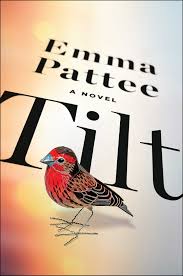
Tilt Review

Book: Tilt
Author: Emma Pattee
Publisher: Marysue Rucci Books
Year: 2025
Rating: 3.5 out of 5 stars

Synopsis : “Annie is nine moths pregnant. She’s shopping for a crib at Ikea. That’s when the massive earthquake hits. There’s nothing to do but walk.
Set over the course of one day – a heart-racing debut about a woman facing the unimaginable and trying to get to safety.”

Review : To be honest, I don’t remember requesting this ARC and had I known what it was about, I’m certain I wouldn’t have. And, while I try to be as objective as possible with how I review books, in truth the score I gave this book is, at least in part, a reflection of how I feel about natural disaster storylines – that is to say, I hate them.

There were so many aspects of this book that made it feel too real for me. Not only is the narrator my age, her husband is my partner’s age, and their struggle felt like a carnival mirror reflection of our own struggle. The entirety of Tilt might best be described as a millennial existential dystopian nightmare. We follow Annie through the literal earth shattering event she lives through on the day of the earthquake, but we also bounce back and forth between her life before marriage, pregnancy, and stalling out midway through her 30s, stuck and unable to move forward thanks to an unstable economy and a husband who cannot find meaningful work. Truly, this book is a millennial hellscape nightmare not many of us are capable of crawling our way out of, and to add to it the specter of a city-leveling earthquake…oof. This novel made me physically ill to read, I’m not even exaggerating. It made me nauseous. I’m going to say something I rarely say about books here : I hated it. And maybe that was Pattee’s intent, it sure seemed so, at least; perhaps that’s not worth lowering the score of this book any further. I believe I felt exactly what I was meant to feel when I read this book, but sadly I don’t enjoy reading things that make me ill. I put them down and never pick them back up again. Which is exactly what I’ll do with Tilt. I read it, it’s over, we won’t be returning.

There are further reasons beyond the visceral reaction I had to Tilt that attributed to the 3.5 star rating I gave this book, so let’s talk about them. First, while I know this is an advanced copy, I did find several inconsistencies in the story telling that served to take me directly out of the fictional reality Pattee created. We’re told over and over again that Annie is wearing a romper, so many times throughout the novel do we hear about Annie’s romper, that when she has someone feel her stomach by putting their hand under her shirt, it was with some relief that I was immediately yanked right out of the story. We also find Annie using the restroom in a looted gas station, a gas station where the electricity has gone out, and yet she closes the bathroom door and in the complete darkness is able to see the blood and dust coating her legs and shoes. I’ve been in many a public restroom where the lights are out (though, not from an earthquake, I assure you!), I can’t bring myself to understand how she was able to see clearly in a closed room with no lighting. Finally, perhaps my number one grievance with the entire story : the book begins with a map of Portland: where Annie lives, where she and her husband work, and where the earthquake takes place. I’m always grateful for a map, particularly if there’s travel involved, I like to flip back and forth and see where our characters are going, get a visual understanding of what’s going on. But the map Pattee provided for us is wildly lacking – there are so many chapters that are headlined by the cross streets Annie finds herself at, but those cross streets are almost exclusively not included in the map. Why bother including a map at all if a huge portion of the book’s landmarks aren’t even on the map in the first place? Either include a map with the cross streets you took your time to tell us about, or don’t include a map at all. This frustration alone was enough to make me drop this book’s rating to 3.5 – do it right or don’t do it. Period.

*** Spoilers Ahead ***

Finally, this book ends the way a realistic natural disaster might end – without a happy ending. There’s no bow tied up at the end of this book for us, and while I generally prefer a book to move me rather than give me something unrealistic, in some situations it might be preferable to finding out our main character’s husband has probably died, crushed under the weight of a building he wasn’t even supposed to be at that day. It might be preferable to the day-of earthquake delivery she gives to her baby in the woods near her apartment, uncertain if anyone she knows is even alive, if her building is even standing, and with absolutely no means of getting to a hospital for care. I hated every part of this book. From start to finish. Hated it.

And listen, I read that Pattee is a climate activist and writer for several bigger publications, she should know that doom and gloom surrounding climate change actually have the opposite impact on most people. Scenarios where we see the worst of the worst played out turn people off to the very real dangers of climate change – we can’t handle the anxiety and dread someone like Pattee piles on top of us while we simultaneously live through horror after horror. This novel did not have a profound impact on me beyond making me wish I’d never read it. It certainly didn’t make me want to care more about climate change (and trust me when I say I already do. A lot.). It did make me want to huck this book at the wall and tell all my friends not to read it. We’re already existing amongst the horrors. We don’t need a reminder of how much worse it could be. Many of us are already doing the work, engaging grassroots efforts, and attempting to make the world a better place in our own ways; piling additional, fictional, horrors onto the situation makes things worse. I will die on this hill.

Advice : If you have anxiety of any kind, if you have fears about climate change, if you’re a millennial, if you or someone you know is struggling to find work, if you find yourself priced out of the housing market, if you got married because you needed health insurance or maybe your partner did, do not read this book. Trust me. Don’t read it. It isn’t worth it. Your mental health will thank you for not reading this one.

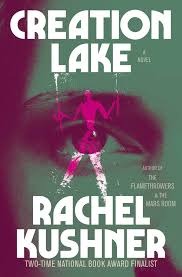
Creation Lake Review

Book: Creation Lake
Author: Rachel Kushner
Publisher: Scribner
Year: 2024
Rating: 5 out of 5 stars

Synopsis : “Creation Lake is a novel about a secret agent, a thirty-four-year-old American woman of ruthless tactics and clean beauty who is sent to do dirty work in France. “Sadie Smith” is how the narrator introduces herself to the rural commune of French subversives on whom she is keeping tabs, and her lover, Lucien, a young and well-born Parisian she has met by “cold bump” – making him believe the encounter was accidental. Like everyone she targets, Lucien is useful to her and used by her. Sadie operates by strategy and dissimulation, based on what her “contacts” – shadowy figures in business and government – instruct. First, these contacts want her to incite provocation. Then they want more.
In this region of old farms and prehistoric caves, Sadie becomes entranced by a mysterious figure named Bruno Lacombe, a mentor to the young activists who believes that the path to emancipate is not revolt but a return to the ancient past. Just as Sadie is certain she’s the seductress and puppet master of those she surveils, Bruno is seducing her with his ingenious counter-histories, his artful laments, his own tragic story.
Written in short, vaulting sections, Rachel Kushner’s rendition of “noir” is taut and dazzling. Creation Lake is Kushner’s finest achievement yet – a work of high art, high comedy, and unforgettable pleasure.”

Review : I was absolutely mesmerized by Creation Lake, it pulled me in and wrapped me up and by the time I was done I had no idea what I’d just read. It was perfect. Kushner has woven a tale that on the surface may be simply read as an engaging spy novel and nothing more, and maybe it’s okay to read it that way and never delve any deeper. But, like an onion, this novel has layers. For most of the book, Kushner bounces between two perspectives, the first being “Sadie” our narrator whose real name we never learn, the second being the hacked email messages of an environmental activist named Bruno Lacombe. Sadie has been tasked with infiltrating and determining the motives behind a small, rural commune in France, a commune who believes in renewing and sustaining cultural farming practices, sometimes by any means necessary. She hacks the email communications between the commune and, who she affectionately refers to as, Bruno (Lacombe to the members of the commune) and spends about one third of the book reading his missives on truly ancient communities, species, and what he perceives to be the evolution of mankind as we know it.

Tucked in tightly within the narration, we find little cracks in Sadie’s story, the one she’s been telling us. I hesitate to call Sadie an unreliable narrator, but we do only get her side of the story and the side of the story she tells is just as carefully crafted for our eyes (by Kushner) as it is for the eyes of the French subversives she’s infiltrating. Sadie projects herself as confident, at times conniving, and self-assured. She knows who she is, she knows what she’s good at, nothing matters beyond that. And yet. And yet. As the story unravels, we begin to catch glimpses into Sadie’s past, into the assignments that have gone wrong, the time spent entrapping innocent people, the subsequent loss of her government job. We begin to see the threads that hold this story so closely and delicately woven, catching light, fraying just a little, tugging at the seams.

Sadie begins to form a connection with Bruno, a connection that will forever remain one-sided, but a connection nonetheless. She relates to what he has to say about the nature of humankind, the nature of our evolutionary process from Homo Erectus to modern humanity, she eagerly opens new emails from Bruno to the commune, turning the philosophies over in her mind, ruminating on them beneath dappled sunlight, allowing herself to get involved with a subject of her assignment – even if no one knows she’s done it. Even if she doesn’t even realize it herself. As Bruno’s philosophy begins to shift and change and ebb and flow, so too does Sadie’s experience as an agent. She begins to get sloppy, she reminisces more, fear creeps in, and she begins to morph from an analytical, strategic agent to a messy, guilt-ridden employee. All the while, continuing to keep up the pretense both with the reader and with the commune that she is who she says she is. It’s safe to say, neither are fooled.

I found this book to be deeply compelling. Kushner wrote Bruno is such a way that I found myself equally as compelled as Sadie by his words, waiting for the next time his emails would turn up in the book’s pages, diving deeper and deeper into his version of history, thinking of it even without the book in my lap. It was riveting, it continues to live in my mind. I thought about this book for a long time after I finished it, chewing it over, turning back through events in my mind, trying to parse where things went wrong, what the greater meaning might be. There’s an inherent sense of oneness that comes from Bruno’s writings, an idea that we aren’t any different than anyone else, despite what our philosophical systems might be, an idea that stems from early humanity; that for all our differences, there might be more similarities than we expect; that this could change our entire worldview if we let it; that maybe it should. At the same time, there’s a thread of guilt that weaves its way through the story, unraveling Sadie’s persona and permeating her entire being, pulling at the mask she wears, both as Sadie Smith and as the narrator. We never fully see her for who she is, but by the time the novel is over, we’ve touched something real.

At the end of the day, this book contains the multitudes that exist within every person. The mask we wear around each other, the atrocities we commit in the name of ego, the way we differentiate ourselves from each other, all the while knowing somewhere deep within ourselves that if you boil each of us down, we’re really the same. There’s a lot of accurate history telling that happens throughout this book, too. Some of it is overwhelmed by Bruno’s own ideas about life and history and evolution, but much of it comes from the real world outside this book and I think that is what makes Bruno’s emails so compelling. We connect with them because we see ourselves in them, just like Sadie did. It made her more human in the end. Maybe it can make us more human, too.

Advice : Creation Lake is a must read. It’s riveting, it’s just high stakes enough without being an overwhelming anxiety trip, and it’s beautifully written.

Sword Crossed Review

Book: Sword Crossed
Author: Freya Marske
Publisher: Bramble
Year: 2024
Rating: 4 out of 5 stars

Synopsis : “Mattinesh Jay, dutiful heir to his struggling family business, needs to hire an experienced swordsman to serve as best man for his arranged marriage. A sword-challenge at the ceremony would destroy his desperate bid to restore his family’s wealth.
What he can afford, unfortunately, is a part-time con artist and full0time charming menace, Luca Piere.
Luca, for his part, is trying to reinvent himself in a new city. All he wants to do is make some easy money and try to forget the crime he committed in his hometown. He didn’t plan on being blackmailed into giving sword lessons to a chronically responsible – and inconveniently handsome – wool merchant like Matti.
However, neither Matti’s business troubles nor Luca himself are quite what they seem. As the days count down to Matti’s wedding, the two of them become entangled in the intrigue and sabotage that have brought Matti’s house to the brink of ruin. And when Luca’s secrets threatened to drive a blade through their growing alliance, both Matti and Luca will have to answer one question : How many lies are you prepared to strip away, when the truth could mean losing everything you want?”

Review : The ARC messaging for this book compares it to Travis Baldree’s Legends and Lattes – my second ARC this year that’s been compared to my favorite cozy, low stakes fantasy world. While I wouldn’t necessarily pick this book up and immediately think “This reminds me of Legends and Lattes“, Marske did deliver on low-stakes and I appreciate that. Marske has created a fantasy world with all the world-building one might hope for and absolutely none of the fantasy, which made the book a bit hard to get through at first – though, the close proximity and suspense of it all made things flow a lot easier as we got into the relationship between Matti and Luca. This is ultimately what led me to give this book four instead of five stars, as there wasn’t a perfect balance between mind-numbingly slow and send-shivers-up-your-spine anticipation. I think the balance could have been struck a bit more seamlessly, but ultimately the writing was great, particularly for an ARC, the storytelling felt solid, and the world-building was pretty good.

I think it’s an interesting concept to create a fantasy book but to include absolutely no fantasy whatsoever. True, there’s some talk of the gods – actually, this ended up being my favorite aspect of the novel, each swear lending itself to more and more ridiculous descriptions of the god’s particular anatomy (someone’s pube being my personal favorite) – but there’s not a single mention of any kind of fantastical creature, anyone who might be anything other than human, or forces that might be beyond anyone’s control. What Marske has created, instead, is a book filled with the day-to-day politics of guild houses and merchant families, what their lives look like as everyday folk who trade and run factories and forge alliances with each other. And ultimately, this is where the book finds Mattinesh Jay – the heir to a guild house that manufactures wool, a guild house that’s fallen on more than it’s fair share of hard times, that’s struggling to survive, and so two families must marry in order to keep the house name from utterly failing. It isn’t a nail biter, there isn’t threat of life or limb (for the most part), and there aren’t any interactions with creatures. From that perspective, I’m not sure if cozy is the right word, so much as slow might be, but low-stakes it most certainly is. There’s absolutely no anxiety-causing battle sequences or war-time scenes, rather we see the politics of daily life and from there our story grows.

I found the pacing to be a bit frustrating, jumping back and forth between incredibly dull and incredibly interesting, it actually took me about half the book before I started to really enjoy the storytelling. I found it dull and hard to follow, though not because it was poorly written, simply because I wasn’t interested in the politics of guild houses. Once things began to get rolling, though, I came to find myself turning pages with gusto, returning to the book to see how the story would play out, and hoping for a bright future for the main characters. In fact, I finally began to enjoy the book so much that the end made me cry a little – so how’s that for making a turn around!

Advice : If you love a slow-burn, low-stakes fantasy or sword fighting, this might just be for you! If you aren’t into queer romance novels, lots of talk about guild houses, or the politics of a fantasy world, you might struggle with this one.

Can’t Spell Treason without Tea Review

Book: Can’t Spell Treason without Tea
Author: Rebecca Thorne
Publisher: Bramble / Tor Books
Year: 2024
Rating: 4 out of 5 stars

Synopsis : “All Reyna and Kianthe want is to open a bookshop that serves tea while firelight drifts between the rafters. However, Reyna works as one of the queen’s private guards, and Kianthe is the most powerful mage in existence. Leaving their lives isn’t so easy.
But after an assassin takes Reyna hostage, she decides she’s thoroughly done risking her life for a self-centered queen. Meanwhile, Kianthe has been waiting for a chance to flee responsibility – all the better that her girlfriend is on board. Together, they settle in Tawney, a town nestled in the icy tundra near dragon country, and open the shop of their dreams.
What follows is a cozy tale of mishaps, mysteries, and a murderous queen throwing the realm’s biggest temper tantrum, where these two women will discover just what they mean to each other…and the world.”

Review : This is another first for me, notably from the same publishing house as the last book I reviewed, a book that was originally independently published in 2022 and has now been picked up by a major publisher, scheduled to be re-released in 2024. I thought it looked familiar! Turns out I’ve been seeing people post about Can’t Spell Treason without Tea for a little while after it’s independent publishing. With the popularity of Travis Baldree’s Legends and Lattes, it’s little wonder a book that credits Baldree’s debut novel with it’s inception, has done so well! I have also found myself swept up in Baldree’s world, searching for additional cozy fantasy novels since finishing both his books, so this was a welcome surprise.

Thorne has successfully created a cozy, relatively low-stakes, fantasy novel that seems to check all the boxes for me. There’s rich world-building without the confusing word salad that sometimes accompanies fantasy novels, I never once struggled to visualize the queendom or any of it’s surrounding countries; there’s just enough mention of tea blends, baked goods, and rolling fires without going so far down the rabbit hole that the entire story becomes a cook book; and there’s mystery and adventure, peppered with betrayal, gryphon flights, and just a dash of magic. It’s the perfect blend of everything I’m looking for in a cozy, no-anxiety, fantasy novel. Thorne sets us up well for additional books, something I’m greatly anticipating (I know there’s a second book coming! It, like the first book, was also originally independently published, but will be re-released later this year). I even tried to buy book two in it’s independent form, but it’s already been marked up to roughly $150 so, like the rest of you, I will be waiting until the fall for the second installment. And that’s about as high of praise as I can give – I never attempt to buy a sequel of a copy I’ve been gifted as an ARC, I try my hand at getting the review copy for the next book in the lineup, and if I don’t get it, I move on.

There were a couple instances where I felt this book could have benefitted from some additional editing, but I suspect that may come with a bit of time, experience, and additional books. None of it felt so grievous that I wouldn’t read more in the future or wouldn’t recommend the series to friends (which I have already done!), but it’s worth mentioning. First, I realize the series is literally called Tomes & Tea, but the overuse of the word “tome” grated on my nerves throughout the book. I think this book, and subsequent books, would benefit from occasionally referring to books as something other than tomes, but that’s a personal preference on my end and perhaps it doesn’t bother anyone else. And second, there were several instance of dialogue that felt so stilted, it was clear this is a debut novel – and I do thin that’s okay! Like I said, I think some of these small errors will be adjusted with time and experience and I expect that book two, and any further books Thorne decides to write, will likely improve. There’s a lot of overuse of the word “girlfriend” in conversation that doesn’t read true to spoken dialogue, or overly formal wording that doesn’t quite strike me as realistic to a verbal conversation. I’m aware that this is a fantasy and not meant to be realistic, but I do expect dialogue to be at least convincing.

Advice : I highly suggest you mark this one on your calendar! If you love cozy, low stakes, but highly enjoyable, smut-free fantasy, this will be right up your alley. If you enjoyed Travis Baldree’s books, this one is definitely for you.

The Coven Review

Book: The Coven
Author: Harper L Woods
Publisher: Bramble / Tor Books
Year: 2023 & 2024
Rating: 2 out of 5 stars

Synopsis : “I was raised to be my father’s weapon against the Coven, who had taken everything from him. I would do anything to keep my younger brother from suffering the same fate. My path lead me to the prestigious halls of Hollow’s Grove University, where witches learn to practice their magic free from human judgement.
There I come face-to-face with the beautiful and infuriating Headmaster, Alaric Grayson Thorne. He despises me just as much as I loathe him – in spite of the fire that burns between us…”

Review : This is a first for me, a book that has been previously published being sent out as an advanced reader copy. I admit, it took me a little bit of digging to figure out why I received an uncorrected advanced reading copy of a book that was published in 2023; it seems this marketing campaign is running ahead of a special edition publication of The Coven debuting in August of 2024, a month before the sequel releases. Whatever the case, this book has been circulating and doing surprisingly well over the last few months, so by the time I received an ARC, opinions had already filtered their way to me. I received this book and immediately heard from a friend how much they enjoyed it, I know the author has amassed a monstrous following on social media, falling into the category of fantasy romance which means the loyal fans are deeply loyal. I had expectations, to say the least.

Unfortunately, The Coven lived up to the low, low bar of my expectations. Now, before we dive in, please don’t get me wrong! I’m not here to shame anyone for reading smutty fantasy novels, I don’t look down my nose at the books or the readers of the genre. At all. However, it has been my experience that many of these fantasy romance authors, in an effort to churn out as many books as possible for their droves of die-hard fans, often sacrifice quality for quantity. Or even quality for smut. It’s fair to say that I went into this book with a bit of trepidation, knowing Woods’ second book is set to debut just a year after her first – a timeline which is pretty drawn-out as far as fantasy books are concerned lately. I expected this book would sacrifice plot for smut, but what I didn’t expect was the shoddy writing (though, perhaps I should have given the passive voice used in the synopsis).

*Spoilers Ahead*

The Coven is a hard to follow fantasy that very clearly draws on so many fantasy and witchy tv shows. Unfortunately for Woods, I too have watched so many fantasy and witchy tv shows, meaning my mind immediately jumped to all the storylines she’s at times all but outright copied. First of all, the vampire-witch romance trope is unbelievably overplayed, but if you’re going to go that route, at least stray away from names used in tv shows like Vampire Diaries (*cough* Alaric *cough*). I find it hard to believe that any reader interested in a book like The Coven hasn’t also watched Sabrina, Legacies, or A Discovery of Witches. Like I said, the vampire-witch struggle and eventual romance is played out. There’s something deeply aggravating about a controlling, toxic male vampire who for some unknown reason just cannot resist the temptation of an “impossible” and frustrating female witch. We’ve seen it played out hundreds of times through so many fantasy books, movies, and tv series…it’s not compelling. Pun not intended. There’s nothing about an over-done trope that makes me want to continue turning pages. It makes me want to throw the book in the trash.

My second issue with The Coven is that while I can appreciate that Woods chose to include content warnings at the beginning of the book, clueing the reader in that the central male character is nothing but toxic, at the end of the day the portrayal of a controlling, manipulative, and coercive relationship is at best disquieting and at worst misogynistic and traumatic. I have yet to decide where Woods falls on the spectrum with her male main character (MMC) – a content warning isn’t enough, simply choosing not to write toxic men into stories where the reader is meant to find their humanity and fall in love with them is more of what I’m looking for. And this leads me to my third grievance with The Coven, which is the, frankly, hard to believe convolution of the storyline that means we readers cannot actually find humanity with Woods’ MMC because he is, in fact, the literal devil. Woods has created a universe where magic is readily available to those who have magical family lines they’ve been fortunate to be born into. Magic, then, is available through whatever means your family line is able to work with : air, earth, water, life, crystals, and the cosmos. However! In Woods’ universe, this ever-present magic is only available through these forms thanks to a blood pact that was made with the literal christian devil, Lucifer Morningstar. I told you, convoluted.

It’s this blood pact that brings me to my fourth grievance with The Coven : setting. While this book is modern, the witches and their family lines all stem from Salem, MA, as if that trope weren’t played out enough already, though as you can see, Woods is not one to run from an overdone trope. Though we’re to believe that Salem is the pinnacle of witchy activity (and not, I don’t know, any of the sites where thousands of people were burned overseas thanks to an unrelenting witch-trial that barely made it’s way to the States), Woods chooses to use the name of someone who didn’t exist in real life as the witch-mother herself, she who made a pact with the devil. It’s like there are all these puzzle pieces and they’re all close enough to fitting, so you shove and shove at them, hoping they will eventually fit, only to realize they’re pieces from two different puzzles.

Finally, my last, and possibly my biggest frustration with The Coven is the slipshod writing Woods employs. We can see it first in the synopsis, an ever-present passive voice. All I could think as I read this book was how much my high school english teacher would have despised it (content aside). He drilled into my head on a regular basis how insufferable a passive voice is, and to this day it lives in my brain : thou shalt not use a passive voice. The Coven is a lot of “what had happened” – again, as you can see from the synopsis. The writing doesn’t improve as the book continues and given that this is an ARC of a book that’s already been published, I don’t suspect additional editing will truly occur here. This book is how it is, passive voice and all. Woods could have benefitted from removing about 50% of the occurrences of the word “that” as well, something that I would think any editor would notice in a first or second draft. Again, this is an ARC for an already published book. It is what it is.

Advice : If fantasy smut is your thing, this book is pretty dang boring. If quality writing is your thing, run as fast as you can in the opposite direction. Don’t. Bother. It’s a waste of money and time. Trust me.

Devil is Fine Review

Book: Devil is Fine
Author: John Vercher
Publisher: Celadon Books
Year: 2024
Rating: 5 out of 5 stars

Synopsis : “From acclaimed novelist John Vercher, a poignant story of what it means to be a father, a son, a writer, and a biracial American fighting to reconcile the past.
Reeling from the sudden death of his teenage son, our narrator receives a letter from an attorney : he has just inherited a plot of land from his estranged grandfather. He travels to a beach town several hours south of his home with the intention of immediately selling the land. But upon inspection, what lies beneath the dirt is much more than he can process in the throes of grief. As a biracial Black man struggling with the many facets of his identity, he’s now the owner of a former plantation passed down by the men on his white mother’s side of the family.
Vercher deftly blurs the lines between real and imagined, past and present, tragedy and humor, and fathers and sons in this story of discovery – and a fight for reclamation – of a painful past. With the wit of Paul Beatty’s The Sellout and the nuance of Zadie Smith’s On Beauty, Devil is Fine is a darkly funny and brilliantly crafted dissection of the legacies we leave behind and those we inherit.”

Review : I had absolutely no idea what kind of wild ride I was getting myself into when I opened this book – full disclosure, the synopsis gives approximately 10% of the book away (okay, maybe I exaggerate…45%?). I started it a couple evenings ago and (spoilers), much like our protagonist, found myself losing time. I looked up two hours later, half the book read, and breathed out for the first time in who knows how long. Woah.

*Due to the little information provided by the synopsis, the majority of this review will contain spoilers, you have been warned.*

I absolutely demolished this book. I can’t even explain to you how quickly I devoured it. So much so that it wasn’t until this very moment I sat down to write this review that I realized we never get the narrator’s name. The novel begins with the narrator sitting in traffic on his way to his teenage son’s funeral, stopped somehow by construction, watching a construction worker do a dance while our narrator has a panic attack. A writer and tenure-track professor, our narrator is a biracial Black man working through what it means to exist in a post-2020 world where his audience and colleagues have largely appeared to have moved on from the protests and interests that were front and center just a few years ago. Finding the book he’s been working on tossed aside by one publishing house after the next, he finds his tenure tracked job suddenly on the rails. Unless he can get his new book picked up immediately, he risks losing his secure job. In the midst of the turmoil and trauma of not only losing his son but the prospect of losing his job, he receives a letter from his attorney : a large piece of property on the coast of Pennsylvania that was willed to his son has now passed to him. Our narrator decides to take a few extra days of bereavement leave to have a look, put the property on the market, and take a trip to a place he has hated since childhood – the beach.

It’s hard to fully explain the depth of surrealism that Vercher’s able to achieve in this work. Devil is Fine presents itself as a pretty realistic book grounded in a pretty realistic character, someone we might see teaching classes and publishing books, someone we might see on social media, someone we can relate to immediately as grounded in reality. It’s when our narrator makes his way to the sea, though, that the thread holding reality and dreams begin to unravel. On a cocktail of anti-anxiety medications, our narrator (who has been sober for 17 years) finds himself saying yes to a drink at the bar attached to his small rental at the beach. As it turns out, the property he’s inherited has not come with any kind of structure so he rents from a bartender / realtor / bike shop owner who serves as his off-the-wagon enabler, serving drink after drink after damned drink to a man who very clearly should not be served in the first place. There are so many moments of frustration and grief that swirl throughout this story, and this relationship between alcohol, medications, and those who egg him on while simultaneously providing a form of magical-comedic-grounding relief is one of them.

As our narrator dives deeper into the all too familiar taste of alcoholism, he begins to find himself plagued by sleep paralysis – or so it seems. Waking to find emails sent, book proposals drafted, and responses given in the middle of the night, what should ultimately be a fairly benign experience begins to take on supernatural undertones. When our narrator, in a fairly drunken haze, steps barefoot onto his beachfront property one night, he unexpectedly, and painfully steps on a dead jellyfish, stung even in it’s death. Now he’s not only battling alcohol and medication induced sleep demons, he’s also battling physical pain. The boundaries around the natural world begin to swim and blur and fracture, creating ghostly appearances, pulling mementos from his past into his present, and allowing him to have, what had until now been a one-sided conversation with his son, a two-sided conversation with the dead.

It is during this unraveling of reality that our narrator comes to find that the sprawling beachfront property he’s inherited is actually a former plantation, owned and passed down by the members of the white side of his family. Through this dream-like experiences, our narrator begins to confront the very real demons of his past, the generational curses that follow family members, and perhaps even emerge from beyond the grave, and the father-son relationships that not only created his relationship with his son but mirror his relationship with his own father. It’s through this reality bending that our narrator begins to find the space to heal the wounds that have lead to the at times fractured relationship he and his son shared. We begin to see reality for what it is, not something that exists in one time and place, but something that bends and moves, shaping and folding itself over generations, creating and dissolving into each family member until they’re ready and capable of finding the healing necessary to move forward.

Advice : I cannot recommend this book highly enough. This is hands down one of my top books of the year. It’s expertly crafted, full of intricate detail, and that ending! My god! The ending! I won’t spoil it for you, but trust me when I say this is a must read.

Rise of a Killah Review

Book: Rise of a Killah : My Life in the Wu-Tang
Author: Ghostface Killah
Publisher: St. Martin’s Press
Year: 2024
Rating: 3 out of 5 stars

Synopsis : “Dennis Coles – aka Ghostface Killah – is a co-founder of the Wu-Tang Clan, a legendary hip hop group who established themselves by breaking all the rules, taking their music to the streets during hip hop’s golden era on a decade-long wave of releasing anthem after classic anthem, and serving as the foundation of modern hip hop. An all-star cast who formed like Voltron to establish the pillars that serve as the foundation of modern hip hop and released seminal albums that have stood the test of time
Rise of a Killah is Ghost’s autobiography, focusing on the people, places, and events that mean the most to him as he enters his fourth decade writing and performing. It’s a beautiful and intense book, going back the the creative ferment that led to Ghost’s first handwritten rhymes. Dive into Ghost’s defining personal moments, his battles with his personal demons, his journey to Africa, his religious viewpoints, his childhood in Staten Island, and his commitment to his family (including his two brothers with muscular dystrophy), from the Clan’s early successes to the pinnacle of Ghost’s career touring and spreading his wings as a solo artist, fashion icon, and trendsetter.
Exclusive photos and memorabilia, as well as graphic art commissioned for this book, make Rise of a Killah both a memoir and a unique visual record, a “real feel” narrative of Ghost’s life as he sees it, a one of a kind holy grail for Wu-Tang and Ghost fans alike.”

Review : Chronicling his life, from formative childhood years growing up in the West Brighton projects, to being introduced to kung-fu movies in his early teens, to forming the Wu-Tang Clan, crafting his Toney Stark persona, and everything in between, Ghostface Killah takes the reader on journey into stardom and the drive to simply make it in Rise of a Killah. It would be difficult to listen to music or engage with pop culture without encountering Wu-Tang clan, either having listened to their music or running into one of their cult-like followers. However, for someone like me, who has listened to their music over the years and enjoyed their work, though isn’t a die-hard fan, this book felt a little lacking. This book is very clearly geared toward the ride or die fans, the fans who’ve followed Ghostface and Wu-Tang Clan, who know the ins and outs, the ups and downs of the Clan and are familiar with the intricacies already – prior to reading the book – but I’ll get into that.

Rise of a Killah reads like a conversation, and that’s because it is a conversation. This book has been transcribed, and while I’ve enjoyed that style of reading in the past, there were very few moments during the course of this book that I didn’t feel this would be better suited as a docu-series. I enjoyed reading Ghostface’s story, he is, and has been, open and vulnerable about things that were, and continue to be, hard topics for people to talk about. I found it invaluable to read about his experiences with his mental health struggles, with how he wishes friends would reach out when they see those they’re close to having a hard time, and the way he found peace through speaking openly with RZA about what he was experiencing. During a time when it wasn’t nearly as acceptable to speak about your mental health or wellness, Ghostface leaned into being open with those around him – much the same way his lyrics spoke to things people weren’t rapping about at the time, like growing up in the projects and buying welfare cheese. He talks about the pressure he felt from a young age, living with a single parent and two wheelchair bound brothers, both of whom had muscular dystrophy, and how that helped shape his experience and push him into spaces with people he might otherwise not have come into contact with.

However, there were so many instances in the book that felt like partial stories, partial retellings, so many aspects left out, that the book felt lacking, at times even incomplete. And don’t get me wrong, I understand not everything can or should be included in an autobiography, I’m not naive – I just wish there had been more meat on the bone here. For example, toward the end of the book, Ghostface’s manager, Mike Caruso, speaks with the transcriber, going back in time and sharing his side of how things were happening mostly with the Def Jam label. Ghostface had already covered the years that Caruso was covering, yet we got infinitely more detail and more interesting stories from him than we did from Ghostface. I don’t think this is a poorly told story, but I do think the format choice is wrong for the impact the stories could be making. I found myself thinking over and over again that this would be the perfect documentary or docu-series, I would thoroughly enjoy watching this, having moments where the narrative could cut away and more details could be provided; at the end of the day, if I wanted to full understand this book, I’d have to spend as much time googling things as I did reading it. Had this been less of a transcribed conversation and more of a video interview, I think the impact would have been monumental. Instead, it falls a bit flat and leaves me with more gaping holes than I had before I read it.

I think the final release of the book will be a huge deal for fans of Ghostface and Wu-Tang Clan, it’s filled with photos, illustrations, and lyrics that will have fans drooling. The book talks a lot about Ghostface’s iconic wardrobe choices, from the diamond studded robes to his gold armbands, and details how colors impact his mental state in a way that profoundly influences his work. This is a great book for those fans who have been with Wu-Tang Clan since the inception, who collect every piece of merch, attend every show they can, and know all the infinite details.

Advice : If you’re a die-hard Wu-Tang Clan or Ghostface Killah fan, this is it. You’re going to want to mark your calendar for May 14th 2024 and be sure to grab a copy. If, however, you aren’t a day one fan, this might end up feeling confusing and hard to read. It definitely has its audience, but I think the broader appeal might be lost.

This Ordinary Stardust Review

Book: This Ordinary Stardust
Author: Alan Townsend
Publisher: Grand Central Publishing
Year: 2024
Rating: 5 out of 5 stars

Synopsis : “A decade ago, Dr. Alan Townsend’s family received two unthinkable diagnoses: his four-year-old daughter and his brilliant wife had developed unrelated life-threatening forms of brain cancer. As he witnessed his young daughter fight her tumor during the courageous final moths of her mother’s life, Townsend – a lifelong scientist – was indelibly altered. He began to see scientific inquiry not just as a source of answers to a given problem, but also as a lifeboat – a lens on the world that could help him find peace with the painful realities he could not change. Through scientific wonder, he found ways to bring meaning to his darkest period.
At a time when society’s relationship with science is increasingly polarized, Townsend offers a balanced, moving perspective on the common ground between science and religion through the spiritual fulfillment he found amid grief. Awash in Townsend’s electrifying and breathtaking prose, This Ordinary Stardust offers hope that life can carry on even in the face of near-certain annihilation.”

Review : Alan Townsend begins This Ordinary Stardust by talking about just that : stardust. He begins by explaining that, while he doesn’t love the cliche, “When viewed in our most elemental form, people are trillions of outer-space atoms, moving around temporarily as one, sensing and seeing and falling in love” (1). This outlook will go on to permeate the entirety of the narrative, from Townsend’s own work as a biogeochemist in Amazonian and South American fields, to the life he creates and grapples to understand with his wife, Diana, and young daughter, Neva. He meticulously creates a narrative in which we are immersed in the beauty and fragility of life, both planetary and human, where we cannot look away even for a second, even when it grows difficult. Townsend lets us in on the fact that he doesn’t subscribe to organized religion early on, but does pepper the book with words from the bible and the talmud – showing us how science and religion aren’t as far apart on the scale as one might assume.

Bouncing back and forth between the past and the present in the early pages of the book, Townsend eventually settles fully into the present around the three quarter mark. He lays the groundwork for us, showing us the work that he did as a scientist (literally) in the field, studying the impact of logging in the Amazon on fields, on the remaining plant and animal life, later studying similar things in South America. He introduces us to his wife as he was introduced to her: shit-eating-grin, brimming with life, never stopping her scientific inquiry into bacteria, never slowing down for anyone. We come to know and love Diana as he sees her, a force to be reckoned with, someone who is not only destined for greatness, but becomes the greatness she was destined for. I knew from reading the back cover that this would be a difficult book to read, especially as I grew to love Diana more.

Fortunately, the majority of the book is comprised of lyrical prose, of the excitement that comes from a scientific mind experiencing the natural world, and of Townsend’s own deep connection to the Universe. We discover early on that Neva, at a mere four years old, was diagnosed with a brain tumor that grows near the occipital lobe. We spend time with the family as they navigate a scary and unexpected circumstance with a daughter who is as bright, inquisitive, and stubborn as her mother. As they navigate the fragility of life, Townsend muses over the way Diana dives into the realm of science as a means to maintain a level of control and distance from the situation, never stopping to question, working to better understand the available options and proceed in the best way possible. Townsend takes the opportunity to discuss the way the brain exists when it’s presented with the space for curiosity, how it perseveres, and the way plasticity comes into the picture, quoting scientists and C.S. Lewis alike.

After the majority of Neva’s tumor has been removed, tragedy hits their family again, this time with a blow to Diana and another, completely unrelated, brain tumor. Unfortunately for Diana and her family, the tumor(s) she’s diagnosed with have no known cure. Though there are several experimental therapies and trials she can take part in, the brain tumor(s) that Diana suffers from are detrimental – most people do not survive the year. Townsend finds himself in the intersection of caring for a young daughter who has had her own experience with a brain tumor, and caring for a wife who is dying. It is science which bridges the gap for him, leading him through the understanding that while science is not perfect and there’s no certainty, there’s a degree of stability to it that weaves it’s web into our lives and threads itself through all the ways we interact with the world. In a quote from Mary Oliver, “All things are meltable, and replaceable. Not at this moment, but soon enough, we are lambs and we are leaves, and we are stars, and the shining, mysterious pond water itself” (3) Townend reflects that it’s through science that we find, what he calls, “no purer love” (7).

As the book wound its way down, I found myself reading more and more slowly – being less and less quick to pick it back up, not because I didn’t enjoy it but because I was delaying the inevitable. It was challenging to read the last quarter of this book and that’s because Townsend did such a remarkable job. Of course I fell in love with Diana, the spunky, big-hearted, stubborn, amazing, wonderful woman that she was. Of course my heart was broken when she left. Of course. And in truth, this is the kind of story I might normally avoid specifically because of the heartbreak. But I’ve finished the book and have no regrets at all. Townsend has created a beautiful gift to the world with This Ordinary Stardust. So has Diana.

Advice : This is a must read. If you enjoy the natural world, this book is definitely for you. If you enjoy science but find yourself gravitating away from dry lectures or cite-laden books, this one ticks all the boxes. Run to grab it as soon as it’s available.