Best of All Worlds Review

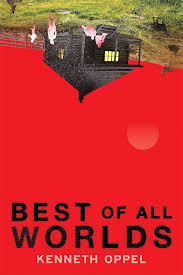
Book: Best of All Worlds
Author: Kenneth Oppel
Publisher: Scholastic Press
Year: 2025
Rating: 5 out of 5 stars

Synopsis : “Xavier Oak doesn’t particularly want to go to the family cottage with his dad and pregnant stepmother. But family obligations are family obligations, so he leaves his mom, his brother, and the rest of his life behind for a weekend at the lake. Except…on the first morning, he wakes up and the cottage isn’t where it was before. It’s like it’s been lifted and placed somewhere else.
When Xavier, his dad, and Mia go explore, they find they are inside a dome, trapped. And there’s no one else around.
Until, three years later, another family arrives.
The Jacksons are a welcome addition at first – especially Mackenzie, a girl Xavier’s exact age. But Mackenzie’s father has very different views on who their captors are, and his actions lead to tension, strife, and sacrifice.
In this masterpiece, award-winning author Kenneth Oppel has created a heart-stopping, can’t-wait-to-talk-about-it-story, showing how our very human choices collectively lead to humanity’s eventual fate.”

Review : Best of All Worlds is a serious mind bending, quasi-scifi, semi-dystopian work of speculative fiction. A family leaves for their lake cabin, something they’ve done for over and over again for so many weekends of their lives, and when they wake in the morning they find they’re somewhere else entirely. What follows is a journey into what a so-called perfect life might look like : no diseases, no bugs, no predators; what a simpler life in a world undisturbed by human activity might entail: hard work, homesteading, eating simply; and what kind of emotional processing that might require. We spend perhaps just shy of one third of the book with the Oaks alone during the first few weeks after they arrive, learning the lay of the habitat, discovering they’re encased within some kind of smart, self-healing dome under which they have electricity and everything they need to survive, but not much else. We find they’re all on their own, their captors seem fairly benevolent, and while they certainly haven’t been transported and isolated with consent, they do their best to make do with the situation at hand. It’s at this point that the book jumps three years into the future – our protagonist Xavier is now 16 years old and has given up all hope of ever seeing another soul again when, out exploring the dome in the middle of the night, looking for a way out, he witnesses a new home being built by tiny nano-bots. The Jackson’s have arrived and suddenly the Oaks are no longer alone.

Oppel has created a visionary work that left me with questions all the way up until the final page. There was no moment where I’d figured everything out, nothing that disappointed me in a predictable sort of way. Best of All Worlds is a truly impressive work that delves into the current climate disaster, the weight of impending future pandemics, climate related deaths, and the paranoia and racism that seem to grip so many people these days. Set sometime in the future, though I would suspect it might be sometime between 10 and 15 years beyond where we find ourselves now, BoAW takes place at a time when the climate crisis has turned into a full-blown climate emergency, with sea walls being built (or not built, depending on the not really mentioned political leanings of each particular state), thousands of people dying due to heat domes over intensely warm states like Florida, climate refugees seeking new land, and, of course, horrific racist conspiracy theories that keep people in the grimy clutches of paranoia. The Jackson’s offer a foil to the Oak’s level-headed mindset – Riley Jackson, our intrepid patriarch, is a deeply paranoid Christian with a belief that the broader governmental system is out to get, well, everyone. Convinced that the dome is nothing more than a big government conspiracy designed to…do something vague…Riley sets out immediately to find a way out and through, to expose the government’s plans, and to live on the fringes of society while he does so. On the other hand, we have Caleb Oak, hard working the land where he now lives, convinced that the reason they’re living within the dome is due to some form of alien activity – a conclusion he only came to after several years living as a captive, seeing technology he’s never witnessed before, and gaining an understanding of what does and doesn’t work in this place. Two equally strange ideal systems, though Caleb Oak seems content to exist in a world where his family is safe and freedom is less about fear and more about a calculated, level-headed decision.

Oppel speaks so clearly to the fear-based conspiracy theories that currently run amok within our world, particularly within the United States, and while we all know this isn’t exclusive to the US by a long shot, we do see this played out in the book with the Oaks being Canadian and the Jackson’s hailing from Tennessee. Much like Xavier will find at the end of the book, I believe anyone on any spectrum of political ideology could read BoAW and come away with something different – we hear what we want to hear, read what we want to read. However, there’s no overlooking the very real inherent through-line of racism that permeates everything the Jackson’s do, the way in which their own need for a life free of fear has actually cast their entire world in a metaphorical bubble of fear and hatred and, ultimately, evil, and the way in which the incessant need to overcome what they perceive as a targeted attack on their rights ultimately leads to just one thing : death. In our present world, this may look like so many things, from the genuine climate disaster, to concentration camps, deportations without due process, and the vulnerability of the weakest members of society when anti-vax conspiracies and rugged individualism run rampant. There’s a lot to be said for compassion, and I believe that’s what Oppel is touching on with this book – a desperate need for compassion, for truth to prevail, and for humanity to release it’s grasp on the idea that we are somehow alone amongst the masses of those who might not be or think just how we do.

This is one of those rare books where I’m going to choose not to spoil anything for you, even with a spoiler warning. You won’t know what hit you until you turn that final page, so buckle up and dive in, you don’t want to miss this one.

Advice : Part science fiction, part coming-of-age, Best of All Worlds is an excellent read. Perfect for those interested in the nuance of the ever widening divide between political parties, for those who believe the humanity deep within each of us is something that makes us inherently more connected than we ever will be different, and for those who are really ready to see the racist get what’s coming to them in the end. That’s all I’ll say for now. Read this one.

Bright Futures Review

Book: Bright Futures
Author: Alex McGlothlin
Publisher: Bituminous
Year: 2025
Rating: 2 out of 5 stars

Synopsis : “David Hall has graduated college and decided to pursue a non-traditional route. Instead of going to business school he’ll spend the summer at his girlfriend’s lake house in Appalachia with an aim to write the Great American Novel. When the words don’t flow as easily as David had hoped, and his girlfriend inexplicably begins spending increasing time away from David, David’s world goes into a tailspin.”

Review : It’s a funny thing to tell you that this is the first book I’ve ever reviewed that had so few reviews I wasn’t able to find an image of the book cover to use here for you. This book came to me via a publicity service and was billed as being a coming-of-age psychological thriller with a hint of romance and while all of those words are technically true, they’re doing all the work of describing a novel without any further depth beyond what you’ve just read. I could describe the plot to you, as I have in numerous other reviews, but sadly all I would be doing is regurgitating what the synopsis (above) already had to say. There is very little depth to Bright Futures and while the technicalities of the writing were fine, for an advanced copy the actual meat of the book goes no deeper than surface level – all while McGlothlin tells you via his protagonist that this is a coming-of-age psychological thriller with a hint of romance. McGlothlin is going through the motions and, if you’ve read any of my past reviews, you know I find this to be an insult to the reader.

David Hall, our main character, is a not-so-subtle misogynist, former frat-boy, and excessive partier-bordering on alcoholic who’s just graduated from his Southern college with big dreams of writing the next great American novel. Unfortunately for the reader, McGlothlin inserts Hall’s book within his own book, so that by the time the reader is 3/4 of the way through Bright Futures we have an entirely new novel to read – Hall’s so-called great American novel. It is jarring, to say the least. I am actually all for a book within a book, give me something so meta it blows my mind, I’m ready! This, however, is not that. Hall’s novel is contrived and graphic, and McGlothlin throws us into a violent and ablest narrative that I found myself flipping through and skimming over just to get away from. It adds absolutely nothing to the plot of McGlothin’s book, in fact I think it detracts from it, furthering the story so little that it actually does Bright Futures a tremendous disservice.

McGlothlin’s attempt to create a psychological thriller goes off the rails before it even begins – though, perhaps we can call Hall’s book within a book a psychological thriller, but it was more gratuitous violence, ableist slurs, and contrived storytelling than it was psychologically thrilling. It’s true, there’s a small element of suspense in Bright Futures, but it is very small indeed, so spaced out that by the time the ends are ready to be tied up, I’d forgotten the entire suspense-ish plot from chapters before and had to remind myself of what was going on. Hall is unpredictable, but not so much in character development as he is in poor writing – rather than a distant girlfriend whose actions eat at him until it’s all he can think about and he begins to act accordingly, we see a distant girlfriend whose actions seem to leave him only vaguely phased until he decides at the drop of a hat and with no real warning that he’s going to follow her. There’s a lot to be desired when it comes to plot arc, character development, and substance; we encounter a lot of ogling, a lot of “boys will be boys” kind of conversations, and a lot of mindless talk about Hall’s (really very bad) novel. That’s about all there is.

Advice : This book has 10 reviews on GoodReads and 4.8 stars, all of which I can only assume came from friends, family, or those who also received a free advanced copy. I choose to review in a way that’s honest, and so I can only tell you now that this is a book I would avoid – it won’t be hard to do. As always I’m grateful for the advanced copy, but they can’t all be winners.

Automatic Noodle Review

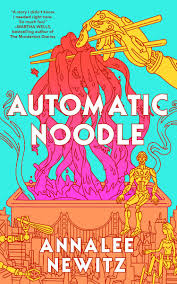
Book: Automatic Noodle
Author: Annalee Newitz
Publisher: Tor Publishing Group
Year: 2025
Rating: 4 out of 5 stars

Synopsis : “You don’t have to eat food to know the way to a city’s heart is through its stomach. So when a group of deactivated robots comes back online in an abandoned ghost kitchen, they decide to make their own way doing what they know : making food – the tastiest hand-pulled noodles around – for the humans of San Francisco, who are recovering from a devastating war.
But when their robot-run business starts causing a stir, a targeted wave of one-star reviews threatens to boil over into a crisis. To keep their doors open, they’ll have to call on their customers, their community, and each other – and find a way to survive and thrive in a world that wasn’t built for them.”

Review : Automatic Noodle is a sweet, quick, low-stakes read that I managed to get through in under a day. Weighing in at just 160 pages (in ARC form), when I tell you this is a quick read, I mean it; while Automatic Noodle tells one small story quickly, it isn’t without substance or a deeper meaning. Newitz has done what I have found happening with regularity these days, they’ve disguised within their robot novel a story with a greater meaning, taking a group of othered people and mirroring them to our current world, perhaps not in a perfectly seemless manner, but with dedication that pays off.

In a world where robots have been granted some, albeit small, level of rights (particularly if they’re of a sentient class of robot) following a brutal war between California and the rest of the United States, we enter this novel to find that the sentient robots don’t have much in the way of rights after all. Living either slaved or indentured to corporations or woken to find they’ve been created by a debt that’s strapped not to who created them but to the robot themselves, most sentient robots have little to no choice about the life they must live. They may also find themselves the subjects of hate speech, disgust, cancel culture, and worse due to the nature of their capitalistic society that created a thing to do a job that a human would otherwise have been hired to do. I’ll admit, it was hard for me to wrap my mind around the first layer of this novel, which is, at face value, robotphobia, given the horrific misuse and abuse of generative AI in our current world; destroying the planet, replacing jobs, and demolishing our creative abilities all in one fell trendy swoop. It feels as though Automatic Noodle might be a look through time at ourselves if we don’t get behind human beings pretty immediately. And that’s where our second layer comes in.

Automatic Noodle is a clever mask for a narrative driven by the gross inequities people of all creeds and backgrounds face even in 2025, particularly our queer, trans, neuro-spicy, and non-white friends. Empathy is the thread Newitz binds this story together with, putting the reader into the shoes of sentient robots who just want to live and thrive in a world where others are so able to live and thrive within. In a world where they are outcast and othered simply for being exactly who they are, they find a way to engage with each other, with their community, and to find their own personhood in the midst of everything. Without needing to ask their community for assistance, it’s freely given to them because in Newitz’ world, empathy exists in the majority of people and for those who seem incapable of seeing a person as a person, they appear to be the minority, enraged and bated by targeted online attacks from those with outdated ideas of what might make a country great. Uncanny, huh?

If you want to know how a society is functioning, simply look to the sci-fi and fantasy world to tell you. It’s no coincidence that the last two books I’ve read in this realm have emphasized the concept of empathy. In a world where we forget that people are people and our humanity makes us inherently more alike than different, it’s no surprise to find stories that allude to the hate and vitriol that’s being spewed with more and more vehemence and frequency. Automatic Noodle does an excellent job of relating a futuristic scenario to our present-day troubles, all while cultivating a narrative of joy, peace, friendship, and community despite and because of our differences. Love is a greater force than fear and hate and we see it time and time again in sweet novels such as this. And while I didn’t find the flow of robotic narration my favorite to follow (in fact, I enjoyed Newitz’ writing the best in their letter to the reader), Automatic Noodle is a book I’ll be recommending to friends in the future. It’s a joyous journey into the world of savory noodles, found family, and community support despite raging phobias and hate over a group of people who are simply trying to live their lives in peace. We are all deserving of a peaceful, joy-filled life. Full stop.

Advice : If you’re looking for a quick, cozy read in the vein of A Psalm for the Wild Built, I think you’ll really love Automatic Noodle. If you enjoy a reclamation story, found family, or how food gets made, this is definitely for you!

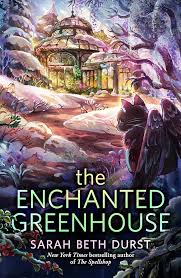
The Enchanted Greenhouse Review

Book: The Enchanted Greenhouse
Author: Sarah Beth Durst
Publisher: Bramble
Year: 2025
Rating: 4.5 out of 5 stars

Synopsis : “Terlu Perna was lonely, so she broke the law. She cast a spell and created a magically sentient spider plant. As punishment, she was turned into a wooden statue and tucked away in an alcove in the North Reading Room of the Great Library of Alyssum. And that was the end of her story. Until…
Terry wakes in the cold of winter on a nearly deserted island full of hundreds of magical greenhouses. She’s starving and freezing and the only other human on the island is a grumpy gardener. To her surprise, he offers Terlu a place to sleep, clean clothes, and freshly baked honey cakes – at least until she’s ready to sail home.
But Terlu can’t return home and doesn’t want to – the greenhouses are a dream come true, each more wondrous than the next. When she learns that the magic that sustains them is failing – causing the death of everything within them – Terlu knows she must help. Even if that means breaking the law again.
This time, though, she isn’t alone. Assisted by a gardener and a sentient rose, Trull must unravel the secrets of a long-dead sorcerer if she wants to save the island – and have a fresh chance at happiness and love.”

Review : I’ll be the first to admit that the concept of anything talking that wouldn’t normally talk is one of my least favorite fantasy tropes – I find talking animals to be disconnected from my expectations and there’s rarely a time when I feel differently. So the concept of a book in which most of the characters are talking plants was immediately something I entered into with trepidation. I love a fun new world of fantasy novels, but for some reason, I just cannot generally get on board with talking creatures. I’m happy to report, however, that The Enchanted Greenhouse is the exception. Durst has successfully created a fantasy world with this novel that needs very little extra work – the entirety of the novel takes place in a massive series of enchanted and magical greenhouses, on an island with just one other inhabitant beyond our protagonist (Terlu Perna, purple skin, purple eyes…human). The plants we encounter in the greenhouses, while some seem to be otherworldly, largely reflect what we might find in our own world, and while there is a flying cat and several magical creatures spelled to do some work in the greenhouses, there’s little beyond the inherent magical quality of the book that wouldn’t be found in our own world.

I realized about a chapter into The Enchanted Greenhouse that this is in fact a sequel to a previous book that I haven’t read, but the mark of a great book is that it can stand alone without much explanation needed, and Durst certainly achieved that feat. Had I not read the letter from the author, I would never have known this wasn’t a stand alone novel, the recap at the beginning of the book felt less like a recap and more like the necessary introduction to Terlu Perna and the magical world she resides within. And though the world she lives in is magical, it’s also filled with rules about who can and can’t do magic – for good reason, as magic can be dangerous – only trained sorcerers are allowed to even attempt to perform spells. However, Terlu casts a spell to create sentience in a plant friend of hers, and in doing so finds herself made an example of and is turned to wood. During her years as a statue, though, the Empire falls and the rules of what magic is and isn’t allowed are changed. To save Terlu from the fires of the resistance, Terlu’s old boss ships the statue formerly known as the living Terlu (along with the spell to awaken her from her statue slumber) to a remote island of greenhouses run by a lone gardener named Yarrow. Having sent letters to the government begging for help with his magically failing greenhouses, Yarrow believes Terlu is a sorcerer sent to help him. When Terlu awakens and Yarrow realizes she’s just a girl who cast a spell one time, he becomes sullen and grouchy. But the greenhouses continue to fail, and Terlu is determined to help.

I’ve read several books over the last few years that have billed themselves as being similar to Legends and Lattes by Travis Baldree, and while some have come close to the cozy fantasy he’s crafted in his series, none have really been what I would compare to his works. While The Enchanted Greenhouse wasn’t labeled as such, had it been, it would have been the first book I’ve read since Legends and Lattes that made me feel the same way Baldree did. Durst has created a cozy, low-stakes fantasy with the most wonderful cast of characters. It did have a slow start, hence the 4.5 stars, but once I got into it, things really picked up in a sweet, cozy, romantic sort of way. And it’s worth saying that even though this book was published by Bramble, it is definitively not a romance novel – it’s a love story. And who would have though I’d have spent an entire novel crying my eyes out over a lovable rag-tag crew of talking plants? Not me, that’s for sure. But cry I did. Durst has created something truly magical with this work, weaving the concept of empathy into her tale in such a way that I can’t imagine anyone who read this book could walk away unchanged. Not only is it a beautiful tale of found family, it’s also a deeply political tale as well, and perfectly timed, at that. I won’t spoil it for you, but know that it doesn’t read as political, it’s just that you cannot come away from this book on the side of the oppressor. You simply can’t.

Advice : If you enjoy quiet, cozy, low-stakes fantasy novels with flying cats and miniature dragons and honey cakes…well, do I have news for you. Add this one to your list, pre-order it now before it’s release in June. Trust me.

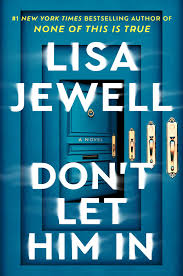
Don’t Let Him In Review

Book: Don’t Let Him In
Author: Lisa Jewell
Publisher: Atria Books
Year: 2025
Rating: 3 out of 5 stars

Review : “He’s the perfect man. He says he loves you. You think he might even be made for you. Before long he’s moved into your heart – and into your house. And then he leaves for days at a time. You don’t know where he’s gone or who he’s with. And you realize – if you looked back – you’d say to yourself : Don’t let him in.”

Review : Don’t Let Him In is, in some ways, the quintessential scam story – a man gives just enough details to be believed, but not enough to encourage questions and in doing so he scams women out of their life’s savings, their home, and their dignity. In other ways, Don’t Let Him In suffers from an image crisis, namely, it doesn’t seem to know what it is – or rather, it wants to be too many things. Jewell does an excellent job painting picture for the reader, jumping back and forth between the present and the past, changing point of view from the victim(s) to a man with many names, guiding us from victim to victim, broadening the scope as she simultaneously narrows the field of vision. It’s an enjoyable suspense thriller with multiple female characters, deviating from the excruciating norm of the unreliable female narrator that so many suspense/thriller writers seem to clutch to with all their might. Jewell, instead, weaves a winding narrative of a man who manipulates, targets, and attacks with precision and ease. By the time it’s all said and done, it doesn’t come down to one (or several) unreliable women, rather, they’re logical, grounded, down to earth women who are worn down over a period of years until they don’t even know themselves anymore.

Where I struggle with Don’t Let Him In, is that this story is far from unique. And while that’s a sad portrait of our modern times, it’s more than that. Jewell seemed to have trouble reigning in her plot, it became muddied and she let slip a few holes because of it. ** Spoilers Ahead ** Jewell wanted us to buy that her scam artist main character was manipulating women, conning his way into their lives, and stealing their money on a slow but steady basis – yes, that I can buy. Consider it sold! But wait, that’s not all – next we have to buy that our main character is also a street stalker, potentially even someone who derives in-the-moment sexual gratification from his street stalking, that this gratification may be his sole sexual drive; okay, I guess I can believe both aspects of this guy’s personality, but again, that’s not all. Now we need to believe he’s also insanely jealous, prone to fits of vengeance and extravagent plotting; next, he’s a murderer; next, he’s faked his own death; next, he’s got a god-complex and delusions of grandeur; he’s an escort; he’s running business scams as a life coach; wait, now he’s also a master of escape. No. It’s too much. Don’t Let Him In suffers from a lack of editing, the plot is a disaster, and the story struggles to keep itself afloat beneath the weight of so many incredible personality characteristics. Pick two from the above list and go hard, do them well, I’ll buy that. This? I’m not buying what you’re selling.

As someone who partakes in pop culture, it wasn’t a struggle to see what podcasts and tv shows Jewell might have consumed prior to writing this book – Dirty John (a true crime podcast by Christopher Goffard) and You (a Netflix adaptation of a book series by the same name) come immediately to mind, I’m sure with just a few additional minutes of thought you or I could come up with more than a handful of others. It’s a storyline in the mainstream, it’s not new or unique and Don’t Let Him In doesn’t offer an inventive perspective beyond trying to encompass every perspective. I didn’t find this book to be very interesting or compelling, but I will say the ending was exactly what you’d hope it would be, without giving anything away. It’s satisfying and thank god for that, because if you’ve plowed through this nearly 500 page book, you deserve an ending that makes you happy it’s over. I didn’t find myself thinking about this book when I wasn’t reading it, or chewing on it after it was over, I simply read it. That’s all. The twists are easily spotted, the plot holes are glaring, and the plot itself is a messy, muddled fiasco.

Advice : If you’re looking for a book that showcases every possible scam available in one character – woo! This is it! If you’re looking for some substance, something that doesn’t read like every podcast you’ve listened to in the last 10 years or every tv show you’ve watched on your fav streaming platform, this is not it. Keep looking. And listen, suspense / thrillers only get better if we, the reader, demand more.

Speedy Reviews

In an effort to continue reviewing every single ARC I receive (for the second year in a row) while simultaneously not burning out from the effort, I’ve decided to implement what I’m calling Speedy Reviews. Here I will briefly review more than one advanced copy received recently – largely books that I don’t feel necessitate a long-winded review. Without further ado, I give you : Speedy Reviews.

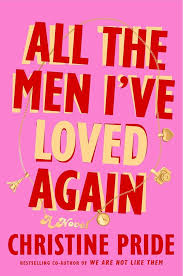
Book: All the Men I’ve Loved Again
Author: Christine Pride
Publisher: Atria Books
Year: 2025
Rating: 3 out of 5 stars

Synopsis : “It’s 1999 and Cora Belle has arrived at college ready to change her life. She’s determined to grow out of the shy, sheltered daddy’s girl who attended an all-white prep school in her all-white suburb. What she’s totally unprepared for is Lincoln, with his dark skin, charming southern drawl, and smile. Because how can you ever prepare yourself for the roller coaster of first love?
Just when Cora thinks she’s got everything figured out, a series of surprises, secrets, and a devastating tragedy sends her into a tailspin. In this wake of this tumult, a new man enters her life. Cora is once again thrown by the strength of her feelings, this time for Aaron, the enigmatic photographer who seems to understand her like no one else. With her whole heart at stake, Cora is pulled between two loves : one that’s comfortable and one that’s true.
Twenty years later, Cora is all grown up and has made it a point to avoid any serious relationships. Being alone can’t break your heart. But then an unexpected reconnection and a chance encounter put her right back where she started. The same two men the same agonizing decision. Finding herself in this position – again – will test everything Cora thought she knew about fate, love, and, most importantly, herself.”

Review : All the Men I’ve Loved Again is a well written read about the ups and downs of first love, particularly first love when one is so, so young and so, so naive about the world, like Cora, a first year college student (when we meet her). And while it was well written, I found it to be an incredibly slow read. I had a hard time connecting with the characters, perhaps because so much of the book is taken up by Cora’s relationship with Lincoln. There was a small attempt made at creating backstory and friendships with Cora’s roommates, but the vast majority of the plot is Cora’s relationship with Lincoln. And while you might think, based on the synopsis, that this story would bounce between Lincoln and Aaron…it really doesn’t. There are whole relationships formed, strange friendships made, hints dropped, and storylines that simply don’t play out, the synopsis tells us more about Cora’s background than the actual book does, and the time we spend between Cora and Aaron is minuscule. All the Men I’ve Loved Again feels disjointed and disconnected from the reader, but beyond that, by the time I’d finished I was left with the glaring question of whether this story needed to be told. And to answer that question, the best I can say is, I don’t think it did. It felt like a story that had nearly nowhere to go and I don’t feel like it ultimately ended up being worth my time. It was well written, I’ll say that. But it wasn’t something that kept me turning the pages.

Finally, if you choose to read All the Men I’ve Loved Again, know that there are mentions of abortion, miscarriage, stroke, hospitalization, loss of a parent, and cheating.

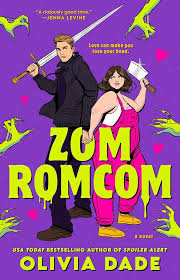
Book: Zom Rom Com
Author: Olivia Dade
Publisher: Berkley Romance
Year: 2025
Rating: 3.5 out of 5 stars

Synopsis : “When Edie Brandstrup attempts to save her seemingly harmless neighbor from the first major zombie breach in years, she’s stunned to be saved by him – and his ridiculously large sword – instead. As it turns out, Gaston “Max” Boucher is actually a super-old, super-surly vampire, and he’s unexpectedly protective.
The pair soon unravels a sinister conspiracy to set zombies loose on the world (again), and despite the awful timing, Edie finds herself falling for the vampire who’s helping her save humanity. As she and Max battle their foes side by side, Edie must decide whether having a love worth living for also meaning having a love you’d die for – and, in a world that grows deadlier by the minute, whether that’s a risk she’s willing to take.”

Review : Zom Rom Com is a surprise of a book, weighing in at just shy of 400 pages, with complex world-building and a cast of characters it’s hard not to love. As someone who isn’t the world’s biggest fan of zombie storylines, I was pleasantly surprised by how much I enjoyed this creative and exciting rom-com from Olivia Dade. In a world where humans, superhuman, and supernaturals coexist together, it’s perhaps not the biggest surprise that there might be zombies existing in this plane of existence, yet I found the concept of zombies to be funny and inventive within the world Dade’s created. Every aspect of this book could have taken a gristly or even bleak turn, but Dade managed to keep things light and fun all the way to the final page. The banter between Edie and her super hot vampire neighbor Max is enough to keep the pages turning, but the complex and well thought out plot behind a zombie outbreak, and even the reasoning behind why zombies exist in the first place, is really what kept me turning pages. There’s a good build up of will-they / won’t-they that lasts for at least the first 100 pages that adds to the building enjoyment, and while this is a romance novel, there’s an incredibly amount of plot creation and fantasy work involved in this novel, from start to finish. I did feel there were a few plot holes and inconsistencies, but nothing that detracted from how much I genuinely enjoyed this book. Without giving any spoilers away, the ending more than leaves room for at least one additional novel, though I suspect there could be more!

Before reading this book, if you choose, this novel discusses the loss of family members, romantic betrayal, and chronic illness. And – yay! – this book included plus-size inclusion!

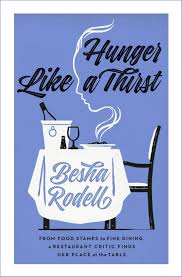
Hunger Like a Thirst Review

Book: Hunger Like a Thirst
Author: Besha Rodell
Publisher: Celadon Books
Year: 2025
Rating: 5 out of 5 stars

Synopsis : “When Besha Rodell moved from Australia to the United States with her mother at fourteen, she was a foreigner in a new land, missing her friends, her father, and the food she grew up eating. In the years that followed, Rodell began waitressing and discovered the buzz of the restaurant world, immersing herself in the lifestyle and community while struggling with the industry’s shortcomings. As she built a family, Rodell realized her dream, though only a handful of women before her had done it : to make a career as a restaurant critic.
From the streets of Brooklyn to lush Atlanta to sunny Los Angeles to traveling and eating around the world and, finally, home to Australia, Rodell takes us on a delicious, raw, and fascinating journey through her life and career and explores the history of criticism and dining and the cultural shifts that have turned us all into food obsessives. Hunger Like a Thirst shares the joys and hardships of coming of age, the amazing (and sometimes terrible) meals she ate along the way, and the dear friends she made in each restaurant, workplace, and home.”

Review : I don’t receive nonfiction advanced copies with any kind of regularity, but when I do, they’re almost always a revelation. Hunger Like a Thirst is no exception. Written by one of the world’s last anonymous food critics, Besha Rodell, Hunger, as poignant as it is comforting, is laid out as courses on our table, each more decadent, more revealing, than the last. Like a blooming onion (yes she has reviewed Outback Steakhouse), Rodell gently peels back the layers of the decadent food world, the culture that simultaneously shaped our tastes and was shaped by our foodie interests, exploring the ways in which food is inherently political, all the while laying herself bare before us, her own heart on our plate. Delicious, rich, funny and equally heartbreaking, overwhelming, and steeped in grief that is not just Rodell’s but my own, Hunger is an absolute must-read.

From living on food stamps to traveling internationally for Food & Wine, Rodell guides us through the often unbalanced and winding journey of a restaurant critic, describing the sheer financial cost of dining out multiple nights per week, often at her own expense, traveling to find the best, the newest, the most creative gem, often alone. She explains the dichotomy of loneliness she feels as she travels the world and the claustrophobia she feels at being back home, the seemingly impossible go-go-go of jet setting from place to place, while being just a few miles shy of landmarks she promised her father she’d see in her lifetime, while not afforded the time or leisure to visit while traveling for work. Hunger is far more than a memoir of good (and sometimes bad) food. Rodell shares her life, her travels outside of work, and the friendships she’s made both in the restaurant industry and in her career as one of only a dozen or so restaurant critics in the country.

Each chapter reads like an in depth exploration of not only the history of food culture and specific food phenomena, but as a dive into the world of a woman working in a predominantly male driven industry. Rodell tackles bigger global issues with ease, often discussing racial disparities, misogyny, and the way in which the world of food has expanded, sometimes at a snail’s pace, to meet a broadening world. She explains the history of women in the service industry through deep dives into the nation’s first chain restaurants and talks about what it’s like to be a woman who continues to work in this industry where women are expected to largely be one thing : gentle. From a background in Alt Weekly publications, Rodell writes in a way that feels comfortable and familiar, like you’re listening to your favorite person rant about their special interest. She’s approachable and funny and foul-mouthed in exactly the way you’d hope, telling slightly horrifying tales from her teenage years as a recent transplant in the US from Australia, talking about the culture that seeps over from punk music into the back of house of a food service gig, all the while remaining real and human and, though not, somehow tangible.

I don’t think any book of this sort could be written without addressing some of the harder aspects of industry work, like drug abuse and suicide. Rodell navigates each with grace and grief, speaking about people she and her husband have both worked with and lost, her husband’s own substance struggles, and drawing parallels in her own internal world to the monumental loss of Anthony Bourdain. Rodell brings the truth and the grit and the heartache of the restaurant world to the reader in a way that feels tender and gentle, written with care and heart. Everything she addresses is important in it’s own way, but this aspect perhaps most of all.

As someone who has never worked in the food service industry but, like so many others, loves watching Top Chef, I found Hunger to be exciting and enjoyable on yet another level. Reading about the foundational restaurants and seminal chefs throughout the decades Rodell shares of her life, it was so fun to hear new stories of people I’ve become familiar with through my favorite cooking show and to learn some of the history involved. Rodell speaks of living in New York during 2001, of feeding diners mere days after the twin towers were hit, and of the chefs who fed first responders. She talks about incredible chefs and restaurants in Atlanta and Los Angeles, and shares her hometown in Melbourne, Australia with us. She shares her husband’s realized dream of opening his own restaurant, an endeavor set to open in 2020, and the indescribable, and perhaps insurmountable, grief that came with that timing. She brings us into her world and shares it in such a way that by the time you’re done reading, Besha Rodell feels like an old friend. Every aspect of this book, from start to finish, is perfection. It’s comfort food.

Advice : If you’re into fine dining or finding holes in the wall or eating where the locals eat or the ins and outs of what it’s like to eat at the best spots in LA, if you love watching Top Chef or Chopped or reading up on the newest spot in town, if you’ve ever wondered what it might be like to be an anonymous food reviewer and restaurant critic, this is an absolute must read. I have a hard time saying there’s any reason not to read it, unless for some reason you hate food and don’t enjoy memoirs. Pick it up, it’s released on May 13th. It’s truly excellent.

Give Up the Night Review

Book: Give Up the Night
Author: P.C. Cast and Kristin Cast
Publisher: Wednesday Books
Year: 2025
Rating: 3 out of 5 stars

Synopsis : “Since becoming Moonstruck on her eighteenth birthday, Wren Nightingale has found herself thrust into a world filled with deception, danger, and murder. Uncovering that their magic was fractured and limited when the original Moonstruck ritual was broken by Selene, Wren is determined to find a way to restore it. But the Elementals are split into two factions – some want the ritual completed and their freedom – and others are so terrified of change that they’re willing to end Wren before she can reach the center of the island where the ritual Selene ruined can be completed.
Between his overbearing father’s arrival, Rottingham delegated him more and more responsibility, and Celeste taking a special interest in him, Lee Young has been struggling to find his own path. As much as Lee wants to take his place in the Moonstruck hierarchy, he knows something’s not right at the Academia de la Luna. He thinks if he can talk some sense into Wren and get her to return to the Academia, that everything will turn out alright.
As Wren and Lee both battle for what they believe is right, they’ll have to uncover who their true allies are…and if they’re even on the same side of this magical fight.”

Review : Dear reader, to be completely honest with you, I’m not sure how I ended up with this early copy. Not only is Give Up the Night a sequel, to a book I didn’t read, mind you, but it’s been co-authored by two people I’m familiar with; if you’ve been here for a little while, you may remember that I reviewed the first and second books in a different trilogy written by P.C. Cast and Kristin Cast, and if not, you can find them here and here – as an aside, I didn’t realize the earlier of the two reviews was written all the way back in 2021 and now I must sit in shock that I’ve been receiving review copies for four years before I can continue on.

I make a point not to request sequels, and after my last two not-so-kind reviews of the Cast’s work, I’m a little more than surprised to find this book sitting in front of me. I must have made a mistake. Nonetheless, much like last year, my plans for this year include reading and reviewing every advanced copy that comes my way, so I did read Give Up the Night even though I didn’t read Draw Down the Moon, the inaugural book in the Moonstruck trilogy. To their credit, the Casts made it easy for someone to jump in without needing a total refresher of the first book – enough details were organically rehashed by the characters within the first chapter that I didn’t struggle to understand what was happening, despite jumping in at a pivotal moment. However, I do find it difficult to review a sequel without having read the first book, so this review will likely be quite short.

I find the Casts to be adequate writers, and by that I mean they do just fine if you’re not bored with a tired trope, ready for fresh material, or want a truly new, enticing, or compelling story. It’s just fine. Nothing more. I realize this is an advanced copy, but this book was riddled with errors, something I don’t tend to see in the more well put together books I receive – so that’s worth noting. Reading this book had me wondering how much might change between an advanced copy and a first edition; for example, if you have a nonbinary character, it might be worth your time as an author to ensure that you get your own character’s pronouns correct. It might even be worth your time to figure out the pronouns of the magical beings you’ve written into your novel, wouldn’t you think? Rather than jumping around confoundingly between he and she with no real clear reasoning as to why it’s jumping around – no, this is no gender fluid creature, it’s simply poor writing. The storyline matched every damn fantasy storyline you might be familiar with and that felt like an insult to the reader : young woman in a magical world finds herself bestowed with incredible! unbelievable! magical powers after spending time thinking something is wrong with her because her peers are developing their powers as normal while she lags behind; magical creature becomes magically attached to said young woman; young woman becomes marked as special, must go on magical quest to set things right / free everyone / do something spectacular that no one else has ever been able to do before. The “quirky” and “special” angle feels wildly overplayed – I can think of four books without even trying that fit the same mold. It’s overdone.

Lastly, I did find the majority of Give Up the Night to be fairly compelling, inasmuch that I continued to turn pages for a while before I got bored. I’ve said it before and I’ll say it again, a book doesn’t have to be well written to be compelling. Poorly written books with compelling storylines still turn pages. As we neared the ending of this book, however, things took a turn. The clear-cut narrative turned muddled, the geography became redundant, and the quest the characters found themselves on turned on it’s head in a way that made no clear sense. It felt like writing for the sake of wrapping up a book with a wild and crazy twist, not like something necessary to the storytelling at all. It was all a ploy to introduce book 3, which is fine, but not for me. Anyway, like I said…this book was fine. No more.

Advice : If you’re familiar with the Casts’ work already and enjoy it, I’m sure you’ll enjoy Give Up the Night. If you’re not or you’re looking for something that doesn’t read like a watered down Fourth Wing…try again. This one won’t be for you.

How We Heal Review

Book: How We Heal
Author: La June Montgomery Tabron
Publisher: Disruption Books
Year: 2025
Rating: 5 out of 5 stars

Synopsis : “From a vivid portrait of her childhood in 1960s Detroit to her leadership of one of the world’s largest philanthropic institutions, La June shares her full-circle, American story – a coming-of-age journey where she gains a firsthand understanding of how systemic racism prevents our children and communities from thriving and learns about the transformative role healing can play in helping all of us transcend the legacy of racial inequity.
As she rises to her position as the first female and first African American leader of the W.K. Kellogg Foundation, La June experiences the power of sharing and listening with empathy. And with the help of mentors and colleagues, she refines the message that will guide the foundation’s mission for years to come : Healing can begin only with truth telling.
Empowered by the mission set forth by its founder to support children and families, the foundation explores a racial healing framework that transforms communities and individuals around the world – from small rural towns and big cities across the United States, including La June’s own beloved Detroit, to Mexico, Haiti, and beyond.
How We Heal serves as a testament to the power of transformation and a blueprint for how each of us, no matter who we are or how we lead, can use racial healing to move from trust to empathy, from understanding to repair – one conversations and one connection at a time.”

Review : Whew. That’s a heck of a synopsis, isn’t it? And though How We Heal is a mere 212 pages long (in ARC form), much like the back-cover synopsis, it packs a lot into those 200-odd pages. While La June spends time detailing what her childhood was like growing up in Eastside Detroit both prior to and after the Detroit Rebellion in 1966, it’s worth noting that the majority of the book describes in detail the work she has and continues to do at the W.K. Kellogg foundation, first as COO and currently as CEO, among other titles. How We Heal is less about La June herself and more about the work that’s been facilitated through the Foundation and through the people who have been impacted by the Foundation’s charitable worn. While the start of the book engages the reader as, perhaps not strictly memoir, but more so memoir adjacent, it’s worth knowing before you dive in that it is decidedly not a memoir.

La June, a direct descendant of Isaiah Thornton Montgomery, the founder of the Reconstruction era town of Mound Bayou, Mississippi, describes the pitfalls and structures of power imbalance that have served to create racial imbalances and divides throughout the United States. And while she would have every right to broach this topic with hate-laced accusations and pointed fingers, La June instead describes what she calls the empathy deficit to explain much of what has stunted racial equity and growth, if not rolled back progress entirely. Rather than assuming that the growth of opportunities and formulation of protections around basic human rights might take all of the above away from those who are not Black or Hispanic or Asian or Indigenous, empathy reminds us that we are all worthy and capable of having access to spaces of growth, stable and safe housing, and quality job opportunities with good wages. When racial equity exists, when we find ourselves within diverse communities, studies show time and time again that we all thrive. It isn’t an us vs them narrative presented within How We Heal, it is very much so the opposite, with La June asking us to imagine a world in which our country outgrows its flawed beginnings and continuous, subsequent failings. As La June says “…through inclusivity, we could make the table bigger.” (How We Heal)

Detailing her decades of work at the Kellogg Foundation, La June describes how the Foundation transformed from a world in which race was an unmentionable topic to a world in which the Kellogg foundation runs multiple racial healing circles throughout the world in order to bridge divides between any number of groups of people. Describing the necessary work at play within the Foundation’s days in the early 2000s as it began to transition into a space that directly addressed racial divides and inequity, a member of the board of trustees, Joe Stewart said (paraphrased by Montgomery Tabron) “Either work to fulfill the dreams of everyone in this nation or tear down the Statue of Liberty.” Because we come from a country whose very foundation was built on the backs of enslaved people and Indigenous massacre, we cannot simply step into the realm of reconciliation without actively addressing the root problems, working toward transformation, and find ways to unite. Enter : TRHT, or Truth, Racial Healing, and Transformation – a project created by those working within the Kellogg Foundation to bring spaces of true healing into diverse communities impacted by racism, a history of redlining, systemic poverty, gun violence, even apartheid. Racial healing circles are designed based on Indigenous practices worldwide and TRHT has been facilitating circles of healing, understanding, and equity for decades, attempting to reach as many people as possible. When it comes to a blueprint for healing, this is it. La June shares so many stories of positive impact within these racial healing circles, it feels almost hard to believe at times. Rather than creating spaces where fingers are pointed and injustices are gripped tightly to, racial healing circles exist to create spaces of radical transformation through understanding and forgiveness. When we are able to fully hear and see where those who have different lived experiences than us are coming from, we can begin to repair something that began as fundamentally broken.

While How We Heal read at times like a proposal for a board meeting, it was deeply informative, well researched, and concise. It laid out a foundation for our path forward, it did more than present the scary facts and figures, it laid out the work the Kellogg Foundation has been doing for a century to combat those figures – going even further to explain how individuals and groups around the globe could be (and have been) taking steps of their own using the very blueprint the Kellogg Foundation uses to create radical healing where it’s so desperately needed. It’s encouraging to me to read a book like this, particularly as we see racial divides deepening, knowing that healing has a way forward. It can and does exist. There’s hope here. And that’s something you can’t buy – or maybe you can, in the form of this book. I found myself crying multiple times during my reading of this book – the stories of hope, forgiveness, healing, and transformation are incredibly moving. It’s well worth the read.

Advice : I think this is a worthwhile read for anyone who is genuinely interested in seeing healing take place on a global scale, anyone who lives in cities with racial disparities (that’s most of us!), or anyone who’s interested in a new take on an old problem. You’re going to want to read this one.

Murder at Gulls Nest Review

Book: Murder at Gulls Nest
Author: Jess Kidd
Publisher: Atria books
Year: 2025
Rating: 5 out of 5 stars

Synopsis :I believe every one of us at Gulls Nest is concealing some kind of secret.
1954: When letters from Frieda, her dependable former novice, stop arriving, Nora Been asks to be released from her vows. Haunted by a line in one of Frieda’s letters, Nora arrives at Gulls Nest, a boarding house filled with lively characters.
A seaside town, a place of fresh air and relaxed constraints, is the perfect place for a new start. Nora hides her identity and pries into the lives of her fellow guests. But when a series of bizarre murders rattles the occupants of Gulls Nest, it’s time to ask whether a dark past can ever really be left behind.”

Review : If ever there was a book (and book cover, for that matter) for me, Murder at Gulls Nest is it. As a lifetime lover of Agatha Christie and a familiar soul in the mystery section of the bookstore, Gulls Nest called to me immediately. It’s worth noting that this book is being marketed as the first in a series – I couldn’t be happier to hear it! And now that I’ve devoured this one, sadly, the wait begins for book two. Jess Kidd has crafted a perfectly cozy, wonderfully intriguing, and marvelously enjoyable whodunit, complete with an amateur sleuth hell bent on doing her own thing, potentially because she’s simply better at this than the actual detectives on the case; a small town filled with interesting characters and all manner of crime; and the back-and-forth, will they / won’t they banter between our protagonist and the town’s slightly cinematic, slightly heroic, slightly overworked detective inspector. What isn’t there to love?

Nora Breen, formerly Sister Agnes, has left her post at the convent, released her vows, and joined the outside world as a middle aged woman with a head for solving puzzles and an interest in what life outside the habit and wimple might actually entail. Kidd has created such whit within Nora’s character, rounding her out and giving depth to someone we’ll spend an entire book alongside – it made for a truly enjoyable and unputdownable book. Nora, following in the footsteps of her friend and former novice, Frieda, is bound and determined to find out what’s going on. Similarly to Nora, Frieda has recently entered the outside world as someone other than a nun, however unlike Nora, Frieda did so for medical reasons. Being afflicted with some kind of heart and lung condition, Frieda was advised to take to the sea, for the brisk and salty air were a balm for her condition. Upon arriving at Gulls Nest, a boardinghouse complete with mysterious long-term boarders and rife with gossip, Frieda begins to fulfill the singular promise she made to Nora when she left : she wrote a letter a week to tell of her new adventure. When Frieda’s letters stop arriving, Nora knows something has gone terribly wrong. Despite her best efforts to convince her Mother Superior that Frieda would never simply break a promise and stop writing, the consensus (among nearly every person she encounters throughout the book) is that Frieda is out living her life, no need to worry. Nora disagrees, and being someone who sees connections where others might not, she knows she cannot sit back and allow her friend to be in potential danger. So she leaves.

** Spoilers Ahead **

It would be difficult to review this book without giving SOME spoilers away, but don’t fret! I promise I won’t tell you who did it, you’ll have to read it for yourself to find out.

Nora arrives at Gulls Nest, under the guise of a former nurse (which, in fact, she was), with a small stipend, a few hand-me-down dresses, and all the gumption in the world. She begins to casually insert herself into the lives of her fellow boarders at Gulls Nest, having rented the room that once belonged to her friend. She reveals her mission to the local detective inspector, one Inspector Rideout, and causes much damage to the police station by way of a thrown shoe – or two. Something I loved immediately about how Nora was written was that not only did we find her grappling with life in the outside world after several decades of life in a convent, we immediately get to know her as so much more than a former nun and nurse. From making friends with the gull who likes to hang out on her windowsill (who she affectionately names Father Patrick Conway, after the priest who saw her through her own novice), to mild harassment of the local police force, to completely ignoring Inspector Rideout’s assessment of her missing friend, to smoking cigarettes just to do it, to riding in fast cars because it was purported to be an enjoyable aspect of life, there is no shortage of facets to our lively protagonist; Nora is a force all her own.

Unlike Sherlock Holmes or even Hercule Poirot, Nora Breen is not indescribably smarter than the average reader – something I enjoy a great deal in a murder mystery. We are given the chance, as readers, to take in just as much information as our protagonist does, meaning we have every opportunity to solve this murder for ourselves. Or maybe I should say murders. Once Nora arrives at Gulls Nest, believing she’s there to solve the case of her missing friend, two more boarders end up dead, most certainly murdered. I was grateful to find that while I did, in fact, solve the murder a little more quickly than our Nora, I didn’t solve it right away or even without much reading. I made it through a good portion of the book before I came to any kind of conclusion, having jumped between several theories at different times and that feels like the making of a good, classic whodunit. We get to be the amateur detective here and that’s something I’ll always appreciate – no missing or hidden clues from the reader, no information we couldn’t possibly have known, just pure and simple, straightforward sleuthing for clues, compiling information, and attention to detail.

Kidd has done an excellent job with her first installment in the Nora Breen Investigation series and I look forward to additional mysteries to come! This is clearly not her first rodeo, having written several book prior to this. The layout flowed well, the pacing made sense, and though it was written in the present tense, which is not my favorite, though the fact that this post is written largely in the present tense is not lost on me, it read easily and without confusion. The fact that I didn’t solve the mystery right off the bat, that I became invested in the whole cast of characters, and that I was sad when it ended and I wasn’t able to order book two immediately all make this a great read in my humble opinion.

Advice : If you enjoy a good mystery, this is going to be a must read for you! This book is for anyone who enjoys Hercule Poirot, Miss Marple, Sherlock Holmes, or any of the classics. You’re going to love it, I just know it.