Book: From a Studio in Oakland California : 180 Notes on Existence Author: Enia Oaks Publisher: Self Published Year: 2025 Rating: 3.5 out of 5 stars
Synopsis : “This collection of poems and essays is for those who sit at the crossroads of past and future, wondering which way to turn. Those who have bravely restarted and are building new homes from within themselves. Those who believe in the grand experience of life and living it fully, even when it asks everything of them. Those hurting, healing, or transforming. For the ones who are seeking meaning or a deep exploration of the layers of existence.”
Review : Enia Oak’s debut book, From a Studio in Oakland California : 108 Notes on Existence is not to be read quickly, blown through, or breezed by; it’s made to be savored, slowly devoured, and meditated upon. It does not surprise me one bit to find this book of 108 missives to be a meditation – it’s spiritual in nature. Written in short blurbs, poems, and ideas, FASIOC is filled with logical life advice, imparted wisdom, and personal exploration. It is quite literally packed to the cover with information on how and why and when to grow, on the choices we make as humans, the way we stretch out for someone else to witness our lives, and how we might best look inward to see and gently tend our inner child as fully formed adults.
While Oaks’ synopsis / letter to the reader calls this book a “collection of poems and essays”, I would more likely call this an open letter to someone who’s going through therapy and doing the work to heal. Based on Oaks’ description, I was initially confused by the layout and conversive tone her poems and essays take. They don’t necessarily read as poems, certainly not so when you take the totality of the book under review, but they do read as essays directed toward the reader. Like I said, it reads like an open letter, not like a collection of poems. It really comes down to the naming of the thing, for me – if they weren’t named as poems, I wouldn’t take issue or feel surprised as a reader, but because I was expecting poetry, I found myself a bit taken aback and disconnected as I got into the meat of the book. I do feel that Oaks might have benefitted from a more formal editor / publisher rather than going the self-published route, it’s truly worth mentioning that I have dog eared this book from start to finish. While there are aspects that I feel read in a discordant way, small mistakes, and grammatical errors I wish weren’t included, Oaks has a distinctive point of view that has a place in this world. This book feels important for so many people.
I found Oaks’ work to be most successful in her most experimental forms, where we might call the style a poem (but again, I struggle to view most of these works as poetry), or where the style seems completely unique to the inner workings of Oaks’ mind. Most of the book is written in a direct way to “you”, perhaps at times the reader, perhaps at times the writer, perhaps at times our collective inner child. It’s less a work of interpretation for the reader, and more directions on how to live your life as told by a therapist – of whom Oaks is not, which is worth saying. I found so many pieces of this book aligning with my own lived experience, and while this did not feel profound, it did feel familiar. There were many reasons Oaks’ collection garnered 3.5 stars, but I want to remind you, reader, that that’s more than 50% and I did genuinely enjoy reading this one.
Advice : This book is already available to buy! If you’ve spent time in therapy I suspect you will enjoy this book. If you like a collection of small works that are quick and easy to read at your own pace with no deadline or need to speed your way through, I think you’ll enjoy this.
Book: Five Found Dead Author: Sulari Gentill Publisher: Sourcebooks Year: 2025 Rating: 3.5 out of 5 stars
Synopsis : “Crime fiction author Joe Penvale has won the most brutal battle of his life. Now that he has finished his intense medical treatment, he and his twin sister, Meredith, are boarding the glorious Orient Express in Paris, hoping for some much-needed rest and rejuvenation. Meredith also hopes that the literary ghosts on the train will nudge Joe’s muse awake and he’ll be inspired to write again. And he is; after their first eventing spent getting to know some of their fellow travelers, Joe pulls out his laptop and opens a new document. Seems like this trip is just what the doctor ordered… And then some. The next morning, Joe and Meredith are shocked to witness that the cabin net door has become a crime scene, bathed in blood but with no body in sight. The pari soon find themselves caught up in an Agathy Cirstie-esque murder investigation. Without any help from the authorities and with the victim still not found, Joe and Meredith are asked to join a group of fellow passengers with law enforcement backgrounds to look into the mysterious disappearance of the man in Cabin 16G. But when the steward guarding the crime scene is murdered, it marks the beginning of a killing spree that leaves five found dead – and one still missing. Now Joe and Meredith must fight once again to preserve their newfound future and to catch a cunning killer before they reach the end of the line.”
Review : It takes a certain level of gumption to write a new take on a famously done murder mystery, possibly none as more culturally known as Murder on the Orient Express, and while I enjoyed much of Five Found Dead, it simply did not live up to Agatha Christie’s famous work. Gentill, to her credit, does much work to lay a foundation wherein her novel would not simply be a retelling, but a fairly meta mystery involving an author, a couple podcasters, and a whole host of law enforcement attempting to sold a crime all while existing within a world in which Murder on the Orient Express might cloud ones perspective of such an incident. It is from this perspective that the entirety of the book ultimately begins to unravel – there are far too many characters, at least a few of whom we rarely interact with; far too much extraneous story-telling happening, some of which does seem to be an attempt at red herring; and far too many details to make this a succinct murder mystery, or really anything that might ever stand up to Christie’s work. And while I think it might be a bit unfair to compare Five Found Dead with Murder on the Orient Express, it’s also exactly what one asks to be done when writing a book about a murder (nay, murders) upon the very Orient Express Christie herself wrote about.
Joe Penvale, a famous murder mystery writer, has undergone an intense period of cancer treatment and upon finding himself in remission, has taken himself and his sister on the trip of a lifetime : a train ride on the famous Orient Express. Gentill managed to set a perfectly cozy scene aboard the train, and after reading her acknowledgments I can clearly understand why, for she herself endured medical treatments and a ride upon the Orient Express. Her understanding of what sets a cozy scene does feel perfectly in line with what I’d like in a murder mystery, even what I’d like within a locked door mystery, but beyond this scene setting, I found the gross majority of the book to be a conundrum. To begin, while Joe and Meredith are twin siblings with a shared family trauma, I found their relationship to be odd and uncomfortable at times. I’m not sure if they were mirrored after a family relationship Gentill has or if they were simply conjured out of thin air, but I did not find believability within their world in the least. If we can look past the strangeness of their written relationship, we find ourselves enmeshed within a world where Covid still has a grip – I was unable to determine during what time frame this story was set and we are given no clues beyond the fact that Covid is still creating new variants. Is there a new variant ravaging the world? Perhaps this was set a few years ago? Or even 2020? It’s unclear and the answer is never given. ***Any further reading will reveal SPOILERS AHEAD*** There is an entire subplot in which we find several passengers have tested positive for a new and deadly variant, a small detour I believe Christie would have used in her own writing, but nonetheless, without more details I found it to be added confusion in a story that is already more confusing than I necessarily agree with.
Upon awakening after their first night aboard the train, Joe and Meredith find that the man in the cabin next to theirs has been murdered or has at least gone missing. What follows is a strange and chaotic 24-48 hours whereby multiple passengers test positive for Covid, five people are murdered, and at we discover that at least seven of the passengers aboard are members of varying international police forces. We encounter so many needless characters that it quickly begins to feel superfluous and needlessly confusing – I suspect in part at least to mimic Christie’s work, but it simply doesn’t play out in a way that lends any ease to the reader. There are so many side trails and intentional red herrings that by the time we do finally unmask our criminal(s) it feels strange, tangled, and frustrating (which, to my mind, is the exact opposite of what you want from a murder mystery reveal). I will say, I was able to determine fairly easily who the man in the cabin next to the Penvale’s actually was, though this does not mean I was able to determine who the killer was. I warned you, here be spoilers. While I won’t reveal the exact nature of the crimes and perpetrators, I will tell you that in the end, it was anticlimactic and disappointing to find the truth. Not to mention, the final chapter reveals an entire podcast episode whereby Gentill undoes much of the convoluted work she’d laid out for us, creating further confusion and disappointment in the ending. I did not find myself pleased with the end result.
Gentill has managed to create a cozy atmosphere aboard the Orient Express, allowing the reader to feel, truly, as if they were on board themselves. Beyond that, however, I found the work to be needlessly convoluted and had to return to past pages to reread sections that didn’t make much sense. It wasn’t exactly what I was hoping for. The ending left much to be desired, the second ending even more so, and with a cast of characters limited to those aboard a train, I suspect many readers will be able to sniff out at least one of our criminal elements prior to the “big reveal”. To her credit, Gentill, unlike Christie, has given the reader enough breadcrumbs to figure things out on their own (for the most part) and, even if I didn’t agree with how it all turned out, I do enjoy that aspect of things. All in all, it was fine, I felt cozy, but it wasn’t deeply satisfying or even tremendously challenging. Take that how you will.
Advice : You may find this to be a worthwhile and perhaps even enjoyable read if you love the genre and consume anything you can within it. However, I suspect you will be comparing it to Christie’s works along the way and in that respect, you may not enjoy it at all. It’s 50/50 – maybe check it out from the library before committing to buying. Happy sleuthing!
Book: The Tragedy of True Crime Author: John J. Lennon Publisher: Celadon Books Year: 2025 Rating: 4 out of 5 stars
Synopsis : “The Tragedy of True Crime is a first-person journalistic account of the lives of four men who have killed, written by a man who has killed. John J. Lennon entered the New York prison system with a sentence of twenty-eight years to life, but after he stepped in to a writing workshop in Attica Correctional facility, his whole life changed. Reporting from the cellblock and the prison yard, Lennon challenges our obsession with true crime by telling the full life stories of men now serving time for the lives they took. The men have completely different backgrounds – Robert Chambers, a preppy Manhattanite turned true-crime celebrity; Milton E. Jones, a seventeen-year-old who turned to burglary, only to be coaxed into something far darker; and Michael Shane Hale, a gay man caught in a crime of passion – and all are searching to find meaning and redemption behind bars. Lennon’s reporting is intertwined with the story of his own journey fro a young man seduced by the infamous gangster culture of New York City to a celebrated prison journalist. The same desire echoes throughout the four lives: to become more than murderers. A first-of-its-kind book of immersive prison journalism, The Tragedy of True Crime poses fundamental questions about the stories we tell and who gets to tell them. What essential truth do we lose when we don’t consider all that comes before an act of unthinkable violence? And what happens to the convicted after the cell gate locks?
Review :The Tragedy of True Crime is the answer to a question I’ve had but have not expressed : is there a sickness to our obsession with true crime? And the answer is a resounding yes. While this book is not exactly the deep dive into how or what the obsession with true crime does to a person, as the synopsis might have you believe, it does present a powerful insight into the nature of a life sentence and the desperate need in our country for prison reform. Written by a man who premeditated a brutal and senseless murder, The Tragedy of True Crime offers a truly unique look into the humanity of incarcerated people we tuck away into steel cages and so often forget. While I have my own thoughts about the prison industrial complex and what justice might look like, I found this book to be a compelling and imperative look into the reforms needed for people to truly experience healing – not just the victims, but the perpetrators themselves. We can carefully put a person behind bars, but if we do not provide them with the resources to heal, to understand, to self examine, and to potentially reform, then we do a disservice not only to the person, their victim(s), but to the community at large. After all, an eye for an eye only takes the world so far.
Our author, Lennon, dives deep into the lives of three men who are serving extended sentences for murder, but this is not a book about three men, it’s a book about four. As we navigate the life, crime, and life-after-sentencing of each of these three men, Lennon offers us a seemingly untarnished look into his own life, crime, and life-after-sentencing. I found Lennon’s own self reflection to be a necessary aspect of this book, but I would be remiss not to mention how deeply off-putting I found his own self review to be. In telling the stories of the three men in these pages, Lennon is kind, objective, and at times sympathetic to their struggles. He speaks gently about their crimes, about the scenarios that led them to their ultimate fate behind bars, allowing the reader to see the soft underbelly each man shelters away from the world. Lennon never once side steps or sugar coats their crimes, but he does strive to explain how each man might have come to the dire place where they committed a crime – or he at least attempts to as one of the men evades questions and makes excuses for himself; it’s with some semblance of a spoiler that I let you know we will likely never know what Robert Chambers did or how the murder he committed truly went down. But when it comes to Lennon’s own crimes, he’s brash, viewing the world in black and white terms, and his own self examination leaves me feeling as though the empathy he’s learned through journalism is no more than a mask he hides behind. But these are real humans I’m talking about and reviewing here, and I believe it would be harmful of me to speculate any further than that.
Perhaps it’s with no surprise that I tell you how conflicted this book has made me, how it’s forced me to examine my own feelings regarding those who take a life, and what I might reasonably expect out of someone’s incarceration. Again, these are real humans. Beyond any other aspect of the book, I find the humanization of these three incarcerated individuals to be the most compelling and important. There’s no question to guilt with any of these men, Lennon included, but there is a question of motivation. First, we have Michael Shane Hale (he goes by Shane), a man who experienced profound abuse as a gay child growing up in Kentucky in the 90s, and further abuse as a broken young adult living in New York on his own without a loving support system that might have shown him care and community – the aspects of gay culture our current world is trying so hard to dismiss and demolish. Shane committed a crime of passion, yes, but beyond that he committed a crime born of abuse, a crime against his abuser, and for that crime he was sentenced to the death penalty. And while Shane has spent decades in prison atoning for his crime (and subsequently having his sentence reduced once the death penalty was once more abolished), a man who committed similar crimes, though through different circumstances and with a serial pattern, was given a reduced sentence compared to Shane’s. He’s currently seeking release and it is with everything I have that I hope he receives clemency. Second, we have Milton E. Jones, a man who killed two priests in cold blood as a teenager, prompted to do so only because a friend suggested that he should. And while I struggle to be okay with this information, regardless of what he’s accomplished in prison (a master’s degree in a divinity program), what I find most disturbing about Milton’s story is that his time spent in prison has served only to provoke a mental illness that he was genetically predisposed to, and has subsequently caused intense damage to his mental and physical state. This is where our system fails people. Despite having a relationship with a family member of one of his victims, despite his friend receiving a reduced sentence, despite his accomplishments in school, he has little to no support for his mental health and, like all prisoners, he has little to no resources for how to heal the parts of himself that were damaged so many years ago before and during his crimes. Finally, we have Robert Chambers who is currently out of prison, having originally received a shortened sentence for manslaughter, but returned to prison on drug charges. And Chambers is perhaps the most frustrating of the three as we never quite get the fully story, we never quite hear his remorse. The motivation? We may never really know, and frankly that’s okay.
I found The Tragedy of True Crime to be an important and insightful narrative into the life of an incarcerated individual, living among rampant abuse from those who keep our prisons, among drug use and violence, often shuttled from place to place. This book made me question what I think and feel about our legal system in a way I found productive and necessary, but I did find Lennon’s writing to be a bit disjointed at times. As a long-form writer and contributor to magazines and print publications, it was clear to me that Lennon struggled a bit with a novel. This is where I find 4 stars rather than 5 to make sense, as there were multiple points throughout the book where I found myself going back to re-read due to complex and, at times, convoluted story telling. But it’s a first go and I suspect that’s to be expected. This book was thoughtful and worth the read, particularly if you do enjoy or partake in true crime retellings of crimes. But, like I mentioned above, I do not believe this book went as deeply into the tragedy of what true crime does to a person so much as it simply shone a light on our shared humanity and prioritized the need for prison reform. Take that how you will.
Advice : It’s worth stating that this book should come with some intense content warnings, such as murder, sexual violence, pedophilia, homophobia, transphobia, drug use, suicide, incest, power abuse, and mental illnesses. If you spend time in the world of true crime, I think this will be an important read for you. If you’ve often wondered how sick we might be for engaging with true crime, you’ll want to pick this book up.
To be honest, I fully intended to give each of these books their own individual reviews, but time got away from me and here we are! Let’s dive in :
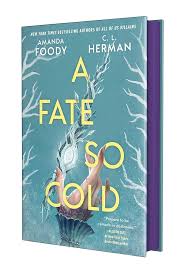
Book: A Fate So Cold Author: Amanda Foody & C. L. Herman Publisher: Tor Teen Year: 2025 Rating: 4 out of 5 stars
Synopsis : “For most of the year, Summer reigns peacefully over Alderland. Then, for six brutal weeks, Winter rages, obliterating towns and wreaking casualties. Magicians bond with powerful wands of Summer to defend the nation, a duty that costs many their lives. Domenic Barrow never wanted such responsibility – but destiny hasn’t granted him a choice. The greatest Summer wand has awakened for the first time in a century, warning that any icy cataclysm looms on the horizon. And despite his reputation as the last suited of his classmates, the and chooses Domenic to wield it. Ellery Caldwell spent years striving to be a perfect Summer magician – and burying her fears of her own power. But her worst suspicions are proven true when she accidentally creates the first ever Winter wand. Now, as the unprecedented Chosen Two, Domenic and Ellery must thwart the oncoming cataclysm together. And in trying to fulfill their destinies, they wonder if they were brought together for a second fate : to fall in love. Until they discover the unthinkable truth. The Chosen Two aren’t fated allies, but eternal rivals, and the only way to save their home is for one of them to slay the other.”
Review :A Fate So Cold is a quick and enjoyable page-turning ‘chosen one’ fantasy that left me wishing book two would come out already! Told between bouncing perspectives, it guides the reader through the winding world of Summer and Winter – and teases the idea that a peaceful world where Summer reigns for 90% of the year might not actually be the ideal. When our protagonist and budding antagonist are chosen by their wands, we fall headfirst into a sweet and idealistic closed-door romance that feels like just enough personal story in the midst of heart racing suspense. This is certainly no cozy fantasy story, so if a sweaty palm fantasy isn’t for you, you might want to skip this one. I found the story to be unique and enjoyable, though I did find small reminders and little hints toward outside inspiration like the Magicians trilogy, the obvious “Winter is coming” of it all as we might have read (or watched) in Game of Thrones, and the wand ceremony from Harry Potter. And while there were small reminders and hints to outside works, none of them felt like direct replicas or served to remove me from the story. All told, this was a fast paced and fun fantasy read with just enough suspense and just enough of a cliffhanger at the end to leave me ready for the next book.
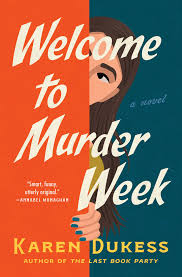
Book: Welcome to Murder Week Author: Karne Dukess Publisher: Scout Press Year: 2025 Rating: 4.5 out of 5 stars
Synopsis : “When thirty-four-year-old Cath loses her mostly absentee mother, she is ambivalent. With days of quiet, unassuming routine in Buffalo, New York, Cath consciously avoids the impulsive, thrill-seeking lifestyle that her mother once led. But when she’s forced to go through her mother’s things one afternoon, Cath is perplexed to find tickets for an upcoming “murder week” in England’s Peak District: a whole town has come together to stage a fake murder mystery to attract tourism to their quaint hamlet. Baffled but helplessly intrigued by her mother’s secret purchase, Cath decides to go on the trip herself—and begins a journey she never could have anticipated. Teaming up with her two cottage-mates, both ardent mystery lovers—Wyatt Green, forty, who works unhappily in his husband’s birding store, and Amity Clark, fifty, a divorced romance writer struggling with her novels—Cath sets about solving the “crime” and begins to unravel shocking truths about her mother along the way. Amidst a fling—or something more—with the handsome local maker of artisanal gin, Cath and her irresistibly charming fellow sleuths will find this week of fake murder may help them face up to a very real crossroads in their own lives. Witty, wise, and deliciously escapist, Welcome to Murder Week is a fresh, inventive twist on the murder mystery and a touching portrayal of one daughter’s reckoning with her grief, her past—and her own budding sense of adventure.”
Review : I absolutely adored Welcome to Murder Week! I had no idea a book about a fictional murder mystery game would be exactly what I needed in my life, but it turns out it was. I did refrain from a 5 star review, though, due to the slow start. I found myself moving at a snail’s pace as the book began, but once things got rolling, boy did they. Sweet, wholesome, and a wonderful good time, Welcome to Murder Week is perfect for anyone who grew up watching Poirot movies, reading Agatha Christie, enjoying Murder She Wrote, or lives for a cozy mystery in book, tv, or movie form. As three strangers work together to solve a fictional murder mystery in a quaint English town, they find themselves growing together as close friends. What began as a quirky tourist trip, though, quickly becomes a deeper and more meaningful adventure for our protagonist, Cath, that we could even have expected. In moments of tenderness, we find Cath retracing steps that seem strangely familiar, despite having never visited the English countryside; we witness the healing of generational trauma, and we experience the joy of watching her story completely turn on its head and unfold in the most beautiful way. This book will make you laugh out loud while simultaneously making you cry. It’s everything I didn’t know I needed and more. Absolutely well done.
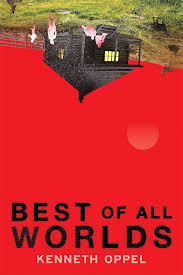
Book: Best of All Worlds Author: Kenneth Oppel Publisher: Scholastic Press Year: 2025 Rating: 5 out of 5 stars
Synopsis : “Xavier Oak doesn’t particularly want to go to the family cottage with his dad and pregnant stepmother. But family obligations are family obligations, so he leaves his mom, his brother, and the rest of his life behind for a weekend at the lake. Except…on the first morning, he wakes up and the cottage isn’t where it was before. It’s like it’s been lifted and placed somewhere else. When Xavier, his dad, and Mia go explore, they find they are inside a dome, trapped. And there’s no one else around. Until, three years later, another family arrives. The Jacksons are a welcome addition at first – especially Mackenzie, a girl Xavier’s exact age. But Mackenzie’s father has very different views on who their captors are, and his actions lead to tension, strife, and sacrifice. In this masterpiece, award-winning author Kenneth Oppel has created a heart-stopping, can’t-wait-to-talk-about-it-story, showing how our very human choices collectively lead to humanity’s eventual fate.”
Review :Best of All Worlds is a serious mind bending, quasi-scifi, semi-dystopian work of speculative fiction. A family leaves for their lake cabin, something they’ve done for over and over again for so many weekends of their lives, and when they wake in the morning they find they’re somewhere else entirely. What follows is a journey into what a so-called perfect life might look like : no diseases, no bugs, no predators; what a simpler life in a world undisturbed by human activity might entail: hard work, homesteading, eating simply; and what kind of emotional processing that might require. We spend perhaps just shy of one third of the book with the Oaks alone during the first few weeks after they arrive, learning the lay of the habitat, discovering they’re encased within some kind of smart, self-healing dome under which they have electricity and everything they need to survive, but not much else. We find they’re all on their own, their captors seem fairly benevolent, and while they certainly haven’t been transported and isolated with consent, they do their best to make do with the situation at hand. It’s at this point that the book jumps three years into the future – our protagonist Xavier is now 16 years old and has given up all hope of ever seeing another soul again when, out exploring the dome in the middle of the night, looking for a way out, he witnesses a new home being built by tiny nano-bots. The Jackson’s have arrived and suddenly the Oaks are no longer alone.
Oppel has created a visionary work that left me with questions all the way up until the final page. There was no moment where I’d figured everything out, nothing that disappointed me in a predictable sort of way. Best of All Worlds is a truly impressive work that delves into the current climate disaster, the weight of impending future pandemics, climate related deaths, and the paranoia and racism that seem to grip so many people these days. Set sometime in the future, though I would suspect it might be sometime between 10 and 15 years beyond where we find ourselves now, BoAW takes place at a time when the climate crisis has turned into a full-blown climate emergency, with sea walls being built (or not built, depending on the not really mentioned political leanings of each particular state), thousands of people dying due to heat domes over intensely warm states like Florida, climate refugees seeking new land, and, of course, horrific racist conspiracy theories that keep people in the grimy clutches of paranoia. The Jackson’s offer a foil to the Oak’s level-headed mindset – Riley Jackson, our intrepid patriarch, is a deeply paranoid Christian with a belief that the broader governmental system is out to get, well, everyone. Convinced that the dome is nothing more than a big government conspiracy designed to…do something vague…Riley sets out immediately to find a way out and through, to expose the government’s plans, and to live on the fringes of society while he does so. On the other hand, we have Caleb Oak, hard working the land where he now lives, convinced that the reason they’re living within the dome is due to some form of alien activity – a conclusion he only came to after several years living as a captive, seeing technology he’s never witnessed before, and gaining an understanding of what does and doesn’t work in this place. Two equally strange ideal systems, though Caleb Oak seems content to exist in a world where his family is safe and freedom is less about fear and more about a calculated, level-headed decision.
Oppel speaks so clearly to the fear-based conspiracy theories that currently run amok within our world, particularly within the United States, and while we all know this isn’t exclusive to the US by a long shot, we do see this played out in the book with the Oaks being Canadian and the Jackson’s hailing from Tennessee. Much like Xavier will find at the end of the book, I believe anyone on any spectrum of political ideology could read BoAW and come away with something different – we hear what we want to hear, read what we want to read. However, there’s no overlooking the very real inherent through-line of racism that permeates everything the Jackson’s do, the way in which their own need for a life free of fear has actually cast their entire world in a metaphorical bubble of fear and hatred and, ultimately, evil, and the way in which the incessant need to overcome what they perceive as a targeted attack on their rights ultimately leads to just one thing : death. In our present world, this may look like so many things, from the genuine climate disaster, to concentration camps, deportations without due process, and the vulnerability of the weakest members of society when anti-vax conspiracies and rugged individualism run rampant. There’s a lot to be said for compassion, and I believe that’s what Oppel is touching on with this book – a desperate need for compassion, for truth to prevail, and for humanity to release it’s grasp on the idea that we are somehow alone amongst the masses of those who might not be or think just how we do.
This is one of those rare books where I’m going to choose not to spoil anything for you, even with a spoiler warning. You won’t know what hit you until you turn that final page, so buckle up and dive in, you don’t want to miss this one.
Advice : Part science fiction, part coming-of-age, Best of All Worlds is an excellent read. Perfect for those interested in the nuance of the ever widening divide between political parties, for those who believe the humanity deep within each of us is something that makes us inherently more connected than we ever will be different, and for those who are really ready to see the racist get what’s coming to them in the end. That’s all I’ll say for now. Read this one.
Book: Bright Futures Author: Alex McGlothlin Publisher: Bituminous Year: 2025 Rating: 2 out of 5 stars
Synopsis : “David Hall has graduated college and decided to pursue a non-traditional route. Instead of going to business school he’ll spend the summer at his girlfriend’s lake house in Appalachia with an aim to write the Great American Novel. When the words don’t flow as easily as David had hoped, and his girlfriend inexplicably begins spending increasing time away from David, David’s world goes into a tailspin.”
Review : It’s a funny thing to tell you that this is the first book I’ve ever reviewed that had so few reviews I wasn’t able to find an image of the book cover to use here for you. This book came to me via a publicity service and was billed as being a coming-of-age psychological thriller with a hint of romance and while all of those words are technically true, they’re doing all the work of describing a novel without any further depth beyond what you’ve just read. I could describe the plot to you, as I have in numerous other reviews, but sadly all I would be doing is regurgitating what the synopsis (above) already had to say. There is very little depth to Bright Futures and while the technicalities of the writing were fine, for an advanced copy the actual meat of the book goes no deeper than surface level – all while McGlothlin tells you via his protagonist that this is a coming-of-age psychological thriller with a hint of romance. McGlothlin is going through the motions and, if you’ve read any of my past reviews, you know I find this to be an insult to the reader.
David Hall, our main character, is a not-so-subtle misogynist, former frat-boy, and excessive partier-bordering on alcoholic who’s just graduated from his Southern college with big dreams of writing the next great American novel. Unfortunately for the reader, McGlothlin inserts Hall’s book within his own book, so that by the time the reader is 3/4 of the way through Bright Futures we have an entirely new novel to read – Hall’s so-called great American novel. It is jarring, to say the least. I am actually all for a book within a book, give me something so meta it blows my mind, I’m ready! This, however, is not that. Hall’s novel is contrived and graphic, and McGlothlin throws us into a violent and ablest narrative that I found myself flipping through and skimming over just to get away from. It adds absolutely nothing to the plot of McGlothin’s book, in fact I think it detracts from it, furthering the story so little that it actually does Bright Futures a tremendous disservice.
McGlothlin’s attempt to create a psychological thriller goes off the rails before it even begins – though, perhaps we can call Hall’s book within a book a psychological thriller, but it was more gratuitous violence, ableist slurs, and contrived storytelling than it was psychologically thrilling. It’s true, there’s a small element of suspense in Bright Futures, but it is very small indeed, so spaced out that by the time the ends are ready to be tied up, I’d forgotten the entire suspense-ish plot from chapters before and had to remind myself of what was going on. Hall is unpredictable, but not so much in character development as he is in poor writing – rather than a distant girlfriend whose actions eat at him until it’s all he can think about and he begins to act accordingly, we see a distant girlfriend whose actions seem to leave him only vaguely phased until he decides at the drop of a hat and with no real warning that he’s going to follow her. There’s a lot to be desired when it comes to plot arc, character development, and substance; we encounter a lot of ogling, a lot of “boys will be boys” kind of conversations, and a lot of mindless talk about Hall’s (really very bad) novel. That’s about all there is.
Advice : This book has 10 reviews on GoodReads and 4.8 stars, all of which I can only assume came from friends, family, or those who also received a free advanced copy. I choose to review in a way that’s honest, and so I can only tell you now that this is a book I would avoid – it won’t be hard to do. As always I’m grateful for the advanced copy, but they can’t all be winners.
Book: Automatic Noodle Author: Annalee Newitz Publisher: Tor Publishing Group Year: 2025 Rating: 4 out of 5 stars
Synopsis : “You don’t have to eat food to know the way to a city’s heart is through its stomach. So when a group of deactivated robots comes back online in an abandoned ghost kitchen, they decide to make their own way doing what they know : making food – the tastiest hand-pulled noodles around – for the humans of San Francisco, who are recovering from a devastating war. But when their robot-run business starts causing a stir, a targeted wave of one-star reviews threatens to boil over into a crisis. To keep their doors open, they’ll have to call on their customers, their community, and each other – and find a way to survive and thrive in a world that wasn’t built for them.”
Review :Automatic Noodle is a sweet, quick, low-stakes read that I managed to get through in under a day. Weighing in at just 160 pages (in ARC form), when I tell you this is a quick read, I mean it; while Automatic Noodle tells one small story quickly, it isn’t without substance or a deeper meaning. Newitz has done what I have found happening with regularity these days, they’ve disguised within their robot novel a story with a greater meaning, taking a group of othered people and mirroring them to our current world, perhaps not in a perfectly seemless manner, but with dedication that pays off.
In a world where robots have been granted some, albeit small, level of rights (particularly if they’re of a sentient class of robot) following a brutal war between California and the rest of the United States, we enter this novel to find that the sentient robots don’t have much in the way of rights after all. Living either slaved or indentured to corporations or woken to find they’ve been created by a debt that’s strapped not to who created them but to the robot themselves, most sentient robots have little to no choice about the life they must live. They may also find themselves the subjects of hate speech, disgust, cancel culture, and worse due to the nature of their capitalistic society that created a thing to do a job that a human would otherwise have been hired to do. I’ll admit, it was hard for me to wrap my mind around the first layer of this novel, which is, at face value, robotphobia, given the horrific misuse and abuse of generative AI in our current world; destroying the planet, replacing jobs, and demolishing our creative abilities all in one fell trendy swoop. It feels as though Automatic Noodle might be a look through time at ourselves if we don’t get behind human beings pretty immediately. And that’s where our second layer comes in.
Automatic Noodle is a clever mask for a narrative driven by the gross inequities people of all creeds and backgrounds face even in 2025, particularly our queer, trans, neuro-spicy, and non-white friends. Empathy is the thread Newitz binds this story together with, putting the reader into the shoes of sentient robots who just want to live and thrive in a world where others are so able to live and thrive within. In a world where they are outcast and othered simply for being exactly who they are, they find a way to engage with each other, with their community, and to find their own personhood in the midst of everything. Without needing to ask their community for assistance, it’s freely given to them because in Newitz’ world, empathy exists in the majority of people and for those who seem incapable of seeing a person as a person, they appear to be the minority, enraged and bated by targeted online attacks from those with outdated ideas of what might make a country great. Uncanny, huh?
If you want to know how a society is functioning, simply look to the sci-fi and fantasy world to tell you. It’s no coincidence that the last two books I’ve read in this realm have emphasized the concept of empathy. In a world where we forget that people are people and our humanity makes us inherently more alike than different, it’s no surprise to find stories that allude to the hate and vitriol that’s being spewed with more and more vehemence and frequency. Automatic Noodle does an excellent job of relating a futuristic scenario to our present-day troubles, all while cultivating a narrative of joy, peace, friendship, and community despite and because of our differences. Love is a greater force than fear and hate and we see it time and time again in sweet novels such as this. And while I didn’t find the flow of robotic narration my favorite to follow (in fact, I enjoyed Newitz’ writing the best in their letter to the reader), Automatic Noodle is a book I’ll be recommending to friends in the future. It’s a joyous journey into the world of savory noodles, found family, and community support despite raging phobias and hate over a group of people who are simply trying to live their lives in peace. We are all deserving of a peaceful, joy-filled life. Full stop.
Advice : If you’re looking for a quick, cozy read in the vein of A Psalm for the Wild Built, I think you’ll really love Automatic Noodle. If you enjoy a reclamation story, found family, or how food gets made, this is definitely for you!
Book: The Enchanted Greenhouse Author: Sarah Beth Durst Publisher: Bramble Year: 2025 Rating: 4.5 out of 5 stars
Synopsis : “Terlu Perna was lonely, so she broke the law. She cast a spell and created a magically sentient spider plant. As punishment, she was turned into a wooden statue and tucked away in an alcove in the North Reading Room of the Great Library of Alyssum. And that was the end of her story. Until… Terry wakes in the cold of winter on a nearly deserted island full of hundreds of magical greenhouses. She’s starving and freezing and the only other human on the island is a grumpy gardener. To her surprise, he offers Terlu a place to sleep, clean clothes, and freshly baked honey cakes – at least until she’s ready to sail home. But Terlu can’t return home and doesn’t want to – the greenhouses are a dream come true, each more wondrous than the next. When she learns that the magic that sustains them is failing – causing the death of everything within them – Terlu knows she must help. Even if that means breaking the law again. This time, though, she isn’t alone. Assisted by a gardener and a sentient rose, Trull must unravel the secrets of a long-dead sorcerer if she wants to save the island – and have a fresh chance at happiness and love.”
Review : I’ll be the first to admit that the concept of anything talking that wouldn’t normally talk is one of my least favorite fantasy tropes – I find talking animals to be disconnected from my expectations and there’s rarely a time when I feel differently. So the concept of a book in which most of the characters are talking plants was immediately something I entered into with trepidation. I love a fun new world of fantasy novels, but for some reason, I just cannot generally get on board with talking creatures. I’m happy to report, however, that The Enchanted Greenhouse is the exception. Durst has successfully created a fantasy world with this novel that needs very little extra work – the entirety of the novel takes place in a massive series of enchanted and magical greenhouses, on an island with just one other inhabitant beyond our protagonist (Terlu Perna, purple skin, purple eyes…human). The plants we encounter in the greenhouses, while some seem to be otherworldly, largely reflect what we might find in our own world, and while there is a flying cat and several magical creatures spelled to do some work in the greenhouses, there’s little beyond the inherent magical quality of the book that wouldn’t be found in our own world.
I realized about a chapter into The Enchanted Greenhouse that this is in fact a sequel to a previous book that I haven’t read, but the mark of a great book is that it can stand alone without much explanation needed, and Durst certainly achieved that feat. Had I not read the letter from the author, I would never have known this wasn’t a stand alone novel, the recap at the beginning of the book felt less like a recap and more like the necessary introduction to Terlu Perna and the magical world she resides within. And though the world she lives in is magical, it’s also filled with rules about who can and can’t do magic – for good reason, as magic can be dangerous – only trained sorcerers are allowed to even attempt to perform spells. However, Terlu casts a spell to create sentience in a plant friend of hers, and in doing so finds herself made an example of and is turned to wood. During her years as a statue, though, the Empire falls and the rules of what magic is and isn’t allowed are changed. To save Terlu from the fires of the resistance, Terlu’s old boss ships the statue formerly known as the living Terlu (along with the spell to awaken her from her statue slumber) to a remote island of greenhouses run by a lone gardener named Yarrow. Having sent letters to the government begging for help with his magically failing greenhouses, Yarrow believes Terlu is a sorcerer sent to help him. When Terlu awakens and Yarrow realizes she’s just a girl who cast a spell one time, he becomes sullen and grouchy. But the greenhouses continue to fail, and Terlu is determined to help.
I’ve read several books over the last few years that have billed themselves as being similar to Legends and Lattes by Travis Baldree, and while some have come close to the cozy fantasy he’s crafted in his series, none have really been what I would compare to his works. While The Enchanted Greenhouse wasn’t labeled as such, had it been, it would have been the first book I’ve read since Legends and Lattes that made me feel the same way Baldree did. Durst has created a cozy, low-stakes fantasy with the most wonderful cast of characters. It did have a slow start, hence the 4.5 stars, but once I got into it, things really picked up in a sweet, cozy, romantic sort of way. And it’s worth saying that even though this book was published by Bramble, it is definitively not a romance novel – it’s a love story. And who would have though I’d have spent an entire novel crying my eyes out over a lovable rag-tag crew of talking plants? Not me, that’s for sure. But cry I did. Durst has created something truly magical with this work, weaving the concept of empathy into her tale in such a way that I can’t imagine anyone who read this book could walk away unchanged. Not only is it a beautiful tale of found family, it’s also a deeply political tale as well, and perfectly timed, at that. I won’t spoil it for you, but know that it doesn’t read as political, it’s just that you cannot come away from this book on the side of the oppressor. You simply can’t.
Advice : If you enjoy quiet, cozy, low-stakes fantasy novels with flying cats and miniature dragons and honey cakes…well, do I have news for you. Add this one to your list, pre-order it now before it’s release in June. Trust me.
Book: Don’t Let Him In Author: Lisa Jewell Publisher: Atria Books Year: 2025 Rating: 3 out of 5 stars
Review : “He’s the perfect man. He says he loves you. You think he might even be made for you. Before long he’s moved into your heart – and into your house. And then he leaves for days at a time. You don’t know where he’s gone or who he’s with. And you realize – if you looked back – you’d say to yourself : Don’t let him in.”
Review :Don’t Let Him In is, in some ways, the quintessential scam story – a man gives just enough details to be believed, but not enough to encourage questions and in doing so he scams women out of their life’s savings, their home, and their dignity. In other ways, Don’t Let Him In suffers from an image crisis, namely, it doesn’t seem to know what it is – or rather, it wants to be too many things. Jewell does an excellent job painting picture for the reader, jumping back and forth between the present and the past, changing point of view from the victim(s) to a man with many names, guiding us from victim to victim, broadening the scope as she simultaneously narrows the field of vision. It’s an enjoyable suspense thriller with multiple female characters, deviating from the excruciating norm of the unreliable female narrator that so many suspense/thriller writers seem to clutch to with all their might. Jewell, instead, weaves a winding narrative of a man who manipulates, targets, and attacks with precision and ease. By the time it’s all said and done, it doesn’t come down to one (or several) unreliable women, rather, they’re logical, grounded, down to earth women who are worn down over a period of years until they don’t even know themselves anymore.
Where I struggle with Don’t Let Him In, is that this story is far from unique. And while that’s a sad portrait of our modern times, it’s more than that. Jewell seemed to have trouble reigning in her plot, it became muddied and she let slip a few holes because of it. ** Spoilers Ahead ** Jewell wanted us to buy that her scam artist main character was manipulating women, conning his way into their lives, and stealing their money on a slow but steady basis – yes, that I can buy. Consider it sold! But wait, that’s not all – next we have to buy that our main character is also a street stalker, potentially even someone who derives in-the-moment sexual gratification from his street stalking, that this gratification may be his sole sexual drive; okay, I guess I can believe both aspects of this guy’s personality, but again, that’s not all. Now we need to believe he’s also insanely jealous, prone to fits of vengeance and extravagent plotting; next, he’s a murderer; next, he’s faked his own death; next, he’s got a god-complex and delusions of grandeur; he’s an escort; he’s running business scams as a life coach; wait, now he’s also a master of escape. No. It’s too much. Don’t Let Him In suffers from a lack of editing, the plot is a disaster, and the story struggles to keep itself afloat beneath the weight of so many incredible personality characteristics. Pick two from the above list and go hard, do them well, I’ll buy that. This? I’m not buying what you’re selling.
As someone who partakes in pop culture, it wasn’t a struggle to see what podcasts and tv shows Jewell might have consumed prior to writing this book – Dirty John (a true crime podcast by Christopher Goffard) and You (a Netflix adaptation of a book series by the same name) come immediately to mind, I’m sure with just a few additional minutes of thought you or I could come up with more than a handful of others. It’s a storyline in the mainstream, it’s not new or unique and Don’t Let Him In doesn’t offer an inventive perspective beyond trying to encompass every perspective. I didn’t find this book to be very interesting or compelling, but I will say the ending was exactly what you’d hope it would be, without giving anything away. It’s satisfying and thank god for that, because if you’ve plowed through this nearly 500 page book, you deserve an ending that makes you happy it’s over. I didn’t find myself thinking about this book when I wasn’t reading it, or chewing on it after it was over, I simply read it. That’s all. The twists are easily spotted, the plot holes are glaring, and the plot itself is a messy, muddled fiasco.
Advice : If you’re looking for a book that showcases every possible scam available in one character – woo! This is it! If you’re looking for some substance, something that doesn’t read like every podcast you’ve listened to in the last 10 years or every tv show you’ve watched on your fav streaming platform, this is not it. Keep looking. And listen, suspense / thrillers only get better if we, the reader, demand more.
In an effort to continue reviewing every single ARC I receive (for the second year in a row) while simultaneously not burning out from the effort, I’ve decided to implement what I’m calling Speedy Reviews. Here I will briefly review more than one advanced copy received recently – largely books that I don’t feel necessitate a long-winded review. Without further ado, I give you : Speedy Reviews.
Book: All the Men I’ve Loved Again Author: Christine Pride Publisher: Atria Books Year: 2025 Rating: 3 out of 5 stars
Synopsis : “It’s 1999 and Cora Belle has arrived at college ready to change her life. She’s determined to grow out of the shy, sheltered daddy’s girl who attended an all-white prep school in her all-white suburb. What she’s totally unprepared for is Lincoln, with his dark skin, charming southern drawl, and smile. Because how can you ever prepare yourself for the roller coaster of first love? Just when Cora thinks she’s got everything figured out, a series of surprises, secrets, and a devastating tragedy sends her into a tailspin. In this wake of this tumult, a new man enters her life. Cora is once again thrown by the strength of her feelings, this time for Aaron, the enigmatic photographer who seems to understand her like no one else. With her whole heart at stake, Cora is pulled between two loves : one that’s comfortable and one that’s true. Twenty years later, Cora is all grown up and has made it a point to avoid any serious relationships. Being alone can’t break your heart. But then an unexpected reconnection and a chance encounter put her right back where she started. The same two men the same agonizing decision. Finding herself in this position – again – will test everything Cora thought she knew about fate, love, and, most importantly, herself.”
Review :All the Men I’ve Loved Again is a well written read about the ups and downs of first love, particularly first love when one is so, so young and so, so naive about the world, like Cora, a first year college student (when we meet her). And while it was well written, I found it to be an incredibly slow read. I had a hard time connecting with the characters, perhaps because so much of the book is taken up by Cora’s relationship with Lincoln. There was a small attempt made at creating backstory and friendships with Cora’s roommates, but the vast majority of the plot is Cora’s relationship with Lincoln. And while you might think, based on the synopsis, that this story would bounce between Lincoln and Aaron…it really doesn’t. There are whole relationships formed, strange friendships made, hints dropped, and storylines that simply don’t play out, the synopsis tells us more about Cora’s background than the actual book does, and the time we spend between Cora and Aaron is minuscule. All the Men I’ve Loved Again feels disjointed and disconnected from the reader, but beyond that, by the time I’d finished I was left with the glaring question of whether this story needed to be told. And to answer that question, the best I can say is, I don’t think it did. It felt like a story that had nearly nowhere to go and I don’t feel like it ultimately ended up being worth my time. It was well written, I’ll say that. But it wasn’t something that kept me turning the pages.
Finally, if you choose to read All the Men I’ve Loved Again, know that there are mentions of abortion, miscarriage, stroke, hospitalization, loss of a parent, and cheating.
Book: Zom Rom Com Author: Olivia Dade Publisher: Berkley Romance Year: 2025 Rating: 3.5 out of 5 stars
Synopsis : “When Edie Brandstrup attempts to save her seemingly harmless neighbor from the first major zombie breach in years, she’s stunned to be saved by him – and his ridiculously large sword – instead. As it turns out, Gaston “Max” Boucher is actually a super-old, super-surly vampire, and he’s unexpectedly protective. The pair soon unravels a sinister conspiracy to set zombies loose on the world (again), and despite the awful timing, Edie finds herself falling for the vampire who’s helping her save humanity. As she and Max battle their foes side by side, Edie must decide whether having a love worth living for also meaning having a love you’d die for – and, in a world that grows deadlier by the minute, whether that’s a risk she’s willing to take.”
Review :Zom Rom Com is a surprise of a book, weighing in at just shy of 400 pages, with complex world-building and a cast of characters it’s hard not to love. As someone who isn’t the world’s biggest fan of zombie storylines, I was pleasantly surprised by how much I enjoyed this creative and exciting rom-com from Olivia Dade. In a world where humans, superhuman, and supernaturals coexist together, it’s perhaps not the biggest surprise that there might be zombies existing in this plane of existence, yet I found the concept of zombies to be funny and inventive within the world Dade’s created. Every aspect of this book could have taken a gristly or even bleak turn, but Dade managed to keep things light and fun all the way to the final page. The banter between Edie and her super hot vampire neighbor Max is enough to keep the pages turning, but the complex and well thought out plot behind a zombie outbreak, and even the reasoning behind why zombies exist in the first place, is really what kept me turning pages. There’s a good build up of will-they / won’t-they that lasts for at least the first 100 pages that adds to the building enjoyment, and while this is a romance novel, there’s an incredibly amount of plot creation and fantasy work involved in this novel, from start to finish. I did feel there were a few plot holes and inconsistencies, but nothing that detracted from how much I genuinely enjoyed this book. Without giving any spoilers away, the ending more than leaves room for at least one additional novel, though I suspect there could be more!
Before reading this book, if you choose, this novel discusses the loss of family members, romantic betrayal, and chronic illness. And – yay! – this book included plus-size inclusion!