The Magicians Trilogy Review

Book: The Magicians, The Magician King, The Magician’s Land
Author: Lev Grossman
Publisher: Penguin
Year: 2007 – 2014
Rating: 2.5 out of 5 stars

Synopsis: (from The Magicians) “Quentin Coldwater is brilliant but miserable. A high school math genius, he’s secretly fascinated with a series of children’s fantasy novels set in a magical land called Fillory, and real life is disappointing by comparison. When Quentin is unexpectedly admitted to an elite, secret college of magic, it looks like his wildest dreams may have come true. But his newfound powers lead him down a rabbit hole of hedonism and disillusionment, and ultimately to the dark secret behind the story of Fillory. The land of his childhood fantasies turns out to be much darker and more dangerous than he ever could have imagined….
The Magicians is one of the most daring and inventive works of literary fantasy in years. No one who as escaped into the worlds of Narnia and Harry Potter should miss this breathtaking return to the landscape of imagination.”

Review: To fill you in on a little background, I found The Magicians through a show on the SciFi channel appropriately named The Magicians. It was compelling, I was immediately struck by what a massive budget the show must have had, and I was completely sucked in by the quality effects and overall put-together-ness you often miss with fantasy and sci-fi shows. It wasn’t until this year, though, that I realized the show was originally a book series so without much thought I dove right in.
I’ve struggled to find ways to review this series without also reviewing the show, continuously finding ways to compare what was done in the show to what was written in the book, seeking out plot holes between the two, and being somewhat marveled by the apt characterization of each person in the show vs the book. It’s already a bit of a strange review, attempting to review a series rather than each book individually, but I found the stories blended so seamlessly, I could have been reading from one enormous book.
Despite plowing through this series in under a week, I chose to rate these books with ultimately 50% because I’ve found, particularly in more recently popular fiction, one does not have to be a great writer to turn pages. One only needs to be compelling, and Lev Grossman writes stories that are nothing if not compelling. If we look past the glaringly obvious copy-cat of The Chronicles of Narnia, we’re still confronted with an author who wields the trope of a miserable, privileged teenage boy as if it’s a blazing sword of originality. It isn’t. I remarked recently, in the show you’re presented with Quentin as a miserable, privileged boy in a way that points to the remarkably pathetic nature of his character, in the book, however, we’re supposed to believe wholeheartedly in his “nothing is ever good enough” facade. Was it meant to be written in a way that makes you want to gag slightly over how rough Quentin has it with his genius IQ that allows him access to a magical world he’s been dreaming about his whole life only to continue pining for something more (a something more that included access to every ivy league school he could possible wish for)? I doubt it. I think we’re truly meant to feel sorry for him and that’s not something I can find myself doing. Poor rich boy, with his magic and his smarts and all the doors opening for him – it hits harder when we realize that his best friend, a girl who is likely better at magic and just as smart as him, didn’t gain access to the magic world for reasons that are never fully explained in the book.
Moving on. Grossman is cavalier with his use of mental illness, he relies heavily on fat shaming, and throws around words I wouldn’t dare use as a conversational piece. Looking at the published date of 2007, I’m not entirely surprised by some of the language he uses, but it doesn’t stop Grossman from continuing to make light of horrific sexual trauma and deep depression even as his writing moves further into the 2010s. That alone is enough to knock the rating down at least two points, in my opinion. It neither adds to the story nor furthers any action, it merely serves to show how little Grossman cares for an audience that often seeks fantasy and sci-fi to escape from the realities of life; mental illness, trauma, abuse, and bullying.
Something I found hard to move past in this trilogy is the way in which Grossman sets up magic; it’s unattainable to the average person and unless you have an IQ higher than practically everyone you know, the idea that you could insert yourself into this world he’s created is implausible. He builds a world we are meant to love and wish to escape to and then holds it so high over the heads of his readers to keep them out that we couldn’t reach it if we jumped. It’s impossible to insert yourself as a reader into a world like that, and frankly isn’t that what sci-fi and fantasy are about? How can we, as readers, be expected to escape to a beautiful world of magic if it’s so far beyond our intellectual reach?
Grossman writes in such a way that I thought perhaps he was simply trying to convey how pretentious Quentin and his friends are throughout the series, but the more I progressed through the books the more I realized it isn’t Quentin and his fellow magicians who are pretentious, it’s Grossman. I found myself looking up words I absolutely never hear or read – thrown into books that read at a YA level, words that, again, don’t further the plot or move the action along; they serve merely as yet another tool to keep his readers at arms length.
Finally, as I finished the trilogy, I began to see the book devolve into a tangled mess of “probably”. I didn’t have the time, energy, or heart to go back through the entirety of the third book, but I did sift through a few of the final chapters (26-28) and found the word probably used over fifteen times – often as the start of a sentence, used both in narrative and conversation. What’s the point? I’m really not sure. Did the other two books and maybe even the remainder of the third contain more of the p-word than I realized? Probably.

Advice: These books are compelling, they really are. I found it hard to put them down, wanting to know what was going to happen next, reading quickly because the plot moved quickly. It’s an enjoyable read if you don’t think about it too much, or if you’ve watched the series and found it to be something you liked. It’s not an enjoyable read for a myriad of other reasons and I will likely not be reading anything further from Grossman in the future.
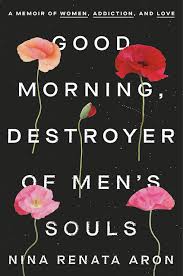
Good Morning, Destroyer of Men’s Souls Review

Book: Good Morning, Destroyer of Men’s Souls
Author: Nina Renata Aron
Publisher: Crown
Year: 2020
Rating: 5 out of 5 stars

Synopsis: “‘The disease he has is addiction,’ Nina Renata Aron writes of her boyfriend, K. “The disease I have is loving him.” Their affair is dramatic, urgent, overwhelming – an intoxicating antidote to the long, lonely days of early motherhood. Soon after they get together, K starts using again, and years of relapses and broken promises follow. Even as his addiction deepens, she stays, confined that she is the one who can help him get sober. As a result of an adolescence marred by tragedy, Aron has always felt responsible for those suffering around her. How can she break this pattern? If she leave K, has she failed him?
Writing in prose at once unflinching and acrobatic, Aron delivers a piercing memoir that cracks open the long-feminized and overlooked phenomenon of codependency. She shifts between visceral, ferocious accounts of her affair with K – as well as her family’s own struggles with addiction – and defining moments in the history of codependency. Good Morning, Destroy of Men’s Souls is a blazing, bighearted book that illuminates and adds nuance to the messy theaters between felinity, enabling, and love.”

Review: Good Morning, Destroyer of Men’s Souls is more than a small synopsis on the back of a book, it is more than a tiny review on a website or post on social media. It is an all encompassing work, a memoir and an unfaltering look into the heart of the AA, Al-Anon, codependency, trauma, tragedy, love, and growth. Aron is at times a young Joan Didion, basking in the warmth of the California sun, radiating the innocence only a new, young life in San Fransisco can. She wraps the reader in a golden glow, enveloped in the potential of a bright future yet to be seen as she emerges, newly 18, on the west coast – having traveled from the far side of the east coast, from New York, Philly, punk shows and hometown suburbia, to find something of her own, to cast her flag upon new soil; an explorer of new lands and a conqueror of life at once. We spend ever the briefest of stays in Didion-esque Northern California before Aron returns home, called upon by her family and the addiction that grips her sister and in turn the entirety of her familial home.
Aron discusses the addiction that codependents find themselves drowning within and the difficulties this level of love, attachment, desire, maybe even lust for the ability to fix it, bring. She waxes poetic on the love she has for the possibility, the person she knows the addicts in her life could be. If only, if only, if only. She struggles; we find her neck deep in an intense and toxic relationship with an old flame, K, yet another addict (heroin, among others). This time she isn’t a budding adult, she has children and a career, a home and a car, both physical and intangible belongings which are easily broken beneath the weight of addiction. Admitting her own codependency, she swings between fury and guilt; quoting Lois Wilson, she acknowledges her own brokenness in needing to fix: “Living with me would be such an inspiration, I thought, that he would not need the balm of alcoholic.” and “Alas, for the codependent, empathy springs eternal.” (220, 218) If she were Joan in a cozy, golden California, in the midst of a lifetime of crisis and trauma she is Melissa Febos – wildly educated, wholly sunk into addiction and love, and deeply, deeply vulnerable.
Reaching into the jagged edge of a wound, Aron uses Good Morning, Destroyer of Men’s Souls to tear herself open, slashed and flayed onto the page for the reader to soak in. We are privy to her agony, the newness of motherhood, of “babylove”, of the milky smell of a newborn, and in the same breath we feel her guilt and sorrow as she struggles to hold everything together, to keep the people around her from crumbling to pieces even as she realizes they already have. She uses herself, her own story of codependence, of being a widow to a man who has not died, of her own addictions to both love and substance, to take the reader on a trip through the confoundedness of addiction trauma and enabling. Aron has written a story that rages quietly, burning through the pages as she discusses the history of AA amidst the anguish of her own life. It is heart shattering, honest, and raw.

Advice: This is not an easy book to read, as I said, it’s brutally honest as Aron speaks of addiction and love in blunt terms. However, it is an absolute must-read, a book that will change you, move you, bring you to the page to write a review. It is a deeply personal memoir that I found often challenging in reading it – I absolutely recommend this book, I will be chewing on it for days to come.

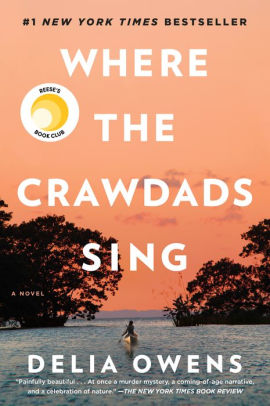
Where the Crawdads Sing Review

Book: Where the Crawdads Sing
Author: Delia Owens
Publisher: Putnam
Year: 2018
Rating: 2.5 out of 5 stars

Synopsis: “For years, rumors of the “Marsh Girl” have haunted Barkley Cove, a quiet town on the North Carolina coast. So in late 1969, when handsome Chase Andrews is found dead, the locals immediately suspect Kya Clark, the so-called Marsh Girl.
But Kya is not what they say. Sensitive and intelligent, she has survived for years alone in the marsh that she calls home, finding friends in the gulls and lessons in the sand. Then the time comes when she yearns to be touched and loved. When two young men from town become intrigued by her wild beauty, Kya opens herself to a new life – until the unthinkable happens.
Perfect for fans of Barbara Kingsolver and Karen Russell, Where the Crawdads Sing is at once an exquisite ode to the natural world, a heartbreaking coming-of-age story, and a surprising tale of possible murder. Owens reminds us that we are forever shaped by the children we once were, and that we are all subject the the beautiful and violent secrets nature keeps.”

Review: Where the Crawdads Sing came highly recommended and it was absolutely without question as to why my book club chose this title to read. It is a New York Times Bestseller, it’s a book in Reese’s book Club, and it’s been highly praised. A quick online search shows it ranks between 4.5 and 5 stars from multiple rating sources. I began reading this book truly uncertain about how I would feel – I waited until the last minute to cram it in before our bookclub meeting and never actually read the synopsis. The story begins in 1952 when Kya, the “Marsh Girl”, is six years old and jumps back and forth between the years leading up to 1969 and 1969 itself. Crawdads is Owens’ debut novel, though it is not her first publication. As a native to North Carolina herself, Owens has a unique perspective of the swampy, marshy areas along the coast, and in fact she has written several books on wildlife (though, notably not about her time in NC). The writing of Crawdads is gorgeous and striking, at no point during the novel are you lost in imagining the marsh and the amazing creatures who call it home. This, at the very least, warrants Crawdads 50% of it’s rating. However, while Owens’ writing skills are clearly well developed, her novel writing skills are not. The conversation is stilted and unbelievable – most townsfolk speaking as Owens writes: in prolific, beautiful language, describing things people would likely think rather than say. She weaves an intricate tale of murder throughout the novel, something that the entirety of the plot relies upon, yet when it comes time to reveal who the murderer really was (gasp! plot twist??) we are left with an incomplete story, a predictable ending, and a story that would absolutely never have happened. And maybe that’s my fault for hoping that a realistic book would have a realistic plot line, but I’d rather read something realistic and deeply moving than something that Nicholas Sparks himself might have written and written better.
The ending leaves the story with gaping holes and I find myself stewing over this days after having finished the book. If what the novel was aiming for was a purely romantic plot line with absolutely no need for reality, it could have and should have been written differently. If, what I suspect Owens was trying to do, the novel was written to be poignant, address prejudices, and introduce the reader to the amazing wildlife and human life that reside within a marsh, it should have absolutely taken about three different turns and concluded in a much different manner. But what I’m left with is disappointment and frustration that I spent $25 on a hardcover copy of what ultimately turned out to be a Nicholas Sparks book in disguise and for that I would have passed it up.

Advice: If you are interested in a slow moving and deeply unrealistic love story, first of all, no judgement. Secondly, this is the book for you. It is a gorgeous book with amazing tales of wildlife and a truly remarkable coming-of-age story that turns on its head and becomes a sappy love story at the end. I can admit that this is not at all my style but is the style of many a summer book reader. If you are not looking to think deeply about the plot or the potential holes in it, definitely pick this book up. Again, I can’t say enough about the gorgeous imagery Crawdads provides, it is striking and compels you to continue reading without putting the book down. It’s a 50/50 for me, some good with a lot of, in my opinion, bad.

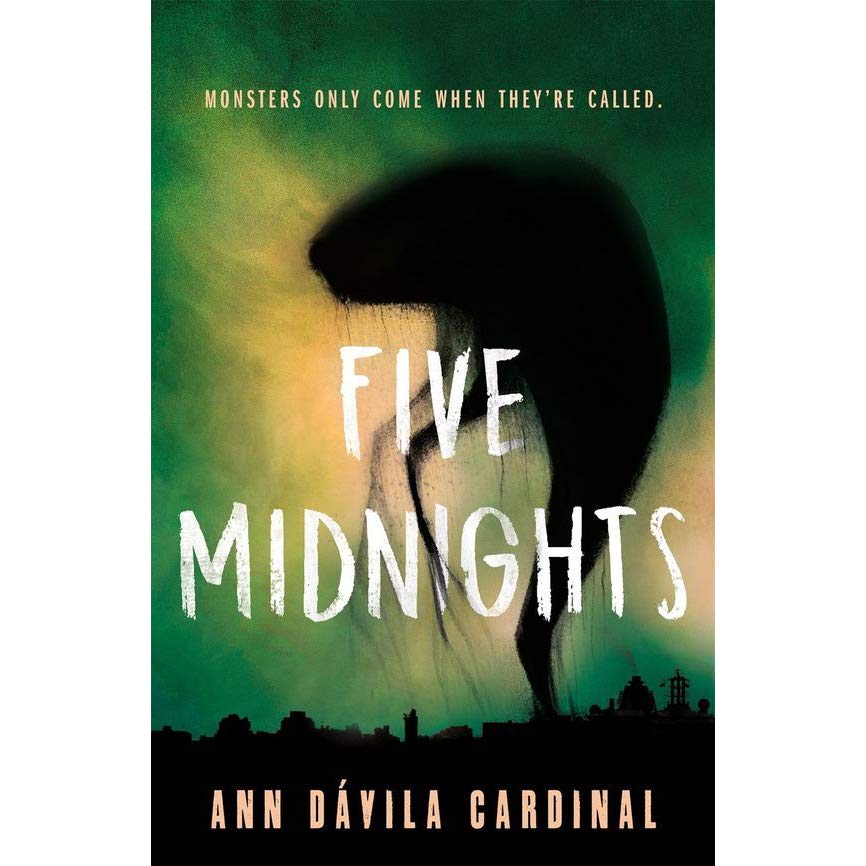
Five Midnights Review

Book: Five Midnights
Author: Ann Dávila Cardinal
Publisher: Tor Teen
Year: 2019
Rating: 3.5 out of 5 stars

Synopsis: “Five friends cursed. Five deadly fates. Five nights of retribución.
If Lupe Dávila and Javier Utierre can survive each other’s company, together they can solve a series of grisly murders sweeping through Puerto Rico. But the clues lead them out of the real world and into the realm of myths and legends. And if they want to catch the killer, they’ll have to step into the shadows to see what’s lurking there — murderer, or monster?”

Review: Five Midnights is the forthcoming debut YA novel from Dávila Cardinal, a Puerto Rican who currently lives in Vermont. What Dávila Cardinal has created is a riveting story of a 16-year-old girl, Lupe, coming of age while visiting a country she has allegiance to, being half Puerto Rican by descent. Over the backdrop of a YA fantasy novel, Lupe struggles with her own heritage as a half Puerto Rican, half Irish girl hailing from the mainland United States (Dávila Cardinal’s own Vermont) who doesn’t feel that either location is quite “home”. As she struggles with the idea of being light skinned and light haired, a trait she inherited from a mother who left several years ago, she tries to move into her role as a Puerto Rican but finds to her dismay that she is identified as “other” to native Puerto Ricans.
Dávila Cardinal’s novel is an engrossing tale of cultural heritage, Island myths, and young teenage love. Lupe, spending the summer in PR with her extended family, shares a love for true crime with her Tío who happens to be the local police chief. When she arrives on the island she quickly finds her way into the middle of his investigation into the strange deaths of two young men who died on the eve of their 18th birthdays. The following story is quick moving, enjoyable, and peppered with just enough mythology to spark interest without overwhelming the story with fantastic beasts or creatures.
As someone who has a vague knowledge of the Spanish language, I found this book to be fun to read as it’s filled with Puerto Rican jargon and often challenged my understanding of the context in which it was written. The dialogue is quick and believable, the characters are relatable, and while the story errs on the fantasy side, it is grounded in reality. I had a hard time putting the book down and ended up plowing through it in just under 48 hours – the mark of a quality novel.

My Advice: Do you enjoy the YA genre? If you said yes, this is the book for you. It’s a quick read, perfect for summer with a release date in early June of 2019, and it introduces the reader to an interesting Latin American myth that proves just spooky enough without giving nightmares. Other reviews call this novel “unputdownable” (Paul Tremblay) and they’re correct. It’s a great dive back into YA fiction and with the personal and profession knowledge possessed by Dávila Cardinal being both Puerto Rican and VCFA’s leader of a Puerto Rican residency, it reads with an air of authenticity that can’t be beat.

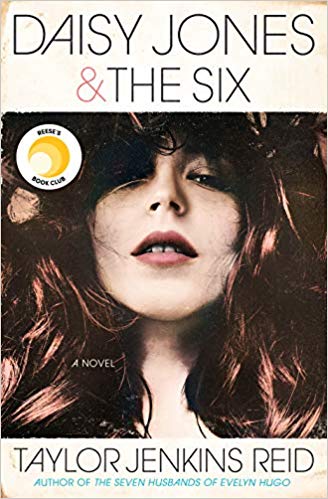
Daisy Jones & The Six Review

Book: Daisy Jones & the Six
Author: Taylor Jenkins Reid
Publisher: Ballantine Books
Year: 2019
Rating: 2 out of 5 stars

Synopsis
“Daisy is a girl coming of age in L.A. in the late sixties, sneaking into clubs on the Sunset Strip, sleeping with rock stars, and dreaming of singing at the Whisky a Go Go. The sex and drugs are thrilling, but it’s the rock ‘n’ roll she loves most. By the time she’s twenty, her voice is getting noticed, and she has the kind of heedless beauty that makes people do crazy things.
Also getting noticed is The Six, a band led by the brooding Billy Dunne. On the eve of their first tour, his girlfriend Camilla finds out she’s pregnant, and with the pressure of impending fatherhood and fame, Billy goes a little wild on the road.
Daisy and Billy cross paths when a producer realizes that the key to supercharged success is to put the two together. What happens next will become the stuff of legend.
The making of that legend is chronicled in this riveting and unforgettable novel, written as an oral history of one of the biggest bands of the seventies. Taylor Jenkins Reid is a talented writer who takes her work to a new level with Daisy Jones & The Six, brilliantly capturing a place and time in an utterly distinctive voice.

Review: Daisy Jones & The Six received a tremendous amount of fanfare preceding it’s release in March of 2019. It was read, reviewed, and adored long before it was available to buy; nearly every book reviewer I follow read the book and was singing its praises. Naturally, I was excited to pick it up, expecting a wild ride through rock and roll, drugs, and the culture of the seventies. I was sorely mistaken. DJ&TS is a kiddie ride by comparison, though Reid does discuss prolific drug use and there is some mention of sex, the details are left out and what the reader finds is a watered down story you could find on VHS’ Behind the Music. The style of the book is told as an interview, each band member giving their thoughts on the time, looking back from some fifty or sixty years later. While this style of writing is interesting and different, it requires interview subjects who have a strong grasp of the details and events as they unfolded. These former rockers talk about night after night of partying, allude to hard drugs, and mention doing lines before shows – none of which give me the impression that they would be capable of rehashing the minutiae, and yet I have come away from the book with a full and complete story. Somehow.
Reid puts a singular emphasis on foreshadowing throughout the book, leading the reader to an explosive climax, or so it seemed. The build up was hundreds of pages long, being alluded to early on and continuously referenced throughout the interviews, but when the eventual fallout occurred it was quiet, quick, and expected. In this same style, Reid turns the end of the transcript into a second “reveal”, giving the reader the details of who had been performing the interview throughout the story – here’s a spoiler: it adds absolutely nothing to the book or it’s plot.
DJ&TS is finished with a predictable rom-com ending that I saw coming from nearly the first chapter of the book. It is cheesy and it trivializes the deep connection Billy and his wife Camilla had for their entire adult lives. It takes a woman who sacrificed everything for her husband to go on tour and become one of the most famous musicians of the time, and turns her into a backdrop and a consolation prize.

My Advice: If you are looking for a book with any sort of female empowerment or feminist message, this is not the book for you. It is lacking, it is weak, and it is a massive disappointment. If you like the idea of a one note story, pun not intended, and a terribly written rom-com then this is absolutely your book. Reid calls Barbara Streisand her primary influence for Daisy’s style and after looking at pictures of young Babs online, I can say with confidence that not only was she the influence, Daisy’s style was an exact rip off of her look. It’s been done. Don’t waste your money, turn on any band interview and you’ll have the gist.


Amateur Review

Book: Amateur
Author: Thomas Page McBee
Publisher: Scribner
Year: 2018
Rating: 5 out of 5 stars

Synopsis : “Amateur follows the author, a trans man, as he trains to fight in a charity match at Madison Square Garden while struggling to untangle the vexed relationship between masculinity and violence. Through his experience boxing — learning to get hit and to hit back, wrestling with the camaraderie of the gym, confronting the betrayals and strength of his own body — McBee examines the weight of male violence, the pervasiveness of gender stereotypes, and the limitations of conventional manhood. Interrogating masculinity as emotional landscape and cultural positioning, he binds his experience to a free-ranging examination of the ways in which men fail and are failed by our society.
At once a deeply reported narrative and an intensely personal journey, Amateur is ultimately a story of hope, as McBee traces a new way forward, a new way of being a man, in the ring and outside of it.”

Review: Thomas Page McBee’s Amateur is at once a study of masculinity within the boxing ring and a deeply moving study of gender in and out of the context of boxing. McBee struggles with the concept of manhood and embarks on this boxing journey to further understand his role in the world as a man. Sharing a unique perspective on toxic masculinity, McBee provides the reader with a deep understanding of the paradoxical world in which he lives; having once lived as a female and now living as a male in a time where men are viewed often as aggressive and dangerous, he finds himself fearful and apologetic.

Not only does McBee have a new realm of existence to explore, he discusses the implications of being a “real man” whose male role model growing up was his stepfather, a man under whom he experienced decades of sexual abuse. In exploring this relationship, McBee discusses the impact this understanding has on his siblings as they become parents themselves.

Delving into the world of boxing, McBee explores masculinity in terms of love, connection, emotions, and touch. He grapples with the loss of his mother, with understanding how to interact with the women in his life, and the perception the world holds of him both as a passing male and as an out trans man. We watch as McBee falls and grows, learning how to find himself, rather than the identity he seeks based on his gender.

My Advice: If you have any interest in reading memoirs, snag this book immediately. If you have any interest in gender roles, snag this book immediately. If you have any interest in boxing, snag this book immediately.

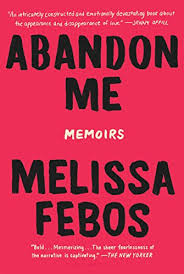
Abandon Me Review

Book: Abandon Me
Author: Melissa Febos
Publisher: Bloomsbury, USA
Year: 2017
Rating: 5 out of 5 stars

Synopsis: “Hailed by the New Yorker, Marie Claire, and Guernica for its “sheer fearlessness,” “ruthless honesty,” and “deep reserves of empathy,” Melissa Febos’s dazzling collection, Abandon Me, captures the intense bonds of love and the need for connection with family, lovers, and oneself. With it “she has emerged as one of our most creative and most unflinching memoirists, essayists, and teachers” (Los Angeles Review of Books).
In these linked essays, Febos tries to reconnect with her birth father and finds that an instinct for self-erasure binds them as surely as their blood. She remains closely tied to the loving sea captain who raised her, absent for months at a time. The hypnotic story of an all-consuming, long-distance affair with a woman marks her exploration of the worship and withdrawal that haunt her love life. Woven throughout is her insatiable hunger for self-knowledge, the difficult kind, and the powerful conviction that universal truths begin there. Abandon Me is at once a courageously vulnerable memoir and an incisive investigation of art, love, and identity.”

Review: Melissa Febos delivers a series of essays that weave her present with her past into a web of self understanding. She opens her wounds wide for the reader to fully experience, laying herself bare upon the pages of her memoirs.
On abandonment, she writes: “I want the people I love to do not as I would or have done, but whatever will keep them safe (…) There is a sorrow in me deeper than the regret of any cruelty for the fact of this: none of us could have protected each other. We could not even have protected ourselves.” (78).
On the early stages of love: “Love is so often a wish to have our wants seen and met, without having to ask” & “It is not easy to be seen, no matter how we crave it. It is not easy to look hard at the ones we love. It is always a little gruesome, as love is: full of contradictions and impossible promises” (103, 106).
On self discovery: “My stories are containers into which I pour myself and the indigestible parts of my experience (…) Once filled, they carry more of us than our lovers can bear, than we can. And sometimes they carry us away” (127).
On soured love: “I sat for hours in therapy sessions, searching for my feelings. I wanted to “get in touch with them.” I thought that when I finally found them it would be like a reunion with a childhood friend – emotional, surely, but also sweet – a reward for all my hard work. I did not think that I was leaving messages for a serial killer. I did not think that my feelings, receiving my invitation, would arrive on my doorstep like a cabal of madwomen and refuse to leave. I though that the host of the party decided when it ended and her guests went home. But feelings have terrible manners – they are like children, or drunks. They are mad. They gorge as the starved will gorge, until they are sick, until their stomach split (…) They do not leave when you want them to. They leave when they are finished” (213).
On her native heritage: “How could I ever know my own motives? The Pilgrims believed God had cleared a path, that the pestilence delivered by other whites was a path the Lord had cleared for them. They called it “The Miraculous Plague”. The natives called it “The Great Dying”” (287).
And on baring your soul to the page: “If you want to write about something, I tell them, you have to look at it. You have to look long enough that your own reflection fades” (292).

Abandon Me is complex and heartbreaking. It meets you in your own space and shows you pieces of your own self through lyrical essays that flow like water. Febos writes with metaphor, comparing the sun to a cup that has spilled onto the table, her emotions to a melon cracked upon the concrete, and her emptiness as a pit that cannot be filled. She invites the reader into her stories, allowing an intimate look at her darkest parts.

My Advice : This book is a must read. It is one of the most well written contemporary books I have read and will stick with me for a long time. It is deep and thoughtful; something to chew on. The book’s first fifteen pages are filled with glowing reviews and it is well deserved.


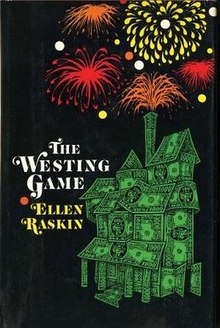
The Westing Game Review

Book: The Westing Game
Author: Ellen Raskin
Publisher: Puffin Books
Year: 1978
Rating: 3.5 out of 5 stars

Synopsis: “A bizarre chain of events begins when sixteen unlikely people gather for the reading of Samuel W. Westing’s will. And though no one knows why the eccentric, game-loving millionaire has chosen a virtual stranger — and a possible murderer — to inherit his vast fortune, one thing’s for sure: Sam Westing may be dead…but that won’t stop him from playing the game!”

Review: I found The Westing Game on the clearance shelf of my local Half Price Books store for $1. The book is in near perfect condition with the exception of a final page that has come lose and threatens to spoil the ending for the next unsuspecting reader. All of these things made my heart beat faster: I had found a childhood favorite I’d long since forgotten about.
The Westing Game is a young adult book, though when I read it I was about 8 years old so young adult could be a bit of a stretch there. It centers around 6 families who have received anonymous invitations to tour and rent Sunset Towers, a luxury apartment complex with a view of the Westing estate – a mansion with an owner who disappeared years before in the wake of a tragic car crash that left his friend crippled and battered Westing. Not long after the 6 families have moved into Sunset Towers, they are summoned to a reading of the will of Mr. Sam Westing, having each been named as his living heirs following the discovery of his dead body within the Westing mansion. As a man who loved games of all sorts, Westing chose to give his guests clues that must be unscrambled to solve the mystery of his death and discover the alleged murderer or murderess. The winner will receive Westing’s vast fortune: $2 million. What follows is a fun, imaginative Clue type murder mystery complete with explosions, deaths, and secret identities.

My Advice: As a kid, I read this book with great interest, marveling at the clues as they played out and attempting to solve the mystery before it was revealed at the finale. I read it again a few years later, again trying to work out the answer to a puzzling book I love but couldn’t unravel. As an adult, it has been over a decade since I last read The Westing Game and I had no recollection of the result. Reading it again, I found myself once again racing to solve the mystery before the end, only this time I finally solved it..well, mostly.
What I found was a book that moves quickly, keeps the reader captivated, and stuns with a surprise ending and more than a few twists and turns along the way. If you have any interest in children’s lit or young adult lit, I’d suggest going to your nearest library and checking this one out for a light read. I think you’ll be pleasantly surprise.

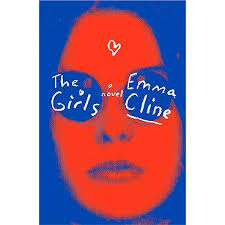
The Girls Review

Book: The Girls
Author: Emma Cline
Publisher: Penguin Random House
Year: 2016
Rating: 2 out of 5 stars

Synopsis: “Northern California, during the violent end of the 1960s. At the start of summer, teenager Evie Boyd sees a group of girls in the park and is immediately struck by their freedom, their careless dress, their dangerous aura of abandon. Soon, Evie is in thrall to Suzanne, a mesmerizing older girl, and drawn into the circle of a soon-to-be infamous cult and the man who is its charismatic leader. The group’s sprawling ranch is eerie and run-down, but to Evie it is exotic, thrilling, charged – a place where she feels desperate to be accepted. As she spends more time away from her mother and the rhythms of her daily life, and as her obsession with Suzanne intensifies, Evie does not realize she is coming closer and closer to unthinkable violence, and to that moment in a girl’s life when everything can go horribly wrong.”

Review: I picked up The Girls because of the hype that had surrounded the book upon it’s release. Cline’s first novel was being read by everyone and being reviewed in publications like the New York Times and NPR; the cover art is simplistic but catchy and inviting, it nearly jumped off the shelf at me. I read the synopsis and against my better judgement decided to give the book a try.
Let me explain.
The year is 2019. We have a white man for president. “Literary geniuses” are more often than not white men. White men dominate the news. In an effort to combat this, I have chosen to read only works from authors who are not white men. I picked up a book by a white woman, Emma Cline, hoping to read a fresh take on an old story. What I was bombarded with, instead, was a stale story about a white man who has been romanticized beyond exhaustion.
How many times have you seen a “new and exciting!” documentary about Charles Manson and the Manson girls? Did you watch John McNamara’s Aquarius when it debuted in 2015? Or perhaps you have noted the movie featured on Netflix “Manson Family Vacation” (again, 2015 release) or the newer documentary “Truth and Lies: The Mason Family” (2018) on Hulu. There is a trend, a fascination, a morbid desire to pick these horrific events apart piece by piece and imagine what could have led people to act the way they did.
Cline writes of a man, Russel, who has a strange hold over the people in his sphere. He speaks of love and a world without race and has seemingly deep and meaningful connections with every girl who lives with and follows him. And as every Manson story goes, if you read just a tiny bit further and delve just a little bit deeper the facade peels away and you’re left with the scum and filth underneath; a sexual predator and young girls who are so lost that they blindly follow the words of their supposed savior.
My hopes for Cline’s novel were less than high, admittedly, but I did wonder if she would perhaps refresh this fascination with Manson and rather than simply retell the story with new names attached would create her own world with new ideas and figures.

My Advice: Perhaps you haven’t seen Charles Manson’s face in the news, a swastika tattooed on his forehead and scraggly hair sprouting from his scalp. Maybe you haven’t watched any of the numerous Manson documentaries, movies, or tv shows that have picked apart the events of the Manson family so such degree that there is nothing left to scavenge. If this is the case, my advise to you is go to your local used book store and pick up a copy for $7.
If, however, this is not the case and you have indeed been privy to this sick obsession with a sexual predator who had no motive beyond his own selfish desires, there are plenty of other books out there that would be better suited for you. And if you still feel like you are missing out, watch Aquarius. It’s the same story.


Welcome!

Welcome to my little space I’ve carved out here for the discussion and review of books I’m reading. For the sake of new beginnings, rather than jump right into reviewing a book, I’ve provided a list below of my current reading list:

  1. Beloved by Toni Morrison
  2. Becoming by Michelle Obama
  3. Assata by Assata Shakur
  4. Sing Unburied Sing by Jesmyn Ward
  5. One Hundred Years of Solitude by Gabriel Garcia Marquez

I’ve chosen the above books from an extensive to-read list of my own based solely on accessibility and time. Becoming is a book I’m reading for a new book club I’ve joined, but other than that the rest of the reads are of my own choosing for the purpose of self education.

Finally, a little information about me. I am a non-traditional college Junior (nearly senior) majoring in English with aspirations towards an MFA in Creative Writing. I dream of copy writing to pay the bills and writing/reviewing on my own time for the fun of it. I’m excited to see what this blog brings during this year!