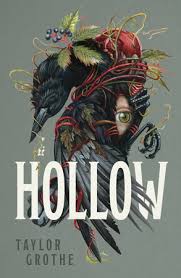
Hollow Review

Book: Hollow
Author: Taylor Grothe
Publisher: Peachtree Teen
Year: 2025
Rating: 3 out of 5 stars

Synopsis : “After a meltdown in her school cafeteria prompts an unwanted autism diagnosis, Cassie Davis moves back to her hometown in upstate New York, where her mom hopes the familiarity will allow Cassie to feel normal again. Cassie’s never truly felt normal anywhere, but she does crave the ease she used to have with her old friends.
Problem is that her friends aren’t so eager to welcome her back into the fold. They extend an olive branch by inviting her on their backpacking trip to Hollow Ridge, in the upper reaches of the Adirondacks. But when a fight breaks out their first night, Cassie wakes to a barren campsite – her friends all gone.
With sever weather approaching and nearing sensory overload, Cassie is saved by a boy named Kaleb, who whisks her away to a compound of artists and outcasts he calls the Roost. As Kaleb tends to her injuries, Cassie begins to feel – for the first time in her life – that she can truly be herself. But as the days pass, strange happenings around the Roost make Cassie question her instincts. Noises in the trees grow louder, begging the question : Are the dangers in the forest, on the trail, or in the Roost itself?
In a world where autistic characters rarely get to be the hero of their own stories, Cassie Davis’ one-step-back, two-steps-forward journey to unmasking makes Hollow as much a love letter to neurodiversity as it is a haunting tale you’ll want to read with the lights on.”

Review : This is a strange review for me; I spent the majority of my time reading Hollow absolutely certain this would be a 5-star-review kind of book. It was impeccably written, impossible to put down, and left me with so many questions bouncing around in my mind – waiting, waiting, waiting for the big reveal that would tie things up and explain the nuances and mystery of the book. Sadly, within the last quarter of Hollow, the plot completely fell apart, the twists and turns Grothe had to take in order to explain the strangeness became overly complex, and left me with so few answers I am almost totally baffled as to why and how it ended the way it did. The sharp turn toward confusion is something I’ve been mulling over for two days since reaching the ending and I’m having a hard time coming to terms with this as a purposeful choice and not a mistake in storytelling.

It’s worth saying that Hollow is genuinely so well written for the majority of the story, it’s a dark and winding suspense-filled mystery of a book filled with nuance and palpable anxiety as we experience Cassie’s world both externally as her camping trip goes horribly awry, and internally as we bounce back and forth between flash backs to a bullying incident at her last school and her present internal world as she navigates a new autism diagnosis. Hollow as a whole is a beautiful metaphor for the neurodivergent experience of masking, or putting on a face for each set of specific circumstances one might find themselves in during a day-to-day existence. Cassie returns to her hometown after living in the city with her family, following a mental breakdown that lead to an autism and trichotillomania diagnosis. She’s lost touch with her friends and upon returning, in an effort to rekindle their friendship, she’s invited on their annual backpacking trip into the Adirondack Mountains. Everything seems fine, at least on the surface, until the first night of their trip leads to too much to drink, blacking out, and waking to find half of her friends have left the group behind. With an imminent storm approaching, Cassie leaves the campsite behind to find and rescue her friends before something terrible happens. It’s during her initial panic as she searches for the rest of her group that Cassie stumbles, spraining her ankle, and finds herself being rescued by a strange boy she’s never seen before – Kaleb. This is where things begin to take a strange turn.

Kaleb and his mother Stasha live in a remote part of the mountains in a small, off grid community called the Roost. It’s here that Cassie is allowed the space to rest and recover while the storm rages around them, taking a break from searching for her friends until the storm passes and they can get radio signal to the rangers down the mountain. Within the Roost are several families, most of whom have stumbled across the community and have chosen to stay, each living in a small home that seems to have been built by Kaleb’s parents. While staying at the Roost, Cassie discovers that there’s a secret language everyone speaks, some strange mixture of different dialects and languages from across the globe. The members of the Roost seem pleasant, though there’s never quite a sense of ease, as they continue to speak in a foreign language Cassie is unable to get a grasp of, and the books are all written in some unknown tongue she’s equally unfamiliar with. Kaleb continuously tells Cassie how unfair it is that her friends have left her on the mountain to fend for herself and says repeatedly that they’ll have to pay for what they’ve done, which gives a nice sinister backdrop for the scene Grothe has created. While in the Roost, Cassie begins to notice that there are carved wooden dolls…everywhere. They seem to surround the Roost, filling buildings with their haunting, carved faces, peering down from rafters, and generally giving an air of strangeness to the entire community. There are so many instances like this where Grothe is clearly making a point about neurodivergence, the way humans interact with a known dialect and jargon that doesn’t always reach the people who might stand on the fringes or feel as though they can never quite get a foothold in with those who so easily adapt. There’s a profound message of accessibility and acceptance within this storyline, but there’s also a lot left to be desired when it comes to unfolding the story outward into an ending that makes sense.

*Spoilers Ahead* As the book begins to really unravel at the end, so much comes to light about the Roost and the community of people who live there – really driving the point home that Cassie has simply never felt as though she belong, that in wearing a mask she’s as wooden as the dolls who surround the compound. The masks neurodivergent people are often forced to wear are ill fitting and a source of tremendous discomfort and I think Grothe does so well in addressing this concept with simultaneously creating a super creepy drama through which it might unfold. It’s how things come apart at the end that really left me struggling for answers; as Cassie finally starts to put the pieces of the Roost’s strangeness together, she realizes (too late) that Kaleb is actually her good childhood friend, Blake. Yet, in all the time she’s spent at the Roost – and this is another issue I find with the actual storytelling of the book, as the time she’s spent there seems to range from a week to several months with zero explanation beyond perhaps some kind of magic?? – she never once recognizes Kaleb as Blake, literally one of the friends on her camping trip. And not only that, somehow Kaleb / Blake is supposed to have created the entire Roost on his own, carved all the members of the community, and also kidnapped several hikers? Over the course of how long? The time frame, the inexplicable inability to recognize even Blake’s voice or mannerisms or scent (which she mentions multiple times), and the complete lack of explanation for all of the above lead the ending of the book to ultimately fall to pieces on top of a well written few hundred pages. I think there’s a singular moment early on where Cassie mentions briefly that she’s been diagnosed with face blindness, which I think might explain being unable to recognize Blake as Kaleb on it’s most base level, but it’s never mentioned again and without working a little harder to tie things together, it feels loose and confusing at best.

The unknown language spoken in the Roost and the unfamiliar written language in the books are never really explained, and while I can appreciate that the spoken language serves as an analogy for how Cassie feels disconnected from neuro-normative folks, the written language being something totally foreign to her feels like an aspect of the book that was written initially and then forgotten about when it came time to wrap things up. The ending of the book is unclear, deeply confusing, and left me with more questions than answers, which is an unsatisfying way to end a suspenseful, magical novel. I really do appreciate the parallels Grothe draws between those who stand on the fringes of the world and Cassie’s experience at the Roost, I love that Cassie was written to give neurodivergent individuals a place to be the hero, but I don’t know that it was completely successful when everything was all said and done. Cassie spends a lot of time back-and-forthing between staying in the Roost and leaving, even when her friends are dying around her, so much so that it felt as though the point was being made, mistakenly, over and over and over again. It felt like Grothe was hammering it home a little too hard, and in doing so neglected wrapping up crucial elements of the plot. I wanted to give this book 5 stars so badly! I wanted the ending to be better than it was, to make more sense than it did, and to give more of a feeling of completion than I was left with. Sadly, the ending spoiled most the book for me and I had to go with 3 stars. I think there’s room to figure things out and make it make more sense, but I also think it’s not super likely to happen at this stage and I’m sad for that and for Cassie’s story.

Advice : I think this book had a lot of potential – if you like crows, if you like something vaguely sinister, if you want to see a neurodivergent person be the hero, wow! You’ll definitely have something to dive into with Hollow. However, I want to recommend that you don’t get your hopes up for the puzzle pieces to fit together at the end – they don’t. This one might be best checked out from your local library first.
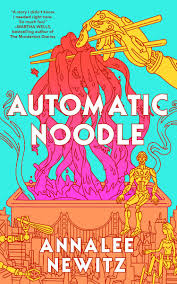
Automatic Noodle Review

Book: Automatic Noodle
Author: Annalee Newitz
Publisher: Tor Publishing Group
Year: 2025
Rating: 4 out of 5 stars

Synopsis : “You don’t have to eat food to know the way to a city’s heart is through its stomach. So when a group of deactivated robots comes back online in an abandoned ghost kitchen, they decide to make their own way doing what they know : making food – the tastiest hand-pulled noodles around – for the humans of San Francisco, who are recovering from a devastating war.
But when their robot-run business starts causing a stir, a targeted wave of one-star reviews threatens to boil over into a crisis. To keep their doors open, they’ll have to call on their customers, their community, and each other – and find a way to survive and thrive in a world that wasn’t built for them.”

Review : Automatic Noodle is a sweet, quick, low-stakes read that I managed to get through in under a day. Weighing in at just 160 pages (in ARC form), when I tell you this is a quick read, I mean it; while Automatic Noodle tells one small story quickly, it isn’t without substance or a deeper meaning. Newitz has done what I have found happening with regularity these days, they’ve disguised within their robot novel a story with a greater meaning, taking a group of othered people and mirroring them to our current world, perhaps not in a perfectly seemless manner, but with dedication that pays off.

In a world where robots have been granted some, albeit small, level of rights (particularly if they’re of a sentient class of robot) following a brutal war between California and the rest of the United States, we enter this novel to find that the sentient robots don’t have much in the way of rights after all. Living either slaved or indentured to corporations or woken to find they’ve been created by a debt that’s strapped not to who created them but to the robot themselves, most sentient robots have little to no choice about the life they must live. They may also find themselves the subjects of hate speech, disgust, cancel culture, and worse due to the nature of their capitalistic society that created a thing to do a job that a human would otherwise have been hired to do. I’ll admit, it was hard for me to wrap my mind around the first layer of this novel, which is, at face value, robotphobia, given the horrific misuse and abuse of generative AI in our current world; destroying the planet, replacing jobs, and demolishing our creative abilities all in one fell trendy swoop. It feels as though Automatic Noodle might be a look through time at ourselves if we don’t get behind human beings pretty immediately. And that’s where our second layer comes in.

Automatic Noodle is a clever mask for a narrative driven by the gross inequities people of all creeds and backgrounds face even in 2025, particularly our queer, trans, neuro-spicy, and non-white friends. Empathy is the thread Newitz binds this story together with, putting the reader into the shoes of sentient robots who just want to live and thrive in a world where others are so able to live and thrive within. In a world where they are outcast and othered simply for being exactly who they are, they find a way to engage with each other, with their community, and to find their own personhood in the midst of everything. Without needing to ask their community for assistance, it’s freely given to them because in Newitz’ world, empathy exists in the majority of people and for those who seem incapable of seeing a person as a person, they appear to be the minority, enraged and bated by targeted online attacks from those with outdated ideas of what might make a country great. Uncanny, huh?

If you want to know how a society is functioning, simply look to the sci-fi and fantasy world to tell you. It’s no coincidence that the last two books I’ve read in this realm have emphasized the concept of empathy. In a world where we forget that people are people and our humanity makes us inherently more alike than different, it’s no surprise to find stories that allude to the hate and vitriol that’s being spewed with more and more vehemence and frequency. Automatic Noodle does an excellent job of relating a futuristic scenario to our present-day troubles, all while cultivating a narrative of joy, peace, friendship, and community despite and because of our differences. Love is a greater force than fear and hate and we see it time and time again in sweet novels such as this. And while I didn’t find the flow of robotic narration my favorite to follow (in fact, I enjoyed Newitz’ writing the best in their letter to the reader), Automatic Noodle is a book I’ll be recommending to friends in the future. It’s a joyous journey into the world of savory noodles, found family, and community support despite raging phobias and hate over a group of people who are simply trying to live their lives in peace. We are all deserving of a peaceful, joy-filled life. Full stop.

Advice : If you’re looking for a quick, cozy read in the vein of A Psalm for the Wild Built, I think you’ll really love Automatic Noodle. If you enjoy a reclamation story, found family, or how food gets made, this is definitely for you!

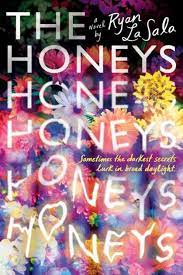
The Honeys Review

Book: The Honeys
Author: Ryan La Sala
Publisher: Push
Year: 2022
Rating: 5 out of 5 stars

Synopsis: “Mars has always been the lesser twin, the shadow to his sister Caroline’s radiance. But when Caroline dies under horrific circumstances, Mars is propelled to learn all he can about his once-inseparable sister, who’d grown tragically distant.
Mars’ gender fluidity means he’s often excluded from the traditions – and expectations – of his politically connected family, including attendance at the prestigious Aspen Conservancy Summer Academy, where his sister poured so much of her time. But with his grief still fresh, he insists on attending in her place.
What Mars finds is a bucolic fairytale. Folksy charm and rigid gender roles combine with toxic preparatory rigor into a pristine, sun-drenched package. Mars seeks out his sister’s old friends: a group of girls dubbed the Honeys, named for the beehives they maintain behind their cabin. They are beautiful and terrifying – and Mars is certain they’re connected to Caroline’s death.
But the longer he stays in Aspen, the more the sweet mountain breezes give way to hints of decay. Mars’ memories begin to falter, bleached beneath the relentless summer sun. Something is hunting him in broad daylight, tying with his mind. If Mars can’t find it soon, it will eat him alive.”

Review: In the front of my review copy of The Honeys, La Sala has left a note for the reader. In it he writes: “As I write you this letter, another fear has found me. My first two books have shown up on a list concocted by a Texas lawmaker, to be investigated for their potentially discomforting themes around queerness, equity, and justice…This man fears me and my art. And I wish – like Mars – his reaction to fear was to learn. As an author, I do think of my works as edifying. I want The Honeys to shock and scare you, but after the buzzing fades, there is much to learn in these pages.”

As you may know from past reviews, I have read several YA books over the last few years and come away feeling frustrated and disappointed. I kept saying “YA can be better!” La Sala has proved me right with The Honeys. A quick-witted and sharp story, The Honeys is also a successful horror / suspense novel, and for that I find myself eternally grateful. I have spent so many hours reading essentially the same book over and over and over within the horror / suspense genre that I’ve grown bored and annoyed, at best. Finally. Finally! A YA novel, a horror / suspense novel at that, that breaks all the norms and blazes its own path forward. The Honeys unfolds slowly and you spend a majority of the book getting to know Mars and Aspen, learning what the camp looks like, discovering all the ways Mars has to fight for their very existence, and learning hints here and there about what may or may not have happened to his sister Caroline while attending the camp. I can appreciate a slow-to-unfold horror story, particularly when it begins it’s descent before there are 10 pages left. La Sala does not disappoint in this regard, as the book begins to gain momentum and work toward a conclusion with a good several chapters to go. In this way, the construction of the book is excellent, something I don’t find very often in both YA and horror novels.

I was a bit torn over whether to give The Honeys 4 or 5 stars when I got to the end – in full transparency, as I read I was convinced it was 5 out of 5 for the majority of the book. It was only when I got to the end that I started to question that rating. I came up against my own mind, thinking “but this is a queer novel” and wondering why there wasn’t some poignant sociologial meaning to draw everything together at the end. What I finally came to realize is that this is a young adult horror novel told from a queer narrator, not a queer novel with horror themes thrown in. While it does answer the brief and delve into Mars’ point of view and the way in which they interact with and are confronted by the world, it doesn’t to come to the end and force the reader to learn something profound – that happens slowly, as you get to know Mars through the bulk of the book. At the end of the day, this is a horror novel told from the point of view of a narrator with a different perspective than the majority of horror or suspense novels I’ve seen out there.

The writing is excellent, especially for a review copy. You have probably read by now, if you’ve been following my reviews for any length of time, that I often get review copies merely weeks before they’re published and still manage to find a plethora of grammatical errors and general mistakes throughout. In The Honeys I found two: one was a repeated word and one was a word left out. The Honeys doesn’t come out for mass reading until August of 2022, so La Sala is way ahead of the game as far as review copies go. I was so overwhelmingly surprised and pleased with the way this book was put together, the quality of the writing, and the overall storytelling, I finished the book and immediately looked up his other two books. YA isn’t a genre I tend to read on my own for fun, but I would gladly read another book from La Sala if his other two are anything like this one.

I can’t speak highly enough about The Honeys. It confronts themes I feel are important, and I think are becoming more important to young readers: the gender binary, traditional gender roles, and the danger that women and trans people feel in the presence of the “boys will be boys” mentality. I’ve read other queer review copies, and particularly within the YA genre it often feels as though the authors are trying too hard to fit these characters into their narrative. The Honeys didn’t feel forced, it didn’t feel over the top, or utterly absurd; it felt natural, it flowed in a way that felt organic, and it left me feeling as though the topic of gender fluidity wasn’t merely thrown in as a token to the audience. Perhaps it’s because La Sala is gender fluid whereas other YA books with queer characters that I’ve read to review have been written by authors who aren’t, or perhaps it speaks to La Sala’s talent as a writer, or maybe (most likely) it’s both. Either way, I came away both absolutely thrilled and disappointed that I’d read through it so quickly.

Advice: I don’t think you have to be a fan of YA books to read and enjoy The Honeys. I think if you enjoy suspenseful novels, beautiful imagery, and a good mystery then The Honeys is going to tick all the boxes for you. If you enjoy quality writing and a mystery that you can’t really solve on your own way ahead of the ending, you’ll love this book. If you’re interested in reading more gender fluid or queer character points of view, this book hits the mark. If you’re a fan of summer camp suspense, again, it checks all the boxes. I think this is a book for a wide and diverse range of audiences and I can’t recommend it enough.

Amateur Review

Book: Amateur
Author: Thomas Page McBee
Publisher: Scribner
Year: 2018
Rating: 5 out of 5 stars

Synopsis : “Amateur follows the author, a trans man, as he trains to fight in a charity match at Madison Square Garden while struggling to untangle the vexed relationship between masculinity and violence. Through his experience boxing — learning to get hit and to hit back, wrestling with the camaraderie of the gym, confronting the betrayals and strength of his own body — McBee examines the weight of male violence, the pervasiveness of gender stereotypes, and the limitations of conventional manhood. Interrogating masculinity as emotional landscape and cultural positioning, he binds his experience to a free-ranging examination of the ways in which men fail and are failed by our society.
At once a deeply reported narrative and an intensely personal journey, Amateur is ultimately a story of hope, as McBee traces a new way forward, a new way of being a man, in the ring and outside of it.”

Review: Thomas Page McBee’s Amateur is at once a study of masculinity within the boxing ring and a deeply moving study of gender in and out of the context of boxing. McBee struggles with the concept of manhood and embarks on this boxing journey to further understand his role in the world as a man. Sharing a unique perspective on toxic masculinity, McBee provides the reader with a deep understanding of the paradoxical world in which he lives; having once lived as a female and now living as a male in a time where men are viewed often as aggressive and dangerous, he finds himself fearful and apologetic.

Not only does McBee have a new realm of existence to explore, he discusses the implications of being a “real man” whose male role model growing up was his stepfather, a man under whom he experienced decades of sexual abuse. In exploring this relationship, McBee discusses the impact this understanding has on his siblings as they become parents themselves.

Delving into the world of boxing, McBee explores masculinity in terms of love, connection, emotions, and touch. He grapples with the loss of his mother, with understanding how to interact with the women in his life, and the perception the world holds of him both as a passing male and as an out trans man. We watch as McBee falls and grows, learning how to find himself, rather than the identity he seeks based on his gender.

My Advice: If you have any interest in reading memoirs, snag this book immediately. If you have any interest in gender roles, snag this book immediately. If you have any interest in boxing, snag this book immediately.