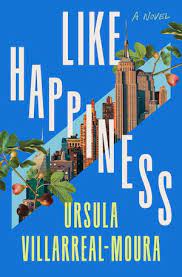
Like Happiness Review

Book: Like Happiness
Author: Ursula Villarreal-Moura
Publisher: Celadon
Year: 2024
Rating: 5 out of 5 stars

Synopsis : “It’s 2015 and Tatum Vega feels that her life is finally falling into place. Living in sunny Chile with her partner, Vera, she spends her days surrounded by art at the museum where she works. More than anything else, she loves this new life for helping her forget the decade she spent in New York City orbiting the brilliant and famous author M. Domínguez.
When a reporter calls from the US asking for an interview, the careful separation Tatum has constructed between her past and present begins to crumble. Domínguez has been accused of assault, and the reporter is looking for corroboration.
As Tatum is forced to reexamine the all-consuming but undefinable relationship that dominated so much of her early adulthood, long-buried questions surface. What did happen between them? And why is she still struggling with the mark the relationship left on her life?
Told in a dual narrative alternating between her present day and a letter from Tatum to Domínguez, recounting and reclaiming the totality of their relationship, Like Happiness explores the nuances of a complicated and imbalanced relationship, catalyzing a reckoning with gender, celebrity, memory, Latinx identity, and power dynamics.”

Review : Like Happiness, as Villarreal-Moura writes in the acknowledgements, “is a book about loving books”. Incredibly literary, not only did it tick all the boxes in my soul that feel like satisfying brain-floss, it also rang some bells of familiarity that cannot be overlooked. This is a powerfully moving debut novel detailing the uneven footing of the power dynamic between a popular contemporary male writer and a younger female fan (notably, eight years younger). Feeling out of place with few friends at her Massachusetts college during her undergrad program, texas native Tatum makes a bold move one evening, penning a letter to the author of her new favorite book, Happiness. The author, M, is gaining popularity with his breakout novel of short stories detailing the lives of Latinx individuals in the United States. Feeling seen and understood in a way she has not felt in literary circles yet, particularly on a nearly all white college campus where she’s an art history, english lit double major, finding herself immersed in required reading of white Euro centric authors, Tatum feels at home with M’s book. She writes to M and within a few weeks, he writes back, thus beginning a multi-year long relationship between Mateo (M) and Tatum.

Like Happiness is a dual perspective book, though it doesn’t bounce around nearly as much as you may be accustomed to in a book with multiple narrators or points of view. Told largely through the lens of 2015 Tatum, far removed from her relationship with Mateo, writing a detailed account of her often one-sided relationship with Mateo, and a slightly earlier 2015 version of Tatum, receiving a phone call from a reporter in the States, calling because her relationship is celebrated fact and Mateo has been publicly criticized and outed as an abuser. It has been years since Tatum has spoken to Mateo and while she never experienced the abuses so many women are stepping forward to name, she is sure he isn’t an innocent party, both with the other women and with her. Choosing to tell her story to the reporter, she simultaneously decides to tell her story to Mateo and afford herself the closure she was never granted in the past.

Villarreal-Moura spins a tale of power imbalances, grooming behavior, and codependency that at times feels so real it’s hard to remember this is fiction and not a memoir. Over the span of nearly 300 pages, she outlines patterns of abuse so subtle they could almost go overlooked, laying them out chronologically, revealing a masterpiece of manipulation when the final product is fully revealed. **Spoilers Ahead**
Laying the groundwork for Mateo’s ultimate betrayal quite early on, Villarreal-Moura is an expert at building a scene. Not only is Mateo a college professor and author, he is a force of magnetism and power in Tatum’s life. He pulls her into his orbit and expects her to stay just where she is, mesmerized and fawning over his very being. He relies on her for attention, commitment, and praise while expecting her to simply go along with whatever he wants to do – and she does. He so encompasses her world that when he’s in it all others cease to exist. Mateo subtly punishes Tatum when she gets a serious boyfriend, though she and Mateo have never approached much more than a platonic relationship, he cuts her down and pokes fun of her intelligence when she doesn’t give him exactly what he wants, and pays off $20,000 of her school loans, leaving her helpless to the encompassing power he now wields over her. 

I don’t want to give away the ending, but know these subtle manipulations are nothing compared to the ultimate betrayal Tatum experiences at the hands of Mateo in the end. Putting a final nail in the coffin of their friendship, she is finally able to extricate herself from the leeching parasite of M, allowing her to write her final letter, this book, to him; knowing it will be the closure she needs in order to fully live her life without his shadow in it. As I read, I couldn’t help but be reminded of an article a read a few years ago about an author whose work I’d read and loved, Nick Flynn. And as I thought about that article, I couldn’t help but be reminded of another, similar, articled I’d read around the same time about another author whose work I’d read and loved, Junot Diaz. Both were published authors, one a professor and the other a keynote speaker, both took advantage of women who were younger than them, women who were still in college. Flynn, in particular, has since been accused by multiple women of abuse and misconduct. There is nothing new about this story, though that doesn’t in any detract from Like Happiness; if anything, I found it gave this book extra connective tissue. There’s a precedent here : men in positions of power who wield that power over unsuspecting women who are at a disadvantage due either to their age or their position (a student vs a professor). It’s common. And therefor, it needs to be told. Villarreal-Moura did a profoundly wonderful job telling it.

Advice : If you love reading books about people who love reading books, Like Happiness is truly wonderful. Villarreal-Moura has introduced me to so many things, though none quite as exciting as my new favorite snack of frozen grapes. If you love reading fiction that’s so perfect and timely that it could easily be memoir, this is it. I highly recommend it.

Fruit of the Dead Review

Book: Fruit of the Dead
Author: Rachel Lyon
Publisher: Scribner
Year: 2024
Rating: 5 out of 5 stars

Synopsis : “Camp counselor Cory Ansel, eighteen and aimless, afraid to face her high strung single mother in New York, is no longer sure where home is when the father ozone of her campers offers and alternative. The CEO of a Fortune 500 pharmaceutical company, Rolo Picazo is middle-aged, divorced, magnetic. He is also intuited boy Cory. When Rolo proffers a childcare job (and an NDA), Cory diets and internal warning and allows herself to be ferried to his private island. Plied with luxury and opiates manufactured by his company, she tires to assure herself she’s in charge. Her mother, Emer, head of a teetering agricultural NGO, senses otherwise. With her daughter seemingly vanished, Ever crosses land and sea to heed a cry fro help that only she can hear.
Alternating between the two women’s perspectives, Rachel Lyon’s Fruit of the Dead incorporates its mythic inspiration with a light touch and devastating precision. The result is a tale that explores love, control, obliteration, and America’s own late-capitalist mythos. Lyon’s reinvention of Persephone and Demeter’s story makes for a haunting and electric novel that readers will not soon forget.”

Review : I was a little skeptical about Fruit of the Dead at first, feeling as though I was about to walk onto Jeffrey Epstein’s island with the back-cover synopsis, not so much a modernized retelling of Persephone’s descent into the underworld and Demeter’s journey to retrieve her. Oh, how wrong I was. Rachel Lyon has spun a masterful tale of persuasion, adoration, and tragedy; a poignant retelling and perfect stand-alone novel. Lyon has completely grasped the fever dream of drug use in such a way that left me feeling dizzy and unmoored as I read Cory’s descent into addiction – a powerful parallel to Persephone’s own descent.

Lyon brings Cory into alignment with Persephone, goddess of both spring and the Underworld, quickly and with ease, as she gets to know Rolo Picazo, her new employer. As the CEO of a big pharma corporation, he has access to medications, drugs, opiates that have not yet been granted FDA approval, most notably a small, gel coated, gleaming red pill called Granadone, Grannies for short. A perfect, ripe, shining pomegranate seed, the demise of Persephone herself. Picazo shares a drink recipe with Cory, a mixture of vodka, pomegranate juice, lime, and, you guessed it, the contents of a Granny; called? Fruit of the Dead. And with her first sip, not even 100 pages in, Cory is snared.

After having been camp counselor to Picazo’s seven year old son, becoming a live-in nanny for his son and slightly younger daughter is easy as can be. Plied with as much alcohol and Grannies as she wants, Cory finds Picazo’s island intocicating. And while Picazo himself (middle aged, bloated, sad) is intriguing to her, she only finds herself (eighteen, unsteady, uncertain) mildly attracted to him in ever-so-brief moments that feel more like the intrigue of someone who grew up without a father. Meanwhile, Picazo expresses clear interest in being both a father figure as well as a romantic partner to Cory right off the bat. And like all master manipulators, he removes his mask and reveals himself nearly immediately, declaring himself a narcissist and reading Cory for the perfect victim she, in fact, is. And like most victims, Cory brushes it all aside, looks beneath the lumpy exterior, and attempts to see the good within. All whilst sinking further and further into a fever dream of addiction and loss of control.

This seems as good a point as any to talk about some content warnings, because, believe me, this book is a walking content warning. Not only does the entire book revolve around the explicit experience and physical sensation of being high and / or drunk, it also speaks in detail about sexual assault, physical assault, and the trauma that results from both. This book is not for the faint of heart, nor should it be read lightly. And while it is written with breathtaking prose, if you do decide to read it, please be careful and gentle with yourself if any of the above are problematic for you.

Bouncing back and forth between an elder teen who does not yet know who she is, who has been the victim of sexual assault and has entirely lost herself because of it, who is then scooped up by a predator and fed mouthfuls of little red happy pills; and a devastated mother who begins to unravel and become feral when she cannot get in touch with her daughter, Fruit of the Dead is nothing short of a masterpiece. We not only glimpse behind the curtain of a well curated mother, a woman who manages an NGO, who hobnobs with google executives, who pulls a few strings and gets her daughter prized internship after internship, who works her magic and lands Cory a scholarship to an all girls private school in Manhattan, we are privy to her downward spiral into mania as she loses herself in the search for her missing daughter. While we find Cory grasping at the very idea of her own identity, we see Emer, Cory’s mother, whose identity no longer fits, a mask that slips, falls, and shatters. The two are wrapped together, entangled in a connection neither can escape.

As a true retelling of Demeter and Persephone, the book does not end with a neat little bow tied on it. After all, Persephone returns to the underworld once every six months, leaving our world to the decay of autumn and the darkness of winter. I won’t completely spoil the book for you, but just know that this is not a happy ending. It is a realistic ending. And for that I am profoundly grateful. A perfect, feral, fever dream of a book.

Advice : I encourage you to read my content warning before deciding if this book is for you. If, however, you read the warning and feel okay with the content, I think you should run as fast as you can to your nearest bookstore on March 5th, 2024 and buy a copy of this book. 

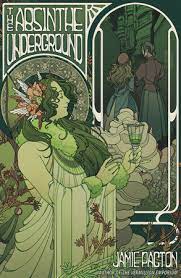
The Absinthe Underground Review

Book: The Absinthe Underground
Author: Jamie Pacton
Publisher: Peachtree Teen
Year: 2024
Rating: 3.5 out of 5 stars

Synopsis : “For Sybil Clarion, the Belle Epoque city of Severon is a wild, romantic dream, filled with cares, cabarets, and glittering nightclubs. Eager to embrace the city’s freedom after running away from home, she’s traded high-society soirees for empty pockets and barren cabinets. At least she has Esme, the girl who offered Sybil a home, and maybe – if either of them dared – something more.
Ever since Esme Rimbaud brought Sybil back to her flat, the girls have been everything to each other – best friends, found family, and secret crushes. While Esme would rather spend the night tinkering with her clocks and snuggling her cats, Sybil craves excitement and needs money. She plans to get both by stealing the rare posters the crop up around town and selling them to collectors. With rent due, Esme agrees to accompany – and more importantly protect – Sybil.
When they’re caught selling a power by none other that its subject, Maeve, the glamorous girl doesn’t press charges. Rather, she invites Sybil and Esme to the Absinthe Underground, the exclusive club she co-owns, and reveals herself to be a green fairy, trapped in this world. She wants to hire thieves for a daring heist in Fae that would set her free, and is willing to pay enough that Sybil and Esme never have to worry about rent again. It’s too good of an offer to pass up, even if Maeve’s tragic story doesn’t quite add up, and even if Sybil’s personal ties to Fae could jeopardize everything she and Esme have so carefully built.”

Review : The Absinthe Underground is a sweet and fun adventure, that, while not low stakes, somehow ended up feeling just low stakes enough that it didn’t trigger any anxiety while reading it. Pacton crafted a beautiful scene by introducing us to the world of Fae, showing us rather than telling us what an intoxicating other-world might look like to two girls from this world. However, where she did a fantasy world justice, I felt she let the reader down with her depictions of the city of Severon. With a name like Severon and very little explanation to the time frame of the book, I was at first convinced this story was not only fantasy but science fiction. It wasn’t until I read the author’s note (at the end, after finishing the book in it’s entirety) that I realized Severon was meant to be an 1890’s Parisian equivalent. Something got lost in translation, figuratively speaking.

Likewise, Pacton included real world names like Toulouse and Mucha when discussing poster artists whose work is often stolen for it’s one of a kind collector status, which lent a bit of confusion and complication that felt unnecessary to the story. Sybil and Esme live in the top of a clock tower in a made up city that contains real world artists, something that I have a hard time wrapping my mind around when it comes to necessity. Not enough of the pre-Fae exploration of TAU connected me to Paris in the late 1800s for the real world examples to make sense, Pacton could have made a more significant impact on the story by placing greater emphasis on the time frame and reality of the world Sybil and Esme live in, then trying to tie it to our world. She lost me there. 

Spoilers Below

That aside, the Absinthe Underground itself was beautifully described and the subsequent adventure Sybil and Esme embark upon is quite endearing. I did feel, though, that there were several loose ends Pacton left untied; it’s unclear whether they were left untied for a reason or because they were simply overlooked in the editing process. However, one seemingly purposeful loose end does find Sybil and Esme’s adventure into Fae and back into the real world marred by a broken promise to free a human they encountered in Fae and help her find her way back through the door – I find the prospect of another book exciting, I can’t wait to see what Pacton does next! She left several threads throughout the story, dropped like leaves, and I wonder if she’ll pick the all back up in the upcoming book or if we’re simply left to speculate why a forest hag might be frightened of a kitten, whether Sybil’s father was a magician, and why he tried so hard to marry her off and turn her into a “proper” young woman before she ran away. There were small explanations planted throughout the book, but not enough to satisfy the weight each of the aforementioned interactions had on the plot. 

TAU was a cute, low-ish stakes middle grade adventure book that has great potential for future iterations, I think there’s room for improvement, but that improvement could surely come in additional books. Overall, I found it easy to read and enjoyable, if not a little slow and sleepy at times.

Advice : If a low-stakes adventure through a fairy realm sounds up your alley, you’ll want to give this one a read when it debuts in February. If you like a bit of a nail biter or a faster paced adventure, this might not be your jam.

The Queen of Days Review

Book: The Queen of Days
Author: Greta Kelly
Publisher: Harper Voyager
Year: 2023
Rating: 3 out of 5 stars

Synopsis : “For Balthazar and his family of thieves, stealing a statue during the annual celebration of the god Karan’s was just a good bit of fun…or a way to stick it to the governor who murdered his parents. And yeah, the small fortune in reward doesn’t hurt – even if his boss also hired the mysterious Queen of Days to join the crew as “the weapon of last resort…”
Whatever that means.
But Bal doesn’t know the ceremony isn’t simply the empty words and dusty tradition; it’s true magic. The kind of magic that rips open a portal for the god himself. Only the idol that Karan’s planned on using for a body now lies broken at the Queen of Days’ feet. And half of it is missing.
With the aid of a lovable brawler, a society lady turned bomb maker, a disgraced soldier, and a time-eating demon, Bal must hunt down the missing half of the statue if he has any hope of earning his money, keeping his crew alive…and perhaps even saving all of humanity. But as his journey sends him racing through the city – and across realities – he discovers that doing all this might just doom the city.

The city be damned. It’s time to kill a god.”

Review : The Queen of Days bounces between two points of view; Balthazar (Bal), the leader of a crew of thieves called the Talion gang; and Tassel Janae (Tass), aka The Queen of Days. Bal and his crew have been commissioned by a mysterious patron for what’s supposed to be a simple smash and grab at a largely symbolic ceremony of ruling class elites within Bal’s home city of Cothis. We learn early on that Bal and the members of the Talion gang are not only related to each other, some through illegitimate affairs on Bal’s father’s behalf, but were once the children of the previous ruling elite of Cothis themselves – before Bal’s family was ousted (and killed) by the members of the city for a superstitious belief that they had angered the god of water, Karanis. Several years of drought will do that.

Though the Talion gang are a crew of experienced thieves with years of work under their belts, their patron has a singular request : they must hire and work with the Queen of Days, a masked mercenary with a reputation that precedes her. She’s rumored to be able to defy the laws of nature, to have extraordinary powers, and worst of all, to be a demon of the Nethersphere. She comes to the Talion gang rather mysteriously herself, all but proving the rumors true and creating fear and suspicion within the gang, particularly when she asks for payment in days off their lives rather than in coin. As Bal, Tass, and the rest of the crew work to layout a plan, they become increasingly fractured and disorganized and it takes the remainder of the book to bring them back together into a family unity again.

Spoilers Ahead

As the crew attempts their simple robbery (with a huge payout, mind you), they almost immediately come to find it isn’t quite as simple as they were promised. When the symbolic ceremony turns anything but, Tass takes matters into her own hands and smashes the statuette they were commissioned to steal. Realizing that the ceremony was designed to draw down the god Karanis from the Nethersphere, Tass acts without explanation, saving the youngest member of the Talion gang, Bal’s sister Mira, and escaping the ceremony. When Karanis arrives and finds his vessel destroyed, he takes possession of the current city’s ruler (and Bal’s father’s usurper) Paasch – a move that will not allow Karanis to exist within this world for long. He must find the statue, it must be restored, or he will wreak unstable and unmeasurable damage upon the world. What ensues is about 300 pages of Bal, Tass, and the crew working to figure out what’s really going on, where the pieces of the statue may have ended up, and how they can save themselves in the process.

I chose to give TQOD 3 stars because I found this book to be quite long and difficult to get through. I don’t actually mind an almost 400 page book, I enjoy a lengthy tale, particularly if it’s something I can’t stop thinking about, but that’s exactly the problem I had with this one. I’ve often said that it doesn’t take quality writing to create a compelling story, there have been many books I’ve found lacking when it came quality that kept me turning pages simply because I couldn’t stop thinking about what was going to happen. Unfortunately, TQOD didn’t hit the mark for me. I found myself distinctly disconnected from the characters, I would put the book down and easily walk away, I found myself thinking of other things when I was reading and often had to go back and reread passages in order to figure out what was happening because I was so lacking connection. There were about 100 pages right at the end that found me turning pages to see what was going to happen, but sadly the 200 something pages that preceded it were so uninteresting enough that the final 100 weren’t enough to make me want to give this book a higher rating.

I will say, it was written quite well and utilized a trope many people thoroughly enjoy : found family. I found the world building to be fair, but not great, as I had a lot of unanswered questions about the world Kelly created. It didn’t help that I was so disconnected from the story, I think had I found more connection with the characters I might have found more connection with the world, but there still remain many unanswered questions about the world, what it looks like, and how it interacts with the characters, and why it does the way it does – for example, Kelly mentions a flood mythology that exists within this world, much like exists within our world. I have questions. Fortunately for readers, TQOD is very clearly the first of at least two books so there will be time and room for questions to be answered, but that does rely on readers finding their own connections that will compel them to continue reading, and of that I’m not sure they will.

Advice : If you enjoy fantasy, the found family trope, and don’t mind reading several hundred pages, you just might like this one. I personally found it lengthy and difficult to get through, but if you like a series, enjoy thievery and magic and gods who aren’t really gods, I think this would be worth the time.

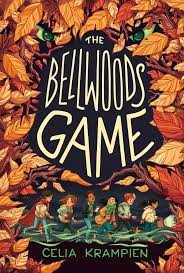
The Bellwoods Game Review

Book: The Bellwoods Game
Author: Celia Krampien
Publisher: Atheneum Books for Young Readers
Year: 2023
Rating: 4 out of 5 stars

Synopsis: “Everyone knows fall hollow is haunted. It has been ever since Abigail Snook went into the woods many years ago, never to be seen again. Since then, it’s tradition for the sixth graders at Beckett Elementary to play the Bellwoods Game, in which three kids are chosen to go into the woods on Halloween night. However rings the bell there wins the game and saves the town for another year. But if Abigails’s ghost captures all the players first, the spirit is let loose to wreak havoc on Fall Hollow…or so the story goes.
Now that it’s Bailee’s year to play, she can finally find out what really happens. And legend has it the game’s winner gets a wish. Maybe if Bailee wins, she can go back to the way things used to be before everyone at school started hating her. But is Abigail’s ghost really haunting the Bellwoods? One thing’s for sure: something sinister is at play – waiting for them all in the woods…”

Review: While this is targeted to ages 8-12, it was a super enjoyable read for me and definitely felt like it could (and maybe should?) easily be targeted at ages a bit older than 8. While it read like a middle grade book, it had some scarier scenes and talked about death in a way that didn’t necessarily read like something an eight-year-old would be into. Maybe that’s just that it’s been so long since I was 8, but it felt more like an 11-15 to me. All that aside, I thoroughly enjoyed The Bellwoods Game and would love, love, love if Krampien would write a second one.

The Bellwoods Game follows sixth grader Bailee as she navigates the trials of late elementary school, the drama of being shunned by your peers, and the fragility of life as she works through her grandmother’s recent mini stroke. All the while, Beckett Elementary, where Bailee goes to school, is preparing for it’s annual Bellwoods Game – a night in the local forest playing an innocent game of tag. Or is it? Legend has it that every October, the sixth grade class gathers in the woods to play a game, one that feels harmless, but also comes with a lot of superstition, students who were past players who cannot physically talk bout the game, and a passed down and much revered book of rules. The students participate in a lottery to see who will play, with those chosen bringing a gift for the spirit of the Bellwoods forest – it’s their free pass through if they get caught by otherworldly creatures.

Bailee, along with two other students, are chosen to play the game. At the clang of a bell, they must race through the woods, navigating their surroundings in the ever-increasing gloom of a fall evening, and make their way to the bell at the furthest edge of the woods. If they can successfully ring the bell, they town will be safe for another year, however if they fail to ring the bell the town will be thrown into peril, with past failed years bringing bad crops, businesses closing, and other tragedies. As Bailee and her peers rush toward the bell, they begin to experience weird things, see weird sights, and discover that all is not as it seems. In fact, there seems to be a ghost in the woods, or maybe two ghosts; creatures who both want to help and harm the students, able to assist and foil their plans – even going so far as to change the landscape of the woods as the students play.

My biggest complaint with this book was how slowly things unfolded once the kids were inside the woods, however what I felt was quite slow in book form I think would make for the perfect setup in a tv-show. I kept thinking “MAN this would make a great show” and honestly I would be first to watch it if it did! All the ways that things slow down in book form are really perfect for unraveling over the course of a multi-episode season. I also thought the way Krampien ended the book left room for additional books and/or seasons if it ever did become a show – while the ends are tied together well, she set the scene and left the door open for future books, which I would be super interested in if she did! One of the most unique qualities about the book is the fact that Krampien not only wrote it but did all of the illustrations, which we see every few pages in comic book style. They’re cute and really add depth and dimension to an already enjoyable read, even more impressive that she drew them herself.

Advice: If you like cute, cozy, spooky books particularly set in October around Halloween, this might just be your thing! It’s low stakes, and the scene is set so beautifully that even reading it in the middle of summer transported me to a fall day. If you love a fall book, this is for you!

The Salt Grows Heavy Review

Book: The Salt Grows Heavy
Author: Cassandra Khaw
Publisher: Nightfire – Tor Publishing Group
Year: 2023
Rating: 4 out of 5 stars

Synopsis: “Certain stories are recounted so many times that they becomes parched of meaning. Others, however, are kept from wine-warmed conversations, catalogued but rarely recited. Complicated stories with no easy ending, stories that remind us karmic debt is a contrivance of despair, that there is nothing fear or sweet about this world. This is one of those stories.”

Review: I almost didn’t write this review. I read the book, I was enthralled, I was mesmerized, I was horrified, and then I was disappointed. I put The Salt Grows Heavy down, fully intending to walk away from it without reviewing it, but something about it kept pulling me back. I had to review it. I had to give it the space to be seen. Be forewarned, this one is odd; perhaps in the best possible ways, perhaps in the worst.

Khaw, in her letter to the reader, explains that TSGH was birthed from the question “what would happen if Ariel laid eggs?” and that’s possibly all you need to know before diving into this one. It’s short, a quick read, but it delves into themes of body horror, bodily autonomy, and existential dread. This novella is graphic, pointed, and poetic. I stopped short of giving it five full stars because of the disappointment I felt over the ending, but we’ll get into that. It is masterfully written with Khaw driving the plot forward, never mincing words, never adding detail that didn’t serve a purpose, all the while turning a disney fairytale into a twisted brothers Grimm tale.

The Salt Grows Heavy begins with a mermaid-eque creature leaving the kingdom she calls home, though it is notably not her home, after her clutch of daughters hatch from their eggs, eat the king, and subsequently eat the entire kingdom (sparing a precious few). Unable to speak because of an injury incurred by the Prince, as many Grimm and folktales go, we find the protagonist-mermaid leaving the kingdom with the Prince’s plague doctor, one of the only remaining survivors of the hatchling’s apocalypse, uncertain of where she’s headed. As they leave together, they burn the entire kingdom to ash, the plague doctor remarking “What’s the point of revenge if you can’t enjoy it?”.

Spoilers Ahead

As the unlikely pair leaves together, they get no further than a strange, cobbled together village of wildlings, children who systematically and routinely kill each other for sport, only to be rebuilt and recreated by their saints – a trio of physicians who have mastered the art of bringing creatures back from the dead…seemingly. The mermaid and the plague doctor are both horrified, though we come to learn that this horror stems from two distinct places. From the mermaid, she seeks to prove the physicians wrong; having had her own tongue cut out of her mouth by the Prince, her teeth removed, and her sisters slain, she feels a sense of purpose amongst these “saints” and the children they seek to rebuild over and over again. However, the plague doctor, who until this point has never removed his mask, experiences horror for other reasons entirely. As they and the mermaid grow closer, we are offered a glimpse behind the mask only to find that the entirety of the plague doctor’s body has been stitched back together, unable to die, unable to discern any form of gender, a blending of hundreds of parts. In fact, they were the saint’s first project.

The Plague doctor begs the mermaid to allow them to stay behind, to bring wrath upon the saints, and to free the children from their menacing grasp. As this is not a long book, these events happen quickly and before long the mermaid and the plague doctor are discovered by the saints, tracked and attempted to be killed. We come to realize that the mermaid is much heartier than the mermaids of Walt Disney’s imagination and can regenerate nearly at will. The plague doctor, because of their many differing parts, is almost unable to be killed, but they are, after all, still human. As the plague doctor reaches the end of their life, they once more beg the mermaid to allow them to die – to attain the one thing the saints have kept from them for a completely unknown number of years, iterations, and science projects that have kept them alive and uncertain of who they are.

The mermaid allows the plague doctor to die, she kills the saints, and then in epilogue, she resurrects the plague doctor because she’s in love with them. And this. THIS is where I take issue. In a book that is entirely about bodily autonomy, how these creatures have had zero say over their bodies and minds for lifetimes, Khaw chooses to posit that love is more important. She distorts the message of the book, completely does away with the autonomy of the plague doctor, a character who has been (pun not intended) plagued by rebirths and regenerations for so many lifetimes that they cease to understand who they are at all, for the sake of love. I think Khaw misses the mark when it comes to the execution of this book. In her letter to the reader she says, “It’s my love letter to the people who can’t and won’t give up. Who love the end of days. Who love like it is the end of days, and there’s nothing left to lose. It’s my nod to love that comes when you’ve given up, when you’ve concluded that’s it, there’s nothing left.” Personally, I don’t find this book to meet that thesis at all. I think Khaw has written a masterful book full of hard hitting and timely messages, and she throws it all away at the end for the sake of selfish love that cannot allow someone the autonomy to choose to die.

Advice: If you’re looking for a body horror book, this is it. If you like something to move at a quick pace, not take too many pages, and still hit hard, this is it! If, however, you cannot help but analyze a book, see where it went wrong, and find frustration over it, I suspect you’ll find, like I did, that this is not it. If you don’t enjoy gore or graphic violence, this will probably be one you’ll want to skip.

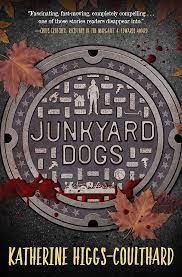
Junkyard Dogs Review

Book: Junkyard Dogs
Author: Katherine Higgs-Coulthard
Publisher: Peachtree Teen
Year: 2023
Rating: 5 out of 5 stars

Synopsis: “Josh’s father has gone missing without a trace. Now Josh and his 9-year-old brother, Twig, are stuck living with Gran in her trailer. Problem is, Gran didn’t ask to take care of any kids, and she’s threatening to call social services unless Josh can find his dad. After paying off his Gran to take in his little brother, Josh risks truancy and getting kicked off his basketball team to take to the streets and hunt for his dad. But when Josh digs too deep, he suddenly finds himself tethered to a liminal scrapping ring that his father was accomplice to. If Josh wants to keep Twig out of the system and return to some sense of normal, he’ll have to track his dad down and demand honest answers.”

Review: Set in a town not all that far from where I’ve lived, Junkyard Dogs feels eerily close to home. Set in South Bend, Indiana, this book tells the story of a pair of brothers experiencing houselessness during a brutal midwest winter. As I was on my way to a coffee shop to write this review, in fact, I passed a billboard that said 7,800 youth and young adults in my town would experience houselessness this year alone. It hits close to home in more ways than one.

Coming from the midwest herself, Higgs-Coulthard hits the nail on the head with her depictions of this part of the country, including how easy it is for many living in a semi-large city to absolutely miss the fact that so many of it’s residents are struggling and just barely scraping by. While this story centers around one particular incident with Josh and Twig, as Josh reminisces about the past with a mother who died when he was young and a father who ran a junkyard during Josh’s formative years, it’s clear that the blurred lines between temporary housing and houselessness are grey at best. This is a liminal space of transience, shifting from a junkyard house on the brink of condemnation by the city to a trailer owned by their Gran to an abandoned warehouse, to tent city under an overpass, to no shelter at all, we see all the ways in which someone without stability grapples to survive in a world that requires a lot of money and connections to get by.

Junkyard Dogs is somewhat infuriating in that as readers we’re privy to all the ways in which the world beats Josh down; from his Gran telling him he’s garbage and worse on a daily basis, to his dad who runs off early on in the book without even leaving Josh with enough money to pay for rent to keep him and his little brother housed at his Gran’s trailer, to the shelter that requires an adult for any minor to eat. It’s hard to read at times.

I think Higgs-Coulthard has created a book that’s deeply human, moving, and gripping; emerging us in a mystery that takes an entire book to unravel completely. While I was able to figure out the central twist pretty early on, I don’t think it ruined the book in any way, and I sort of suspect that Higgs-Coulthard meant for her readers to grasp the twist at least part way through the plot. While this book does end with a pretty neat ending that I think is unlikely to be reality for most unhoused youth, making it pretty unrealistic in my opinion, I did enjoy the way in which she chose to end the story. It isn’t easy, but it’s certainly the best case scenario. I think the book could have been more impactful by being more realistic in it’s ending, but I also think as a young adult read it almost demanded a hopeful ending. It ends by giving us some sense of hope for humanity, hope for the way people experience each other, and hope for the empathy the world might bestow upon people who are down on their luck.

Advice: If you are empathetic at all, this may very well not be a book for you, particularly if you don’t enjoy crying over books. If you enjoy a book with a hopeful ending, with hope for a better future in spite of a tough start, this might be the book for you! If you enjoy stories about real things, about real problems that impact real people, this is probably a great place to start.

The Carrefour Curse Review

Book: The Carrefour Curse
Author: Dianne K. Salerni
Publisher: Holiday House
Year: 2023
Rating: 3 out of 5 stars

Synopsis: “Twelve-year-old Garnet doesn’t know her family. Her mother has done her best to keep it that way, living far from the rest of the magical Carrefour clan and their legendary mansion known as Crossroad House.
But when Garnet finally gets summoned to the estate, it isn’t quite what she hoped for. Her relatives are strange and quarrelsome, each room in Crossroad House is more dilapidated than the last, and she can’t keep straight which dusty hallways and cobwebbed corners are forbidden.
And then she learns a terrifying secret/l the dying Carrefour patriarch fights to retain his life by stealing powers from the others. Every household accident that isn’t an accident, every unexpected illness and unexplained disappearance grants him a little more time.
While the Carrefours squabble over who will in heritage his role when (if) he dies, Garnet encounters evidence of an even deeper curse. Was she brought to Crossroad House as part of the curse…or is she meant to break it?”

Review: I don’t often read middle grade novels, but this looked too cute to pass up! I clearly didn’t retain the synopsis because when I found out our protagonist, Garnet, was 12 (about 3/4 through the book) I was shocked. While The Carrefour Curse reads like a mid-grade novel, Garnet reads as much older than 12. But, this could be how little I read books in this realm!

As the novel begins, we find Garnet in a very wizard-with-a-lightning-bolt-scar predicament: she’s spitting up frogs and has no idea how to reverse the effects of whatever has gone wrong. We find her riding in the car with her mother, Emerald, getting closer and closer to the old family home, Crossroads House. Convinced that this is a summoning spell gone wrong, Emerald brings her daughter to the family home she’s never before allowed her to visit, in the hopes that this will satisfy a magical spell she believes her siblings and cousins have placed on her daughter. As it turns out, the family has been experiencing their own fair share of mystical conundrums and once Emerald and Garnet arrive at Crossroads House, they find they cannot leave without experiencing some kind of physiological distress.

As the story progresses, we begin to get glimpses into a murky past that only Garnet is privy to. While each member of the Carrefour family has their own magical powers, Garnet’s are beginning to awaken now that she’s in the vicinity of the home. She’s always had a special connection to the element Earth, but the more time she spends at Crossroads House, the more she comes to realize that she can also see and walk in the past; a time traveler. It is this special gift that allows Garnet to begin to unravel the mystery of the old house, the original location of Crossroads House, believed to be built directly on top of magical lay lines. The current house sits off from the old ruins, as anyone who goes near the old house mysteriously vanishes. It soon seems as though Garnet is the only person who will be able to release the curse, and with it the missing people.

Salerni does a good job of creating a magical world in Carrefour Curse, she lays out the family tree in a way that’s easy to follow in spite of the fact that it spans multiple generations and several of the family members share the same name. I think it’s no small feat to not only make a confusing and convoluted family tree seem manageable, but to also take a mansion and make it’s layout feel understood. It’s helpful, of course, that she included both a house layout and a family tree in diagram form in the book, but I think, especially for a younger audience, this could have gotten confusing quick. It’s easy to step into this book and find yourself comfortably in the world Salerni’s created and I think that’s a huge positive!

The book itself feels like it misses a lot of opportunities for connections to be made, which on a positive note makes it harder to predict, but on a negative note makes it feel a bit frustrating at times. Salerni brings things up that you think will play out in a certain way based on context clues, but we find them unused pieces of information that don’t necessarily go anywhere. I think there’s some work that could have been done here to make the book even better, more rounded, and solid – for me. But all in all, it’s a fun and enjoyable mid-grade read with an ending I thought made sense, and that’s sometimes all you can hope for.

Advice: If you’re looking for a book that has a clearly built magical system in place, that feels light and fluffy to read, and that won’t make you frustrated, this is it! It’s a great read for a snow day in, it’s nice a quick, and it’s a good breather from other, more intense fantasy books. All around enjoyable and cute.

Sister, Maiden, Monster Review

Book: Sister, Maiden, Monster
Author: Lucy A. Snyder
Publisher: Nightfire
Year: 2023
Rating: 5 out of 5 stars

Synopsis: “A virus tears across the globe, transforming its victims in nightmarish ways. As the world collapses, dark forces pull a small group of women together.
Erin, once quiet and closeted, acquires an appetite for a woman and her brain. Why does forbidden fruit taste so good?
Savannah, a professional BDSM switch, discovers a new turn-on: committing brutal murders for her eldritch masters.
Mareva, plagued with chronic tumors, is too horrified to acknowledge her divine role in the coming apocalypse, and as her growths multiply, so too does her desperation.
Inspired by her Bram Stoke Award-winning story “Mandala Amygdala”, Lucy A. Snyder delivers a cosmic tale about the planet’s disastrous transformation…and what we become after.”

Review: I’m going to do something I haven’t done before, I’m going to give a book I didn’t like 5 full stars. I did not like this book. It was weird, it was graphic, and it was dystopian which is absolutely not my favorite. But! But. It was well written, it unraveled at just the speed you’d hope, and it was entirely unique. You could not have predicted this book if you’d tried, and anyone who says they could is lying.

I was pretty apprehensive about reading a book about a pandemic; frankly I don’t think we’re far enough removed for a storyline about a world-wide virus to have any impact on me other than pure horror. Granted, I do think this book was dystopian horror novel, so perhaps my initial reaction was exactly as it should have been. Snyder does reference the current pandemic as a thing of the past, so the timeline for this novel is at least a few years or possibly decades in the future, though it could have taken place in our current reality based on the technology available. There are aspects of the virus in this book that have stuck with me and continue to feel frustratingly gross to think about, but I always say that the mark of a good book is that I continue to think about it long after I’m done reading it, so yet again I feel compelled to say that this book was good, just not for me.

I think, perhaps, the best and most accurate way to sum up this novel is with a quote Snyder leaves at the end of her acknowledgements, an excerpt from an editorial acceptance of her original short story “Mandala Amygdala” : “Lucy, what the fuck is wrong with you? Good grief that story was messed up. Thanks. I think.”

Sister, Maiden, Monster is told through the perspective of three different women, each being given one third of the book’s narrative. I initially thought I didn’t particularly like the way the story was told when Erin was the narrator, being the first. As the perspective shifts, though, to Savannah, I quickly realized Snyder had deftly used Erin’s voice to be the every-man of the story. Each point of view through each woman was completely different and served to move the plot forward, but perhaps the thing that was most impressive (and maybe it shouldn’t be, but it’s simply not always a given) was that each narrator had their own voice. While Erin’s was mundane and maybe even a little bland, Savannah’s was full of excitement and intrigue, telling her tale with zest that Erin lacked. As we made our way to Mareva, we encountered a scientific and logic-minded narrator who’s point of view varied so much so from Erin and Savannah’s that there was no missing the foil.

As the world roils from a plague that looks eerily like a vampire / zombie crossover virus, things start to change in strange and confusing ways. We see these changes first through the eyes of Erin, an infected survivor of the virus whose long haul (so to speak) symptoms require the consumption of brain matter to ensure her survival, making her a type 3 of 5, the rest of whom either never survive or require blood; then through the eyes of Savannah who begins to receive messages through her dreams from old gods she finds unfamiliar and strange, giving her just enough information to work with but not enough to reveal the final aspects of what this plague would do to humanity.

Just when you think you’ve got the plot figured out, Snyder goes and changes something in the weirdest and strangest ways all the way through to the very end of the book. I can’t even say that nothing is as it seems, because everything is as it seems, but how it seems is confusing and strange and twisted. I will say, not everything is revealed, and it unfolds slowly through each of the three women. We find ourselves at the end of the book with some answers, but not all. And while this lack of answers can often leave me feeling annoyed or frustrated, here it works. Nothing makes sense because none of what’s happening is familiar, so any unanswered questions are done so purposefully, rather than neglectfully. Snyder leaves ends untied and questions unanswered, and we get to speculate for ourselves. I suspect anything I might come up with in my mind would pale in comparison to anything Snyder could write.

Advice: “Sister, Maiden, Mother” is a truly graphic telling of an eldritch horror, ten times worse than anything Lovecraft himself could have thought up. It is not for the faint of heart, nor for anyone who may be squeamish in anyway, those who do not enjoy dystopian novels, or anyone who feels grossed out by the idea of a worldwide virus. If, however, you enjoy a truly unique, surprising, or even gross novel that’s written so well the only flaw you can find with it seems too minimal to mention, and you kind of relish the idea of looking at roadkill with curiosity, this may very well be the book for you.

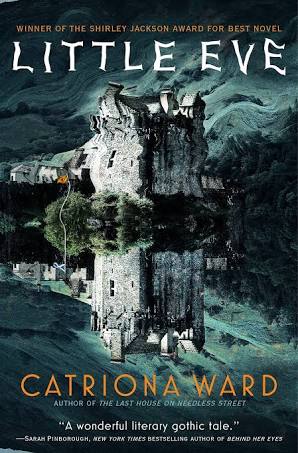
Little Eve Review

Book: Little Eve
Author: Catriona Ward
Publisher: Nightfire
Year: 2022
Rating: 5 out of 5 stars

Synopsis: “On the wind-battered isle of Altnaharra, off the wildest coast of Scotland, a clan prepares to bring about the end of the world and its imminent rebirth. The Adder is coming, and one of their number will inherit its powers. They all want the honor, but young Eve is willing to do anything for the distinction. A reckoning beyond Eve’s imagination begins when Chief Inspector Black arrives to investigate a brutal murder, and their sacred ceremony goes terribly wrong. And soon, all the secrets of Altnaharra will be uncovered.”

Review: Wow, can you believe it? A 5 star review for an uncorrected advanced reader copy? It seems almost too good to be true! I kid, of course, but you know how I’ve felt about a lot of the ARCs I’ve received – particularly suspenseful fiction, even more so with a female narrator. I did happen to read an ARC from Catriona Ward last year, Sundial, but never got around to reviewing it. In fairness, Sundial was so strange and creepy I wasn’t entirely sure how to review it, but it would have also certainly garnered at least 3 stars (it’s been a little while since I read it, so I can’t say for sure what I would have rated it but I can tell you it was very good, especially for the genre).

Little Eve bounces around between, mainly, two narrators. It jumps back and forth in time, ranging from 1917 to 1945, telling a twisting tale both as it unfolds in real time and as a series of letters written to the aforementioned Chief Inspector Black. This book is filled with turns, not everyone is who we think them to be and even as details are revealed we have to keep in mind that the narration is coming from characters who are nearly as in the dark as we are as readers. Little Eve tells the tale of a man, “Uncle”, who possesses a unique gift called The Eye. Uncle, with his powers of understanding and persuasion, convinces two women to move to his inherited home on the isle of Altnaharra – for all intents and purposes, a castle on the edge of the sea, behind which is a ring of towering stones Uncle and his family use for ritual-esque purposes. The three then adopt four children, three girls and a boy, who grow up and live on the isle with their somewhat cobbled together family.

The book begins with a retelling of the events that unfold on the cold morning of January 2 1921, when the local butcher, Jamie MacRaith, makes his way to the Castle of Altnaharra to deliver a slab of beef for Hogmanay (New Year’s Eve). Jamie is a few days late because of a wicked winter storm, and when he arrives at Altnaharra to deliver the beef, instead of a locked gate at the entrance to the lone isle, he finds the gate ajar and blood on the ground. Jamie is the first to discover the five bodies of those in residence at Altnaharra; each with a single eye removed, dead or nearly so, arranged in a circle within the stones behind the castle. The rest of the book tells the story of the previous four years and what exactly transpired to bring Uncle, the two women, and the four children who lived on the isle with him to their ultimate demise. (And yes, I correctly said five bodies and not seven, all is revealed in time.)

Little Eve weaves a web of cult-like behavior, made up religious beliefs, possible magical powers, and confusion through it’s story-line. Unlike other books I’ve read that have attempted to spin a yarn so complex and failed in a jumble of convoluted nonsense and confusion, Ward has managed to weave a web of complexity that unfolds in a pleasing way. Nothing is as it seems. Nothing plays out the way you expect it to, even if you’re like me and prefer to guess incessantly as the book reveals its secrets, it holds those secrets closely guarded until it’s ready to reveal them and astonish you. I referred to this book twice now as a woven web, and I would generally not repeat a phrase like that but it’s the only way I can think to explain the inner workings of what Ward has managed to achieve. Little Eve is complex in the best ways: you can’t ever quite rule anything out no matter how much your mind might want you to, all options are on the table until the last chapter, and even then there are still secrets being revealed right up until the end.

I was so surprisingly satisfied with how this book played out that I couldn’t help but give it 5 stars. Not only was it well constructed, it was a compelling story, and the best part? It was well written. And not just well written for an Arc, it was well written. I have not a single complaint or wish for this book and if you’ve been here for a bit, you know that’s no small feat. Little Eve left me stewing over how it might play out for several days when I accidentally left the book at home when I went on vacation – I couldn’t wait to get back to the plot, to see where it was going to take me! That’s the mark of a great book in my opinion. I can only hope to read more from Catriona Ward in the future, she has exceeded every expectation.

Advice: If you like a good suspenseful novel, a dark mystery, a cult story, or an ending you cannot predict then boy do I have the book for you. If you love a good twist (or four, or five), I think you’ll love Little Eve. If, however, you’re looking for something light and fluffy, or prefer a narrative that doesn’t jump around between characters, this is probably not quite the book for you. All in all, I found this to be an enjoyable, complex, engaging, and dark read.