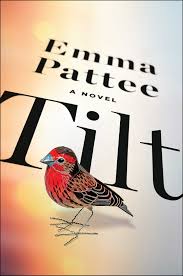
Tilt Review

Book: Tilt
Author: Emma Pattee
Publisher: Marysue Rucci Books
Year: 2025
Rating: 3.5 out of 5 stars

Synopsis : “Annie is nine moths pregnant. She’s shopping for a crib at Ikea. That’s when the massive earthquake hits. There’s nothing to do but walk.
Set over the course of one day – a heart-racing debut about a woman facing the unimaginable and trying to get to safety.”

Review : To be honest, I don’t remember requesting this ARC and had I known what it was about, I’m certain I wouldn’t have. And, while I try to be as objective as possible with how I review books, in truth the score I gave this book is, at least in part, a reflection of how I feel about natural disaster storylines – that is to say, I hate them.

There were so many aspects of this book that made it feel too real for me. Not only is the narrator my age, her husband is my partner’s age, and their struggle felt like a carnival mirror reflection of our own struggle. The entirety of Tilt might best be described as a millennial existential dystopian nightmare. We follow Annie through the literal earth shattering event she lives through on the day of the earthquake, but we also bounce back and forth between her life before marriage, pregnancy, and stalling out midway through her 30s, stuck and unable to move forward thanks to an unstable economy and a husband who cannot find meaningful work. Truly, this book is a millennial hellscape nightmare not many of us are capable of crawling our way out of, and to add to it the specter of a city-leveling earthquake…oof. This novel made me physically ill to read, I’m not even exaggerating. It made me nauseous. I’m going to say something I rarely say about books here : I hated it. And maybe that was Pattee’s intent, it sure seemed so, at least; perhaps that’s not worth lowering the score of this book any further. I believe I felt exactly what I was meant to feel when I read this book, but sadly I don’t enjoy reading things that make me ill. I put them down and never pick them back up again. Which is exactly what I’ll do with Tilt. I read it, it’s over, we won’t be returning.

There are further reasons beyond the visceral reaction I had to Tilt that attributed to the 3.5 star rating I gave this book, so let’s talk about them. First, while I know this is an advanced copy, I did find several inconsistencies in the story telling that served to take me directly out of the fictional reality Pattee created. We’re told over and over again that Annie is wearing a romper, so many times throughout the novel do we hear about Annie’s romper, that when she has someone feel her stomach by putting their hand under her shirt, it was with some relief that I was immediately yanked right out of the story. We also find Annie using the restroom in a looted gas station, a gas station where the electricity has gone out, and yet she closes the bathroom door and in the complete darkness is able to see the blood and dust coating her legs and shoes. I’ve been in many a public restroom where the lights are out (though, not from an earthquake, I assure you!), I can’t bring myself to understand how she was able to see clearly in a closed room with no lighting. Finally, perhaps my number one grievance with the entire story : the book begins with a map of Portland: where Annie lives, where she and her husband work, and where the earthquake takes place. I’m always grateful for a map, particularly if there’s travel involved, I like to flip back and forth and see where our characters are going, get a visual understanding of what’s going on. But the map Pattee provided for us is wildly lacking – there are so many chapters that are headlined by the cross streets Annie finds herself at, but those cross streets are almost exclusively not included in the map. Why bother including a map at all if a huge portion of the book’s landmarks aren’t even on the map in the first place? Either include a map with the cross streets you took your time to tell us about, or don’t include a map at all. This frustration alone was enough to make me drop this book’s rating to 3.5 – do it right or don’t do it. Period.

*** Spoilers Ahead ***

Finally, this book ends the way a realistic natural disaster might end – without a happy ending. There’s no bow tied up at the end of this book for us, and while I generally prefer a book to move me rather than give me something unrealistic, in some situations it might be preferable to finding out our main character’s husband has probably died, crushed under the weight of a building he wasn’t even supposed to be at that day. It might be preferable to the day-of earthquake delivery she gives to her baby in the woods near her apartment, uncertain if anyone she knows is even alive, if her building is even standing, and with absolutely no means of getting to a hospital for care. I hated every part of this book. From start to finish. Hated it.

And listen, I read that Pattee is a climate activist and writer for several bigger publications, she should know that doom and gloom surrounding climate change actually have the opposite impact on most people. Scenarios where we see the worst of the worst played out turn people off to the very real dangers of climate change – we can’t handle the anxiety and dread someone like Pattee piles on top of us while we simultaneously live through horror after horror. This novel did not have a profound impact on me beyond making me wish I’d never read it. It certainly didn’t make me want to care more about climate change (and trust me when I say I already do. A lot.). It did make me want to huck this book at the wall and tell all my friends not to read it. We’re already existing amongst the horrors. We don’t need a reminder of how much worse it could be. Many of us are already doing the work, engaging grassroots efforts, and attempting to make the world a better place in our own ways; piling additional, fictional, horrors onto the situation makes things worse. I will die on this hill.

Advice : If you have anxiety of any kind, if you have fears about climate change, if you’re a millennial, if you or someone you know is struggling to find work, if you find yourself priced out of the housing market, if you got married because you needed health insurance or maybe your partner did, do not read this book. Trust me. Don’t read it. It isn’t worth it. Your mental health will thank you for not reading this one.
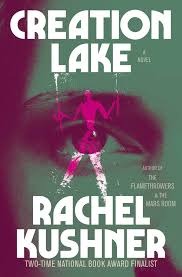
Creation Lake Review

Book: Creation Lake
Author: Rachel Kushner
Publisher: Scribner
Year: 2024
Rating: 5 out of 5 stars

Synopsis : “Creation Lake is a novel about a secret agent, a thirty-four-year-old American woman of ruthless tactics and clean beauty who is sent to do dirty work in France. “Sadie Smith” is how the narrator introduces herself to the rural commune of French subversives on whom she is keeping tabs, and her lover, Lucien, a young and well-born Parisian she has met by “cold bump” – making him believe the encounter was accidental. Like everyone she targets, Lucien is useful to her and used by her. Sadie operates by strategy and dissimulation, based on what her “contacts” – shadowy figures in business and government – instruct. First, these contacts want her to incite provocation. Then they want more.
In this region of old farms and prehistoric caves, Sadie becomes entranced by a mysterious figure named Bruno Lacombe, a mentor to the young activists who believes that the path to emancipate is not revolt but a return to the ancient past. Just as Sadie is certain she’s the seductress and puppet master of those she surveils, Bruno is seducing her with his ingenious counter-histories, his artful laments, his own tragic story.
Written in short, vaulting sections, Rachel Kushner’s rendition of “noir” is taut and dazzling. Creation Lake is Kushner’s finest achievement yet – a work of high art, high comedy, and unforgettable pleasure.”

Review : I was absolutely mesmerized by Creation Lake, it pulled me in and wrapped me up and by the time I was done I had no idea what I’d just read. It was perfect. Kushner has woven a tale that on the surface may be simply read as an engaging spy novel and nothing more, and maybe it’s okay to read it that way and never delve any deeper. But, like an onion, this novel has layers. For most of the book, Kushner bounces between two perspectives, the first being “Sadie” our narrator whose real name we never learn, the second being the hacked email messages of an environmental activist named Bruno Lacombe. Sadie has been tasked with infiltrating and determining the motives behind a small, rural commune in France, a commune who believes in renewing and sustaining cultural farming practices, sometimes by any means necessary. She hacks the email communications between the commune and, who she affectionately refers to as, Bruno (Lacombe to the members of the commune) and spends about one third of the book reading his missives on truly ancient communities, species, and what he perceives to be the evolution of mankind as we know it.

Tucked in tightly within the narration, we find little cracks in Sadie’s story, the one she’s been telling us. I hesitate to call Sadie an unreliable narrator, but we do only get her side of the story and the side of the story she tells is just as carefully crafted for our eyes (by Kushner) as it is for the eyes of the French subversives she’s infiltrating. Sadie projects herself as confident, at times conniving, and self-assured. She knows who she is, she knows what she’s good at, nothing matters beyond that. And yet. And yet. As the story unravels, we begin to catch glimpses into Sadie’s past, into the assignments that have gone wrong, the time spent entrapping innocent people, the subsequent loss of her government job. We begin to see the threads that hold this story so closely and delicately woven, catching light, fraying just a little, tugging at the seams.

Sadie begins to form a connection with Bruno, a connection that will forever remain one-sided, but a connection nonetheless. She relates to what he has to say about the nature of humankind, the nature of our evolutionary process from Homo Erectus to modern humanity, she eagerly opens new emails from Bruno to the commune, turning the philosophies over in her mind, ruminating on them beneath dappled sunlight, allowing herself to get involved with a subject of her assignment – even if no one knows she’s done it. Even if she doesn’t even realize it herself. As Bruno’s philosophy begins to shift and change and ebb and flow, so too does Sadie’s experience as an agent. She begins to get sloppy, she reminisces more, fear creeps in, and she begins to morph from an analytical, strategic agent to a messy, guilt-ridden employee. All the while, continuing to keep up the pretense both with the reader and with the commune that she is who she says she is. It’s safe to say, neither are fooled.

I found this book to be deeply compelling. Kushner wrote Bruno is such a way that I found myself equally as compelled as Sadie by his words, waiting for the next time his emails would turn up in the book’s pages, diving deeper and deeper into his version of history, thinking of it even without the book in my lap. It was riveting, it continues to live in my mind. I thought about this book for a long time after I finished it, chewing it over, turning back through events in my mind, trying to parse where things went wrong, what the greater meaning might be. There’s an inherent sense of oneness that comes from Bruno’s writings, an idea that we aren’t any different than anyone else, despite what our philosophical systems might be, an idea that stems from early humanity; that for all our differences, there might be more similarities than we expect; that this could change our entire worldview if we let it; that maybe it should. At the same time, there’s a thread of guilt that weaves its way through the story, unraveling Sadie’s persona and permeating her entire being, pulling at the mask she wears, both as Sadie Smith and as the narrator. We never fully see her for who she is, but by the time the novel is over, we’ve touched something real.

At the end of the day, this book contains the multitudes that exist within every person. The mask we wear around each other, the atrocities we commit in the name of ego, the way we differentiate ourselves from each other, all the while knowing somewhere deep within ourselves that if you boil each of us down, we’re really the same. There’s a lot of accurate history telling that happens throughout this book, too. Some of it is overwhelmed by Bruno’s own ideas about life and history and evolution, but much of it comes from the real world outside this book and I think that is what makes Bruno’s emails so compelling. We connect with them because we see ourselves in them, just like Sadie did. It made her more human in the end. Maybe it can make us more human, too.

Advice : Creation Lake is a must read. It’s riveting, it’s just high stakes enough without being an overwhelming anxiety trip, and it’s beautifully written.

Summoned by the Earth Review

Book: Summoned by the Earth : Becoming a Holy Vessel for Healing Our World
Author: Cynthia Jury
Publisher: Prospecta Press
Year: 2024
Rating: 5 out of 5 stars

Synopsis : “The most pressing question in these uncertain times may well be, How can we bring healing and protection to the Earth? It was this very question that Cynthia Jurs carried with her in 1990 as she climbed a path high in the Himalayas to meet an “old wise man in a cave” – a venerated lama from Nepal. In response to her question, the old lama gave her a formidable assignment based on an ancient practice from Tibet : she must procure earth treasure vases made of clay and potent medicines, fill them with prayers and symbolic offerings, and bury them around the world where healing is called for.
Thus begins the journey of a lifetime – sometimes harrowing, but always shining with beauty at the threshold between urgency and the timelessness of the sacred. In Summed by the Earth we accompany this passionate and creative Buddhist teacher, as she attempts to fulfill the daunting task. Ultimately, the path from the wise man’s mountain cave winds around the world, bringing Cynthia into relationship with elders, activists and diverse communities. One by one, as the humble clay pots are planted in the earth, the power of an ancient technology of the sacred comes alive and global community grows to protect the Earth and learn how to become vessels of healing.
As many of us wonder what we can do in this eleventh hour, Summoned by the Earth offers a riveting account of one woman’s response to the challenges we face, and is an irresistible invitation to become “sacred activists” heeding the call of the Earth.”

Review : Oh boy. You know, sometimes I read a book that moves me in such a profound way that I end up not even reviewing it – how do you put words to the thing that has changed and transformed you from the inside out? Anything you might say after that would pale by comparison. As I sit down to write this review, I fear the struggle to fully encapsulate the enormity of Summoned by the Earth may keep me from conveying to you just how life altering this book has been for me. I’m going to do my best!

This book, unlike what I generally review, did not come to me as an advanced reader copy, instead, it was sent to me by a PR agent post-release. I’m grateful this is how I was able to read this work: in its totality, with maps and endnotes and glossary and photos, with a foreword and an understanding of just how this journey has unfolded for the people involved as well as the planet. My copy is now filled to the brim with notations, underlined passages, dog eared pages, and little colorful tabs to remind me of all the many ways in which Cynthia Jurs has spoken directly to my soul. I suspect this will be a reread many times over and a gift I will be passing along to my friends.

In the 1990s, Cynthia was already considering the harmful effects of mankind’s destruction of the Earth when she took her pilgrimage to meet a reclusive Buddhist Lama, Charok Rinpoche. Living across the Rio Grande Valley from the Los Alamos National Laboratory (LANL) where nuclear weapons are created, tested, and stored, Jurs had already been contemplating the harmful effects of radioactive poisoning on the land. She explained her concerns to the Lama and asked him how she might be of service to the Earth, how she might heal the planet, and how she might do the work in a world devoid of hope in light of the atrocities being faced across the globe. Charok Rinpoche then gave her a directive : plant Earth Treasure Vases in the ground, allow them to do the work. In Charok Rinpoche’s Buddhist tradition, Earth Treasure Vases are clay pots filled with sacred medicine, containing what are referred to as “precious pills”, or those remaining aspects of a realized practitioner’s body that do not burn when their earthly vessels are burned after they’ve passed. The Earth Treasure Vessels, 30 in total, were created for Jurs after her departure from the mountain and sent along to her later, however ETVs are traditionally filled, closed, and sealed, never to be opened again. Because they were being shipped to Jurs, they could not be filled and sealed without fear of being reopened when passing through customs on their way to the United States, and so they were created using both clay and the sacred ingredients, empty vessels ready for Jurs’ filling.

Jurs, a Buddhist teacher who studied directly under Thich That Hanh, spent a great deal of time following the directive to heal the Earth by burying sacred vessels within her soil deepening her own spiritual practice, forming a Sangha (or community of practitioners), and meditating on the most useful places around the globe for these precious vessels to do their work. Beginning in the United States, Jurs, along with Tewa elders Marian Naranjo and Vickie Downey, chose to plant the first ETV within an area referred to as Area G, in a cave overlooking LANL. The Los Alamos National Laboratory resides on stolen indigenous land, belonging to the Tewa people, but taken by eminent domain during World War II. Indigenous tribes have not had access to their sacred sites located within LANL since their land was stolen.

Throughout this amazing, eye opening, deeply moving work, Jurs does more than simply plant vessels, hoping they’ll perform miracles. No. She engages her Sangha, meditating on each vessel with specific intentions for each chosen location, doing decades worth of research into communities that might benefit most from this practice, and connecting with elders from across the world. Several of the vessels were stewarded by those within her community, taken and placed by someone other than Cynthia herself, often by people with personal connections to the spaces where the vessels would be buried. There even remain a few left to be buried today, a work that continues on in the world even as we speak, despite already having put nearly thirty years into the ETVs.

Something that I appreciate so greatly about Cynthia’s work here is how transparent and honest she is with the reader – at times she describes mistakes she’s made when interacting with elders and indigenous communities, though never once making excuses or acting as though the mistakes are trivial matters. She outlines the work she’s done to make things right, to make reparations, and the communications she’s had to ensure it doesn’t happen again, she also acknowledges her own privilege and speaks to how that informs her work. Throughout this practice, in traveling to nearly every continent on this planet, she relies solely on the advice and acceptance of indigenous elders, never taking over or forging ahead if the vessels are not accepted. It is a welcome change from so many who leave the United States and travel to other countries with the idea that they might be a “savior” to those they encounter. Jurs remains humble, prostrating herself at the feet of those who hold sacred connection to their land, taking in whatever knowledge she can gain from them, and simply facilitating the space for the vessels to be filled with the prayers and intentions of those who live on the land where they’ll be buried. There are so many instances of indigenous elders waiting to receive signs or divining prior to accepting the vases, Jurs always defers to the elders.

There are so many moments throughout Summoned by the Earth where Nature herself seemed to be responding directly to the prayers and meditations being poured directly into the vessels, from the roars of white lions living within a refuge in the South African bush, to endangered eastern lowland gorillas in the DRC coming close enough to witness, to a humpback whale breeching and splashing the vase along the coast of Oaxaca, even to incredibly synchronous and intricately detailed crop circles appearing while in England. I found myself shedding tears over each moment as Jurs explained the connection she felt to the planet with each incredible inhuman encounter. It’s almost as if the planet understands our intent.

While the idea of Earth Treasure Vases healing the Earth may sound far-fetched or overly spiritual, at the end of the day there have been noticeable changes within regions where the ETVs have been planted – and this speaks directly to the impact of community healing that happens when people come together for a common cause. Within Liberia, where multiple vessels are buried, four Peace Huts have been erected to specifically address the prayers for peace within the region that came about during the prayer ritual and burial of the original Liberian ETV; multiple non-profits have been formed due largely in part to the work of the Sangha community, Jurs own work, and the work of those across the globe who have heeded the call for restoration and peace; and since the burial of the initial vase across from the sacred Tewa site where LANL resides, Tewa elders have been granted access to small portions of the land in order to leave offerings and begin to tend their holy spaces. When communities engage and gather together for a common cause of peace, tremendous work and healing can occur, of that we can be sure. Whatever you believe when it comes to the Earth Treasure Vases, it is clear that our global community is hurting, not just from climate change and radioactive waste, but from horrific humanitarian crises that are impossible to untangle from each other. Bringing communities together for prayer and intention and peace is a symbol of profound hope that this world so desperately needs.

It was an absolute honor to read this book, to delve into Cynthia’s life’s work, and to feel that in reading this book I have shared the emotions that have risen within me with an entire global mandala of people’s prayers and wishes and hopes for a better world. I read this book slowly, purposefully, and with intention and I come out of it feeling as though I’ve been unzipped in a way, as if the healing work of the ETVs has been at play in my own life, as though the energy they create has reached a small tendril out into my life and has drawn me into the matrix of global hope that permeates outward from the center.

Advice : Pick this book up. That’s all I have to say! My review is a measly thing in comparison. Pick this one up. You won’t regret it.

Sword Crossed Review

Book: Sword Crossed
Author: Freya Marske
Publisher: Bramble
Year: 2024
Rating: 4 out of 5 stars

Synopsis : “Mattinesh Jay, dutiful heir to his struggling family business, needs to hire an experienced swordsman to serve as best man for his arranged marriage. A sword-challenge at the ceremony would destroy his desperate bid to restore his family’s wealth.
What he can afford, unfortunately, is a part-time con artist and full0time charming menace, Luca Piere.
Luca, for his part, is trying to reinvent himself in a new city. All he wants to do is make some easy money and try to forget the crime he committed in his hometown. He didn’t plan on being blackmailed into giving sword lessons to a chronically responsible – and inconveniently handsome – wool merchant like Matti.
However, neither Matti’s business troubles nor Luca himself are quite what they seem. As the days count down to Matti’s wedding, the two of them become entangled in the intrigue and sabotage that have brought Matti’s house to the brink of ruin. And when Luca’s secrets threatened to drive a blade through their growing alliance, both Matti and Luca will have to answer one question : How many lies are you prepared to strip away, when the truth could mean losing everything you want?”

Review : The ARC messaging for this book compares it to Travis Baldree’s Legends and Lattes – my second ARC this year that’s been compared to my favorite cozy, low stakes fantasy world. While I wouldn’t necessarily pick this book up and immediately think “This reminds me of Legends and Lattes“, Marske did deliver on low-stakes and I appreciate that. Marske has created a fantasy world with all the world-building one might hope for and absolutely none of the fantasy, which made the book a bit hard to get through at first – though, the close proximity and suspense of it all made things flow a lot easier as we got into the relationship between Matti and Luca. This is ultimately what led me to give this book four instead of five stars, as there wasn’t a perfect balance between mind-numbingly slow and send-shivers-up-your-spine anticipation. I think the balance could have been struck a bit more seamlessly, but ultimately the writing was great, particularly for an ARC, the storytelling felt solid, and the world-building was pretty good.

I think it’s an interesting concept to create a fantasy book but to include absolutely no fantasy whatsoever. True, there’s some talk of the gods – actually, this ended up being my favorite aspect of the novel, each swear lending itself to more and more ridiculous descriptions of the god’s particular anatomy (someone’s pube being my personal favorite) – but there’s not a single mention of any kind of fantastical creature, anyone who might be anything other than human, or forces that might be beyond anyone’s control. What Marske has created, instead, is a book filled with the day-to-day politics of guild houses and merchant families, what their lives look like as everyday folk who trade and run factories and forge alliances with each other. And ultimately, this is where the book finds Mattinesh Jay – the heir to a guild house that manufactures wool, a guild house that’s fallen on more than it’s fair share of hard times, that’s struggling to survive, and so two families must marry in order to keep the house name from utterly failing. It isn’t a nail biter, there isn’t threat of life or limb (for the most part), and there aren’t any interactions with creatures. From that perspective, I’m not sure if cozy is the right word, so much as slow might be, but low-stakes it most certainly is. There’s absolutely no anxiety-causing battle sequences or war-time scenes, rather we see the politics of daily life and from there our story grows.

I found the pacing to be a bit frustrating, jumping back and forth between incredibly dull and incredibly interesting, it actually took me about half the book before I started to really enjoy the storytelling. I found it dull and hard to follow, though not because it was poorly written, simply because I wasn’t interested in the politics of guild houses. Once things began to get rolling, though, I came to find myself turning pages with gusto, returning to the book to see how the story would play out, and hoping for a bright future for the main characters. In fact, I finally began to enjoy the book so much that the end made me cry a little – so how’s that for making a turn around!

Advice : If you love a slow-burn, low-stakes fantasy or sword fighting, this might just be for you! If you aren’t into queer romance novels, lots of talk about guild houses, or the politics of a fantasy world, you might struggle with this one.

Can’t Spell Treason without Tea Review

Book: Can’t Spell Treason without Tea
Author: Rebecca Thorne
Publisher: Bramble / Tor Books
Year: 2024
Rating: 4 out of 5 stars

Synopsis : “All Reyna and Kianthe want is to open a bookshop that serves tea while firelight drifts between the rafters. However, Reyna works as one of the queen’s private guards, and Kianthe is the most powerful mage in existence. Leaving their lives isn’t so easy.
But after an assassin takes Reyna hostage, she decides she’s thoroughly done risking her life for a self-centered queen. Meanwhile, Kianthe has been waiting for a chance to flee responsibility – all the better that her girlfriend is on board. Together, they settle in Tawney, a town nestled in the icy tundra near dragon country, and open the shop of their dreams.
What follows is a cozy tale of mishaps, mysteries, and a murderous queen throwing the realm’s biggest temper tantrum, where these two women will discover just what they mean to each other…and the world.”

Review : This is another first for me, notably from the same publishing house as the last book I reviewed, a book that was originally independently published in 2022 and has now been picked up by a major publisher, scheduled to be re-released in 2024. I thought it looked familiar! Turns out I’ve been seeing people post about Can’t Spell Treason without Tea for a little while after it’s independent publishing. With the popularity of Travis Baldree’s Legends and Lattes, it’s little wonder a book that credits Baldree’s debut novel with it’s inception, has done so well! I have also found myself swept up in Baldree’s world, searching for additional cozy fantasy novels since finishing both his books, so this was a welcome surprise.

Thorne has successfully created a cozy, relatively low-stakes, fantasy novel that seems to check all the boxes for me. There’s rich world-building without the confusing word salad that sometimes accompanies fantasy novels, I never once struggled to visualize the queendom or any of it’s surrounding countries; there’s just enough mention of tea blends, baked goods, and rolling fires without going so far down the rabbit hole that the entire story becomes a cook book; and there’s mystery and adventure, peppered with betrayal, gryphon flights, and just a dash of magic. It’s the perfect blend of everything I’m looking for in a cozy, no-anxiety, fantasy novel. Thorne sets us up well for additional books, something I’m greatly anticipating (I know there’s a second book coming! It, like the first book, was also originally independently published, but will be re-released later this year). I even tried to buy book two in it’s independent form, but it’s already been marked up to roughly $150 so, like the rest of you, I will be waiting until the fall for the second installment. And that’s about as high of praise as I can give – I never attempt to buy a sequel of a copy I’ve been gifted as an ARC, I try my hand at getting the review copy for the next book in the lineup, and if I don’t get it, I move on.

There were a couple instances where I felt this book could have benefitted from some additional editing, but I suspect that may come with a bit of time, experience, and additional books. None of it felt so grievous that I wouldn’t read more in the future or wouldn’t recommend the series to friends (which I have already done!), but it’s worth mentioning. First, I realize the series is literally called Tomes & Tea, but the overuse of the word “tome” grated on my nerves throughout the book. I think this book, and subsequent books, would benefit from occasionally referring to books as something other than tomes, but that’s a personal preference on my end and perhaps it doesn’t bother anyone else. And second, there were several instance of dialogue that felt so stilted, it was clear this is a debut novel – and I do thin that’s okay! Like I said, I think some of these small errors will be adjusted with time and experience and I expect that book two, and any further books Thorne decides to write, will likely improve. There’s a lot of overuse of the word “girlfriend” in conversation that doesn’t read true to spoken dialogue, or overly formal wording that doesn’t quite strike me as realistic to a verbal conversation. I’m aware that this is a fantasy and not meant to be realistic, but I do expect dialogue to be at least convincing.

Advice : I highly suggest you mark this one on your calendar! If you love cozy, low stakes, but highly enjoyable, smut-free fantasy, this will be right up your alley. If you enjoyed Travis Baldree’s books, this one is definitely for you.

The Coven Review

Book: The Coven
Author: Harper L Woods
Publisher: Bramble / Tor Books
Year: 2023 & 2024
Rating: 2 out of 5 stars

Synopsis : “I was raised to be my father’s weapon against the Coven, who had taken everything from him. I would do anything to keep my younger brother from suffering the same fate. My path lead me to the prestigious halls of Hollow’s Grove University, where witches learn to practice their magic free from human judgement.
There I come face-to-face with the beautiful and infuriating Headmaster, Alaric Grayson Thorne. He despises me just as much as I loathe him – in spite of the fire that burns between us…”

Review : This is a first for me, a book that has been previously published being sent out as an advanced reader copy. I admit, it took me a little bit of digging to figure out why I received an uncorrected advanced reading copy of a book that was published in 2023; it seems this marketing campaign is running ahead of a special edition publication of The Coven debuting in August of 2024, a month before the sequel releases. Whatever the case, this book has been circulating and doing surprisingly well over the last few months, so by the time I received an ARC, opinions had already filtered their way to me. I received this book and immediately heard from a friend how much they enjoyed it, I know the author has amassed a monstrous following on social media, falling into the category of fantasy romance which means the loyal fans are deeply loyal. I had expectations, to say the least.

Unfortunately, The Coven lived up to the low, low bar of my expectations. Now, before we dive in, please don’t get me wrong! I’m not here to shame anyone for reading smutty fantasy novels, I don’t look down my nose at the books or the readers of the genre. At all. However, it has been my experience that many of these fantasy romance authors, in an effort to churn out as many books as possible for their droves of die-hard fans, often sacrifice quality for quantity. Or even quality for smut. It’s fair to say that I went into this book with a bit of trepidation, knowing Woods’ second book is set to debut just a year after her first – a timeline which is pretty drawn-out as far as fantasy books are concerned lately. I expected this book would sacrifice plot for smut, but what I didn’t expect was the shoddy writing (though, perhaps I should have given the passive voice used in the synopsis).

*Spoilers Ahead*

The Coven is a hard to follow fantasy that very clearly draws on so many fantasy and witchy tv shows. Unfortunately for Woods, I too have watched so many fantasy and witchy tv shows, meaning my mind immediately jumped to all the storylines she’s at times all but outright copied. First of all, the vampire-witch romance trope is unbelievably overplayed, but if you’re going to go that route, at least stray away from names used in tv shows like Vampire Diaries (*cough* Alaric *cough*). I find it hard to believe that any reader interested in a book like The Coven hasn’t also watched Sabrina, Legacies, or A Discovery of Witches. Like I said, the vampire-witch struggle and eventual romance is played out. There’s something deeply aggravating about a controlling, toxic male vampire who for some unknown reason just cannot resist the temptation of an “impossible” and frustrating female witch. We’ve seen it played out hundreds of times through so many fantasy books, movies, and tv series…it’s not compelling. Pun not intended. There’s nothing about an over-done trope that makes me want to continue turning pages. It makes me want to throw the book in the trash.

My second issue with The Coven is that while I can appreciate that Woods chose to include content warnings at the beginning of the book, clueing the reader in that the central male character is nothing but toxic, at the end of the day the portrayal of a controlling, manipulative, and coercive relationship is at best disquieting and at worst misogynistic and traumatic. I have yet to decide where Woods falls on the spectrum with her male main character (MMC) – a content warning isn’t enough, simply choosing not to write toxic men into stories where the reader is meant to find their humanity and fall in love with them is more of what I’m looking for. And this leads me to my third grievance with The Coven, which is the, frankly, hard to believe convolution of the storyline that means we readers cannot actually find humanity with Woods’ MMC because he is, in fact, the literal devil. Woods has created a universe where magic is readily available to those who have magical family lines they’ve been fortunate to be born into. Magic, then, is available through whatever means your family line is able to work with : air, earth, water, life, crystals, and the cosmos. However! In Woods’ universe, this ever-present magic is only available through these forms thanks to a blood pact that was made with the literal christian devil, Lucifer Morningstar. I told you, convoluted.

It’s this blood pact that brings me to my fourth grievance with The Coven : setting. While this book is modern, the witches and their family lines all stem from Salem, MA, as if that trope weren’t played out enough already, though as you can see, Woods is not one to run from an overdone trope. Though we’re to believe that Salem is the pinnacle of witchy activity (and not, I don’t know, any of the sites where thousands of people were burned overseas thanks to an unrelenting witch-trial that barely made it’s way to the States), Woods chooses to use the name of someone who didn’t exist in real life as the witch-mother herself, she who made a pact with the devil. It’s like there are all these puzzle pieces and they’re all close enough to fitting, so you shove and shove at them, hoping they will eventually fit, only to realize they’re pieces from two different puzzles.

Finally, my last, and possibly my biggest frustration with The Coven is the slipshod writing Woods employs. We can see it first in the synopsis, an ever-present passive voice. All I could think as I read this book was how much my high school english teacher would have despised it (content aside). He drilled into my head on a regular basis how insufferable a passive voice is, and to this day it lives in my brain : thou shalt not use a passive voice. The Coven is a lot of “what had happened” – again, as you can see from the synopsis. The writing doesn’t improve as the book continues and given that this is an ARC of a book that’s already been published, I don’t suspect additional editing will truly occur here. This book is how it is, passive voice and all. Woods could have benefitted from removing about 50% of the occurrences of the word “that” as well, something that I would think any editor would notice in a first or second draft. Again, this is an ARC for an already published book. It is what it is.

Advice : If fantasy smut is your thing, this book is pretty dang boring. If quality writing is your thing, run as fast as you can in the opposite direction. Don’t. Bother. It’s a waste of money and time. Trust me.

The Manicurist’s Daughter

Book: The Manicurist’s Daughter
Author: Susan Lieu
Publisher: Celadon Books
Year: 2024
Rating: 3.5 out of 5 stars

Synopsis : “Susan Lieu has long been searching or answers. About her family’s past and about her own future. Refugees from the Vietnam War, Susan’s family escaped to California in the 1980s after five failed attempts. Upon arrival, Susan’s mother was their savvy, charismatic North Star, setting up two successful nail salons and orchestrating every success – until Susan was eleven. That year, her mother died from a botched tummy tuck. After the funeral, no one was ever allowed to talk about her or what had happened.
For the next twenty years, Susan navigated a series of cascading questions alone – why did the most perfect person in her life want to change her body? Why would no one tell her about her mother’s life in Vietnam? And how did this surgeon, who preyed on Vietnamese immigrants, go on operations after her mother’s death? Sifting through depositions, tracking down the surgeon’s family, and enlisting the help of spirit channelers, Susan uncovers the painful truth of her mother, herself, and the impossible ideal of beauty.
The Manicurist’s Daughter is much more than a memoir about grief, trauma, and body image. It is a story of fierce determination, strength in shared culture, and finding your place in the world.”

Review : I was really excited to dive into this advanced copy memoir after reading the letter to the reader Lieu included with the book – but I’m realizing now that much of what was covered in the letter isn’t touched on in the back cover synopsis, so I’m not sure you’re seeing the wild ride that her letter was, so I’ll share a bit of it here with you : “For the last two decades, no one in my family has ever spoken of her or how she died. I would ask questions, but they said I was being too emotional or stuck in the past. Desperate for answers, I joined a cult, tracked down the family of my mother’s surgeon, and sought justice through the help of spirit channelers.” This is all within the first few sentences in her letter to the reader! What a wild ride, I thought, I couldn’t wait to get into the meat of this memoir.

A comedian by trade, Lieu writes in a way that showcases her humor, leading us through her life as the youngest daughter of Vietnamese immigrant parents with off the cuff remarks that leave you laughing out loud, winding deftly through the trauma and emotional turmoil of losing a parent so young, guiding us through struggling to find answers while upholding a nearly impossible personal and familial standard; from feeling lost while navigating ivy league schooling to searching for answers from beyond the veil, Lieu takes us on, what ends up being, a winding and at times rather bumpy road. From the beginning, Lieu makes it clear that body image, food, and self worth are deeply connected within her family – something we can see clearly played out in the tummy tuck operation that ultimately takes her mother’s life at a mere 38 years old. Not only is Lieu constantly criticized for any weight she might put on, she’s also forced to consume every single piece of food that’s put before her, at least once to the point of vomiting. Lieu struggles so desperately for answers as to why her mother might have felt the need to have a cosmetic procedure for so much of her life, all the while laying it out methodically for the reader to understand, like a neon sign flashing in front of our eyes.

It’s for this exact reason that this book should be read with caution – tread lightly my friends, if you have struggled with disordered eating this book may present complications for you. The majority of the book revolves around food, so much so that part of the advanced reader copy package included a few postcards with pictures of traditional Vietnamese foods on them. While I think the point that Lieu is trying to make is an important one, there are a lot of complex emotions and ties to food in this book that may bring up some difficult emotions in the reader. Lieu refers so fondly to the dishes her family members made while she was growing up, speaking kindly of the foods her relatives make when she comes home to visit as an adult, while simultaneously speaking poorly of her body, her body image, and the way her body is objectified by those around her. It’s complex and confusing at times, but only in the sense that those who have not navigated this ground themselves may struggle to understand the difficulty one faces when they’re told over and over to shrink themselves. This book requires a content warning.

There are some pacing issues I struggled with in this memoir, places where Lieu spent so much time, chapters even, and places where she jumped around almost frantically. You probably know how much I hate being told what’s going on, and while Lieu doesn’t do this, there are connections she asks her reader to make that at times aren’t given enough context to make on our own. I’m a little perplexed as to why the pacing is so frenetic an uneven, with certain aspects of her personal story garnering so much attention while others warrant no more than a sentence or two. The time frame is a bit scattered, at times being not quite chronological, jumping from the past to the present of Lieu’s own life, and I feel she might have benefitted from gently tweaking the format.

These few issues aside, I found Lieu’s work to be an important embrace of family history, of breaking down the barriers that exist between family members, and of honest inspection of how generational curses impact our lives. In writing this memoir, Lieu is doing the work to heal not only her own self, but the individual members of her family, and past generations of her family as well. It’s an important read, but it does come with some necessary warning.

Advice : If you enjoy a memoir I really think this is going to be right up your alley. If you’ve struggled with disordered eating, I might avoid this one for your own sake.

Middletide Review

Book: Middletide
Author: Sarah Crouch
Publisher: Atria Books
Year: 2024
Rating: 2 out of 5 stars

Synopsis : “One peaceful morning, in the small Puget Sound town of Point Orchards, the lifeless body of Dr. Erin Landry is found hanging from a tree on the property of prodigal son and failed writer Elijah Leith. Sheriff Jim Godbout’s initial investigation points to an obvious suicide, but upon closer inspection, there seem to be clues of foul play when he discovers that the circumstances of the beautiful doctor’s death were ripped straight from the pages of Elijah’s own novel.
Out of money and motivation, thirty-three-year-old Elijah returns to his empty childhood home to lick the wounds of his fertile writing career. Hungry for purpose, he throws himself into restoring the ramshackle cabin his father left behind and rekindling his relationship with Nakita, the extraordinary girl from the nearby reservation whom he betrayed but was never able to forget.
As the town of Point Orchards turns against him, Elijah must fight for his innocence against an unexpected foe who is close and cunning enough to flawlessly frame him for murder. For fans of Where the Crawdads Sing, this scintillating literary suspense seeks to uncover a case of love, loss, and revenge.”

Review : Okay, Middletide is my first DNF (did not finish) of the year. And while I would normally not review a book I didn’t finish, I’m trying to be better about reviewing every advanced reader copy I get this year; while this may be a shorter review than most, I’m going to let you know why I chose not to finish this one. I had immediate red flags right from the start with the author’s note to the reader explaining that while Sarah Crouch took inspiration from the Lummi and Navajo Nations, the indigenous group she writes about is fictional. There was something about fictionalizing a group of people that didn’t sit quite right with me, something that continued to itch at the back of my mind as Crouch introduced us to Nakita and her father, to members of the fictional Indigenous group who also happen to be Christians (her father being the Christian pastor on the fictional reservation). The more I think about it, the more it rubs me the wrong way. Not only was the narrative not served by a white woman writing in a fictionalized Indigenous narrative, but the insistence that they be Christian rather than connected to their Indigenous beliefs felt off balance, at best. I think it’s also worth mentioning that Crouch wrote Nakita as living in a three story home on the reservation, take that how you will.

Crouch puts a great deal of emphasis on her main character, Elijah, being a homesteader; surely through her long-winded descriptions of the food he makes for himself and the plant-life that surround his small off-the-grid-esque cabin she earned the “for fans of Where the Crawdads Sing” title from the synopsis. However, if you’ve been here for a while you might remember that I gave WTCS a 2.5 stars for it’s lyrical writing and I still chose to give Middletide half a star less. Where WTCS crafted an effortlessly beautiful story full of natural elements and wonder, Middletide felt like effort. Crouch included so many drawn out descriptions of Elijah’s food that it became repetitive and frustrating early on, but when Elijah began killing his own food with equally long winded discussions about his bow and arrow, well, this vegan was out.

**Spoilers Ahead**

I was willing to overlook and plow through some of the frustrations I’d come across, hoping to find a quality murder mystery at the heart of this debut novel, but when the narrative took a swift turn into the unbelievable, I flipped to the end, discovered the twist I predicted immediately was true, and shut the book. Crouch asks the reader not to suspend belief, but to be so carried away by cozy conversations about food that we forget the nature of the characters she’s crafted for the reader. When the narrative changes on a dime, it becomes hard to reconcile who we’ve come to see with what she’s asking us to believe – and the real kicker is, if you’ve been reading thrillers for some time, it’s especially hard to reconcile because the plot eerily mirrors another’s work. Jumping from Elijah’s third person narrative to the diaries of a woman he’s been seeing, Crouch asks us to believe that Elijah has been an unreliable narrator and instead believe the diary entries we’re reading, which do not correspond with the third-person telling we’ve been getting until this point. I have a hard time with this, as Crouch is asking us to believe that she is the unreliable narrator as the author of a third-person narrative. Had Elijah’s perspective been first person, I would have had an easier time believing his account might not be entirely truthful, and the twist would have taken hold. Instead, the diary entries we read are so out of sync with what we’ve come to know over one hundred-some pages that it’s impossible to believe them, which is unfortunate because the plot twist reminded me immediately of Gone Girl by Gillian Flynn. And sure enough, when I flipped to the back of the book…the diary entries were faked in order to frame Elijah for murder.

Advice : This book certainly has an audience that I think might enjoy it, and if you fall into the homesteading, living off the land, the main characters date but don’t even kiss for months, kind of camp, well this might be for you. If you aren’t, or you’ve read Gone Girl, don’t bother. You already know how it ends.

Shanghailanders Review

Book: Shanghailanders
Author: Juli Min
Publisher: Spiegel & Grau
Year: 2024
Rating: 5 out of 5 stars

Synopsis : “The year is 2040, and wealthy real estate investor Leo Yang – handsome, distinguished, a real Shanghai man – is on the train back to the city after seeing his family off at the airport. His sophisticated Japanese-French wife, Eko, and their two eldest children, Yumi and Yoko, are headed for Boston, though one daughter’s revelations will soon reroute them to Paris.
While the years rewind to 2014, Shanghailanders rotates perspectives, drawing readers into the shared and separate lives of the Yang family, parent by parent, daughter by daughter, and through the eyes of the people in their orbit. As their world shifts and brings change for each of the Yangs, universal constants remain : love is complex, and family will always be connected by blood, secrets, and longing.”

Review : Shanghailanders is a complex work of creative genius, told not just from shifting perspectives, but also from an unwinding timeline, the book spans from 2040 to 2014, with each subsequent chapter unwinding time just a tiny bit more. Min’s first novel, Shanghailanders is a breathtaking debut novel filled with family history, peeling back the curtain, giving us a glimpse into the Yang family’s dynamic; toxicity, growth, rejection, and all the layers the meld together to form a family. Beginning and Ending with Leo, the patriarch of the Yang family, Min has bookended her work with a man whose chapters hardly revolve around his inner world at all. I found it fascinating that throughout the entirety of the novel, Min chose to only reveal the Yang family through three male-centered chapters, two of which are Leo, the third being the family’s driver – all three of whom serve only to point us back toward the matrilineal family line.

Shanghailanders is a novel that addresses the fragility of time both in narrative and construct, giving us the smallest glimpses into the years that make up a family, revealing small clues and inward peaks that create the structure the Yangs have crafted their world(s) into. Speaking broadly of time, of bloodlines, and of familial connection, Min paints a much more detailed picture with the narrative, showing rather than telling us that Leo, and likely Yoko as well, has an anxiety disorder that causes apocalyptic dread, that drives his need to see his daughters sinking into independence and stability, that, at times, pushes his family to the brink, threatening to shatter their bubble; that Yuki, the youngest, at sixteen is facing the loss of innocence and the heartache of love lost; that while each family member feels tethered to the other, neither feels the thread of love as connection, that love is not a given. This is a novel filled with longing, with logic, with dread, and the potent, ever present realization that time is a fragile filament that tugs at us all. 

I think the most successful aspect of this book is the format, rewinding through the narrative from 2040 until, finally, 2014. Taking us briefly through the years of improved technology, covid, and finally into those pre-pandemic years where the children are barely formed, where love is new, and anxieties aren’t quite realized yet. Each chapter invites us into a new realm of the Yang family, masterfully written, weaving webs so delicate behind the scenes that we cannot see each thread until the final page has turned. Each chapter left me craving more, desperately wishing the timeline was reversed, that I could follow this family into further detail, into more solid ground, wishing and hoping I would be given glimpses into the characters and storylines I most enjoyed. Alas, with each passing chapter, each character faded, each storyline slipped away, and I was transported to younger versions, the groundwork of each prior chapter laid out ahead of me. The longing I felt. Perfection.

Advice : This is a truly remarkable work created with a unique vision. If you enjoy epics, this might just be for you. Spanning 26 years in the reverse, this scratches the epic itch while fulfilling a creative interest and need. I’d mark this one on the calendar.

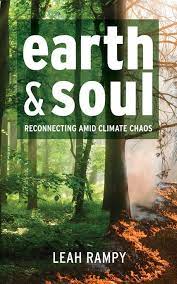
Earth & Soul Review

Book: Earth & Soul : Reconnecting Amid Climate Chaos
Author: Leah Rampy
Publisher: Bold Story Press
Year: 2024
Rating: 2.5 out of 5 stars

Synopsis : “Facing directly into the devastation of climate chaos and biodiversity loss, Rampy leads her readers on a soul journey through grief and loss to also claim the beauty, joy, and possibilities available when we reconnect with Earth. As we follow the author’s compelling personal experiences and engagingly lyrical stories of whales, cedars, sparrows, and more, we see the necessity and urgency of learning from the wisdom of our kin in the natural world. Writing at the intersection of spirituality, ecology, and story, Rampy charts a course for living deeply connected to Earth in ways that are both vitally important for and uniquely suited to these times. Even now when the worlds as we once knew it is ending and a new story lies beyond what we can envision, we hold the potential to lay stepping stones toward a diverse and vibrant world of oneness and mutual flourishing.”

Review : I have so many conflicting thoughts as I sit down to review this book. It gives me no joy to give a book about climate change a 50% review, particularly as the publicist for this book sent this book to me because of my own work in the world of sustainability. I wanted to love Earth & Soul, but I didn’t. Let’s start at the beginning : Leah Rampy, while boasting a PHD, does not have a background in biology, climate sciences, or ecology – her doctorate is in curriculum. While I don’t think it’s necessary for an author to hold an advanced degree, I do believe it hinders the work and the words she’s trying to communicate. Because her field of study has nothing to do with the subject matter, Rampy relies heavily on the works of others, paraphrasing (and citing) books I have been privileged enough to have read in the past. While this might function well in an academic paper or blog post, I find the distillation of the work of others to be an unfortunate book choice. I don’t think there’s anything wrong with a book filled with cited sources, don’t get me wrong! I love a well researched book. Where I take issue is how a story is told; Rampy rarely sheds light on her own experiences, choosing instead to simply share what others have written.

Rampy barely pulls the curtains back on her own life, something I think does a true disservice to the impact this book could have made. As I mentioned, she relies heavily on the work and words of others to bolster her narrative rather than allowing her own connection and experiences with Earth to drive the narrative forward. Referencing Robin Wall Kimmerer’s Braiding Sweetgrass eight times in 180 pages, Rampy clearly seeks to emulate Wall Kimmerer’s foundational work. Unfortunately, it reads as someone who’s read Braiding Sweetgrass and is relaying it to a friend who doesn’t want to read it themselves. As I have recently finished reading Braiding Sweetgrass myself, I found this particularly glaring. Rampy references indigenous wisdom and knowledge, which I appreciate a great deal as the scientific world is finally coming to understand just how much indigenous wisdom could have helped us over the last several hundred years; I couldn’t help but feel that I would rather be reading about indigenous wisdom right from the source, rather than distilled by a white woman. For reference, there was a singular moment in this book that brought me to tears and it was, unfortunately, a retelling of a Wall Kimmerer story. I found the writing style to be choppy and stilted, there was little flow to this narrative, though in the few places where it did flow (interestingly enough, found during the few brief descriptions of Rampy’s own personal experiences with the Earth), it was quite enjoyable to read.

Rampy’s style seems to be tell, rather than show, which you may know I find an incredibly condescending method of writing. In a chapter entitled “Kith and Kin”, Rampy uses the words kith and kin a combined total of twenty six times over the course of a mere fifteen pages, beating us over the head with the words rather than showing us what they mean to her. The words will go on to haunt the remainder of the book, interspersed so often than you cannot get away from them. I would rather be shown what kith and kin might look like than be told over and over again what it might mean – the impact is lessened this way, becoming more of an annoyance than a moment of understanding. In other books I’ve reviewed, I’ve found the occasion for telling vs showing often comes from an author’s disbelief that the reader would be intelligent enough to figure things out for themselves, to Rampy’s credit, Earth & Soul did not read this way. It did, however, read as though Rampy didn’t know how to show us rather than telling us, and perhaps that comes from her time spent as a lecturer; perhaps she will learn that as she grows as an author, but for now it leaves me continually frustrated by the way she steals the powerful impact this book could have made right out from under herself. 

As someone who is invested in the world of sustainability, I found frustration with this book. Rampy discloses at regular intervals that she has lead, what she refers to as, Pilgrimages all over the world. However, she never once discusses what kind of carbon impact she has on the planet by flying to multiple locations all across the globe with groups of people – in a time when many people are assessing their own carbon impact and coming to the conclusion that regular flight travel has a negative impact on the climate, I find it to be a stark omission. I also wish Rampy would have addressed the privilege that comes from having access to around the world flight travel, of the kind of people who might have the disposable income to go on such a journey, the people who are paying money to gaze upon nature without being tasked with making their own sustainable choices. It’s entirely possible that I’m pegging this all wrong, but Rampy doesn’t discuss any part of her climate footprint or the privilege that comes from these trips, so I can only tell you how it feels, which is…not good. During an early discussion revolving around meditating on nature, Rampy shares an anecdote from one such pilgrimage in which someone left a strand of yarn around an area of Earth with a sign telling people to stop and enjoy. Unfortunately, all I could think about was how that person had littered – sewing continued frustration on my end, as someone who works very hard to keep people from littering and to clean up litter that exists in nature already.

Likewise, Rampy twice discusses the use of cairns, both as a suggestion for the reader and as an example of what her pilgrimages entail. Again, as someone who works in the realm of sustainability, I find it problematic and ignorant on Rampy’s part to suggest readers create cairns. I have learned, and you can find this on many signs in many forest nation wide, to take only photographs and keep only memories, meaning you are to leave nature as you found it (or in my personal opinion, better than you found it). Creating cairns is frowned upon within the sustainability and naturalist worlds for (largely) two reasons : the first being that cairns created by park rangers exist for a specific reason, they are made to mark trails and creating your own can make a negative impact on carefully constructed cairns used for designating directions; the second being that many creatures, like salamanders, take shelter under or lay their eggs under stones, removing them from where they exist already may either damage eggs, damage habitat, or create fewer available spaces in which an animal may find shelter or lay their eggs. 

I left this book deeply frustrated. Rampy spends much time discussing the horrifying facts, figures, and statistics of climate change and biology loss, but she spends precisely zero time discussing who’s at fault for climate change. She doesn’t offer any suggestions for moving forward, ways in which we can reduce our carbon footprint, how we might engage with our local government to facilitate change, or what we can implement into our own lives in order to start the process of making change – all of which I suspect would lead to some unpleasant realizations of her own. She doesn’t discuss the greed, resource lust, or corporate entities who have created this world we find ourselves living within and I find that to be another disservice to what she’s attempting to accomplish. At the end of the day, yes, we have to find ways as individuals to create a world that flourishes around us, but the climate issue is not an individual problem and cannot be addressed as such. Rampy fails in this arena.

Advice : This is a first attempt, I believe that’s clear. This book doesn’t read like something that’s meant for those of us who are already working in the world of sustainability, greatly aware of the impacts of climate change on the natural world. It does read like someone who was not so much a believer in climate change and has since changed their mind, which seems fairly evident in Rampy’s own confessions throughout the book – another frustration as she professes to spending her time teaching others about the climate despite not having a background in the sciences. I think, if you are like me, you would benefit from reading Braiding Sweetgrass by Robin Wall Kimmerer instead. I believe Earth & Soul is directed toward people who have not spent much time thinking about the climate and are beginning to change how they interact with the world – this book will lead them toward other resources that will impact them on a much deeper level.