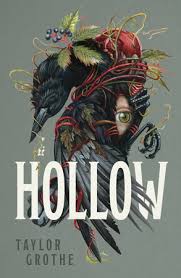
Hollow Review

Book: Hollow
Author: Taylor Grothe
Publisher: Peachtree Teen
Year: 2025
Rating: 3 out of 5 stars

Synopsis : “After a meltdown in her school cafeteria prompts an unwanted autism diagnosis, Cassie Davis moves back to her hometown in upstate New York, where her mom hopes the familiarity will allow Cassie to feel normal again. Cassie’s never truly felt normal anywhere, but she does crave the ease she used to have with her old friends.
Problem is that her friends aren’t so eager to welcome her back into the fold. They extend an olive branch by inviting her on their backpacking trip to Hollow Ridge, in the upper reaches of the Adirondacks. But when a fight breaks out their first night, Cassie wakes to a barren campsite – her friends all gone.
With sever weather approaching and nearing sensory overload, Cassie is saved by a boy named Kaleb, who whisks her away to a compound of artists and outcasts he calls the Roost. As Kaleb tends to her injuries, Cassie begins to feel – for the first time in her life – that she can truly be herself. But as the days pass, strange happenings around the Roost make Cassie question her instincts. Noises in the trees grow louder, begging the question : Are the dangers in the forest, on the trail, or in the Roost itself?
In a world where autistic characters rarely get to be the hero of their own stories, Cassie Davis’ one-step-back, two-steps-forward journey to unmasking makes Hollow as much a love letter to neurodiversity as it is a haunting tale you’ll want to read with the lights on.”

Review : This is a strange review for me; I spent the majority of my time reading Hollow absolutely certain this would be a 5-star-review kind of book. It was impeccably written, impossible to put down, and left me with so many questions bouncing around in my mind – waiting, waiting, waiting for the big reveal that would tie things up and explain the nuances and mystery of the book. Sadly, within the last quarter of Hollow, the plot completely fell apart, the twists and turns Grothe had to take in order to explain the strangeness became overly complex, and left me with so few answers I am almost totally baffled as to why and how it ended the way it did. The sharp turn toward confusion is something I’ve been mulling over for two days since reaching the ending and I’m having a hard time coming to terms with this as a purposeful choice and not a mistake in storytelling.

It’s worth saying that Hollow is genuinely so well written for the majority of the story, it’s a dark and winding suspense-filled mystery of a book filled with nuance and palpable anxiety as we experience Cassie’s world both externally as her camping trip goes horribly awry, and internally as we bounce back and forth between flash backs to a bullying incident at her last school and her present internal world as she navigates a new autism diagnosis. Hollow as a whole is a beautiful metaphor for the neurodivergent experience of masking, or putting on a face for each set of specific circumstances one might find themselves in during a day-to-day existence. Cassie returns to her hometown after living in the city with her family, following a mental breakdown that lead to an autism and trichotillomania diagnosis. She’s lost touch with her friends and upon returning, in an effort to rekindle their friendship, she’s invited on their annual backpacking trip into the Adirondack Mountains. Everything seems fine, at least on the surface, until the first night of their trip leads to too much to drink, blacking out, and waking to find half of her friends have left the group behind. With an imminent storm approaching, Cassie leaves the campsite behind to find and rescue her friends before something terrible happens. It’s during her initial panic as she searches for the rest of her group that Cassie stumbles, spraining her ankle, and finds herself being rescued by a strange boy she’s never seen before – Kaleb. This is where things begin to take a strange turn.

Kaleb and his mother Stasha live in a remote part of the mountains in a small, off grid community called the Roost. It’s here that Cassie is allowed the space to rest and recover while the storm rages around them, taking a break from searching for her friends until the storm passes and they can get radio signal to the rangers down the mountain. Within the Roost are several families, most of whom have stumbled across the community and have chosen to stay, each living in a small home that seems to have been built by Kaleb’s parents. While staying at the Roost, Cassie discovers that there’s a secret language everyone speaks, some strange mixture of different dialects and languages from across the globe. The members of the Roost seem pleasant, though there’s never quite a sense of ease, as they continue to speak in a foreign language Cassie is unable to get a grasp of, and the books are all written in some unknown tongue she’s equally unfamiliar with. Kaleb continuously tells Cassie how unfair it is that her friends have left her on the mountain to fend for herself and says repeatedly that they’ll have to pay for what they’ve done, which gives a nice sinister backdrop for the scene Grothe has created. While in the Roost, Cassie begins to notice that there are carved wooden dolls…everywhere. They seem to surround the Roost, filling buildings with their haunting, carved faces, peering down from rafters, and generally giving an air of strangeness to the entire community. There are so many instances like this where Grothe is clearly making a point about neurodivergence, the way humans interact with a known dialect and jargon that doesn’t always reach the people who might stand on the fringes or feel as though they can never quite get a foothold in with those who so easily adapt. There’s a profound message of accessibility and acceptance within this storyline, but there’s also a lot left to be desired when it comes to unfolding the story outward into an ending that makes sense.

*Spoilers Ahead* As the book begins to really unravel at the end, so much comes to light about the Roost and the community of people who live there – really driving the point home that Cassie has simply never felt as though she belong, that in wearing a mask she’s as wooden as the dolls who surround the compound. The masks neurodivergent people are often forced to wear are ill fitting and a source of tremendous discomfort and I think Grothe does so well in addressing this concept with simultaneously creating a super creepy drama through which it might unfold. It’s how things come apart at the end that really left me struggling for answers; as Cassie finally starts to put the pieces of the Roost’s strangeness together, she realizes (too late) that Kaleb is actually her good childhood friend, Blake. Yet, in all the time she’s spent at the Roost – and this is another issue I find with the actual storytelling of the book, as the time she’s spent there seems to range from a week to several months with zero explanation beyond perhaps some kind of magic?? – she never once recognizes Kaleb as Blake, literally one of the friends on her camping trip. And not only that, somehow Kaleb / Blake is supposed to have created the entire Roost on his own, carved all the members of the community, and also kidnapped several hikers? Over the course of how long? The time frame, the inexplicable inability to recognize even Blake’s voice or mannerisms or scent (which she mentions multiple times), and the complete lack of explanation for all of the above lead the ending of the book to ultimately fall to pieces on top of a well written few hundred pages. I think there’s a singular moment early on where Cassie mentions briefly that she’s been diagnosed with face blindness, which I think might explain being unable to recognize Blake as Kaleb on it’s most base level, but it’s never mentioned again and without working a little harder to tie things together, it feels loose and confusing at best.

The unknown language spoken in the Roost and the unfamiliar written language in the books are never really explained, and while I can appreciate that the spoken language serves as an analogy for how Cassie feels disconnected from neuro-normative folks, the written language being something totally foreign to her feels like an aspect of the book that was written initially and then forgotten about when it came time to wrap things up. The ending of the book is unclear, deeply confusing, and left me with more questions than answers, which is an unsatisfying way to end a suspenseful, magical novel. I really do appreciate the parallels Grothe draws between those who stand on the fringes of the world and Cassie’s experience at the Roost, I love that Cassie was written to give neurodivergent individuals a place to be the hero, but I don’t know that it was completely successful when everything was all said and done. Cassie spends a lot of time back-and-forthing between staying in the Roost and leaving, even when her friends are dying around her, so much so that it felt as though the point was being made, mistakenly, over and over and over again. It felt like Grothe was hammering it home a little too hard, and in doing so neglected wrapping up crucial elements of the plot. I wanted to give this book 5 stars so badly! I wanted the ending to be better than it was, to make more sense than it did, and to give more of a feeling of completion than I was left with. Sadly, the ending spoiled most the book for me and I had to go with 3 stars. I think there’s room to figure things out and make it make more sense, but I also think it’s not super likely to happen at this stage and I’m sad for that and for Cassie’s story.

Advice : I think this book had a lot of potential – if you like crows, if you like something vaguely sinister, if you want to see a neurodivergent person be the hero, wow! You’ll definitely have something to dive into with Hollow. However, I want to recommend that you don’t get your hopes up for the puzzle pieces to fit together at the end – they don’t. This one might be best checked out from your local library first.
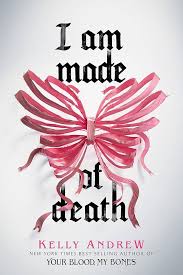
I Am Made of Death Review

Book: I Am Made of Death
Author: Kelly Andrew
Publisher: Scholastic Press
Year: 2025
Rating: 4 out of 5 stars

Synopsis : “Following the death of his father, Thomas Walsh had to grow up quickly, taking on odd jobs to help pay his gravely ill mother’s medical bills. When he’s offered a highly paid position as an interpreter for an heiress who exclusively signs, Thomas – the hearing child of a Deaf adult – jumps at the opportunity.
But the job is not without its challenges.
A selective-mute, Vivienne Farrow hasn’t said a word in years – not since going missing in Red Rock Canyon when she was four years old. No one knows quite what happened to her out in the dark. They only know that the sound of her voice is now as deadly as a poison. Anyone who hears her speak suffers a horrible death.
Vivienne is desperate for a way to regain control of bother her voice and her body. Because the face staring out of the mirror isn’t hers. It’s something with teeth.
Thankfully, she’s finally found someone who claims to be able to perform a surgical exorcism. She just needs to find a way to get rid of Thomas first. But Thomas can’t afford to walk away, nor is he willing to abandon the mysterious girl he’s falling for, no matter what dark powers threaten to swallow them both whole.”

Review : I Am Made of Death was the perfect antidote for both the book hole I found myself in after finishing The Devils and the disgust I felt over my last unfortunate one star review copy, Anji Kills a King. I needed something to grip me, and I Am Made of Death (IAMOD) did just that. I started and finished IAMOD in just under 48 hours, and had I just a tiny bit more free time available, I would have cut that time way down. Andrew created an absolute page turning, unputdownable read and I am eternally grateful for that.

As a child, Andrew lost her hearing at just 4 years old and it becomes evident throughout this book that Andrew has woven her own story into this dark fantasy, frankly, the personal connection, both to her own hearing loss and to her marriage with a Hearing individual, makes for a super compelling read. Told from the alternating perspectives of both Thomas, 18 year old interpreter for Vivienne Farrow, paid in unspeakably large sums of money by her step-father, Philip, and Vivienne, Thomas’ peer and wealthy heiress to Philip’s fortune who has remained largely unspeaking for most of her adult life. Following a tragic accident in the desert while a toddler, Vivienne has had the uncanny ability to kill with just the sound of her voice, no words necessary. Because of this unfortunate ability, Vivienne has mostly locked herself away, ashamed, afraid of her own voice, and more than anything, afraid of the monster she sees in the mirror. Both metaphor and reality, Vivienne is not merely the body from which a killer voice emerges, but the host to a parasitic demon; a demon who saved her life as a toddler, who continues to save her life as an adult, but for whom the price of existence is murder.

We enter IAMOD to find Vivienne mid-way into the process of entrapping a medical student into performing a highly risky procedure in which he will attempt to surgically remove the supernatural parasite from her body. Unfortunately, Thomas’ ever present self, and how little he knows or understands about the situation, stands between Vivienne and release from the creature who plagues her body and soul. *Spoilers Ahead!* Through the course of the book, told in three parts, we see an ever-diminishing gap between Vivienne’s hatred of Thomas and Thomas’ confusion over Vivienne’s situation. Andrew has written such a perfect foray into the sweetness of first love, it felt both intense and silly all at the same time, I found their quasi-friendship turned love so palpable and enjoyable. Beyond the slow growing love between Thomas and Vivienne, we also find a whole world of occult and magic intermingled with the world of high-stakes finance, law, and even medicine – it makes the somewhat dizzying world Andrew has created feel like maybe, just maybe, it could be part of our world.

Where things took a stumble, however, is in the telling. I can’t get a grasp on whether IAMOD is going to be the first in a series or whether it’s a planned stand-alone novel and that determines how I feel things were wrapped up and explained. If, as I hope, IAMOD is the first in a series, I think Andrew left plenty of room for questions to eventually be resolved and cleared up in a second, or even third, book. There were messy threads left incomplete by the time it was all said and done and as I closed the book I found I had more questions than answers. If this is to be a stand-alone novel, Andrew could have done a much neater job of tying up loose ends and that’s where I struggle with the final rating – there are too many things that went unsaid and too much that needed to be addressed for this to be the end. It’s possible this will be a one-off, but I think that would do a disservice to the characters Andrew has begun to built and a disservice to the broader aspects of the story that were never fully resolved. While IAMOD doesn’t end on a cliffhanger, it almost might as well with how many loose threads Andrew left behind and that’s why I feel this must be the introduction to a bigger world yet to be revealed through a sequel. I guess it’s yet to be seen! Either way, the loose ends as they were, this book was still so compelling, so well written, and so enjoyable that I had no choice but to give it 4 out of 5 stars. I think you’ll understand why when you read it.

Advice : If you enjoy a nail biter, enemies to lovers, dark fantasy, or a sweet first love story, this will definitely be for you!

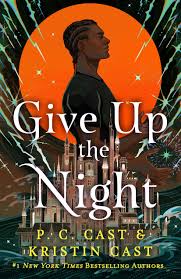
Give Up the Night Review

Book: Give Up the Night
Author: P.C. Cast and Kristin Cast
Publisher: Wednesday Books
Year: 2025
Rating: 3 out of 5 stars

Synopsis : “Since becoming Moonstruck on her eighteenth birthday, Wren Nightingale has found herself thrust into a world filled with deception, danger, and murder. Uncovering that their magic was fractured and limited when the original Moonstruck ritual was broken by Selene, Wren is determined to find a way to restore it. But the Elementals are split into two factions – some want the ritual completed and their freedom – and others are so terrified of change that they’re willing to end Wren before she can reach the center of the island where the ritual Selene ruined can be completed.
Between his overbearing father’s arrival, Rottingham delegated him more and more responsibility, and Celeste taking a special interest in him, Lee Young has been struggling to find his own path. As much as Lee wants to take his place in the Moonstruck hierarchy, he knows something’s not right at the Academia de la Luna. He thinks if he can talk some sense into Wren and get her to return to the Academia, that everything will turn out alright.
As Wren and Lee both battle for what they believe is right, they’ll have to uncover who their true allies are…and if they’re even on the same side of this magical fight.”

Review : Dear reader, to be completely honest with you, I’m not sure how I ended up with this early copy. Not only is Give Up the Night a sequel, to a book I didn’t read, mind you, but it’s been co-authored by two people I’m familiar with; if you’ve been here for a little while, you may remember that I reviewed the first and second books in a different trilogy written by P.C. Cast and Kristin Cast, and if not, you can find them here and here – as an aside, I didn’t realize the earlier of the two reviews was written all the way back in 2021 and now I must sit in shock that I’ve been receiving review copies for four years before I can continue on.

I make a point not to request sequels, and after my last two not-so-kind reviews of the Cast’s work, I’m a little more than surprised to find this book sitting in front of me. I must have made a mistake. Nonetheless, much like last year, my plans for this year include reading and reviewing every advanced copy that comes my way, so I did read Give Up the Night even though I didn’t read Draw Down the Moon, the inaugural book in the Moonstruck trilogy. To their credit, the Casts made it easy for someone to jump in without needing a total refresher of the first book – enough details were organically rehashed by the characters within the first chapter that I didn’t struggle to understand what was happening, despite jumping in at a pivotal moment. However, I do find it difficult to review a sequel without having read the first book, so this review will likely be quite short.

I find the Casts to be adequate writers, and by that I mean they do just fine if you’re not bored with a tired trope, ready for fresh material, or want a truly new, enticing, or compelling story. It’s just fine. Nothing more. I realize this is an advanced copy, but this book was riddled with errors, something I don’t tend to see in the more well put together books I receive – so that’s worth noting. Reading this book had me wondering how much might change between an advanced copy and a first edition; for example, if you have a nonbinary character, it might be worth your time as an author to ensure that you get your own character’s pronouns correct. It might even be worth your time to figure out the pronouns of the magical beings you’ve written into your novel, wouldn’t you think? Rather than jumping around confoundingly between he and she with no real clear reasoning as to why it’s jumping around – no, this is no gender fluid creature, it’s simply poor writing. The storyline matched every damn fantasy storyline you might be familiar with and that felt like an insult to the reader : young woman in a magical world finds herself bestowed with incredible! unbelievable! magical powers after spending time thinking something is wrong with her because her peers are developing their powers as normal while she lags behind; magical creature becomes magically attached to said young woman; young woman becomes marked as special, must go on magical quest to set things right / free everyone / do something spectacular that no one else has ever been able to do before. The “quirky” and “special” angle feels wildly overplayed – I can think of four books without even trying that fit the same mold. It’s overdone.

Lastly, I did find the majority of Give Up the Night to be fairly compelling, inasmuch that I continued to turn pages for a while before I got bored. I’ve said it before and I’ll say it again, a book doesn’t have to be well written to be compelling. Poorly written books with compelling storylines still turn pages. As we neared the ending of this book, however, things took a turn. The clear-cut narrative turned muddled, the geography became redundant, and the quest the characters found themselves on turned on it’s head in a way that made no clear sense. It felt like writing for the sake of wrapping up a book with a wild and crazy twist, not like something necessary to the storytelling at all. It was all a ploy to introduce book 3, which is fine, but not for me. Anyway, like I said…this book was fine. No more.

Advice : If you’re familiar with the Casts’ work already and enjoy it, I’m sure you’ll enjoy Give Up the Night. If you’re not or you’re looking for something that doesn’t read like a watered down Fourth Wing…try again. This one won’t be for you.

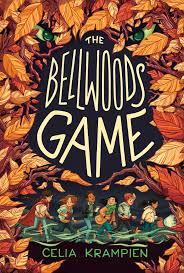
The Bellwoods Game Review

Book: The Bellwoods Game
Author: Celia Krampien
Publisher: Atheneum Books for Young Readers
Year: 2023
Rating: 4 out of 5 stars

Synopsis: “Everyone knows fall hollow is haunted. It has been ever since Abigail Snook went into the woods many years ago, never to be seen again. Since then, it’s tradition for the sixth graders at Beckett Elementary to play the Bellwoods Game, in which three kids are chosen to go into the woods on Halloween night. However rings the bell there wins the game and saves the town for another year. But if Abigails’s ghost captures all the players first, the spirit is let loose to wreak havoc on Fall Hollow…or so the story goes.
Now that it’s Bailee’s year to play, she can finally find out what really happens. And legend has it the game’s winner gets a wish. Maybe if Bailee wins, she can go back to the way things used to be before everyone at school started hating her. But is Abigail’s ghost really haunting the Bellwoods? One thing’s for sure: something sinister is at play – waiting for them all in the woods…”

Review: While this is targeted to ages 8-12, it was a super enjoyable read for me and definitely felt like it could (and maybe should?) easily be targeted at ages a bit older than 8. While it read like a middle grade book, it had some scarier scenes and talked about death in a way that didn’t necessarily read like something an eight-year-old would be into. Maybe that’s just that it’s been so long since I was 8, but it felt more like an 11-15 to me. All that aside, I thoroughly enjoyed The Bellwoods Game and would love, love, love if Krampien would write a second one.

The Bellwoods Game follows sixth grader Bailee as she navigates the trials of late elementary school, the drama of being shunned by your peers, and the fragility of life as she works through her grandmother’s recent mini stroke. All the while, Beckett Elementary, where Bailee goes to school, is preparing for it’s annual Bellwoods Game – a night in the local forest playing an innocent game of tag. Or is it? Legend has it that every October, the sixth grade class gathers in the woods to play a game, one that feels harmless, but also comes with a lot of superstition, students who were past players who cannot physically talk bout the game, and a passed down and much revered book of rules. The students participate in a lottery to see who will play, with those chosen bringing a gift for the spirit of the Bellwoods forest – it’s their free pass through if they get caught by otherworldly creatures.

Bailee, along with two other students, are chosen to play the game. At the clang of a bell, they must race through the woods, navigating their surroundings in the ever-increasing gloom of a fall evening, and make their way to the bell at the furthest edge of the woods. If they can successfully ring the bell, they town will be safe for another year, however if they fail to ring the bell the town will be thrown into peril, with past failed years bringing bad crops, businesses closing, and other tragedies. As Bailee and her peers rush toward the bell, they begin to experience weird things, see weird sights, and discover that all is not as it seems. In fact, there seems to be a ghost in the woods, or maybe two ghosts; creatures who both want to help and harm the students, able to assist and foil their plans – even going so far as to change the landscape of the woods as the students play.

My biggest complaint with this book was how slowly things unfolded once the kids were inside the woods, however what I felt was quite slow in book form I think would make for the perfect setup in a tv-show. I kept thinking “MAN this would make a great show” and honestly I would be first to watch it if it did! All the ways that things slow down in book form are really perfect for unraveling over the course of a multi-episode season. I also thought the way Krampien ended the book left room for additional books and/or seasons if it ever did become a show – while the ends are tied together well, she set the scene and left the door open for future books, which I would be super interested in if she did! One of the most unique qualities about the book is the fact that Krampien not only wrote it but did all of the illustrations, which we see every few pages in comic book style. They’re cute and really add depth and dimension to an already enjoyable read, even more impressive that she drew them herself.

Advice: If you like cute, cozy, spooky books particularly set in October around Halloween, this might just be your thing! It’s low stakes, and the scene is set so beautifully that even reading it in the middle of summer transported me to a fall day. If you love a fall book, this is for you!