The Housekeeper’s Secret Review

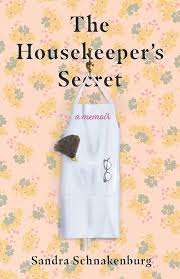
Book: The Housekeeper’s Secret
Author: Sandra Schnakenburg
Publisher: She Writes Press
Year: 2025
Rating: 3.5 out of 5 stars

Synopsis : “A catholic family in 1960s Chicago headed by a narcissistic and demanding father takes on Lee, a housekeeper with a mysterious past. Lee becomes like a second mother to the Krilich children, especially Sandy. After Lee’s death, Sandy begins a determined quest to find out her dear friend’s backstory – and proceeds to uncover one shocking fact after another, even as the story of her own family drama, and the heartwarming role Lee played in the Krilich’s lives, unfolds.”

Review : While this book’s title and synopsis might lead you to believe the entirety of the novel will be spent uncovering a housekeeper’s secret(s), the truth is only about 20% of the book was spent actually delving into Lee’s past. While I don’t particularly think the information Schnakenburg was able to gather about Lee, her beloved housekeeper, is broad enough to fill an entire book, I do find it hard to wrap my head around how little of the book was actually devoted to Lee’s life and how much of it was devoted instead to our writer. I don’t find this problematic as far as storytelling goes, Schnakenburg, nee Krilich, had an extraordinary childhood filled with trauma, neglect, abuse, and a near fatal accident – but the title of the book is The Housekeeper’s Secret and we didn’t begin to dive into Lee’s secret until the book was nearly over. The title and the content didn’t match up.

Like I said, though, I found the story of Schnakenburg’s upbringing to be enough to keep me turning pages, wanting to know how things would evolve in the lives of Sandy’s family members, forced to endure a grueling childhood with a demanding and demeaning father with a roiling anger problem and no regard for the wellbeing of anyone in his path. I found Schnakenburg’s portrayal of her father to be quite interesting – in fact, I believe her storytelling of his abuse throughout her childhood to be far too lenient and more forgiving than I would hope. We spend, as I mentioned, about 80% of The Housekeeper’s Secret growing up with Sandy in a hellish nightmare world of a home, growing with her from the time she’s no more than a toddler until she’s an adult with children of her own. It’s throughout this memoir-like progression that we come to find Sandy’s relationship with her father, and the relationship he shares with her 5 additional siblings and mother, is strained at best. He is, to put it bluntly, a menace. Demanding 7 different types of juice each morning, forcing Schnakenburg’s mother into situations that endanger her life (more than once), forcing a six-year-old to utilize hedge-trimmers with zero supervision, and having a second family are only some of the stories we read in this book – it is well and truly a nightmare. And yet, Schakenburg attempts to humanize her father, explaining that he suffered the loss of a childhood friend in a drowning accident, as if this singular trauma might explain the evil that he unleashed upon his family; it’s particularly glaring when you consider that Schakenburg’s mother suffered from a terrible fear of drowning, so much so that she never learned to swim, and her husband forced her onto multiple boating trips, one in which the threat of drowning was quite real when their boat suffered damage and began to take on water.

*Spoilers Ahead*

When we do finally make our way to Lee’s story, a story she told the children for years she wanted to write (but spent no time actually writing down, nor telling to anyone to transcribe), the story we end up with is one of tremendous tragedy, horror, and loss. It is hard to endure, yet necessary to read. Lee, a Black woman growing up in the 1940s, was brutally attacked, beaten, and sexually assaulted by multiple men while walking to the bus after work. She was left for dead. Because it was winter and there was snow on the ground, she managed to survive the night, but suffered incredibly bodily damage as well as a traumatic brain injury. Being unable to fully recover and in a family that was enduring their own physical ailments and diagnoses, Lee was sent to a sanatorium for care. While there’s significantly more to Lee’s story, I’d like to leave it here and encourage you to read this book if for no other reason than the necessity of hearing a story like Lee’s – a story that deserves to be heard and told. The history of women’s medical treatment is one we should never take lightly, especially as we find ourselves simply not all that far removed from the most egregious “treatment” and experiments performed – often for diagnoses that are now easily managed with medication, therapy, and simple kindness. Women of color, even more so.

I sobbed through Lee’s story, wishing so much that there was more information available, that we could see retribution for the actions of the men in her life who treated her with such unimaginable disregard, wishing Schnakenburg could have dug up and revealed names so we might know them for who they were. It’s the human response, I believe, to reading a story like Lee’s. You want to see justice done, you want to see more come from it than 20% of a book about an abusive father, you just want more. I think it’s commendable that Schnakenburg took up the mantle of this task, but I wish there was less about Schnakenburg herself (perhaps saving it for a separate memoir) and more about Lee. As we meet Lee’s children toward the end of the book, Schnakenburg and her siblings share stories about Lee that were never mentioned at any other point in the book and I can’t help but think this book would have better served Lee’s memory had it included more stories of Lee’s life, even on where she was an employee of a family that was not her own. Schnakenburg dips her toes into the realm of white saviorism at the end, when she learns one of Lee’s children fell victim to the system as an orphaned child born in a sanatorium, suggesting that this child would have been better off in Schnakenburg’s home where her horrifically abusive father ruled with an iron fist of unpredictability. In fairness, I think her intentions were noble in this moment, believing the child would have been better off with Lee, and I agree, but again, I feel she’s been far too forgiving of her father and a bit short sighted, considering how deeply she had previously detailed his abuses. There were moments that left me gasping for air for the sheer horror of it all, moments where I sobbed, and moments where I cringed. Lee’s story is a tragedy that deserves to be heard.

Advice : It’s worth noting that if you choose to read this book it does speak about verbal abuse, emotional abuse, manipulation, gang rape, power dynamics, torture, water torture, sexual assault, traumatic brain injury, a car accident / bicycle accident, and drowning. This book is not for the faint of heart, but if you’re a woman I think it’s a deeply important and impactful story to read.

Best of All Worlds Review

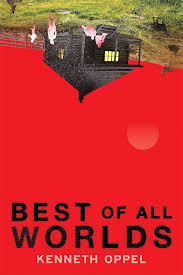
Book: Best of All Worlds
Author: Kenneth Oppel
Publisher: Scholastic Press
Year: 2025
Rating: 5 out of 5 stars

Synopsis : “Xavier Oak doesn’t particularly want to go to the family cottage with his dad and pregnant stepmother. But family obligations are family obligations, so he leaves his mom, his brother, and the rest of his life behind for a weekend at the lake. Except…on the first morning, he wakes up and the cottage isn’t where it was before. It’s like it’s been lifted and placed somewhere else.
When Xavier, his dad, and Mia go explore, they find they are inside a dome, trapped. And there’s no one else around.
Until, three years later, another family arrives.
The Jacksons are a welcome addition at first – especially Mackenzie, a girl Xavier’s exact age. But Mackenzie’s father has very different views on who their captors are, and his actions lead to tension, strife, and sacrifice.
In this masterpiece, award-winning author Kenneth Oppel has created a heart-stopping, can’t-wait-to-talk-about-it-story, showing how our very human choices collectively lead to humanity’s eventual fate.”

Review : Best of All Worlds is a serious mind bending, quasi-scifi, semi-dystopian work of speculative fiction. A family leaves for their lake cabin, something they’ve done for over and over again for so many weekends of their lives, and when they wake in the morning they find they’re somewhere else entirely. What follows is a journey into what a so-called perfect life might look like : no diseases, no bugs, no predators; what a simpler life in a world undisturbed by human activity might entail: hard work, homesteading, eating simply; and what kind of emotional processing that might require. We spend perhaps just shy of one third of the book with the Oaks alone during the first few weeks after they arrive, learning the lay of the habitat, discovering they’re encased within some kind of smart, self-healing dome under which they have electricity and everything they need to survive, but not much else. We find they’re all on their own, their captors seem fairly benevolent, and while they certainly haven’t been transported and isolated with consent, they do their best to make do with the situation at hand. It’s at this point that the book jumps three years into the future – our protagonist Xavier is now 16 years old and has given up all hope of ever seeing another soul again when, out exploring the dome in the middle of the night, looking for a way out, he witnesses a new home being built by tiny nano-bots. The Jackson’s have arrived and suddenly the Oaks are no longer alone.

Oppel has created a visionary work that left me with questions all the way up until the final page. There was no moment where I’d figured everything out, nothing that disappointed me in a predictable sort of way. Best of All Worlds is a truly impressive work that delves into the current climate disaster, the weight of impending future pandemics, climate related deaths, and the paranoia and racism that seem to grip so many people these days. Set sometime in the future, though I would suspect it might be sometime between 10 and 15 years beyond where we find ourselves now, BoAW takes place at a time when the climate crisis has turned into a full-blown climate emergency, with sea walls being built (or not built, depending on the not really mentioned political leanings of each particular state), thousands of people dying due to heat domes over intensely warm states like Florida, climate refugees seeking new land, and, of course, horrific racist conspiracy theories that keep people in the grimy clutches of paranoia. The Jackson’s offer a foil to the Oak’s level-headed mindset – Riley Jackson, our intrepid patriarch, is a deeply paranoid Christian with a belief that the broader governmental system is out to get, well, everyone. Convinced that the dome is nothing more than a big government conspiracy designed to…do something vague…Riley sets out immediately to find a way out and through, to expose the government’s plans, and to live on the fringes of society while he does so. On the other hand, we have Caleb Oak, hard working the land where he now lives, convinced that the reason they’re living within the dome is due to some form of alien activity – a conclusion he only came to after several years living as a captive, seeing technology he’s never witnessed before, and gaining an understanding of what does and doesn’t work in this place. Two equally strange ideal systems, though Caleb Oak seems content to exist in a world where his family is safe and freedom is less about fear and more about a calculated, level-headed decision.

Oppel speaks so clearly to the fear-based conspiracy theories that currently run amok within our world, particularly within the United States, and while we all know this isn’t exclusive to the US by a long shot, we do see this played out in the book with the Oaks being Canadian and the Jackson’s hailing from Tennessee. Much like Xavier will find at the end of the book, I believe anyone on any spectrum of political ideology could read BoAW and come away with something different – we hear what we want to hear, read what we want to read. However, there’s no overlooking the very real inherent through-line of racism that permeates everything the Jackson’s do, the way in which their own need for a life free of fear has actually cast their entire world in a metaphorical bubble of fear and hatred and, ultimately, evil, and the way in which the incessant need to overcome what they perceive as a targeted attack on their rights ultimately leads to just one thing : death. In our present world, this may look like so many things, from the genuine climate disaster, to concentration camps, deportations without due process, and the vulnerability of the weakest members of society when anti-vax conspiracies and rugged individualism run rampant. There’s a lot to be said for compassion, and I believe that’s what Oppel is touching on with this book – a desperate need for compassion, for truth to prevail, and for humanity to release it’s grasp on the idea that we are somehow alone amongst the masses of those who might not be or think just how we do.

This is one of those rare books where I’m going to choose not to spoil anything for you, even with a spoiler warning. You won’t know what hit you until you turn that final page, so buckle up and dive in, you don’t want to miss this one.

Advice : Part science fiction, part coming-of-age, Best of All Worlds is an excellent read. Perfect for those interested in the nuance of the ever widening divide between political parties, for those who believe the humanity deep within each of us is something that makes us inherently more connected than we ever will be different, and for those who are really ready to see the racist get what’s coming to them in the end. That’s all I’ll say for now. Read this one.