This Ordinary Stardust Review

Book: This Ordinary Stardust
Author: Alan Townsend
Publisher: Grand Central Publishing
Year: 2024
Rating: 5 out of 5 stars

Synopsis : “A decade ago, Dr. Alan Townsend’s family received two unthinkable diagnoses: his four-year-old daughter and his brilliant wife had developed unrelated life-threatening forms of brain cancer. As he witnessed his young daughter fight her tumor during the courageous final moths of her mother’s life, Townsend – a lifelong scientist – was indelibly altered. He began to see scientific inquiry not just as a source of answers to a given problem, but also as a lifeboat – a lens on the world that could help him find peace with the painful realities he could not change. Through scientific wonder, he found ways to bring meaning to his darkest period.
At a time when society’s relationship with science is increasingly polarized, Townsend offers a balanced, moving perspective on the common ground between science and religion through the spiritual fulfillment he found amid grief. Awash in Townsend’s electrifying and breathtaking prose, This Ordinary Stardust offers hope that life can carry on even in the face of near-certain annihilation.”

Review : Alan Townsend begins This Ordinary Stardust by talking about just that : stardust. He begins by explaining that, while he doesn’t love the cliche, “When viewed in our most elemental form, people are trillions of outer-space atoms, moving around temporarily as one, sensing and seeing and falling in love” (1). This outlook will go on to permeate the entirety of the narrative, from Townsend’s own work as a biogeochemist in Amazonian and South American fields, to the life he creates and grapples to understand with his wife, Diana, and young daughter, Neva. He meticulously creates a narrative in which we are immersed in the beauty and fragility of life, both planetary and human, where we cannot look away even for a second, even when it grows difficult. Townsend lets us in on the fact that he doesn’t subscribe to organized religion early on, but does pepper the book with words from the bible and the talmud – showing us how science and religion aren’t as far apart on the scale as one might assume.

Bouncing back and forth between the past and the present in the early pages of the book, Townsend eventually settles fully into the present around the three quarter mark. He lays the groundwork for us, showing us the work that he did as a scientist (literally) in the field, studying the impact of logging in the Amazon on fields, on the remaining plant and animal life, later studying similar things in South America. He introduces us to his wife as he was introduced to her: shit-eating-grin, brimming with life, never stopping her scientific inquiry into bacteria, never slowing down for anyone. We come to know and love Diana as he sees her, a force to be reckoned with, someone who is not only destined for greatness, but becomes the greatness she was destined for. I knew from reading the back cover that this would be a difficult book to read, especially as I grew to love Diana more.

Fortunately, the majority of the book is comprised of lyrical prose, of the excitement that comes from a scientific mind experiencing the natural world, and of Townsend’s own deep connection to the Universe. We discover early on that Neva, at a mere four years old, was diagnosed with a brain tumor that grows near the occipital lobe. We spend time with the family as they navigate a scary and unexpected circumstance with a daughter who is as bright, inquisitive, and stubborn as her mother. As they navigate the fragility of life, Townsend muses over the way Diana dives into the realm of science as a means to maintain a level of control and distance from the situation, never stopping to question, working to better understand the available options and proceed in the best way possible. Townsend takes the opportunity to discuss the way the brain exists when it’s presented with the space for curiosity, how it perseveres, and the way plasticity comes into the picture, quoting scientists and C.S. Lewis alike.

After the majority of Neva’s tumor has been removed, tragedy hits their family again, this time with a blow to Diana and another, completely unrelated, brain tumor. Unfortunately for Diana and her family, the tumor(s) she’s diagnosed with have no known cure. Though there are several experimental therapies and trials she can take part in, the brain tumor(s) that Diana suffers from are detrimental – most people do not survive the year. Townsend finds himself in the intersection of caring for a young daughter who has had her own experience with a brain tumor, and caring for a wife who is dying. It is science which bridges the gap for him, leading him through the understanding that while science is not perfect and there’s no certainty, there’s a degree of stability to it that weaves it’s web into our lives and threads itself through all the ways we interact with the world. In a quote from Mary Oliver, “All things are meltable, and replaceable. Not at this moment, but soon enough, we are lambs and we are leaves, and we are stars, and the shining, mysterious pond water itself” (3) Townend reflects that it’s through science that we find, what he calls, “no purer love” (7).

As the book wound its way down, I found myself reading more and more slowly – being less and less quick to pick it back up, not because I didn’t enjoy it but because I was delaying the inevitable. It was challenging to read the last quarter of this book and that’s because Townsend did such a remarkable job. Of course I fell in love with Diana, the spunky, big-hearted, stubborn, amazing, wonderful woman that she was. Of course my heart was broken when she left. Of course. And in truth, this is the kind of story I might normally avoid specifically because of the heartbreak. But I’ve finished the book and have no regrets at all. Townsend has created a beautiful gift to the world with This Ordinary Stardust. So has Diana.

Advice : This is a must read. If you enjoy the natural world, this book is definitely for you. If you enjoy science but find yourself gravitating away from dry lectures or cite-laden books, this one ticks all the boxes. Run to grab it as soon as it’s available.

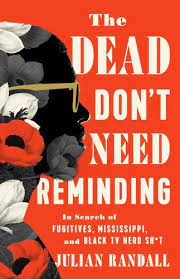
The Dead Don’t Need Reminding Review

Book: The Dead Don’t Need Reminding
Author: Julian Randall
Publisher: Bold Type Books
Year: 2024
Rating: 5 out of 5 stars

Synopsis :The Dead Don’t Need Reminding is a braided story of Julian Randall’s return from the cliff edge of a harrowing depression and his determination to retrace the hustle of a white-passing grandfather to the Mississippi town from which he was driven amid threats of tar and feather.
Alternatively wry, lyrical, and heartfelt, Randall’s voice bursts off the page with verve, humor, and poet’s eye for detail. In this book, Randall transforms pop culture moments into deeply personal explorations of grief, family, and the American way. He envisions his fight to stay alive through a striking medley of media ranging from Spiderman and Jordan Peele movies to BoJack Horseman and the music of Odd Future. Pulsing with life, sharp, and wickedly funny, The Dead Don’t Need Reminding is Randall’s journey to get his ghost story back.”

Review : The Dead Don’t Need Reminding is one of those books you read the way you eat a great meal, slowly, purposefully, savoring every single bite. Comprised of essays, TDDNR is a lyrical work of pop culture references, self inquiry, depression, chronic pain, and what it means to exist within a queer, Black body in America. Randall weaves a narrative that’s steeped with grief, tugging on a thread that unravels to reveal ancestral history, the kind that dips through an entire body, tethering each generation to the last, reminding us what it is to search for yourself amongst the dead. I devoured this book quickly, at first, then slowly, so slowly, asking the narrative to slow down, to keep from ending. You know how it is.

My copy of The Dead Don’t Need Reminding is now filled with dogeared pages, underlined, read again and again. It is one of those books you never stop reading. Filled with longing, Randall takes the reader on his journey through life-long destabilizing depression, suicidal ideations (and intentions), chronic pain that interjects throughout the narrative in the way only chronic pain can do, racism, and an endless running list of cultural references he uses to bind us to a better understanding of his own inner (and outer) world. Randall explains that he thinks in quotes, in lyrics, in movies and tv shows, using examples from BoJack Horseman, Spiderman, Kanye West (Ye), Drake, Odd Future, and more to open his heart and mind to the page, to the reader. Even without a complete knowledge of the totality of his references, the impact is striking. I enjoy reading about the things other people enjoy, particularly if it’s done in a way that doesn’t require me to have the references handy at all times, and this is that book. Randall takes quotes and clips and concerts and makes them sing on the page, brings them to life for a reader who maybe doesn’t have every single quote or clip or concert in their own mind. They do now. It works.

Speaking with so much ache, Randall winds us through a collection of essays into the heart of his grief, into the empty crater of depression, and into the humid search for an ancestral burial ground – a gravesite in Mississippi, proof of life.

I’ve struggled with how to write this review. How do you review a book you can’t quote, not yet? How can I review this book without showing it to you, without flipping to a dogeared page and reading an underlined verse? How do I explain the depth this book sunk me into? It is a stunning masterpiece, exploring boyhood tenderness that transmits itself into adulthood tenderness, fear, longing, and the desire to live – the choice to live – while haunting a family line in search of ghosts.

Advice : Run. Don’t walk. You’re going to want to read this one.

Shanghailanders Review

Book: Shanghailanders
Author: Juli Min
Publisher: Spiegel & Grau
Year: 2024
Rating: 5 out of 5 stars

Synopsis : “The year is 2040, and wealthy real estate investor Leo Yang – handsome, distinguished, a real Shanghai man – is on the train back to the city after seeing his family off at the airport. His sophisticated Japanese-French wife, Eko, and their two eldest children, Yumi and Yoko, are headed for Boston, though one daughter’s revelations will soon reroute them to Paris.
While the years rewind to 2014, Shanghailanders rotates perspectives, drawing readers into the shared and separate lives of the Yang family, parent by parent, daughter by daughter, and through the eyes of the people in their orbit. As their world shifts and brings change for each of the Yangs, universal constants remain : love is complex, and family will always be connected by blood, secrets, and longing.”

Review : Shanghailanders is a complex work of creative genius, told not just from shifting perspectives, but also from an unwinding timeline, the book spans from 2040 to 2014, with each subsequent chapter unwinding time just a tiny bit more. Min’s first novel, Shanghailanders is a breathtaking debut novel filled with family history, peeling back the curtain, giving us a glimpse into the Yang family’s dynamic; toxicity, growth, rejection, and all the layers the meld together to form a family. Beginning and Ending with Leo, the patriarch of the Yang family, Min has bookended her work with a man whose chapters hardly revolve around his inner world at all. I found it fascinating that throughout the entirety of the novel, Min chose to only reveal the Yang family through three male-centered chapters, two of which are Leo, the third being the family’s driver – all three of whom serve only to point us back toward the matrilineal family line.

Shanghailanders is a novel that addresses the fragility of time both in narrative and construct, giving us the smallest glimpses into the years that make up a family, revealing small clues and inward peaks that create the structure the Yangs have crafted their world(s) into. Speaking broadly of time, of bloodlines, and of familial connection, Min paints a much more detailed picture with the narrative, showing rather than telling us that Leo, and likely Yoko as well, has an anxiety disorder that causes apocalyptic dread, that drives his need to see his daughters sinking into independence and stability, that, at times, pushes his family to the brink, threatening to shatter their bubble; that Yuki, the youngest, at sixteen is facing the loss of innocence and the heartache of love lost; that while each family member feels tethered to the other, neither feels the thread of love as connection, that love is not a given. This is a novel filled with longing, with logic, with dread, and the potent, ever present realization that time is a fragile filament that tugs at us all. 

I think the most successful aspect of this book is the format, rewinding through the narrative from 2040 until, finally, 2014. Taking us briefly through the years of improved technology, covid, and finally into those pre-pandemic years where the children are barely formed, where love is new, and anxieties aren’t quite realized yet. Each chapter invites us into a new realm of the Yang family, masterfully written, weaving webs so delicate behind the scenes that we cannot see each thread until the final page has turned. Each chapter left me craving more, desperately wishing the timeline was reversed, that I could follow this family into further detail, into more solid ground, wishing and hoping I would be given glimpses into the characters and storylines I most enjoyed. Alas, with each passing chapter, each character faded, each storyline slipped away, and I was transported to younger versions, the groundwork of each prior chapter laid out ahead of me. The longing I felt. Perfection.

Advice : This is a truly remarkable work created with a unique vision. If you enjoy epics, this might just be for you. Spanning 26 years in the reverse, this scratches the epic itch while fulfilling a creative interest and need. I’d mark this one on the calendar.

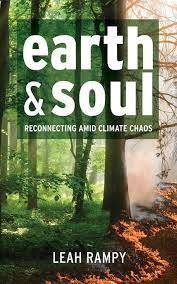
Earth & Soul Review

Book: Earth & Soul : Reconnecting Amid Climate Chaos
Author: Leah Rampy
Publisher: Bold Story Press
Year: 2024
Rating: 2.5 out of 5 stars

Synopsis : “Facing directly into the devastation of climate chaos and biodiversity loss, Rampy leads her readers on a soul journey through grief and loss to also claim the beauty, joy, and possibilities available when we reconnect with Earth. As we follow the author’s compelling personal experiences and engagingly lyrical stories of whales, cedars, sparrows, and more, we see the necessity and urgency of learning from the wisdom of our kin in the natural world. Writing at the intersection of spirituality, ecology, and story, Rampy charts a course for living deeply connected to Earth in ways that are both vitally important for and uniquely suited to these times. Even now when the worlds as we once knew it is ending and a new story lies beyond what we can envision, we hold the potential to lay stepping stones toward a diverse and vibrant world of oneness and mutual flourishing.”

Review : I have so many conflicting thoughts as I sit down to review this book. It gives me no joy to give a book about climate change a 50% review, particularly as the publicist for this book sent this book to me because of my own work in the world of sustainability. I wanted to love Earth & Soul, but I didn’t. Let’s start at the beginning : Leah Rampy, while boasting a PHD, does not have a background in biology, climate sciences, or ecology – her doctorate is in curriculum. While I don’t think it’s necessary for an author to hold an advanced degree, I do believe it hinders the work and the words she’s trying to communicate. Because her field of study has nothing to do with the subject matter, Rampy relies heavily on the works of others, paraphrasing (and citing) books I have been privileged enough to have read in the past. While this might function well in an academic paper or blog post, I find the distillation of the work of others to be an unfortunate book choice. I don’t think there’s anything wrong with a book filled with cited sources, don’t get me wrong! I love a well researched book. Where I take issue is how a story is told; Rampy rarely sheds light on her own experiences, choosing instead to simply share what others have written.

Rampy barely pulls the curtains back on her own life, something I think does a true disservice to the impact this book could have made. As I mentioned, she relies heavily on the work and words of others to bolster her narrative rather than allowing her own connection and experiences with Earth to drive the narrative forward. Referencing Robin Wall Kimmerer’s Braiding Sweetgrass eight times in 180 pages, Rampy clearly seeks to emulate Wall Kimmerer’s foundational work. Unfortunately, it reads as someone who’s read Braiding Sweetgrass and is relaying it to a friend who doesn’t want to read it themselves. As I have recently finished reading Braiding Sweetgrass myself, I found this particularly glaring. Rampy references indigenous wisdom and knowledge, which I appreciate a great deal as the scientific world is finally coming to understand just how much indigenous wisdom could have helped us over the last several hundred years; I couldn’t help but feel that I would rather be reading about indigenous wisdom right from the source, rather than distilled by a white woman. For reference, there was a singular moment in this book that brought me to tears and it was, unfortunately, a retelling of a Wall Kimmerer story. I found the writing style to be choppy and stilted, there was little flow to this narrative, though in the few places where it did flow (interestingly enough, found during the few brief descriptions of Rampy’s own personal experiences with the Earth), it was quite enjoyable to read.

Rampy’s style seems to be tell, rather than show, which you may know I find an incredibly condescending method of writing. In a chapter entitled “Kith and Kin”, Rampy uses the words kith and kin a combined total of twenty six times over the course of a mere fifteen pages, beating us over the head with the words rather than showing us what they mean to her. The words will go on to haunt the remainder of the book, interspersed so often than you cannot get away from them. I would rather be shown what kith and kin might look like than be told over and over again what it might mean – the impact is lessened this way, becoming more of an annoyance than a moment of understanding. In other books I’ve reviewed, I’ve found the occasion for telling vs showing often comes from an author’s disbelief that the reader would be intelligent enough to figure things out for themselves, to Rampy’s credit, Earth & Soul did not read this way. It did, however, read as though Rampy didn’t know how to show us rather than telling us, and perhaps that comes from her time spent as a lecturer; perhaps she will learn that as she grows as an author, but for now it leaves me continually frustrated by the way she steals the powerful impact this book could have made right out from under herself. 

As someone who is invested in the world of sustainability, I found frustration with this book. Rampy discloses at regular intervals that she has lead, what she refers to as, Pilgrimages all over the world. However, she never once discusses what kind of carbon impact she has on the planet by flying to multiple locations all across the globe with groups of people – in a time when many people are assessing their own carbon impact and coming to the conclusion that regular flight travel has a negative impact on the climate, I find it to be a stark omission. I also wish Rampy would have addressed the privilege that comes from having access to around the world flight travel, of the kind of people who might have the disposable income to go on such a journey, the people who are paying money to gaze upon nature without being tasked with making their own sustainable choices. It’s entirely possible that I’m pegging this all wrong, but Rampy doesn’t discuss any part of her climate footprint or the privilege that comes from these trips, so I can only tell you how it feels, which is…not good. During an early discussion revolving around meditating on nature, Rampy shares an anecdote from one such pilgrimage in which someone left a strand of yarn around an area of Earth with a sign telling people to stop and enjoy. Unfortunately, all I could think about was how that person had littered – sewing continued frustration on my end, as someone who works very hard to keep people from littering and to clean up litter that exists in nature already.

Likewise, Rampy twice discusses the use of cairns, both as a suggestion for the reader and as an example of what her pilgrimages entail. Again, as someone who works in the realm of sustainability, I find it problematic and ignorant on Rampy’s part to suggest readers create cairns. I have learned, and you can find this on many signs in many forest nation wide, to take only photographs and keep only memories, meaning you are to leave nature as you found it (or in my personal opinion, better than you found it). Creating cairns is frowned upon within the sustainability and naturalist worlds for (largely) two reasons : the first being that cairns created by park rangers exist for a specific reason, they are made to mark trails and creating your own can make a negative impact on carefully constructed cairns used for designating directions; the second being that many creatures, like salamanders, take shelter under or lay their eggs under stones, removing them from where they exist already may either damage eggs, damage habitat, or create fewer available spaces in which an animal may find shelter or lay their eggs. 

I left this book deeply frustrated. Rampy spends much time discussing the horrifying facts, figures, and statistics of climate change and biology loss, but she spends precisely zero time discussing who’s at fault for climate change. She doesn’t offer any suggestions for moving forward, ways in which we can reduce our carbon footprint, how we might engage with our local government to facilitate change, or what we can implement into our own lives in order to start the process of making change – all of which I suspect would lead to some unpleasant realizations of her own. She doesn’t discuss the greed, resource lust, or corporate entities who have created this world we find ourselves living within and I find that to be another disservice to what she’s attempting to accomplish. At the end of the day, yes, we have to find ways as individuals to create a world that flourishes around us, but the climate issue is not an individual problem and cannot be addressed as such. Rampy fails in this arena.

Advice : This is a first attempt, I believe that’s clear. This book doesn’t read like something that’s meant for those of us who are already working in the world of sustainability, greatly aware of the impacts of climate change on the natural world. It does read like someone who was not so much a believer in climate change and has since changed their mind, which seems fairly evident in Rampy’s own confessions throughout the book – another frustration as she professes to spending her time teaching others about the climate despite not having a background in the sciences. I think, if you are like me, you would benefit from reading Braiding Sweetgrass by Robin Wall Kimmerer instead. I believe Earth & Soul is directed toward people who have not spent much time thinking about the climate and are beginning to change how they interact with the world – this book will lead them toward other resources that will impact them on a much deeper level. 

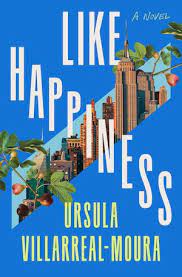
Like Happiness Review

Book: Like Happiness
Author: Ursula Villarreal-Moura
Publisher: Celadon
Year: 2024
Rating: 5 out of 5 stars

Synopsis : “It’s 2015 and Tatum Vega feels that her life is finally falling into place. Living in sunny Chile with her partner, Vera, she spends her days surrounded by art at the museum where she works. More than anything else, she loves this new life for helping her forget the decade she spent in New York City orbiting the brilliant and famous author M. Domínguez.
When a reporter calls from the US asking for an interview, the careful separation Tatum has constructed between her past and present begins to crumble. Domínguez has been accused of assault, and the reporter is looking for corroboration.
As Tatum is forced to reexamine the all-consuming but undefinable relationship that dominated so much of her early adulthood, long-buried questions surface. What did happen between them? And why is she still struggling with the mark the relationship left on her life?
Told in a dual narrative alternating between her present day and a letter from Tatum to Domínguez, recounting and reclaiming the totality of their relationship, Like Happiness explores the nuances of a complicated and imbalanced relationship, catalyzing a reckoning with gender, celebrity, memory, Latinx identity, and power dynamics.”

Review : Like Happiness, as Villarreal-Moura writes in the acknowledgements, “is a book about loving books”. Incredibly literary, not only did it tick all the boxes in my soul that feel like satisfying brain-floss, it also rang some bells of familiarity that cannot be overlooked. This is a powerfully moving debut novel detailing the uneven footing of the power dynamic between a popular contemporary male writer and a younger female fan (notably, eight years younger). Feeling out of place with few friends at her Massachusetts college during her undergrad program, texas native Tatum makes a bold move one evening, penning a letter to the author of her new favorite book, Happiness. The author, M, is gaining popularity with his breakout novel of short stories detailing the lives of Latinx individuals in the United States. Feeling seen and understood in a way she has not felt in literary circles yet, particularly on a nearly all white college campus where she’s an art history, english lit double major, finding herself immersed in required reading of white Euro centric authors, Tatum feels at home with M’s book. She writes to M and within a few weeks, he writes back, thus beginning a multi-year long relationship between Mateo (M) and Tatum.

Like Happiness is a dual perspective book, though it doesn’t bounce around nearly as much as you may be accustomed to in a book with multiple narrators or points of view. Told largely through the lens of 2015 Tatum, far removed from her relationship with Mateo, writing a detailed account of her often one-sided relationship with Mateo, and a slightly earlier 2015 version of Tatum, receiving a phone call from a reporter in the States, calling because her relationship is celebrated fact and Mateo has been publicly criticized and outed as an abuser. It has been years since Tatum has spoken to Mateo and while she never experienced the abuses so many women are stepping forward to name, she is sure he isn’t an innocent party, both with the other women and with her. Choosing to tell her story to the reporter, she simultaneously decides to tell her story to Mateo and afford herself the closure she was never granted in the past.

Villarreal-Moura spins a tale of power imbalances, grooming behavior, and codependency that at times feels so real it’s hard to remember this is fiction and not a memoir. Over the span of nearly 300 pages, she outlines patterns of abuse so subtle they could almost go overlooked, laying them out chronologically, revealing a masterpiece of manipulation when the final product is fully revealed. **Spoilers Ahead**
Laying the groundwork for Mateo’s ultimate betrayal quite early on, Villarreal-Moura is an expert at building a scene. Not only is Mateo a college professor and author, he is a force of magnetism and power in Tatum’s life. He pulls her into his orbit and expects her to stay just where she is, mesmerized and fawning over his very being. He relies on her for attention, commitment, and praise while expecting her to simply go along with whatever he wants to do – and she does. He so encompasses her world that when he’s in it all others cease to exist. Mateo subtly punishes Tatum when she gets a serious boyfriend, though she and Mateo have never approached much more than a platonic relationship, he cuts her down and pokes fun of her intelligence when she doesn’t give him exactly what he wants, and pays off $20,000 of her school loans, leaving her helpless to the encompassing power he now wields over her. 

I don’t want to give away the ending, but know these subtle manipulations are nothing compared to the ultimate betrayal Tatum experiences at the hands of Mateo in the end. Putting a final nail in the coffin of their friendship, she is finally able to extricate herself from the leeching parasite of M, allowing her to write her final letter, this book, to him; knowing it will be the closure she needs in order to fully live her life without his shadow in it. As I read, I couldn’t help but be reminded of an article a read a few years ago about an author whose work I’d read and loved, Nick Flynn. And as I thought about that article, I couldn’t help but be reminded of another, similar, articled I’d read around the same time about another author whose work I’d read and loved, Junot Diaz. Both were published authors, one a professor and the other a keynote speaker, both took advantage of women who were younger than them, women who were still in college. Flynn, in particular, has since been accused by multiple women of abuse and misconduct. There is nothing new about this story, though that doesn’t in any detract from Like Happiness; if anything, I found it gave this book extra connective tissue. There’s a precedent here : men in positions of power who wield that power over unsuspecting women who are at a disadvantage due either to their age or their position (a student vs a professor). It’s common. And therefor, it needs to be told. Villarreal-Moura did a profoundly wonderful job telling it.

Advice : If you love reading books about people who love reading books, Like Happiness is truly wonderful. Villarreal-Moura has introduced me to so many things, though none quite as exciting as my new favorite snack of frozen grapes. If you love reading fiction that’s so perfect and timely that it could easily be memoir, this is it. I highly recommend it.

Fruit of the Dead Review

Book: Fruit of the Dead
Author: Rachel Lyon
Publisher: Scribner
Year: 2024
Rating: 5 out of 5 stars

Synopsis : “Camp counselor Cory Ansel, eighteen and aimless, afraid to face her high strung single mother in New York, is no longer sure where home is when the father ozone of her campers offers and alternative. The CEO of a Fortune 500 pharmaceutical company, Rolo Picazo is middle-aged, divorced, magnetic. He is also intuited boy Cory. When Rolo proffers a childcare job (and an NDA), Cory diets and internal warning and allows herself to be ferried to his private island. Plied with luxury and opiates manufactured by his company, she tires to assure herself she’s in charge. Her mother, Emer, head of a teetering agricultural NGO, senses otherwise. With her daughter seemingly vanished, Ever crosses land and sea to heed a cry fro help that only she can hear.
Alternating between the two women’s perspectives, Rachel Lyon’s Fruit of the Dead incorporates its mythic inspiration with a light touch and devastating precision. The result is a tale that explores love, control, obliteration, and America’s own late-capitalist mythos. Lyon’s reinvention of Persephone and Demeter’s story makes for a haunting and electric novel that readers will not soon forget.”

Review : I was a little skeptical about Fruit of the Dead at first, feeling as though I was about to walk onto Jeffrey Epstein’s island with the back-cover synopsis, not so much a modernized retelling of Persephone’s descent into the underworld and Demeter’s journey to retrieve her. Oh, how wrong I was. Rachel Lyon has spun a masterful tale of persuasion, adoration, and tragedy; a poignant retelling and perfect stand-alone novel. Lyon has completely grasped the fever dream of drug use in such a way that left me feeling dizzy and unmoored as I read Cory’s descent into addiction – a powerful parallel to Persephone’s own descent.

Lyon brings Cory into alignment with Persephone, goddess of both spring and the Underworld, quickly and with ease, as she gets to know Rolo Picazo, her new employer. As the CEO of a big pharma corporation, he has access to medications, drugs, opiates that have not yet been granted FDA approval, most notably a small, gel coated, gleaming red pill called Granadone, Grannies for short. A perfect, ripe, shining pomegranate seed, the demise of Persephone herself. Picazo shares a drink recipe with Cory, a mixture of vodka, pomegranate juice, lime, and, you guessed it, the contents of a Granny; called? Fruit of the Dead. And with her first sip, not even 100 pages in, Cory is snared.

After having been camp counselor to Picazo’s seven year old son, becoming a live-in nanny for his son and slightly younger daughter is easy as can be. Plied with as much alcohol and Grannies as she wants, Cory finds Picazo’s island intocicating. And while Picazo himself (middle aged, bloated, sad) is intriguing to her, she only finds herself (eighteen, unsteady, uncertain) mildly attracted to him in ever-so-brief moments that feel more like the intrigue of someone who grew up without a father. Meanwhile, Picazo expresses clear interest in being both a father figure as well as a romantic partner to Cory right off the bat. And like all master manipulators, he removes his mask and reveals himself nearly immediately, declaring himself a narcissist and reading Cory for the perfect victim she, in fact, is. And like most victims, Cory brushes it all aside, looks beneath the lumpy exterior, and attempts to see the good within. All whilst sinking further and further into a fever dream of addiction and loss of control.

This seems as good a point as any to talk about some content warnings, because, believe me, this book is a walking content warning. Not only does the entire book revolve around the explicit experience and physical sensation of being high and / or drunk, it also speaks in detail about sexual assault, physical assault, and the trauma that results from both. This book is not for the faint of heart, nor should it be read lightly. And while it is written with breathtaking prose, if you do decide to read it, please be careful and gentle with yourself if any of the above are problematic for you.

Bouncing back and forth between an elder teen who does not yet know who she is, who has been the victim of sexual assault and has entirely lost herself because of it, who is then scooped up by a predator and fed mouthfuls of little red happy pills; and a devastated mother who begins to unravel and become feral when she cannot get in touch with her daughter, Fruit of the Dead is nothing short of a masterpiece. We not only glimpse behind the curtain of a well curated mother, a woman who manages an NGO, who hobnobs with google executives, who pulls a few strings and gets her daughter prized internship after internship, who works her magic and lands Cory a scholarship to an all girls private school in Manhattan, we are privy to her downward spiral into mania as she loses herself in the search for her missing daughter. While we find Cory grasping at the very idea of her own identity, we see Emer, Cory’s mother, whose identity no longer fits, a mask that slips, falls, and shatters. The two are wrapped together, entangled in a connection neither can escape.

As a true retelling of Demeter and Persephone, the book does not end with a neat little bow tied on it. After all, Persephone returns to the underworld once every six months, leaving our world to the decay of autumn and the darkness of winter. I won’t completely spoil the book for you, but just know that this is not a happy ending. It is a realistic ending. And for that I am profoundly grateful. A perfect, feral, fever dream of a book.

Advice : I encourage you to read my content warning before deciding if this book is for you. If, however, you read the warning and feel okay with the content, I think you should run as fast as you can to your nearest bookstore on March 5th, 2024 and buy a copy of this book. 

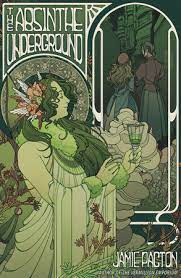
The Absinthe Underground Review

Book: The Absinthe Underground
Author: Jamie Pacton
Publisher: Peachtree Teen
Year: 2024
Rating: 3.5 out of 5 stars

Synopsis : “For Sybil Clarion, the Belle Epoque city of Severon is a wild, romantic dream, filled with cares, cabarets, and glittering nightclubs. Eager to embrace the city’s freedom after running away from home, she’s traded high-society soirees for empty pockets and barren cabinets. At least she has Esme, the girl who offered Sybil a home, and maybe – if either of them dared – something more.
Ever since Esme Rimbaud brought Sybil back to her flat, the girls have been everything to each other – best friends, found family, and secret crushes. While Esme would rather spend the night tinkering with her clocks and snuggling her cats, Sybil craves excitement and needs money. She plans to get both by stealing the rare posters the crop up around town and selling them to collectors. With rent due, Esme agrees to accompany – and more importantly protect – Sybil.
When they’re caught selling a power by none other that its subject, Maeve, the glamorous girl doesn’t press charges. Rather, she invites Sybil and Esme to the Absinthe Underground, the exclusive club she co-owns, and reveals herself to be a green fairy, trapped in this world. She wants to hire thieves for a daring heist in Fae that would set her free, and is willing to pay enough that Sybil and Esme never have to worry about rent again. It’s too good of an offer to pass up, even if Maeve’s tragic story doesn’t quite add up, and even if Sybil’s personal ties to Fae could jeopardize everything she and Esme have so carefully built.”

Review : The Absinthe Underground is a sweet and fun adventure, that, while not low stakes, somehow ended up feeling just low stakes enough that it didn’t trigger any anxiety while reading it. Pacton crafted a beautiful scene by introducing us to the world of Fae, showing us rather than telling us what an intoxicating other-world might look like to two girls from this world. However, where she did a fantasy world justice, I felt she let the reader down with her depictions of the city of Severon. With a name like Severon and very little explanation to the time frame of the book, I was at first convinced this story was not only fantasy but science fiction. It wasn’t until I read the author’s note (at the end, after finishing the book in it’s entirety) that I realized Severon was meant to be an 1890’s Parisian equivalent. Something got lost in translation, figuratively speaking.

Likewise, Pacton included real world names like Toulouse and Mucha when discussing poster artists whose work is often stolen for it’s one of a kind collector status, which lent a bit of confusion and complication that felt unnecessary to the story. Sybil and Esme live in the top of a clock tower in a made up city that contains real world artists, something that I have a hard time wrapping my mind around when it comes to necessity. Not enough of the pre-Fae exploration of TAU connected me to Paris in the late 1800s for the real world examples to make sense, Pacton could have made a more significant impact on the story by placing greater emphasis on the time frame and reality of the world Sybil and Esme live in, then trying to tie it to our world. She lost me there. 

Spoilers Below

That aside, the Absinthe Underground itself was beautifully described and the subsequent adventure Sybil and Esme embark upon is quite endearing. I did feel, though, that there were several loose ends Pacton left untied; it’s unclear whether they were left untied for a reason or because they were simply overlooked in the editing process. However, one seemingly purposeful loose end does find Sybil and Esme’s adventure into Fae and back into the real world marred by a broken promise to free a human they encountered in Fae and help her find her way back through the door – I find the prospect of another book exciting, I can’t wait to see what Pacton does next! She left several threads throughout the story, dropped like leaves, and I wonder if she’ll pick the all back up in the upcoming book or if we’re simply left to speculate why a forest hag might be frightened of a kitten, whether Sybil’s father was a magician, and why he tried so hard to marry her off and turn her into a “proper” young woman before she ran away. There were small explanations planted throughout the book, but not enough to satisfy the weight each of the aforementioned interactions had on the plot. 

TAU was a cute, low-ish stakes middle grade adventure book that has great potential for future iterations, I think there’s room for improvement, but that improvement could surely come in additional books. Overall, I found it easy to read and enjoyable, if not a little slow and sleepy at times.

Advice : If a low-stakes adventure through a fairy realm sounds up your alley, you’ll want to give this one a read when it debuts in February. If you like a bit of a nail biter or a faster paced adventure, this might not be your jam.

The Fury Review

Book: The Fury
Author: Alex Michaelides
Publisher: Celadon
Year: 2023
Rating: 2.5 out of 5 stars

Synopsis : “This is a tale of murder. Or maybe that’s not quite true. At it’s heart, it’s a love story, isn’t it?
Lana Farrar is a reclusive ex-movie star and one of the most famous women in the world. Every year, she invites her closet friends to escape the English weather and spend Easter on her idyllic private Greek island.
I tell you this because you may think you know this story. You probably read about it at the time – it caused a real stir in the tabloids, if you remember. It had all of the necessary ingredients for a press sensation: a celebrity, a private island cut off by the wind…and a murder.
We found ourselves trapped there overnight. Our old friendships concealed hatred and a desire for revenge. What followed was a game of cat and mouse – a battle of wits, full of twists and turns, building to an unforgettable climax. The night ended in violence and death.
But who am I?
My name is Elliot Chase, and I’m going to tell you a story nine any you’ve ever heard.”

Review : When I requested an ARC of The Fury, I didn’t realize it was by an author whose work I’d previously reviewed before. If you’ve been here for a while, you may remember when I reviewed The Maidens and gave it a withering 2 out of 5 stars (though I don’t check GoodReads for reviews, I know several others who read and disliked the execution of The Maidens), The Fury was written by none other than Maidens author, Alex Michaelides. Now, we already know I serve some hot takes on this blog, which is largely why I choose not to check other reviewers opinions prior to writing my own, but I was fairly astonished to find that The Maidens has been optioned into a television series by Mirimax. Small rant aside, I was grateful to get into a new book after trudging through my last review copy, and while The Fury didn’t garner more than 2.5 stars, in my opinion, it was at least a compelling read.

A few things right off the bat really started to rub me the wrong way, contributing at least in part to my 50% positive review. First of all, The Fury is narrated by a singular character who I found immediately off-putting. It’s possible that was Michaelides intention, but given the number of twists and turns throughout the book and the sheer effort he took to convince the reader that the narrator, Elliot, was someone they should be sympathetic to, leads me to believe that it wasn’t at all. Elliot is instantly pretentious and annoying, someone I had zero interest in reading through the eyes of for an entire book, which was unfortunate given that he was exactly who we’d spend the entire book reading through. Rather than laying out exactly who each character in the story was, what their relationship might have been, and allowing us to simply come to the conclusion that Elliot was an unreliable narrator, he began almost immediately by interjecting his own telling of the story to make cheeky comments about how much he’d tried to keep his own opinions out of the story but obviously hadn’t. There’s no room for the reader to do any work, Elliot does it all for us. Rather than reading and inferring, assuming the reader will be smart enough to come to their own conclusions, Michaelides treats us like we’re too dumb to read critically and tells us what’s going on. Personally, I take offense to this style and find it pandering at best, patronizing at worst.

The Fury, set on a remote Greek island, centers around Elliot’s friend and so-called soul mate of a friend, Lana Farrar. Through a series of twists and turns, Elliot convinces Lana to confront both her husband and best friend when she finds out they’ve been having an affair. What happens when she does, however, is a twisted nightmare of toxic relationships, bad choices, and manipulation. However, as we read through the book, we come to find that we’re getting only a fraction of the story from Elliot, revealing only tidbits of information to lead the reader down a path of his own design – which, had it been executed well, would have been intriguing and maybe even exciting to read. However, like I mentioned before, Elliot tells us right from the beginning that he’s an unreliable narrator and it was within the first chapter that I had already solved the murder.

Spoilers Ahead

The question, though, is which murder did I solve? Because this damn book has so many plot twists – arguably TOO many – that it isn’t until we reach the end that we find out who really died and who really murdered them. But, good news for me, the murder I solved in chapter one was, in fact, both the correct murder and correct murderer. Bad news for Michaelides.

When it comes to a murder mystery, or a murder retelling I suppose, in this case, I don’t want plot twist after plot twist after plot twist. I want a singular twist that I can’t see coming from a mile away. I feel so strongly that had Michaelides trusted us as an audience, I would not have seen the murderer coming from the jump. It would have been more interesting, better executed, and a surprise to read. Instead, it became contrived and boring. Michaelides had an infuriating habit of leaving each chapter on an ambiguous teaser, which I don’t mind if done appropriately and sparingly, but when you end every. single. chapter. with words like “He was just a kid, playing make-believe. And kids shouldn’t play with guns.” (59) it not only loses its impact but it loses its appeal. There were so many reasons for me to genuinely dislike this book, it’s hard to cram them all into a single review, but I think I’ve covered the most grievous here. It was compelling, I’ll give Michaelides that much, I kept turning pages, but it was a poor book. And for that I give it 2.5 out of 5 stars.

Advice : Sigh. I suppose if you enjoyed The Maidens you might actually enjoy The Fury. If, however, you don’t enjoy being patronized or a mystery you can solve from the very beginning, I don’t think this will be the one for you. It’s probably worth checking out from the library if you’re curious about it, but by no means should you waste money on this one.

The Queen of Days Review

Book: The Queen of Days
Author: Greta Kelly
Publisher: Harper Voyager
Year: 2023
Rating: 3 out of 5 stars

Synopsis : “For Balthazar and his family of thieves, stealing a statue during the annual celebration of the god Karan’s was just a good bit of fun…or a way to stick it to the governor who murdered his parents. And yeah, the small fortune in reward doesn’t hurt – even if his boss also hired the mysterious Queen of Days to join the crew as “the weapon of last resort…”
Whatever that means.
But Bal doesn’t know the ceremony isn’t simply the empty words and dusty tradition; it’s true magic. The kind of magic that rips open a portal for the god himself. Only the idol that Karan’s planned on using for a body now lies broken at the Queen of Days’ feet. And half of it is missing.
With the aid of a lovable brawler, a society lady turned bomb maker, a disgraced soldier, and a time-eating demon, Bal must hunt down the missing half of the statue if he has any hope of earning his money, keeping his crew alive…and perhaps even saving all of humanity. But as his journey sends him racing through the city – and across realities – he discovers that doing all this might just doom the city.

The city be damned. It’s time to kill a god.”

Review : The Queen of Days bounces between two points of view; Balthazar (Bal), the leader of a crew of thieves called the Talion gang; and Tassel Janae (Tass), aka The Queen of Days. Bal and his crew have been commissioned by a mysterious patron for what’s supposed to be a simple smash and grab at a largely symbolic ceremony of ruling class elites within Bal’s home city of Cothis. We learn early on that Bal and the members of the Talion gang are not only related to each other, some through illegitimate affairs on Bal’s father’s behalf, but were once the children of the previous ruling elite of Cothis themselves – before Bal’s family was ousted (and killed) by the members of the city for a superstitious belief that they had angered the god of water, Karanis. Several years of drought will do that.

Though the Talion gang are a crew of experienced thieves with years of work under their belts, their patron has a singular request : they must hire and work with the Queen of Days, a masked mercenary with a reputation that precedes her. She’s rumored to be able to defy the laws of nature, to have extraordinary powers, and worst of all, to be a demon of the Nethersphere. She comes to the Talion gang rather mysteriously herself, all but proving the rumors true and creating fear and suspicion within the gang, particularly when she asks for payment in days off their lives rather than in coin. As Bal, Tass, and the rest of the crew work to layout a plan, they become increasingly fractured and disorganized and it takes the remainder of the book to bring them back together into a family unity again.

Spoilers Ahead

As the crew attempts their simple robbery (with a huge payout, mind you), they almost immediately come to find it isn’t quite as simple as they were promised. When the symbolic ceremony turns anything but, Tass takes matters into her own hands and smashes the statuette they were commissioned to steal. Realizing that the ceremony was designed to draw down the god Karanis from the Nethersphere, Tass acts without explanation, saving the youngest member of the Talion gang, Bal’s sister Mira, and escaping the ceremony. When Karanis arrives and finds his vessel destroyed, he takes possession of the current city’s ruler (and Bal’s father’s usurper) Paasch – a move that will not allow Karanis to exist within this world for long. He must find the statue, it must be restored, or he will wreak unstable and unmeasurable damage upon the world. What ensues is about 300 pages of Bal, Tass, and the crew working to figure out what’s really going on, where the pieces of the statue may have ended up, and how they can save themselves in the process.

I chose to give TQOD 3 stars because I found this book to be quite long and difficult to get through. I don’t actually mind an almost 400 page book, I enjoy a lengthy tale, particularly if it’s something I can’t stop thinking about, but that’s exactly the problem I had with this one. I’ve often said that it doesn’t take quality writing to create a compelling story, there have been many books I’ve found lacking when it came quality that kept me turning pages simply because I couldn’t stop thinking about what was going to happen. Unfortunately, TQOD didn’t hit the mark for me. I found myself distinctly disconnected from the characters, I would put the book down and easily walk away, I found myself thinking of other things when I was reading and often had to go back and reread passages in order to figure out what was happening because I was so lacking connection. There were about 100 pages right at the end that found me turning pages to see what was going to happen, but sadly the 200 something pages that preceded it were so uninteresting enough that the final 100 weren’t enough to make me want to give this book a higher rating.

I will say, it was written quite well and utilized a trope many people thoroughly enjoy : found family. I found the world building to be fair, but not great, as I had a lot of unanswered questions about the world Kelly created. It didn’t help that I was so disconnected from the story, I think had I found more connection with the characters I might have found more connection with the world, but there still remain many unanswered questions about the world, what it looks like, and how it interacts with the characters, and why it does the way it does – for example, Kelly mentions a flood mythology that exists within this world, much like exists within our world. I have questions. Fortunately for readers, TQOD is very clearly the first of at least two books so there will be time and room for questions to be answered, but that does rely on readers finding their own connections that will compel them to continue reading, and of that I’m not sure they will.

Advice : If you enjoy fantasy, the found family trope, and don’t mind reading several hundred pages, you just might like this one. I personally found it lengthy and difficult to get through, but if you like a series, enjoy thievery and magic and gods who aren’t really gods, I think this would be worth the time.

The Shape of Time Review

Book: The Shape of Time
Author: Ryan Calejo
Publisher: Amulet Books
Year: 2023
Rating: 1 out of 5 stars

Synopsis: “Antares de la Vega is an adventurer at heart. He dreams of journeying across burning deserts, trekking through wild and uncharted jungles, sailing the farthest reaches of the seas – and yet, he’s never stepped foot outside of South Florida.
Until strange creatures come leaping out of lightning bolts to kidnap him.
Locked away in a secret prison in the middle of the Bermuda Triangle, Antares meets Magdavellia, a mysterious and iron-willed girl who opens his eyes to a shocking truth: This world is a far different – and weirder – place than he’s been led to believe. Every stranger rumor, every wild theory, is based on truth.
After they escape the prison, Antares and Magdavellia must set out beyond the edges of any amp in search of a legendary artifact – and Antares’s parents, who have been missing most of his life. The two of them must wield geometry and alchemy, outsmart molten and mermaids, and outrun fiendish aliens…all while attempting to solve a riddle as old and mystifying as the sun.

Review: Okay, let’s address the elephant in the room, shall we? I’ve never given a book anything lower than 2 out of 5 stars and here I am, bypassing an entire half star to give this book a lone 1 out of 5 stars. You’re right, it’s drastic; particularly as I’ve been reading and reviewing more and more standout books over the last year. But it’s necessary. Trust me.

The Shape of Time (TSOT) is a middle grade read with a 14-year-old main character – based on how it’s written, I suspect this book would do best with those 10-12 years old. Never in my life did I think I would be reviewing a flat earth conspiracy mid grade read, but here we are. I cannot defend it, teaching middle schoolers that the earth might be flat (albeit in a science fiction book / fantasy book) in a world where conspiracy theories freely abound, feels at best irresponsible and at worst dangerous. I was worried as I began this book and realized what direction we were headed in that a thrilling adventure book geared toward young to mid grade readers would create a space where growing minds might not be able to differentiate between fact and fiction, particularly when fiction exists so prolifically outside the world of books – but my fears were in vain, as this book is not the thrilling adventure I expected it to be.

Maybe this is my fault, for assuming that a book with a synopsis like that would be anything short of thrilling, exciting, or adventurous. In fact, until about four chapters into the book I thought it was really headed in a direction I could see myself enjoying. It starts well – well, actually, it starts by ripping off A Wrinkle in Time with strange characters from another world / time / dimension / part of a flat planet Earth named Mr. Now, Mr. Minutes, and Mr. Hoursback (though, why Mr. Minutes is called Mr. Minutes when he comes from a part of the Earth that calls Minutes Mintocks is beyond me). There are so many discrenpancies like what I mentioned above that it began to feel overwhelming keeping track of them all, but I want to point out specifically the differences between Calejo’s descriptions of the world he crafted for us and the illustrations not only within the book but on the cover as well. Antares is described as having one blue eye and one brown, but on the cover of the book, praised by Calejo in his acknowledgements, Antares has two brown eyes. Calejo describes monsters and vessels and the world around us in TSOT but the illustrations never line up with what we’ve read – the disconnect is hard to get past and kept me from creating a world in my mind. It does a huge disservice to the book, but quite honestly, it’s Calejo’s poor writing and inability to craft a world I either care about or care to even visualize that are the real disservice here.

I had a hard time getting into this one, likely from the immediate A Wrinkle in Time reference, but once I did, I enjoyed a mere two chapters before I found myself annoyed and ready to be done. I sincerely wanted to put this one down before I finished it, but I found the things that frustrated me about this book were so egregious that I had to write a review. I find it interesting that a quick google search for this book turns up, first not this book, because it’s a common name and there are other, better things out there; second, not a single review of it despite it’s September publish date. I find that to be a good sign. Calejo boasts several awards, “half a dozen state reading lists”, and medals for his writing prowess, yet I find TSOT to be, to put it bluntly, aggressively bad.

Advice: Avoid. Trust me. Avoid at all costs. It’s not worth the time or energy.