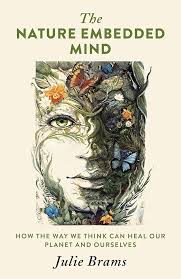
Book: The Nature Embedded Mind
Author: Julie Brams
Publisher: Changemakers Books
Year: 2025
Rating: 4 out of 5 stars
Synopsis : “The Nature Embedded Mind explores some of the most vital questions our culture is facing, regarding the broken relationship between humans and nature. Our persistent and shared delusion that we are different from the rest of nature is at the heart of why we behave in ways that destroy our own habitat. Focusing on our personal and collective beliefs, The Nature Embedded Mind shows how we can begin healing the most important relationship we have, our relationship with Earth. These pages combine the latest scientific research, personal stories, and writing prompts that will allow you to expand your own thinking. Challenging Western psychology, this book aims to prioritize its offered repair as the new foundations for mental health and social wellness.”
Review : The Nature Embedded Mind, while written by a psychotherapist and geared toward therapists and allied professionals, is ultimately a book for everyone. You might think a book about letting our collective repair with that natural world expand outward into the repair necessary with other humans would be specifically for those who already feel a deep connection with the Earth, but realistically, the message of this book is for every person on this planet. That message is namely that if we can begin to reframe our human perception of the Earth and the other-than-human beings who live here with us as being less about hierarchy and more about coexistence with our siblings, we may very well be able to find ourselves in a place that is less caustic, less inflamed, and less ill.
Over the years I’ve read several books on the benefits of Forest Bathing and how one might go about participating in such an event. Brams has created a work that does more than delve into the positive impact Forest Bathing might have on a person’s psyche; she’s created a work that’s gathered scientific data around how we as humans interact with the natural world and how we not only gain benefits from it, but how we might benefit the world around us in a relationship of equal exchange. If you’re a fan of Robin Wall Kimmerer, not only will this concept not be new to you, it will likely be quite welcome to read. While not overt, Brams readily suggests a concept that will be familiar to anyone who’s studied yoga : we are the microcosm of the macrocosm. Meaning? What happens in the natural world is reflected within our own being and vice versa. Brams suggests that we’re experiencing a collective awakening and desire to return to something we may have only experienced in childhood, a freedom that comes from an unfettered connection to and collaboration with the world around us. When we stop viewing the world and the non-human life that exists within it as separate from ourselves, Brams says, we can start to experience the necessary perspective shift for a new way of life to unfold.
The Nature Embedded Mind reads like a both manual for reshaping and reframing our collective ideals about the natural world and an introduction into the world of Forest Therapy (Brams is certified by the Association of Nature and Forest Therapy, or ANFT, and regularly leads walks for those in her area). There are periodic writing and experiential prompts throughout the book that are geared toward gently shifting the reader’s mindset away from our standard collective idea that humans exist on a hierarchy outside of nature, somehow both separate from it and at the top of the pyramid within it. The prompts allow for playfulness and exploration, and paired with the way Brams speaks about nature, it’s a gentle shaking of the norms so that the reader has the freedom within a container to begin to safely consider how they think about and interact with the non-human world around them. Concluding with a prompt that comes directly from Nature Therapy, Brams has given the reader ample room to begin their own immersive journey into forest bathing techniques, or at minimum, to begin to explore the idea of what a deeper relationship with the Earth might look like outside of a modern, Western point of view.
I found this book to be incredibly necessary and timely. I’ve already recommended it to several friends : therapists, those in therapy, and other folks in allied professions that are doing the work on their own and beginning to question if the ways we interact with the world around us are truly serving our collective consciousness. I found Brams to be quite relatable as an author and enjoyed her perspective immensely. I expected as I dove into the book that I would already have a nature embedded mind, as I consider myself pretty connected to the planet, an outdoorsy kind of gal who views herself as part of nature rather than something disconnected from it, but Brams truly challenged my way of thinking and helped me turn some of my thought patterns around on their head. It’s easy to view humanity as the top of the food chain, sitting pleasantly at the top of a hierarchical caste of sorts, but the reality is that we live in tandem with the world around us, it’s completely intertwined and our own existence is reliant on the existence and persistence of the whole of the Earth. As we witness destruction on new and unparalleled levels each year, and seemingly worse each day, finding our way back to the understanding that we are no different than the other-than-human creatures who live on this planet feels imperative to the collective survival of, frankly, everyone and everything. If the soil is as similar to me as my own hand, wouldn’t I fight long and hard to keep the soil healthy? If I enjoy time in nature as I would time with a friend, wouldn’t I take the time to clean up some trash? To fight for legislation that keeps the body of Earth well? Wouldn’t I consider her my home rather than an object?
The Nature Embedded Mind is a quick read but it’s worth taking your time with. It explores the idea that we aren’t so different from the planet and that the planet isn’t so different from us. It’s a reminder that as humans we aren’t actually separate from nature at all, but truly part of nature just like everything else on this planet. And finally, it’s an invitation to explore ways in which you connect with the planet, inviting the reader to try their hand at simply existing with the planet, to forest bathe or to seek out forest therapy or to just sit and be connected with a friend (the Earth, her abundance, her creatures, and her cycles). It’s a necessary way forward. Perhaps it’s the only way forward.
Advice : If you experience the deep, unsettled feelings of doom connected to climate change, practice meditation, enjoy being in the woods or smelling flowers or watching bees flit from flower to flower, if you’re a therapist, a yoga or Ayurveda practitioner, an activist, or simply a human being navigating existence on a planet that feels daily more and more disconnected from your life, this book is truly for you. It’s a quick read but it’s packed full of insight and wisdom and filled with journal prompts and ideas for how you might connect more deeply with the world around you and ultimately reshape your understanding of the Earth and your relationship with it.
 Paige Reviews Books