The Housekeeper’s Secret Review

Book: The Housekeeper’s Secret
Author: Sandra Schnakenburg
Publisher: She Writes Press
Year: 2025
Rating: 3.5 out of 5 stars

Synopsis : “A catholic family in 1960s Chicago headed by a narcissistic and demanding father takes on Lee, a housekeeper with a mysterious past. Lee becomes like a second mother to the Krilich children, especially Sandy. After Lee’s death, Sandy begins a determined quest to find out her dear friend’s backstory – and proceeds to uncover one shocking fact after another, even as the story of her own family drama, and the heartwarming role Lee played in the Krilich’s lives, unfolds.”

Review : While this book’s title and synopsis might lead you to believe the entirety of the novel will be spent uncovering a housekeeper’s secret(s), the truth is only about 20% of the book was spent actually delving into Lee’s past. While I don’t particularly think the information Schnakenburg was able to gather about Lee, her beloved housekeeper, is broad enough to fill an entire book, I do find it hard to wrap my head around how little of the book was actually devoted to Lee’s life and how much of it was devoted instead to our writer. I don’t find this problematic as far as storytelling goes, Schnakenburg, nee Krilich, had an extraordinary childhood filled with trauma, neglect, abuse, and a near fatal accident – but the title of the book is The Housekeeper’s Secret and we didn’t begin to dive into Lee’s secret until the book was nearly over. The title and the content didn’t match up.

Like I said, though, I found the story of Schnakenburg’s upbringing to be enough to keep me turning pages, wanting to know how things would evolve in the lives of Sandy’s family members, forced to endure a grueling childhood with a demanding and demeaning father with a roiling anger problem and no regard for the wellbeing of anyone in his path. I found Schnakenburg’s portrayal of her father to be quite interesting – in fact, I believe her storytelling of his abuse throughout her childhood to be far too lenient and more forgiving than I would hope. We spend, as I mentioned, about 80% of The Housekeeper’s Secret growing up with Sandy in a hellish nightmare world of a home, growing with her from the time she’s no more than a toddler until she’s an adult with children of her own. It’s throughout this memoir-like progression that we come to find Sandy’s relationship with her father, and the relationship he shares with her 5 additional siblings and mother, is strained at best. He is, to put it bluntly, a menace. Demanding 7 different types of juice each morning, forcing Schnakenburg’s mother into situations that endanger her life (more than once), forcing a six-year-old to utilize hedge-trimmers with zero supervision, and having a second family are only some of the stories we read in this book – it is well and truly a nightmare. And yet, Schakenburg attempts to humanize her father, explaining that he suffered the loss of a childhood friend in a drowning accident, as if this singular trauma might explain the evil that he unleashed upon his family; it’s particularly glaring when you consider that Schakenburg’s mother suffered from a terrible fear of drowning, so much so that she never learned to swim, and her husband forced her onto multiple boating trips, one in which the threat of drowning was quite real when their boat suffered damage and began to take on water.

*Spoilers Ahead*

When we do finally make our way to Lee’s story, a story she told the children for years she wanted to write (but spent no time actually writing down, nor telling to anyone to transcribe), the story we end up with is one of tremendous tragedy, horror, and loss. It is hard to endure, yet necessary to read. Lee, a Black woman growing up in the 1940s, was brutally attacked, beaten, and sexually assaulted by multiple men while walking to the bus after work. She was left for dead. Because it was winter and there was snow on the ground, she managed to survive the night, but suffered incredibly bodily damage as well as a traumatic brain injury. Being unable to fully recover and in a family that was enduring their own physical ailments and diagnoses, Lee was sent to a sanatorium for care. While there’s significantly more to Lee’s story, I’d like to leave it here and encourage you to read this book if for no other reason than the necessity of hearing a story like Lee’s – a story that deserves to be heard and told. The history of women’s medical treatment is one we should never take lightly, especially as we find ourselves simply not all that far removed from the most egregious “treatment” and experiments performed – often for diagnoses that are now easily managed with medication, therapy, and simple kindness. Women of color, even more so.

I sobbed through Lee’s story, wishing so much that there was more information available, that we could see retribution for the actions of the men in her life who treated her with such unimaginable disregard, wishing Schnakenburg could have dug up and revealed names so we might know them for who they were. It’s the human response, I believe, to reading a story like Lee’s. You want to see justice done, you want to see more come from it than 20% of a book about an abusive father, you just want more. I think it’s commendable that Schnakenburg took up the mantle of this task, but I wish there was less about Schnakenburg herself (perhaps saving it for a separate memoir) and more about Lee. As we meet Lee’s children toward the end of the book, Schnakenburg and her siblings share stories about Lee that were never mentioned at any other point in the book and I can’t help but think this book would have better served Lee’s memory had it included more stories of Lee’s life, even on where she was an employee of a family that was not her own. Schnakenburg dips her toes into the realm of white saviorism at the end, when she learns one of Lee’s children fell victim to the system as an orphaned child born in a sanatorium, suggesting that this child would have been better off in Schnakenburg’s home where her horrifically abusive father ruled with an iron fist of unpredictability. In fairness, I think her intentions were noble in this moment, believing the child would have been better off with Lee, and I agree, but again, I feel she’s been far too forgiving of her father and a bit short sighted, considering how deeply she had previously detailed his abuses. There were moments that left me gasping for air for the sheer horror of it all, moments where I sobbed, and moments where I cringed. Lee’s story is a tragedy that deserves to be heard.

Advice : It’s worth noting that if you choose to read this book it does speak about verbal abuse, emotional abuse, manipulation, gang rape, power dynamics, torture, water torture, sexual assault, traumatic brain injury, a car accident / bicycle accident, and drowning. This book is not for the faint of heart, but if you’re a woman I think it’s a deeply important and impactful story to read.
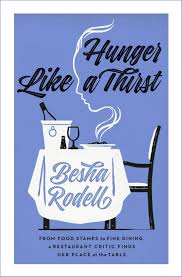
Hunger Like a Thirst Review

Book: Hunger Like a Thirst
Author: Besha Rodell
Publisher: Celadon Books
Year: 2025
Rating: 5 out of 5 stars

Synopsis : “When Besha Rodell moved from Australia to the United States with her mother at fourteen, she was a foreigner in a new land, missing her friends, her father, and the food she grew up eating. In the years that followed, Rodell began waitressing and discovered the buzz of the restaurant world, immersing herself in the lifestyle and community while struggling with the industry’s shortcomings. As she built a family, Rodell realized her dream, though only a handful of women before her had done it : to make a career as a restaurant critic.
From the streets of Brooklyn to lush Atlanta to sunny Los Angeles to traveling and eating around the world and, finally, home to Australia, Rodell takes us on a delicious, raw, and fascinating journey through her life and career and explores the history of criticism and dining and the cultural shifts that have turned us all into food obsessives. Hunger Like a Thirst shares the joys and hardships of coming of age, the amazing (and sometimes terrible) meals she ate along the way, and the dear friends she made in each restaurant, workplace, and home.”

Review : I don’t receive nonfiction advanced copies with any kind of regularity, but when I do, they’re almost always a revelation. Hunger Like a Thirst is no exception. Written by one of the world’s last anonymous food critics, Besha Rodell, Hunger, as poignant as it is comforting, is laid out as courses on our table, each more decadent, more revealing, than the last. Like a blooming onion (yes she has reviewed Outback Steakhouse), Rodell gently peels back the layers of the decadent food world, the culture that simultaneously shaped our tastes and was shaped by our foodie interests, exploring the ways in which food is inherently political, all the while laying herself bare before us, her own heart on our plate. Delicious, rich, funny and equally heartbreaking, overwhelming, and steeped in grief that is not just Rodell’s but my own, Hunger is an absolute must-read.

From living on food stamps to traveling internationally for Food & Wine, Rodell guides us through the often unbalanced and winding journey of a restaurant critic, describing the sheer financial cost of dining out multiple nights per week, often at her own expense, traveling to find the best, the newest, the most creative gem, often alone. She explains the dichotomy of loneliness she feels as she travels the world and the claustrophobia she feels at being back home, the seemingly impossible go-go-go of jet setting from place to place, while being just a few miles shy of landmarks she promised her father she’d see in her lifetime, while not afforded the time or leisure to visit while traveling for work. Hunger is far more than a memoir of good (and sometimes bad) food. Rodell shares her life, her travels outside of work, and the friendships she’s made both in the restaurant industry and in her career as one of only a dozen or so restaurant critics in the country.

Each chapter reads like an in depth exploration of not only the history of food culture and specific food phenomena, but as a dive into the world of a woman working in a predominantly male driven industry. Rodell tackles bigger global issues with ease, often discussing racial disparities, misogyny, and the way in which the world of food has expanded, sometimes at a snail’s pace, to meet a broadening world. She explains the history of women in the service industry through deep dives into the nation’s first chain restaurants and talks about what it’s like to be a woman who continues to work in this industry where women are expected to largely be one thing : gentle. From a background in Alt Weekly publications, Rodell writes in a way that feels comfortable and familiar, like you’re listening to your favorite person rant about their special interest. She’s approachable and funny and foul-mouthed in exactly the way you’d hope, telling slightly horrifying tales from her teenage years as a recent transplant in the US from Australia, talking about the culture that seeps over from punk music into the back of house of a food service gig, all the while remaining real and human and, though not, somehow tangible.

I don’t think any book of this sort could be written without addressing some of the harder aspects of industry work, like drug abuse and suicide. Rodell navigates each with grace and grief, speaking about people she and her husband have both worked with and lost, her husband’s own substance struggles, and drawing parallels in her own internal world to the monumental loss of Anthony Bourdain. Rodell brings the truth and the grit and the heartache of the restaurant world to the reader in a way that feels tender and gentle, written with care and heart. Everything she addresses is important in it’s own way, but this aspect perhaps most of all.

As someone who has never worked in the food service industry but, like so many others, loves watching Top Chef, I found Hunger to be exciting and enjoyable on yet another level. Reading about the foundational restaurants and seminal chefs throughout the decades Rodell shares of her life, it was so fun to hear new stories of people I’ve become familiar with through my favorite cooking show and to learn some of the history involved. Rodell speaks of living in New York during 2001, of feeding diners mere days after the twin towers were hit, and of the chefs who fed first responders. She talks about incredible chefs and restaurants in Atlanta and Los Angeles, and shares her hometown in Melbourne, Australia with us. She shares her husband’s realized dream of opening his own restaurant, an endeavor set to open in 2020, and the indescribable, and perhaps insurmountable, grief that came with that timing. She brings us into her world and shares it in such a way that by the time you’re done reading, Besha Rodell feels like an old friend. Every aspect of this book, from start to finish, is perfection. It’s comfort food.

Advice : If you’re into fine dining or finding holes in the wall or eating where the locals eat or the ins and outs of what it’s like to eat at the best spots in LA, if you love watching Top Chef or Chopped or reading up on the newest spot in town, if you’ve ever wondered what it might be like to be an anonymous food reviewer and restaurant critic, this is an absolute must read. I have a hard time saying there’s any reason not to read it, unless for some reason you hate food and don’t enjoy memoirs. Pick it up, it’s released on May 13th. It’s truly excellent.

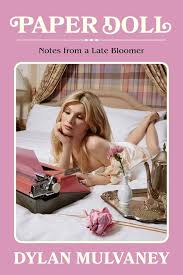
Paper Doll Review

Book: Paper Doll
Author: Dylan Mulvaney
Publisher: Abrams Image
Year: 2025
Rating: 3 out of 5 stars

Synopsis : “When Dylan Mulvaney came out as a woman online, she went viral overnight, emerging as a trailblazing voice on social media. Dylan’s personal coming-out story blossomed into a platform for advocacy and empowerment for trans people all over the world. With her “Days of Girlhood” series, she connected with followers by exploring what it means to be a girl, from experimenting with makeup to story times to spilling the tea, while never shying away from discussing the transphobia she faced online. Nevertheless, she was determined to be a beacon of positivity.
But shortly after she celebrated day 365 of being a girl, it all came screeching to a halt when an innocuous post sparked a media firestorm and right-wing backlash she couldn’t have expected. Despite the vitriolic press, Dylan was determined to rediscover the light, even in the darkest of situations.
In Paper Doll, Dylan pulls back the curtain with a witty and intimate reflection on her life pre- and post-transition. She covers everything from her first big break in theater to the first time her dad recognized her as a girl to how she handled scandals, cancelations, and…tucking. It’s both laugh-out-loud funny and powerfully honest, and is a love letter to her younger self, who didn’t experience the queer joy she now lives daily.”

Review : Dylan Mulvaney’s breakout book Paper Doll is an exploration into girlhood, bouncing back and forth between her first 365 days immediately after coming out as a girl, told through journal-ish entries, and her life during what she refers to as “post-beergate”, a reference to the wildly public, months long, right-wing backlash to her Bud Light partnership on TikTok. Dylan prefaces the book with the note that she writes how she talks, and while I appreciate the candor, I think the style in which she’s written this book felt stilted and, at times, a bit inauthentic. I don’t want to be misunderstood here – Dylan does delve into a lot of personal and intimate topics on an authentic level, but the delivery leaves something to be desired. Paper Dolls reads less like how someone’s talking to you as a friend, and more like how someone might be talking in a viral video which became a bit of a challenge. I think it will find it’s perfect audience, but stylistically, it wasn’t my favorite writing.

But that brings me to the first point I’d like to make before we really get into this review : content warnings. Dylan is open and honest about the mental health struggles she’s endured through her life, both before transitioning and while navigating beergate. She discusses body dysmorphia (but also bodily joy!), suicidal ideology, disassociation, depression, people pleasing, and anxiety. If any of the above topics feel difficult for you, please approach this book with gentleness. Dylan has a positive and upbeat way of conveying her experiences, but she also doesn’t shy away from the very real struggles that many queer and trans people experience, she speaks about her own struggles with frankness and it’s important to say so up front. She does include a small content warning, but doesn’t specify what the content might be, so please be kind to yourself if you choose to read this book.

Aside from the challenges this book faces with writing style, I found Dylan’s use of tense to be loose, at best. I think it’s an ambitious move to jump from present to past tense between two different writing styles (as discussed above), and perhaps that was a bit overly ambitious here for a first book? I was left wondering what was happening with the editing process as her journal entries bounced from tense to tense – most glaringly at the start of the book. I did find that her voice and style and tense all smoothed out a bit as the book went on, but the tense jumping was hard to get past as I was reading. While this is still an uncorrected proof, I did feel that there were additional editorial corrections needed and I’m not sure how much of that will happen prior to the initial printing. Either way, tense and tone alone were enough to warrant this book 3 rather than 5 stars, for me.

I appreciated how much Dylan spoke about both the good and the bad, with Paper Dolls traversing intense moments of public outcry – I wonder if anyone in the US was able to navigate the last few years without seeing some highly public right-wing figure shooting cases of Bud Light in protest over a small partnership with a trans girl living her life on social media. It’s important to see how our actions impact the people we see as celebrities, particularly those whose fame has happened seemingly overnight thanks to apps like TikTok. No one is immune from the harmful actions and words of internet trolls and bullies and it’s commendable that Dylan opened her world up to us, not only as a content creator, but as an author, sharing her grief, her disappointment, and her darkest moments from within these spaces. There’s a great strength that arises from this book, and while a lot of what Dylan’s written comes across as pink and poppy and bubblegum-flavored (or maybe Dominos pan pizza flavored), she allows herself to be witnessed as something more.

Finally, my last critique. While Dylan at times makes mention of her absolutely enormous privilege, both as a content creator and as a passing trans girl, they are brief and occasionally feel a bit performative. She mentions her privilege but doesn’t necessarily mention what she’s doing to amplify those around her who have less privilege – she acknowledges, but brushes past. I felt at first as though maybe it’s asking too much for someone who’s been thrust into the spotlight to use their precious resources to be an activist, but ultimately I came to the conclusion that those with platforms as large as Dylan’s have a responsibility to do the work. And I think Dylan might be, or at least is trying to, but I also think it’s addressed in a way, in her book, that feel glib and passive. It comes across as performative, and that rubbed me the wrong way.

I think Paper Dolls offers and important insight into so many people’s favorite content creator, into coming out, and into the perception of girlhood, something each girl in the world gets to define for herself. It might not be the perfect book, but it was fun and enjoyable to witness the queer joy Dylan cultivates in her life. It’s a quick read, it’s compelling, and it felt approachable, most of all.

Advice : If you love Dylan Mulvaney, if you enjoy a queer book, if you like a memoir, or even if you simply followed along as beergate unfolded, I think you’ll enjoy this book. If you don’t enjoy social media jargon, you might not like how this book was written, but it’s a quick read so maybe that’ll make up for it!

The Manicurist’s Daughter

Book: The Manicurist’s Daughter
Author: Susan Lieu
Publisher: Celadon Books
Year: 2024
Rating: 3.5 out of 5 stars

Synopsis : “Susan Lieu has long been searching or answers. About her family’s past and about her own future. Refugees from the Vietnam War, Susan’s family escaped to California in the 1980s after five failed attempts. Upon arrival, Susan’s mother was their savvy, charismatic North Star, setting up two successful nail salons and orchestrating every success – until Susan was eleven. That year, her mother died from a botched tummy tuck. After the funeral, no one was ever allowed to talk about her or what had happened.
For the next twenty years, Susan navigated a series of cascading questions alone – why did the most perfect person in her life want to change her body? Why would no one tell her about her mother’s life in Vietnam? And how did this surgeon, who preyed on Vietnamese immigrants, go on operations after her mother’s death? Sifting through depositions, tracking down the surgeon’s family, and enlisting the help of spirit channelers, Susan uncovers the painful truth of her mother, herself, and the impossible ideal of beauty.
The Manicurist’s Daughter is much more than a memoir about grief, trauma, and body image. It is a story of fierce determination, strength in shared culture, and finding your place in the world.”

Review : I was really excited to dive into this advanced copy memoir after reading the letter to the reader Lieu included with the book – but I’m realizing now that much of what was covered in the letter isn’t touched on in the back cover synopsis, so I’m not sure you’re seeing the wild ride that her letter was, so I’ll share a bit of it here with you : “For the last two decades, no one in my family has ever spoken of her or how she died. I would ask questions, but they said I was being too emotional or stuck in the past. Desperate for answers, I joined a cult, tracked down the family of my mother’s surgeon, and sought justice through the help of spirit channelers.” This is all within the first few sentences in her letter to the reader! What a wild ride, I thought, I couldn’t wait to get into the meat of this memoir.

A comedian by trade, Lieu writes in a way that showcases her humor, leading us through her life as the youngest daughter of Vietnamese immigrant parents with off the cuff remarks that leave you laughing out loud, winding deftly through the trauma and emotional turmoil of losing a parent so young, guiding us through struggling to find answers while upholding a nearly impossible personal and familial standard; from feeling lost while navigating ivy league schooling to searching for answers from beyond the veil, Lieu takes us on, what ends up being, a winding and at times rather bumpy road. From the beginning, Lieu makes it clear that body image, food, and self worth are deeply connected within her family – something we can see clearly played out in the tummy tuck operation that ultimately takes her mother’s life at a mere 38 years old. Not only is Lieu constantly criticized for any weight she might put on, she’s also forced to consume every single piece of food that’s put before her, at least once to the point of vomiting. Lieu struggles so desperately for answers as to why her mother might have felt the need to have a cosmetic procedure for so much of her life, all the while laying it out methodically for the reader to understand, like a neon sign flashing in front of our eyes.

It’s for this exact reason that this book should be read with caution – tread lightly my friends, if you have struggled with disordered eating this book may present complications for you. The majority of the book revolves around food, so much so that part of the advanced reader copy package included a few postcards with pictures of traditional Vietnamese foods on them. While I think the point that Lieu is trying to make is an important one, there are a lot of complex emotions and ties to food in this book that may bring up some difficult emotions in the reader. Lieu refers so fondly to the dishes her family members made while she was growing up, speaking kindly of the foods her relatives make when she comes home to visit as an adult, while simultaneously speaking poorly of her body, her body image, and the way her body is objectified by those around her. It’s complex and confusing at times, but only in the sense that those who have not navigated this ground themselves may struggle to understand the difficulty one faces when they’re told over and over to shrink themselves. This book requires a content warning.

There are some pacing issues I struggled with in this memoir, places where Lieu spent so much time, chapters even, and places where she jumped around almost frantically. You probably know how much I hate being told what’s going on, and while Lieu doesn’t do this, there are connections she asks her reader to make that at times aren’t given enough context to make on our own. I’m a little perplexed as to why the pacing is so frenetic an uneven, with certain aspects of her personal story garnering so much attention while others warrant no more than a sentence or two. The time frame is a bit scattered, at times being not quite chronological, jumping from the past to the present of Lieu’s own life, and I feel she might have benefitted from gently tweaking the format.

These few issues aside, I found Lieu’s work to be an important embrace of family history, of breaking down the barriers that exist between family members, and of honest inspection of how generational curses impact our lives. In writing this memoir, Lieu is doing the work to heal not only her own self, but the individual members of her family, and past generations of her family as well. It’s an important read, but it does come with some necessary warning.

Advice : If you enjoy a memoir I really think this is going to be right up your alley. If you’ve struggled with disordered eating, I might avoid this one for your own sake.

Rise of a Killah Review

Book: Rise of a Killah : My Life in the Wu-Tang
Author: Ghostface Killah
Publisher: St. Martin’s Press
Year: 2024
Rating: 3 out of 5 stars

Synopsis : “Dennis Coles – aka Ghostface Killah – is a co-founder of the Wu-Tang Clan, a legendary hip hop group who established themselves by breaking all the rules, taking their music to the streets during hip hop’s golden era on a decade-long wave of releasing anthem after classic anthem, and serving as the foundation of modern hip hop. An all-star cast who formed like Voltron to establish the pillars that serve as the foundation of modern hip hop and released seminal albums that have stood the test of time
Rise of a Killah is Ghost’s autobiography, focusing on the people, places, and events that mean the most to him as he enters his fourth decade writing and performing. It’s a beautiful and intense book, going back the the creative ferment that led to Ghost’s first handwritten rhymes. Dive into Ghost’s defining personal moments, his battles with his personal demons, his journey to Africa, his religious viewpoints, his childhood in Staten Island, and his commitment to his family (including his two brothers with muscular dystrophy), from the Clan’s early successes to the pinnacle of Ghost’s career touring and spreading his wings as a solo artist, fashion icon, and trendsetter.
Exclusive photos and memorabilia, as well as graphic art commissioned for this book, make Rise of a Killah both a memoir and a unique visual record, a “real feel” narrative of Ghost’s life as he sees it, a one of a kind holy grail for Wu-Tang and Ghost fans alike.”

Review : Chronicling his life, from formative childhood years growing up in the West Brighton projects, to being introduced to kung-fu movies in his early teens, to forming the Wu-Tang Clan, crafting his Toney Stark persona, and everything in between, Ghostface Killah takes the reader on journey into stardom and the drive to simply make it in Rise of a Killah. It would be difficult to listen to music or engage with pop culture without encountering Wu-Tang clan, either having listened to their music or running into one of their cult-like followers. However, for someone like me, who has listened to their music over the years and enjoyed their work, though isn’t a die-hard fan, this book felt a little lacking. This book is very clearly geared toward the ride or die fans, the fans who’ve followed Ghostface and Wu-Tang Clan, who know the ins and outs, the ups and downs of the Clan and are familiar with the intricacies already – prior to reading the book – but I’ll get into that.

Rise of a Killah reads like a conversation, and that’s because it is a conversation. This book has been transcribed, and while I’ve enjoyed that style of reading in the past, there were very few moments during the course of this book that I didn’t feel this would be better suited as a docu-series. I enjoyed reading Ghostface’s story, he is, and has been, open and vulnerable about things that were, and continue to be, hard topics for people to talk about. I found it invaluable to read about his experiences with his mental health struggles, with how he wishes friends would reach out when they see those they’re close to having a hard time, and the way he found peace through speaking openly with RZA about what he was experiencing. During a time when it wasn’t nearly as acceptable to speak about your mental health or wellness, Ghostface leaned into being open with those around him – much the same way his lyrics spoke to things people weren’t rapping about at the time, like growing up in the projects and buying welfare cheese. He talks about the pressure he felt from a young age, living with a single parent and two wheelchair bound brothers, both of whom had muscular dystrophy, and how that helped shape his experience and push him into spaces with people he might otherwise not have come into contact with.

However, there were so many instances in the book that felt like partial stories, partial retellings, so many aspects left out, that the book felt lacking, at times even incomplete. And don’t get me wrong, I understand not everything can or should be included in an autobiography, I’m not naive – I just wish there had been more meat on the bone here. For example, toward the end of the book, Ghostface’s manager, Mike Caruso, speaks with the transcriber, going back in time and sharing his side of how things were happening mostly with the Def Jam label. Ghostface had already covered the years that Caruso was covering, yet we got infinitely more detail and more interesting stories from him than we did from Ghostface. I don’t think this is a poorly told story, but I do think the format choice is wrong for the impact the stories could be making. I found myself thinking over and over again that this would be the perfect documentary or docu-series, I would thoroughly enjoy watching this, having moments where the narrative could cut away and more details could be provided; at the end of the day, if I wanted to full understand this book, I’d have to spend as much time googling things as I did reading it. Had this been less of a transcribed conversation and more of a video interview, I think the impact would have been monumental. Instead, it falls a bit flat and leaves me with more gaping holes than I had before I read it.

I think the final release of the book will be a huge deal for fans of Ghostface and Wu-Tang Clan, it’s filled with photos, illustrations, and lyrics that will have fans drooling. The book talks a lot about Ghostface’s iconic wardrobe choices, from the diamond studded robes to his gold armbands, and details how colors impact his mental state in a way that profoundly influences his work. This is a great book for those fans who have been with Wu-Tang Clan since the inception, who collect every piece of merch, attend every show they can, and know all the infinite details.

Advice : If you’re a die-hard Wu-Tang Clan or Ghostface Killah fan, this is it. You’re going to want to mark your calendar for May 14th 2024 and be sure to grab a copy. If, however, you aren’t a day one fan, this might end up feeling confusing and hard to read. It definitely has its audience, but I think the broader appeal might be lost.

Unmasked Review

Book: Unmasked: My Life Solving America’s Cold Cases
Author: Paul Holes with Robin Gaby Fisher
Publisher: Celadon Books
Year: 2022
Rating: 4 out of 5 stars

Synopsis: “Most people know Paul Holes as the gifted cold-case detective with a big hear and charming smile, who finally caught the Golden State Killer. But until now, no one has known the man behind it all, the person beneath the flashy cases and brilliant investigations.
In Unmasked, Holes takes us through his memories of a storied career and provides an insider account of some of the most notorious cases in contemporary American history, including the hunt for the Golden State Killer, Laci Peterson’s murder, and Jaycee Dugald’s kidnapping. This is also a revelatory profile of a complex man and what makes him tick: the drive to find closure for victims and their loved ones, the inability to walk away from a challenge – even at the expense of his own happiness.”

Review: Unmasked does not come with any content warnings (and it should), so let me begin this review by providing a few. Unmasked contains graphic depictions of violent crimes including murder, kidnapping, criminal confinement, sexual assault, battery, domestic violence, robberies, and more. It describes PTSD, anxiety attacks, panic attacks, and both alcohol and drug abuse as coping mechanisms. That aside, if you are a true crime junky or have followed any of the above mentioned cases as they unfolded, Unmasked offers a rare insight into the forensic processes that led to the demise of many North American serial killers. If you’re taken with the true crime craze as much of the world seems to be, you have likely read some of the books written by former detectives who have solved high-profile crimes. They’re often interesting, though generally a bit dry, and may not offer the kind of skilled writing you’d get from a professional author – and I think that’s to be expected. There’s something familiar about the way a former detective writes a book, it’s often just the facts, ma’am, straightforward and to the point; outlining the details, the clues, and the methods they followed to get to a place where their subject was found and arrested (for the most part). But just because it’s familiar doesn’t mean it’s compelling. I find these books tend toward a historical retelling that can be boring and lacking narrative that I crave from a compelling work of non-fiction.
Perhaps it’s because Holes had Robin Gaby Fisher, a NYT best selling author and two time finalist for the Pulitzer Prize, or perhaps it’s the particularly unique perspective Holes offers, but Unmasked reads like it’s written by an author, not a former crime scene investigator. And that’s not to say that I don’t appreciate the work of former detectives, but it can’t easily be said that they’re natural born writers (of course, this is a generalization). Holes weaves his own narrative throughout the book, taking us through the steps that led him to become a forensic investigator, that brought him down the path of working and, in many cases, solving cold cases largely on his own time. He speaks at length about his own psyche, discussing the obsession that drives him to solve murders, similar to his mother’s obsession that led her to have an eating disorder, and his brother’s obsession that was later diagnosed as OCD. He has woven himself into this book in such a delicate manner that the book has no choice but to reflect a strong narrative. I suspect that Gaby Fisher played a large part in the finessing of Unmasked and I can appreciate that effort – though, in the end it’s Gaby Fisher’s involvement that led me to give this book 4 rather than 5 stars. Despite their best efforts, Unmasked still retains some bit of dry, too-complex-for-layman details about forensics that, I assume, have likely been dumbed down a bit for the average reader to understand. I found myself skipping over these parts, though I’m sure Holes felt they were crucial to explaining his process as he used forensic technology to solve these crimes, they read as complicated and long-winded and if I skipped over them, surely they could have been pared down even further. I’m a bit torn over his long-winded descriptions of forensics and DNA technology, though, because he doesn’t treat the reader as if we’re too uneducated to understand, but at the same time, in fact I am too uneducated in the realm of forensic science to understand.
With the help of Gaby Fisher, there are aspects of the book that I wish had been stronger or more well put together. Holes jumps from one crime to another before returning to the original crime, and in the case of the Golden State Killer, or EAR as he’s initial referred to, so many of his crimes and victims resemble one another that it becomes a bit convoluted and hard to follow at times. I do like a narrative that can bounce around from one thing to the next in a seamless way, but I found myself wondering if I hadn’t just read the account a chapter earlier multiple times, so I think there’s still some clarity missing from this narrative. With the help of Gaby Fisher, I would hope there wouldn’t be so many of these instances, but it’s impossible to know where the book began in order to get to where it is now. Either way, there was still some work left to be done, but given that I received this review copy a mere month before it was published, I suspect that the book was altogether finished at that point.
I found this to be an excellent counterpart to Michelle McNamara’s I’ll Be Gone in the Dark. Having read McNamara’s book when it came out a few years ago, right as the Golden State Killer was caught, I had already heard of Paul Holes and was familiar at least on a small level with what his work entailed. Having read about the detailed search for the GSK that spanned decades from McNamara’s side of things as a journalist and amateur internet sleuth, getting the bulk of Hole’s work from his perspective was genuinely an excellent counterpart. I appreciated, as well, that Holes addressed his working relationship with McNamara and also spoke about her death, something I was hoping for as I read through, and glad to see put into words. McNamara devoted much of her life leading up to her death by accidental overdose to the GSK search – in fact it was McNamara herself who gave him the formal name ‘Golden State Killer’.
Overall, I found Unmasked to be thorough, decently well written, and full of details that drove a complete and satisfying narrative.

Advice: If you struggle with true crime stories, this is absolutely not going to be the book for you. If, on the other hand, you live for true crime podcasts, books, and tv shows, you will probably love Unmasked. It ticks all the true crime boxes and leaves you feeling satisfied with the retelling. If you read and enjoyed I’ll Be Gone in the Dark by Michelle McNamara, I think Unmasked is a logical next read for you.

Good Morning, Destroyer of Men’s Souls Review

Book: Good Morning, Destroyer of Men’s Souls
Author: Nina Renata Aron
Publisher: Crown
Year: 2020
Rating: 5 out of 5 stars

Synopsis: “‘The disease he has is addiction,’ Nina Renata Aron writes of her boyfriend, K. “The disease I have is loving him.” Their affair is dramatic, urgent, overwhelming – an intoxicating antidote to the long, lonely days of early motherhood. Soon after they get together, K starts using again, and years of relapses and broken promises follow. Even as his addiction deepens, she stays, confined that she is the one who can help him get sober. As a result of an adolescence marred by tragedy, Aron has always felt responsible for those suffering around her. How can she break this pattern? If she leave K, has she failed him?
Writing in prose at once unflinching and acrobatic, Aron delivers a piercing memoir that cracks open the long-feminized and overlooked phenomenon of codependency. She shifts between visceral, ferocious accounts of her affair with K – as well as her family’s own struggles with addiction – and defining moments in the history of codependency. Good Morning, Destroy of Men’s Souls is a blazing, bighearted book that illuminates and adds nuance to the messy theaters between felinity, enabling, and love.”

Review: Good Morning, Destroyer of Men’s Souls is more than a small synopsis on the back of a book, it is more than a tiny review on a website or post on social media. It is an all encompassing work, a memoir and an unfaltering look into the heart of the AA, Al-Anon, codependency, trauma, tragedy, love, and growth. Aron is at times a young Joan Didion, basking in the warmth of the California sun, radiating the innocence only a new, young life in San Fransisco can. She wraps the reader in a golden glow, enveloped in the potential of a bright future yet to be seen as she emerges, newly 18, on the west coast – having traveled from the far side of the east coast, from New York, Philly, punk shows and hometown suburbia, to find something of her own, to cast her flag upon new soil; an explorer of new lands and a conqueror of life at once. We spend ever the briefest of stays in Didion-esque Northern California before Aron returns home, called upon by her family and the addiction that grips her sister and in turn the entirety of her familial home.
Aron discusses the addiction that codependents find themselves drowning within and the difficulties this level of love, attachment, desire, maybe even lust for the ability to fix it, bring. She waxes poetic on the love she has for the possibility, the person she knows the addicts in her life could be. If only, if only, if only. She struggles; we find her neck deep in an intense and toxic relationship with an old flame, K, yet another addict (heroin, among others). This time she isn’t a budding adult, she has children and a career, a home and a car, both physical and intangible belongings which are easily broken beneath the weight of addiction. Admitting her own codependency, she swings between fury and guilt; quoting Lois Wilson, she acknowledges her own brokenness in needing to fix: “Living with me would be such an inspiration, I thought, that he would not need the balm of alcoholic.” and “Alas, for the codependent, empathy springs eternal.” (220, 218) If she were Joan in a cozy, golden California, in the midst of a lifetime of crisis and trauma she is Melissa Febos – wildly educated, wholly sunk into addiction and love, and deeply, deeply vulnerable.
Reaching into the jagged edge of a wound, Aron uses Good Morning, Destroyer of Men’s Souls to tear herself open, slashed and flayed onto the page for the reader to soak in. We are privy to her agony, the newness of motherhood, of “babylove”, of the milky smell of a newborn, and in the same breath we feel her guilt and sorrow as she struggles to hold everything together, to keep the people around her from crumbling to pieces even as she realizes they already have. She uses herself, her own story of codependence, of being a widow to a man who has not died, of her own addictions to both love and substance, to take the reader on a trip through the confoundedness of addiction trauma and enabling. Aron has written a story that rages quietly, burning through the pages as she discusses the history of AA amidst the anguish of her own life. It is heart shattering, honest, and raw.

Advice: This is not an easy book to read, as I said, it’s brutally honest as Aron speaks of addiction and love in blunt terms. However, it is an absolute must-read, a book that will change you, move you, bring you to the page to write a review. It is a deeply personal memoir that I found often challenging in reading it – I absolutely recommend this book, I will be chewing on it for days to come.

Amateur Review

Book: Amateur
Author: Thomas Page McBee
Publisher: Scribner
Year: 2018
Rating: 5 out of 5 stars

Synopsis : “Amateur follows the author, a trans man, as he trains to fight in a charity match at Madison Square Garden while struggling to untangle the vexed relationship between masculinity and violence. Through his experience boxing — learning to get hit and to hit back, wrestling with the camaraderie of the gym, confronting the betrayals and strength of his own body — McBee examines the weight of male violence, the pervasiveness of gender stereotypes, and the limitations of conventional manhood. Interrogating masculinity as emotional landscape and cultural positioning, he binds his experience to a free-ranging examination of the ways in which men fail and are failed by our society.
At once a deeply reported narrative and an intensely personal journey, Amateur is ultimately a story of hope, as McBee traces a new way forward, a new way of being a man, in the ring and outside of it.”

Review: Thomas Page McBee’s Amateur is at once a study of masculinity within the boxing ring and a deeply moving study of gender in and out of the context of boxing. McBee struggles with the concept of manhood and embarks on this boxing journey to further understand his role in the world as a man. Sharing a unique perspective on toxic masculinity, McBee provides the reader with a deep understanding of the paradoxical world in which he lives; having once lived as a female and now living as a male in a time where men are viewed often as aggressive and dangerous, he finds himself fearful and apologetic.

Not only does McBee have a new realm of existence to explore, he discusses the implications of being a “real man” whose male role model growing up was his stepfather, a man under whom he experienced decades of sexual abuse. In exploring this relationship, McBee discusses the impact this understanding has on his siblings as they become parents themselves.

Delving into the world of boxing, McBee explores masculinity in terms of love, connection, emotions, and touch. He grapples with the loss of his mother, with understanding how to interact with the women in his life, and the perception the world holds of him both as a passing male and as an out trans man. We watch as McBee falls and grows, learning how to find himself, rather than the identity he seeks based on his gender.

My Advice: If you have any interest in reading memoirs, snag this book immediately. If you have any interest in gender roles, snag this book immediately. If you have any interest in boxing, snag this book immediately.

Abandon Me Review

Book: Abandon Me
Author: Melissa Febos
Publisher: Bloomsbury, USA
Year: 2017
Rating: 5 out of 5 stars

Synopsis: “Hailed by the New Yorker, Marie Claire, and Guernica for its “sheer fearlessness,” “ruthless honesty,” and “deep reserves of empathy,” Melissa Febos’s dazzling collection, Abandon Me, captures the intense bonds of love and the need for connection with family, lovers, and oneself. With it “she has emerged as one of our most creative and most unflinching memoirists, essayists, and teachers” (Los Angeles Review of Books).
In these linked essays, Febos tries to reconnect with her birth father and finds that an instinct for self-erasure binds them as surely as their blood. She remains closely tied to the loving sea captain who raised her, absent for months at a time. The hypnotic story of an all-consuming, long-distance affair with a woman marks her exploration of the worship and withdrawal that haunt her love life. Woven throughout is her insatiable hunger for self-knowledge, the difficult kind, and the powerful conviction that universal truths begin there. Abandon Me is at once a courageously vulnerable memoir and an incisive investigation of art, love, and identity.”

Review: Melissa Febos delivers a series of essays that weave her present with her past into a web of self understanding. She opens her wounds wide for the reader to fully experience, laying herself bare upon the pages of her memoirs.
On abandonment, she writes: “I want the people I love to do not as I would or have done, but whatever will keep them safe (…) There is a sorrow in me deeper than the regret of any cruelty for the fact of this: none of us could have protected each other. We could not even have protected ourselves.” (78).
On the early stages of love: “Love is so often a wish to have our wants seen and met, without having to ask” & “It is not easy to be seen, no matter how we crave it. It is not easy to look hard at the ones we love. It is always a little gruesome, as love is: full of contradictions and impossible promises” (103, 106).
On self discovery: “My stories are containers into which I pour myself and the indigestible parts of my experience (…) Once filled, they carry more of us than our lovers can bear, than we can. And sometimes they carry us away” (127).
On soured love: “I sat for hours in therapy sessions, searching for my feelings. I wanted to “get in touch with them.” I thought that when I finally found them it would be like a reunion with a childhood friend – emotional, surely, but also sweet – a reward for all my hard work. I did not think that I was leaving messages for a serial killer. I did not think that my feelings, receiving my invitation, would arrive on my doorstep like a cabal of madwomen and refuse to leave. I though that the host of the party decided when it ended and her guests went home. But feelings have terrible manners – they are like children, or drunks. They are mad. They gorge as the starved will gorge, until they are sick, until their stomach split (…) They do not leave when you want them to. They leave when they are finished” (213).
On her native heritage: “How could I ever know my own motives? The Pilgrims believed God had cleared a path, that the pestilence delivered by other whites was a path the Lord had cleared for them. They called it “The Miraculous Plague”. The natives called it “The Great Dying”” (287).
And on baring your soul to the page: “If you want to write about something, I tell them, you have to look at it. You have to look long enough that your own reflection fades” (292).

Abandon Me is complex and heartbreaking. It meets you in your own space and shows you pieces of your own self through lyrical essays that flow like water. Febos writes with metaphor, comparing the sun to a cup that has spilled onto the table, her emotions to a melon cracked upon the concrete, and her emptiness as a pit that cannot be filled. She invites the reader into her stories, allowing an intimate look at her darkest parts.

My Advice : This book is a must read. It is one of the most well written contemporary books I have read and will stick with me for a long time. It is deep and thoughtful; something to chew on. The book’s first fifteen pages are filled with glowing reviews and it is well deserved.