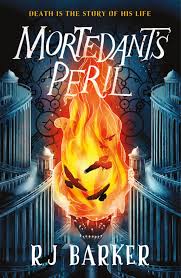
Book: Mortedant’s Peril Author: RJ Barker Publisher: Tor Books Year: 2026 Rating: 3.5 out of 5 stars
Synopsis : “In a city of ancient automata, strange spirits, and sleeping gods, a cleric of death is about to find his own life on the line…unless he can find his apprentice’s killer first. This thrilling fantasy murder mystery is the first in a perilous new series from the acclaimed author of The Bone Ships and Age of Assassins.”
Review :Mortedant’s Peril is a winding, twisting, murder mystery wrapped in a fantasy novel set in a strange world filled with blood magic, old gods, and strange lands across the sea. It follows a Mortedant, that is, a death worker whose job is to read the final thoughts of those who have passed, named Irody Hasp as he embarks on a quest to not only seek out his apprentice’s killer but to take vengeance on those who may have, in fact, killed his apprentice on accident while attempting to kill Hasp himself. Hasp embarks on the journey with the help of his apprentice’s young sister, Mirial, and his assigned bodyguard, Whisper, a sea person warrior with potentially royal family ties. What follows is a classic murder mystery with winding back roads, secret passageways, poison berries, death cults, and magical beings who seemingly control the city and, indeed, seem to control Hasp’s own fate.
Mortedant’s Peril gets off to a slow, so very slow, start. It was difficult for me to find my way into the world of Elbay, the city Hasp resides within, and even more difficult for me to wrap my head around all the different creatures, spirit forms, and even the way people are addressed within the world. It didn’t feel like a smooth dive into a new world and the world building felt a bit stunted. There were several instances where I found myself reading and rereading passages, trying to make sense of Barker’s descriptors, often times leaving things without an image in my mind. There’s a sweet spot with fantasy novels where the reader doesn’t have to work too hard to imagine what’s being introduced and this book missed the mark a bit in that regard. However, while a slow start, once I got into the meat of the novel, I found it hard to put down. If you can make it through the first hundred pages or so, you’ll be well into an enjoyable mystery.
While a fantasy first, this book is at it’s heart a mystery so I do want to tell you that I was able to solve the mystery – though, not the mechanics – long before the book reached it’s zenith. On top of that, Barker introduces the reader to so many different religious sects, cults, and names I found difficult to connect to, that the mechanics of how the murder took place and who exactly was involved felt hard for me to piece together in the end. It didn’t keep me from enjoying the reveal, but it did take something away from the experience.
I struggled a bit with the broader picture of what this book was ultimately about. At first, I believed this was a fantasy novel written to reveal to the reader the dangers of racism and an us vs them perspective, as Hasp, and truly so many people in this book, relies heavily on what I could only call racism (though, in this fantasy world we’re talking about the distinction between people of land vs people of sea, rather than people of differing skin colors) and it’s that very racism that made me recoil at the first bit of the book. The use of “it” as a pronoun is difficult to stomach, to say the least. But the anti-racist plotline doesn’t really pan out beyond Hasp’s subtle move from using “it” to “she” when referring to Whisper, though notably, not when he refers to other creatures. There’s also a strange “guns don’t kill people, people kill people” argument made toward the end of the book that didn’t sit well with me, either.
All in all, I enjoyed the overall plot of Mortedant’s Peril, I was able to figure out the mystery before the end of the book, and there are several questionable themes throughout the book that don’t resolve in a way that feels good. I found myself returning to the book over and over again to turn the pages and see how things would play out, so this was better than it wasn’t, but it was still not my favorite nor was it a truly successful fantasy book.
Advice : If you love fantasy, or dark and dystopian worlds, if you don’t mind doing extra work where world building lacks, and like the idea of a mystery fantasy novel, this will be a great read for you! If you don’t want to do the work, you might skip this one or check it out from your local library rather than buying it outright.
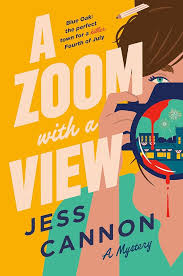
Book: A Zoom with a View Author: Jess Cannon Publisher: Dutton Year: 2026 Rating: 3.5 out of 5 stars
Synopsis : “Leo can’t believe she’s back in Blue Oak. Her small, quirky Texas hometown feels suffocating after trying to make it big as an English professor in New York – especially due to her strained relationship with her overly hair-sprayed mother, Karina. But with Leo’s career in academia in shambles, at least she’s able to work as a photographer for her godmother’s real estate business. And her best friend, Emily, is around to help her navigate through the mess – and maybe force her to reconnect with her old high school boyfriend, Mack. But while at work, Leo makes a grisly discovery: the dead body of rival real estate agent and social media influencer Chaz. Even worse, Leo and Emily have been secretly running a snarky Reddit page making fun of Chaz’s cringe-inducing advice and duck-faced selfies. When someone Leo loves is accused of the murder, she finds herself flung headfirst into a dangerous investigation, teaming up with a local detective who grew up to be quite attractive. Meanwhile, Karina has been acting stranger and stranger, as if all her hair hides a big secret…”
Review : A Zoom with a View is a cute, sort of cozy, I-just-moved-back-home mystery I love. I extra love that it’s a mystery with a female protagonist who is neither drunk, nor having a mental break. It’s the perfect break from the (ugh) normalized unreliable female narrator trope. We need that. An entire genre of modern mystery books needs that. Jess Cannon has created a fun, hard to put down narrative of twists and turns and fun characters that feel like they stepped right out of your own lived hometown experience, and I genuinely enjoyed reading this book for all of those reasons.
Once I got into the meat of the novel, the plot was easy to follow and the mystery was fun to unravel. I did figure out whodunnit fairly early on, but I will say that the motive was unclear to me until close to the end of the book, so while you may be able to narrow it down early, it doesn’t necessarily take away from the plot. I won’t give the ending away for you, but I will tell you that I thought the villain would have a different motivation and felt the ending suffered a bit from a fairly reductive character. The final reveal felt semi-believable, but I wanted a little more depth than we were given. There’s still time, I think…
Cannon lost me early on, and I want to warn you, reader, that A Zoom with a View has an incredibly slow start and hasn’t been smoothed out in a way that felt easy to read. While it does get much better as you get into the meat of the book, the plot is a bit meta, if you’ll pardon the pun, and this is the real problem with Cannon’s rocky start. In attempting to lay the groundwork for her novel, Cannon has set herself up for some tricky narrative and it doesn’t seem to me that she’s entirely succeeded in making it something everyone will be able to follow. The main character, Leo, runs a snark subreddit centered around someone she went to high school with, Chaz, who as grown up to become a wellness influencer. Leo, and subsequently Cannon, spends a great deal of time explaining the subreddit, running through the cast of characters in Chaz’s universe, and laying out a lot of Chaz jargon. All of this feels true to life, but it’s not written in a way that brings ease to the reader. Snark subreddits aren’t new to me and I still found myself going back and rereading paragraphs, trying to wrap my head around what Cannon was attempting to describe. There’s a sweet spot you find in books where the words flow and the narrative unfurls in your mind and you don’t have to do much work as a reader, and it isn’t really until about halfway through the book that I found that sweet spot here. The first good bit requires you to work for it, and that’s hard for me to argue for. I don’t think it’s necessarily due to the content, though it’s not an easy task to describe a subreddit and an entirely made-up world, but fantasy writers world build all the time. Sometimes it reads easily and sometimes it doesn’t. This was the latter.
Once I got into the swing of things and found the rhythm of A Zoom with a View, I found myself really enjoying how things were unfolding. Like I said, I had the mystery solved pretty early on, but I enjoyed going with Leo to interview each character, seeing how things were happening in Blue Oak and in the broader Chaz snark subreddit world, and seeing my own suspicions confirmed. What really let me down, though, was the ending. I’ve found myself frustrated in recent years by suspense and mystery books that spend 90% of the novel building up to a climax, revealing the villain, and then wrapping the whole book up in the last couple of pages and unfortunately, that’s exactly what A Zoom with a View has done. It’s only in the final few pages of a pretty hefty book that we finally find out the truth behind Leo’s Mom’s secrets and as soon as we learn her secrets, the book ends. It’s a gnarly cliffhanger, if it actually is a cliffhanger. I can’t find any information online about whether this is the first of a series or at least the first of two books and the ending is so nebulous, yet still ties everything up, that I have no idea if it was meant to leave me feeling confused or it was an intentional set-up for the next book. I have to hope it’s a set-up, and I would surely read book two if there were to ever be a sequel, but it felt disjointed and rushed. The ending unraveled fast. I wanted more. So much more. I think much of what I found off-putting about this book would be a non-issue in a sequel now that the groundwork has been done. Ultimately, Cannon is an enjoyable writer who’s created an enjoyable universe and I have questions I’d like to see answered in a second book. Sign me up.
Advice : If you like a well-written mystery that doesn’t feature an unreliable female narrator, I think you should stick out the slow start and give this book a chance! It was fun and enjoyable and once I got into it I found myself swiftly turning the pages. It’s worth the read.
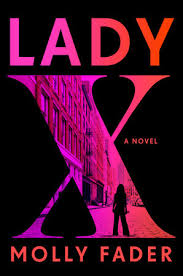
Book: Lady X Author: Molly Fader Publisher: Ballantine Books Year: 2026 Rating: 5 out of 5 stars
Synopsis : “Los Angeles, 2024 Margot Cooper’s life explodes after she discovers that her A-list actor husband sent explicit photos to multiple girls on social media. Desperate to get away from the world – and the paparazzi – Margot flees to her childhood home, with her teenage daughter in tow. But home isn’t the sanctuary Margot was hoping for. In a cardboard box in the corner of the attic, she and her sister find damning evidence about a mysterious vigilante named Lady X, including a blurry newspaper photo from the 1970s of a woman who looks an awful lot like their mother. It turns out that Margot’s husband isn’t the only family member harboring secrets. New York City, 1977 Ginger Daughtry is living her best life with her two beloved roommates, until one of them is assaulted. Astounded by the lack of response from the police, the young women take things into their own hands and find themselves igniting a movement that suddenly takes New York City by storm. Soon what began as a little bit of revenge against terrible men – vandalism here and there, singed collectively as Lady X – starts to take on a life of its own. Their enigmatic reputation spirals beyond their control with copycat criminals running amok under the guise of the enigmatic Lady X. When a body is found fallen – or pushed – from five stories high, the hunt reaches a boiling point. But Lady X has vanished into thin air.”
Review :Lady X is not for everyone. Lady X is a novel full of thick, intoxicating, divine rage that fills your chest cavity, runs down your fingers, and sizzles off your skin as you recount the statistics of women who will be assaulted by men in their lifetimes; as you field yet another “you should smile”; as unwanted fingers run up your arms and legs to touch tattoos without consent; as you recall being asked, by a man, if you’re on your period. It’s the rage of thousands of years of patriarchy; the idea that feminism somehow has nothing to do with global atrocities, and being told that it’s worse somewhere else, so you should be grateful. Lady X is a heralding beacon in a bleak, dark, inky black night sky. It’s timely in a way that this subject will never not be timely without radical, dramatic, civilization altering change – it’s pointed, it’s aggressive, it’s feral, and yet it’s deeply soft, prodding the softness of your humanity and heart with fingers that gently turn your head and say “don’t look away”.
Lady X is a vigilante masterclass on how meekly our culture has shifted over the last fifty years, revealing the dark truth that while women have only had access to bank accounts and credit cards without their husband’s approval since 1974, the culture of men doing so much more than taking advantage of women has hardly changed in all that time. While the culture has certainly shifted, at least in part thanks to #metoo, the truth is that women still make a fraction of what men make in the workforce, are continuously being legislated against, often without exception for medical emergencies or anomalies, and still face the backroom absurdities and assaults that happened in the 70s. Only now, with a president who has openly spoken (and been found guilty of!!) about assaulting women; with younger generations of young men coming into the political field with open misogyny and a bloodlust for the voting rights and the bodily autonomy of women. Molly Fader has perfectly encapsulated the energy that sizzles and dances through every person who has ever been assaulted or harmed at the hands of men who have let their belief in male superiority take complete control. She’s written a novel that hits the button labeled “Rage” that sits in the very center of my chest and flung it right where it hurts. And it’s perfection.
Written between the perspective of Ginger Daughtry in 1977 and her daughter, Margot Cooper in 2024, Lady X jumps between narratives with ease, only ever leaving me frustrated at critical points in the story arc. The unfolding mystery of who Lady X is and what might have happened to her is a thread tying two generations of women together as they simultaneously navigate what it’s like to live in a world where men take and take and take. And before you get upset at how misandrist this sounds, Lady X is the perfect embodiment of the understanding that while not all men are the cause of assault, all women have been or know someone who has been assaulted by a man. Lady X became a folk hero, during a time when New York City was embroiled with the Son of Sam, labor shortages in the police force, and a rolling, city-wide blackout. Created perfectly to fit into our real world, Lady X could have easily come to fruition in real time in 1977, or 2024, or 2025. Lady X became a vigilante figure who gave entire groups of people, not just women, the sense that they could speak up, they could point the finger at their abusers, those who have continuously gotten away with cruelty, and that they could enact real change that might make the world a better, softer place for themselves and other marginalized folks.
Fader has created a world that feels so real, that speaks so pointedly to the time we’re living in and all that’s come before us to get us to where we are, that she goes so far as to write in a Lady X campaign that, fictionally, took place during Trump’s second inauguration. It was so pointed, so necessary, so perfectly, seamlessly correct for the time that I found myself weeping. This is not for everyone. It’s for those who have a belief that a better world could exist, those who dream of a matriarchy, of a third way forward, those who have been hurt and know people who are hurting, and those who wish, desperately, for there to be some small measure of justice in this world. Or, maybe not so small justice. Lady X is a guttural scream in the night, a shattering of that hard exterior shell that keeps you safe and looking the other way, it’s our survival instinct screaming, crying out that yes, this is how it changes.
Advice : I would be remiss not to mention content warnings before sending you to the bookshelves in May 2026. Lady X mentions sexual assault, rape, physical abuse, battery, police brutality, harassment, stalking, catcalling, solicitation of a minor, sexual exploitation, cheating, and vigilante violence. That being said, if you feel you can read the above list in a safe way, this book is an excellent read and perfect for anyone who would like to see the bad guys get what’s coming to them. I flew through this one and found it to be utterly unputdownable. I highly recommend pre-ordering it.
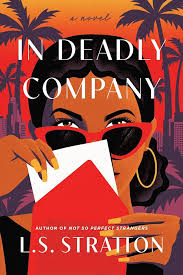
Book: In Deadly Company Author: L.S. Stratton Publisher: Union Square & Co. Year: 2025 Rating: 4 out of 5 stars
Synopsis : “As the assistant to the CEO of a Fortune 500 company, Nicole Underwood has plenty of tasks on her to-do list – one of which is the blowout celebration for her nightmare, on-percenter boss, Xander Chambers. But when the party ends in chaos and murder and Nicole is one of the survivors, suspicion – from the investigators to the media – lands on her. Was she the reason for all the bloodshed? A year after those deadly events, Nicole tries to set the public record straight by agreeing to consult on a feature film based on her story. However, while on set in Los Angeles, she’s sidelined by inappropriate casting and persistent, bizarre script changes – and haunted by persistent visions of her now-deceased boss. It seems clearing her name ins’t so simple when the question of guilt or innocence is…complicated.”
Review :In Deadly Company is an enjoyable, inventive, and easy to read thriller with a truly unique plot that doesn’t fall into the trap of the unreliable female protagonist trope so many thrillers seem to adore. It’s well written, quick moving, and leaves you guessing all the way until the end. While I did find the final reveal to be a bit obvious and contrived, it was still fun to get there in the end. I thoroughly enjoyed this read, found myself wanting to slow things down so it wouldn’t end quite so soon, and have been chewing it over since I finished it yesterday – all hallmarks of a good book.
The narration jumps a bit, and doesn’t hold fast to a set-in-stone pattern which I found to be unnecessary, but provided some texture and certainly helped give context to the way events played out. Between Nicole’s present day and her past, we watch the fateful events of her boss’s birthday party unravel, not only the alluded to murders (yes, plural), but the behind the scenes goings on in Nicole’s personal life that we are only granted glimpses of throughout the book. In the present, Nicole is watching and “consulting” on the movie retelling of the events of her boss, Xander Chambers’ birthday – she wields almost no say in how the story gets told, but she’s been hired by the production team and so she’s there, on set, watching the events play out once more despite very clearly having PTSD. In the past, we simultaneously watch the events play out in real time, catching little bits here and there that might reveal who ends up murdered and why, but never enough to fully catch on to the carnage that would eventually play out by the time the birthday weekend was over.
This review will be short and sweet, nearly anything else I have to say would include spoilers that might truly wreck the ending for you, so I’ll leave things where they are. I will say, however, that I wish the ending had taken a slightly different turn – without giving you the details, you’ll have to read those for yourself, the final twist at the end felt contrived and forced, giving the power of the novel a bit of a lackluster finish. It didn’t feel well thought out, but it did feel a bit messy. Things could have tied up in a nicer way, been a bit less all over the place, and not included one of the most obvious plot twists in history. Okay, that’s all. If I say more, I’ll spoil it for you!
Advice : This was such a fun read! If you’ve been disillusioned by thrillers written from a female perspective, I think you should really give this one a shot! Be warned, there are graphic descriptions of blood, gore, and death; the author describes PTSD flash backs; and there’s mention of the date rape drug as well as what happens when it’s used.
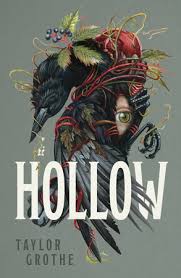
Book: Hollow Author: Taylor Grothe Publisher: Peachtree Teen Year: 2025 Rating: 3 out of 5 stars
Synopsis : “After a meltdown in her school cafeteria prompts an unwanted autism diagnosis, Cassie Davis moves back to her hometown in upstate New York, where her mom hopes the familiarity will allow Cassie to feel normal again. Cassie’s never truly felt normal anywhere, but she does crave the ease she used to have with her old friends. Problem is that her friends aren’t so eager to welcome her back into the fold. They extend an olive branch by inviting her on their backpacking trip to Hollow Ridge, in the upper reaches of the Adirondacks. But when a fight breaks out their first night, Cassie wakes to a barren campsite – her friends all gone. With sever weather approaching and nearing sensory overload, Cassie is saved by a boy named Kaleb, who whisks her away to a compound of artists and outcasts he calls the Roost. As Kaleb tends to her injuries, Cassie begins to feel – for the first time in her life – that she can truly be herself. But as the days pass, strange happenings around the Roost make Cassie question her instincts. Noises in the trees grow louder, begging the question : Are the dangers in the forest, on the trail, or in the Roost itself? In a world where autistic characters rarely get to be the hero of their own stories, Cassie Davis’ one-step-back, two-steps-forward journey to unmasking makes Hollow as much a love letter to neurodiversity as it is a haunting tale you’ll want to read with the lights on.”
Review : This is a strange review for me; I spent the majority of my time reading Hollow absolutely certain this would be a 5-star-review kind of book. It was impeccably written, impossible to put down, and left me with so many questions bouncing around in my mind – waiting, waiting, waiting for the big reveal that would tie things up and explain the nuances and mystery of the book. Sadly, within the last quarter of Hollow, the plot completely fell apart, the twists and turns Grothe had to take in order to explain the strangeness became overly complex, and left me with so few answers I am almost totally baffled as to why and how it ended the way it did. The sharp turn toward confusion is something I’ve been mulling over for two days since reaching the ending and I’m having a hard time coming to terms with this as a purposeful choice and not a mistake in storytelling.
It’s worth saying that Hollow is genuinely so well written for the majority of the story, it’s a dark and winding suspense-filled mystery of a book filled with nuance and palpable anxiety as we experience Cassie’s world both externally as her camping trip goes horribly awry, and internally as we bounce back and forth between flash backs to a bullying incident at her last school and her present internal world as she navigates a new autism diagnosis. Hollow as a whole is a beautiful metaphor for the neurodivergent experience of masking, or putting on a face for each set of specific circumstances one might find themselves in during a day-to-day existence. Cassie returns to her hometown after living in the city with her family, following a mental breakdown that lead to an autism and trichotillomania diagnosis. She’s lost touch with her friends and upon returning, in an effort to rekindle their friendship, she’s invited on their annual backpacking trip into the Adirondack Mountains. Everything seems fine, at least on the surface, until the first night of their trip leads to too much to drink, blacking out, and waking to find half of her friends have left the group behind. With an imminent storm approaching, Cassie leaves the campsite behind to find and rescue her friends before something terrible happens. It’s during her initial panic as she searches for the rest of her group that Cassie stumbles, spraining her ankle, and finds herself being rescued by a strange boy she’s never seen before – Kaleb. This is where things begin to take a strange turn.
Kaleb and his mother Stasha live in a remote part of the mountains in a small, off grid community called the Roost. It’s here that Cassie is allowed the space to rest and recover while the storm rages around them, taking a break from searching for her friends until the storm passes and they can get radio signal to the rangers down the mountain. Within the Roost are several families, most of whom have stumbled across the community and have chosen to stay, each living in a small home that seems to have been built by Kaleb’s parents. While staying at the Roost, Cassie discovers that there’s a secret language everyone speaks, some strange mixture of different dialects and languages from across the globe. The members of the Roost seem pleasant, though there’s never quite a sense of ease, as they continue to speak in a foreign language Cassie is unable to get a grasp of, and the books are all written in some unknown tongue she’s equally unfamiliar with. Kaleb continuously tells Cassie how unfair it is that her friends have left her on the mountain to fend for herself and says repeatedly that they’ll have to pay for what they’ve done, which gives a nice sinister backdrop for the scene Grothe has created. While in the Roost, Cassie begins to notice that there are carved wooden dolls…everywhere. They seem to surround the Roost, filling buildings with their haunting, carved faces, peering down from rafters, and generally giving an air of strangeness to the entire community. There are so many instances like this where Grothe is clearly making a point about neurodivergence, the way humans interact with a known dialect and jargon that doesn’t always reach the people who might stand on the fringes or feel as though they can never quite get a foothold in with those who so easily adapt. There’s a profound message of accessibility and acceptance within this storyline, but there’s also a lot left to be desired when it comes to unfolding the story outward into an ending that makes sense.
*Spoilers Ahead* As the book begins to really unravel at the end, so much comes to light about the Roost and the community of people who live there – really driving the point home that Cassie has simply never felt as though she belong, that in wearing a mask she’s as wooden as the dolls who surround the compound. The masks neurodivergent people are often forced to wear are ill fitting and a source of tremendous discomfort and I think Grothe does so well in addressing this concept with simultaneously creating a super creepy drama through which it might unfold. It’s how things come apart at the end that really left me struggling for answers; as Cassie finally starts to put the pieces of the Roost’s strangeness together, she realizes (too late) that Kaleb is actually her good childhood friend, Blake. Yet, in all the time she’s spent at the Roost – and this is another issue I find with the actual storytelling of the book, as the time she’s spent there seems to range from a week to several months with zero explanation beyond perhaps some kind of magic?? – she never once recognizes Kaleb as Blake, literally one of the friends on her camping trip. And not only that, somehow Kaleb / Blake is supposed to have created the entire Roost on his own, carved all the members of the community, and also kidnapped several hikers? Over the course of how long? The time frame, the inexplicable inability to recognize even Blake’s voice or mannerisms or scent (which she mentions multiple times), and the complete lack of explanation for all of the above lead the ending of the book to ultimately fall to pieces on top of a well written few hundred pages. I think there’s a singular moment early on where Cassie mentions briefly that she’s been diagnosed with face blindness, which I think might explain being unable to recognize Blake as Kaleb on it’s most base level, but it’s never mentioned again and without working a little harder to tie things together, it feels loose and confusing at best.
The unknown language spoken in the Roost and the unfamiliar written language in the books are never really explained, and while I can appreciate that the spoken language serves as an analogy for how Cassie feels disconnected from neuro-normative folks, the written language being something totally foreign to her feels like an aspect of the book that was written initially and then forgotten about when it came time to wrap things up. The ending of the book is unclear, deeply confusing, and left me with more questions than answers, which is an unsatisfying way to end a suspenseful, magical novel. I really do appreciate the parallels Grothe draws between those who stand on the fringes of the world and Cassie’s experience at the Roost, I love that Cassie was written to give neurodivergent individuals a place to be the hero, but I don’t know that it was completely successful when everything was all said and done. Cassie spends a lot of time back-and-forthing between staying in the Roost and leaving, even when her friends are dying around her, so much so that it felt as though the point was being made, mistakenly, over and over and over again. It felt like Grothe was hammering it home a little too hard, and in doing so neglected wrapping up crucial elements of the plot. I wanted to give this book 5 stars so badly! I wanted the ending to be better than it was, to make more sense than it did, and to give more of a feeling of completion than I was left with. Sadly, the ending spoiled most the book for me and I had to go with 3 stars. I think there’s room to figure things out and make it make more sense, but I also think it’s not super likely to happen at this stage and I’m sad for that and for Cassie’s story.
Advice : I think this book had a lot of potential – if you like crows, if you like something vaguely sinister, if you want to see a neurodivergent person be the hero, wow! You’ll definitely have something to dive into with Hollow. However, I want to recommend that you don’t get your hopes up for the puzzle pieces to fit together at the end – they don’t. This one might be best checked out from your local library first.
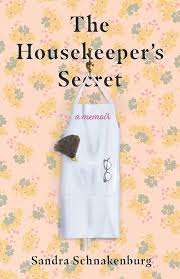
Book: The Housekeeper’s Secret Author: Sandra Schnakenburg Publisher: She Writes Press Year: 2025 Rating: 3.5 out of 5 stars
Synopsis : “A catholic family in 1960s Chicago headed by a narcissistic and demanding father takes on Lee, a housekeeper with a mysterious past. Lee becomes like a second mother to the Krilich children, especially Sandy. After Lee’s death, Sandy begins a determined quest to find out her dear friend’s backstory – and proceeds to uncover one shocking fact after another, even as the story of her own family drama, and the heartwarming role Lee played in the Krilich’s lives, unfolds.”
Review : While this book’s title and synopsis might lead you to believe the entirety of the novel will be spent uncovering a housekeeper’s secret(s), the truth is only about 20% of the book was spent actually delving into Lee’s past. While I don’t particularly think the information Schnakenburg was able to gather about Lee, her beloved housekeeper, is broad enough to fill an entire book, I do find it hard to wrap my head around how little of the book was actually devoted to Lee’s life and how much of it was devoted instead to our writer. I don’t find this problematic as far as storytelling goes, Schnakenburg, nee Krilich, had an extraordinary childhood filled with trauma, neglect, abuse, and a near fatal accident – but the title of the book is The Housekeeper’s Secret and we didn’t begin to dive into Lee’s secret until the book was nearly over. The title and the content didn’t match up.
Like I said, though, I found the story of Schnakenburg’s upbringing to be enough to keep me turning pages, wanting to know how things would evolve in the lives of Sandy’s family members, forced to endure a grueling childhood with a demanding and demeaning father with a roiling anger problem and no regard for the wellbeing of anyone in his path. I found Schnakenburg’s portrayal of her father to be quite interesting – in fact, I believe her storytelling of his abuse throughout her childhood to be far too lenient and more forgiving than I would hope. We spend, as I mentioned, about 80% of The Housekeeper’s Secret growing up with Sandy in a hellish nightmare world of a home, growing with her from the time she’s no more than a toddler until she’s an adult with children of her own. It’s throughout this memoir-like progression that we come to find Sandy’s relationship with her father, and the relationship he shares with her 5 additional siblings and mother, is strained at best. He is, to put it bluntly, a menace. Demanding 7 different types of juice each morning, forcing Schnakenburg’s mother into situations that endanger her life (more than once), forcing a six-year-old to utilize hedge-trimmers with zero supervision, and having a second family are only some of the stories we read in this book – it is well and truly a nightmare. And yet, Schakenburg attempts to humanize her father, explaining that he suffered the loss of a childhood friend in a drowning accident, as if this singular trauma might explain the evil that he unleashed upon his family; it’s particularly glaring when you consider that Schakenburg’s mother suffered from a terrible fear of drowning, so much so that she never learned to swim, and her husband forced her onto multiple boating trips, one in which the threat of drowning was quite real when their boat suffered damage and began to take on water.
*Spoilers Ahead*
When we do finally make our way to Lee’s story, a story she told the children for years she wanted to write (but spent no time actually writing down, nor telling to anyone to transcribe), the story we end up with is one of tremendous tragedy, horror, and loss. It is hard to endure, yet necessary to read. Lee, a Black woman growing up in the 1940s, was brutally attacked, beaten, and sexually assaulted by multiple men while walking to the bus after work. She was left for dead. Because it was winter and there was snow on the ground, she managed to survive the night, but suffered incredibly bodily damage as well as a traumatic brain injury. Being unable to fully recover and in a family that was enduring their own physical ailments and diagnoses, Lee was sent to a sanatorium for care. While there’s significantly more to Lee’s story, I’d like to leave it here and encourage you to read this book if for no other reason than the necessity of hearing a story like Lee’s – a story that deserves to be heard and told. The history of women’s medical treatment is one we should never take lightly, especially as we find ourselves simply not all that far removed from the most egregious “treatment” and experiments performed – often for diagnoses that are now easily managed with medication, therapy, and simple kindness. Women of color, even more so.
I sobbed through Lee’s story, wishing so much that there was more information available, that we could see retribution for the actions of the men in her life who treated her with such unimaginable disregard, wishing Schnakenburg could have dug up and revealed names so we might know them for who they were. It’s the human response, I believe, to reading a story like Lee’s. You want to see justice done, you want to see more come from it than 20% of a book about an abusive father, you just want more. I think it’s commendable that Schnakenburg took up the mantle of this task, but I wish there was less about Schnakenburg herself (perhaps saving it for a separate memoir) and more about Lee. As we meet Lee’s children toward the end of the book, Schnakenburg and her siblings share stories about Lee that were never mentioned at any other point in the book and I can’t help but think this book would have better served Lee’s memory had it included more stories of Lee’s life, even on where she was an employee of a family that was not her own. Schnakenburg dips her toes into the realm of white saviorism at the end, when she learns one of Lee’s children fell victim to the system as an orphaned child born in a sanatorium, suggesting that this child would have been better off in Schnakenburg’s home where her horrifically abusive father ruled with an iron fist of unpredictability. In fairness, I think her intentions were noble in this moment, believing the child would have been better off with Lee, and I agree, but again, I feel she’s been far too forgiving of her father and a bit short sighted, considering how deeply she had previously detailed his abuses. There were moments that left me gasping for air for the sheer horror of it all, moments where I sobbed, and moments where I cringed. Lee’s story is a tragedy that deserves to be heard.
Advice : It’s worth noting that if you choose to read this book it does speak about verbal abuse, emotional abuse, manipulation, gang rape, power dynamics, torture, water torture, sexual assault, traumatic brain injury, a car accident / bicycle accident, and drowning. This book is not for the faint of heart, but if you’re a woman I think it’s a deeply important and impactful story to read.
Book: Boudicca’s Daughter Author: Elodie Harper Publisher: Union Square & Co Year: 2025 Rating: 4.5 out of 5 stars
Synopsis : “Boudicca was an infamous warrior, queen of the British Iceni tribe, and mastermind of one of history’s greatest revolts. Her defeat in c. 60 CE by the conquering forces of the Roman Empire spelled ruin for her people, yet still Boudicca’s name was enough to strike fear into the hearts of her enemies. But what of the woman who grew up in her shadow – her daughter Solina – who has her mother’s looks and cunning and her father’s druidic gifts, but a spirit all her own? Solina’s desperate bid for survival takes her from Britain’s battlefields and sacred marshlands to the glittering facades and treacherous politics of Nero’s Rome, where she must decide what it truly means to be Boudicca’s daughter.”
Review :Boudicca’s Daughter is an intense, 400+ page work of historical fiction that left me crying at times, enraged at others, and sent me down a google rabbit hole to find the truth. In all honesty, I’m not sure where I sit on the fence of historical fiction, and in all likelihood it’s probably closer to the “I’m not sure this is something we should do” side of things than not. In this instance, so little is known about Boudicca’s actual daughters – yes, plural – that the story could be filled in however Harper chose to see fit. It’s an interesting conundrum that a woman who held such a role in history, whose two daughters were deeded the rights to rule the Iceni tribe once their ruling father passed, made so little a mark as to have left two nameless daughters to the annals of time. I appreciate Harper’s work here in bringing these very real people back to life, even if created purely from imagination. We might suppose that some of what came to pass in this book could have been real, truthfully, Harper put in a great deal of work to get the historical facts correct; the rest, however, is mere speculation. While Harper suggests in her letter to the reader that humanity is largely the same even spanning across thousands of years, I suspect she’s written the characters we find here with more grace, humility, and kindness than might necessarily be warranted them.
Boudicca’s Daughter breaches the real world and enters into a historical fiction narrative complete with love, betrayal, and blood sacrifices that play out into the real world. I grew to love Solina, our protagonist, as we encountered her throughout four dramatic stages of her life. My biggest complaint about our time spent with Solina in the Iceni tribe is that so little of the book is spent in such a broad, wild place and so little time is truly spent on Boudicca’s actual assault on the British Empire. Much time passed during this first quarter of the book, yet the way it was written lead me to believe it was short-lived and perhaps even not so wide of a battle – history informs me that by the time the battles were over, nearly 100,000 people had been killed, British and Roman alike. Harper addresses the grey area that a war inevitably brings with it and asks the reader to critically think about who might bear the weight of the word guilty in a time when cultures are combining, the Roman Empire is conquering multiple people groups, and the masses are doing what they must do to survive. Where does the line get drawn and who holds the weight of responsibility for such a line? Can anyone be truly blameless in war or is everyone at equal rights to blame for the bloodshed? Harper weaves a thread of guilt and shame throughout the entirety of this novel, reminding us that the manner of human life is such that nuance is a necessity and survival is often the only option even in a world like Rome.
*Spoilers Ahead* We are drawn through time with Solina following the death of her mother, carrying the belief that she is truly the last remaining Iceni alive in the world; witnessing her ultimate defeat at the hands of a Roman General, Paulinus; watching her eventual enslavement to Poppaea Sabina, Nero’s wife; and finally her escape and eventual marriage to none other than Paulinus himself – her very captor. I struggle a bit to find the nuance between true devotional love and stockholm syndrome, but I do think Harper does the work necessary to convince the reader that Solina is truly in a headspace to care for the man who ultimately enslaved her, sold her to Nero, and murdered her entire bloodline. It’s hefty to put it all out there like that. This is ultimately why I find myself hemming and hawing on the fence of historical fiction, wondering if there’s truly a place for this genre when the pillage and mass murder of an entire people group at the hands of a brutal colonial empire is tamed to such a degree that we find ourselves in a love story between captor and captive. Does this do justice to the reality of the world? Or are we finding ourselves in an idealized version of history that makes people out to be much kinder, gentler, and more loving than the truth of history might reveal? It’s impossible to know, as we may only speculate upon the truth.
Boudicca’s Daughter held me captive for the entire 400+ pages, at no point did I find myself wanting to stop reading. I found myself roiling with rage over the injustices of the time, watching parallels between ancient Rome and our current world unfold, and simultaneously hoping for a happy ending in which captor and captive might live on forever. It’s well written and beautifully researched, weaving enough real history into the fiction that it feels as though it might as well be true, but again, we have to remember that it also, more than equally, is likely not. This is a struggle I seem to find impossible to ignore. At the end of the day, I enjoyed it for the entertainment value, but felt it could have possessed stronger anti-colonizer themes and less blurred lines between love and insufficient power. All told, it felt worth the week it took me to read it.
Advice : It’s worth mentioning that Boudicca’s Daughter talks extensively about blood, both in battle and in ritual, it discusses sexual assault, PTSD, captivity, forced castration, and suicide. I feel strongly that if you enjoy Outlander, you’ll enjoy this read.
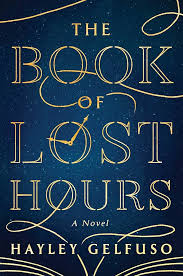
Book: The Book of Lost Hours Author: Hayley Gelfuso Publisher: Atria Books Year: 2025 Rating: 5 out of 5 stars
Synopsis : “Nuremberg, 1938: Eleven-year-old Lisavet Levy is hidden by her father from approaching forces in a mysterious place called the time space, a library where all the memories of the past are stored inside of books. Trapped, she spends her adolescence walking through the memories of those who lived before. When she discovers that government spies are entering the time space to destroy volumes and maintain their preferred version of history, Lisavet sets about trying to salvage the past, creating her own book of lost memories. Until one day in 1949, when she meets an American timekeeper named Ernest Duquesne, who offers her a chance at another life, setting in motion a series of events that puts her own existence – and that of the time space itself – in peril. Boston, 1965: Amelia Duquesne is mourning the death of her uncle and guardian, Ernest, when she’s approached by Moira Donnelly, the head of the CIA’s highly secretive Temporal Reconnaissance Program. Moira tells her about the existence of the time space – accessed only by specially designed watches whose intricate mechanisms have been lost to history – and enlists her help in recovering a strange book her uncle had once sought. But when Amelia enters the time space, she discovers that her uncle may not have been the man she thought – and that the government may have another reason to bring her there.”
Review : Lisavet Levy lives in the Time Space. In the history of time, it seems that no one has ever simply lived in the Time Space – the place outside concrete reality where all memories live and are recorded, where souls who pass go to be placed into books, where our recollection of events are housed. And yet, for over a decade, Lisavet Levy lives within the Time Space. In a world where special watches and only a few select people may generate a doorway into such a sacred place, the governing bodies of countries all across the globe enter and tamper with the Time Space, effectively changing the way people view the world according, literally, to the victor. It’s within the Time Space that Lisavet Levy realizes government agents and soldiers are entering her temporal reality and burning memories, literally destroying the memories of hundreds, if not thousands, of people. In the real world, as a reader, The Book of Lost Hours speaks, at least in part, to the dangers of propaganda and misinformation campaigns. And while we may be in a world without a literal Time Space, nearly one hundred years in the future, the threat of mis (and dis) information looms large. Gelfuso touches on a topic that is near and dear to many of our hearts with her stunning book, reminding us of the importance of preserving the memories of those who perhaps did not fare as well as the victor may have, as we know that indeed, history is written by the victor.
While The Book of Lost Hours is a chilling look into how governing bodies (presidents, say) go about changing and challenging the agreed upon version of events, it is at it’s core a hauntingly beautiful love story that spans not just years and countries, but memories and timelines as well. Lisavet meets Ernest Duquesne in the Time Space and while they court each other in the memories of others, Lisavet begins to change Ernest’s mind about burning and changing the memories of those he’s sent into the Time Space to discard. **Spoilers Ahead** And though Lisavet, as a form of self preservation, must eventually erase all memory of herself and their love from Ernest’s mind, the seed she planted in his mind takes root. By the year 1965, there’s a full-blown revolution occurring within the CIA, even spanning across the globe; soldier’s preserving memories they’d been sent to destroy, thwarting the notion that memories and history must be warped to fit a specific turn of events. Through sheer bad luck and, perhaps, inevitability, Lisavet finds herself captured and under the control of the director of the CIA, Jack, a man who sees her merely as an asset and something to be used to further bolster the American agenda within a growing Cold War. It is outside the Time Space that Lisavet and Ernest meet once again, and again find themselves falling in love – though one of them remembers the past while the other doesn’t.
Jumping between the perspective of Lisavet and Amelia, Ernest’s niece, we piece Lisavet’s story together, from her time within the Time Space to her time spent in the real, concrete world. With several twists and turns that, while easy to spot, don’t detract from the storyline, we navigate a growing divide in the external world and a literal growing chasm in the Time Space, torn apart by Amelia’s mere presence in the world. With just a hint of string theory and quantum physics, The Book of Lost Hours presents a framework whereby we might imagine memories as a collectively agreed upon idea rather than a set in stone foundation of events that well and truly happened. It’s a lot to chew on and offers a unique perspective into the idea of time, memories, and consciousness – all while addressing the very real implications of disinformation. With parallels to our own world, it’s hard to miss the roadsigns. If we aren’t careful, we’ll wrap ourselves up so tightly in a web of lies we’ll never be able to find our way back to the truth again – if we haven’t already.
Advice : This book comes out tomorrow (8/12)!! I think you should grab it. If you enjoy Outlander, time travel of any kind, libraries, and a little bit of science fiction, I think you’ll really love this one. If you’re not interested in a love story, or don’t like books, well, this is probably not for you and what are you even doing on my blog in the first place?
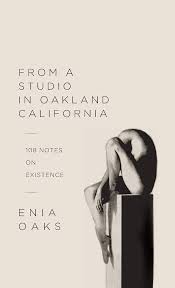
Book: From a Studio in Oakland California : 180 Notes on Existence Author: Enia Oaks Publisher: Self Published Year: 2025 Rating: 3.5 out of 5 stars
Synopsis : “This collection of poems and essays is for those who sit at the crossroads of past and future, wondering which way to turn. Those who have bravely restarted and are building new homes from within themselves. Those who believe in the grand experience of life and living it fully, even when it asks everything of them. Those hurting, healing, or transforming. For the ones who are seeking meaning or a deep exploration of the layers of existence.”
Review : Enia Oak’s debut book, From a Studio in Oakland California : 108 Notes on Existence is not to be read quickly, blown through, or breezed by; it’s made to be savored, slowly devoured, and meditated upon. It does not surprise me one bit to find this book of 108 missives to be a meditation – it’s spiritual in nature. Written in short blurbs, poems, and ideas, FASIOC is filled with logical life advice, imparted wisdom, and personal exploration. It is quite literally packed to the cover with information on how and why and when to grow, on the choices we make as humans, the way we stretch out for someone else to witness our lives, and how we might best look inward to see and gently tend our inner child as fully formed adults.
While Oaks’ synopsis / letter to the reader calls this book a “collection of poems and essays”, I would more likely call this an open letter to someone who’s going through therapy and doing the work to heal. Based on Oaks’ description, I was initially confused by the layout and conversive tone her poems and essays take. They don’t necessarily read as poems, certainly not so when you take the totality of the book under review, but they do read as essays directed toward the reader. Like I said, it reads like an open letter, not like a collection of poems. It really comes down to the naming of the thing, for me – if they weren’t named as poems, I wouldn’t take issue or feel surprised as a reader, but because I was expecting poetry, I found myself a bit taken aback and disconnected as I got into the meat of the book. I do feel that Oaks might have benefitted from a more formal editor / publisher rather than going the self-published route, it’s truly worth mentioning that I have dog eared this book from start to finish. While there are aspects that I feel read in a discordant way, small mistakes, and grammatical errors I wish weren’t included, Oaks has a distinctive point of view that has a place in this world. This book feels important for so many people.
I found Oaks’ work to be most successful in her most experimental forms, where we might call the style a poem (but again, I struggle to view most of these works as poetry), or where the style seems completely unique to the inner workings of Oaks’ mind. Most of the book is written in a direct way to “you”, perhaps at times the reader, perhaps at times the writer, perhaps at times our collective inner child. It’s less a work of interpretation for the reader, and more directions on how to live your life as told by a therapist – of whom Oaks is not, which is worth saying. I found so many pieces of this book aligning with my own lived experience, and while this did not feel profound, it did feel familiar. There were many reasons Oaks’ collection garnered 3.5 stars, but I want to remind you, reader, that that’s more than 50% and I did genuinely enjoy reading this one.
Advice : This book is already available to buy! If you’ve spent time in therapy I suspect you will enjoy this book. If you like a collection of small works that are quick and easy to read at your own pace with no deadline or need to speed your way through, I think you’ll enjoy this.
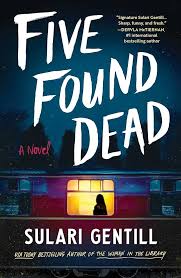
Book: Five Found Dead Author: Sulari Gentill Publisher: Sourcebooks Year: 2025 Rating: 3.5 out of 5 stars
Synopsis : “Crime fiction author Joe Penvale has won the most brutal battle of his life. Now that he has finished his intense medical treatment, he and his twin sister, Meredith, are boarding the glorious Orient Express in Paris, hoping for some much-needed rest and rejuvenation. Meredith also hopes that the literary ghosts on the train will nudge Joe’s muse awake and he’ll be inspired to write again. And he is; after their first eventing spent getting to know some of their fellow travelers, Joe pulls out his laptop and opens a new document. Seems like this trip is just what the doctor ordered… And then some. The next morning, Joe and Meredith are shocked to witness that the cabin net door has become a crime scene, bathed in blood but with no body in sight. The pari soon find themselves caught up in an Agathy Cirstie-esque murder investigation. Without any help from the authorities and with the victim still not found, Joe and Meredith are asked to join a group of fellow passengers with law enforcement backgrounds to look into the mysterious disappearance of the man in Cabin 16G. But when the steward guarding the crime scene is murdered, it marks the beginning of a killing spree that leaves five found dead – and one still missing. Now Joe and Meredith must fight once again to preserve their newfound future and to catch a cunning killer before they reach the end of the line.”
Review : It takes a certain level of gumption to write a new take on a famously done murder mystery, possibly none as more culturally known as Murder on the Orient Express, and while I enjoyed much of Five Found Dead, it simply did not live up to Agatha Christie’s famous work. Gentill, to her credit, does much work to lay a foundation wherein her novel would not simply be a retelling, but a fairly meta mystery involving an author, a couple podcasters, and a whole host of law enforcement attempting to sold a crime all while existing within a world in which Murder on the Orient Express might cloud ones perspective of such an incident. It is from this perspective that the entirety of the book ultimately begins to unravel – there are far too many characters, at least a few of whom we rarely interact with; far too much extraneous story-telling happening, some of which does seem to be an attempt at red herring; and far too many details to make this a succinct murder mystery, or really anything that might ever stand up to Christie’s work. And while I think it might be a bit unfair to compare Five Found Dead with Murder on the Orient Express, it’s also exactly what one asks to be done when writing a book about a murder (nay, murders) upon the very Orient Express Christie herself wrote about.
Joe Penvale, a famous murder mystery writer, has undergone an intense period of cancer treatment and upon finding himself in remission, has taken himself and his sister on the trip of a lifetime : a train ride on the famous Orient Express. Gentill managed to set a perfectly cozy scene aboard the train, and after reading her acknowledgments I can clearly understand why, for she herself endured medical treatments and a ride upon the Orient Express. Her understanding of what sets a cozy scene does feel perfectly in line with what I’d like in a murder mystery, even what I’d like within a locked door mystery, but beyond this scene setting, I found the gross majority of the book to be a conundrum. To begin, while Joe and Meredith are twin siblings with a shared family trauma, I found their relationship to be odd and uncomfortable at times. I’m not sure if they were mirrored after a family relationship Gentill has or if they were simply conjured out of thin air, but I did not find believability within their world in the least. If we can look past the strangeness of their written relationship, we find ourselves enmeshed within a world where Covid still has a grip – I was unable to determine during what time frame this story was set and we are given no clues beyond the fact that Covid is still creating new variants. Is there a new variant ravaging the world? Perhaps this was set a few years ago? Or even 2020? It’s unclear and the answer is never given. ***Any further reading will reveal SPOILERS AHEAD*** There is an entire subplot in which we find several passengers have tested positive for a new and deadly variant, a small detour I believe Christie would have used in her own writing, but nonetheless, without more details I found it to be added confusion in a story that is already more confusing than I necessarily agree with.
Upon awakening after their first night aboard the train, Joe and Meredith find that the man in the cabin next to theirs has been murdered or has at least gone missing. What follows is a strange and chaotic 24-48 hours whereby multiple passengers test positive for Covid, five people are murdered, and at we discover that at least seven of the passengers aboard are members of varying international police forces. We encounter so many needless characters that it quickly begins to feel superfluous and needlessly confusing – I suspect in part at least to mimic Christie’s work, but it simply doesn’t play out in a way that lends any ease to the reader. There are so many side trails and intentional red herrings that by the time we do finally unmask our criminal(s) it feels strange, tangled, and frustrating (which, to my mind, is the exact opposite of what you want from a murder mystery reveal). I will say, I was able to determine fairly easily who the man in the cabin next to the Penvale’s actually was, though this does not mean I was able to determine who the killer was. I warned you, here be spoilers. While I won’t reveal the exact nature of the crimes and perpetrators, I will tell you that in the end, it was anticlimactic and disappointing to find the truth. Not to mention, the final chapter reveals an entire podcast episode whereby Gentill undoes much of the convoluted work she’d laid out for us, creating further confusion and disappointment in the ending. I did not find myself pleased with the end result.
Gentill has managed to create a cozy atmosphere aboard the Orient Express, allowing the reader to feel, truly, as if they were on board themselves. Beyond that, however, I found the work to be needlessly convoluted and had to return to past pages to reread sections that didn’t make much sense. It wasn’t exactly what I was hoping for. The ending left much to be desired, the second ending even more so, and with a cast of characters limited to those aboard a train, I suspect many readers will be able to sniff out at least one of our criminal elements prior to the “big reveal”. To her credit, Gentill, unlike Christie, has given the reader enough breadcrumbs to figure things out on their own (for the most part) and, even if I didn’t agree with how it all turned out, I do enjoy that aspect of things. All in all, it was fine, I felt cozy, but it wasn’t deeply satisfying or even tremendously challenging. Take that how you will.
Advice : You may find this to be a worthwhile and perhaps even enjoyable read if you love the genre and consume anything you can within it. However, I suspect you will be comparing it to Christie’s works along the way and in that respect, you may not enjoy it at all. It’s 50/50 – maybe check it out from the library before committing to buying. Happy sleuthing!

 Paige Reviews Books