Junkyard Dogs Review

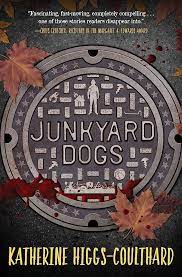
Book: Junkyard Dogs
Author: Katherine Higgs-Coulthard
Publisher: Peachtree Teen
Year: 2023
Rating: 5 out of 5 stars

Synopsis: “Josh’s father has gone missing without a trace. Now Josh and his 9-year-old brother, Twig, are stuck living with Gran in her trailer. Problem is, Gran didn’t ask to take care of any kids, and she’s threatening to call social services unless Josh can find his dad. After paying off his Gran to take in his little brother, Josh risks truancy and getting kicked off his basketball team to take to the streets and hunt for his dad. But when Josh digs too deep, he suddenly finds himself tethered to a liminal scrapping ring that his father was accomplice to. If Josh wants to keep Twig out of the system and return to some sense of normal, he’ll have to track his dad down and demand honest answers.”

Review: Set in a town not all that far from where I’ve lived, Junkyard Dogs feels eerily close to home. Set in South Bend, Indiana, this book tells the story of a pair of brothers experiencing houselessness during a brutal midwest winter. As I was on my way to a coffee shop to write this review, in fact, I passed a billboard that said 7,800 youth and young adults in my town would experience houselessness this year alone. It hits close to home in more ways than one.

Coming from the midwest herself, Higgs-Coulthard hits the nail on the head with her depictions of this part of the country, including how easy it is for many living in a semi-large city to absolutely miss the fact that so many of it’s residents are struggling and just barely scraping by. While this story centers around one particular incident with Josh and Twig, as Josh reminisces about the past with a mother who died when he was young and a father who ran a junkyard during Josh’s formative years, it’s clear that the blurred lines between temporary housing and houselessness are grey at best. This is a liminal space of transience, shifting from a junkyard house on the brink of condemnation by the city to a trailer owned by their Gran to an abandoned warehouse, to tent city under an overpass, to no shelter at all, we see all the ways in which someone without stability grapples to survive in a world that requires a lot of money and connections to get by.

Junkyard Dogs is somewhat infuriating in that as readers we’re privy to all the ways in which the world beats Josh down; from his Gran telling him he’s garbage and worse on a daily basis, to his dad who runs off early on in the book without even leaving Josh with enough money to pay for rent to keep him and his little brother housed at his Gran’s trailer, to the shelter that requires an adult for any minor to eat. It’s hard to read at times.

I think Higgs-Coulthard has created a book that’s deeply human, moving, and gripping; emerging us in a mystery that takes an entire book to unravel completely. While I was able to figure out the central twist pretty early on, I don’t think it ruined the book in any way, and I sort of suspect that Higgs-Coulthard meant for her readers to grasp the twist at least part way through the plot. While this book does end with a pretty neat ending that I think is unlikely to be reality for most unhoused youth, making it pretty unrealistic in my opinion, I did enjoy the way in which she chose to end the story. It isn’t easy, but it’s certainly the best case scenario. I think the book could have been more impactful by being more realistic in it’s ending, but I also think as a young adult read it almost demanded a hopeful ending. It ends by giving us some sense of hope for humanity, hope for the way people experience each other, and hope for the empathy the world might bestow upon people who are down on their luck.

Advice: If you are empathetic at all, this may very well not be a book for you, particularly if you don’t enjoy crying over books. If you enjoy a book with a hopeful ending, with hope for a better future in spite of a tough start, this might be the book for you! If you enjoy stories about real things, about real problems that impact real people, this is probably a great place to start.

Witch King Review

Book: Witch King
Author: Martha Wells
Publisher: Tor
Year: 2023
Rating: 5 out of 5 stars

Synopsis : “Kai-Enna is the witch king, though he hasn’t always been, and he hasn’t even always been Kai-Enna!

After being murdered, his consciousness dormant and unaware of the passing of time while confined in an elaborate water trap, Kai wakes to find a lesser mage attempting to harness Kai’s magic to his own advantage. That was never going to end well.

But why was Kai imprisoned in the first place? What has changed in the world since his assassination? And why does the Rising World coalition appear to be growing in influence?

Kai will need to pull his allies close and draw on all his pain magic if he is to answer even the least of these questions.

He’s not going to like the answers.”

Review : Martha Wells is no first timer at the fantasy rodeo, her list of past works spans an entire front page in Witch King, including several long-term series, and honestly you can tell this is the work of a person deeply familiar with the inner workings of creating a successful fantasy world. It was a joy to read.

Like many of the advanced reader copies I receive, Witch King came with a little letter from the author. In it, Wells explains her motivation for creating this book: it was conceived in the early months of the pandemic, attempting to visualize what it would look like to see a “conquering genocidal attacker” ultimately defeated by an uprising of ordinary people (or semi-ordinary). She wanted to visualize what that world would look like during the attack and several decades later, hence the perfect setting for a fantasy novel full of immortal beings and beings who can live incredibly long lifespans.

Witch King is written from a singular point of view, but it’s told by jumping back and forth between the present (several decades following the defeat of an attacker) and the past (during the actual uprising). Kai-Enna is an immortal underworld demon prince inhabiting a mortal body, the only way he is able to exist in the upper world. Thanks to a treaty that his half mortal-half immortal grandmother brokered between the Grass Kings, a nomadic people group in the upper world, and the demons of the underworld, Kai is able to partake in a sacred ritual that allows him to enter into a recently deceased mortal body. This ritual allows the loved ones of the deceased to hear the final thoughts and words of their beloved while also giving them a demon who will both learn the ways of the upper world in order to fully understand and appreciate mortal life, and bring protection to the clan they’ve entered into a relationship with. Because Kai is still a demon, he will be able to live as long as he pleases inside a mortal body without being wounded thanks to his ability to heal inordinately fast, and the only real give-away that he isn’t mortal are his all black eyes.

Kai is still a young demon (and living in a young mortal body) when the Heirarchs, a ruling class of people from an unknown land, take over and conquer the known world. The Grass Kings fight back, but being a nomadic group of people, they are unaware of the reach the Heirarchs have, the weapons they’ve acquired, and the magical tools at their disposal. The Heirarchs, unbeknownst to Kai or his mortal family, have a super weapon that can knock the life out of a mortal and inflict incredible pain on an immortal, allowing demons to be captured and imprisoned.

*Spoilers Coming*

Wells returns us to these moments of war throughout the book, jumping back to Kai’s former body, his former life, and his fight to overturn the Heirarchs. In the present moment, some 60 years in the future, we see that the Heirarchs have been defeated, the passage from the upper world to the underworld permanently blocked, and Kai, though a demon, is referred to as the Witch King. As the book begins, we find Kai’s consciousness awakening outside of a deceased mortal body he’s been occupying for several years – no longer the young body of the Grass Kings. His body has died, but he has been imprisoned in a tower of water, the only real achilles heel for a demon. Because of this prison, he’s been in a suspended state, unaware of how much time has passed or where his friends and chosen family are located. We spend the rest of the book reuniting this family and seeking the remaining members who have gone missing, all the while eerily retracing his steps from the past when he worked to defeat the Heirarchs.

Wells has created a book that functions on multiple fantasy levels; it can be read alone, it ties up nicely in the end, and we get to see how Kai defeated the Heirarchs in the past, and worked to defeat a growing world alliance that’s attempting to create an empire in the present; I believe it will also function as an excellent book one of several and I look forward to seeing where Wells goes in the future. And I hope she does, because while this book didn’t end on a cliffhanger or leave you wishing for more of the story, there are pieces and parts of the past that remain untold, certain adventures to be had now that the family is reunited, and we make it to the end of the book without finding out definitively how Kai came to earn the monicker “Witch King”. While it can be inferred, I’m craving the full story and I have hope that Wells will add another book to this title and make it a series.

Advice: If you love fantasy, if you enjoy getting wrapped up in a world of unearthly creatures, if you love an excellent retelling of past events, this is it. It’s well written, it’s easy to understand, and it resonates with current events without being in your face or even hard to read. This book uses gender-neutral pronouns for several characters without being fussy about it and exhibits a great deal of inclusivity as well, making it a must read for so many reasons. I highly recommend it.

The Carrefour Curse Review

Book: The Carrefour Curse
Author: Dianne K. Salerni
Publisher: Holiday House
Year: 2023
Rating: 3 out of 5 stars

Synopsis: “Twelve-year-old Garnet doesn’t know her family. Her mother has done her best to keep it that way, living far from the rest of the magical Carrefour clan and their legendary mansion known as Crossroad House.
But when Garnet finally gets summoned to the estate, it isn’t quite what she hoped for. Her relatives are strange and quarrelsome, each room in Crossroad House is more dilapidated than the last, and she can’t keep straight which dusty hallways and cobwebbed corners are forbidden.
And then she learns a terrifying secret/l the dying Carrefour patriarch fights to retain his life by stealing powers from the others. Every household accident that isn’t an accident, every unexpected illness and unexplained disappearance grants him a little more time.
While the Carrefours squabble over who will in heritage his role when (if) he dies, Garnet encounters evidence of an even deeper curse. Was she brought to Crossroad House as part of the curse…or is she meant to break it?”

Review: I don’t often read middle grade novels, but this looked too cute to pass up! I clearly didn’t retain the synopsis because when I found out our protagonist, Garnet, was 12 (about 3/4 through the book) I was shocked. While The Carrefour Curse reads like a mid-grade novel, Garnet reads as much older than 12. But, this could be how little I read books in this realm!

As the novel begins, we find Garnet in a very wizard-with-a-lightning-bolt-scar predicament: she’s spitting up frogs and has no idea how to reverse the effects of whatever has gone wrong. We find her riding in the car with her mother, Emerald, getting closer and closer to the old family home, Crossroads House. Convinced that this is a summoning spell gone wrong, Emerald brings her daughter to the family home she’s never before allowed her to visit, in the hopes that this will satisfy a magical spell she believes her siblings and cousins have placed on her daughter. As it turns out, the family has been experiencing their own fair share of mystical conundrums and once Emerald and Garnet arrive at Crossroads House, they find they cannot leave without experiencing some kind of physiological distress.

As the story progresses, we begin to get glimpses into a murky past that only Garnet is privy to. While each member of the Carrefour family has their own magical powers, Garnet’s are beginning to awaken now that she’s in the vicinity of the home. She’s always had a special connection to the element Earth, but the more time she spends at Crossroads House, the more she comes to realize that she can also see and walk in the past; a time traveler. It is this special gift that allows Garnet to begin to unravel the mystery of the old house, the original location of Crossroads House, believed to be built directly on top of magical lay lines. The current house sits off from the old ruins, as anyone who goes near the old house mysteriously vanishes. It soon seems as though Garnet is the only person who will be able to release the curse, and with it the missing people.

Salerni does a good job of creating a magical world in Carrefour Curse, she lays out the family tree in a way that’s easy to follow in spite of the fact that it spans multiple generations and several of the family members share the same name. I think it’s no small feat to not only make a confusing and convoluted family tree seem manageable, but to also take a mansion and make it’s layout feel understood. It’s helpful, of course, that she included both a house layout and a family tree in diagram form in the book, but I think, especially for a younger audience, this could have gotten confusing quick. It’s easy to step into this book and find yourself comfortably in the world Salerni’s created and I think that’s a huge positive!

The book itself feels like it misses a lot of opportunities for connections to be made, which on a positive note makes it harder to predict, but on a negative note makes it feel a bit frustrating at times. Salerni brings things up that you think will play out in a certain way based on context clues, but we find them unused pieces of information that don’t necessarily go anywhere. I think there’s some work that could have been done here to make the book even better, more rounded, and solid – for me. But all in all, it’s a fun and enjoyable mid-grade read with an ending I thought made sense, and that’s sometimes all you can hope for.

Advice: If you’re looking for a book that has a clearly built magical system in place, that feels light and fluffy to read, and that won’t make you frustrated, this is it! It’s a great read for a snow day in, it’s nice a quick, and it’s a good breather from other, more intense fantasy books. All around enjoyable and cute.

Sister, Maiden, Monster Review

Book: Sister, Maiden, Monster
Author: Lucy A. Snyder
Publisher: Nightfire
Year: 2023
Rating: 5 out of 5 stars

Synopsis: “A virus tears across the globe, transforming its victims in nightmarish ways. As the world collapses, dark forces pull a small group of women together.
Erin, once quiet and closeted, acquires an appetite for a woman and her brain. Why does forbidden fruit taste so good?
Savannah, a professional BDSM switch, discovers a new turn-on: committing brutal murders for her eldritch masters.
Mareva, plagued with chronic tumors, is too horrified to acknowledge her divine role in the coming apocalypse, and as her growths multiply, so too does her desperation.
Inspired by her Bram Stoke Award-winning story “Mandala Amygdala”, Lucy A. Snyder delivers a cosmic tale about the planet’s disastrous transformation…and what we become after.”

Review: I’m going to do something I haven’t done before, I’m going to give a book I didn’t like 5 full stars. I did not like this book. It was weird, it was graphic, and it was dystopian which is absolutely not my favorite. But! But. It was well written, it unraveled at just the speed you’d hope, and it was entirely unique. You could not have predicted this book if you’d tried, and anyone who says they could is lying.

I was pretty apprehensive about reading a book about a pandemic; frankly I don’t think we’re far enough removed for a storyline about a world-wide virus to have any impact on me other than pure horror. Granted, I do think this book was dystopian horror novel, so perhaps my initial reaction was exactly as it should have been. Snyder does reference the current pandemic as a thing of the past, so the timeline for this novel is at least a few years or possibly decades in the future, though it could have taken place in our current reality based on the technology available. There are aspects of the virus in this book that have stuck with me and continue to feel frustratingly gross to think about, but I always say that the mark of a good book is that I continue to think about it long after I’m done reading it, so yet again I feel compelled to say that this book was good, just not for me.

I think, perhaps, the best and most accurate way to sum up this novel is with a quote Snyder leaves at the end of her acknowledgements, an excerpt from an editorial acceptance of her original short story “Mandala Amygdala” : “Lucy, what the fuck is wrong with you? Good grief that story was messed up. Thanks. I think.”

Sister, Maiden, Monster is told through the perspective of three different women, each being given one third of the book’s narrative. I initially thought I didn’t particularly like the way the story was told when Erin was the narrator, being the first. As the perspective shifts, though, to Savannah, I quickly realized Snyder had deftly used Erin’s voice to be the every-man of the story. Each point of view through each woman was completely different and served to move the plot forward, but perhaps the thing that was most impressive (and maybe it shouldn’t be, but it’s simply not always a given) was that each narrator had their own voice. While Erin’s was mundane and maybe even a little bland, Savannah’s was full of excitement and intrigue, telling her tale with zest that Erin lacked. As we made our way to Mareva, we encountered a scientific and logic-minded narrator who’s point of view varied so much so from Erin and Savannah’s that there was no missing the foil.

As the world roils from a plague that looks eerily like a vampire / zombie crossover virus, things start to change in strange and confusing ways. We see these changes first through the eyes of Erin, an infected survivor of the virus whose long haul (so to speak) symptoms require the consumption of brain matter to ensure her survival, making her a type 3 of 5, the rest of whom either never survive or require blood; then through the eyes of Savannah who begins to receive messages through her dreams from old gods she finds unfamiliar and strange, giving her just enough information to work with but not enough to reveal the final aspects of what this plague would do to humanity.

Just when you think you’ve got the plot figured out, Snyder goes and changes something in the weirdest and strangest ways all the way through to the very end of the book. I can’t even say that nothing is as it seems, because everything is as it seems, but how it seems is confusing and strange and twisted. I will say, not everything is revealed, and it unfolds slowly through each of the three women. We find ourselves at the end of the book with some answers, but not all. And while this lack of answers can often leave me feeling annoyed or frustrated, here it works. Nothing makes sense because none of what’s happening is familiar, so any unanswered questions are done so purposefully, rather than neglectfully. Snyder leaves ends untied and questions unanswered, and we get to speculate for ourselves. I suspect anything I might come up with in my mind would pale in comparison to anything Snyder could write.

Advice: “Sister, Maiden, Mother” is a truly graphic telling of an eldritch horror, ten times worse than anything Lovecraft himself could have thought up. It is not for the faint of heart, nor for anyone who may be squeamish in anyway, those who do not enjoy dystopian novels, or anyone who feels grossed out by the idea of a worldwide virus. If, however, you enjoy a truly unique, surprising, or even gross novel that’s written so well the only flaw you can find with it seems too minimal to mention, and you kind of relish the idea of looking at roadkill with curiosity, this may very well be the book for you.

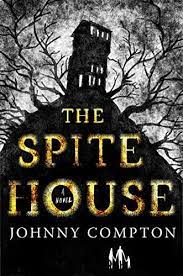
The Spite House Reveiw

Book: The Spite House
Author: Johnny Compton
Publisher: Nightfire
Year: 2023
Rating: 4 out of 5 stars

Synopsis: “Eric Ross is on the run from a mysterious past with his two daughters in tow. When he comes across a strange ad for the Masson House in Degener, Texas, Eric thinks they may have finally caught a lucky break. The “most haunted place in Texas” needs a caretaker. All they need to do is stay in the house and keep a detailed record of everything that happens there. Provided the house’s horrors don’t drive them all mad, like the caretakers before them.
A terrifying Gothic thriller about grief and death and the depths of a father’s love, Johnny Compton’s The Spite House is a stunning debut by a horror master in the making.”

Review:

The Spite House is Johnny Compton’s first novel and does a heck of a lot of work to lay the foundation for further moving novels in the future. While this book may not lend itself to sequels, the heart of the book gives me great hope for future works by Compton. Though the synopsis refers to this work as being about the “depths of a father’s love”, I think this book does so much more than that – I’m not sure it’s the theme I would point out for a review. This book is about the spite that drives and fuels us; the privilege and rage that keep us embittered and sour; the fear that turns each day into a waking nightmare of our own creation; perhaps this book is even about generational trauma that, when left unattended, may slowly poison an entire town. Yes, a father’s love knows no bounds, and Eric Ross, our protagonist, shows us just how far a father will go to protect his children and find answers, but it is not the theme of this book.


I’m finding myself having a hard time reviewing this book without writing what keeps turning into a book report. Due to the sheer strangeness of The Spite House, it’s a little hard to review without getting into the details of what happened. Eric Ross is a protagonist with a secret: when he was a child, he experienced the energetic imprint of a fire that had burned down most of his grandparents house long before he was born. The townspeople grew to have a healthy fear of his grandfather, a man they believed died in the fire and was reborn out of spite. As a Black man in a small southern town, Eric’s grandfather Fred, a man who had a tendency to say the wrong thing around the wrong people, found himself ticking off his neighbors. In the middle of the night, after making the wrong people mad, Fred’s house was burned to the ground by a group of white men from the neighboring town. After passing out in the burning house, Fred awoke to find himself safe, unharmed, and free of the house. The neighbors, rightfully so, began to fear that Fred possessed a paranormal ability to survive. In the years that followed the fire, every single one of the men who set fire to his house all met untimely deaths that could not be connected to Fred. Compton doles out little bits of Eric’s secret throughout the book, unraveling it in the best possible way. Not only do we not know that Eric’s secret runs much deeper than this, we don’t find out the totality of what that secret entails until nearly the end.

I found Spite House to be a compelling read, keeping me guessing through the entirety. It wasn’t predictable, it didn’t pander to the reader, and while it was technically a thriller, it didn’t keep me awake at night either. Compton has mastered the art of suspense with this book, weaving a tale that spans multiple generations, intertwining them with each other in ways that you don’t see coming. In my mind, this book was a clear success. My greatest criticism comes from the layout of the actual spite house that the tale centers around. I’d never heard of a spite house prior to this book, and upon a quick google search found that most spite houses share a similar style: tall, thin, and imposing. Built to be a visual representation of the spite someone feels toward their neighbors, spite houses are often built tall enough that they may actually block out the sun from the neighboring properties. I found myself wishing on multiple occasions that there was a drawn map showing the layout of the spite house in this book as I had a hard time wrapping my mind around the exact specifications. There’s an addition to this spite house on the second floor that comes in the form of a small hallway that I was never quite clear on. Where does it run between? I’m not sure.

For logistical reasons, The Spite House has earned 4 stars rather than 5, but for a first novel I found it excellent! I want to also note that in several advanced reader copies I’ve received, it’s turned out that there have been maps and other small additions missing that were included in the final copy, so it is possible this book will be published with some additional information regarding the layout of the house.

Advice: If you like a good mystery, a ghost story, or a slow burning suspenseful thriller, this is the perfect book for you! This book would likely not be a good fit for you if you are easily frightened, disinterested in ghosts, or have anxiety that makes suspenseful novels hard to read.

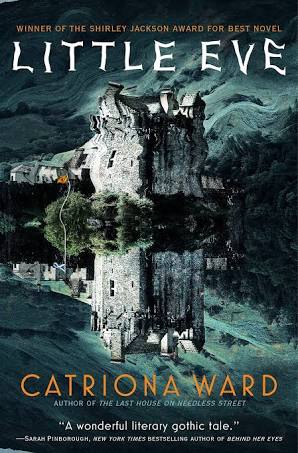
Little Eve Review

Book: Little Eve
Author: Catriona Ward
Publisher: Nightfire
Year: 2022
Rating: 5 out of 5 stars

Synopsis: “On the wind-battered isle of Altnaharra, off the wildest coast of Scotland, a clan prepares to bring about the end of the world and its imminent rebirth. The Adder is coming, and one of their number will inherit its powers. They all want the honor, but young Eve is willing to do anything for the distinction. A reckoning beyond Eve’s imagination begins when Chief Inspector Black arrives to investigate a brutal murder, and their sacred ceremony goes terribly wrong. And soon, all the secrets of Altnaharra will be uncovered.”

Review: Wow, can you believe it? A 5 star review for an uncorrected advanced reader copy? It seems almost too good to be true! I kid, of course, but you know how I’ve felt about a lot of the ARCs I’ve received – particularly suspenseful fiction, even more so with a female narrator. I did happen to read an ARC from Catriona Ward last year, Sundial, but never got around to reviewing it. In fairness, Sundial was so strange and creepy I wasn’t entirely sure how to review it, but it would have also certainly garnered at least 3 stars (it’s been a little while since I read it, so I can’t say for sure what I would have rated it but I can tell you it was very good, especially for the genre).

Little Eve bounces around between, mainly, two narrators. It jumps back and forth in time, ranging from 1917 to 1945, telling a twisting tale both as it unfolds in real time and as a series of letters written to the aforementioned Chief Inspector Black. This book is filled with turns, not everyone is who we think them to be and even as details are revealed we have to keep in mind that the narration is coming from characters who are nearly as in the dark as we are as readers. Little Eve tells the tale of a man, “Uncle”, who possesses a unique gift called The Eye. Uncle, with his powers of understanding and persuasion, convinces two women to move to his inherited home on the isle of Altnaharra – for all intents and purposes, a castle on the edge of the sea, behind which is a ring of towering stones Uncle and his family use for ritual-esque purposes. The three then adopt four children, three girls and a boy, who grow up and live on the isle with their somewhat cobbled together family.

The book begins with a retelling of the events that unfold on the cold morning of January 2 1921, when the local butcher, Jamie MacRaith, makes his way to the Castle of Altnaharra to deliver a slab of beef for Hogmanay (New Year’s Eve). Jamie is a few days late because of a wicked winter storm, and when he arrives at Altnaharra to deliver the beef, instead of a locked gate at the entrance to the lone isle, he finds the gate ajar and blood on the ground. Jamie is the first to discover the five bodies of those in residence at Altnaharra; each with a single eye removed, dead or nearly so, arranged in a circle within the stones behind the castle. The rest of the book tells the story of the previous four years and what exactly transpired to bring Uncle, the two women, and the four children who lived on the isle with him to their ultimate demise. (And yes, I correctly said five bodies and not seven, all is revealed in time.)

Little Eve weaves a web of cult-like behavior, made up religious beliefs, possible magical powers, and confusion through it’s story-line. Unlike other books I’ve read that have attempted to spin a yarn so complex and failed in a jumble of convoluted nonsense and confusion, Ward has managed to weave a web of complexity that unfolds in a pleasing way. Nothing is as it seems. Nothing plays out the way you expect it to, even if you’re like me and prefer to guess incessantly as the book reveals its secrets, it holds those secrets closely guarded until it’s ready to reveal them and astonish you. I referred to this book twice now as a woven web, and I would generally not repeat a phrase like that but it’s the only way I can think to explain the inner workings of what Ward has managed to achieve. Little Eve is complex in the best ways: you can’t ever quite rule anything out no matter how much your mind might want you to, all options are on the table until the last chapter, and even then there are still secrets being revealed right up until the end.

I was so surprisingly satisfied with how this book played out that I couldn’t help but give it 5 stars. Not only was it well constructed, it was a compelling story, and the best part? It was well written. And not just well written for an Arc, it was well written. I have not a single complaint or wish for this book and if you’ve been here for a bit, you know that’s no small feat. Little Eve left me stewing over how it might play out for several days when I accidentally left the book at home when I went on vacation – I couldn’t wait to get back to the plot, to see where it was going to take me! That’s the mark of a great book in my opinion. I can only hope to read more from Catriona Ward in the future, she has exceeded every expectation.

Advice: If you like a good suspenseful novel, a dark mystery, a cult story, or an ending you cannot predict then boy do I have the book for you. If you love a good twist (or four, or five), I think you’ll love Little Eve. If, however, you’re looking for something light and fluffy, or prefer a narrative that doesn’t jump around between characters, this is probably not quite the book for you. All in all, I found this to be an enjoyable, complex, engaging, and dark read.

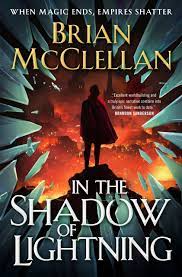
In the Shadow of Lightning Review

Book: In the Shadow of Lightning
Author: Brian McClellan
Publisher: Tor
Year: 2022
Rating: 4.5 out of 5 stars

Synopsis: “Magic is a finite resource – and it’s running out. Demir Grappo is an exile. A failure as a general, as a leader, and as a son. But when his own mother is brutally murdered, he must return to take his seat as the head of the family. Because she was killed for a secret, a secret so large it threatens the social order, the future of the empire, and the fate of the world: The magic is running out and no one knows how to stop it.
A war is coming, a war unlike any other. And Demir is the only thing that stands in the way of the end of life as the world knows it.”

Review: In the Shadow of Lightning is one of those books I finished and immediately regretted. I regretted plowing through it as fast as I did, knowing full well its pub date is June of 2022 and as the first of several, I’ll have to wait a year (at least) to read the next installment. I was a little hesitant to pick this one up at first, after all it’s a 560 page behemoth of a book, and a fantasy novel on top of that. After The Bone Orchard, which left me feeling a little frustrated with fantasy, I wasn’t sure I was ready to dive into another unknown world on a wing and a prayer that the author would paint a picture I could get lost in. McClellan, however, as a seasoned pro with at least six other fantasy books under his belt came through with a fantasy world I saw clearly and understood with ease. It was a joy to read this book.

ITSOL is told from multiple viewpoints, bouncing back and forth between a few different interlocking storylines to unveil a broad, detailed view of all angles of the story – within reason, of course. There are aspects of the story that unfold slowly, only coming to light as we begin to find the book winding down, clearly setting the reader up for the second book, but there’s plenty unraveling throughout the entirety of the book that I wasn’t left feeling frustrated that I was able to figure the plot points and twists out before we even got into the good stuff, but at the same time I wasn’t left feeling like any part of the story was dragging on needlessly. Every plot point and twisting turn seemed to further the story and the development of the characters in a way that felt satisfying and well thought out.

Each character is developed in a way that feels organic and without being told how each person sounds I found myself creating voices for them in my mind as I read, which is not something that happens often for me with books – a truly well written book, yes. Demir is an enjoyable character known as a glass dancer, or someone who can move glass at will with a rare and dangerous telekinetic power, who is fighting to overcome both the perceived personal failings of his youth, and the stigma that comes with being one of a minority of people with a dangerous and, at times, deadly power. In a world where magical glass, godglass, has the power to augment reality, the word glass takes on a deeper meaning. “Glassdamn” takes the place of many a swear word in Demir’s world and the use of the word glass in this way does a great job of emphasizing it’s importance in the lives of the people of this world. It seems to span multiple countries and/or continents (being an ARC, my copy of ITSOL doesn’t have the maps that will be included in the published copy so I’m not sure what the exact geography is), each people group using the godglass for similar purposes. They do make reference to illegal forms of godglass that may be used to torture or perhaps even change the physical appearance of a human, and I’m fascinated to see where that takes us in the next book.

This book, like many fantasy novels, takes place during a period of war. In fact, the entirety of this massive book only takes place over the span of a couple days, a week at most, successfully at that! But, with the mention of war, I did want to touch briefly on the potentially triggering imagery in the book. There are depictions of gruesome deaths and murder, death of animals, and war time fighting. It’s not nearly as graphic as it could have been, though I don’t think it should have been, but it does hang out in these realms of blood and death for a good portion of the book, so that should be noted.

The reason I’ve chosen to give this book 4.5 instead of 5 comes down to a few nit-picky things. It’s written exceptionally well, but McClellan does seem to rely on the use of the word “spat” throughout. I love when a character spits words at someone, it’s such a visceral descriptor that I tend to dwell on it more than other words. Unfortunately, so many characters in this book are constantly spitting their words at others that it begins to grow redundant and annoying by the time you reach the end of the book. I think this is an easy fix, though. My second issue deals with the wording of a handful of sentences that I felt were confusing in their wording. I bookmarked all pages where I found one of these sentences, and the book is simply littered with bookmarked pages from front to back. The storyline is detailed and winding, so I think some of the problem lies in trying to get the point across, but there were several instances where I had to re-read a sentence several times to understand what McClellan was trying to get across. Neither of these are deal breakers for me or even big issues, especially with an ARC, but they were enough in volume to take half a point.

Advice: If you love fantasy that’s done well, that leaves you wanting to know so much more, that brings you into a brand new world and gives you a full view of the intricacies, then this book is for you. If you don’t enjoy depictions of war, this is probably not going to be your cup of tea. If you love a good, slowly unfolding mystery, twists you can’t predict, and the idea of monsters and magic in a foreign land, run to your nearest bookstore this month and grab a copy.

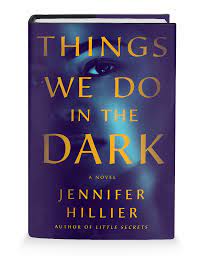
Things We Do in the Dark Review

Book: Things We Do in the Dark
Author: Jennifer Hillier
Publisher: Minotaur Books
Year: 2022
Rating: 2 out of 5 stars

Synopsis: “In the dark, monsters are real. When Paris Peralta is arrested in her own bathroom – covered in blood, holding a straight razor, her celebrity husband dead in the bathtub – she knows she’s in serious trouble.
In the dark, it never happened. But as bad as it looks, the arrest is not what worries her the most. With the unwanted media attention now surrounding her, it’s only a matter of time before someone from her old life recognizes her and destroys everything she’s worked so hard to build.
In the dark, she could be anyone. Because Paris has a dark past. And she’ll do anything to keep it hidden.”

Review: Things We Do in the Dark has a promising synopsis, it sounds intriguing and dark, mysterious and interesting. To say it falls flat is an understatement. To be completely honest, I found myself bored reading this book. There was a tiny section where I grew more interested somewhere around 3/4 of the way through, but it was short lived and the book returned to it’s dull story-telling for it’s finale. Hillier skirts the more graphic details of Paris’ previous life, stopping short of telling you what’s really going on, leaving it up to the reader’s imagination. I personally think if you’re going to tell a story that requires some content warnings, and this does, you might as well go all in and embrace what you’re telling rather than apologize for it by simply not describing or naming the thing. So let’s talk about the content warnings: Things We Do in the Dark contains implications of pedopohelia, assault, domestic violence, and PTSD. It references harm to a minor, incest, and contains racist language. While all of the above sounds fairly graphic, this book would likely receive a PG-13 rating as a movie, do with that what you will.

Though this book has little to nothing to do with music, each chapter begins with a quote from a popular song. The song lyrics rarely, if ever, tie into the chapter, and the effect is meaningless. It adds to my distaste for how this book was put together, giving the impression that perhaps there are places in the book that should have been highlighted in order to tie in with the chapter lyrics. Why go through the trouble of choosing lyrics for each chapter of a book that has nothing to do with music? I believe it’s referenced one, maybe two times through the entire 397 page book. This is the least of my issues, however. While the writing was fine and I found almost no grammatical errors that seem to be common in ARCs, it lacked that thing that makes you want to keep turning pages. It took me much longer to read this book than the past few ARCs simply because I didn’t care what happened. Not only did I figure out what was going on long before it was revealed because it was glaringly obvious, the “twists” were revealed much too early to give the reader any incentive to keep going. I’ve said it many times before, you don’t have to be a good writer to write a compelling story. I’ve read many books that were poorly executed but I kept turning the pages because I needed to know what was going to happen. What We Do in the Dark is simply not that book.

Hillier doesn’t stay true to her character, Paris, toward the end stating “[she] had been trained not to cry.” But by this point, we’ve seen the main character cry several times. This might seem small, but this sentence was 301 pages into the book and by this time the main character has cried no less than five times that we know of. Hillier tells Paris’ story by jumping back and forth between Paris’ point of view in the present, her point of view in the past, and the point of view of her former best friend / roommate, Drew. Paris has lived a hard life full of oppression, abuse, and trauma, yet when she reconnects with Drew, supposedly the best person in her life, potentially the love of her life, he is condescending, offensive, and patronizing. While she stands up for herself, she doesn’t demand apology or change from Drew, she simply allows him to continue to be the bully he has always been. I’m not sure why he’s painted to be a savior figure here, but he becomes someone she relies upon once again as her perspective jumps back to the future (she relied on him a great deal in her younger years, before she had the wherewithal to stand up for herself), and I found myself feeling completely disgusted as I read.

Things We Do in the Dark, lastly, is entitled far too closely to the hit TV show What We Do in the Shadows and contains names of characters that share names of characters in other TV shows. While none are related, and I suspect are just coincidence, I couldn’t read through the book without making the connections and I have to wonder why an editor wouldn’t suggest some name changes. Least of all, the title of the book should be at least slightly more different, as What We Do in the Shadows is a current, and wildly popular show that has absolutely nothing in common with this book. These are semantics, I suppose, but added to my pile of issues with reading through this book, end up being more than small irritants I could look past.

Advice: Skip this book. There are no surprises, there are no twists that you won’t see coming a mile away, there’s nothing interesting here. While it may be sort of unique in plot, it’s not wholly unique and could be supplemented with several other suspense novels, including any of the past suspense novels I’ve read and criticized for being cookie cutter versions of each other. This one is not worth the read.

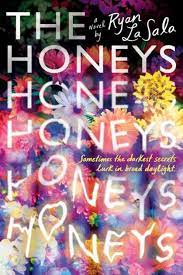
The Honeys Review

Book: The Honeys
Author: Ryan La Sala
Publisher: Push
Year: 2022
Rating: 5 out of 5 stars

Synopsis: “Mars has always been the lesser twin, the shadow to his sister Caroline’s radiance. But when Caroline dies under horrific circumstances, Mars is propelled to learn all he can about his once-inseparable sister, who’d grown tragically distant.
Mars’ gender fluidity means he’s often excluded from the traditions – and expectations – of his politically connected family, including attendance at the prestigious Aspen Conservancy Summer Academy, where his sister poured so much of her time. But with his grief still fresh, he insists on attending in her place.
What Mars finds is a bucolic fairytale. Folksy charm and rigid gender roles combine with toxic preparatory rigor into a pristine, sun-drenched package. Mars seeks out his sister’s old friends: a group of girls dubbed the Honeys, named for the beehives they maintain behind their cabin. They are beautiful and terrifying – and Mars is certain they’re connected to Caroline’s death.
But the longer he stays in Aspen, the more the sweet mountain breezes give way to hints of decay. Mars’ memories begin to falter, bleached beneath the relentless summer sun. Something is hunting him in broad daylight, tying with his mind. If Mars can’t find it soon, it will eat him alive.”

Review: In the front of my review copy of The Honeys, La Sala has left a note for the reader. In it he writes: “As I write you this letter, another fear has found me. My first two books have shown up on a list concocted by a Texas lawmaker, to be investigated for their potentially discomforting themes around queerness, equity, and justice…This man fears me and my art. And I wish – like Mars – his reaction to fear was to learn. As an author, I do think of my works as edifying. I want The Honeys to shock and scare you, but after the buzzing fades, there is much to learn in these pages.”

As you may know from past reviews, I have read several YA books over the last few years and come away feeling frustrated and disappointed. I kept saying “YA can be better!” La Sala has proved me right with The Honeys. A quick-witted and sharp story, The Honeys is also a successful horror / suspense novel, and for that I find myself eternally grateful. I have spent so many hours reading essentially the same book over and over and over within the horror / suspense genre that I’ve grown bored and annoyed, at best. Finally. Finally! A YA novel, a horror / suspense novel at that, that breaks all the norms and blazes its own path forward. The Honeys unfolds slowly and you spend a majority of the book getting to know Mars and Aspen, learning what the camp looks like, discovering all the ways Mars has to fight for their very existence, and learning hints here and there about what may or may not have happened to his sister Caroline while attending the camp. I can appreciate a slow-to-unfold horror story, particularly when it begins it’s descent before there are 10 pages left. La Sala does not disappoint in this regard, as the book begins to gain momentum and work toward a conclusion with a good several chapters to go. In this way, the construction of the book is excellent, something I don’t find very often in both YA and horror novels.

I was a bit torn over whether to give The Honeys 4 or 5 stars when I got to the end – in full transparency, as I read I was convinced it was 5 out of 5 for the majority of the book. It was only when I got to the end that I started to question that rating. I came up against my own mind, thinking “but this is a queer novel” and wondering why there wasn’t some poignant sociologial meaning to draw everything together at the end. What I finally came to realize is that this is a young adult horror novel told from a queer narrator, not a queer novel with horror themes thrown in. While it does answer the brief and delve into Mars’ point of view and the way in which they interact with and are confronted by the world, it doesn’t to come to the end and force the reader to learn something profound – that happens slowly, as you get to know Mars through the bulk of the book. At the end of the day, this is a horror novel told from the point of view of a narrator with a different perspective than the majority of horror or suspense novels I’ve seen out there.

The writing is excellent, especially for a review copy. You have probably read by now, if you’ve been following my reviews for any length of time, that I often get review copies merely weeks before they’re published and still manage to find a plethora of grammatical errors and general mistakes throughout. In The Honeys I found two: one was a repeated word and one was a word left out. The Honeys doesn’t come out for mass reading until August of 2022, so La Sala is way ahead of the game as far as review copies go. I was so overwhelmingly surprised and pleased with the way this book was put together, the quality of the writing, and the overall storytelling, I finished the book and immediately looked up his other two books. YA isn’t a genre I tend to read on my own for fun, but I would gladly read another book from La Sala if his other two are anything like this one.

I can’t speak highly enough about The Honeys. It confronts themes I feel are important, and I think are becoming more important to young readers: the gender binary, traditional gender roles, and the danger that women and trans people feel in the presence of the “boys will be boys” mentality. I’ve read other queer review copies, and particularly within the YA genre it often feels as though the authors are trying too hard to fit these characters into their narrative. The Honeys didn’t feel forced, it didn’t feel over the top, or utterly absurd; it felt natural, it flowed in a way that felt organic, and it left me feeling as though the topic of gender fluidity wasn’t merely thrown in as a token to the audience. Perhaps it’s because La Sala is gender fluid whereas other YA books with queer characters that I’ve read to review have been written by authors who aren’t, or perhaps it speaks to La Sala’s talent as a writer, or maybe (most likely) it’s both. Either way, I came away both absolutely thrilled and disappointed that I’d read through it so quickly.

Advice: I don’t think you have to be a fan of YA books to read and enjoy The Honeys. I think if you enjoy suspenseful novels, beautiful imagery, and a good mystery then The Honeys is going to tick all the boxes for you. If you enjoy quality writing and a mystery that you can’t really solve on your own way ahead of the ending, you’ll love this book. If you’re interested in reading more gender fluid or queer character points of view, this book hits the mark. If you’re a fan of summer camp suspense, again, it checks all the boxes. I think this is a book for a wide and diverse range of audiences and I can’t recommend it enough.

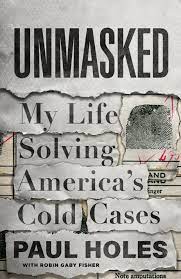
Unmasked Review

Book: Unmasked: My Life Solving America’s Cold Cases
Author: Paul Holes with Robin Gaby Fisher
Publisher: Celadon Books
Year: 2022
Rating: 4 out of 5 stars

Synopsis: “Most people know Paul Holes as the gifted cold-case detective with a big hear and charming smile, who finally caught the Golden State Killer. But until now, no one has known the man behind it all, the person beneath the flashy cases and brilliant investigations.
In Unmasked, Holes takes us through his memories of a storied career and provides an insider account of some of the most notorious cases in contemporary American history, including the hunt for the Golden State Killer, Laci Peterson’s murder, and Jaycee Dugald’s kidnapping. This is also a revelatory profile of a complex man and what makes him tick: the drive to find closure for victims and their loved ones, the inability to walk away from a challenge – even at the expense of his own happiness.”

Review: Unmasked does not come with any content warnings (and it should), so let me begin this review by providing a few. Unmasked contains graphic depictions of violent crimes including murder, kidnapping, criminal confinement, sexual assault, battery, domestic violence, robberies, and more. It describes PTSD, anxiety attacks, panic attacks, and both alcohol and drug abuse as coping mechanisms. That aside, if you are a true crime junky or have followed any of the above mentioned cases as they unfolded, Unmasked offers a rare insight into the forensic processes that led to the demise of many North American serial killers. If you’re taken with the true crime craze as much of the world seems to be, you have likely read some of the books written by former detectives who have solved high-profile crimes. They’re often interesting, though generally a bit dry, and may not offer the kind of skilled writing you’d get from a professional author – and I think that’s to be expected. There’s something familiar about the way a former detective writes a book, it’s often just the facts, ma’am, straightforward and to the point; outlining the details, the clues, and the methods they followed to get to a place where their subject was found and arrested (for the most part). But just because it’s familiar doesn’t mean it’s compelling. I find these books tend toward a historical retelling that can be boring and lacking narrative that I crave from a compelling work of non-fiction.
Perhaps it’s because Holes had Robin Gaby Fisher, a NYT best selling author and two time finalist for the Pulitzer Prize, or perhaps it’s the particularly unique perspective Holes offers, but Unmasked reads like it’s written by an author, not a former crime scene investigator. And that’s not to say that I don’t appreciate the work of former detectives, but it can’t easily be said that they’re natural born writers (of course, this is a generalization). Holes weaves his own narrative throughout the book, taking us through the steps that led him to become a forensic investigator, that brought him down the path of working and, in many cases, solving cold cases largely on his own time. He speaks at length about his own psyche, discussing the obsession that drives him to solve murders, similar to his mother’s obsession that led her to have an eating disorder, and his brother’s obsession that was later diagnosed as OCD. He has woven himself into this book in such a delicate manner that the book has no choice but to reflect a strong narrative. I suspect that Gaby Fisher played a large part in the finessing of Unmasked and I can appreciate that effort – though, in the end it’s Gaby Fisher’s involvement that led me to give this book 4 rather than 5 stars. Despite their best efforts, Unmasked still retains some bit of dry, too-complex-for-layman details about forensics that, I assume, have likely been dumbed down a bit for the average reader to understand. I found myself skipping over these parts, though I’m sure Holes felt they were crucial to explaining his process as he used forensic technology to solve these crimes, they read as complicated and long-winded and if I skipped over them, surely they could have been pared down even further. I’m a bit torn over his long-winded descriptions of forensics and DNA technology, though, because he doesn’t treat the reader as if we’re too uneducated to understand, but at the same time, in fact I am too uneducated in the realm of forensic science to understand.
With the help of Gaby Fisher, there are aspects of the book that I wish had been stronger or more well put together. Holes jumps from one crime to another before returning to the original crime, and in the case of the Golden State Killer, or EAR as he’s initial referred to, so many of his crimes and victims resemble one another that it becomes a bit convoluted and hard to follow at times. I do like a narrative that can bounce around from one thing to the next in a seamless way, but I found myself wondering if I hadn’t just read the account a chapter earlier multiple times, so I think there’s still some clarity missing from this narrative. With the help of Gaby Fisher, I would hope there wouldn’t be so many of these instances, but it’s impossible to know where the book began in order to get to where it is now. Either way, there was still some work left to be done, but given that I received this review copy a mere month before it was published, I suspect that the book was altogether finished at that point.
I found this to be an excellent counterpart to Michelle McNamara’s I’ll Be Gone in the Dark. Having read McNamara’s book when it came out a few years ago, right as the Golden State Killer was caught, I had already heard of Paul Holes and was familiar at least on a small level with what his work entailed. Having read about the detailed search for the GSK that spanned decades from McNamara’s side of things as a journalist and amateur internet sleuth, getting the bulk of Hole’s work from his perspective was genuinely an excellent counterpart. I appreciated, as well, that Holes addressed his working relationship with McNamara and also spoke about her death, something I was hoping for as I read through, and glad to see put into words. McNamara devoted much of her life leading up to her death by accidental overdose to the GSK search – in fact it was McNamara herself who gave him the formal name ‘Golden State Killer’.
Overall, I found Unmasked to be thorough, decently well written, and full of details that drove a complete and satisfying narrative.

Advice: If you struggle with true crime stories, this is absolutely not going to be the book for you. If, on the other hand, you live for true crime podcasts, books, and tv shows, you will probably love Unmasked. It ticks all the true crime boxes and leaves you feeling satisfied with the retelling. If you read and enjoyed I’ll Be Gone in the Dark by Michelle McNamara, I think Unmasked is a logical next read for you.