Earth & Soul Review

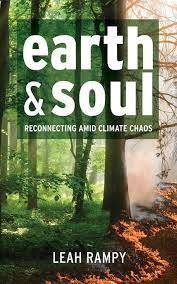
Book: Earth & Soul : Reconnecting Amid Climate Chaos
Author: Leah Rampy
Publisher: Bold Story Press
Year: 2024
Rating: 2.5 out of 5 stars

Synopsis : “Facing directly into the devastation of climate chaos and biodiversity loss, Rampy leads her readers on a soul journey through grief and loss to also claim the beauty, joy, and possibilities available when we reconnect with Earth. As we follow the author’s compelling personal experiences and engagingly lyrical stories of whales, cedars, sparrows, and more, we see the necessity and urgency of learning from the wisdom of our kin in the natural world. Writing at the intersection of spirituality, ecology, and story, Rampy charts a course for living deeply connected to Earth in ways that are both vitally important for and uniquely suited to these times. Even now when the worlds as we once knew it is ending and a new story lies beyond what we can envision, we hold the potential to lay stepping stones toward a diverse and vibrant world of oneness and mutual flourishing.”

Review : I have so many conflicting thoughts as I sit down to review this book. It gives me no joy to give a book about climate change a 50% review, particularly as the publicist for this book sent this book to me because of my own work in the world of sustainability. I wanted to love Earth & Soul, but I didn’t. Let’s start at the beginning : Leah Rampy, while boasting a PHD, does not have a background in biology, climate sciences, or ecology – her doctorate is in curriculum. While I don’t think it’s necessary for an author to hold an advanced degree, I do believe it hinders the work and the words she’s trying to communicate. Because her field of study has nothing to do with the subject matter, Rampy relies heavily on the works of others, paraphrasing (and citing) books I have been privileged enough to have read in the past. While this might function well in an academic paper or blog post, I find the distillation of the work of others to be an unfortunate book choice. I don’t think there’s anything wrong with a book filled with cited sources, don’t get me wrong! I love a well researched book. Where I take issue is how a story is told; Rampy rarely sheds light on her own experiences, choosing instead to simply share what others have written.

Rampy barely pulls the curtains back on her own life, something I think does a true disservice to the impact this book could have made. As I mentioned, she relies heavily on the work and words of others to bolster her narrative rather than allowing her own connection and experiences with Earth to drive the narrative forward. Referencing Robin Wall Kimmerer’s Braiding Sweetgrass eight times in 180 pages, Rampy clearly seeks to emulate Wall Kimmerer’s foundational work. Unfortunately, it reads as someone who’s read Braiding Sweetgrass and is relaying it to a friend who doesn’t want to read it themselves. As I have recently finished reading Braiding Sweetgrass myself, I found this particularly glaring. Rampy references indigenous wisdom and knowledge, which I appreciate a great deal as the scientific world is finally coming to understand just how much indigenous wisdom could have helped us over the last several hundred years; I couldn’t help but feel that I would rather be reading about indigenous wisdom right from the source, rather than distilled by a white woman. For reference, there was a singular moment in this book that brought me to tears and it was, unfortunately, a retelling of a Wall Kimmerer story. I found the writing style to be choppy and stilted, there was little flow to this narrative, though in the few places where it did flow (interestingly enough, found during the few brief descriptions of Rampy’s own personal experiences with the Earth), it was quite enjoyable to read.

Rampy’s style seems to be tell, rather than show, which you may know I find an incredibly condescending method of writing. In a chapter entitled “Kith and Kin”, Rampy uses the words kith and kin a combined total of twenty six times over the course of a mere fifteen pages, beating us over the head with the words rather than showing us what they mean to her. The words will go on to haunt the remainder of the book, interspersed so often than you cannot get away from them. I would rather be shown what kith and kin might look like than be told over and over again what it might mean – the impact is lessened this way, becoming more of an annoyance than a moment of understanding. In other books I’ve reviewed, I’ve found the occasion for telling vs showing often comes from an author’s disbelief that the reader would be intelligent enough to figure things out for themselves, to Rampy’s credit, Earth & Soul did not read this way. It did, however, read as though Rampy didn’t know how to show us rather than telling us, and perhaps that comes from her time spent as a lecturer; perhaps she will learn that as she grows as an author, but for now it leaves me continually frustrated by the way she steals the powerful impact this book could have made right out from under herself. 

As someone who is invested in the world of sustainability, I found frustration with this book. Rampy discloses at regular intervals that she has lead, what she refers to as, Pilgrimages all over the world. However, she never once discusses what kind of carbon impact she has on the planet by flying to multiple locations all across the globe with groups of people – in a time when many people are assessing their own carbon impact and coming to the conclusion that regular flight travel has a negative impact on the climate, I find it to be a stark omission. I also wish Rampy would have addressed the privilege that comes from having access to around the world flight travel, of the kind of people who might have the disposable income to go on such a journey, the people who are paying money to gaze upon nature without being tasked with making their own sustainable choices. It’s entirely possible that I’m pegging this all wrong, but Rampy doesn’t discuss any part of her climate footprint or the privilege that comes from these trips, so I can only tell you how it feels, which is…not good. During an early discussion revolving around meditating on nature, Rampy shares an anecdote from one such pilgrimage in which someone left a strand of yarn around an area of Earth with a sign telling people to stop and enjoy. Unfortunately, all I could think about was how that person had littered – sewing continued frustration on my end, as someone who works very hard to keep people from littering and to clean up litter that exists in nature already.

Likewise, Rampy twice discusses the use of cairns, both as a suggestion for the reader and as an example of what her pilgrimages entail. Again, as someone who works in the realm of sustainability, I find it problematic and ignorant on Rampy’s part to suggest readers create cairns. I have learned, and you can find this on many signs in many forest nation wide, to take only photographs and keep only memories, meaning you are to leave nature as you found it (or in my personal opinion, better than you found it). Creating cairns is frowned upon within the sustainability and naturalist worlds for (largely) two reasons : the first being that cairns created by park rangers exist for a specific reason, they are made to mark trails and creating your own can make a negative impact on carefully constructed cairns used for designating directions; the second being that many creatures, like salamanders, take shelter under or lay their eggs under stones, removing them from where they exist already may either damage eggs, damage habitat, or create fewer available spaces in which an animal may find shelter or lay their eggs. 

I left this book deeply frustrated. Rampy spends much time discussing the horrifying facts, figures, and statistics of climate change and biology loss, but she spends precisely zero time discussing who’s at fault for climate change. She doesn’t offer any suggestions for moving forward, ways in which we can reduce our carbon footprint, how we might engage with our local government to facilitate change, or what we can implement into our own lives in order to start the process of making change – all of which I suspect would lead to some unpleasant realizations of her own. She doesn’t discuss the greed, resource lust, or corporate entities who have created this world we find ourselves living within and I find that to be another disservice to what she’s attempting to accomplish. At the end of the day, yes, we have to find ways as individuals to create a world that flourishes around us, but the climate issue is not an individual problem and cannot be addressed as such. Rampy fails in this arena.

Advice : This is a first attempt, I believe that’s clear. This book doesn’t read like something that’s meant for those of us who are already working in the world of sustainability, greatly aware of the impacts of climate change on the natural world. It does read like someone who was not so much a believer in climate change and has since changed their mind, which seems fairly evident in Rampy’s own confessions throughout the book – another frustration as she professes to spending her time teaching others about the climate despite not having a background in the sciences. I think, if you are like me, you would benefit from reading Braiding Sweetgrass by Robin Wall Kimmerer instead. I believe Earth & Soul is directed toward people who have not spent much time thinking about the climate and are beginning to change how they interact with the world – this book will lead them toward other resources that will impact them on a much deeper level. 

Like Happiness Review

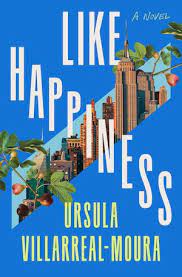
Book: Like Happiness
Author: Ursula Villarreal-Moura
Publisher: Celadon
Year: 2024
Rating: 5 out of 5 stars

Synopsis : “It’s 2015 and Tatum Vega feels that her life is finally falling into place. Living in sunny Chile with her partner, Vera, she spends her days surrounded by art at the museum where she works. More than anything else, she loves this new life for helping her forget the decade she spent in New York City orbiting the brilliant and famous author M. Domínguez.
When a reporter calls from the US asking for an interview, the careful separation Tatum has constructed between her past and present begins to crumble. Domínguez has been accused of assault, and the reporter is looking for corroboration.
As Tatum is forced to reexamine the all-consuming but undefinable relationship that dominated so much of her early adulthood, long-buried questions surface. What did happen between them? And why is she still struggling with the mark the relationship left on her life?
Told in a dual narrative alternating between her present day and a letter from Tatum to Domínguez, recounting and reclaiming the totality of their relationship, Like Happiness explores the nuances of a complicated and imbalanced relationship, catalyzing a reckoning with gender, celebrity, memory, Latinx identity, and power dynamics.”

Review : Like Happiness, as Villarreal-Moura writes in the acknowledgements, “is a book about loving books”. Incredibly literary, not only did it tick all the boxes in my soul that feel like satisfying brain-floss, it also rang some bells of familiarity that cannot be overlooked. This is a powerfully moving debut novel detailing the uneven footing of the power dynamic between a popular contemporary male writer and a younger female fan (notably, eight years younger). Feeling out of place with few friends at her Massachusetts college during her undergrad program, texas native Tatum makes a bold move one evening, penning a letter to the author of her new favorite book, Happiness. The author, M, is gaining popularity with his breakout novel of short stories detailing the lives of Latinx individuals in the United States. Feeling seen and understood in a way she has not felt in literary circles yet, particularly on a nearly all white college campus where she’s an art history, english lit double major, finding herself immersed in required reading of white Euro centric authors, Tatum feels at home with M’s book. She writes to M and within a few weeks, he writes back, thus beginning a multi-year long relationship between Mateo (M) and Tatum.

Like Happiness is a dual perspective book, though it doesn’t bounce around nearly as much as you may be accustomed to in a book with multiple narrators or points of view. Told largely through the lens of 2015 Tatum, far removed from her relationship with Mateo, writing a detailed account of her often one-sided relationship with Mateo, and a slightly earlier 2015 version of Tatum, receiving a phone call from a reporter in the States, calling because her relationship is celebrated fact and Mateo has been publicly criticized and outed as an abuser. It has been years since Tatum has spoken to Mateo and while she never experienced the abuses so many women are stepping forward to name, she is sure he isn’t an innocent party, both with the other women and with her. Choosing to tell her story to the reporter, she simultaneously decides to tell her story to Mateo and afford herself the closure she was never granted in the past.

Villarreal-Moura spins a tale of power imbalances, grooming behavior, and codependency that at times feels so real it’s hard to remember this is fiction and not a memoir. Over the span of nearly 300 pages, she outlines patterns of abuse so subtle they could almost go overlooked, laying them out chronologically, revealing a masterpiece of manipulation when the final product is fully revealed. **Spoilers Ahead**
Laying the groundwork for Mateo’s ultimate betrayal quite early on, Villarreal-Moura is an expert at building a scene. Not only is Mateo a college professor and author, he is a force of magnetism and power in Tatum’s life. He pulls her into his orbit and expects her to stay just where she is, mesmerized and fawning over his very being. He relies on her for attention, commitment, and praise while expecting her to simply go along with whatever he wants to do – and she does. He so encompasses her world that when he’s in it all others cease to exist. Mateo subtly punishes Tatum when she gets a serious boyfriend, though she and Mateo have never approached much more than a platonic relationship, he cuts her down and pokes fun of her intelligence when she doesn’t give him exactly what he wants, and pays off $20,000 of her school loans, leaving her helpless to the encompassing power he now wields over her. 

I don’t want to give away the ending, but know these subtle manipulations are nothing compared to the ultimate betrayal Tatum experiences at the hands of Mateo in the end. Putting a final nail in the coffin of their friendship, she is finally able to extricate herself from the leeching parasite of M, allowing her to write her final letter, this book, to him; knowing it will be the closure she needs in order to fully live her life without his shadow in it. As I read, I couldn’t help but be reminded of an article a read a few years ago about an author whose work I’d read and loved, Nick Flynn. And as I thought about that article, I couldn’t help but be reminded of another, similar, articled I’d read around the same time about another author whose work I’d read and loved, Junot Diaz. Both were published authors, one a professor and the other a keynote speaker, both took advantage of women who were younger than them, women who were still in college. Flynn, in particular, has since been accused by multiple women of abuse and misconduct. There is nothing new about this story, though that doesn’t in any detract from Like Happiness; if anything, I found it gave this book extra connective tissue. There’s a precedent here : men in positions of power who wield that power over unsuspecting women who are at a disadvantage due either to their age or their position (a student vs a professor). It’s common. And therefor, it needs to be told. Villarreal-Moura did a profoundly wonderful job telling it.

Advice : If you love reading books about people who love reading books, Like Happiness is truly wonderful. Villarreal-Moura has introduced me to so many things, though none quite as exciting as my new favorite snack of frozen grapes. If you love reading fiction that’s so perfect and timely that it could easily be memoir, this is it. I highly recommend it.

The Fury Review

Book: The Fury
Author: Alex Michaelides
Publisher: Celadon
Year: 2023
Rating: 2.5 out of 5 stars

Synopsis : “This is a tale of murder. Or maybe that’s not quite true. At it’s heart, it’s a love story, isn’t it?
Lana Farrar is a reclusive ex-movie star and one of the most famous women in the world. Every year, she invites her closet friends to escape the English weather and spend Easter on her idyllic private Greek island.
I tell you this because you may think you know this story. You probably read about it at the time – it caused a real stir in the tabloids, if you remember. It had all of the necessary ingredients for a press sensation: a celebrity, a private island cut off by the wind…and a murder.
We found ourselves trapped there overnight. Our old friendships concealed hatred and a desire for revenge. What followed was a game of cat and mouse – a battle of wits, full of twists and turns, building to an unforgettable climax. The night ended in violence and death.
But who am I?
My name is Elliot Chase, and I’m going to tell you a story nine any you’ve ever heard.”

Review : When I requested an ARC of The Fury, I didn’t realize it was by an author whose work I’d previously reviewed before. If you’ve been here for a while, you may remember when I reviewed The Maidens and gave it a withering 2 out of 5 stars (though I don’t check GoodReads for reviews, I know several others who read and disliked the execution of The Maidens), The Fury was written by none other than Maidens author, Alex Michaelides. Now, we already know I serve some hot takes on this blog, which is largely why I choose not to check other reviewers opinions prior to writing my own, but I was fairly astonished to find that The Maidens has been optioned into a television series by Mirimax. Small rant aside, I was grateful to get into a new book after trudging through my last review copy, and while The Fury didn’t garner more than 2.5 stars, in my opinion, it was at least a compelling read.

A few things right off the bat really started to rub me the wrong way, contributing at least in part to my 50% positive review. First of all, The Fury is narrated by a singular character who I found immediately off-putting. It’s possible that was Michaelides intention, but given the number of twists and turns throughout the book and the sheer effort he took to convince the reader that the narrator, Elliot, was someone they should be sympathetic to, leads me to believe that it wasn’t at all. Elliot is instantly pretentious and annoying, someone I had zero interest in reading through the eyes of for an entire book, which was unfortunate given that he was exactly who we’d spend the entire book reading through. Rather than laying out exactly who each character in the story was, what their relationship might have been, and allowing us to simply come to the conclusion that Elliot was an unreliable narrator, he began almost immediately by interjecting his own telling of the story to make cheeky comments about how much he’d tried to keep his own opinions out of the story but obviously hadn’t. There’s no room for the reader to do any work, Elliot does it all for us. Rather than reading and inferring, assuming the reader will be smart enough to come to their own conclusions, Michaelides treats us like we’re too dumb to read critically and tells us what’s going on. Personally, I take offense to this style and find it pandering at best, patronizing at worst.

The Fury, set on a remote Greek island, centers around Elliot’s friend and so-called soul mate of a friend, Lana Farrar. Through a series of twists and turns, Elliot convinces Lana to confront both her husband and best friend when she finds out they’ve been having an affair. What happens when she does, however, is a twisted nightmare of toxic relationships, bad choices, and manipulation. However, as we read through the book, we come to find that we’re getting only a fraction of the story from Elliot, revealing only tidbits of information to lead the reader down a path of his own design – which, had it been executed well, would have been intriguing and maybe even exciting to read. However, like I mentioned before, Elliot tells us right from the beginning that he’s an unreliable narrator and it was within the first chapter that I had already solved the murder.

Spoilers Ahead

The question, though, is which murder did I solve? Because this damn book has so many plot twists – arguably TOO many – that it isn’t until we reach the end that we find out who really died and who really murdered them. But, good news for me, the murder I solved in chapter one was, in fact, both the correct murder and correct murderer. Bad news for Michaelides.

When it comes to a murder mystery, or a murder retelling I suppose, in this case, I don’t want plot twist after plot twist after plot twist. I want a singular twist that I can’t see coming from a mile away. I feel so strongly that had Michaelides trusted us as an audience, I would not have seen the murderer coming from the jump. It would have been more interesting, better executed, and a surprise to read. Instead, it became contrived and boring. Michaelides had an infuriating habit of leaving each chapter on an ambiguous teaser, which I don’t mind if done appropriately and sparingly, but when you end every. single. chapter. with words like “He was just a kid, playing make-believe. And kids shouldn’t play with guns.” (59) it not only loses its impact but it loses its appeal. There were so many reasons for me to genuinely dislike this book, it’s hard to cram them all into a single review, but I think I’ve covered the most grievous here. It was compelling, I’ll give Michaelides that much, I kept turning pages, but it was a poor book. And for that I give it 2.5 out of 5 stars.

Advice : Sigh. I suppose if you enjoyed The Maidens you might actually enjoy The Fury. If, however, you don’t enjoy being patronized or a mystery you can solve from the very beginning, I don’t think this will be the one for you. It’s probably worth checking out from the library if you’re curious about it, but by no means should you waste money on this one.

The Queen of Days Review

Book: The Queen of Days
Author: Greta Kelly
Publisher: Harper Voyager
Year: 2023
Rating: 3 out of 5 stars

Synopsis : “For Balthazar and his family of thieves, stealing a statue during the annual celebration of the god Karan’s was just a good bit of fun…or a way to stick it to the governor who murdered his parents. And yeah, the small fortune in reward doesn’t hurt – even if his boss also hired the mysterious Queen of Days to join the crew as “the weapon of last resort…”
Whatever that means.
But Bal doesn’t know the ceremony isn’t simply the empty words and dusty tradition; it’s true magic. The kind of magic that rips open a portal for the god himself. Only the idol that Karan’s planned on using for a body now lies broken at the Queen of Days’ feet. And half of it is missing.
With the aid of a lovable brawler, a society lady turned bomb maker, a disgraced soldier, and a time-eating demon, Bal must hunt down the missing half of the statue if he has any hope of earning his money, keeping his crew alive…and perhaps even saving all of humanity. But as his journey sends him racing through the city – and across realities – he discovers that doing all this might just doom the city.

The city be damned. It’s time to kill a god.”

Review : The Queen of Days bounces between two points of view; Balthazar (Bal), the leader of a crew of thieves called the Talion gang; and Tassel Janae (Tass), aka The Queen of Days. Bal and his crew have been commissioned by a mysterious patron for what’s supposed to be a simple smash and grab at a largely symbolic ceremony of ruling class elites within Bal’s home city of Cothis. We learn early on that Bal and the members of the Talion gang are not only related to each other, some through illegitimate affairs on Bal’s father’s behalf, but were once the children of the previous ruling elite of Cothis themselves – before Bal’s family was ousted (and killed) by the members of the city for a superstitious belief that they had angered the god of water, Karanis. Several years of drought will do that.

Though the Talion gang are a crew of experienced thieves with years of work under their belts, their patron has a singular request : they must hire and work with the Queen of Days, a masked mercenary with a reputation that precedes her. She’s rumored to be able to defy the laws of nature, to have extraordinary powers, and worst of all, to be a demon of the Nethersphere. She comes to the Talion gang rather mysteriously herself, all but proving the rumors true and creating fear and suspicion within the gang, particularly when she asks for payment in days off their lives rather than in coin. As Bal, Tass, and the rest of the crew work to layout a plan, they become increasingly fractured and disorganized and it takes the remainder of the book to bring them back together into a family unity again.

Spoilers Ahead

As the crew attempts their simple robbery (with a huge payout, mind you), they almost immediately come to find it isn’t quite as simple as they were promised. When the symbolic ceremony turns anything but, Tass takes matters into her own hands and smashes the statuette they were commissioned to steal. Realizing that the ceremony was designed to draw down the god Karanis from the Nethersphere, Tass acts without explanation, saving the youngest member of the Talion gang, Bal’s sister Mira, and escaping the ceremony. When Karanis arrives and finds his vessel destroyed, he takes possession of the current city’s ruler (and Bal’s father’s usurper) Paasch – a move that will not allow Karanis to exist within this world for long. He must find the statue, it must be restored, or he will wreak unstable and unmeasurable damage upon the world. What ensues is about 300 pages of Bal, Tass, and the crew working to figure out what’s really going on, where the pieces of the statue may have ended up, and how they can save themselves in the process.

I chose to give TQOD 3 stars because I found this book to be quite long and difficult to get through. I don’t actually mind an almost 400 page book, I enjoy a lengthy tale, particularly if it’s something I can’t stop thinking about, but that’s exactly the problem I had with this one. I’ve often said that it doesn’t take quality writing to create a compelling story, there have been many books I’ve found lacking when it came quality that kept me turning pages simply because I couldn’t stop thinking about what was going to happen. Unfortunately, TQOD didn’t hit the mark for me. I found myself distinctly disconnected from the characters, I would put the book down and easily walk away, I found myself thinking of other things when I was reading and often had to go back and reread passages in order to figure out what was happening because I was so lacking connection. There were about 100 pages right at the end that found me turning pages to see what was going to happen, but sadly the 200 something pages that preceded it were so uninteresting enough that the final 100 weren’t enough to make me want to give this book a higher rating.

I will say, it was written quite well and utilized a trope many people thoroughly enjoy : found family. I found the world building to be fair, but not great, as I had a lot of unanswered questions about the world Kelly created. It didn’t help that I was so disconnected from the story, I think had I found more connection with the characters I might have found more connection with the world, but there still remain many unanswered questions about the world, what it looks like, and how it interacts with the characters, and why it does the way it does – for example, Kelly mentions a flood mythology that exists within this world, much like exists within our world. I have questions. Fortunately for readers, TQOD is very clearly the first of at least two books so there will be time and room for questions to be answered, but that does rely on readers finding their own connections that will compel them to continue reading, and of that I’m not sure they will.

Advice : If you enjoy fantasy, the found family trope, and don’t mind reading several hundred pages, you just might like this one. I personally found it lengthy and difficult to get through, but if you like a series, enjoy thievery and magic and gods who aren’t really gods, I think this would be worth the time.

The Shape of Time Review

Book: The Shape of Time
Author: Ryan Calejo
Publisher: Amulet Books
Year: 2023
Rating: 1 out of 5 stars

Synopsis: “Antares de la Vega is an adventurer at heart. He dreams of journeying across burning deserts, trekking through wild and uncharted jungles, sailing the farthest reaches of the seas – and yet, he’s never stepped foot outside of South Florida.
Until strange creatures come leaping out of lightning bolts to kidnap him.
Locked away in a secret prison in the middle of the Bermuda Triangle, Antares meets Magdavellia, a mysterious and iron-willed girl who opens his eyes to a shocking truth: This world is a far different – and weirder – place than he’s been led to believe. Every stranger rumor, every wild theory, is based on truth.
After they escape the prison, Antares and Magdavellia must set out beyond the edges of any amp in search of a legendary artifact – and Antares’s parents, who have been missing most of his life. The two of them must wield geometry and alchemy, outsmart molten and mermaids, and outrun fiendish aliens…all while attempting to solve a riddle as old and mystifying as the sun.

Review: Okay, let’s address the elephant in the room, shall we? I’ve never given a book anything lower than 2 out of 5 stars and here I am, bypassing an entire half star to give this book a lone 1 out of 5 stars. You’re right, it’s drastic; particularly as I’ve been reading and reviewing more and more standout books over the last year. But it’s necessary. Trust me.

The Shape of Time (TSOT) is a middle grade read with a 14-year-old main character – based on how it’s written, I suspect this book would do best with those 10-12 years old. Never in my life did I think I would be reviewing a flat earth conspiracy mid grade read, but here we are. I cannot defend it, teaching middle schoolers that the earth might be flat (albeit in a science fiction book / fantasy book) in a world where conspiracy theories freely abound, feels at best irresponsible and at worst dangerous. I was worried as I began this book and realized what direction we were headed in that a thrilling adventure book geared toward young to mid grade readers would create a space where growing minds might not be able to differentiate between fact and fiction, particularly when fiction exists so prolifically outside the world of books – but my fears were in vain, as this book is not the thrilling adventure I expected it to be.

Maybe this is my fault, for assuming that a book with a synopsis like that would be anything short of thrilling, exciting, or adventurous. In fact, until about four chapters into the book I thought it was really headed in a direction I could see myself enjoying. It starts well – well, actually, it starts by ripping off A Wrinkle in Time with strange characters from another world / time / dimension / part of a flat planet Earth named Mr. Now, Mr. Minutes, and Mr. Hoursback (though, why Mr. Minutes is called Mr. Minutes when he comes from a part of the Earth that calls Minutes Mintocks is beyond me). There are so many discrenpancies like what I mentioned above that it began to feel overwhelming keeping track of them all, but I want to point out specifically the differences between Calejo’s descriptions of the world he crafted for us and the illustrations not only within the book but on the cover as well. Antares is described as having one blue eye and one brown, but on the cover of the book, praised by Calejo in his acknowledgements, Antares has two brown eyes. Calejo describes monsters and vessels and the world around us in TSOT but the illustrations never line up with what we’ve read – the disconnect is hard to get past and kept me from creating a world in my mind. It does a huge disservice to the book, but quite honestly, it’s Calejo’s poor writing and inability to craft a world I either care about or care to even visualize that are the real disservice here.

I had a hard time getting into this one, likely from the immediate A Wrinkle in Time reference, but once I did, I enjoyed a mere two chapters before I found myself annoyed and ready to be done. I sincerely wanted to put this one down before I finished it, but I found the things that frustrated me about this book were so egregious that I had to write a review. I find it interesting that a quick google search for this book turns up, first not this book, because it’s a common name and there are other, better things out there; second, not a single review of it despite it’s September publish date. I find that to be a good sign. Calejo boasts several awards, “half a dozen state reading lists”, and medals for his writing prowess, yet I find TSOT to be, to put it bluntly, aggressively bad.

Advice: Avoid. Trust me. Avoid at all costs. It’s not worth the time or energy.

The Bellwoods Game Review

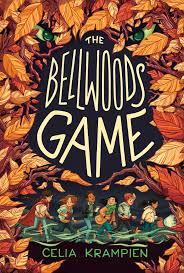
Book: The Bellwoods Game
Author: Celia Krampien
Publisher: Atheneum Books for Young Readers
Year: 2023
Rating: 4 out of 5 stars

Synopsis: “Everyone knows fall hollow is haunted. It has been ever since Abigail Snook went into the woods many years ago, never to be seen again. Since then, it’s tradition for the sixth graders at Beckett Elementary to play the Bellwoods Game, in which three kids are chosen to go into the woods on Halloween night. However rings the bell there wins the game and saves the town for another year. But if Abigails’s ghost captures all the players first, the spirit is let loose to wreak havoc on Fall Hollow…or so the story goes.
Now that it’s Bailee’s year to play, she can finally find out what really happens. And legend has it the game’s winner gets a wish. Maybe if Bailee wins, she can go back to the way things used to be before everyone at school started hating her. But is Abigail’s ghost really haunting the Bellwoods? One thing’s for sure: something sinister is at play – waiting for them all in the woods…”

Review: While this is targeted to ages 8-12, it was a super enjoyable read for me and definitely felt like it could (and maybe should?) easily be targeted at ages a bit older than 8. While it read like a middle grade book, it had some scarier scenes and talked about death in a way that didn’t necessarily read like something an eight-year-old would be into. Maybe that’s just that it’s been so long since I was 8, but it felt more like an 11-15 to me. All that aside, I thoroughly enjoyed The Bellwoods Game and would love, love, love if Krampien would write a second one.

The Bellwoods Game follows sixth grader Bailee as she navigates the trials of late elementary school, the drama of being shunned by your peers, and the fragility of life as she works through her grandmother’s recent mini stroke. All the while, Beckett Elementary, where Bailee goes to school, is preparing for it’s annual Bellwoods Game – a night in the local forest playing an innocent game of tag. Or is it? Legend has it that every October, the sixth grade class gathers in the woods to play a game, one that feels harmless, but also comes with a lot of superstition, students who were past players who cannot physically talk bout the game, and a passed down and much revered book of rules. The students participate in a lottery to see who will play, with those chosen bringing a gift for the spirit of the Bellwoods forest – it’s their free pass through if they get caught by otherworldly creatures.

Bailee, along with two other students, are chosen to play the game. At the clang of a bell, they must race through the woods, navigating their surroundings in the ever-increasing gloom of a fall evening, and make their way to the bell at the furthest edge of the woods. If they can successfully ring the bell, they town will be safe for another year, however if they fail to ring the bell the town will be thrown into peril, with past failed years bringing bad crops, businesses closing, and other tragedies. As Bailee and her peers rush toward the bell, they begin to experience weird things, see weird sights, and discover that all is not as it seems. In fact, there seems to be a ghost in the woods, or maybe two ghosts; creatures who both want to help and harm the students, able to assist and foil their plans – even going so far as to change the landscape of the woods as the students play.

My biggest complaint with this book was how slowly things unfolded once the kids were inside the woods, however what I felt was quite slow in book form I think would make for the perfect setup in a tv-show. I kept thinking “MAN this would make a great show” and honestly I would be first to watch it if it did! All the ways that things slow down in book form are really perfect for unraveling over the course of a multi-episode season. I also thought the way Krampien ended the book left room for additional books and/or seasons if it ever did become a show – while the ends are tied together well, she set the scene and left the door open for future books, which I would be super interested in if she did! One of the most unique qualities about the book is the fact that Krampien not only wrote it but did all of the illustrations, which we see every few pages in comic book style. They’re cute and really add depth and dimension to an already enjoyable read, even more impressive that she drew them herself.

Advice: If you like cute, cozy, spooky books particularly set in October around Halloween, this might just be your thing! It’s low stakes, and the scene is set so beautifully that even reading it in the middle of summer transported me to a fall day. If you love a fall book, this is for you!

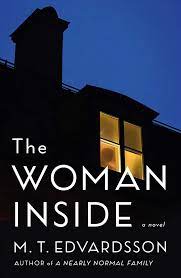
The Woman Inside Review

Book: The Woman Inside
Author: M.T. Edvardsson
Publisher: Celadon
Year: 2023
Rating: 2.5 out of 5 stars

Synopsis: “Bill Olson, recently widowed, is desperate to provide for his daughter, Sally. Struggling to pay rent, he welcomes a lodger in to their home : Karla, a law student and aspiring judge who works as a housekeeper to make ends meet. Her clients are the Rytters, and incredibly wealthy couple who hide behind closed doors. The wife is ill and hasn’t left the house in months. The husband is controlling and obsessive. Is he just a worried husband, concerned for his wife’s health? Or is there something more sinister at play?
As bill’s situation becomes more dire, Karla is forced to make a difficult choice. And when the Rytters wind up dead and Karla is pulled in for questioning, she’s made to defend some parts of her past she’d rather nor resist.
Every person in The Woman Inside is hiding something, but could any of them really have been driven to kill?”

Review: I had high hopes for The Woman Inside as I really enjoy the nordic noir genre, however this was not the “super well composed chamber drama” I was promised from the back of the book reviews. The Woman Inside is a slow moving study in right and wrong, the legal system, and what justice might really look like outside of theory. For that reason, I found the book interesting, because I do believe that justice, like ethics, comes down to moment-by-moment decisions, particularly where every day true crime is concerned. Unfortunately, The Woman Inside has nothing more to offer than just that, a glimpse as what justice might look like when it tragedy and drama plays out in our every day lives.

The Woman Inside jumps back and forth between a few narrators, each with a different perspective and connection to the victims, unraveling the crime as the book progresses. It offers a unique perspective in this way, as we can see how the faulty justice each character creates is justified in their own minds, something I believe reads true to reality. The bummer of it all, though, is that while this may be true to real life and offer a realistic picture of individual justice, it’s just…boring. I’ve found myself a bit uninterested in writing a review for this book because I finished it and was simply bored. I kept going over and over the book, not in the way you chew on a good book for a long time after you’ve finished reading it, but in the way you chew on a bad book, hoping desperately to find some hidden meaning you might have missed; something that will tie it all together and make it more worthwhile, the “aha! there it is!” moment. The Woman Inside did not offer any part of that for me, no matter how many times I went over it in my head, I came back with the same conclusion: it’s boring.

The story, in my mind, was not begging to be told. There wasn’t anything about it that drove me to want to know more, to want to know who did it, or why. It was just a story about miserable people justifying the unethical things they do, like begging people for money just to squander it on a gambling addiction, like pretending that your daughter is your whole world but doing the bare minimum to provide for her, like stealing from your employer because your roommate has manipulated you into thinking that they’re strapped for cash (and they are because they keep gambling it away). There’s so much deceit and manipulation through the entire book, and you might think that the lies and drama would make for a book that you can’t put down, but a page-turner it is not.

Advice: I wanted to write a longer a review, I mean a couple paragraphs? It’s not much. But this book isn’t it for me. It’s boring, it’s slow moving, it doesn’t hit you the way a nordic noir does, with grit and intensity and a need to keep reading. If that’s what you’re after, there are a plethora of amazing nordic noirs out there, I’d chose from any of them before I’d read anything further from Edvardsson.

Camp Damascus Review

Book: Camp Damascus
Author: Chuck Tingle
Publisher: Nightmare
Year: 2023
Rating: 2.5 out of 5 stars

Synopsis : “Welcome to Everton, Montana: home to a God-fearing community with a heart of gold.

Nestled high up in the mountains is Camp Damascus, the self-proclaimed “most effective” gay conversion camp in the country. Here, a life free from sin awaits. But the secret behind that success is anything but holy.”

Review : I’ve been a little hesitant to review Camp Damascus because, well, I didn’t like it very much. Structurally, I couldn’t find much fault with it, even for a review copy. There were few errors and the narrative flowed well enough, at least for a middle grade read, which I don’t necessarily find this to be, but it was written that way, so it appears it may be. I’ve struggled with how to review this book knowing that it isn’t bad, but also feeling strongly that it doesn’t move the cultural narrative forward or do any work to provide any kind of cultural healing. Maybe that’s too much to put onto a book, frankly it’s what’s kept me from being able to concisely put my words onto the page, maybe I’m asking too much of a book like this. But Tingle himself said something in the note to the reader that makes me think that maybe it isn’t too much, maybe it’s just enough : “Currently, there are conversion therapy camps working hard to strip the personalities and inner truths from thousands of queer youths. These camps see one’s identity as something that can be ground down and chiseled away, creating a new and improved version of something that was never broken to being with. This barbaric attempt to crush the glorious reality of young LGBTQ people needs to end. It’s my hope that Camp Damascus can be a voice in the choir of artists and writers standing up to shout “no more”.”

Camp Damascus follows a 20-year-old autistic girl named Rose as she begins to unravel her known reality, living within the confines of a small town whose population largely attends church who hosts what’s known as the nation’s most effective conversion camp, boasting a 100% success rate. Early on, Rose notes that the commercials for Camp Damascus don’t have a need to hire actors because of their extremely high success rate, however no one that she knows who she’s spotted in the commercials have any recollection of having ever being participants at Camp Damascus. Tingle weaves a web of confusion and strangeness right out of the gate, creating a book that is immediately a horror novel, with Rose vomiting up piles of strange mayfly type bugs, witnessing a horrifying visage anytime she begins to feel anything that may resemble same-sex attraction (though this connection isn’t made clear to Rose until part-way through the book), and some bizarre breaks in reality where she remembers things as being other than they are.

Rose begins to tug at the thread of strangeness, unraveling the world around her, and in doing so she begins to lose her faith. As the object of her affection is murdered by what she grows to learn is a demon and her reality becomes more and more skewed, Camp Damascus becomes more and more of a supernatural horror / thriller. Rose grows to learn that she was, in fact, a former conversion therapy camp attendee, having had a previous relationship with another girl named Willow, but having little to no recollection of the relationship and absolutely no memory of attending the camp. Because she’s driven by the need to know more and more information, to structure her world into a way that makes sense, Rose is able to begin to parse what’s happening and methodically works her way through people who’ve been to Camp Damascus before, hoping to understand why they’re all witnessing demons and barfing up flies. Rose finds solace in a friend from camp (though she doesn’t remember him), Saul, and together they plot to take down Camp Damascus and help save those who’ve been through the program and have subsequently lost their memories and found themselves tethered to a demon.

The point of the demonic tethering in Camp Damascus is to bring about something truly terrifying and out of alignment with reality anytime the tethered human experiences any form of same-sex attraction, pushing them to avoid the feeling or avoid the person who has lead them to “sin”. While the concept is true of conversion therapy, the execution is obviously made-up, but it is in this execution that I find the biggest flaws with the book. Tingle is attempting to draw a parallel to the fear that Christianity uses to convert, “fire insurance” if you will, by using literal demons in his book as a means of fear based conversion. In Rose’s research, though, she’s able to determine that the Demons are real beings from another, perhaps alternate, world. They can walk through walls and disappear at will, but they are flesh and blood like people. She gets a glimpse at real deal hell, as well, and is able to see exactly how the demons torture humans who sin. It’s here that I take the most issue. Rose loses her faith because she finds what the church is doing to be completely out of alignment with the idea of love and salvation, but the prospect of real hell continues to exist for her. I think by continuing to draw lines to the idea of fear through hell being a real place really does a disservice to what Tingle and other authors are clearly trying to do. If Christians are using fear to convert and fear to turn anyone who identifies as other into their perfect idea of a “sinless” human, then Tingle is no different by (spoilers ahead) having the demons drag bigoted church members to literal hell in the end of the book.

While I believe Tingle is making a point to show that being gay isn’t a sin, by allowing for hell to be a real place and for the demons to really be torturing humans who sin, his work no longer moves the cultural narrative forward. I believe that Tingle’s book comes from a place of anger, and rightfully so, particularly as a member of the LGBTQ community. Tingle has every right to be angry. He even has every right to write a book out of that anger. BUT if Tingle wants to join the growing chorus of voices saying “no more” then I think the chorus of voices needs to create spaces for forward movement and instead what he’s done is create a space of convoluted anger and continued fear that by acting certain ways we’ll be dragged to hell and tortured for eternity. I think this book missed the mark in terms of saying “no more” and bringing spaces of healing and momentum toward something different and better into the world. Rather, Tingle perpetuated the idea of a literal Christian hell and continued to create spaces of fear and fear-based conversion (though, not conversion in the conversion camp sense), and to me that makes this book disappointing and sad, no different than movies that perpetuate the fear we have over war and disease during times of war and disease. I think collectively we need spaces where we can grapple with what cultural reality looks like, but (and this is coming from someone who has not been through conversion camp, so take my opinion with a grain of salt) I don’t think this was quite it.

Advice : If you like horror, particularly supernatural horror, you will probably find this fairly enjoyable. If you have any form of religious trauma or trauma surrounding conversion therapy, I would steer clear of this one. Although, it’s possible you may find it cathartic – but I think there are definite themes that would be potentially triggering to those with PTSD, so bear that in mind. It was a miss for me, but if you love horror it may be a hit for you.

The Saint of Bright Doors Review

Book: The Saint of Bright Doors
Author: Bajra Chandrasekera
Publisher: Tor Dot Com
Year: 2023
Rating: 5 out of 5 stars

Synopsis: “Fetter was raised to kill, honed as a knife to cut down his sainted father. This gave him plenty to talk about in therapy. He walked among invisible powers: devils and antigods that mock the shape of man. He learned a lethal catechism, lost his shadow, and gained a habit for secrecy. After a blood-soaked childhood, Fetter escaped his rural hometown for the big city and fell into a broader world where divine destinies are a dime a dozen.”

Review: Before I sat down to write this review, I made the mistake of reading some of the GoodReads reviews on The Saint of Bright Doors. The average review was 3.5 stars and they were littered with “did not finish” (DNF) reviews from people calling this book pretentious and confusing. Before I had even finished Saint, I vehemently told my partner this book needs to be a summer reading book for AP English students. NEEDS TO BE. I have to assume that those who were DNFing this book have never read Catch-22 or One Hundred Years of Solitude (and if they have, I would hate to see their impending reviews about how terrible they are), but I think that’s probably a rant for another time.

It has taken me several days since finishing Saint to finally get the nerve to sit down and write this. Chandrasekera has written an absolute masterpiece; it’s hard to know where to begin. The Saint of Bright Doors weaves a web of myth and legend, beginning with our protagonist, Fetter, losing his shadow as a newborn. His mother, Mother-of-Glory, in an attempt to make Fetter her perfect killing machine, rips his shadow from his body with a nail. This loss finds Fetter no longer tied to the laws of gravity, able to simply float upward at the slightest unclenching of a muscle in his abdomen. Mother-of-Glory spends the first twelve years of Fetter’s life preparing him to kill his estranged father, The Perfect and Kind, a mystical holy-person and the leader of a cult-like religion called The Path Above (not to be confused with The Path Behind or any of the other offshoots of The Path Above, each as convoluted as the next, professing completely opposing beliefs, assured they are each the correct way forward).

Spoilers Below

When Fetter is twelve, Mother-of-Glory throws him out of the house, assuming the world would make him hard, perfecting the process she has already begun. Fetter, however, finds his way to an island called Luriat, rejects the killing lifestyle, and attempts to live his life in a new way. We spend the remainder of the book in Luriat, for the most part, and watch as Fetter grows to love this strange and mixed up island. The political and religious system of the world Chandrasekera has created are confusing and complicated, often convoluted, and always at odds with whatever political or religious system has recently been overthrown, often seeing buildings and streets renamed for the new political or religious system in place, thus leaving spaces to be named and renamed and renamed over again, sometimes bouncing back and forth between names when one system overthrows another and is then overthrown by the previous system. It’s complex, I understand why some people found this difficult to process, but it only serves to show how strange the world Fetter lives in is.

We spend most of the book assuming that Fetter’s parents are otherworldly in some way because they’re both, seemingly, hundreds or thousands of years old. What we come to learn, though, is that, around the time of Fetter’s birth, The Perfect and Kind simply reshapes the world and in doing so creates thousands of years of political and religious systems in the memories of those alive, throwing Mother-of-Glory into a space where, though only 15-20 years old, she remembers her original homeland but also remembers all that has come to pass since then – false memories that were created with the reshaping of the world. In this reshaping, the island of Luriat comes into existence for the first time. I find this reshaping to be a fascinating part of this tale and I’ll tell you why! As I read through Saint, I kept thinking “this is an epic”, though it’s not necessarily an epic in the traditional sense. It covers a span of time, it’s a decently long book, but realistically we’re only spending about 30 years with Fetter from the start of the book, at his birth, to the end of the book. It doesn’t quite make it an epic, and yet…it’s an epic. Chandrasekera has created an epic in the same way that The Perfect and Kind has recreated the world, building history into something that is thousands of years younger than it seems. It’s nothing short of masterful.

The Saint of Bright Doors is a book about choosing our own destinies despite the destinies we may often find thrust upon us. It’s about autonomy in the face of somewhat mystical forces. Fetter joins a group of people in Luriat, a self help group if you will, called the Unchosen. People who come from all kinds of different mystical and mythical backgrounds, those with equally magical and powerful families and family members, people who came close to being the chosen ones, but just didn’t quite make it. Each person in the group has their own story and their own magical abilities, and they each set out to become something else. I suspect that at least one person in the group actually is a chosen one, but the story of their legacy is so muddled by the time it makes its way to them, that they are unable to fulfill their particular destiny. Fetter, similarly, has a legacy he is unable to fulfill at the time he finds the group because he’s never been introduced to his father and is unable to A) become the heir to The Perfect and Kind or B) kill is father as Mother-of-Glory has raised him to do.

Fetter spends much of the book wondering who he is, exactly. He slips into different personas in order to fit into the caste system of Luriat and do the work he wants to do, which is studying the bright doors around the city – doors which, if closed for too long and put under the right amount of pressure, will turn into something magical. No one knows or understands what the doors do, but Fetter can see that they are actually open doorways to other worlds and realities, through which devils can cross and enter the world Luriat exists in.

Fetter, appropriately named for one who is tied down, spends his life in this book attempting to escape the destinies that his parents see for him, to escape the destinies that are thrust upon him by institutions, political and religious systems, or even by those he considers his friends. He wonders who he is in relation to the secrets and lies he’s constructed in order to fit in, and I can’t think it’s a coincidence that he finds himself most at home on an island that shouldn’t even exist – an island that has simply chosen it’s own destiny. Fetter finds himself drawn to bright doors, turning into magical portals when given the time or attention to become what they want to be, again spending his time with creations that have chosen their own destinies. In the end, Fetter leaves us with this :
“‘Every lost past is a world,’ Fetter says. ‘I learned that from my…from the Perfect and Kind himself. I think it might be the only thing I learned from him that matters. Behind every bright door is a world full of lost hearts. It matters.’ […] “‘I need you to understand me, here. I know this isn’t your politics, and I swear to every devil I know I’m not turning my back on that, because I’m fucking here, aren’t I? I’m here, this time But I need you to understand what I mean when I say I am the world.’ Koel laughs, shortly. ‘And you’ve changed it?’ ‘And I’ve changed it,’ Fetter says.”

Advice: If you read One Hundred Years of Solitude and found it easy to keep track of the timeline, you will have absolutely no trouble keeping track of the intricacies of The Saint of Bright Doors. If you read Catch-22 and found the politics laughable and relatable, you will have absolutely no trouble seeing the politics in The Saint of Bright Doors for what they are. If you enjoy an epic, world building, myths, and strangeness, this is the book for you. If you can read critically and analyze what you’re consuming, dive the heck in! You don’t want to miss this one.

The Angel Maker Review

Book: The Angel Maker
Author: Alex North
Publisher: Celadon Books
Year: 2023
Rating: 3 out of 5 stars

Synopsis : “Growing up in a beautiful house in the English countryside, Katie Shaw lived a charmed life. At the cusp of graduation, she had big dreams, a devoted boyfriend, and a little brother she protected fiercely. Until the day a violent stranger changed the fate of her family forever.

Years later, still unable to live down the guilt surrounding what happened to her brother, Chris, and now with a child of her own to protect, Katie struggles to separate the real threats from the imagined. But then she gets the phone call: Chris has gone missing and needs his big sister once more.

Meanwhile, Detective Laurence Age is facing a particularly gruesome crime. A distinguished professor of fate and free will has been brutally murdered just hours after firing his staff. All the leads point back to two old cases: the gruesome attack on teenager Christopher Shaw, and the despicable crimes of a notorious serial killer who, legend had it, could see the future.”

Review : Why is it that the books that come with the coolest ARC packaging always turn out to be the biggest duds? The Angel Maker arrived with several envelopes, each with a sticker dictating after which chapter you should open each. Inside the envelopes were cute little references to the revelations in each corresponding chapter: a small card, a newspaper article, and a box of matches. I love getting ARC packages, they are always an extremely enjoyable aspect of receiving and reviewing books, but what I’ve come to notice is that if a book has a detailed and intricate package, it’s likely to be pretty rough reading.

The Angel Maker did not disappoint in terms of living up to the ARC package let-down. North, a former New York Times best seller, wrote a book with a unique story in a truly bizarre way. I found myself wondering several times if he had simply hit “replace all” for certain words, given the strange wording of so many of his sentences. There were many instances of sentences that seemed to go nowhere, that wove a strange web of words that didn’t go together, it felt almost as if it had been poorly translated into English. I found myself baffled more than not reading through this one – and I realize it’s an uncorrected proof so it’s probably pretty likely that by the time it’s available to buy these problems will have been corrected, but I think it speaks volumes when an ARC reads so poorly.

I will give North credit, though, the story he’s created is interesting and strange. It unravels at the speed you’d hope from a suspense/thriller novel. Told from the point of view of several people, it hops between the present and the past, unveiling more and more details as you read. Something North did that I didn’t enjoy, however, was relying on the unreliable female narrator trope – once again we see a female protagonist, Katie Shaw, who’s had two whole glasses of wine and suddenly no one around her can possibly believe a word she says, so what does she do? Investigates on her own, of course! What else could she possibly do? This is the trope. It’s old, it’s over done, it’s worn out, and it’s lazy. And I’m not exaggerating, she had two glasses of wine in one single scene and suddenly her husband no longer believes a word she’s saying. But let’s not even focus on the fact that her husband regularly leaves their five year old daughter alone to watch tv by herself while he makes music in the basement with the door closed, a fact that Katie finds bothersome and irritating while her husband, Sam, finds completely acceptable.

I find it hard to want to read a book that employs the aforementioned trope, particularly as a woman. Not only is it overdone, but it plays into a stereotype that honestly isn’t a good look coming from yet another male author. I was slow to read The Angel Maker for all of the above reasons, it took me longer than most of the ARCs I’ve read this year because, while the story was interesting, it was written so poorly and in such a lazy way that it was no longer even a compelling read. It’s unfortunate that an author can take a quality premise and mess it up so badly that it isn’t even worth turning pages to see the finale. I’ve said many times that a book doesn’t have to be well written to be compelling, and unfortunately The Angel Maker is neither well written nor compelling.

Advice: Unless Alex North is your favorite author, this is a pass for me. It contains depictions of attempted and successful murder, snuff films, houselessness, substance abuse, and gaslighting. If you enjoy a book with worn out tropes, you might actually like this one. If you don’t, this isn’t it.