The Enchanted Greenhouse Review

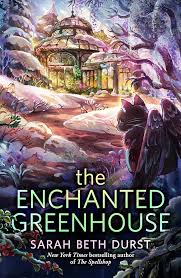
Book: The Enchanted Greenhouse
Author: Sarah Beth Durst
Publisher: Bramble
Year: 2025
Rating: 4.5 out of 5 stars

Synopsis : “Terlu Perna was lonely, so she broke the law. She cast a spell and created a magically sentient spider plant. As punishment, she was turned into a wooden statue and tucked away in an alcove in the North Reading Room of the Great Library of Alyssum. And that was the end of her story. Until…
Terry wakes in the cold of winter on a nearly deserted island full of hundreds of magical greenhouses. She’s starving and freezing and the only other human on the island is a grumpy gardener. To her surprise, he offers Terlu a place to sleep, clean clothes, and freshly baked honey cakes – at least until she’s ready to sail home.
But Terlu can’t return home and doesn’t want to – the greenhouses are a dream come true, each more wondrous than the next. When she learns that the magic that sustains them is failing – causing the death of everything within them – Terlu knows she must help. Even if that means breaking the law again.
This time, though, she isn’t alone. Assisted by a gardener and a sentient rose, Trull must unravel the secrets of a long-dead sorcerer if she wants to save the island – and have a fresh chance at happiness and love.”

Review : I’ll be the first to admit that the concept of anything talking that wouldn’t normally talk is one of my least favorite fantasy tropes – I find talking animals to be disconnected from my expectations and there’s rarely a time when I feel differently. So the concept of a book in which most of the characters are talking plants was immediately something I entered into with trepidation. I love a fun new world of fantasy novels, but for some reason, I just cannot generally get on board with talking creatures. I’m happy to report, however, that The Enchanted Greenhouse is the exception. Durst has successfully created a fantasy world with this novel that needs very little extra work – the entirety of the novel takes place in a massive series of enchanted and magical greenhouses, on an island with just one other inhabitant beyond our protagonist (Terlu Perna, purple skin, purple eyes…human). The plants we encounter in the greenhouses, while some seem to be otherworldly, largely reflect what we might find in our own world, and while there is a flying cat and several magical creatures spelled to do some work in the greenhouses, there’s little beyond the inherent magical quality of the book that wouldn’t be found in our own world.

I realized about a chapter into The Enchanted Greenhouse that this is in fact a sequel to a previous book that I haven’t read, but the mark of a great book is that it can stand alone without much explanation needed, and Durst certainly achieved that feat. Had I not read the letter from the author, I would never have known this wasn’t a stand alone novel, the recap at the beginning of the book felt less like a recap and more like the necessary introduction to Terlu Perna and the magical world she resides within. And though the world she lives in is magical, it’s also filled with rules about who can and can’t do magic – for good reason, as magic can be dangerous – only trained sorcerers are allowed to even attempt to perform spells. However, Terlu casts a spell to create sentience in a plant friend of hers, and in doing so finds herself made an example of and is turned to wood. During her years as a statue, though, the Empire falls and the rules of what magic is and isn’t allowed are changed. To save Terlu from the fires of the resistance, Terlu’s old boss ships the statue formerly known as the living Terlu (along with the spell to awaken her from her statue slumber) to a remote island of greenhouses run by a lone gardener named Yarrow. Having sent letters to the government begging for help with his magically failing greenhouses, Yarrow believes Terlu is a sorcerer sent to help him. When Terlu awakens and Yarrow realizes she’s just a girl who cast a spell one time, he becomes sullen and grouchy. But the greenhouses continue to fail, and Terlu is determined to help.

I’ve read several books over the last few years that have billed themselves as being similar to Legends and Lattes by Travis Baldree, and while some have come close to the cozy fantasy he’s crafted in his series, none have really been what I would compare to his works. While The Enchanted Greenhouse wasn’t labeled as such, had it been, it would have been the first book I’ve read since Legends and Lattes that made me feel the same way Baldree did. Durst has created a cozy, low-stakes fantasy with the most wonderful cast of characters. It did have a slow start, hence the 4.5 stars, but once I got into it, things really picked up in a sweet, cozy, romantic sort of way. And it’s worth saying that even though this book was published by Bramble, it is definitively not a romance novel – it’s a love story. And who would have though I’d have spent an entire novel crying my eyes out over a lovable rag-tag crew of talking plants? Not me, that’s for sure. But cry I did. Durst has created something truly magical with this work, weaving the concept of empathy into her tale in such a way that I can’t imagine anyone who read this book could walk away unchanged. Not only is it a beautiful tale of found family, it’s also a deeply political tale as well, and perfectly timed, at that. I won’t spoil it for you, but know that it doesn’t read as political, it’s just that you cannot come away from this book on the side of the oppressor. You simply can’t.

Advice : If you enjoy quiet, cozy, low-stakes fantasy novels with flying cats and miniature dragons and honey cakes…well, do I have news for you. Add this one to your list, pre-order it now before it’s release in June. Trust me.

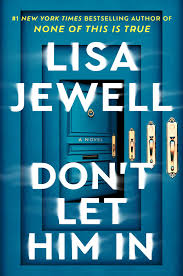
Don’t Let Him In Review

Book: Don’t Let Him In
Author: Lisa Jewell
Publisher: Atria Books
Year: 2025
Rating: 3 out of 5 stars

Review : “He’s the perfect man. He says he loves you. You think he might even be made for you. Before long he’s moved into your heart – and into your house. And then he leaves for days at a time. You don’t know where he’s gone or who he’s with. And you realize – if you looked back – you’d say to yourself : Don’t let him in.”

Review : Don’t Let Him In is, in some ways, the quintessential scam story – a man gives just enough details to be believed, but not enough to encourage questions and in doing so he scams women out of their life’s savings, their home, and their dignity. In other ways, Don’t Let Him In suffers from an image crisis, namely, it doesn’t seem to know what it is – or rather, it wants to be too many things. Jewell does an excellent job painting picture for the reader, jumping back and forth between the present and the past, changing point of view from the victim(s) to a man with many names, guiding us from victim to victim, broadening the scope as she simultaneously narrows the field of vision. It’s an enjoyable suspense thriller with multiple female characters, deviating from the excruciating norm of the unreliable female narrator that so many suspense/thriller writers seem to clutch to with all their might. Jewell, instead, weaves a winding narrative of a man who manipulates, targets, and attacks with precision and ease. By the time it’s all said and done, it doesn’t come down to one (or several) unreliable women, rather, they’re logical, grounded, down to earth women who are worn down over a period of years until they don’t even know themselves anymore.

Where I struggle with Don’t Let Him In, is that this story is far from unique. And while that’s a sad portrait of our modern times, it’s more than that. Jewell seemed to have trouble reigning in her plot, it became muddied and she let slip a few holes because of it. ** Spoilers Ahead ** Jewell wanted us to buy that her scam artist main character was manipulating women, conning his way into their lives, and stealing their money on a slow but steady basis – yes, that I can buy. Consider it sold! But wait, that’s not all – next we have to buy that our main character is also a street stalker, potentially even someone who derives in-the-moment sexual gratification from his street stalking, that this gratification may be his sole sexual drive; okay, I guess I can believe both aspects of this guy’s personality, but again, that’s not all. Now we need to believe he’s also insanely jealous, prone to fits of vengeance and extravagent plotting; next, he’s a murderer; next, he’s faked his own death; next, he’s got a god-complex and delusions of grandeur; he’s an escort; he’s running business scams as a life coach; wait, now he’s also a master of escape. No. It’s too much. Don’t Let Him In suffers from a lack of editing, the plot is a disaster, and the story struggles to keep itself afloat beneath the weight of so many incredible personality characteristics. Pick two from the above list and go hard, do them well, I’ll buy that. This? I’m not buying what you’re selling.

As someone who partakes in pop culture, it wasn’t a struggle to see what podcasts and tv shows Jewell might have consumed prior to writing this book – Dirty John (a true crime podcast by Christopher Goffard) and You (a Netflix adaptation of a book series by the same name) come immediately to mind, I’m sure with just a few additional minutes of thought you or I could come up with more than a handful of others. It’s a storyline in the mainstream, it’s not new or unique and Don’t Let Him In doesn’t offer an inventive perspective beyond trying to encompass every perspective. I didn’t find this book to be very interesting or compelling, but I will say the ending was exactly what you’d hope it would be, without giving anything away. It’s satisfying and thank god for that, because if you’ve plowed through this nearly 500 page book, you deserve an ending that makes you happy it’s over. I didn’t find myself thinking about this book when I wasn’t reading it, or chewing on it after it was over, I simply read it. That’s all. The twists are easily spotted, the plot holes are glaring, and the plot itself is a messy, muddled fiasco.

Advice : If you’re looking for a book that showcases every possible scam available in one character – woo! This is it! If you’re looking for some substance, something that doesn’t read like every podcast you’ve listened to in the last 10 years or every tv show you’ve watched on your fav streaming platform, this is not it. Keep looking. And listen, suspense / thrillers only get better if we, the reader, demand more.

Speedy Reviews

In an effort to continue reviewing every single ARC I receive (for the second year in a row) while simultaneously not burning out from the effort, I’ve decided to implement what I’m calling Speedy Reviews. Here I will briefly review more than one advanced copy received recently – largely books that I don’t feel necessitate a long-winded review. Without further ado, I give you : Speedy Reviews.

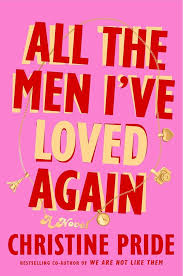
Book: All the Men I’ve Loved Again
Author: Christine Pride
Publisher: Atria Books
Year: 2025
Rating: 3 out of 5 stars

Synopsis : “It’s 1999 and Cora Belle has arrived at college ready to change her life. She’s determined to grow out of the shy, sheltered daddy’s girl who attended an all-white prep school in her all-white suburb. What she’s totally unprepared for is Lincoln, with his dark skin, charming southern drawl, and smile. Because how can you ever prepare yourself for the roller coaster of first love?
Just when Cora thinks she’s got everything figured out, a series of surprises, secrets, and a devastating tragedy sends her into a tailspin. In this wake of this tumult, a new man enters her life. Cora is once again thrown by the strength of her feelings, this time for Aaron, the enigmatic photographer who seems to understand her like no one else. With her whole heart at stake, Cora is pulled between two loves : one that’s comfortable and one that’s true.
Twenty years later, Cora is all grown up and has made it a point to avoid any serious relationships. Being alone can’t break your heart. But then an unexpected reconnection and a chance encounter put her right back where she started. The same two men the same agonizing decision. Finding herself in this position – again – will test everything Cora thought she knew about fate, love, and, most importantly, herself.”

Review : All the Men I’ve Loved Again is a well written read about the ups and downs of first love, particularly first love when one is so, so young and so, so naive about the world, like Cora, a first year college student (when we meet her). And while it was well written, I found it to be an incredibly slow read. I had a hard time connecting with the characters, perhaps because so much of the book is taken up by Cora’s relationship with Lincoln. There was a small attempt made at creating backstory and friendships with Cora’s roommates, but the vast majority of the plot is Cora’s relationship with Lincoln. And while you might think, based on the synopsis, that this story would bounce between Lincoln and Aaron…it really doesn’t. There are whole relationships formed, strange friendships made, hints dropped, and storylines that simply don’t play out, the synopsis tells us more about Cora’s background than the actual book does, and the time we spend between Cora and Aaron is minuscule. All the Men I’ve Loved Again feels disjointed and disconnected from the reader, but beyond that, by the time I’d finished I was left with the glaring question of whether this story needed to be told. And to answer that question, the best I can say is, I don’t think it did. It felt like a story that had nearly nowhere to go and I don’t feel like it ultimately ended up being worth my time. It was well written, I’ll say that. But it wasn’t something that kept me turning the pages.

Finally, if you choose to read All the Men I’ve Loved Again, know that there are mentions of abortion, miscarriage, stroke, hospitalization, loss of a parent, and cheating.

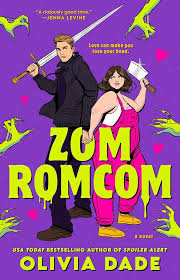
Book: Zom Rom Com
Author: Olivia Dade
Publisher: Berkley Romance
Year: 2025
Rating: 3.5 out of 5 stars

Synopsis : “When Edie Brandstrup attempts to save her seemingly harmless neighbor from the first major zombie breach in years, she’s stunned to be saved by him – and his ridiculously large sword – instead. As it turns out, Gaston “Max” Boucher is actually a super-old, super-surly vampire, and he’s unexpectedly protective.
The pair soon unravels a sinister conspiracy to set zombies loose on the world (again), and despite the awful timing, Edie finds herself falling for the vampire who’s helping her save humanity. As she and Max battle their foes side by side, Edie must decide whether having a love worth living for also meaning having a love you’d die for – and, in a world that grows deadlier by the minute, whether that’s a risk she’s willing to take.”

Review : Zom Rom Com is a surprise of a book, weighing in at just shy of 400 pages, with complex world-building and a cast of characters it’s hard not to love. As someone who isn’t the world’s biggest fan of zombie storylines, I was pleasantly surprised by how much I enjoyed this creative and exciting rom-com from Olivia Dade. In a world where humans, superhuman, and supernaturals coexist together, it’s perhaps not the biggest surprise that there might be zombies existing in this plane of existence, yet I found the concept of zombies to be funny and inventive within the world Dade’s created. Every aspect of this book could have taken a gristly or even bleak turn, but Dade managed to keep things light and fun all the way to the final page. The banter between Edie and her super hot vampire neighbor Max is enough to keep the pages turning, but the complex and well thought out plot behind a zombie outbreak, and even the reasoning behind why zombies exist in the first place, is really what kept me turning pages. There’s a good build up of will-they / won’t-they that lasts for at least the first 100 pages that adds to the building enjoyment, and while this is a romance novel, there’s an incredibly amount of plot creation and fantasy work involved in this novel, from start to finish. I did feel there were a few plot holes and inconsistencies, but nothing that detracted from how much I genuinely enjoyed this book. Without giving any spoilers away, the ending more than leaves room for at least one additional novel, though I suspect there could be more!

Before reading this book, if you choose, this novel discusses the loss of family members, romantic betrayal, and chronic illness. And – yay! – this book included plus-size inclusion!

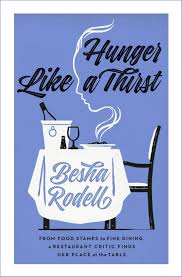
Hunger Like a Thirst Review

Book: Hunger Like a Thirst
Author: Besha Rodell
Publisher: Celadon Books
Year: 2025
Rating: 5 out of 5 stars

Synopsis : “When Besha Rodell moved from Australia to the United States with her mother at fourteen, she was a foreigner in a new land, missing her friends, her father, and the food she grew up eating. In the years that followed, Rodell began waitressing and discovered the buzz of the restaurant world, immersing herself in the lifestyle and community while struggling with the industry’s shortcomings. As she built a family, Rodell realized her dream, though only a handful of women before her had done it : to make a career as a restaurant critic.
From the streets of Brooklyn to lush Atlanta to sunny Los Angeles to traveling and eating around the world and, finally, home to Australia, Rodell takes us on a delicious, raw, and fascinating journey through her life and career and explores the history of criticism and dining and the cultural shifts that have turned us all into food obsessives. Hunger Like a Thirst shares the joys and hardships of coming of age, the amazing (and sometimes terrible) meals she ate along the way, and the dear friends she made in each restaurant, workplace, and home.”

Review : I don’t receive nonfiction advanced copies with any kind of regularity, but when I do, they’re almost always a revelation. Hunger Like a Thirst is no exception. Written by one of the world’s last anonymous food critics, Besha Rodell, Hunger, as poignant as it is comforting, is laid out as courses on our table, each more decadent, more revealing, than the last. Like a blooming onion (yes she has reviewed Outback Steakhouse), Rodell gently peels back the layers of the decadent food world, the culture that simultaneously shaped our tastes and was shaped by our foodie interests, exploring the ways in which food is inherently political, all the while laying herself bare before us, her own heart on our plate. Delicious, rich, funny and equally heartbreaking, overwhelming, and steeped in grief that is not just Rodell’s but my own, Hunger is an absolute must-read.

From living on food stamps to traveling internationally for Food & Wine, Rodell guides us through the often unbalanced and winding journey of a restaurant critic, describing the sheer financial cost of dining out multiple nights per week, often at her own expense, traveling to find the best, the newest, the most creative gem, often alone. She explains the dichotomy of loneliness she feels as she travels the world and the claustrophobia she feels at being back home, the seemingly impossible go-go-go of jet setting from place to place, while being just a few miles shy of landmarks she promised her father she’d see in her lifetime, while not afforded the time or leisure to visit while traveling for work. Hunger is far more than a memoir of good (and sometimes bad) food. Rodell shares her life, her travels outside of work, and the friendships she’s made both in the restaurant industry and in her career as one of only a dozen or so restaurant critics in the country.

Each chapter reads like an in depth exploration of not only the history of food culture and specific food phenomena, but as a dive into the world of a woman working in a predominantly male driven industry. Rodell tackles bigger global issues with ease, often discussing racial disparities, misogyny, and the way in which the world of food has expanded, sometimes at a snail’s pace, to meet a broadening world. She explains the history of women in the service industry through deep dives into the nation’s first chain restaurants and talks about what it’s like to be a woman who continues to work in this industry where women are expected to largely be one thing : gentle. From a background in Alt Weekly publications, Rodell writes in a way that feels comfortable and familiar, like you’re listening to your favorite person rant about their special interest. She’s approachable and funny and foul-mouthed in exactly the way you’d hope, telling slightly horrifying tales from her teenage years as a recent transplant in the US from Australia, talking about the culture that seeps over from punk music into the back of house of a food service gig, all the while remaining real and human and, though not, somehow tangible.

I don’t think any book of this sort could be written without addressing some of the harder aspects of industry work, like drug abuse and suicide. Rodell navigates each with grace and grief, speaking about people she and her husband have both worked with and lost, her husband’s own substance struggles, and drawing parallels in her own internal world to the monumental loss of Anthony Bourdain. Rodell brings the truth and the grit and the heartache of the restaurant world to the reader in a way that feels tender and gentle, written with care and heart. Everything she addresses is important in it’s own way, but this aspect perhaps most of all.

As someone who has never worked in the food service industry but, like so many others, loves watching Top Chef, I found Hunger to be exciting and enjoyable on yet another level. Reading about the foundational restaurants and seminal chefs throughout the decades Rodell shares of her life, it was so fun to hear new stories of people I’ve become familiar with through my favorite cooking show and to learn some of the history involved. Rodell speaks of living in New York during 2001, of feeding diners mere days after the twin towers were hit, and of the chefs who fed first responders. She talks about incredible chefs and restaurants in Atlanta and Los Angeles, and shares her hometown in Melbourne, Australia with us. She shares her husband’s realized dream of opening his own restaurant, an endeavor set to open in 2020, and the indescribable, and perhaps insurmountable, grief that came with that timing. She brings us into her world and shares it in such a way that by the time you’re done reading, Besha Rodell feels like an old friend. Every aspect of this book, from start to finish, is perfection. It’s comfort food.

Advice : If you’re into fine dining or finding holes in the wall or eating where the locals eat or the ins and outs of what it’s like to eat at the best spots in LA, if you love watching Top Chef or Chopped or reading up on the newest spot in town, if you’ve ever wondered what it might be like to be an anonymous food reviewer and restaurant critic, this is an absolute must read. I have a hard time saying there’s any reason not to read it, unless for some reason you hate food and don’t enjoy memoirs. Pick it up, it’s released on May 13th. It’s truly excellent.

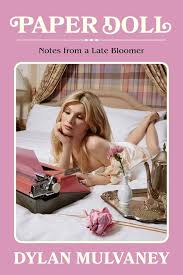
Paper Doll Review

Book: Paper Doll
Author: Dylan Mulvaney
Publisher: Abrams Image
Year: 2025
Rating: 3 out of 5 stars

Synopsis : “When Dylan Mulvaney came out as a woman online, she went viral overnight, emerging as a trailblazing voice on social media. Dylan’s personal coming-out story blossomed into a platform for advocacy and empowerment for trans people all over the world. With her “Days of Girlhood” series, she connected with followers by exploring what it means to be a girl, from experimenting with makeup to story times to spilling the tea, while never shying away from discussing the transphobia she faced online. Nevertheless, she was determined to be a beacon of positivity.
But shortly after she celebrated day 365 of being a girl, it all came screeching to a halt when an innocuous post sparked a media firestorm and right-wing backlash she couldn’t have expected. Despite the vitriolic press, Dylan was determined to rediscover the light, even in the darkest of situations.
In Paper Doll, Dylan pulls back the curtain with a witty and intimate reflection on her life pre- and post-transition. She covers everything from her first big break in theater to the first time her dad recognized her as a girl to how she handled scandals, cancelations, and…tucking. It’s both laugh-out-loud funny and powerfully honest, and is a love letter to her younger self, who didn’t experience the queer joy she now lives daily.”

Review : Dylan Mulvaney’s breakout book Paper Doll is an exploration into girlhood, bouncing back and forth between her first 365 days immediately after coming out as a girl, told through journal-ish entries, and her life during what she refers to as “post-beergate”, a reference to the wildly public, months long, right-wing backlash to her Bud Light partnership on TikTok. Dylan prefaces the book with the note that she writes how she talks, and while I appreciate the candor, I think the style in which she’s written this book felt stilted and, at times, a bit inauthentic. I don’t want to be misunderstood here – Dylan does delve into a lot of personal and intimate topics on an authentic level, but the delivery leaves something to be desired. Paper Dolls reads less like how someone’s talking to you as a friend, and more like how someone might be talking in a viral video which became a bit of a challenge. I think it will find it’s perfect audience, but stylistically, it wasn’t my favorite writing.

But that brings me to the first point I’d like to make before we really get into this review : content warnings. Dylan is open and honest about the mental health struggles she’s endured through her life, both before transitioning and while navigating beergate. She discusses body dysmorphia (but also bodily joy!), suicidal ideology, disassociation, depression, people pleasing, and anxiety. If any of the above topics feel difficult for you, please approach this book with gentleness. Dylan has a positive and upbeat way of conveying her experiences, but she also doesn’t shy away from the very real struggles that many queer and trans people experience, she speaks about her own struggles with frankness and it’s important to say so up front. She does include a small content warning, but doesn’t specify what the content might be, so please be kind to yourself if you choose to read this book.

Aside from the challenges this book faces with writing style, I found Dylan’s use of tense to be loose, at best. I think it’s an ambitious move to jump from present to past tense between two different writing styles (as discussed above), and perhaps that was a bit overly ambitious here for a first book? I was left wondering what was happening with the editing process as her journal entries bounced from tense to tense – most glaringly at the start of the book. I did find that her voice and style and tense all smoothed out a bit as the book went on, but the tense jumping was hard to get past as I was reading. While this is still an uncorrected proof, I did feel that there were additional editorial corrections needed and I’m not sure how much of that will happen prior to the initial printing. Either way, tense and tone alone were enough to warrant this book 3 rather than 5 stars, for me.

I appreciated how much Dylan spoke about both the good and the bad, with Paper Dolls traversing intense moments of public outcry – I wonder if anyone in the US was able to navigate the last few years without seeing some highly public right-wing figure shooting cases of Bud Light in protest over a small partnership with a trans girl living her life on social media. It’s important to see how our actions impact the people we see as celebrities, particularly those whose fame has happened seemingly overnight thanks to apps like TikTok. No one is immune from the harmful actions and words of internet trolls and bullies and it’s commendable that Dylan opened her world up to us, not only as a content creator, but as an author, sharing her grief, her disappointment, and her darkest moments from within these spaces. There’s a great strength that arises from this book, and while a lot of what Dylan’s written comes across as pink and poppy and bubblegum-flavored (or maybe Dominos pan pizza flavored), she allows herself to be witnessed as something more.

Finally, my last critique. While Dylan at times makes mention of her absolutely enormous privilege, both as a content creator and as a passing trans girl, they are brief and occasionally feel a bit performative. She mentions her privilege but doesn’t necessarily mention what she’s doing to amplify those around her who have less privilege – she acknowledges, but brushes past. I felt at first as though maybe it’s asking too much for someone who’s been thrust into the spotlight to use their precious resources to be an activist, but ultimately I came to the conclusion that those with platforms as large as Dylan’s have a responsibility to do the work. And I think Dylan might be, or at least is trying to, but I also think it’s addressed in a way, in her book, that feel glib and passive. It comes across as performative, and that rubbed me the wrong way.

I think Paper Dolls offers and important insight into so many people’s favorite content creator, into coming out, and into the perception of girlhood, something each girl in the world gets to define for herself. It might not be the perfect book, but it was fun and enjoyable to witness the queer joy Dylan cultivates in her life. It’s a quick read, it’s compelling, and it felt approachable, most of all.

Advice : If you love Dylan Mulvaney, if you enjoy a queer book, if you like a memoir, or even if you simply followed along as beergate unfolded, I think you’ll enjoy this book. If you don’t enjoy social media jargon, you might not like how this book was written, but it’s a quick read so maybe that’ll make up for it!

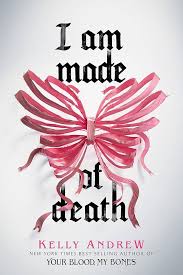
I Am Made of Death Review

Book: I Am Made of Death
Author: Kelly Andrew
Publisher: Scholastic Press
Year: 2025
Rating: 4 out of 5 stars

Synopsis : “Following the death of his father, Thomas Walsh had to grow up quickly, taking on odd jobs to help pay his gravely ill mother’s medical bills. When he’s offered a highly paid position as an interpreter for an heiress who exclusively signs, Thomas – the hearing child of a Deaf adult – jumps at the opportunity.
But the job is not without its challenges.
A selective-mute, Vivienne Farrow hasn’t said a word in years – not since going missing in Red Rock Canyon when she was four years old. No one knows quite what happened to her out in the dark. They only know that the sound of her voice is now as deadly as a poison. Anyone who hears her speak suffers a horrible death.
Vivienne is desperate for a way to regain control of bother her voice and her body. Because the face staring out of the mirror isn’t hers. It’s something with teeth.
Thankfully, she’s finally found someone who claims to be able to perform a surgical exorcism. She just needs to find a way to get rid of Thomas first. But Thomas can’t afford to walk away, nor is he willing to abandon the mysterious girl he’s falling for, no matter what dark powers threaten to swallow them both whole.”

Review : I Am Made of Death was the perfect antidote for both the book hole I found myself in after finishing The Devils and the disgust I felt over my last unfortunate one star review copy, Anji Kills a King. I needed something to grip me, and I Am Made of Death (IAMOD) did just that. I started and finished IAMOD in just under 48 hours, and had I just a tiny bit more free time available, I would have cut that time way down. Andrew created an absolute page turning, unputdownable read and I am eternally grateful for that.

As a child, Andrew lost her hearing at just 4 years old and it becomes evident throughout this book that Andrew has woven her own story into this dark fantasy, frankly, the personal connection, both to her own hearing loss and to her marriage with a Hearing individual, makes for a super compelling read. Told from the alternating perspectives of both Thomas, 18 year old interpreter for Vivienne Farrow, paid in unspeakably large sums of money by her step-father, Philip, and Vivienne, Thomas’ peer and wealthy heiress to Philip’s fortune who has remained largely unspeaking for most of her adult life. Following a tragic accident in the desert while a toddler, Vivienne has had the uncanny ability to kill with just the sound of her voice, no words necessary. Because of this unfortunate ability, Vivienne has mostly locked herself away, ashamed, afraid of her own voice, and more than anything, afraid of the monster she sees in the mirror. Both metaphor and reality, Vivienne is not merely the body from which a killer voice emerges, but the host to a parasitic demon; a demon who saved her life as a toddler, who continues to save her life as an adult, but for whom the price of existence is murder.

We enter IAMOD to find Vivienne mid-way into the process of entrapping a medical student into performing a highly risky procedure in which he will attempt to surgically remove the supernatural parasite from her body. Unfortunately, Thomas’ ever present self, and how little he knows or understands about the situation, stands between Vivienne and release from the creature who plagues her body and soul. *Spoilers Ahead!* Through the course of the book, told in three parts, we see an ever-diminishing gap between Vivienne’s hatred of Thomas and Thomas’ confusion over Vivienne’s situation. Andrew has written such a perfect foray into the sweetness of first love, it felt both intense and silly all at the same time, I found their quasi-friendship turned love so palpable and enjoyable. Beyond the slow growing love between Thomas and Vivienne, we also find a whole world of occult and magic intermingled with the world of high-stakes finance, law, and even medicine – it makes the somewhat dizzying world Andrew has created feel like maybe, just maybe, it could be part of our world.

Where things took a stumble, however, is in the telling. I can’t get a grasp on whether IAMOD is going to be the first in a series or whether it’s a planned stand-alone novel and that determines how I feel things were wrapped up and explained. If, as I hope, IAMOD is the first in a series, I think Andrew left plenty of room for questions to eventually be resolved and cleared up in a second, or even third, book. There were messy threads left incomplete by the time it was all said and done and as I closed the book I found I had more questions than answers. If this is to be a stand-alone novel, Andrew could have done a much neater job of tying up loose ends and that’s where I struggle with the final rating – there are too many things that went unsaid and too much that needed to be addressed for this to be the end. It’s possible this will be a one-off, but I think that would do a disservice to the characters Andrew has begun to built and a disservice to the broader aspects of the story that were never fully resolved. While IAMOD doesn’t end on a cliffhanger, it almost might as well with how many loose threads Andrew left behind and that’s why I feel this must be the introduction to a bigger world yet to be revealed through a sequel. I guess it’s yet to be seen! Either way, the loose ends as they were, this book was still so compelling, so well written, and so enjoyable that I had no choice but to give it 4 out of 5 stars. I think you’ll understand why when you read it.

Advice : If you enjoy a nail biter, enemies to lovers, dark fantasy, or a sweet first love story, this will definitely be for you!

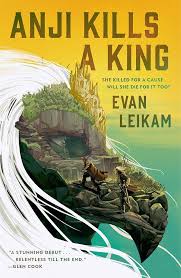
Anji Kills a King Review

Book: Anji Kills a King
Author: Evan Leikam
Publisher: Tor Books
Year: 2025
Rating: 1 out of 5 stars

Synopsis : “Anji works as a castle servant, doing laundry for a king she hates. So when a rare opportunity presents itself, she seizes the chance to cut his throat. Then she runs for her life. In her was, the kingdom is thrown into disarray, while a bounty bigger than anyone could imagine lands on her head.
On her heels are the fabled mercenaries of the Menagerie, whose animal-shaped masks are magical relics rumored to give them superhuman powers. It’s the Hawk who finds Anji first: a surly, aging swordswoman who has her own reasons for keeping Anji alive and out of the hands of her fellow bounty hunters, if only long enough to collect the reward herself.
With the rest of the Menagerie on their trail, so begins an alliance as tenuous as it is temporary – and a race against death that will decide Anti’s face, and may change the course of a kingdom.”

Review : A couple things to note right off the bat: if you’ve been around for a while you’ll notice that I gave Anji Kills a King the lowest score I’ve ever given – a score I extremely rarely dole out – 1 star. I also want to preface this review by telling you I did not finish (DNF) this book, I made it as far as page 107 (out of 348 in the advanced copy) before I called it quits. I generally try to give a book it’s fair shot by finishing it, and as you’ll note, over the last year I only DNF one other book out of approximately 30 that I received. Anji Kills a King was one of the most upsettingly bad books I’ve attempted to read in quite some time; I chose to DNF and shelve it rather than forcing myself through something I genuinely did not enjoy. Let’s get into it.

After spending years reviewing books online, Anji Kills a King is Evan Leikam’s debut novel and I found it an incredible disappointment to encounter such a poorly written book by a fellow reviewer. Anji Kills a King is being billed as a recommendation for fans of Joe Abercrombie’s work, and as someone who literally just finished a massive tome by Joe Abercrombie, I feel uniquely qualified to say : no. There is simply no universe in which I’d compare Leikam’s writing to that of Abercrombie’s. It is a far, far cry from the dry, witty, enjoyable work of a master talent like Abercrombie, to say the very least. Anji Kills a King begins with, well, Anji killing a king. There’s absolutely nothing to ease us into the story, there’s no lead-up, there’s just Anji, the king, and spurting blood. It’s from the very get-go that we go awry as the pacing absolutely stumbles headfirst through our entry into this fantasy world Leikam has created – and I use the term “created” loosely, as I could hardly tell you what the world was like, I have no idea what it was called, and couldn’t even begin to picture it if I tried. So many aspects of the book feel rushed, almost as though they ended up on the page by mere accident, yet simultaneously we find ourselves trapped in Anji’s inner world for an excruciating amount of time. It makes for a stilted and unenjoyable read from the very first page and doesn’t get better over the next 106 pages, either.

It’s hard to understand why Leikam wrote Anji the way he did, as I found her to be wildly unlikeable. It doesn’t make sense to create a book in which your reader is forced to endure nearly 400 pages with a protagonist who is intolerable to read. Anji is entitled, she’s brash, and she’s incredibly annoying. The annoying aspect is something I’d like to address, because I believe it comes down to poor writing, rather than an intentionally annoying character. Either way, Anji cannot seem to keep her damn mouth shut, and by that I mean Leikam has written dialogue that relentlessly travels the same ground over and over and over, making Anji appear to be dimwitted, though she isn’t written to appear dim outside of dialogue so I have to assume this is the sign of poor dialogue development, and not so much a character trait. The dialogue was so difficult to read I nearly stopped several times prior to page 107, but stubborn me, I wanted to get through it so I could give you a clear idea of the totality of this work – ha!

Sadly, Leikam’s work is not the breakneck fantasy book I was lead to believe it was. Instead, it was intentionally disgusting, not in any way that might have furthered the plot, but in a way that made me feel that Leikam chose to lean on the crutch of foul descriptors and disgusting scenes in order to bring grit to the book he created and instead made this reader feel nausea. Rather than the dark, gritty tone someone like Abercrombie might have achieved through a balance of humor and dry wit, Leikam instead managed to merely create something needlessly gross. With a narrator I couldn’t stand to read, pacing that made no sense, and absolutely no semblance of world building, it’s no wonder that by the time Leikam brutally killed not one, but two animals in his storyline, I closed the book and said “No more.” I couldn’t stomach another page of this truly unenjoyable book. As someone who holds onto the advanced copies they receive, whether good or bad, I hope I can impress upon you exactly how I feel by sharing that this book will go where it belongs : in the recycling.

Advice : If you enjoy Joe Abercrombie’s work, this is not for you. If you like fantasy books that include world building, that paint a picture for you, and that do the work of actually creating systems of magic that actually make sense, this is not for you. Don’t waste your time, it isn’t worth it. Avoid this one at all costs.

The Devils Review

Book: The Devils
Author: Joe Abercrombie
Publisher: Tor Books
Year: 2025
Rating: 5 out of 5 stars

Synopsis : “Brother Diaz has been summoned to the Holy City, where he is certain a commendation and a divine assignment await him. But his new flock is made up of unrepentant murderers, practitioners of ghastly magic, and outright monsters. The mission he is tasked with will require bloody measures from them all in order to achieve its righteous ends.
Elves lurk at our borders and hunger for our flesh, while greedy princes care for nothing but their own ambitions and comfort. With a hellish journey before hi, it’s a good thing Brother Diaz has the devils on his side.”

Review : Weighing in at a whopping total of 547 pages (in the advanced copy), before I’d cracked the spine I assumed The Devils would be slow-going, what I didn’t account for was my own reluctance to finish the book. Joe Abercrombie has crafted one of the single most enjoyable books I’ve had the pleasure to read in longer than I can remember; The Devils was perfection, could I have given it more than 5 stars, I would (being that it’s my own rating system is completely beside the point…I believe Brother Diaz would agree that some things benefit from structure). Abercrombie had me from the word ensorcelment and he didn’t let go until the final word on page 547. There’s a massive book-shaped hole in my life and, full disclosure, I will be filling it with additional Joe Abercrombie works, for surely they are just as excellent as this.

Told through the jumping narration of multiple, though not all, characters, The Devils spans, what I can only assume is, a fairly short amount of time but no shortage of adventure, daring feats, bloody scenes, laugh-out-loud funny dialogue, and is capped off with a dash of romance. Set in a world that feels juuuuuust a little too familiar, Abercrombie has crafted an ingenious fantasy novel that needed so little extra explanation that an entirely new world would beg from a reader, it felt like I was right at home. In a world separated by bickering factions of the church – one lead by a ten-year-old girl as the Pope, the other by a Patriarch, one featuring a wheel, the other a circle – not only was the geography near enough to our world that any differences only served to make me laugh, the morality of the world he’s created feels eerily similar, if not absolutely pointed. We begin The Devils by finding one Brother Diaz, a monk in the service of the Pope, being granted a new post : leader of the Church of Holy Expediency. In a world where the greatest threat to humankind comes in the form of Elf invasion, the church is determined to heal the rift between East and West factions in order to build a solid foundation against humankind’s mortal enemy, who, by the way, is overdue for an invasion that would likely be met with failure rather than success in battle. The Church of Holy Expediency seeks to fight fire with fire – if a war with devils is looming on the horizon, who better to fight devils than the church’s very own band of misfit devils?

The Devils features a cursed knight who cannot die, a jane of all trades, a not-as-decrepit-as-he-seems vampire, a true Scandinavian werewolf, a corpse conducting magician, a semi-invisible elf, and a street rat turned princess. It’s exactly the kind of good time you’d hope from a ragtag list such as this. Tasked, and magically bound, with delivering Princess Alexia (street rat by nature, princess by birth) to the throne of Troy, the crew embarks on a dangerous and bloody adventure, bound only by Papal magic…though, like every good buddy story, friendship and love are not as far off as they may seem. Between Alexia’s many murderous cousins and a leaked copy of the Papal Bull announcing her right to the throne, the crew is met with no shortage of devastatingly gore filled encounters. And YES, this book is incredibly graphic! There are so many fighting, pillaging, and all out scrambling-for-their-very-lives scenes, but…but Abercrombie has deftly wielded the pen, creating humor and humanity with each stroke. I laughed out loud so many times, even in the midst of the Viggo-Wolf ripping limbs and snuffling out the good meat, it was truly a work of art – much unlike the way our beloved Jakob of Thorn, the cursed knight who just cannot die, wields his sword, that is to say, not so deftly.

Intertwined throughout this hilarious, gripping, suspense-filled book we come to find a few profound theological delights. Not only are we told right from the start that these creatures are devils, we’re bombarded with that information throughout every step of the way. Culturally, the world Abercrombie has introduced us to seems to believe that the only people worthy of a soul’s eternal salvation are, well, people. Anyone else is an unrepentant sinner, never mind whether the Viggo-Wolf has been baptized (twice), or whether the cursed knight has spent hundreds of years attempting to earn salvation, or the semi-invisible elf actually yearns for personhood. We find, by the time we reach the final page, that Abercrombie has been tenderly carrying us through to the very heart of his point : that one group of people is not inherently more worthy of salvation than another simply because they were born a certain way. We come to realize that in Abercrombie’s world, the Devils are in fact, no different than the humans. And, while I don’t know this information yet, I suspect humans are really no different than the Elves, either – perhaps even worse.

Bereft. Devastated. Aimless. All words to describe how I feel now that I’ve finished reading The Devils. Absolutely crushed that it’s over. But fear not! Abercrombie has written us a small opening, a thread, if you will. I feel certain that there will be a second book and hopeful that there will be a third after that. While The Devils doesn’t end on a cliffhanger (not so much a spoiler, but hopefully you don’t mind this information), it does end in such a way that makes me want to know more, that has me asking questions that went unanswered, intentionally, I believe, throughout this tome. Like a dark fantasy suicide squad, Abercrombie has a cast of characters who are begging to be put through another gritty adventure and I, for one, cannot wait to read what he comes up with next. I think it’s also worth pointing out that a significant number of the books Abercrombie has written all came in the form of a trilogy, so finger’s crossed!

Advice : The only thing I can really say is that if you really, really, really dislike any mention of blood or guts or gore, you might not enjoy this book. However, if you love witty repartee, a stunning vocabulary, nuanced characters and character arcs, or a buddy comedy, I think you’ll fall as head over heels for The Devils as I did. Put this one on your calendar – May 6, 2025. Preorder it. Trust me.

Give Up the Night Review

Book: Give Up the Night
Author: P.C. Cast and Kristin Cast
Publisher: Wednesday Books
Year: 2025
Rating: 3 out of 5 stars

Synopsis : “Since becoming Moonstruck on her eighteenth birthday, Wren Nightingale has found herself thrust into a world filled with deception, danger, and murder. Uncovering that their magic was fractured and limited when the original Moonstruck ritual was broken by Selene, Wren is determined to find a way to restore it. But the Elementals are split into two factions – some want the ritual completed and their freedom – and others are so terrified of change that they’re willing to end Wren before she can reach the center of the island where the ritual Selene ruined can be completed.
Between his overbearing father’s arrival, Rottingham delegated him more and more responsibility, and Celeste taking a special interest in him, Lee Young has been struggling to find his own path. As much as Lee wants to take his place in the Moonstruck hierarchy, he knows something’s not right at the Academia de la Luna. He thinks if he can talk some sense into Wren and get her to return to the Academia, that everything will turn out alright.
As Wren and Lee both battle for what they believe is right, they’ll have to uncover who their true allies are…and if they’re even on the same side of this magical fight.”

Review : Dear reader, to be completely honest with you, I’m not sure how I ended up with this early copy. Not only is Give Up the Night a sequel, to a book I didn’t read, mind you, but it’s been co-authored by two people I’m familiar with; if you’ve been here for a little while, you may remember that I reviewed the first and second books in a different trilogy written by P.C. Cast and Kristin Cast, and if not, you can find them here and here – as an aside, I didn’t realize the earlier of the two reviews was written all the way back in 2021 and now I must sit in shock that I’ve been receiving review copies for four years before I can continue on.

I make a point not to request sequels, and after my last two not-so-kind reviews of the Cast’s work, I’m a little more than surprised to find this book sitting in front of me. I must have made a mistake. Nonetheless, much like last year, my plans for this year include reading and reviewing every advanced copy that comes my way, so I did read Give Up the Night even though I didn’t read Draw Down the Moon, the inaugural book in the Moonstruck trilogy. To their credit, the Casts made it easy for someone to jump in without needing a total refresher of the first book – enough details were organically rehashed by the characters within the first chapter that I didn’t struggle to understand what was happening, despite jumping in at a pivotal moment. However, I do find it difficult to review a sequel without having read the first book, so this review will likely be quite short.

I find the Casts to be adequate writers, and by that I mean they do just fine if you’re not bored with a tired trope, ready for fresh material, or want a truly new, enticing, or compelling story. It’s just fine. Nothing more. I realize this is an advanced copy, but this book was riddled with errors, something I don’t tend to see in the more well put together books I receive – so that’s worth noting. Reading this book had me wondering how much might change between an advanced copy and a first edition; for example, if you have a nonbinary character, it might be worth your time as an author to ensure that you get your own character’s pronouns correct. It might even be worth your time to figure out the pronouns of the magical beings you’ve written into your novel, wouldn’t you think? Rather than jumping around confoundingly between he and she with no real clear reasoning as to why it’s jumping around – no, this is no gender fluid creature, it’s simply poor writing. The storyline matched every damn fantasy storyline you might be familiar with and that felt like an insult to the reader : young woman in a magical world finds herself bestowed with incredible! unbelievable! magical powers after spending time thinking something is wrong with her because her peers are developing their powers as normal while she lags behind; magical creature becomes magically attached to said young woman; young woman becomes marked as special, must go on magical quest to set things right / free everyone / do something spectacular that no one else has ever been able to do before. The “quirky” and “special” angle feels wildly overplayed – I can think of four books without even trying that fit the same mold. It’s overdone.

Lastly, I did find the majority of Give Up the Night to be fairly compelling, inasmuch that I continued to turn pages for a while before I got bored. I’ve said it before and I’ll say it again, a book doesn’t have to be well written to be compelling. Poorly written books with compelling storylines still turn pages. As we neared the ending of this book, however, things took a turn. The clear-cut narrative turned muddled, the geography became redundant, and the quest the characters found themselves on turned on it’s head in a way that made no clear sense. It felt like writing for the sake of wrapping up a book with a wild and crazy twist, not like something necessary to the storytelling at all. It was all a ploy to introduce book 3, which is fine, but not for me. Anyway, like I said…this book was fine. No more.

Advice : If you’re familiar with the Casts’ work already and enjoy it, I’m sure you’ll enjoy Give Up the Night. If you’re not or you’re looking for something that doesn’t read like a watered down Fourth Wing…try again. This one won’t be for you.

The Distractions Review

Book: The Distractions
Author: Liza Monroy
Publisher: Regalo Press
Year: 2025
Rating: 3 out of 5 stars

Synopsis : “Mischa Osborn spends her days as a ProWatcher – keeping distracted people on task and lonely ones accompanies – from her Brooklyn Mega-building, while eating Petri-Meat Steax and working out with her favorite personal trainer, a straight-talking algorithm named Tory.
Her carefully constructed, isolated existence is suddenly upended by a chance realspace encounter with a HighlightReel celebrity, Nicolas Adan Luchano. On their first date, hiking in Kuulsuits and watching DroneBeez pollinate flowers, Mischa experiences a brief but intense realspace connection.
Mischa takes to relentlessly watching Nic onReel. As Mischa’s ReelWatching spirals into an all-consuming obsession, and even realspace stalking, Mischa takes increasingly desperate measures to be seen and valued, sucking others into her vortex of obsession until she completely loses control.
Meanwhile, someone is equally obsessed with Mischa, tracking her every move and perhaps even influencing her choices.
A tale of how technology enables obsession, envy, and unrelenting comparison, told through an eccentric cast of interconnected characters, The Distractions invites us to reflect on who we are watching, and why.”

Review : Liza Monroy’s The Distractions asks what might happen if our lives became nothing more than content for others to watch, taking our current reality several steps beyond where we find ourselves in 2025. Set in some kind of ambiguous future – is it one hundred years, two hundred, a thousand? – The Distractions is an imagining of where our lives might take us if things were simply not to deviate from where they are in the present. In a world where we are constantly attached to our phones, where smart homes, smart watches, smart glasses, and self-driving cars are becoming more and more the norm, it’s not hard to see where Monroy’s concept was born. Mischa, our protagonist, spends years consumed with obsession, literally (no, really) losing herself to the endless succession of constantly streamed video feeds of the objects of her ever-worsening obsession. I think it’s worth noting that The Distractions reads like an addiction spiral and if you’ve found yourself in that space, this may not be the right book for you.

I’ll be the first to admit that dystopian fiction is not my favorite, to put it lightly. I wasn’t completely clear on just how dystopian this book would be until I really got into the meat of it – I knew it would be futuristic as it begins with five pages filled with verbiage necessary to understanding the world Monroy has crafted. Five. It’s a task for any author to fully create a functioning and understandable world, and while this is something I encounter more regularly in the realm of fantasy, Monroy gave herself quite the task with this book. I do think she succeeded in creating a reality that I was able to easily understand after I spent the first chapter flipping back and forth between her compendium of terms and the page I was reading. Once I got into the novel, I was able to seamlessly grasp the terms and concepts as they’re just not that far off from where we are these days and the terms we have in our common vocabulary. I will say, I found this to be less speculative and more progressive, if that makes sense! There was so little imagining of the future and truly so much speeding up from where we are – the understanding is that as a society we only evolve through technology and rampant consumerism and all the rest we just learn to live with. Like most dystopian novels, it was flat out sad.

The Distractions amplifies a world we already find ourselves living within and with an uptick in people considering leaving social media or seeking out other sources of connection, I think Monroy did herself a disservice by choosing not to be speculative. Speaking of the landscape in California, Monroy tells us that everything is on fire these days – the timing of this book feels potent; of the air quality and heat index, one can only step outside while wearing a protective suit and most choose to stay inside instead; of food, we see Mischa et al consuming lab grown “meat” and cricket powders; of bird populations, well, there aren’t any. It’s all so reminiscent of our current reality that as things do change and progress and we, ideally, evolve beyond our need to consume at all costs, I think The Distractions will, at least in small part, become irrelevant and that’s a tough thing for a dystopian futuristic novel. And I don’t think I’m being overly optimistic here, but maybe I am. I just tend to expect that the current and immediate future generations will find ways to connect with each other outside of online spaces, particularly as our online spaces take a turn for the worse.

Where this book fell flat for me, is in the functional flow of the narration and the content within. While written well and given appropriate pacing, particularly as we witness Mischa losing literal years of her life, it felt as though it wasn’t a fully thought out concept outside the actual obsession that comprised 85% of the book. Monroy initially describes Mischa as preferring to keep to herself, to not engage with other humans, and to appropriately divvy up her time. However, the downward spiral into obsession came on quickly, as though this wasn’t the first time it happened, and the inability to even see glimpses of Mischa’s past life felt off. I realize the nature of addiction looks different to everyone, but it felt incomplete, as if we were missing crucial details about Mischa’s life prior to beginning the book. Likewise, the ending of the book was a convoluted, confusing mess that left me wondering why it was written the way it was. I was left with questions that might have served as intriguing methods of concluding the book but instead grew tangled the more Monroy attempted to explain them. It didn’t feel neat, it felt needlessly messy; I can be completely content with messy if it’s purposeful and intentional and meets the standard of the entirety of the book, but this was not that. Finally, yes, Mischa was being watched the entire time, we know this because there’s a second narrator, but the finale (and the back of the book) make this narrator out to be much more sinister than they came across in our time spent with them – and I found the details of just how this being watched Mischa to be convoluted and confusing at best. There’s so little explanation for the voyeur that it almost felt like I wasn’t meant to question it, but of course I did because there was no explanation…you see my problem?

Ultimately, this was an interesting concept that reminded me at times of the movie Wall-E and at times of Philip K. Dick’s Do Androids Dream of Electric Sheep?. I could go on for many more paragraphs about the implications of AL (advanced algorithms in The Distractions), the ethics presented in this book, of autonomous artificial intelligence, and our perceived humanity within the complex matrix of technology, but I’ll leave it here. The Distractions was interesting and clearly fleshed out in ways I will never be able to grasp, but it felt incomplete and perhaps even unnecessary, or at least I can hope. And maybe that’s all that can really be said about a dystopian novel, at the end of the day. It makes you hope and wish for a better future, and this book certainly did that for me.

Advice : If you, like me, aren’t the biggest fan of dystopian fiction, if you prefer speculative fiction, or you’re horrified by the idea of AI or social media taking over our lives, this may not be for you. If you enjoy the ethics and philosophy behind all of the above, you may just well love this one.