The Pursued Review

Book: The Pursued
Author: Corey Mead
Publisher: Little A
Year: 2025
Rating: 4 out of 5 stars

Synopsis : “From 1977 to 1981, Ruth Finley, an ordinary wife and mother from Kansas, was tormented by an elusive maniac known as the Poet. The police, already on edge from BTK’s reign of terror, spent years searching for the stalker. Meanwhile, his cryptic letters in rhymed verse grew more disturbing and violent, spilling into deeds like stabbing and kidnapping.
In this propulsive nonfiction account, as Ruth is surveilled from all sides, her nightmare takes a chilling turn: The stalker is no stranger at all. It’s someone the police have been close to for years, someone nearer to home than Ruth dared to admit. The revelation recasts what seemed like a cruel twist of fate as something far more disturbing.”

Review : The Pursued is, at times, a dry yet compelling nonfiction read about a serial stalker I hadn’t previously heard of. While the writing and narrative are what one might expect from a true crime rendering – that is to say, dry – the actual incidents themselves and the deeply disturbing nature of the crime left me turning pages, unwilling to put the book down until the conclusion. I finished this book in about 72 hours, and despite the dry nature of it, The Pursued is certainly what I would call unputdownable. Mead has done a good job of creating doubt, of shedding just enough light on the narrative to keep you guessing and questioning right along with the police as they attempt to understand the Poet’s motivation.

The Pursued details several years in which a woman, Ruth Finley, is stalked, tormented, and even kidnapped by a man known only as “The Poet”. It’s a winding tale of uncertainty, fear, and doubt as the police surveil Ruth’s home, neighborhood, and work for years attempting to find the Poet and bring him to justice. The actual events of the case are so absurd and strange, at times there seems to even be suspicion that The Poet and BTK might be the same person. Mead has created a narrative in which the reader cannot possibly see the end result of the investigation until one has completely finished the book – and even then, I find there are still holes in the conclusion that don’t quite add up for me. It’s a strange case and I suspect an even stranger case to have written about. I think Mead did a good job of remaining objective throughout the retelling, something that would be easy to divorce oneself from, particularly if you already knew the conclusion at the outset of writing the book. I do wish there’d been a bit more humanity in the retelling, however, perhaps some interviews with people close to the story, something to assure me that we’re doing more than craning our necks to look at someone else’s dirty laundry for the sake of entertainment – but that’s all true crime, isn’t it?

*** Spoiler’s Ahead ***

I want to tell you, however, that I had trouble sleeping once I’d finished this book, and had I known what the outcome was going to be, I likely wouldn’t have picked it up in the first place. It’s impossible to read this book in the way it was meant to be written and simultaneously know how the case concluded, but The Pursued desperately needs to come with content warnings. I won’t be giving the ending away by telling you these details, but I do want you to know that this information does contain some level of spoiler, so please be warned. If you choose to read this book, you must know that The Pursued discusses sexual assault of an adult, sexual assault of a minor, pedophilia, endangerment of a child, discussion of bodily fluids, kidnapping, physical assault, and mental illnesses. Anyone reading this book should go in knowing that the end is gruesome and horrific and sheds a light on outright evil. It’s not for the faint of heart and should be approached with extreme caution.

Advice : If you have a thick skin and a stomach of steel and you live for true crime and nothing really bothers you, then you will likely really enjoy this book. If you’re a softy, like me, or find real cruelty to be difficult to stomach or you have PTSD, I really highly suggest that you don’t read this book, or find some spoilers and decide for yourself if this will be a safe book for you.

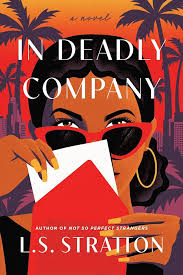
In Deadly Company Review

Book: In Deadly Company
Author: L.S. Stratton
Publisher: Union Square & Co.
Year: 2025
Rating: 4 out of 5 stars

Synopsis : “As the assistant to the CEO of a Fortune 500 company, Nicole Underwood has plenty of tasks on her to-do list – one of which is the blowout celebration for her nightmare, on-percenter boss, Xander Chambers. But when the party ends in chaos and murder and Nicole is one of the survivors, suspicion – from the investigators to the media – lands on her. Was she the reason for all the bloodshed?
A year after those deadly events, Nicole tries to set the public record straight by agreeing to consult on a feature film based on her story. However, while on set in Los Angeles, she’s sidelined by inappropriate casting and persistent, bizarre script changes – and haunted by persistent visions of her now-deceased boss. It seems clearing her name ins’t so simple when the question of guilt or innocence is…complicated.”

Review : In Deadly Company is an enjoyable, inventive, and easy to read thriller with a truly unique plot that doesn’t fall into the trap of the unreliable female protagonist trope so many thrillers seem to adore. It’s well written, quick moving, and leaves you guessing all the way until the end. While I did find the final reveal to be a bit obvious and contrived, it was still fun to get there in the end. I thoroughly enjoyed this read, found myself wanting to slow things down so it wouldn’t end quite so soon, and have been chewing it over since I finished it yesterday – all hallmarks of a good book.

The narration jumps a bit, and doesn’t hold fast to a set-in-stone pattern which I found to be unnecessary, but provided some texture and certainly helped give context to the way events played out. Between Nicole’s present day and her past, we watch the fateful events of her boss’s birthday party unravel, not only the alluded to murders (yes, plural), but the behind the scenes goings on in Nicole’s personal life that we are only granted glimpses of throughout the book. In the present, Nicole is watching and “consulting” on the movie retelling of the events of her boss, Xander Chambers’ birthday – she wields almost no say in how the story gets told, but she’s been hired by the production team and so she’s there, on set, watching the events play out once more despite very clearly having PTSD. In the past, we simultaneously watch the events play out in real time, catching little bits here and there that might reveal who ends up murdered and why, but never enough to fully catch on to the carnage that would eventually play out by the time the birthday weekend was over.

This review will be short and sweet, nearly anything else I have to say would include spoilers that might truly wreck the ending for you, so I’ll leave things where they are. I will say, however, that I wish the ending had taken a slightly different turn – without giving you the details, you’ll have to read those for yourself, the final twist at the end felt contrived and forced, giving the power of the novel a bit of a lackluster finish. It didn’t feel well thought out, but it did feel a bit messy. Things could have tied up in a nicer way, been a bit less all over the place, and not included one of the most obvious plot twists in history. Okay, that’s all. If I say more, I’ll spoil it for you!

Advice : This was such a fun read! If you’ve been disillusioned by thrillers written from a female perspective, I think you should really give this one a shot! Be warned, there are graphic descriptions of blood, gore, and death; the author describes PTSD flash backs; and there’s mention of the date rape drug as well as what happens when it’s used.

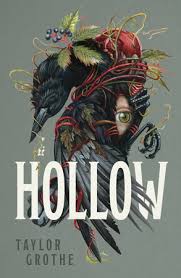
Hollow Review

Book: Hollow
Author: Taylor Grothe
Publisher: Peachtree Teen
Year: 2025
Rating: 3 out of 5 stars

Synopsis : “After a meltdown in her school cafeteria prompts an unwanted autism diagnosis, Cassie Davis moves back to her hometown in upstate New York, where her mom hopes the familiarity will allow Cassie to feel normal again. Cassie’s never truly felt normal anywhere, but she does crave the ease she used to have with her old friends.
Problem is that her friends aren’t so eager to welcome her back into the fold. They extend an olive branch by inviting her on their backpacking trip to Hollow Ridge, in the upper reaches of the Adirondacks. But when a fight breaks out their first night, Cassie wakes to a barren campsite – her friends all gone.
With sever weather approaching and nearing sensory overload, Cassie is saved by a boy named Kaleb, who whisks her away to a compound of artists and outcasts he calls the Roost. As Kaleb tends to her injuries, Cassie begins to feel – for the first time in her life – that she can truly be herself. But as the days pass, strange happenings around the Roost make Cassie question her instincts. Noises in the trees grow louder, begging the question : Are the dangers in the forest, on the trail, or in the Roost itself?
In a world where autistic characters rarely get to be the hero of their own stories, Cassie Davis’ one-step-back, two-steps-forward journey to unmasking makes Hollow as much a love letter to neurodiversity as it is a haunting tale you’ll want to read with the lights on.”

Review : This is a strange review for me; I spent the majority of my time reading Hollow absolutely certain this would be a 5-star-review kind of book. It was impeccably written, impossible to put down, and left me with so many questions bouncing around in my mind – waiting, waiting, waiting for the big reveal that would tie things up and explain the nuances and mystery of the book. Sadly, within the last quarter of Hollow, the plot completely fell apart, the twists and turns Grothe had to take in order to explain the strangeness became overly complex, and left me with so few answers I am almost totally baffled as to why and how it ended the way it did. The sharp turn toward confusion is something I’ve been mulling over for two days since reaching the ending and I’m having a hard time coming to terms with this as a purposeful choice and not a mistake in storytelling.

It’s worth saying that Hollow is genuinely so well written for the majority of the story, it’s a dark and winding suspense-filled mystery of a book filled with nuance and palpable anxiety as we experience Cassie’s world both externally as her camping trip goes horribly awry, and internally as we bounce back and forth between flash backs to a bullying incident at her last school and her present internal world as she navigates a new autism diagnosis. Hollow as a whole is a beautiful metaphor for the neurodivergent experience of masking, or putting on a face for each set of specific circumstances one might find themselves in during a day-to-day existence. Cassie returns to her hometown after living in the city with her family, following a mental breakdown that lead to an autism and trichotillomania diagnosis. She’s lost touch with her friends and upon returning, in an effort to rekindle their friendship, she’s invited on their annual backpacking trip into the Adirondack Mountains. Everything seems fine, at least on the surface, until the first night of their trip leads to too much to drink, blacking out, and waking to find half of her friends have left the group behind. With an imminent storm approaching, Cassie leaves the campsite behind to find and rescue her friends before something terrible happens. It’s during her initial panic as she searches for the rest of her group that Cassie stumbles, spraining her ankle, and finds herself being rescued by a strange boy she’s never seen before – Kaleb. This is where things begin to take a strange turn.

Kaleb and his mother Stasha live in a remote part of the mountains in a small, off grid community called the Roost. It’s here that Cassie is allowed the space to rest and recover while the storm rages around them, taking a break from searching for her friends until the storm passes and they can get radio signal to the rangers down the mountain. Within the Roost are several families, most of whom have stumbled across the community and have chosen to stay, each living in a small home that seems to have been built by Kaleb’s parents. While staying at the Roost, Cassie discovers that there’s a secret language everyone speaks, some strange mixture of different dialects and languages from across the globe. The members of the Roost seem pleasant, though there’s never quite a sense of ease, as they continue to speak in a foreign language Cassie is unable to get a grasp of, and the books are all written in some unknown tongue she’s equally unfamiliar with. Kaleb continuously tells Cassie how unfair it is that her friends have left her on the mountain to fend for herself and says repeatedly that they’ll have to pay for what they’ve done, which gives a nice sinister backdrop for the scene Grothe has created. While in the Roost, Cassie begins to notice that there are carved wooden dolls…everywhere. They seem to surround the Roost, filling buildings with their haunting, carved faces, peering down from rafters, and generally giving an air of strangeness to the entire community. There are so many instances like this where Grothe is clearly making a point about neurodivergence, the way humans interact with a known dialect and jargon that doesn’t always reach the people who might stand on the fringes or feel as though they can never quite get a foothold in with those who so easily adapt. There’s a profound message of accessibility and acceptance within this storyline, but there’s also a lot left to be desired when it comes to unfolding the story outward into an ending that makes sense.

*Spoilers Ahead* As the book begins to really unravel at the end, so much comes to light about the Roost and the community of people who live there – really driving the point home that Cassie has simply never felt as though she belong, that in wearing a mask she’s as wooden as the dolls who surround the compound. The masks neurodivergent people are often forced to wear are ill fitting and a source of tremendous discomfort and I think Grothe does so well in addressing this concept with simultaneously creating a super creepy drama through which it might unfold. It’s how things come apart at the end that really left me struggling for answers; as Cassie finally starts to put the pieces of the Roost’s strangeness together, she realizes (too late) that Kaleb is actually her good childhood friend, Blake. Yet, in all the time she’s spent at the Roost – and this is another issue I find with the actual storytelling of the book, as the time she’s spent there seems to range from a week to several months with zero explanation beyond perhaps some kind of magic?? – she never once recognizes Kaleb as Blake, literally one of the friends on her camping trip. And not only that, somehow Kaleb / Blake is supposed to have created the entire Roost on his own, carved all the members of the community, and also kidnapped several hikers? Over the course of how long? The time frame, the inexplicable inability to recognize even Blake’s voice or mannerisms or scent (which she mentions multiple times), and the complete lack of explanation for all of the above lead the ending of the book to ultimately fall to pieces on top of a well written few hundred pages. I think there’s a singular moment early on where Cassie mentions briefly that she’s been diagnosed with face blindness, which I think might explain being unable to recognize Blake as Kaleb on it’s most base level, but it’s never mentioned again and without working a little harder to tie things together, it feels loose and confusing at best.

The unknown language spoken in the Roost and the unfamiliar written language in the books are never really explained, and while I can appreciate that the spoken language serves as an analogy for how Cassie feels disconnected from neuro-normative folks, the written language being something totally foreign to her feels like an aspect of the book that was written initially and then forgotten about when it came time to wrap things up. The ending of the book is unclear, deeply confusing, and left me with more questions than answers, which is an unsatisfying way to end a suspenseful, magical novel. I really do appreciate the parallels Grothe draws between those who stand on the fringes of the world and Cassie’s experience at the Roost, I love that Cassie was written to give neurodivergent individuals a place to be the hero, but I don’t know that it was completely successful when everything was all said and done. Cassie spends a lot of time back-and-forthing between staying in the Roost and leaving, even when her friends are dying around her, so much so that it felt as though the point was being made, mistakenly, over and over and over again. It felt like Grothe was hammering it home a little too hard, and in doing so neglected wrapping up crucial elements of the plot. I wanted to give this book 5 stars so badly! I wanted the ending to be better than it was, to make more sense than it did, and to give more of a feeling of completion than I was left with. Sadly, the ending spoiled most the book for me and I had to go with 3 stars. I think there’s room to figure things out and make it make more sense, but I also think it’s not super likely to happen at this stage and I’m sad for that and for Cassie’s story.

Advice : I think this book had a lot of potential – if you like crows, if you like something vaguely sinister, if you want to see a neurodivergent person be the hero, wow! You’ll definitely have something to dive into with Hollow. However, I want to recommend that you don’t get your hopes up for the puzzle pieces to fit together at the end – they don’t. This one might be best checked out from your local library first.

The Housekeeper’s Secret Review

Book: The Housekeeper’s Secret
Author: Sandra Schnakenburg
Publisher: She Writes Press
Year: 2025
Rating: 3.5 out of 5 stars

Synopsis : “A catholic family in 1960s Chicago headed by a narcissistic and demanding father takes on Lee, a housekeeper with a mysterious past. Lee becomes like a second mother to the Krilich children, especially Sandy. After Lee’s death, Sandy begins a determined quest to find out her dear friend’s backstory – and proceeds to uncover one shocking fact after another, even as the story of her own family drama, and the heartwarming role Lee played in the Krilich’s lives, unfolds.”

Review : While this book’s title and synopsis might lead you to believe the entirety of the novel will be spent uncovering a housekeeper’s secret(s), the truth is only about 20% of the book was spent actually delving into Lee’s past. While I don’t particularly think the information Schnakenburg was able to gather about Lee, her beloved housekeeper, is broad enough to fill an entire book, I do find it hard to wrap my head around how little of the book was actually devoted to Lee’s life and how much of it was devoted instead to our writer. I don’t find this problematic as far as storytelling goes, Schnakenburg, nee Krilich, had an extraordinary childhood filled with trauma, neglect, abuse, and a near fatal accident – but the title of the book is The Housekeeper’s Secret and we didn’t begin to dive into Lee’s secret until the book was nearly over. The title and the content didn’t match up.

Like I said, though, I found the story of Schnakenburg’s upbringing to be enough to keep me turning pages, wanting to know how things would evolve in the lives of Sandy’s family members, forced to endure a grueling childhood with a demanding and demeaning father with a roiling anger problem and no regard for the wellbeing of anyone in his path. I found Schnakenburg’s portrayal of her father to be quite interesting – in fact, I believe her storytelling of his abuse throughout her childhood to be far too lenient and more forgiving than I would hope. We spend, as I mentioned, about 80% of The Housekeeper’s Secret growing up with Sandy in a hellish nightmare world of a home, growing with her from the time she’s no more than a toddler until she’s an adult with children of her own. It’s throughout this memoir-like progression that we come to find Sandy’s relationship with her father, and the relationship he shares with her 5 additional siblings and mother, is strained at best. He is, to put it bluntly, a menace. Demanding 7 different types of juice each morning, forcing Schnakenburg’s mother into situations that endanger her life (more than once), forcing a six-year-old to utilize hedge-trimmers with zero supervision, and having a second family are only some of the stories we read in this book – it is well and truly a nightmare. And yet, Schakenburg attempts to humanize her father, explaining that he suffered the loss of a childhood friend in a drowning accident, as if this singular trauma might explain the evil that he unleashed upon his family; it’s particularly glaring when you consider that Schakenburg’s mother suffered from a terrible fear of drowning, so much so that she never learned to swim, and her husband forced her onto multiple boating trips, one in which the threat of drowning was quite real when their boat suffered damage and began to take on water.

*Spoilers Ahead*

When we do finally make our way to Lee’s story, a story she told the children for years she wanted to write (but spent no time actually writing down, nor telling to anyone to transcribe), the story we end up with is one of tremendous tragedy, horror, and loss. It is hard to endure, yet necessary to read. Lee, a Black woman growing up in the 1940s, was brutally attacked, beaten, and sexually assaulted by multiple men while walking to the bus after work. She was left for dead. Because it was winter and there was snow on the ground, she managed to survive the night, but suffered incredibly bodily damage as well as a traumatic brain injury. Being unable to fully recover and in a family that was enduring their own physical ailments and diagnoses, Lee was sent to a sanatorium for care. While there’s significantly more to Lee’s story, I’d like to leave it here and encourage you to read this book if for no other reason than the necessity of hearing a story like Lee’s – a story that deserves to be heard and told. The history of women’s medical treatment is one we should never take lightly, especially as we find ourselves simply not all that far removed from the most egregious “treatment” and experiments performed – often for diagnoses that are now easily managed with medication, therapy, and simple kindness. Women of color, even more so.

I sobbed through Lee’s story, wishing so much that there was more information available, that we could see retribution for the actions of the men in her life who treated her with such unimaginable disregard, wishing Schnakenburg could have dug up and revealed names so we might know them for who they were. It’s the human response, I believe, to reading a story like Lee’s. You want to see justice done, you want to see more come from it than 20% of a book about an abusive father, you just want more. I think it’s commendable that Schnakenburg took up the mantle of this task, but I wish there was less about Schnakenburg herself (perhaps saving it for a separate memoir) and more about Lee. As we meet Lee’s children toward the end of the book, Schnakenburg and her siblings share stories about Lee that were never mentioned at any other point in the book and I can’t help but think this book would have better served Lee’s memory had it included more stories of Lee’s life, even on where she was an employee of a family that was not her own. Schnakenburg dips her toes into the realm of white saviorism at the end, when she learns one of Lee’s children fell victim to the system as an orphaned child born in a sanatorium, suggesting that this child would have been better off in Schnakenburg’s home where her horrifically abusive father ruled with an iron fist of unpredictability. In fairness, I think her intentions were noble in this moment, believing the child would have been better off with Lee, and I agree, but again, I feel she’s been far too forgiving of her father and a bit short sighted, considering how deeply she had previously detailed his abuses. There were moments that left me gasping for air for the sheer horror of it all, moments where I sobbed, and moments where I cringed. Lee’s story is a tragedy that deserves to be heard.

Advice : It’s worth noting that if you choose to read this book it does speak about verbal abuse, emotional abuse, manipulation, gang rape, power dynamics, torture, water torture, sexual assault, traumatic brain injury, a car accident / bicycle accident, and drowning. This book is not for the faint of heart, but if you’re a woman I think it’s a deeply important and impactful story to read.

The Book of Lost Hours Review

Book: The Book of Lost Hours
Author: Hayley Gelfuso
Publisher: Atria Books
Year: 2025
Rating: 5 out of 5 stars

Synopsis : “Nuremberg, 1938: Eleven-year-old Lisavet Levy is hidden by her father from approaching forces in a mysterious place called the time space, a library where all the memories of the past are stored inside of books. Trapped, she spends her adolescence walking through the memories of those who lived before. When she discovers that government spies are entering the time space to destroy volumes and maintain their preferred version of history, Lisavet sets about trying to salvage the past, creating her own book of lost memories.
Until one day in 1949, when she meets an American timekeeper named Ernest Duquesne, who offers her a chance at another life, setting in motion a series of events that puts her own existence – and that of the time space itself – in peril.
Boston, 1965: Amelia Duquesne is mourning the death of her uncle and guardian, Ernest, when she’s approached by Moira Donnelly, the head of the CIA’s highly secretive Temporal Reconnaissance Program. Moira tells her about the existence of the time space – accessed only by specially designed watches whose intricate mechanisms have been lost to history – and enlists her help in recovering a strange book her uncle had once sought. But when Amelia enters the time space, she discovers that her uncle may not have been the man she thought – and that the government may have another reason to bring her there.”

Review : Lisavet Levy lives in the Time Space. In the history of time, it seems that no one has ever simply lived in the Time Space – the place outside concrete reality where all memories live and are recorded, where souls who pass go to be placed into books, where our recollection of events are housed. And yet, for over a decade, Lisavet Levy lives within the Time Space. In a world where special watches and only a few select people may generate a doorway into such a sacred place, the governing bodies of countries all across the globe enter and tamper with the Time Space, effectively changing the way people view the world according, literally, to the victor. It’s within the Time Space that Lisavet Levy realizes government agents and soldiers are entering her temporal reality and burning memories, literally destroying the memories of hundreds, if not thousands, of people. In the real world, as a reader, The Book of Lost Hours speaks, at least in part, to the dangers of propaganda and misinformation campaigns. And while we may be in a world without a literal Time Space, nearly one hundred years in the future, the threat of mis (and dis) information looms large. Gelfuso touches on a topic that is near and dear to many of our hearts with her stunning book, reminding us of the importance of preserving the memories of those who perhaps did not fare as well as the victor may have, as we know that indeed, history is written by the victor.

While The Book of Lost Hours is a chilling look into how governing bodies (presidents, say) go about changing and challenging the agreed upon version of events, it is at it’s core a hauntingly beautiful love story that spans not just years and countries, but memories and timelines as well. Lisavet meets Ernest Duquesne in the Time Space and while they court each other in the memories of others, Lisavet begins to change Ernest’s mind about burning and changing the memories of those he’s sent into the Time Space to discard. **Spoilers Ahead** And though Lisavet, as a form of self preservation, must eventually erase all memory of herself and their love from Ernest’s mind, the seed she planted in his mind takes root. By the year 1965, there’s a full-blown revolution occurring within the CIA, even spanning across the globe; soldier’s preserving memories they’d been sent to destroy, thwarting the notion that memories and history must be warped to fit a specific turn of events. Through sheer bad luck and, perhaps, inevitability, Lisavet finds herself captured and under the control of the director of the CIA, Jack, a man who sees her merely as an asset and something to be used to further bolster the American agenda within a growing Cold War. It is outside the Time Space that Lisavet and Ernest meet once again, and again find themselves falling in love – though one of them remembers the past while the other doesn’t.

Jumping between the perspective of Lisavet and Amelia, Ernest’s niece, we piece Lisavet’s story together, from her time within the Time Space to her time spent in the real, concrete world. With several twists and turns that, while easy to spot, don’t detract from the storyline, we navigate a growing divide in the external world and a literal growing chasm in the Time Space, torn apart by Amelia’s mere presence in the world. With just a hint of string theory and quantum physics, The Book of Lost Hours presents a framework whereby we might imagine memories as a collectively agreed upon idea rather than a set in stone foundation of events that well and truly happened. It’s a lot to chew on and offers a unique perspective into the idea of time, memories, and consciousness – all while addressing the very real implications of disinformation. With parallels to our own world, it’s hard to miss the roadsigns. If we aren’t careful, we’ll wrap ourselves up so tightly in a web of lies we’ll never be able to find our way back to the truth again – if we haven’t already.

Advice : This book comes out tomorrow (8/12)!! I think you should grab it. If you enjoy Outlander, time travel of any kind, libraries, and a little bit of science fiction, I think you’ll really love this one. If you’re not interested in a love story, or don’t like books, well, this is probably not for you and what are you even doing on my blog in the first place?

From a Studio in Oakland California Review

Book: From a Studio in Oakland California : 180 Notes on Existence
Author: Enia Oaks
Publisher: Self Published
Year: 2025
Rating: 3.5 out of 5 stars

Synopsis : “This collection of poems and essays is for those who sit at the crossroads of past and future, wondering which way to turn. Those who have bravely restarted and are building new homes from within themselves. Those who believe in the grand experience of life and living it fully, even when it asks everything of them. Those hurting, healing, or transforming. For the ones who are seeking meaning or a deep exploration of the layers of existence.”

Review : Enia Oak’s debut book, From a Studio in Oakland California : 108 Notes on Existence is not to be read quickly, blown through, or breezed by; it’s made to be savored, slowly devoured, and meditated upon. It does not surprise me one bit to find this book of 108 missives to be a meditation – it’s spiritual in nature. Written in short blurbs, poems, and ideas, FASIOC is filled with logical life advice, imparted wisdom, and personal exploration. It is quite literally packed to the cover with information on how and why and when to grow, on the choices we make as humans, the way we stretch out for someone else to witness our lives, and how we might best look inward to see and gently tend our inner child as fully formed adults.

While Oaks’ synopsis / letter to the reader calls this book a “collection of poems and essays”, I would more likely call this an open letter to someone who’s going through therapy and doing the work to heal. Based on Oaks’ description, I was initially confused by the layout and conversive tone her poems and essays take. They don’t necessarily read as poems, certainly not so when you take the totality of the book under review, but they do read as essays directed toward the reader. Like I said, it reads like an open letter, not like a collection of poems. It really comes down to the naming of the thing, for me – if they weren’t named as poems, I wouldn’t take issue or feel surprised as a reader, but because I was expecting poetry, I found myself a bit taken aback and disconnected as I got into the meat of the book. I do feel that Oaks might have benefitted from a more formal editor / publisher rather than going the self-published route, it’s truly worth mentioning that I have dog eared this book from start to finish. While there are aspects that I feel read in a discordant way, small mistakes, and grammatical errors I wish weren’t included, Oaks has a distinctive point of view that has a place in this world. This book feels important for so many people.

I found Oaks’ work to be most successful in her most experimental forms, where we might call the style a poem (but again, I struggle to view most of these works as poetry), or where the style seems completely unique to the inner workings of Oaks’ mind. Most of the book is written in a direct way to “you”, perhaps at times the reader, perhaps at times the writer, perhaps at times our collective inner child. It’s less a work of interpretation for the reader, and more directions on how to live your life as told by a therapist – of whom Oaks is not, which is worth saying. I found so many pieces of this book aligning with my own lived experience, and while this did not feel profound, it did feel familiar. There were many reasons Oaks’ collection garnered 3.5 stars, but I want to remind you, reader, that that’s more than 50% and I did genuinely enjoy reading this one.

Advice : This book is already available to buy! If you’ve spent time in therapy I suspect you will enjoy this book. If you like a collection of small works that are quick and easy to read at your own pace with no deadline or need to speed your way through, I think you’ll enjoy this.

The Tragedy of True Crime Review

Book: The Tragedy of True Crime
Author: John J. Lennon
Publisher: Celadon Books
Year: 2025
Rating: 4 out of 5 stars

Synopsis :The Tragedy of True Crime is a first-person journalistic account of the lives of four men who have killed, written by a man who has killed. John J. Lennon entered the New York prison system with a sentence of twenty-eight years to life, but after he stepped in to a writing workshop in Attica Correctional facility, his whole life changed. Reporting from the cellblock and the prison yard, Lennon challenges our obsession with true crime by telling the full life stories of men now serving time for the lives they took.
The men have completely different backgrounds – Robert Chambers, a preppy Manhattanite turned true-crime celebrity; Milton E. Jones, a seventeen-year-old who turned to burglary, only to be coaxed into something far darker; and Michael Shane Hale, a gay man caught in a crime of passion – and all are searching to find meaning and redemption behind bars. Lennon’s reporting is intertwined with the story of his own journey fro a young man seduced by the infamous gangster culture of New York City to a celebrated prison journalist. The same desire echoes throughout the four lives: to become more than murderers.
A first-of-its-kind book of immersive prison journalism, The Tragedy of True Crime poses fundamental questions about the stories we tell and who gets to tell them. What essential truth do we lose when we don’t consider all that comes before an act of unthinkable violence? And what happens to the convicted after the cell gate locks?

Review : The Tragedy of True Crime is the answer to a question I’ve had but have not expressed : is there a sickness to our obsession with true crime? And the answer is a resounding yes. While this book is not exactly the deep dive into how or what the obsession with true crime does to a person, as the synopsis might have you believe, it does present a powerful insight into the nature of a life sentence and the desperate need in our country for prison reform. Written by a man who premeditated a brutal and senseless murder, The Tragedy of True Crime offers a truly unique look into the humanity of incarcerated people we tuck away into steel cages and so often forget. While I have my own thoughts about the prison industrial complex and what justice might look like, I found this book to be a compelling and imperative look into the reforms needed for people to truly experience healing – not just the victims, but the perpetrators themselves. We can carefully put a person behind bars, but if we do not provide them with the resources to heal, to understand, to self examine, and to potentially reform, then we do a disservice not only to the person, their victim(s), but to the community at large. After all, an eye for an eye only takes the world so far.

Our author, Lennon, dives deep into the lives of three men who are serving extended sentences for murder, but this is not a book about three men, it’s a book about four. As we navigate the life, crime, and life-after-sentencing of each of these three men, Lennon offers us a seemingly untarnished look into his own life, crime, and life-after-sentencing. I found Lennon’s own self reflection to be a necessary aspect of this book, but I would be remiss not to mention how deeply off-putting I found his own self review to be. In telling the stories of the three men in these pages, Lennon is kind, objective, and at times sympathetic to their struggles. He speaks gently about their crimes, about the scenarios that led them to their ultimate fate behind bars, allowing the reader to see the soft underbelly each man shelters away from the world. Lennon never once side steps or sugar coats their crimes, but he does strive to explain how each man might have come to the dire place where they committed a crime – or he at least attempts to as one of the men evades questions and makes excuses for himself; it’s with some semblance of a spoiler that I let you know we will likely never know what Robert Chambers did or how the murder he committed truly went down. But when it comes to Lennon’s own crimes, he’s brash, viewing the world in black and white terms, and his own self examination leaves me feeling as though the empathy he’s learned through journalism is no more than a mask he hides behind. But these are real humans I’m talking about and reviewing here, and I believe it would be harmful of me to speculate any further than that.

Perhaps it’s with no surprise that I tell you how conflicted this book has made me, how it’s forced me to examine my own feelings regarding those who take a life, and what I might reasonably expect out of someone’s incarceration. Again, these are real humans. Beyond any other aspect of the book, I find the humanization of these three incarcerated individuals to be the most compelling and important. There’s no question to guilt with any of these men, Lennon included, but there is a question of motivation. First, we have Michael Shane Hale (he goes by Shane), a man who experienced profound abuse as a gay child growing up in Kentucky in the 90s, and further abuse as a broken young adult living in New York on his own without a loving support system that might have shown him care and community – the aspects of gay culture our current world is trying so hard to dismiss and demolish. Shane committed a crime of passion, yes, but beyond that he committed a crime born of abuse, a crime against his abuser, and for that crime he was sentenced to the death penalty. And while Shane has spent decades in prison atoning for his crime (and subsequently having his sentence reduced once the death penalty was once more abolished), a man who committed similar crimes, though through different circumstances and with a serial pattern, was given a reduced sentence compared to Shane’s. He’s currently seeking release and it is with everything I have that I hope he receives clemency. Second, we have Milton E. Jones, a man who killed two priests in cold blood as a teenager, prompted to do so only because a friend suggested that he should. And while I struggle to be okay with this information, regardless of what he’s accomplished in prison (a master’s degree in a divinity program), what I find most disturbing about Milton’s story is that his time spent in prison has served only to provoke a mental illness that he was genetically predisposed to, and has subsequently caused intense damage to his mental and physical state. This is where our system fails people. Despite having a relationship with a family member of one of his victims, despite his friend receiving a reduced sentence, despite his accomplishments in school, he has little to no support for his mental health and, like all prisoners, he has little to no resources for how to heal the parts of himself that were damaged so many years ago before and during his crimes. Finally, we have Robert Chambers who is currently out of prison, having originally received a shortened sentence for manslaughter, but returned to prison on drug charges. And Chambers is perhaps the most frustrating of the three as we never quite get the fully story, we never quite hear his remorse. The motivation? We may never really know, and frankly that’s okay.

I found The Tragedy of True Crime to be an important and insightful narrative into the life of an incarcerated individual, living among rampant abuse from those who keep our prisons, among drug use and violence, often shuttled from place to place. This book made me question what I think and feel about our legal system in a way I found productive and necessary, but I did find Lennon’s writing to be a bit disjointed at times. As a long-form writer and contributor to magazines and print publications, it was clear to me that Lennon struggled a bit with a novel. This is where I find 4 stars rather than 5 to make sense, as there were multiple points throughout the book where I found myself going back to re-read due to complex and, at times, convoluted story telling. But it’s a first go and I suspect that’s to be expected. This book was thoughtful and worth the read, particularly if you do enjoy or partake in true crime retellings of crimes. But, like I mentioned above, I do not believe this book went as deeply into the tragedy of what true crime does to a person so much as it simply shone a light on our shared humanity and prioritized the need for prison reform. Take that how you will.

Advice : It’s worth stating that this book should come with some intense content warnings, such as murder, sexual violence, pedophilia, homophobia, transphobia, drug use, suicide, incest, power abuse, and mental illnesses. If you spend time in the world of true crime, I think this will be an important read for you. If you’ve often wondered how sick we might be for engaging with true crime, you’ll want to pick this book up.

Speedy Reviews

To be honest, I fully intended to give each of these books their own individual reviews, but time got away from me and here we are! Let’s dive in :

Book: A Fate So Cold
Author: Amanda Foody & C. L. Herman
Publisher: Tor Teen
Year: 2025
Rating: 4 out of 5 stars

Synopsis : “For most of the year, Summer reigns peacefully over Alderland. Then, for six brutal weeks, Winter rages, obliterating towns and wreaking casualties. Magicians bond with powerful wands of Summer to defend the nation, a duty that costs many their lives.
Domenic Barrow never wanted such responsibility – but destiny hasn’t granted him a choice. The greatest Summer wand has awakened for the first time in a century, warning that any icy cataclysm looms on the horizon. And despite his reputation as the last suited of his classmates, the and chooses Domenic to wield it.
Ellery Caldwell spent years striving to be a perfect Summer magician – and burying her fears of her own power. But her worst suspicions are proven true when she accidentally creates the first ever Winter wand.
Now, as the unprecedented Chosen Two, Domenic and Ellery must thwart the oncoming cataclysm together. And in trying to fulfill their destinies, they wonder if they were brought together for a second fate : to fall in love.
Until they discover the unthinkable truth. The Chosen Two aren’t fated allies, but eternal rivals, and the only way to save their home is for one of them to slay the other.”

Review : A Fate So Cold is a quick and enjoyable page-turning ‘chosen one’ fantasy that left me wishing book two would come out already! Told between bouncing perspectives, it guides the reader through the winding world of Summer and Winter – and teases the idea that a peaceful world where Summer reigns for 90% of the year might not actually be the ideal. When our protagonist and budding antagonist are chosen by their wands, we fall headfirst into a sweet and idealistic closed-door romance that feels like just enough personal story in the midst of heart racing suspense. This is certainly no cozy fantasy story, so if a sweaty palm fantasy isn’t for you, you might want to skip this one. I found the story to be unique and enjoyable, though I did find small reminders and little hints toward outside inspiration like the Magicians trilogy, the obvious “Winter is coming” of it all as we might have read (or watched) in Game of Thrones, and the wand ceremony from Harry Potter. And while there were small reminders and hints to outside works, none of them felt like direct replicas or served to remove me from the story. All told, this was a fast paced and fun fantasy read with just enough suspense and just enough of a cliffhanger at the end to leave me ready for the next book.

Book: Welcome to Murder Week
Author: Karne Dukess
Publisher: Scout Press
Year: 2025
Rating: 4.5 out of 5 stars

Synopsis : “When thirty-four-year-old Cath loses her mostly absentee mother, she is ambivalent. With days of quiet, unassuming routine in Buffalo, New York, Cath consciously avoids the impulsive, thrill-seeking lifestyle that her mother once led. But when she’s forced to go through her mother’s things one afternoon, Cath is perplexed to find tickets for an upcoming “murder week” in England’s Peak District: a whole town has come together to stage a fake murder mystery to attract tourism to their quaint hamlet. Baffled but helplessly intrigued by her mother’s secret purchase, Cath decides to go on the trip herself—and begins a journey she never could have anticipated.
Teaming up with her two cottage-mates, both ardent mystery lovers—Wyatt Green, forty, who works unhappily in his husband’s birding store, and Amity Clark, fifty, a divorced romance writer struggling with her novels—Cath sets about solving the “crime” and begins to unravel shocking truths about her mother along the way. Amidst a fling—or something more—with the handsome local maker of artisanal gin, Cath and her irresistibly charming fellow sleuths will find this week of fake murder may help them face up to a very real crossroads in their own lives.
Witty, wise, and deliciously escapist, Welcome to Murder Week is a fresh, inventive twist on the murder mystery and a touching portrayal of one daughter’s reckoning with her grief, her past—and her own budding sense of adventure.”

Review : I absolutely adored Welcome to Murder Week! I had no idea a book about a fictional murder mystery game would be exactly what I needed in my life, but it turns out it was. I did refrain from a 5 star review, though, due to the slow start. I found myself moving at a snail’s pace as the book began, but once things got rolling, boy did they. Sweet, wholesome, and a wonderful good time, Welcome to Murder Week is perfect for anyone who grew up watching Poirot movies, reading Agatha Christie, enjoying Murder She Wrote, or lives for a cozy mystery in book, tv, or movie form. As three strangers work together to solve a fictional murder mystery in a quaint English town, they find themselves growing together as close friends. What began as a quirky tourist trip, though, quickly becomes a deeper and more meaningful adventure for our protagonist, Cath, that we could even have expected. In moments of tenderness, we find Cath retracing steps that seem strangely familiar, despite having never visited the English countryside; we witness the healing of generational trauma, and we experience the joy of watching her story completely turn on its head and unfold in the most beautiful way. This book will make you laugh out loud while simultaneously making you cry. It’s everything I didn’t know I needed and more. Absolutely well done.

Best of All Worlds Review

Book: Best of All Worlds
Author: Kenneth Oppel
Publisher: Scholastic Press
Year: 2025
Rating: 5 out of 5 stars

Synopsis : “Xavier Oak doesn’t particularly want to go to the family cottage with his dad and pregnant stepmother. But family obligations are family obligations, so he leaves his mom, his brother, and the rest of his life behind for a weekend at the lake. Except…on the first morning, he wakes up and the cottage isn’t where it was before. It’s like it’s been lifted and placed somewhere else.
When Xavier, his dad, and Mia go explore, they find they are inside a dome, trapped. And there’s no one else around.
Until, three years later, another family arrives.
The Jacksons are a welcome addition at first – especially Mackenzie, a girl Xavier’s exact age. But Mackenzie’s father has very different views on who their captors are, and his actions lead to tension, strife, and sacrifice.
In this masterpiece, award-winning author Kenneth Oppel has created a heart-stopping, can’t-wait-to-talk-about-it-story, showing how our very human choices collectively lead to humanity’s eventual fate.”

Review : Best of All Worlds is a serious mind bending, quasi-scifi, semi-dystopian work of speculative fiction. A family leaves for their lake cabin, something they’ve done for over and over again for so many weekends of their lives, and when they wake in the morning they find they’re somewhere else entirely. What follows is a journey into what a so-called perfect life might look like : no diseases, no bugs, no predators; what a simpler life in a world undisturbed by human activity might entail: hard work, homesteading, eating simply; and what kind of emotional processing that might require. We spend perhaps just shy of one third of the book with the Oaks alone during the first few weeks after they arrive, learning the lay of the habitat, discovering they’re encased within some kind of smart, self-healing dome under which they have electricity and everything they need to survive, but not much else. We find they’re all on their own, their captors seem fairly benevolent, and while they certainly haven’t been transported and isolated with consent, they do their best to make do with the situation at hand. It’s at this point that the book jumps three years into the future – our protagonist Xavier is now 16 years old and has given up all hope of ever seeing another soul again when, out exploring the dome in the middle of the night, looking for a way out, he witnesses a new home being built by tiny nano-bots. The Jackson’s have arrived and suddenly the Oaks are no longer alone.

Oppel has created a visionary work that left me with questions all the way up until the final page. There was no moment where I’d figured everything out, nothing that disappointed me in a predictable sort of way. Best of All Worlds is a truly impressive work that delves into the current climate disaster, the weight of impending future pandemics, climate related deaths, and the paranoia and racism that seem to grip so many people these days. Set sometime in the future, though I would suspect it might be sometime between 10 and 15 years beyond where we find ourselves now, BoAW takes place at a time when the climate crisis has turned into a full-blown climate emergency, with sea walls being built (or not built, depending on the not really mentioned political leanings of each particular state), thousands of people dying due to heat domes over intensely warm states like Florida, climate refugees seeking new land, and, of course, horrific racist conspiracy theories that keep people in the grimy clutches of paranoia. The Jackson’s offer a foil to the Oak’s level-headed mindset – Riley Jackson, our intrepid patriarch, is a deeply paranoid Christian with a belief that the broader governmental system is out to get, well, everyone. Convinced that the dome is nothing more than a big government conspiracy designed to…do something vague…Riley sets out immediately to find a way out and through, to expose the government’s plans, and to live on the fringes of society while he does so. On the other hand, we have Caleb Oak, hard working the land where he now lives, convinced that the reason they’re living within the dome is due to some form of alien activity – a conclusion he only came to after several years living as a captive, seeing technology he’s never witnessed before, and gaining an understanding of what does and doesn’t work in this place. Two equally strange ideal systems, though Caleb Oak seems content to exist in a world where his family is safe and freedom is less about fear and more about a calculated, level-headed decision.

Oppel speaks so clearly to the fear-based conspiracy theories that currently run amok within our world, particularly within the United States, and while we all know this isn’t exclusive to the US by a long shot, we do see this played out in the book with the Oaks being Canadian and the Jackson’s hailing from Tennessee. Much like Xavier will find at the end of the book, I believe anyone on any spectrum of political ideology could read BoAW and come away with something different – we hear what we want to hear, read what we want to read. However, there’s no overlooking the very real inherent through-line of racism that permeates everything the Jackson’s do, the way in which their own need for a life free of fear has actually cast their entire world in a metaphorical bubble of fear and hatred and, ultimately, evil, and the way in which the incessant need to overcome what they perceive as a targeted attack on their rights ultimately leads to just one thing : death. In our present world, this may look like so many things, from the genuine climate disaster, to concentration camps, deportations without due process, and the vulnerability of the weakest members of society when anti-vax conspiracies and rugged individualism run rampant. There’s a lot to be said for compassion, and I believe that’s what Oppel is touching on with this book – a desperate need for compassion, for truth to prevail, and for humanity to release it’s grasp on the idea that we are somehow alone amongst the masses of those who might not be or think just how we do.

This is one of those rare books where I’m going to choose not to spoil anything for you, even with a spoiler warning. You won’t know what hit you until you turn that final page, so buckle up and dive in, you don’t want to miss this one.

Advice : Part science fiction, part coming-of-age, Best of All Worlds is an excellent read. Perfect for those interested in the nuance of the ever widening divide between political parties, for those who believe the humanity deep within each of us is something that makes us inherently more connected than we ever will be different, and for those who are really ready to see the racist get what’s coming to them in the end. That’s all I’ll say for now. Read this one.

Bright Futures Review

Book: Bright Futures
Author: Alex McGlothlin
Publisher: Bituminous
Year: 2025
Rating: 2 out of 5 stars

Synopsis : “David Hall has graduated college and decided to pursue a non-traditional route. Instead of going to business school he’ll spend the summer at his girlfriend’s lake house in Appalachia with an aim to write the Great American Novel. When the words don’t flow as easily as David had hoped, and his girlfriend inexplicably begins spending increasing time away from David, David’s world goes into a tailspin.”

Review : It’s a funny thing to tell you that this is the first book I’ve ever reviewed that had so few reviews I wasn’t able to find an image of the book cover to use here for you. This book came to me via a publicity service and was billed as being a coming-of-age psychological thriller with a hint of romance and while all of those words are technically true, they’re doing all the work of describing a novel without any further depth beyond what you’ve just read. I could describe the plot to you, as I have in numerous other reviews, but sadly all I would be doing is regurgitating what the synopsis (above) already had to say. There is very little depth to Bright Futures and while the technicalities of the writing were fine, for an advanced copy the actual meat of the book goes no deeper than surface level – all while McGlothlin tells you via his protagonist that this is a coming-of-age psychological thriller with a hint of romance. McGlothlin is going through the motions and, if you’ve read any of my past reviews, you know I find this to be an insult to the reader.

David Hall, our main character, is a not-so-subtle misogynist, former frat-boy, and excessive partier-bordering on alcoholic who’s just graduated from his Southern college with big dreams of writing the next great American novel. Unfortunately for the reader, McGlothlin inserts Hall’s book within his own book, so that by the time the reader is 3/4 of the way through Bright Futures we have an entirely new novel to read – Hall’s so-called great American novel. It is jarring, to say the least. I am actually all for a book within a book, give me something so meta it blows my mind, I’m ready! This, however, is not that. Hall’s novel is contrived and graphic, and McGlothlin throws us into a violent and ablest narrative that I found myself flipping through and skimming over just to get away from. It adds absolutely nothing to the plot of McGlothin’s book, in fact I think it detracts from it, furthering the story so little that it actually does Bright Futures a tremendous disservice.

McGlothlin’s attempt to create a psychological thriller goes off the rails before it even begins – though, perhaps we can call Hall’s book within a book a psychological thriller, but it was more gratuitous violence, ableist slurs, and contrived storytelling than it was psychologically thrilling. It’s true, there’s a small element of suspense in Bright Futures, but it is very small indeed, so spaced out that by the time the ends are ready to be tied up, I’d forgotten the entire suspense-ish plot from chapters before and had to remind myself of what was going on. Hall is unpredictable, but not so much in character development as he is in poor writing – rather than a distant girlfriend whose actions eat at him until it’s all he can think about and he begins to act accordingly, we see a distant girlfriend whose actions seem to leave him only vaguely phased until he decides at the drop of a hat and with no real warning that he’s going to follow her. There’s a lot to be desired when it comes to plot arc, character development, and substance; we encounter a lot of ogling, a lot of “boys will be boys” kind of conversations, and a lot of mindless talk about Hall’s (really very bad) novel. That’s about all there is.

Advice : This book has 10 reviews on GoodReads and 4.8 stars, all of which I can only assume came from friends, family, or those who also received a free advanced copy. I choose to review in a way that’s honest, and so I can only tell you now that this is a book I would avoid – it won’t be hard to do. As always I’m grateful for the advanced copy, but they can’t all be winners.