Devil is Fine Review

Book: Devil is Fine
Author: John Vercher
Publisher: Celadon Books
Year: 2024
Rating: 5 out of 5 stars

Synopsis : “From acclaimed novelist John Vercher, a poignant story of what it means to be a father, a son, a writer, and a biracial American fighting to reconcile the past.
Reeling from the sudden death of his teenage son, our narrator receives a letter from an attorney : he has just inherited a plot of land from his estranged grandfather. He travels to a beach town several hours south of his home with the intention of immediately selling the land. But upon inspection, what lies beneath the dirt is much more than he can process in the throes of grief. As a biracial Black man struggling with the many facets of his identity, he’s now the owner of a former plantation passed down by the men on his white mother’s side of the family.
Vercher deftly blurs the lines between real and imagined, past and present, tragedy and humor, and fathers and sons in this story of discovery – and a fight for reclamation – of a painful past. With the wit of Paul Beatty’s The Sellout and the nuance of Zadie Smith’s On Beauty, Devil is Fine is a darkly funny and brilliantly crafted dissection of the legacies we leave behind and those we inherit.”

Review : I had absolutely no idea what kind of wild ride I was getting myself into when I opened this book – full disclosure, the synopsis gives approximately 10% of the book away (okay, maybe I exaggerate…45%?). I started it a couple evenings ago and (spoilers), much like our protagonist, found myself losing time. I looked up two hours later, half the book read, and breathed out for the first time in who knows how long. Woah.

*Due to the little information provided by the synopsis, the majority of this review will contain spoilers, you have been warned.*

I absolutely demolished this book. I can’t even explain to you how quickly I devoured it. So much so that it wasn’t until this very moment I sat down to write this review that I realized we never get the narrator’s name. The novel begins with the narrator sitting in traffic on his way to his teenage son’s funeral, stopped somehow by construction, watching a construction worker do a dance while our narrator has a panic attack. A writer and tenure-track professor, our narrator is a biracial Black man working through what it means to exist in a post-2020 world where his audience and colleagues have largely appeared to have moved on from the protests and interests that were front and center just a few years ago. Finding the book he’s been working on tossed aside by one publishing house after the next, he finds his tenure tracked job suddenly on the rails. Unless he can get his new book picked up immediately, he risks losing his secure job. In the midst of the turmoil and trauma of not only losing his son but the prospect of losing his job, he receives a letter from his attorney : a large piece of property on the coast of Pennsylvania that was willed to his son has now passed to him. Our narrator decides to take a few extra days of bereavement leave to have a look, put the property on the market, and take a trip to a place he has hated since childhood – the beach.

It’s hard to fully explain the depth of surrealism that Vercher’s able to achieve in this work. Devil is Fine presents itself as a pretty realistic book grounded in a pretty realistic character, someone we might see teaching classes and publishing books, someone we might see on social media, someone we can relate to immediately as grounded in reality. It’s when our narrator makes his way to the sea, though, that the thread holding reality and dreams begin to unravel. On a cocktail of anti-anxiety medications, our narrator (who has been sober for 17 years) finds himself saying yes to a drink at the bar attached to his small rental at the beach. As it turns out, the property he’s inherited has not come with any kind of structure so he rents from a bartender / realtor / bike shop owner who serves as his off-the-wagon enabler, serving drink after drink after damned drink to a man who very clearly should not be served in the first place. There are so many moments of frustration and grief that swirl throughout this story, and this relationship between alcohol, medications, and those who egg him on while simultaneously providing a form of magical-comedic-grounding relief is one of them.

As our narrator dives deeper into the all too familiar taste of alcoholism, he begins to find himself plagued by sleep paralysis – or so it seems. Waking to find emails sent, book proposals drafted, and responses given in the middle of the night, what should ultimately be a fairly benign experience begins to take on supernatural undertones. When our narrator, in a fairly drunken haze, steps barefoot onto his beachfront property one night, he unexpectedly, and painfully steps on a dead jellyfish, stung even in it’s death. Now he’s not only battling alcohol and medication induced sleep demons, he’s also battling physical pain. The boundaries around the natural world begin to swim and blur and fracture, creating ghostly appearances, pulling mementos from his past into his present, and allowing him to have, what had until now been a one-sided conversation with his son, a two-sided conversation with the dead.

It is during this unraveling of reality that our narrator comes to find that the sprawling beachfront property he’s inherited is actually a former plantation, owned and passed down by the members of the white side of his family. Through this dream-like experiences, our narrator begins to confront the very real demons of his past, the generational curses that follow family members, and perhaps even emerge from beyond the grave, and the father-son relationships that not only created his relationship with his son but mirror his relationship with his own father. It’s through this reality bending that our narrator begins to find the space to heal the wounds that have lead to the at times fractured relationship he and his son shared. We begin to see reality for what it is, not something that exists in one time and place, but something that bends and moves, shaping and folding itself over generations, creating and dissolving into each family member until they’re ready and capable of finding the healing necessary to move forward.

Advice : I cannot recommend this book highly enough. This is hands down one of my top books of the year. It’s expertly crafted, full of intricate detail, and that ending! My god! The ending! I won’t spoil it for you, but trust me when I say this is a must read.

The Manicurist’s Daughter

Book: The Manicurist’s Daughter
Author: Susan Lieu
Publisher: Celadon Books
Year: 2024
Rating: 3.5 out of 5 stars

Synopsis : “Susan Lieu has long been searching or answers. About her family’s past and about her own future. Refugees from the Vietnam War, Susan’s family escaped to California in the 1980s after five failed attempts. Upon arrival, Susan’s mother was their savvy, charismatic North Star, setting up two successful nail salons and orchestrating every success – until Susan was eleven. That year, her mother died from a botched tummy tuck. After the funeral, no one was ever allowed to talk about her or what had happened.
For the next twenty years, Susan navigated a series of cascading questions alone – why did the most perfect person in her life want to change her body? Why would no one tell her about her mother’s life in Vietnam? And how did this surgeon, who preyed on Vietnamese immigrants, go on operations after her mother’s death? Sifting through depositions, tracking down the surgeon’s family, and enlisting the help of spirit channelers, Susan uncovers the painful truth of her mother, herself, and the impossible ideal of beauty.
The Manicurist’s Daughter is much more than a memoir about grief, trauma, and body image. It is a story of fierce determination, strength in shared culture, and finding your place in the world.”

Review : I was really excited to dive into this advanced copy memoir after reading the letter to the reader Lieu included with the book – but I’m realizing now that much of what was covered in the letter isn’t touched on in the back cover synopsis, so I’m not sure you’re seeing the wild ride that her letter was, so I’ll share a bit of it here with you : “For the last two decades, no one in my family has ever spoken of her or how she died. I would ask questions, but they said I was being too emotional or stuck in the past. Desperate for answers, I joined a cult, tracked down the family of my mother’s surgeon, and sought justice through the help of spirit channelers.” This is all within the first few sentences in her letter to the reader! What a wild ride, I thought, I couldn’t wait to get into the meat of this memoir.

A comedian by trade, Lieu writes in a way that showcases her humor, leading us through her life as the youngest daughter of Vietnamese immigrant parents with off the cuff remarks that leave you laughing out loud, winding deftly through the trauma and emotional turmoil of losing a parent so young, guiding us through struggling to find answers while upholding a nearly impossible personal and familial standard; from feeling lost while navigating ivy league schooling to searching for answers from beyond the veil, Lieu takes us on, what ends up being, a winding and at times rather bumpy road. From the beginning, Lieu makes it clear that body image, food, and self worth are deeply connected within her family – something we can see clearly played out in the tummy tuck operation that ultimately takes her mother’s life at a mere 38 years old. Not only is Lieu constantly criticized for any weight she might put on, she’s also forced to consume every single piece of food that’s put before her, at least once to the point of vomiting. Lieu struggles so desperately for answers as to why her mother might have felt the need to have a cosmetic procedure for so much of her life, all the while laying it out methodically for the reader to understand, like a neon sign flashing in front of our eyes.

It’s for this exact reason that this book should be read with caution – tread lightly my friends, if you have struggled with disordered eating this book may present complications for you. The majority of the book revolves around food, so much so that part of the advanced reader copy package included a few postcards with pictures of traditional Vietnamese foods on them. While I think the point that Lieu is trying to make is an important one, there are a lot of complex emotions and ties to food in this book that may bring up some difficult emotions in the reader. Lieu refers so fondly to the dishes her family members made while she was growing up, speaking kindly of the foods her relatives make when she comes home to visit as an adult, while simultaneously speaking poorly of her body, her body image, and the way her body is objectified by those around her. It’s complex and confusing at times, but only in the sense that those who have not navigated this ground themselves may struggle to understand the difficulty one faces when they’re told over and over to shrink themselves. This book requires a content warning.

There are some pacing issues I struggled with in this memoir, places where Lieu spent so much time, chapters even, and places where she jumped around almost frantically. You probably know how much I hate being told what’s going on, and while Lieu doesn’t do this, there are connections she asks her reader to make that at times aren’t given enough context to make on our own. I’m a little perplexed as to why the pacing is so frenetic an uneven, with certain aspects of her personal story garnering so much attention while others warrant no more than a sentence or two. The time frame is a bit scattered, at times being not quite chronological, jumping from the past to the present of Lieu’s own life, and I feel she might have benefitted from gently tweaking the format.

These few issues aside, I found Lieu’s work to be an important embrace of family history, of breaking down the barriers that exist between family members, and of honest inspection of how generational curses impact our lives. In writing this memoir, Lieu is doing the work to heal not only her own self, but the individual members of her family, and past generations of her family as well. It’s an important read, but it does come with some necessary warning.

Advice : If you enjoy a memoir I really think this is going to be right up your alley. If you’ve struggled with disordered eating, I might avoid this one for your own sake.

Rise of a Killah Review

Book: Rise of a Killah : My Life in the Wu-Tang
Author: Ghostface Killah
Publisher: St. Martin’s Press
Year: 2024
Rating: 3 out of 5 stars

Synopsis : “Dennis Coles – aka Ghostface Killah – is a co-founder of the Wu-Tang Clan, a legendary hip hop group who established themselves by breaking all the rules, taking their music to the streets during hip hop’s golden era on a decade-long wave of releasing anthem after classic anthem, and serving as the foundation of modern hip hop. An all-star cast who formed like Voltron to establish the pillars that serve as the foundation of modern hip hop and released seminal albums that have stood the test of time
Rise of a Killah is Ghost’s autobiography, focusing on the people, places, and events that mean the most to him as he enters his fourth decade writing and performing. It’s a beautiful and intense book, going back the the creative ferment that led to Ghost’s first handwritten rhymes. Dive into Ghost’s defining personal moments, his battles with his personal demons, his journey to Africa, his religious viewpoints, his childhood in Staten Island, and his commitment to his family (including his two brothers with muscular dystrophy), from the Clan’s early successes to the pinnacle of Ghost’s career touring and spreading his wings as a solo artist, fashion icon, and trendsetter.
Exclusive photos and memorabilia, as well as graphic art commissioned for this book, make Rise of a Killah both a memoir and a unique visual record, a “real feel” narrative of Ghost’s life as he sees it, a one of a kind holy grail for Wu-Tang and Ghost fans alike.”

Review : Chronicling his life, from formative childhood years growing up in the West Brighton projects, to being introduced to kung-fu movies in his early teens, to forming the Wu-Tang Clan, crafting his Toney Stark persona, and everything in between, Ghostface Killah takes the reader on journey into stardom and the drive to simply make it in Rise of a Killah. It would be difficult to listen to music or engage with pop culture without encountering Wu-Tang clan, either having listened to their music or running into one of their cult-like followers. However, for someone like me, who has listened to their music over the years and enjoyed their work, though isn’t a die-hard fan, this book felt a little lacking. This book is very clearly geared toward the ride or die fans, the fans who’ve followed Ghostface and Wu-Tang Clan, who know the ins and outs, the ups and downs of the Clan and are familiar with the intricacies already – prior to reading the book – but I’ll get into that.

Rise of a Killah reads like a conversation, and that’s because it is a conversation. This book has been transcribed, and while I’ve enjoyed that style of reading in the past, there were very few moments during the course of this book that I didn’t feel this would be better suited as a docu-series. I enjoyed reading Ghostface’s story, he is, and has been, open and vulnerable about things that were, and continue to be, hard topics for people to talk about. I found it invaluable to read about his experiences with his mental health struggles, with how he wishes friends would reach out when they see those they’re close to having a hard time, and the way he found peace through speaking openly with RZA about what he was experiencing. During a time when it wasn’t nearly as acceptable to speak about your mental health or wellness, Ghostface leaned into being open with those around him – much the same way his lyrics spoke to things people weren’t rapping about at the time, like growing up in the projects and buying welfare cheese. He talks about the pressure he felt from a young age, living with a single parent and two wheelchair bound brothers, both of whom had muscular dystrophy, and how that helped shape his experience and push him into spaces with people he might otherwise not have come into contact with.

However, there were so many instances in the book that felt like partial stories, partial retellings, so many aspects left out, that the book felt lacking, at times even incomplete. And don’t get me wrong, I understand not everything can or should be included in an autobiography, I’m not naive – I just wish there had been more meat on the bone here. For example, toward the end of the book, Ghostface’s manager, Mike Caruso, speaks with the transcriber, going back in time and sharing his side of how things were happening mostly with the Def Jam label. Ghostface had already covered the years that Caruso was covering, yet we got infinitely more detail and more interesting stories from him than we did from Ghostface. I don’t think this is a poorly told story, but I do think the format choice is wrong for the impact the stories could be making. I found myself thinking over and over again that this would be the perfect documentary or docu-series, I would thoroughly enjoy watching this, having moments where the narrative could cut away and more details could be provided; at the end of the day, if I wanted to full understand this book, I’d have to spend as much time googling things as I did reading it. Had this been less of a transcribed conversation and more of a video interview, I think the impact would have been monumental. Instead, it falls a bit flat and leaves me with more gaping holes than I had before I read it.

I think the final release of the book will be a huge deal for fans of Ghostface and Wu-Tang Clan, it’s filled with photos, illustrations, and lyrics that will have fans drooling. The book talks a lot about Ghostface’s iconic wardrobe choices, from the diamond studded robes to his gold armbands, and details how colors impact his mental state in a way that profoundly influences his work. This is a great book for those fans who have been with Wu-Tang Clan since the inception, who collect every piece of merch, attend every show they can, and know all the infinite details.

Advice : If you’re a die-hard Wu-Tang Clan or Ghostface Killah fan, this is it. You’re going to want to mark your calendar for May 14th 2024 and be sure to grab a copy. If, however, you aren’t a day one fan, this might end up feeling confusing and hard to read. It definitely has its audience, but I think the broader appeal might be lost.

Middletide Review

Book: Middletide
Author: Sarah Crouch
Publisher: Atria Books
Year: 2024
Rating: 2 out of 5 stars

Synopsis : “One peaceful morning, in the small Puget Sound town of Point Orchards, the lifeless body of Dr. Erin Landry is found hanging from a tree on the property of prodigal son and failed writer Elijah Leith. Sheriff Jim Godbout’s initial investigation points to an obvious suicide, but upon closer inspection, there seem to be clues of foul play when he discovers that the circumstances of the beautiful doctor’s death were ripped straight from the pages of Elijah’s own novel.
Out of money and motivation, thirty-three-year-old Elijah returns to his empty childhood home to lick the wounds of his fertile writing career. Hungry for purpose, he throws himself into restoring the ramshackle cabin his father left behind and rekindling his relationship with Nakita, the extraordinary girl from the nearby reservation whom he betrayed but was never able to forget.
As the town of Point Orchards turns against him, Elijah must fight for his innocence against an unexpected foe who is close and cunning enough to flawlessly frame him for murder. For fans of Where the Crawdads Sing, this scintillating literary suspense seeks to uncover a case of love, loss, and revenge.”

Review : Okay, Middletide is my first DNF (did not finish) of the year. And while I would normally not review a book I didn’t finish, I’m trying to be better about reviewing every advanced reader copy I get this year; while this may be a shorter review than most, I’m going to let you know why I chose not to finish this one. I had immediate red flags right from the start with the author’s note to the reader explaining that while Sarah Crouch took inspiration from the Lummi and Navajo Nations, the indigenous group she writes about is fictional. There was something about fictionalizing a group of people that didn’t sit quite right with me, something that continued to itch at the back of my mind as Crouch introduced us to Nakita and her father, to members of the fictional Indigenous group who also happen to be Christians (her father being the Christian pastor on the fictional reservation). The more I think about it, the more it rubs me the wrong way. Not only was the narrative not served by a white woman writing in a fictionalized Indigenous narrative, but the insistence that they be Christian rather than connected to their Indigenous beliefs felt off balance, at best. I think it’s also worth mentioning that Crouch wrote Nakita as living in a three story home on the reservation, take that how you will.

Crouch puts a great deal of emphasis on her main character, Elijah, being a homesteader; surely through her long-winded descriptions of the food he makes for himself and the plant-life that surround his small off-the-grid-esque cabin she earned the “for fans of Where the Crawdads Sing” title from the synopsis. However, if you’ve been here for a while you might remember that I gave WTCS a 2.5 stars for it’s lyrical writing and I still chose to give Middletide half a star less. Where WTCS crafted an effortlessly beautiful story full of natural elements and wonder, Middletide felt like effort. Crouch included so many drawn out descriptions of Elijah’s food that it became repetitive and frustrating early on, but when Elijah began killing his own food with equally long winded discussions about his bow and arrow, well, this vegan was out.

**Spoilers Ahead**

I was willing to overlook and plow through some of the frustrations I’d come across, hoping to find a quality murder mystery at the heart of this debut novel, but when the narrative took a swift turn into the unbelievable, I flipped to the end, discovered the twist I predicted immediately was true, and shut the book. Crouch asks the reader not to suspend belief, but to be so carried away by cozy conversations about food that we forget the nature of the characters she’s crafted for the reader. When the narrative changes on a dime, it becomes hard to reconcile who we’ve come to see with what she’s asking us to believe – and the real kicker is, if you’ve been reading thrillers for some time, it’s especially hard to reconcile because the plot eerily mirrors another’s work. Jumping from Elijah’s third person narrative to the diaries of a woman he’s been seeing, Crouch asks us to believe that Elijah has been an unreliable narrator and instead believe the diary entries we’re reading, which do not correspond with the third-person telling we’ve been getting until this point. I have a hard time with this, as Crouch is asking us to believe that she is the unreliable narrator as the author of a third-person narrative. Had Elijah’s perspective been first person, I would have had an easier time believing his account might not be entirely truthful, and the twist would have taken hold. Instead, the diary entries we read are so out of sync with what we’ve come to know over one hundred-some pages that it’s impossible to believe them, which is unfortunate because the plot twist reminded me immediately of Gone Girl by Gillian Flynn. And sure enough, when I flipped to the back of the book…the diary entries were faked in order to frame Elijah for murder.

Advice : This book certainly has an audience that I think might enjoy it, and if you fall into the homesteading, living off the land, the main characters date but don’t even kiss for months, kind of camp, well this might be for you. If you aren’t, or you’ve read Gone Girl, don’t bother. You already know how it ends.

This Ordinary Stardust Review

Book: This Ordinary Stardust
Author: Alan Townsend
Publisher: Grand Central Publishing
Year: 2024
Rating: 5 out of 5 stars

Synopsis : “A decade ago, Dr. Alan Townsend’s family received two unthinkable diagnoses: his four-year-old daughter and his brilliant wife had developed unrelated life-threatening forms of brain cancer. As he witnessed his young daughter fight her tumor during the courageous final moths of her mother’s life, Townsend – a lifelong scientist – was indelibly altered. He began to see scientific inquiry not just as a source of answers to a given problem, but also as a lifeboat – a lens on the world that could help him find peace with the painful realities he could not change. Through scientific wonder, he found ways to bring meaning to his darkest period.
At a time when society’s relationship with science is increasingly polarized, Townsend offers a balanced, moving perspective on the common ground between science and religion through the spiritual fulfillment he found amid grief. Awash in Townsend’s electrifying and breathtaking prose, This Ordinary Stardust offers hope that life can carry on even in the face of near-certain annihilation.”

Review : Alan Townsend begins This Ordinary Stardust by talking about just that : stardust. He begins by explaining that, while he doesn’t love the cliche, “When viewed in our most elemental form, people are trillions of outer-space atoms, moving around temporarily as one, sensing and seeing and falling in love” (1). This outlook will go on to permeate the entirety of the narrative, from Townsend’s own work as a biogeochemist in Amazonian and South American fields, to the life he creates and grapples to understand with his wife, Diana, and young daughter, Neva. He meticulously creates a narrative in which we are immersed in the beauty and fragility of life, both planetary and human, where we cannot look away even for a second, even when it grows difficult. Townsend lets us in on the fact that he doesn’t subscribe to organized religion early on, but does pepper the book with words from the bible and the talmud – showing us how science and religion aren’t as far apart on the scale as one might assume.

Bouncing back and forth between the past and the present in the early pages of the book, Townsend eventually settles fully into the present around the three quarter mark. He lays the groundwork for us, showing us the work that he did as a scientist (literally) in the field, studying the impact of logging in the Amazon on fields, on the remaining plant and animal life, later studying similar things in South America. He introduces us to his wife as he was introduced to her: shit-eating-grin, brimming with life, never stopping her scientific inquiry into bacteria, never slowing down for anyone. We come to know and love Diana as he sees her, a force to be reckoned with, someone who is not only destined for greatness, but becomes the greatness she was destined for. I knew from reading the back cover that this would be a difficult book to read, especially as I grew to love Diana more.

Fortunately, the majority of the book is comprised of lyrical prose, of the excitement that comes from a scientific mind experiencing the natural world, and of Townsend’s own deep connection to the Universe. We discover early on that Neva, at a mere four years old, was diagnosed with a brain tumor that grows near the occipital lobe. We spend time with the family as they navigate a scary and unexpected circumstance with a daughter who is as bright, inquisitive, and stubborn as her mother. As they navigate the fragility of life, Townsend muses over the way Diana dives into the realm of science as a means to maintain a level of control and distance from the situation, never stopping to question, working to better understand the available options and proceed in the best way possible. Townsend takes the opportunity to discuss the way the brain exists when it’s presented with the space for curiosity, how it perseveres, and the way plasticity comes into the picture, quoting scientists and C.S. Lewis alike.

After the majority of Neva’s tumor has been removed, tragedy hits their family again, this time with a blow to Diana and another, completely unrelated, brain tumor. Unfortunately for Diana and her family, the tumor(s) she’s diagnosed with have no known cure. Though there are several experimental therapies and trials she can take part in, the brain tumor(s) that Diana suffers from are detrimental – most people do not survive the year. Townsend finds himself in the intersection of caring for a young daughter who has had her own experience with a brain tumor, and caring for a wife who is dying. It is science which bridges the gap for him, leading him through the understanding that while science is not perfect and there’s no certainty, there’s a degree of stability to it that weaves it’s web into our lives and threads itself through all the ways we interact with the world. In a quote from Mary Oliver, “All things are meltable, and replaceable. Not at this moment, but soon enough, we are lambs and we are leaves, and we are stars, and the shining, mysterious pond water itself” (3) Townend reflects that it’s through science that we find, what he calls, “no purer love” (7).

As the book wound its way down, I found myself reading more and more slowly – being less and less quick to pick it back up, not because I didn’t enjoy it but because I was delaying the inevitable. It was challenging to read the last quarter of this book and that’s because Townsend did such a remarkable job. Of course I fell in love with Diana, the spunky, big-hearted, stubborn, amazing, wonderful woman that she was. Of course my heart was broken when she left. Of course. And in truth, this is the kind of story I might normally avoid specifically because of the heartbreak. But I’ve finished the book and have no regrets at all. Townsend has created a beautiful gift to the world with This Ordinary Stardust. So has Diana.

Advice : This is a must read. If you enjoy the natural world, this book is definitely for you. If you enjoy science but find yourself gravitating away from dry lectures or cite-laden books, this one ticks all the boxes. Run to grab it as soon as it’s available.

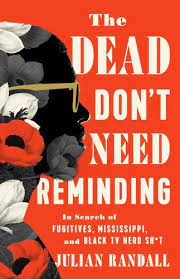
The Dead Don’t Need Reminding Review

Book: The Dead Don’t Need Reminding
Author: Julian Randall
Publisher: Bold Type Books
Year: 2024
Rating: 5 out of 5 stars

Synopsis :The Dead Don’t Need Reminding is a braided story of Julian Randall’s return from the cliff edge of a harrowing depression and his determination to retrace the hustle of a white-passing grandfather to the Mississippi town from which he was driven amid threats of tar and feather.
Alternatively wry, lyrical, and heartfelt, Randall’s voice bursts off the page with verve, humor, and poet’s eye for detail. In this book, Randall transforms pop culture moments into deeply personal explorations of grief, family, and the American way. He envisions his fight to stay alive through a striking medley of media ranging from Spiderman and Jordan Peele movies to BoJack Horseman and the music of Odd Future. Pulsing with life, sharp, and wickedly funny, The Dead Don’t Need Reminding is Randall’s journey to get his ghost story back.”

Review : The Dead Don’t Need Reminding is one of those books you read the way you eat a great meal, slowly, purposefully, savoring every single bite. Comprised of essays, TDDNR is a lyrical work of pop culture references, self inquiry, depression, chronic pain, and what it means to exist within a queer, Black body in America. Randall weaves a narrative that’s steeped with grief, tugging on a thread that unravels to reveal ancestral history, the kind that dips through an entire body, tethering each generation to the last, reminding us what it is to search for yourself amongst the dead. I devoured this book quickly, at first, then slowly, so slowly, asking the narrative to slow down, to keep from ending. You know how it is.

My copy of The Dead Don’t Need Reminding is now filled with dogeared pages, underlined, read again and again. It is one of those books you never stop reading. Filled with longing, Randall takes the reader on his journey through life-long destabilizing depression, suicidal ideations (and intentions), chronic pain that interjects throughout the narrative in the way only chronic pain can do, racism, and an endless running list of cultural references he uses to bind us to a better understanding of his own inner (and outer) world. Randall explains that he thinks in quotes, in lyrics, in movies and tv shows, using examples from BoJack Horseman, Spiderman, Kanye West (Ye), Drake, Odd Future, and more to open his heart and mind to the page, to the reader. Even without a complete knowledge of the totality of his references, the impact is striking. I enjoy reading about the things other people enjoy, particularly if it’s done in a way that doesn’t require me to have the references handy at all times, and this is that book. Randall takes quotes and clips and concerts and makes them sing on the page, brings them to life for a reader who maybe doesn’t have every single quote or clip or concert in their own mind. They do now. It works.

Speaking with so much ache, Randall winds us through a collection of essays into the heart of his grief, into the empty crater of depression, and into the humid search for an ancestral burial ground – a gravesite in Mississippi, proof of life.

I’ve struggled with how to write this review. How do you review a book you can’t quote, not yet? How can I review this book without showing it to you, without flipping to a dogeared page and reading an underlined verse? How do I explain the depth this book sunk me into? It is a stunning masterpiece, exploring boyhood tenderness that transmits itself into adulthood tenderness, fear, longing, and the desire to live – the choice to live – while haunting a family line in search of ghosts.

Advice : Run. Don’t walk. You’re going to want to read this one.

Shanghailanders Review

Book: Shanghailanders
Author: Juli Min
Publisher: Spiegel & Grau
Year: 2024
Rating: 5 out of 5 stars

Synopsis : “The year is 2040, and wealthy real estate investor Leo Yang – handsome, distinguished, a real Shanghai man – is on the train back to the city after seeing his family off at the airport. His sophisticated Japanese-French wife, Eko, and their two eldest children, Yumi and Yoko, are headed for Boston, though one daughter’s revelations will soon reroute them to Paris.
While the years rewind to 2014, Shanghailanders rotates perspectives, drawing readers into the shared and separate lives of the Yang family, parent by parent, daughter by daughter, and through the eyes of the people in their orbit. As their world shifts and brings change for each of the Yangs, universal constants remain : love is complex, and family will always be connected by blood, secrets, and longing.”

Review : Shanghailanders is a complex work of creative genius, told not just from shifting perspectives, but also from an unwinding timeline, the book spans from 2040 to 2014, with each subsequent chapter unwinding time just a tiny bit more. Min’s first novel, Shanghailanders is a breathtaking debut novel filled with family history, peeling back the curtain, giving us a glimpse into the Yang family’s dynamic; toxicity, growth, rejection, and all the layers the meld together to form a family. Beginning and Ending with Leo, the patriarch of the Yang family, Min has bookended her work with a man whose chapters hardly revolve around his inner world at all. I found it fascinating that throughout the entirety of the novel, Min chose to only reveal the Yang family through three male-centered chapters, two of which are Leo, the third being the family’s driver – all three of whom serve only to point us back toward the matrilineal family line.

Shanghailanders is a novel that addresses the fragility of time both in narrative and construct, giving us the smallest glimpses into the years that make up a family, revealing small clues and inward peaks that create the structure the Yangs have crafted their world(s) into. Speaking broadly of time, of bloodlines, and of familial connection, Min paints a much more detailed picture with the narrative, showing rather than telling us that Leo, and likely Yoko as well, has an anxiety disorder that causes apocalyptic dread, that drives his need to see his daughters sinking into independence and stability, that, at times, pushes his family to the brink, threatening to shatter their bubble; that Yuki, the youngest, at sixteen is facing the loss of innocence and the heartache of love lost; that while each family member feels tethered to the other, neither feels the thread of love as connection, that love is not a given. This is a novel filled with longing, with logic, with dread, and the potent, ever present realization that time is a fragile filament that tugs at us all. 

I think the most successful aspect of this book is the format, rewinding through the narrative from 2040 until, finally, 2014. Taking us briefly through the years of improved technology, covid, and finally into those pre-pandemic years where the children are barely formed, where love is new, and anxieties aren’t quite realized yet. Each chapter invites us into a new realm of the Yang family, masterfully written, weaving webs so delicate behind the scenes that we cannot see each thread until the final page has turned. Each chapter left me craving more, desperately wishing the timeline was reversed, that I could follow this family into further detail, into more solid ground, wishing and hoping I would be given glimpses into the characters and storylines I most enjoyed. Alas, with each passing chapter, each character faded, each storyline slipped away, and I was transported to younger versions, the groundwork of each prior chapter laid out ahead of me. The longing I felt. Perfection.

Advice : This is a truly remarkable work created with a unique vision. If you enjoy epics, this might just be for you. Spanning 26 years in the reverse, this scratches the epic itch while fulfilling a creative interest and need. I’d mark this one on the calendar.

Earth & Soul Review

Book: Earth & Soul : Reconnecting Amid Climate Chaos
Author: Leah Rampy
Publisher: Bold Story Press
Year: 2024
Rating: 2.5 out of 5 stars

Synopsis : “Facing directly into the devastation of climate chaos and biodiversity loss, Rampy leads her readers on a soul journey through grief and loss to also claim the beauty, joy, and possibilities available when we reconnect with Earth. As we follow the author’s compelling personal experiences and engagingly lyrical stories of whales, cedars, sparrows, and more, we see the necessity and urgency of learning from the wisdom of our kin in the natural world. Writing at the intersection of spirituality, ecology, and story, Rampy charts a course for living deeply connected to Earth in ways that are both vitally important for and uniquely suited to these times. Even now when the worlds as we once knew it is ending and a new story lies beyond what we can envision, we hold the potential to lay stepping stones toward a diverse and vibrant world of oneness and mutual flourishing.”

Review : I have so many conflicting thoughts as I sit down to review this book. It gives me no joy to give a book about climate change a 50% review, particularly as the publicist for this book sent this book to me because of my own work in the world of sustainability. I wanted to love Earth & Soul, but I didn’t. Let’s start at the beginning : Leah Rampy, while boasting a PHD, does not have a background in biology, climate sciences, or ecology – her doctorate is in curriculum. While I don’t think it’s necessary for an author to hold an advanced degree, I do believe it hinders the work and the words she’s trying to communicate. Because her field of study has nothing to do with the subject matter, Rampy relies heavily on the works of others, paraphrasing (and citing) books I have been privileged enough to have read in the past. While this might function well in an academic paper or blog post, I find the distillation of the work of others to be an unfortunate book choice. I don’t think there’s anything wrong with a book filled with cited sources, don’t get me wrong! I love a well researched book. Where I take issue is how a story is told; Rampy rarely sheds light on her own experiences, choosing instead to simply share what others have written.

Rampy barely pulls the curtains back on her own life, something I think does a true disservice to the impact this book could have made. As I mentioned, she relies heavily on the work and words of others to bolster her narrative rather than allowing her own connection and experiences with Earth to drive the narrative forward. Referencing Robin Wall Kimmerer’s Braiding Sweetgrass eight times in 180 pages, Rampy clearly seeks to emulate Wall Kimmerer’s foundational work. Unfortunately, it reads as someone who’s read Braiding Sweetgrass and is relaying it to a friend who doesn’t want to read it themselves. As I have recently finished reading Braiding Sweetgrass myself, I found this particularly glaring. Rampy references indigenous wisdom and knowledge, which I appreciate a great deal as the scientific world is finally coming to understand just how much indigenous wisdom could have helped us over the last several hundred years; I couldn’t help but feel that I would rather be reading about indigenous wisdom right from the source, rather than distilled by a white woman. For reference, there was a singular moment in this book that brought me to tears and it was, unfortunately, a retelling of a Wall Kimmerer story. I found the writing style to be choppy and stilted, there was little flow to this narrative, though in the few places where it did flow (interestingly enough, found during the few brief descriptions of Rampy’s own personal experiences with the Earth), it was quite enjoyable to read.

Rampy’s style seems to be tell, rather than show, which you may know I find an incredibly condescending method of writing. In a chapter entitled “Kith and Kin”, Rampy uses the words kith and kin a combined total of twenty six times over the course of a mere fifteen pages, beating us over the head with the words rather than showing us what they mean to her. The words will go on to haunt the remainder of the book, interspersed so often than you cannot get away from them. I would rather be shown what kith and kin might look like than be told over and over again what it might mean – the impact is lessened this way, becoming more of an annoyance than a moment of understanding. In other books I’ve reviewed, I’ve found the occasion for telling vs showing often comes from an author’s disbelief that the reader would be intelligent enough to figure things out for themselves, to Rampy’s credit, Earth & Soul did not read this way. It did, however, read as though Rampy didn’t know how to show us rather than telling us, and perhaps that comes from her time spent as a lecturer; perhaps she will learn that as she grows as an author, but for now it leaves me continually frustrated by the way she steals the powerful impact this book could have made right out from under herself. 

As someone who is invested in the world of sustainability, I found frustration with this book. Rampy discloses at regular intervals that she has lead, what she refers to as, Pilgrimages all over the world. However, she never once discusses what kind of carbon impact she has on the planet by flying to multiple locations all across the globe with groups of people – in a time when many people are assessing their own carbon impact and coming to the conclusion that regular flight travel has a negative impact on the climate, I find it to be a stark omission. I also wish Rampy would have addressed the privilege that comes from having access to around the world flight travel, of the kind of people who might have the disposable income to go on such a journey, the people who are paying money to gaze upon nature without being tasked with making their own sustainable choices. It’s entirely possible that I’m pegging this all wrong, but Rampy doesn’t discuss any part of her climate footprint or the privilege that comes from these trips, so I can only tell you how it feels, which is…not good. During an early discussion revolving around meditating on nature, Rampy shares an anecdote from one such pilgrimage in which someone left a strand of yarn around an area of Earth with a sign telling people to stop and enjoy. Unfortunately, all I could think about was how that person had littered – sewing continued frustration on my end, as someone who works very hard to keep people from littering and to clean up litter that exists in nature already.

Likewise, Rampy twice discusses the use of cairns, both as a suggestion for the reader and as an example of what her pilgrimages entail. Again, as someone who works in the realm of sustainability, I find it problematic and ignorant on Rampy’s part to suggest readers create cairns. I have learned, and you can find this on many signs in many forest nation wide, to take only photographs and keep only memories, meaning you are to leave nature as you found it (or in my personal opinion, better than you found it). Creating cairns is frowned upon within the sustainability and naturalist worlds for (largely) two reasons : the first being that cairns created by park rangers exist for a specific reason, they are made to mark trails and creating your own can make a negative impact on carefully constructed cairns used for designating directions; the second being that many creatures, like salamanders, take shelter under or lay their eggs under stones, removing them from where they exist already may either damage eggs, damage habitat, or create fewer available spaces in which an animal may find shelter or lay their eggs. 

I left this book deeply frustrated. Rampy spends much time discussing the horrifying facts, figures, and statistics of climate change and biology loss, but she spends precisely zero time discussing who’s at fault for climate change. She doesn’t offer any suggestions for moving forward, ways in which we can reduce our carbon footprint, how we might engage with our local government to facilitate change, or what we can implement into our own lives in order to start the process of making change – all of which I suspect would lead to some unpleasant realizations of her own. She doesn’t discuss the greed, resource lust, or corporate entities who have created this world we find ourselves living within and I find that to be another disservice to what she’s attempting to accomplish. At the end of the day, yes, we have to find ways as individuals to create a world that flourishes around us, but the climate issue is not an individual problem and cannot be addressed as such. Rampy fails in this arena.

Advice : This is a first attempt, I believe that’s clear. This book doesn’t read like something that’s meant for those of us who are already working in the world of sustainability, greatly aware of the impacts of climate change on the natural world. It does read like someone who was not so much a believer in climate change and has since changed their mind, which seems fairly evident in Rampy’s own confessions throughout the book – another frustration as she professes to spending her time teaching others about the climate despite not having a background in the sciences. I think, if you are like me, you would benefit from reading Braiding Sweetgrass by Robin Wall Kimmerer instead. I believe Earth & Soul is directed toward people who have not spent much time thinking about the climate and are beginning to change how they interact with the world – this book will lead them toward other resources that will impact them on a much deeper level. 

Like Happiness Review

Book: Like Happiness
Author: Ursula Villarreal-Moura
Publisher: Celadon
Year: 2024
Rating: 5 out of 5 stars

Synopsis : “It’s 2015 and Tatum Vega feels that her life is finally falling into place. Living in sunny Chile with her partner, Vera, she spends her days surrounded by art at the museum where she works. More than anything else, she loves this new life for helping her forget the decade she spent in New York City orbiting the brilliant and famous author M. Domínguez.
When a reporter calls from the US asking for an interview, the careful separation Tatum has constructed between her past and present begins to crumble. Domínguez has been accused of assault, and the reporter is looking for corroboration.
As Tatum is forced to reexamine the all-consuming but undefinable relationship that dominated so much of her early adulthood, long-buried questions surface. What did happen between them? And why is she still struggling with the mark the relationship left on her life?
Told in a dual narrative alternating between her present day and a letter from Tatum to Domínguez, recounting and reclaiming the totality of their relationship, Like Happiness explores the nuances of a complicated and imbalanced relationship, catalyzing a reckoning with gender, celebrity, memory, Latinx identity, and power dynamics.”

Review : Like Happiness, as Villarreal-Moura writes in the acknowledgements, “is a book about loving books”. Incredibly literary, not only did it tick all the boxes in my soul that feel like satisfying brain-floss, it also rang some bells of familiarity that cannot be overlooked. This is a powerfully moving debut novel detailing the uneven footing of the power dynamic between a popular contemporary male writer and a younger female fan (notably, eight years younger). Feeling out of place with few friends at her Massachusetts college during her undergrad program, texas native Tatum makes a bold move one evening, penning a letter to the author of her new favorite book, Happiness. The author, M, is gaining popularity with his breakout novel of short stories detailing the lives of Latinx individuals in the United States. Feeling seen and understood in a way she has not felt in literary circles yet, particularly on a nearly all white college campus where she’s an art history, english lit double major, finding herself immersed in required reading of white Euro centric authors, Tatum feels at home with M’s book. She writes to M and within a few weeks, he writes back, thus beginning a multi-year long relationship between Mateo (M) and Tatum.

Like Happiness is a dual perspective book, though it doesn’t bounce around nearly as much as you may be accustomed to in a book with multiple narrators or points of view. Told largely through the lens of 2015 Tatum, far removed from her relationship with Mateo, writing a detailed account of her often one-sided relationship with Mateo, and a slightly earlier 2015 version of Tatum, receiving a phone call from a reporter in the States, calling because her relationship is celebrated fact and Mateo has been publicly criticized and outed as an abuser. It has been years since Tatum has spoken to Mateo and while she never experienced the abuses so many women are stepping forward to name, she is sure he isn’t an innocent party, both with the other women and with her. Choosing to tell her story to the reporter, she simultaneously decides to tell her story to Mateo and afford herself the closure she was never granted in the past.

Villarreal-Moura spins a tale of power imbalances, grooming behavior, and codependency that at times feels so real it’s hard to remember this is fiction and not a memoir. Over the span of nearly 300 pages, she outlines patterns of abuse so subtle they could almost go overlooked, laying them out chronologically, revealing a masterpiece of manipulation when the final product is fully revealed. **Spoilers Ahead**
Laying the groundwork for Mateo’s ultimate betrayal quite early on, Villarreal-Moura is an expert at building a scene. Not only is Mateo a college professor and author, he is a force of magnetism and power in Tatum’s life. He pulls her into his orbit and expects her to stay just where she is, mesmerized and fawning over his very being. He relies on her for attention, commitment, and praise while expecting her to simply go along with whatever he wants to do – and she does. He so encompasses her world that when he’s in it all others cease to exist. Mateo subtly punishes Tatum when she gets a serious boyfriend, though she and Mateo have never approached much more than a platonic relationship, he cuts her down and pokes fun of her intelligence when she doesn’t give him exactly what he wants, and pays off $20,000 of her school loans, leaving her helpless to the encompassing power he now wields over her. 

I don’t want to give away the ending, but know these subtle manipulations are nothing compared to the ultimate betrayal Tatum experiences at the hands of Mateo in the end. Putting a final nail in the coffin of their friendship, she is finally able to extricate herself from the leeching parasite of M, allowing her to write her final letter, this book, to him; knowing it will be the closure she needs in order to fully live her life without his shadow in it. As I read, I couldn’t help but be reminded of an article a read a few years ago about an author whose work I’d read and loved, Nick Flynn. And as I thought about that article, I couldn’t help but be reminded of another, similar, articled I’d read around the same time about another author whose work I’d read and loved, Junot Diaz. Both were published authors, one a professor and the other a keynote speaker, both took advantage of women who were younger than them, women who were still in college. Flynn, in particular, has since been accused by multiple women of abuse and misconduct. There is nothing new about this story, though that doesn’t in any detract from Like Happiness; if anything, I found it gave this book extra connective tissue. There’s a precedent here : men in positions of power who wield that power over unsuspecting women who are at a disadvantage due either to their age or their position (a student vs a professor). It’s common. And therefor, it needs to be told. Villarreal-Moura did a profoundly wonderful job telling it.

Advice : If you love reading books about people who love reading books, Like Happiness is truly wonderful. Villarreal-Moura has introduced me to so many things, though none quite as exciting as my new favorite snack of frozen grapes. If you love reading fiction that’s so perfect and timely that it could easily be memoir, this is it. I highly recommend it.

Fruit of the Dead Review

Book: Fruit of the Dead
Author: Rachel Lyon
Publisher: Scribner
Year: 2024
Rating: 5 out of 5 stars

Synopsis : “Camp counselor Cory Ansel, eighteen and aimless, afraid to face her high strung single mother in New York, is no longer sure where home is when the father ozone of her campers offers and alternative. The CEO of a Fortune 500 pharmaceutical company, Rolo Picazo is middle-aged, divorced, magnetic. He is also intuited boy Cory. When Rolo proffers a childcare job (and an NDA), Cory diets and internal warning and allows herself to be ferried to his private island. Plied with luxury and opiates manufactured by his company, she tires to assure herself she’s in charge. Her mother, Emer, head of a teetering agricultural NGO, senses otherwise. With her daughter seemingly vanished, Ever crosses land and sea to heed a cry fro help that only she can hear.
Alternating between the two women’s perspectives, Rachel Lyon’s Fruit of the Dead incorporates its mythic inspiration with a light touch and devastating precision. The result is a tale that explores love, control, obliteration, and America’s own late-capitalist mythos. Lyon’s reinvention of Persephone and Demeter’s story makes for a haunting and electric novel that readers will not soon forget.”

Review : I was a little skeptical about Fruit of the Dead at first, feeling as though I was about to walk onto Jeffrey Epstein’s island with the back-cover synopsis, not so much a modernized retelling of Persephone’s descent into the underworld and Demeter’s journey to retrieve her. Oh, how wrong I was. Rachel Lyon has spun a masterful tale of persuasion, adoration, and tragedy; a poignant retelling and perfect stand-alone novel. Lyon has completely grasped the fever dream of drug use in such a way that left me feeling dizzy and unmoored as I read Cory’s descent into addiction – a powerful parallel to Persephone’s own descent.

Lyon brings Cory into alignment with Persephone, goddess of both spring and the Underworld, quickly and with ease, as she gets to know Rolo Picazo, her new employer. As the CEO of a big pharma corporation, he has access to medications, drugs, opiates that have not yet been granted FDA approval, most notably a small, gel coated, gleaming red pill called Granadone, Grannies for short. A perfect, ripe, shining pomegranate seed, the demise of Persephone herself. Picazo shares a drink recipe with Cory, a mixture of vodka, pomegranate juice, lime, and, you guessed it, the contents of a Granny; called? Fruit of the Dead. And with her first sip, not even 100 pages in, Cory is snared.

After having been camp counselor to Picazo’s seven year old son, becoming a live-in nanny for his son and slightly younger daughter is easy as can be. Plied with as much alcohol and Grannies as she wants, Cory finds Picazo’s island intocicating. And while Picazo himself (middle aged, bloated, sad) is intriguing to her, she only finds herself (eighteen, unsteady, uncertain) mildly attracted to him in ever-so-brief moments that feel more like the intrigue of someone who grew up without a father. Meanwhile, Picazo expresses clear interest in being both a father figure as well as a romantic partner to Cory right off the bat. And like all master manipulators, he removes his mask and reveals himself nearly immediately, declaring himself a narcissist and reading Cory for the perfect victim she, in fact, is. And like most victims, Cory brushes it all aside, looks beneath the lumpy exterior, and attempts to see the good within. All whilst sinking further and further into a fever dream of addiction and loss of control.

This seems as good a point as any to talk about some content warnings, because, believe me, this book is a walking content warning. Not only does the entire book revolve around the explicit experience and physical sensation of being high and / or drunk, it also speaks in detail about sexual assault, physical assault, and the trauma that results from both. This book is not for the faint of heart, nor should it be read lightly. And while it is written with breathtaking prose, if you do decide to read it, please be careful and gentle with yourself if any of the above are problematic for you.

Bouncing back and forth between an elder teen who does not yet know who she is, who has been the victim of sexual assault and has entirely lost herself because of it, who is then scooped up by a predator and fed mouthfuls of little red happy pills; and a devastated mother who begins to unravel and become feral when she cannot get in touch with her daughter, Fruit of the Dead is nothing short of a masterpiece. We not only glimpse behind the curtain of a well curated mother, a woman who manages an NGO, who hobnobs with google executives, who pulls a few strings and gets her daughter prized internship after internship, who works her magic and lands Cory a scholarship to an all girls private school in Manhattan, we are privy to her downward spiral into mania as she loses herself in the search for her missing daughter. While we find Cory grasping at the very idea of her own identity, we see Emer, Cory’s mother, whose identity no longer fits, a mask that slips, falls, and shatters. The two are wrapped together, entangled in a connection neither can escape.

As a true retelling of Demeter and Persephone, the book does not end with a neat little bow tied on it. After all, Persephone returns to the underworld once every six months, leaving our world to the decay of autumn and the darkness of winter. I won’t completely spoil the book for you, but just know that this is not a happy ending. It is a realistic ending. And for that I am profoundly grateful. A perfect, feral, fever dream of a book.

Advice : I encourage you to read my content warning before deciding if this book is for you. If, however, you read the warning and feel okay with the content, I think you should run as fast as you can to your nearest bookstore on March 5th, 2024 and buy a copy of this book.