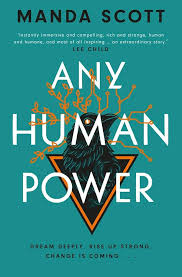
Any Human Power Review

Book: Any Human Power
Author: Manda Scott
Publisher: September Publishing
Year: 2024
Rating: 5 out of 5 stars

Synopsis : “As Lan lies dying, she makes a promise that binds her long into the Beyond. Fifteen years later, her teenage granddaughter, Kaitlyn, triggers an international storm of outrage that unleashes the rage of a whole betrayed generation. For one shining fragment of time, the world is with her. But then the backlash begins and soon she and those closest to her find themselves facing the wrath of the old establishment, who will use every dirty trick in the book to fight them off.
Watching over the growing chaos is Lan, who taught them all to think independently, approach power skeptically and dream with clear intent. She knows more than one generation’s hopes are on the line. Nothing less than the future of humanity stands in the balance.
Grand in scope, rich in courageous characters who breathe new life into ancient wisdom, here is a dream of a better future : a world we’d be proud to leave to our children and their children and on, generations down the line.”

Review : It all started with a tweet. Fifteen years after the death of our narrator, Lan, we find her teenage granddaughter, Kaitlin, checking in with her Uncle Niall before sending a single incendiary tweet into the world, to be seen by her many thousands of followers, a tweet that holds the power to change the entire world. It seems impossible, doesn’t it? Before I began this book, I couldn’t fathom what kind of power a single tweet might have in the landscape of our ever moving headlines : where horrifying news breaking nearly hourly is the norm, where all one needs to do is step out of the limelight for a comment that didn’t age too well to be forgotten, where we brush aside some of the most horrific statements from politicians on a regular basis. And then I read Any Human Power and I understood.

Let me back up. Before we dive into this book, before I recommend you read this book (and believe me, I will), you need to know what you’re getting yourself into. Content warnings for Any Human Power include existential themes such as climate change, a sense of impending doom, depression, anxiety, suicidal thoughts and ideations, examples of characters committing suicide on page, gun violence, political extremism, stalking, doxxing, harassment, paparazzi, discussions of addiction, and death both as a tangible concept (ie, death of a loved one) as well as Death / Afterlife as a location. That sounds like a lot and frankly, it is, but my greatest hope is that this list will simply prepare you for the reality of this book and not keep you from diving in. At the end of the day Any Human Power is a mirror reflecting our current reality back to us and that can feel quite overwhelming, particularly in the form of a 500 page book, but believe me when I tell you this book is a blueprint for a better world. We need only read to understand.

I was given this book as a review copy after it’s publication, not as an advanced copy, and I was told it was a thrutopian novel. Now, this was a new word for me and I had to go googling to figure out what thrutopian might mean, so if you’re in the same boat I found myself in, let me help : “It’s not dystopian. It’s not utopian. It’s a thrutopia where people fight through the obstacles to get to the future that we want…[books that] inspire you that hope and optimism are not only possible, but critical to changing the ending of our story as human beings.” (Aya de León) Trutopian, indeed. Any Human Power, as stated above, offers a blueprint for how our world might genuinely change, we need only find those with the drive, the resources, and the determination to see real and lasting change for the greater good rather than the individual or individual groups as part rather than the whole.

So, like I said, it all started with a tweet. Or rather, it all started with the death of a matriarch, Lan. On her deathbed, mere moments before departing our world for Beyond, Lan makes a single promise to her young grandson, Finn : if he ever needs her, if it’s possible, if it’s within her power, she will come. As she steps into the Beyond and meets her guide, a Crow she met previously within the world of Dreams, she realizes she cannot pass beyond this intermediary space; the power of her promise has tethered her to Finn until he releases her or dies. Little does she know her promise will be a beacon of light and a powerful thread of hope in the darkness of her family’s collective lives over the next two decades as her promise grows and her power to hold her family together intensifies.

Through Any Human Power we experience not only hyper-realistic depictions of our current reality (though, it’s worth noting that if you’re in the US and not in the UK, not every aspect of this book will be quite as easily relatable) from Gen Z very real worry that they are not guaranteed a career and a mortgage or even a habitable planet if things do not dramatically change with immediacy, to the political extremism that infiltrates social platforms, radicalizing those who are most vulnerable, leaving a trail of bodies in its wake. To be completely honest, this book required a solid break about midway through for me. I was unable to read it through in one go, I had to pick up a few lighter books before I was able to finish it – gun violence will do that to you. Some things are truly too real, simultaneously, some things should not be looked away from. The two are true within this book. Any Human Power holds a mirror up to our lives and asks us to take an unflinching look at how tremendously wrong life has gone, all in service of the almighty Capitalism. It asks us not to shy away, because we’ve shied away for far too long. Now is the time for witnessing, for collective action, and for liberation through community care.

Scott has truly created a timely, powerful, and wildly important masterpiece. I would go so far as to call this a work of genius. Not only does she shine a light on the intensity and immeasurable suffering our world experiences at the hands of corruption and out of control consumerism, they also pave a way forward step by step with meticulously detailed instructions. There are somewhere around 200 pages of this book that are dedicated to answering the question what now? Scott tackles governmental reform and from this space a domino effect takes place – once we reform how our governments operate and where their priorities lie, then we begin to reframe and reshape our corporations, our communities, and our globe. My only note about this book is that Scott resides in the UK and their characters reside within the UK, so govermental reform is dedicated to Parliament which I have only the most rudimentary understanding of. There were many aspects of this plan that would not translate to government within the United States, and even priorities which are not quite as high on the list of things that might need to be adjusted here as there, but beyond these technicalities, in the right hands…my god. This book could serves as the catalyst for true global change. Any Human Power asks that we put people first, that we consider communities as more important than money, and insists on full financial transparency within the government and corporations. It has completely challenged me and changed me – I cannot express the gratitude I feel enough. The relief to know what life could be is profound.

While so much of Any Human Power exists within a deeply grounded reality, equally we spend time in the Beyond, Between life and after-life with Lan, with those beings who are beyond gods, beyond time and space and all human concept. We exist in a world that layers itself on top of ours, we enter into the void and parse timelines with intense precision while sweat drips down our brow, and we come to understand that the truest, greatest human power is love.

Advice : Any Human Power quotes both Ursula K. LeGuinn and Angela Y. Davis to remind us that capitalism is not the be-all, end-all and to encourage us to live each day as if a better world was possible – because it is. If you have climate anxiety, if you work in the realm of grassroots organization, if you want to see things change and change for good and change with speed, if you have resources available or know people who do, if you’re on the cutting edge of technology, or if you work in tech at all, if you love people, if you want to see community care prevail in the face of an ever-widening political canyon, if you believe in cooperative living, if you refuse to take your eyes off the suffering of the world, if you can’t see a future for yourself, your age group, or those younger than you…read this book. Don’t look away when it gets hard. Keep reading. Keep going. Run. Don’t walk. Pick this one up immediately.

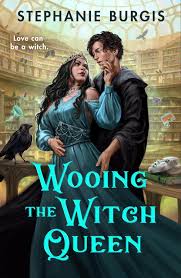
Wooing the Witch Queen Review

Book: Wooing the Witch Queen
Author: Stephanie Burgis
Publisher: Bramble
Year: 2024
Rating: 3.5 out of 5 stars

Synopsis : “Queen Saskia is the wicked sorceress everyone fears. After successfully wrestling the throne from her evil uncle, she only wants one thing : to keep her people safe from the empire next door. For that, she needs to spend more time in her laboratory experimenting with her spells. She definitely doesn’t have time to bring order to her chaotic library of magic.
When a mysterious dark wizard arrives at her castle, Saskia hires him as her new librarian on the spot. “Fabian” is sweet and a little nerdy, and his requests seem a bit strange – what in the name of Divine Elva is a fountain pen? – but he’s getting the job done. And if he writes her flirtatious poetry and his innocent touch makes her skin burn, well…
Little does Saskia know that the “wizard” she’s falling for is actually an Imperial archduke in disguise, with no magical training whatsoever. On the run, with perilous secrets on his trail and a fast-growing yearning for the wicked sorceress, he’s in danger from her enemies and her newfound allies, too. When his identity is finally revealed, will their love save or doom each other?”

Review : Wooing the Witch Queen was a cute, quick romantasy-ish book about two people who are ultimately misunderstood by those around them. I call it romatasy-ish because while it is a fantasy and it’s being published under Bramble, a romance novel imprint of Tor Books, the actual romance aspect of this book was…light. I think if this were a movie it might be rated PG-13 for implied nudity; the romance aspect of the book was mild, took the entire book to develop, and was about as closed-door as it gets without actually being a closed-door romance, take that how you will!

Outside the actual romance of the novel, which the synopsis seems to more than imply is the majority of the book, the actual plot of Wooing the Witch Queen centers around Saskia’s immediate threat to the throne she stole from her uncle – largely from her neighbors, seemingly under the order of the Archduke Felix.

** Warning, spoilers ahead! **

Being as quick as this read was, there’s very little I could say here that wouldn’t be a fairly immediate spoiler, so let’s just dive into it. What Saskia, or the rest of the surrounding kingdoms for that matter, doesn’t know is that Felix is simply a figure-head, someone who has been held prisoner, who has no formal diplomatic training, and who has no say in what his kingdom does or doesn’t do. On the night his traitorous family is poised to murder him and turn him into a martyr, Felix makes an escape to the only Imperial who has been able to hold off his in-laws : Saskia. Wearing what he doesn’t realize is the cloak of a dark wizard, Felix escapes while donning a swooping hooded cape. When he arrives at Saskia’s court, she assumes he’s a dark wizard answering her call for a temporary laborer to arrange her magical library. Without allowing Felix to get a word in edgewise, Saskia hires him and permits him to wear a mask – something that is, apparently, typical for dark wizards.

The remainder of the book follows this path : Felix bumbles his way through his task, only capable of organizing a magical library because he’s only ever been allowed to participate in the arts, Saskia falls for his gentle personality, and no one seems to be any wiser until he finally reveals himself to her at the end of the book. Ultimately, I found this story to be mildly cute but of no great importance or need to be told, the romance was more actually romantic than what you might expect out of a romance novel, and Felix’s character is written like the reversal of every female protagonist written by a man – deeply hard to believe, full of strange character traits that sound more like a woman who didn’t have any diversity in her beta readers, and not all that interesting when it’s all said and done.

Finally, I found the plot to be thin and weak, Felix’s background was never fleshed out, and I found myself with questions I didn’t ultimately find answers to. I think the trouble with writing a fantasy novel is you have to create a story that’s compelling enough that the reader finds themselves willingly reading about the politics of a world that is wholly made up – if you create a world the reader isn’t invested in, there’s then no incentive for them to involve themselves with the minutiae. Sadly, Burgis did not succeed in compelling me to care about the politics of the world she crafted and so during moments of political discourse (which comprised a good deal of the book), I found myself bored and uninterested. I was never given the chance to become invested in the world when the book moved so quickly and never fully explained the main characters backgrounds in a way that felt satisfactory. Overall, this book was fine.

Advice : If you pick up any romantasy you can get your hands on, maybe this will be for you! If you prefer more romance, more fantasy, more everything…well, maybe this isn’t going to be the one. It might be worth checking out from your local library.

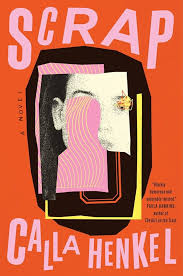
Scrap Review

Book: Scrap
Author: Calla Henkel
Publisher: The Overlook Press
Year: 2024
Rating: 3.5 out of 5 stars

Synopsis : “Recently dumped and stuck with the mortgage, artist Esther Ray wants to burn down the world, but instead, she reluctantly accepts a scrapbooking job from the deliriously wealthy Naomi Duncan. The scrapbooks, a secret birthday gift for Naomi’s husband, Bryce, trace the Duncan’s twenty-five-year marriage. The conditions : Esther must include every piece of paper she’s been sent, must sign and NDA, and must only contact Naomi using the burner phone provided. Otherwise, she’ll spoil the surprise.
As Esther binges true-crime podcasts and works through the nearly two hundred books of Duncan detritus, she finds herself infatuated with the gilded family – until, mid-project, Naomi dies suspiciously. When Esther becomes convinced the husband killed her, she uses the scrapbooks’ trove of information to insert herself into the Duncan’s lives to prove it. But the more Esther investigates, the further she is dragged back to the scorched earth of her own past in the art world.
Laced with pitch-black humor and conspiratorial unease, Scrap is a razor-sharp examination of wealth and power, art and truth, of the line between justices and revenge – and who gets to cross it.”

Review : Sigh. Dear reader, I have struggled with how to write this review. In fact, this is my second try – my first felt…not quite right. I think the struggle I find with reviewing this book is, as I sit down to do this I find that I have reviewed this book before. And before you say anything, no I don’t mean you can scroll back and find Scrap reviewed in the annals of this blog, what I mean to say is this :

In the realm of thriller novels featuring a female narrator, there’s a pretty standard outline whose basic structure is as follows : a woman with some level of mental instability witnesses or becomes aware of some kind of crime; she attempts to investigate on her own despite a crumbling foundation of stability and awareness; she attempts to bring the crime to light by sharing what’s going on with the people in her life and / or the police; her credibility is questioned, maybe laughed at, never believed; she continues to investigate despite all logic saying otherwise; she finds herself in a stick situation where she very well might die; somehow, miraculously, she is saved from impending doom, the criminals are put behind bars, and her credibility is restored at least in part; the book ends.

Sound familiar? I’ve said it before and it remains true, you could head to your nearest bookstore, plant yourself in front of the thriller section, close your eyes, and grab a book at random and find the exact scenario outlined above in a good percentage of the modern thrillers you’d find on the shelf. In fact, this idea is so not unique to me, a mini series was made based on this exact premise : The Woman in the House Across the Street from the Girl in the Window. We’re being handed novel after novel after novel (written by different authors) all with the same regurgitated outline and being asked to be okay with it. Frankly, I’m not.

I wanted Scrap to be different; I hoped it would be unique. It was, sadly, not.

Henkel begins the novel by creating a world in which I cannot trust the storytelling right off the bat, by telling the reader that Esther and her now ex fiancé lived in a mountain cabin on 5 acres of land near Asheville, NC they bought for a whopping $110,000. Read that again. Now, I’m not sure what world Henkel lives in, where anything in the Asheville area would cost as little as $110,000, let alone a cabin with a garage slash workspace big enough to host a yoga class in, or say, 200 some boxes of papers for scrapbooking, on ANY acreage, but it certainly isn’t our 2024 world. Or our 2023 world. Or our 2022 world. And, while Esther is not reduced to the wine guzzling woman we so regularly see in these books, she does have a crumbling foundation, one foot barely grounded in reality as she binges true crime podcast after true crime podcast ad nauseam, working herself into an over exaggerated sense of justice.

We find Esther so hyped up by the idea that the police either can’t or won’t do their jobs that throughout the novel she comes to see herself as some kind of vigilante carrying out justice for those who might not otherwise see it served. As she begins to deep dive investigate the death of her employer, she begins to refer to herself as a podcaster, despite not even remotely having a podcast, spiraling further and further out of control. I found Scrap to be difficult to read at times, in a secondhand embarrassment kind of way, cringing at the lengths Esther would willingly go to, seemingly without any sense of self awareness, to find the so-called answers she was seeking. It was difficult to find myself wanting to continue to pick this book up.

I don’t think this book requires a long, drawn out review diving into the meaning of the book. It fit the outline I mentioned above, it was filled with plot holes (particularly at the end), and it was wholly unoriginal.

Advice : If you really, really enjoy thrillers, you just might like this one. If you like a queer FMC, a slow descent into madness, or the idea of an idyllic hippy village where you have to go down a mountain for wi-fi, you might just find yourself getting sucked into this one. If, however, you prefer something that makes you think, something that you can’t see coming a mile away, this is probably not going to be the one for you. And that’s okay.

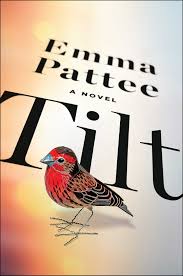
Tilt Review

Book: Tilt
Author: Emma Pattee
Publisher: Marysue Rucci Books
Year: 2025
Rating: 3.5 out of 5 stars

Synopsis : “Annie is nine moths pregnant. She’s shopping for a crib at Ikea. That’s when the massive earthquake hits. There’s nothing to do but walk.
Set over the course of one day – a heart-racing debut about a woman facing the unimaginable and trying to get to safety.”

Review : To be honest, I don’t remember requesting this ARC and had I known what it was about, I’m certain I wouldn’t have. And, while I try to be as objective as possible with how I review books, in truth the score I gave this book is, at least in part, a reflection of how I feel about natural disaster storylines – that is to say, I hate them.

There were so many aspects of this book that made it feel too real for me. Not only is the narrator my age, her husband is my partner’s age, and their struggle felt like a carnival mirror reflection of our own struggle. The entirety of Tilt might best be described as a millennial existential dystopian nightmare. We follow Annie through the literal earth shattering event she lives through on the day of the earthquake, but we also bounce back and forth between her life before marriage, pregnancy, and stalling out midway through her 30s, stuck and unable to move forward thanks to an unstable economy and a husband who cannot find meaningful work. Truly, this book is a millennial hellscape nightmare not many of us are capable of crawling our way out of, and to add to it the specter of a city-leveling earthquake…oof. This novel made me physically ill to read, I’m not even exaggerating. It made me nauseous. I’m going to say something I rarely say about books here : I hated it. And maybe that was Pattee’s intent, it sure seemed so, at least; perhaps that’s not worth lowering the score of this book any further. I believe I felt exactly what I was meant to feel when I read this book, but sadly I don’t enjoy reading things that make me ill. I put them down and never pick them back up again. Which is exactly what I’ll do with Tilt. I read it, it’s over, we won’t be returning.

There are further reasons beyond the visceral reaction I had to Tilt that attributed to the 3.5 star rating I gave this book, so let’s talk about them. First, while I know this is an advanced copy, I did find several inconsistencies in the story telling that served to take me directly out of the fictional reality Pattee created. We’re told over and over again that Annie is wearing a romper, so many times throughout the novel do we hear about Annie’s romper, that when she has someone feel her stomach by putting their hand under her shirt, it was with some relief that I was immediately yanked right out of the story. We also find Annie using the restroom in a looted gas station, a gas station where the electricity has gone out, and yet she closes the bathroom door and in the complete darkness is able to see the blood and dust coating her legs and shoes. I’ve been in many a public restroom where the lights are out (though, not from an earthquake, I assure you!), I can’t bring myself to understand how she was able to see clearly in a closed room with no lighting. Finally, perhaps my number one grievance with the entire story : the book begins with a map of Portland: where Annie lives, where she and her husband work, and where the earthquake takes place. I’m always grateful for a map, particularly if there’s travel involved, I like to flip back and forth and see where our characters are going, get a visual understanding of what’s going on. But the map Pattee provided for us is wildly lacking – there are so many chapters that are headlined by the cross streets Annie finds herself at, but those cross streets are almost exclusively not included in the map. Why bother including a map at all if a huge portion of the book’s landmarks aren’t even on the map in the first place? Either include a map with the cross streets you took your time to tell us about, or don’t include a map at all. This frustration alone was enough to make me drop this book’s rating to 3.5 – do it right or don’t do it. Period.

*** Spoilers Ahead ***

Finally, this book ends the way a realistic natural disaster might end – without a happy ending. There’s no bow tied up at the end of this book for us, and while I generally prefer a book to move me rather than give me something unrealistic, in some situations it might be preferable to finding out our main character’s husband has probably died, crushed under the weight of a building he wasn’t even supposed to be at that day. It might be preferable to the day-of earthquake delivery she gives to her baby in the woods near her apartment, uncertain if anyone she knows is even alive, if her building is even standing, and with absolutely no means of getting to a hospital for care. I hated every part of this book. From start to finish. Hated it.

And listen, I read that Pattee is a climate activist and writer for several bigger publications, she should know that doom and gloom surrounding climate change actually have the opposite impact on most people. Scenarios where we see the worst of the worst played out turn people off to the very real dangers of climate change – we can’t handle the anxiety and dread someone like Pattee piles on top of us while we simultaneously live through horror after horror. This novel did not have a profound impact on me beyond making me wish I’d never read it. It certainly didn’t make me want to care more about climate change (and trust me when I say I already do. A lot.). It did make me want to huck this book at the wall and tell all my friends not to read it. We’re already existing amongst the horrors. We don’t need a reminder of how much worse it could be. Many of us are already doing the work, engaging grassroots efforts, and attempting to make the world a better place in our own ways; piling additional, fictional, horrors onto the situation makes things worse. I will die on this hill.

Advice : If you have anxiety of any kind, if you have fears about climate change, if you’re a millennial, if you or someone you know is struggling to find work, if you find yourself priced out of the housing market, if you got married because you needed health insurance or maybe your partner did, do not read this book. Trust me. Don’t read it. It isn’t worth it. Your mental health will thank you for not reading this one.

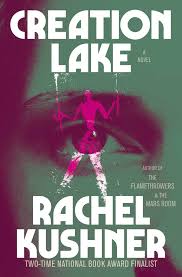
Creation Lake Review

Book: Creation Lake
Author: Rachel Kushner
Publisher: Scribner
Year: 2024
Rating: 5 out of 5 stars

Synopsis :Creation Lake is a novel about a secret agent, a thirty-four-year-old American woman of ruthless tactics and clean beauty who is sent to do dirty work in France. “Sadie Smith” is how the narrator introduces herself to the rural commune of French subversives on whom she is keeping tabs, and her lover, Lucien, a young and well-born Parisian she has met by “cold bump” – making him believe the encounter was accidental. Like everyone she targets, Lucien is useful to her and used by her. Sadie operates by strategy and dissimulation, based on what her “contacts” – shadowy figures in business and government – instruct. First, these contacts want her to incite provocation. Then they want more.
In this region of old farms and prehistoric caves, Sadie becomes entranced by a mysterious figure named Bruno Lacombe, a mentor to the young activists who believes that the path to emancipate is not revolt but a return to the ancient past. Just as Sadie is certain she’s the seductress and puppet master of those she surveils, Bruno is seducing her with his ingenious counter-histories, his artful laments, his own tragic story.
Written in short, vaulting sections, Rachel Kushner’s rendition of “noir” is taut and dazzling. Creation Lake is Kushner’s finest achievement yet – a work of high art, high comedy, and unforgettable pleasure.”

Review : I was absolutely mesmerized by Creation Lake, it pulled me in and wrapped me up and by the time I was done I had no idea what I’d just read. It was perfect. Kushner has woven a tale that on the surface may be simply read as an engaging spy novel and nothing more, and maybe it’s okay to read it that way and never delve any deeper. But, like an onion, this novel has layers. For most of the book, Kushner bounces between two perspectives, the first being “Sadie” our narrator whose real name we never learn, the second being the hacked email messages of an environmental activist named Bruno Lacombe. Sadie has been tasked with infiltrating and determining the motives behind a small, rural commune in France, a commune who believes in renewing and sustaining cultural farming practices, sometimes by any means necessary. She hacks the email communications between the commune and, who she affectionately refers to as, Bruno (Lacombe to the members of the commune) and spends about one third of the book reading his missives on truly ancient communities, species, and what he perceives to be the evolution of mankind as we know it.

Tucked in tightly within the narration, we find little cracks in Sadie’s story, the one she’s been telling us. I hesitate to call Sadie an unreliable narrator, but we do only get her side of the story and the side of the story she tells is just as carefully crafted for our eyes (by Kushner) as it is for the eyes of the French subversives she’s infiltrating. Sadie projects herself as confident, at times conniving, and self-assured. She knows who she is, she knows what she’s good at, nothing matters beyond that. And yet. And yet. As the story unravels, we begin to catch glimpses into Sadie’s past, into the assignments that have gone wrong, the time spent entrapping innocent people, the subsequent loss of her government job. We begin to see the threads that hold this story so closely and delicately woven, catching light, fraying just a little, tugging at the seams.

Sadie begins to form a connection with Bruno, a connection that will forever remain one-sided, but a connection nonetheless. She relates to what he has to say about the nature of humankind, the nature of our evolutionary process from Homo Erectus to modern humanity, she eagerly opens new emails from Bruno to the commune, turning the philosophies over in her mind, ruminating on them beneath dappled sunlight, allowing herself to get involved with a subject of her assignment – even if no one knows she’s done it. Even if she doesn’t even realize it herself. As Bruno’s philosophy begins to shift and change and ebb and flow, so too does Sadie’s experience as an agent. She begins to get sloppy, she reminisces more, fear creeps in, and she begins to morph from an analytical, strategic agent to a messy, guilt-ridden employee. All the while, continuing to keep up the pretense both with the reader and with the commune that she is who she says she is. It’s safe to say, neither are fooled.

I found this book to be deeply compelling. Kushner wrote Bruno is such a way that I found myself equally as compelled as Sadie by his words, waiting for the next time his emails would turn up in the book’s pages, diving deeper and deeper into his version of history, thinking of it even without the book in my lap. It was riveting, it continues to live in my mind. I thought about this book for a long time after I finished it, chewing it over, turning back through events in my mind, trying to parse where things went wrong, what the greater meaning might be. There’s an inherent sense of oneness that comes from Bruno’s writings, an idea that we aren’t any different than anyone else, despite what our philosophical systems might be, an idea that stems from early humanity; that for all our differences, there might be more similarities than we expect; that this could change our entire worldview if we let it; that maybe it should. At the same time, there’s a thread of guilt that weaves its way through the story, unraveling Sadie’s persona and permeating her entire being, pulling at the mask she wears, both as Sadie Smith and as the narrator. We never fully see her for who she is, but by the time the novel is over, we’ve touched something real.

At the end of the day, this book contains the multitudes that exist within every person. The mask we wear around each other, the atrocities we commit in the name of ego, the way we differentiate ourselves from each other, all the while knowing somewhere deep within ourselves that if you boil each of us down, we’re really the same. There’s a lot of accurate history telling that happens throughout this book, too. Some of it is overwhelmed by Bruno’s own ideas about life and history and evolution, but much of it comes from the real world outside this book and I think that is what makes Bruno’s emails so compelling. We connect with them because we see ourselves in them, just like Sadie did. It made her more human in the end. Maybe it can make us more human, too.

Advice : Creation Lake is a must read. It’s riveting, it’s just high stakes enough without being an overwhelming anxiety trip, and it’s beautifully written.

Summoned by the Earth Review

Book: Summoned by the Earth : Becoming a Holy Vessel for Healing Our World
Author: Cynthia Jury
Publisher: Prospecta Press
Year: 2024
Rating: 5 out of 5 stars

Synopsis : “The most pressing question in these uncertain times may well be, How can we bring healing and protection to the Earth? It was this very question that Cynthia Jurs carried with her in 1990 as she climbed a path high in the Himalayas to meet an “old wise man in a cave” – a venerated lama from Nepal. In response to her question, the old lama gave her a formidable assignment based on an ancient practice from Tibet : she must procure earth treasure vases made of clay and potent medicines, fill them with prayers and symbolic offerings, and bury them around the world where healing is called for.
Thus begins the journey of a lifetime – sometimes harrowing, but always shining with beauty at the threshold between urgency and the timelessness of the sacred. In Summed by the Earth we accompany this passionate and creative Buddhist teacher, as she attempts to fulfill the daunting task. Ultimately, the path from the wise man’s mountain cave winds around the world, bringing Cynthia into relationship with elders, activists and diverse communities. One by one, as the humble clay pots are planted in the earth, the power of an ancient technology of the sacred comes alive and global community grows to protect the Earth and learn how to become vessels of healing.
As many of us wonder what we can do in this eleventh hour, Summoned by the Earth offers a riveting account of one woman’s response to the challenges we face, and is an irresistible invitation to become “sacred activists” heeding the call of the Earth.”

Review : Oh boy. You know, sometimes I read a book that moves me in such a profound way that I end up not even reviewing it – how do you put words to the thing that has changed and transformed you from the inside out? Anything you might say after that would pale by comparison. As I sit down to write this review, I fear the struggle to fully encapsulate the enormity of Summoned by the Earth may keep me from conveying to you just how life altering this book has been for me. I’m going to do my best!

This book, unlike what I generally review, did not come to me as an advanced reader copy, instead, it was sent to me by a PR agent post-release. I’m grateful this is how I was able to read this work: in its totality, with maps and endnotes and glossary and photos, with a foreword and an understanding of just how this journey has unfolded for the people involved as well as the planet. My copy is now filled to the brim with notations, underlined passages, dog eared pages, and little colorful tabs to remind me of all the many ways in which Cynthia Jurs has spoken directly to my soul. I suspect this will be a reread many times over and a gift I will be passing along to my friends.

In the 1990s, Cynthia was already considering the harmful effects of mankind’s destruction of the Earth when she took her pilgrimage to meet a reclusive Buddhist Lama, Charok Rinpoche. Living across the Rio Grande Valley from the Los Alamos National Laboratory (LANL) where nuclear weapons are created, tested, and stored, Jurs had already been contemplating the harmful effects of radioactive poisoning on the land. She explained her concerns to the Lama and asked him how she might be of service to the Earth, how she might heal the planet, and how she might do the work in a world devoid of hope in light of the atrocities being faced across the globe. Charok Rinpoche then gave her a directive : plant Earth Treasure Vases in the ground, allow them to do the work. In Charok Rinpoche’s Buddhist tradition, Earth Treasure Vases are clay pots filled with sacred medicine, containing what are referred to as “precious pills”, or those remaining aspects of a realized practitioner’s body that do not burn when their earthly vessels are burned after they’ve passed. The Earth Treasure Vessels, 30 in total, were created for Jurs after her departure from the mountain and sent along to her later, however ETVs are traditionally filled, closed, and sealed, never to be opened again. Because they were being shipped to Jurs, they could not be filled and sealed without fear of being reopened when passing through customs on their way to the United States, and so they were created using both clay and the sacred ingredients, empty vessels ready for Jurs’ filling.

Jurs, a Buddhist teacher who studied directly under Thich That Hanh, spent a great deal of time following the directive to heal the Earth by burying sacred vessels within her soil deepening her own spiritual practice, forming a Sangha (or community of practitioners), and meditating on the most useful places around the globe for these precious vessels to do their work. Beginning in the United States, Jurs, along with Tewa elders Marian Naranjo and Vickie Downey, chose to plant the first ETV within an area referred to as Area G, in a cave overlooking LANL. The Los Alamos National Laboratory resides on stolen indigenous land, belonging to the Tewa people, but taken by eminent domain during World War II. Indigenous tribes have not had access to their sacred sites located within LANL since their land was stolen.

Throughout this amazing, eye opening, deeply moving work, Jurs does more than simply plant vessels, hoping they’ll perform miracles. No. She engages her Sangha, meditating on each vessel with specific intentions for each chosen location, doing decades worth of research into communities that might benefit most from this practice, and connecting with elders from across the world. Several of the vessels were stewarded by those within her community, taken and placed by someone other than Cynthia herself, often by people with personal connections to the spaces where the vessels would be buried. There even remain a few left to be buried today, a work that continues on in the world even as we speak, despite already having put nearly thirty years into the ETVs.

Something that I appreciate so greatly about Cynthia’s work here is how transparent and honest she is with the reader – at times she describes mistakes she’s made when interacting with elders and indigenous communities, though never once making excuses or acting as though the mistakes are trivial matters. She outlines the work she’s done to make things right, to make reparations, and the communications she’s had to ensure it doesn’t happen again, she also acknowledges her own privilege and speaks to how that informs her work. Throughout this practice, in traveling to nearly every continent on this planet, she relies solely on the advice and acceptance of indigenous elders, never taking over or forging ahead if the vessels are not accepted. It is a welcome change from so many who leave the United States and travel to other countries with the idea that they might be a “savior” to those they encounter. Jurs remains humble, prostrating herself at the feet of those who hold sacred connection to their land, taking in whatever knowledge she can gain from them, and simply facilitating the space for the vessels to be filled with the prayers and intentions of those who live on the land where they’ll be buried. There are so many instances of indigenous elders waiting to receive signs or divining prior to accepting the vases, Jurs always defers to the elders.

There are so many moments throughout Summoned by the Earth where Nature herself seemed to be responding directly to the prayers and meditations being poured directly into the vessels, from the roars of white lions living within a refuge in the South African bush, to endangered eastern lowland gorillas in the DRC coming close enough to witness, to a humpback whale breeching and splashing the vase along the coast of Oaxaca, even to incredibly synchronous and intricately detailed crop circles appearing while in England. I found myself shedding tears over each moment as Jurs explained the connection she felt to the planet with each incredible inhuman encounter. It’s almost as if the planet understands our intent.

While the idea of Earth Treasure Vases healing the Earth may sound far-fetched or overly spiritual, at the end of the day there have been noticeable changes within regions where the ETVs have been planted – and this speaks directly to the impact of community healing that happens when people come together for a common cause. Within Liberia, where multiple vessels are buried, four Peace Huts have been erected to specifically address the prayers for peace within the region that came about during the prayer ritual and burial of the original Liberian ETV; multiple non-profits have been formed due largely in part to the work of the Sangha community, Jurs own work, and the work of those across the globe who have heeded the call for restoration and peace; and since the burial of the initial vase across from the sacred Tewa site where LANL resides, Tewa elders have been granted access to small portions of the land in order to leave offerings and begin to tend their holy spaces. When communities engage and gather together for a common cause of peace, tremendous work and healing can occur, of that we can be sure. Whatever you believe when it comes to the Earth Treasure Vases, it is clear that our global community is hurting, not just from climate change and radioactive waste, but from horrific humanitarian crises that are impossible to untangle from each other. Bringing communities together for prayer and intention and peace is a symbol of profound hope that this world so desperately needs.

It was an absolute honor to read this book, to delve into Cynthia’s life’s work, and to feel that in reading this book I have shared the emotions that have risen within me with an entire global mandala of people’s prayers and wishes and hopes for a better world. I read this book slowly, purposefully, and with intention and I come out of it feeling as though I’ve been unzipped in a way, as if the healing work of the ETVs has been at play in my own life, as though the energy they create has reached a small tendril out into my life and has drawn me into the matrix of global hope that permeates outward from the center.

Advice : Pick this book up. That’s all I have to say! My review is a measly thing in comparison. Pick this one up. You won’t regret it.

The Time Travel Twins Review

Book: The Time Travel Twins
Author: James Patterson and Tad Safran
Publisher: Little, Brown Young Readers
Year: 2024
Rating: 4 out of 5 stars

Synopsis : “Twins Pew and Basket Church dream of escaping the miserable misfortune of their isolated orphanage. Or, even better, the return of their unknown parents. But even in their wildest dreams, they never imagined the truth : The twins can travel through time.
Armed only with perplexing clues to their past and a time travel talisman that is key to their future, Pew and Basket embark on an epic quest It takes them into George Washington’s war tent and on a hunt for the Liberty Bell, from the battlefields of the American Revolution to a pirate republic in the Caribbean and beyond, all in a race to uncover the secrets of their family – and outsmart time’s greatest villain.
History, mystery, humor, and adventure collide in this delightfully clever romp that heralds the arrival of James Patterson’s newest blockbuster series.”

Review : If you’ve been here for a while, you might know that while I don’t often read and review young adult books, when I do, I tend to find myself disappointed. In general, the young adult advanced copies I’ve read over the years have left me wondering if I’m simply holding young readers to a high standard they may not be able to truly live up to. I wonder often if I’m so far removed from being a young reader that I simply cannot remember what it was like to read books as a pre-teen; my expectations have been dashed so many times. The Time Travel Twins, however, has fully restored my hope and faith in a high quality, enjoyable young adult read. As someone who works fairly hard to avoid a James Patterson adult read, I wasn’t entirely sure what to expect from this advanced copy, but it was genuinely such a fun and enjoyable read, I’m excited for the kids who pick this book up and find themselves sucked into a world full of time travel, mystery, and witty adventures.

Prior to heading to the front of the book for a bit more information about the authors, I’d already decided The Time Travel Twins reminded me a great deal of A Series of Unfortunate Events. The authors have created 12-year-old characters who talk and think like adults, not in a necessarily unbelievable way, but in a funny, charming, disarming sort of way – Basket and Pew, named for the literal church where they were found as abandoned babies, have grown up in an orphanage that’s educated them not as children might be, but as PHD candidates might be. They have amassed a wealth of information from higher education learning in a grueling atmosphere where they’re fed rock hard bread and worms, taught mathematical principals most adults wouldn’t understand, trade wind patterns, ancient ship types, and all manner of seemingly nonsensical information no child would ever need to know. Wink. The authors don’t speak down to the readers, taking several instances throughout the book to break the fourth wall and address the reader with little tidbits to explain complicated or new phrases in a way that feels like the reader is part of the adventure, rather than someone who hasn’t been educated to the tremendously high degree that Basket and Pew have been. It reads like Lemony Snicket wrote the book, and when I read a bit more about the authors, I discovered Tad Safran had, in fact, served as a writer for the Series of Unfortunate Events TV series.

This book is truly what would happen if Lemony Snicket got a little too engrossed in history and began writing historical time travel fiction for kids. It’s great. Where the books deviate from this particular style of storytelling, though, is in the detail and commitment to teaching the reader. Rather than an all out rampage of fun and whimsy and adventure, TTTT is smartly wrapped up in a sneaky campaign to teach the reader the ins and outs of the revolutionary war and, based on the ending, I’m guessing will continue to teach future readers about additional historical events as the series unfolds. It reminds me of the computer games you might, if you were my age, have grown up playing that were thrilling adventures serving as a sneaky vehicle to learn math and English particulars. Every so often the authors break off and give us an illustration of a scene, complete with a small blurb to further explain details either of a specific battle or the details of 1700’s attire that might not be familiar to the reader. It works so, so well. Everything about this book was amusing and charming and informative, giving the reader something to grasp onto and chew on while they found themselves whisked away to the pirate’s republic, or sucked into a time vortex to narrowly avoid escaping certain death.

It should be noted that this book is about as far from low stakes as a younger reader’s book could be. There’s action, adventure, and like I previously mentioned, the threat of certain death. There’s suspense building and nail biting, and to my displeasure, a lot of “but we just had that thing and didn’t know we needed it and now we need to backtrack to get it!” which, ultimately, earned this book one less than a perfect score. It did feel as though we spent far too much time zig-zagging between having the thing we needed and throwing it away, and going back for the thing only to be thwarted in the process. I’m not a side quest kind of person, if you can’t tell! All in all, the book felt like it was about 50 pages too long, all thanks to the back tracking and side questing – I think it could have easily wrapped up so much sooner and without any to-do, I doubt you’d have missed out if we didn’t have just one fewer instance of the above scenario.

It’s also worth mentioning that while Basket and Pew are twins, Pew is a Black boy and Basket is a white girl. And they come find themselves in the midst of the revolutionary war. Perhaps you can draw some conclusions on your own here? There’s some talk about racism, slavery, and what it might mean to find yourself in an era where the color of your skin alone could mean your demise. There’s also discussion about what it might mean to change time, to tell general Washington to abolish slavery before the war was concluded, what that might mean for the future of the United States, and why the North had the resources available to win in a battle against the south (the future civil war). The issues are addressed frankly and don’t gloss over them terribly, but are also pretty clearly written from the perspective of two white authors, so there’s certainly something the be desired here when it comes to navigating a character’s existence in a body that’s viewed as less than or other in the midst of war. I know, too, that this is a children’s book and doesn’t need to go into the horrific specificities of what that reality might look like, but there was something about making witty banter over why one simply cannot change time that rubbed me the wrong way and I think that’s worth being said.

Ultimately, this book was an enjoyable read that didn’t sacrifice education or writing quality for fun. It ended on a cliff hanger, leaving the door wide open to future books, and it makes you want to continue reading (for most of the book, anyway. Like I said, it does feel about 50 pages too long). I’m pleasantly surprised at how much I enjoyed this one and suspect many kids will feel similarly.

Advice : This is the kind of book you give to your advanced reader without feeling like it isn’t going to push them to learn something. It’s going to teach not only history but ethics, confirmation bias, and the importance of kindness to those around you, regardless of who they might be (like a pirate). I highly recommend it!

Sword Crossed Review

Book: Sword Crossed
Author: Freya Marske
Publisher: Bramble
Year: 2024
Rating: 4 out of 5 stars

Synopsis : “Mattinesh Jay, dutiful heir to his struggling family business, needs to hire an experienced swordsman to serve as best man for his arranged marriage. A sword-challenge at the ceremony would destroy his desperate bid to restore his family’s wealth.
What he can afford, unfortunately, is a part-time con artist and full0time charming menace, Luca Piere.
Luca, for his part, is trying to reinvent himself in a new city. All he wants to do is make some easy money and try to forget the crime he committed in his hometown. He didn’t plan on being blackmailed into giving sword lessons to a chronically responsible – and inconveniently handsome – wool merchant like Matti.
However, neither Matti’s business troubles nor Luca himself are quite what they seem. As the days count down to Matti’s wedding, the two of them become entangled in the intrigue and sabotage that have brought Matti’s house to the brink of ruin. And when Luca’s secrets threatened to drive a blade through their growing alliance, both Matti and Luca will have to answer one question : How many lies are you prepared to strip away, when the truth could mean losing everything you want?”

Review : The ARC messaging for this book compares it to Travis Baldree’s Legends and Lattes – my second ARC this year that’s been compared to my favorite cozy, low stakes fantasy world. While I wouldn’t necessarily pick this book up and immediately think “This reminds me of Legends and Lattes“, Marske did deliver on low-stakes and I appreciate that. Marske has created a fantasy world with all the world-building one might hope for and absolutely none of the fantasy, which made the book a bit hard to get through at first – though, the close proximity and suspense of it all made things flow a lot easier as we got into the relationship between Matti and Luca. This is ultimately what led me to give this book four instead of five stars, as there wasn’t a perfect balance between mind-numbingly slow and send-shivers-up-your-spine anticipation. I think the balance could have been struck a bit more seamlessly, but ultimately the writing was great, particularly for an ARC, the storytelling felt solid, and the world-building was pretty good.

I think it’s an interesting concept to create a fantasy book but to include absolutely no fantasy whatsoever. True, there’s some talk of the gods – actually, this ended up being my favorite aspect of the novel, each swear lending itself to more and more ridiculous descriptions of the god’s particular anatomy (someone’s pube being my personal favorite) – but there’s not a single mention of any kind of fantastical creature, anyone who might be anything other than human, or forces that might be beyond anyone’s control. What Marske has created, instead, is a book filled with the day-to-day politics of guild houses and merchant families, what their lives look like as everyday folk who trade and run factories and forge alliances with each other. And ultimately, this is where the book finds Mattinesh Jay – the heir to a guild house that manufactures wool, a guild house that’s fallen on more than it’s fair share of hard times, that’s struggling to survive, and so two families must marry in order to keep the house name from utterly failing. It isn’t a nail biter, there isn’t threat of life or limb (for the most part), and there aren’t any interactions with creatures. From that perspective, I’m not sure if cozy is the right word, so much as slow might be, but low-stakes it most certainly is. There’s absolutely no anxiety-causing battle sequences or war-time scenes, rather we see the politics of daily life and from there our story grows.

I found the pacing to be a bit frustrating, jumping back and forth between incredibly dull and incredibly interesting, it actually took me about half the book before I started to really enjoy the storytelling. I found it dull and hard to follow, though not because it was poorly written, simply because I wasn’t interested in the politics of guild houses. Once things began to get rolling, though, I came to find myself turning pages with gusto, returning to the book to see how the story would play out, and hoping for a bright future for the main characters. In fact, I finally began to enjoy the book so much that the end made me cry a little – so how’s that for making a turn around!

Advice : If you love a slow-burn, low-stakes fantasy or sword fighting, this might just be for you! If you aren’t into queer romance novels, lots of talk about guild houses, or the politics of a fantasy world, you might struggle with this one.

Can’t Spell Treason without Tea Review

Book: Can’t Spell Treason without Tea
Author: Rebecca Thorne
Publisher: Bramble / Tor Books
Year: 2024
Rating: 4 out of 5 stars

Synopsis : “All Reyna and Kianthe want is to open a bookshop that serves tea while firelight drifts between the rafters. However, Reyna works as one of the queen’s private guards, and Kianthe is the most powerful mage in existence. Leaving their lives isn’t so easy.
But after an assassin takes Reyna hostage, she decides she’s thoroughly done risking her life for a self-centered queen. Meanwhile, Kianthe has been waiting for a chance to flee responsibility – all the better that her girlfriend is on board. Together, they settle in Tawney, a town nestled in the icy tundra near dragon country, and open the shop of their dreams.
What follows is a cozy tale of mishaps, mysteries, and a murderous queen throwing the realm’s biggest temper tantrum, where these two women will discover just what they mean to each other…and the world.”

Review : This is another first for me, notably from the same publishing house as the last book I reviewed, a book that was originally independently published in 2022 and has now been picked up by a major publisher, scheduled to be re-released in 2024. I thought it looked familiar! Turns out I’ve been seeing people post about Can’t Spell Treason without Tea for a little while after it’s independent publishing. With the popularity of Travis Baldree’s Legends and Lattes, it’s little wonder a book that credits Baldree’s debut novel with it’s inception, has done so well! I have also found myself swept up in Baldree’s world, searching for additional cozy fantasy novels since finishing both his books, so this was a welcome surprise.

Thorne has successfully created a cozy, relatively low-stakes, fantasy novel that seems to check all the boxes for me. There’s rich world-building without the confusing word salad that sometimes accompanies fantasy novels, I never once struggled to visualize the queendom or any of it’s surrounding countries; there’s just enough mention of tea blends, baked goods, and rolling fires without going so far down the rabbit hole that the entire story becomes a cook book; and there’s mystery and adventure, peppered with betrayal, gryphon flights, and just a dash of magic. It’s the perfect blend of everything I’m looking for in a cozy, no-anxiety, fantasy novel. Thorne sets us up well for additional books, something I’m greatly anticipating (I know there’s a second book coming! It, like the first book, was also originally independently published, but will be re-released later this year). I even tried to buy book two in it’s independent form, but it’s already been marked up to roughly $150 so, like the rest of you, I will be waiting until the fall for the second installment. And that’s about as high of praise as I can give – I never attempt to buy a sequel of a copy I’ve been gifted as an ARC, I try my hand at getting the review copy for the next book in the lineup, and if I don’t get it, I move on.

There were a couple instances where I felt this book could have benefitted from some additional editing, but I suspect that may come with a bit of time, experience, and additional books. None of it felt so grievous that I wouldn’t read more in the future or wouldn’t recommend the series to friends (which I have already done!), but it’s worth mentioning. First, I realize the series is literally called Tomes & Tea, but the overuse of the word “tome” grated on my nerves throughout the book. I think this book, and subsequent books, would benefit from occasionally referring to books as something other than tomes, but that’s a personal preference on my end and perhaps it doesn’t bother anyone else. And second, there were several instance of dialogue that felt so stilted, it was clear this is a debut novel – and I do thin that’s okay! Like I said, I think some of these small errors will be adjusted with time and experience and I expect that book two, and any further books Thorne decides to write, will likely improve. There’s a lot of overuse of the word “girlfriend” in conversation that doesn’t read true to spoken dialogue, or overly formal wording that doesn’t quite strike me as realistic to a verbal conversation. I’m aware that this is a fantasy and not meant to be realistic, but I do expect dialogue to be at least convincing.

Advice : I highly suggest you mark this one on your calendar! If you love cozy, low stakes, but highly enjoyable, smut-free fantasy, this will be right up your alley. If you enjoyed Travis Baldree’s books, this one is definitely for you.

The Coven Review

Book: The Coven
Author: Harper L Woods
Publisher: Bramble / Tor Books
Year: 2023 & 2024
Rating: 2 out of 5 stars

Synopsis : “I was raised to be my father’s weapon against the Coven, who had taken everything from him. I would do anything to keep my younger brother from suffering the same fate. My path lead me to the prestigious halls of Hollow’s Grove University, where witches learn to practice their magic free from human judgement.
There I come face-to-face with the beautiful and infuriating Headmaster, Alaric Grayson Thorne. He despises me just as much as I loathe him – in spite of the fire that burns between us…”

Review : This is a first for me, a book that has been previously published being sent out as an advanced reader copy. I admit, it took me a little bit of digging to figure out why I received an uncorrected advanced reading copy of a book that was published in 2023; it seems this marketing campaign is running ahead of a special edition publication of The Coven debuting in August of 2024, a month before the sequel releases. Whatever the case, this book has been circulating and doing surprisingly well over the last few months, so by the time I received an ARC, opinions had already filtered their way to me. I received this book and immediately heard from a friend how much they enjoyed it, I know the author has amassed a monstrous following on social media, falling into the category of fantasy romance which means the loyal fans are deeply loyal. I had expectations, to say the least.

Unfortunately, The Coven lived up to the low, low bar of my expectations. Now, before we dive in, please don’t get me wrong! I’m not here to shame anyone for reading smutty fantasy novels, I don’t look down my nose at the books or the readers of the genre. At all. However, it has been my experience that many of these fantasy romance authors, in an effort to churn out as many books as possible for their droves of die-hard fans, often sacrifice quality for quantity. Or even quality for smut. It’s fair to say that I went into this book with a bit of trepidation, knowing Woods’ second book is set to debut just a year after her first – a timeline which is pretty drawn-out as far as fantasy books are concerned lately. I expected this book would sacrifice plot for smut, but what I didn’t expect was the shoddy writing (though, perhaps I should have given the passive voice used in the synopsis).

*Spoilers Ahead*

The Coven is a hard to follow fantasy that very clearly draws on so many fantasy and witchy tv shows. Unfortunately for Woods, I too have watched so many fantasy and witchy tv shows, meaning my mind immediately jumped to all the storylines she’s at times all but outright copied. First of all, the vampire-witch romance trope is unbelievably overplayed, but if you’re going to go that route, at least stray away from names used in tv shows like Vampire Diaries (*cough* Alaric *cough*). I find it hard to believe that any reader interested in a book like The Coven hasn’t also watched Sabrina, Legacies, or A Discovery of Witches. Like I said, the vampire-witch struggle and eventual romance is played out. There’s something deeply aggravating about a controlling, toxic male vampire who for some unknown reason just cannot resist the temptation of an “impossible” and frustrating female witch. We’ve seen it played out hundreds of times through so many fantasy books, movies, and tv series…it’s not compelling. Pun not intended. There’s nothing about an over-done trope that makes me want to continue turning pages. It makes me want to throw the book in the trash.

My second issue with The Coven is that while I can appreciate that Woods chose to include content warnings at the beginning of the book, clueing the reader in that the central male character is nothing but toxic, at the end of the day the portrayal of a controlling, manipulative, and coercive relationship is at best disquieting and at worst misogynistic and traumatic. I have yet to decide where Woods falls on the spectrum with her male main character (MMC) – a content warning isn’t enough, simply choosing not to write toxic men into stories where the reader is meant to find their humanity and fall in love with them is more of what I’m looking for. And this leads me to my third grievance with The Coven, which is the, frankly, hard to believe convolution of the storyline that means we readers cannot actually find humanity with Woods’ MMC because he is, in fact, the literal devil. Woods has created a universe where magic is readily available to those who have magical family lines they’ve been fortunate to be born into. Magic, then, is available through whatever means your family line is able to work with : air, earth, water, life, crystals, and the cosmos. However! In Woods’ universe, this ever-present magic is only available through these forms thanks to a blood pact that was made with the literal christian devil, Lucifer Morningstar. I told you, convoluted.

It’s this blood pact that brings me to my fourth grievance with The Coven : setting. While this book is modern, the witches and their family lines all stem from Salem, MA, as if that trope weren’t played out enough already, though as you can see, Woods is not one to run from an overdone trope. Though we’re to believe that Salem is the pinnacle of witchy activity (and not, I don’t know, any of the sites where thousands of people were burned overseas thanks to an unrelenting witch-trial that barely made it’s way to the States), Woods chooses to use the name of someone who didn’t exist in real life as the witch-mother herself, she who made a pact with the devil. It’s like there are all these puzzle pieces and they’re all close enough to fitting, so you shove and shove at them, hoping they will eventually fit, only to realize they’re pieces from two different puzzles.

Finally, my last, and possibly my biggest frustration with The Coven is the slipshod writing Woods employs. We can see it first in the synopsis, an ever-present passive voice. All I could think as I read this book was how much my high school english teacher would have despised it (content aside). He drilled into my head on a regular basis how insufferable a passive voice is, and to this day it lives in my brain : thou shalt not use a passive voice. The Coven is a lot of “what had happened” – again, as you can see from the synopsis. The writing doesn’t improve as the book continues and given that this is an ARC of a book that’s already been published, I don’t suspect additional editing will truly occur here. This book is how it is, passive voice and all. Woods could have benefitted from removing about 50% of the occurrences of the word “that” as well, something that I would think any editor would notice in a first or second draft. Again, this is an ARC for an already published book. It is what it is.

Advice : If fantasy smut is your thing, this book is pretty dang boring. If quality writing is your thing, run as fast as you can in the opposite direction. Don’t. Bother. It’s a waste of money and time. Trust me.