The Pursued Review

Book: The Pursued
Author: Corey Mead
Publisher: Little A
Year: 2025
Rating: 4 out of 5 stars

Synopsis : “From 1977 to 1981, Ruth Finley, an ordinary wife and mother from Kansas, was tormented by an elusive maniac known as the Poet. The police, already on edge from BTK’s reign of terror, spent years searching for the stalker. Meanwhile, his cryptic letters in rhymed verse grew more disturbing and violent, spilling into deeds like stabbing and kidnapping.
In this propulsive nonfiction account, as Ruth is surveilled from all sides, her nightmare takes a chilling turn: The stalker is no stranger at all. It’s someone the police have been close to for years, someone nearer to home than Ruth dared to admit. The revelation recasts what seemed like a cruel twist of fate as something far more disturbing.”

Review : The Pursued is, at times, a dry yet compelling nonfiction read about a serial stalker I hadn’t previously heard of. While the writing and narrative are what one might expect from a true crime rendering – that is to say, dry – the actual incidents themselves and the deeply disturbing nature of the crime left me turning pages, unwilling to put the book down until the conclusion. I finished this book in about 72 hours, and despite the dry nature of it, The Pursued is certainly what I would call unputdownable. Mead has done a good job of creating doubt, of shedding just enough light on the narrative to keep you guessing and questioning right along with the police as they attempt to understand the Poet’s motivation.

The Pursued details several years in which a woman, Ruth Finley, is stalked, tormented, and even kidnapped by a man known only as “The Poet”. It’s a winding tale of uncertainty, fear, and doubt as the police surveil Ruth’s home, neighborhood, and work for years attempting to find the Poet and bring him to justice. The actual events of the case are so absurd and strange, at times there seems to even be suspicion that The Poet and BTK might be the same person. Mead has created a narrative in which the reader cannot possibly see the end result of the investigation until one has completely finished the book – and even then, I find there are still holes in the conclusion that don’t quite add up for me. It’s a strange case and I suspect an even stranger case to have written about. I think Mead did a good job of remaining objective throughout the retelling, something that would be easy to divorce oneself from, particularly if you already knew the conclusion at the outset of writing the book. I do wish there’d been a bit more humanity in the retelling, however, perhaps some interviews with people close to the story, something to assure me that we’re doing more than craning our necks to look at someone else’s dirty laundry for the sake of entertainment – but that’s all true crime, isn’t it?

*** Spoiler’s Ahead ***

I want to tell you, however, that I had trouble sleeping once I’d finished this book, and had I known what the outcome was going to be, I likely wouldn’t have picked it up in the first place. It’s impossible to read this book in the way it was meant to be written and simultaneously know how the case concluded, but The Pursued desperately needs to come with content warnings. I won’t be giving the ending away by telling you these details, but I do want you to know that this information does contain some level of spoiler, so please be warned. If you choose to read this book, you must know that The Pursued discusses sexual assault of an adult, sexual assault of a minor, pedophilia, endangerment of a child, discussion of bodily fluids, kidnapping, physical assault, and mental illnesses. Anyone reading this book should go in knowing that the end is gruesome and horrific and sheds a light on outright evil. It’s not for the faint of heart and should be approached with extreme caution.

Advice : If you have a thick skin and a stomach of steel and you live for true crime and nothing really bothers you, then you will likely really enjoy this book. If you’re a softy, like me, or find real cruelty to be difficult to stomach or you have PTSD, I really highly suggest that you don’t read this book, or find some spoilers and decide for yourself if this will be a safe book for you.
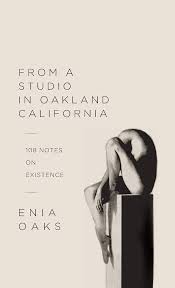
From a Studio in Oakland California Review

Book: From a Studio in Oakland California : 180 Notes on Existence
Author: Enia Oaks
Publisher: Self Published
Year: 2025
Rating: 3.5 out of 5 stars

Synopsis : “This collection of poems and essays is for those who sit at the crossroads of past and future, wondering which way to turn. Those who have bravely restarted and are building new homes from within themselves. Those who believe in the grand experience of life and living it fully, even when it asks everything of them. Those hurting, healing, or transforming. For the ones who are seeking meaning or a deep exploration of the layers of existence.”

Review : Enia Oak’s debut book, From a Studio in Oakland California : 108 Notes on Existence is not to be read quickly, blown through, or breezed by; it’s made to be savored, slowly devoured, and meditated upon. It does not surprise me one bit to find this book of 108 missives to be a meditation – it’s spiritual in nature. Written in short blurbs, poems, and ideas, FASIOC is filled with logical life advice, imparted wisdom, and personal exploration. It is quite literally packed to the cover with information on how and why and when to grow, on the choices we make as humans, the way we stretch out for someone else to witness our lives, and how we might best look inward to see and gently tend our inner child as fully formed adults.

While Oaks’ synopsis / letter to the reader calls this book a “collection of poems and essays”, I would more likely call this an open letter to someone who’s going through therapy and doing the work to heal. Based on Oaks’ description, I was initially confused by the layout and conversive tone her poems and essays take. They don’t necessarily read as poems, certainly not so when you take the totality of the book under review, but they do read as essays directed toward the reader. Like I said, it reads like an open letter, not like a collection of poems. It really comes down to the naming of the thing, for me – if they weren’t named as poems, I wouldn’t take issue or feel surprised as a reader, but because I was expecting poetry, I found myself a bit taken aback and disconnected as I got into the meat of the book. I do feel that Oaks might have benefitted from a more formal editor / publisher rather than going the self-published route, it’s truly worth mentioning that I have dog eared this book from start to finish. While there are aspects that I feel read in a discordant way, small mistakes, and grammatical errors I wish weren’t included, Oaks has a distinctive point of view that has a place in this world. This book feels important for so many people.

I found Oaks’ work to be most successful in her most experimental forms, where we might call the style a poem (but again, I struggle to view most of these works as poetry), or where the style seems completely unique to the inner workings of Oaks’ mind. Most of the book is written in a direct way to “you”, perhaps at times the reader, perhaps at times the writer, perhaps at times our collective inner child. It’s less a work of interpretation for the reader, and more directions on how to live your life as told by a therapist – of whom Oaks is not, which is worth saying. I found so many pieces of this book aligning with my own lived experience, and while this did not feel profound, it did feel familiar. There were many reasons Oaks’ collection garnered 3.5 stars, but I want to remind you, reader, that that’s more than 50% and I did genuinely enjoy reading this one.

Advice : This book is already available to buy! If you’ve spent time in therapy I suspect you will enjoy this book. If you like a collection of small works that are quick and easy to read at your own pace with no deadline or need to speed your way through, I think you’ll enjoy this.

The Tragedy of True Crime Review

Book: The Tragedy of True Crime
Author: John J. Lennon
Publisher: Celadon Books
Year: 2025
Rating: 4 out of 5 stars

Synopsis :The Tragedy of True Crime is a first-person journalistic account of the lives of four men who have killed, written by a man who has killed. John J. Lennon entered the New York prison system with a sentence of twenty-eight years to life, but after he stepped in to a writing workshop in Attica Correctional facility, his whole life changed. Reporting from the cellblock and the prison yard, Lennon challenges our obsession with true crime by telling the full life stories of men now serving time for the lives they took.
The men have completely different backgrounds – Robert Chambers, a preppy Manhattanite turned true-crime celebrity; Milton E. Jones, a seventeen-year-old who turned to burglary, only to be coaxed into something far darker; and Michael Shane Hale, a gay man caught in a crime of passion – and all are searching to find meaning and redemption behind bars. Lennon’s reporting is intertwined with the story of his own journey fro a young man seduced by the infamous gangster culture of New York City to a celebrated prison journalist. The same desire echoes throughout the four lives: to become more than murderers.
A first-of-its-kind book of immersive prison journalism, The Tragedy of True Crime poses fundamental questions about the stories we tell and who gets to tell them. What essential truth do we lose when we don’t consider all that comes before an act of unthinkable violence? And what happens to the convicted after the cell gate locks?

Review : The Tragedy of True Crime is the answer to a question I’ve had but have not expressed : is there a sickness to our obsession with true crime? And the answer is a resounding yes. While this book is not exactly the deep dive into how or what the obsession with true crime does to a person, as the synopsis might have you believe, it does present a powerful insight into the nature of a life sentence and the desperate need in our country for prison reform. Written by a man who premeditated a brutal and senseless murder, The Tragedy of True Crime offers a truly unique look into the humanity of incarcerated people we tuck away into steel cages and so often forget. While I have my own thoughts about the prison industrial complex and what justice might look like, I found this book to be a compelling and imperative look into the reforms needed for people to truly experience healing – not just the victims, but the perpetrators themselves. We can carefully put a person behind bars, but if we do not provide them with the resources to heal, to understand, to self examine, and to potentially reform, then we do a disservice not only to the person, their victim(s), but to the community at large. After all, an eye for an eye only takes the world so far.

Our author, Lennon, dives deep into the lives of three men who are serving extended sentences for murder, but this is not a book about three men, it’s a book about four. As we navigate the life, crime, and life-after-sentencing of each of these three men, Lennon offers us a seemingly untarnished look into his own life, crime, and life-after-sentencing. I found Lennon’s own self reflection to be a necessary aspect of this book, but I would be remiss not to mention how deeply off-putting I found his own self review to be. In telling the stories of the three men in these pages, Lennon is kind, objective, and at times sympathetic to their struggles. He speaks gently about their crimes, about the scenarios that led them to their ultimate fate behind bars, allowing the reader to see the soft underbelly each man shelters away from the world. Lennon never once side steps or sugar coats their crimes, but he does strive to explain how each man might have come to the dire place where they committed a crime – or he at least attempts to as one of the men evades questions and makes excuses for himself; it’s with some semblance of a spoiler that I let you know we will likely never know what Robert Chambers did or how the murder he committed truly went down. But when it comes to Lennon’s own crimes, he’s brash, viewing the world in black and white terms, and his own self examination leaves me feeling as though the empathy he’s learned through journalism is no more than a mask he hides behind. But these are real humans I’m talking about and reviewing here, and I believe it would be harmful of me to speculate any further than that.

Perhaps it’s with no surprise that I tell you how conflicted this book has made me, how it’s forced me to examine my own feelings regarding those who take a life, and what I might reasonably expect out of someone’s incarceration. Again, these are real humans. Beyond any other aspect of the book, I find the humanization of these three incarcerated individuals to be the most compelling and important. There’s no question to guilt with any of these men, Lennon included, but there is a question of motivation. First, we have Michael Shane Hale (he goes by Shane), a man who experienced profound abuse as a gay child growing up in Kentucky in the 90s, and further abuse as a broken young adult living in New York on his own without a loving support system that might have shown him care and community – the aspects of gay culture our current world is trying so hard to dismiss and demolish. Shane committed a crime of passion, yes, but beyond that he committed a crime born of abuse, a crime against his abuser, and for that crime he was sentenced to the death penalty. And while Shane has spent decades in prison atoning for his crime (and subsequently having his sentence reduced once the death penalty was once more abolished), a man who committed similar crimes, though through different circumstances and with a serial pattern, was given a reduced sentence compared to Shane’s. He’s currently seeking release and it is with everything I have that I hope he receives clemency. Second, we have Milton E. Jones, a man who killed two priests in cold blood as a teenager, prompted to do so only because a friend suggested that he should. And while I struggle to be okay with this information, regardless of what he’s accomplished in prison (a master’s degree in a divinity program), what I find most disturbing about Milton’s story is that his time spent in prison has served only to provoke a mental illness that he was genetically predisposed to, and has subsequently caused intense damage to his mental and physical state. This is where our system fails people. Despite having a relationship with a family member of one of his victims, despite his friend receiving a reduced sentence, despite his accomplishments in school, he has little to no support for his mental health and, like all prisoners, he has little to no resources for how to heal the parts of himself that were damaged so many years ago before and during his crimes. Finally, we have Robert Chambers who is currently out of prison, having originally received a shortened sentence for manslaughter, but returned to prison on drug charges. And Chambers is perhaps the most frustrating of the three as we never quite get the fully story, we never quite hear his remorse. The motivation? We may never really know, and frankly that’s okay.

I found The Tragedy of True Crime to be an important and insightful narrative into the life of an incarcerated individual, living among rampant abuse from those who keep our prisons, among drug use and violence, often shuttled from place to place. This book made me question what I think and feel about our legal system in a way I found productive and necessary, but I did find Lennon’s writing to be a bit disjointed at times. As a long-form writer and contributor to magazines and print publications, it was clear to me that Lennon struggled a bit with a novel. This is where I find 4 stars rather than 5 to make sense, as there were multiple points throughout the book where I found myself going back to re-read due to complex and, at times, convoluted story telling. But it’s a first go and I suspect that’s to be expected. This book was thoughtful and worth the read, particularly if you do enjoy or partake in true crime retellings of crimes. But, like I mentioned above, I do not believe this book went as deeply into the tragedy of what true crime does to a person so much as it simply shone a light on our shared humanity and prioritized the need for prison reform. Take that how you will.

Advice : It’s worth stating that this book should come with some intense content warnings, such as murder, sexual violence, pedophilia, homophobia, transphobia, drug use, suicide, incest, power abuse, and mental illnesses. If you spend time in the world of true crime, I think this will be an important read for you. If you’ve often wondered how sick we might be for engaging with true crime, you’ll want to pick this book up.

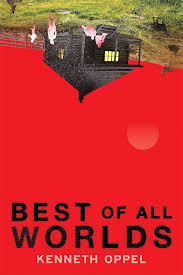
Best of All Worlds Review

Book: Best of All Worlds
Author: Kenneth Oppel
Publisher: Scholastic Press
Year: 2025
Rating: 5 out of 5 stars

Synopsis : “Xavier Oak doesn’t particularly want to go to the family cottage with his dad and pregnant stepmother. But family obligations are family obligations, so he leaves his mom, his brother, and the rest of his life behind for a weekend at the lake. Except…on the first morning, he wakes up and the cottage isn’t where it was before. It’s like it’s been lifted and placed somewhere else.
When Xavier, his dad, and Mia go explore, they find they are inside a dome, trapped. And there’s no one else around.
Until, three years later, another family arrives.
The Jacksons are a welcome addition at first – especially Mackenzie, a girl Xavier’s exact age. But Mackenzie’s father has very different views on who their captors are, and his actions lead to tension, strife, and sacrifice.
In this masterpiece, award-winning author Kenneth Oppel has created a heart-stopping, can’t-wait-to-talk-about-it-story, showing how our very human choices collectively lead to humanity’s eventual fate.”

Review : Best of All Worlds is a serious mind bending, quasi-scifi, semi-dystopian work of speculative fiction. A family leaves for their lake cabin, something they’ve done for over and over again for so many weekends of their lives, and when they wake in the morning they find they’re somewhere else entirely. What follows is a journey into what a so-called perfect life might look like : no diseases, no bugs, no predators; what a simpler life in a world undisturbed by human activity might entail: hard work, homesteading, eating simply; and what kind of emotional processing that might require. We spend perhaps just shy of one third of the book with the Oaks alone during the first few weeks after they arrive, learning the lay of the habitat, discovering they’re encased within some kind of smart, self-healing dome under which they have electricity and everything they need to survive, but not much else. We find they’re all on their own, their captors seem fairly benevolent, and while they certainly haven’t been transported and isolated with consent, they do their best to make do with the situation at hand. It’s at this point that the book jumps three years into the future – our protagonist Xavier is now 16 years old and has given up all hope of ever seeing another soul again when, out exploring the dome in the middle of the night, looking for a way out, he witnesses a new home being built by tiny nano-bots. The Jackson’s have arrived and suddenly the Oaks are no longer alone.

Oppel has created a visionary work that left me with questions all the way up until the final page. There was no moment where I’d figured everything out, nothing that disappointed me in a predictable sort of way. Best of All Worlds is a truly impressive work that delves into the current climate disaster, the weight of impending future pandemics, climate related deaths, and the paranoia and racism that seem to grip so many people these days. Set sometime in the future, though I would suspect it might be sometime between 10 and 15 years beyond where we find ourselves now, BoAW takes place at a time when the climate crisis has turned into a full-blown climate emergency, with sea walls being built (or not built, depending on the not really mentioned political leanings of each particular state), thousands of people dying due to heat domes over intensely warm states like Florida, climate refugees seeking new land, and, of course, horrific racist conspiracy theories that keep people in the grimy clutches of paranoia. The Jackson’s offer a foil to the Oak’s level-headed mindset – Riley Jackson, our intrepid patriarch, is a deeply paranoid Christian with a belief that the broader governmental system is out to get, well, everyone. Convinced that the dome is nothing more than a big government conspiracy designed to…do something vague…Riley sets out immediately to find a way out and through, to expose the government’s plans, and to live on the fringes of society while he does so. On the other hand, we have Caleb Oak, hard working the land where he now lives, convinced that the reason they’re living within the dome is due to some form of alien activity – a conclusion he only came to after several years living as a captive, seeing technology he’s never witnessed before, and gaining an understanding of what does and doesn’t work in this place. Two equally strange ideal systems, though Caleb Oak seems content to exist in a world where his family is safe and freedom is less about fear and more about a calculated, level-headed decision.

Oppel speaks so clearly to the fear-based conspiracy theories that currently run amok within our world, particularly within the United States, and while we all know this isn’t exclusive to the US by a long shot, we do see this played out in the book with the Oaks being Canadian and the Jackson’s hailing from Tennessee. Much like Xavier will find at the end of the book, I believe anyone on any spectrum of political ideology could read BoAW and come away with something different – we hear what we want to hear, read what we want to read. However, there’s no overlooking the very real inherent through-line of racism that permeates everything the Jackson’s do, the way in which their own need for a life free of fear has actually cast their entire world in a metaphorical bubble of fear and hatred and, ultimately, evil, and the way in which the incessant need to overcome what they perceive as a targeted attack on their rights ultimately leads to just one thing : death. In our present world, this may look like so many things, from the genuine climate disaster, to concentration camps, deportations without due process, and the vulnerability of the weakest members of society when anti-vax conspiracies and rugged individualism run rampant. There’s a lot to be said for compassion, and I believe that’s what Oppel is touching on with this book – a desperate need for compassion, for truth to prevail, and for humanity to release it’s grasp on the idea that we are somehow alone amongst the masses of those who might not be or think just how we do.

This is one of those rare books where I’m going to choose not to spoil anything for you, even with a spoiler warning. You won’t know what hit you until you turn that final page, so buckle up and dive in, you don’t want to miss this one.

Advice : Part science fiction, part coming-of-age, Best of All Worlds is an excellent read. Perfect for those interested in the nuance of the ever widening divide between political parties, for those who believe the humanity deep within each of us is something that makes us inherently more connected than we ever will be different, and for those who are really ready to see the racist get what’s coming to them in the end. That’s all I’ll say for now. Read this one.

Bright Futures Review

Book: Bright Futures
Author: Alex McGlothlin
Publisher: Bituminous
Year: 2025
Rating: 2 out of 5 stars

Synopsis : “David Hall has graduated college and decided to pursue a non-traditional route. Instead of going to business school he’ll spend the summer at his girlfriend’s lake house in Appalachia with an aim to write the Great American Novel. When the words don’t flow as easily as David had hoped, and his girlfriend inexplicably begins spending increasing time away from David, David’s world goes into a tailspin.”

Review : It’s a funny thing to tell you that this is the first book I’ve ever reviewed that had so few reviews I wasn’t able to find an image of the book cover to use here for you. This book came to me via a publicity service and was billed as being a coming-of-age psychological thriller with a hint of romance and while all of those words are technically true, they’re doing all the work of describing a novel without any further depth beyond what you’ve just read. I could describe the plot to you, as I have in numerous other reviews, but sadly all I would be doing is regurgitating what the synopsis (above) already had to say. There is very little depth to Bright Futures and while the technicalities of the writing were fine, for an advanced copy the actual meat of the book goes no deeper than surface level – all while McGlothlin tells you via his protagonist that this is a coming-of-age psychological thriller with a hint of romance. McGlothlin is going through the motions and, if you’ve read any of my past reviews, you know I find this to be an insult to the reader.

David Hall, our main character, is a not-so-subtle misogynist, former frat-boy, and excessive partier-bordering on alcoholic who’s just graduated from his Southern college with big dreams of writing the next great American novel. Unfortunately for the reader, McGlothlin inserts Hall’s book within his own book, so that by the time the reader is 3/4 of the way through Bright Futures we have an entirely new novel to read – Hall’s so-called great American novel. It is jarring, to say the least. I am actually all for a book within a book, give me something so meta it blows my mind, I’m ready! This, however, is not that. Hall’s novel is contrived and graphic, and McGlothlin throws us into a violent and ablest narrative that I found myself flipping through and skimming over just to get away from. It adds absolutely nothing to the plot of McGlothin’s book, in fact I think it detracts from it, furthering the story so little that it actually does Bright Futures a tremendous disservice.

McGlothlin’s attempt to create a psychological thriller goes off the rails before it even begins – though, perhaps we can call Hall’s book within a book a psychological thriller, but it was more gratuitous violence, ableist slurs, and contrived storytelling than it was psychologically thrilling. It’s true, there’s a small element of suspense in Bright Futures, but it is very small indeed, so spaced out that by the time the ends are ready to be tied up, I’d forgotten the entire suspense-ish plot from chapters before and had to remind myself of what was going on. Hall is unpredictable, but not so much in character development as he is in poor writing – rather than a distant girlfriend whose actions eat at him until it’s all he can think about and he begins to act accordingly, we see a distant girlfriend whose actions seem to leave him only vaguely phased until he decides at the drop of a hat and with no real warning that he’s going to follow her. There’s a lot to be desired when it comes to plot arc, character development, and substance; we encounter a lot of ogling, a lot of “boys will be boys” kind of conversations, and a lot of mindless talk about Hall’s (really very bad) novel. That’s about all there is.

Advice : This book has 10 reviews on GoodReads and 4.8 stars, all of which I can only assume came from friends, family, or those who also received a free advanced copy. I choose to review in a way that’s honest, and so I can only tell you now that this is a book I would avoid – it won’t be hard to do. As always I’m grateful for the advanced copy, but they can’t all be winners.

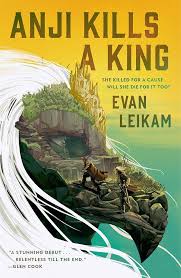
Anji Kills a King Review

Book: Anji Kills a King
Author: Evan Leikam
Publisher: Tor Books
Year: 2025
Rating: 1 out of 5 stars

Synopsis : “Anji works as a castle servant, doing laundry for a king she hates. So when a rare opportunity presents itself, she seizes the chance to cut his throat. Then she runs for her life. In her was, the kingdom is thrown into disarray, while a bounty bigger than anyone could imagine lands on her head.
On her heels are the fabled mercenaries of the Menagerie, whose animal-shaped masks are magical relics rumored to give them superhuman powers. It’s the Hawk who finds Anji first: a surly, aging swordswoman who has her own reasons for keeping Anji alive and out of the hands of her fellow bounty hunters, if only long enough to collect the reward herself.
With the rest of the Menagerie on their trail, so begins an alliance as tenuous as it is temporary – and a race against death that will decide Anti’s face, and may change the course of a kingdom.”

Review : A couple things to note right off the bat: if you’ve been around for a while you’ll notice that I gave Anji Kills a King the lowest score I’ve ever given – a score I extremely rarely dole out – 1 star. I also want to preface this review by telling you I did not finish (DNF) this book, I made it as far as page 107 (out of 348 in the advanced copy) before I called it quits. I generally try to give a book it’s fair shot by finishing it, and as you’ll note, over the last year I only DNF one other book out of approximately 30 that I received. Anji Kills a King was one of the most upsettingly bad books I’ve attempted to read in quite some time; I chose to DNF and shelve it rather than forcing myself through something I genuinely did not enjoy. Let’s get into it.

After spending years reviewing books online, Anji Kills a King is Evan Leikam’s debut novel and I found it an incredible disappointment to encounter such a poorly written book by a fellow reviewer. Anji Kills a King is being billed as a recommendation for fans of Joe Abercrombie’s work, and as someone who literally just finished a massive tome by Joe Abercrombie, I feel uniquely qualified to say : no. There is simply no universe in which I’d compare Leikam’s writing to that of Abercrombie’s. It is a far, far cry from the dry, witty, enjoyable work of a master talent like Abercrombie, to say the very least. Anji Kills a King begins with, well, Anji killing a king. There’s absolutely nothing to ease us into the story, there’s no lead-up, there’s just Anji, the king, and spurting blood. It’s from the very get-go that we go awry as the pacing absolutely stumbles headfirst through our entry into this fantasy world Leikam has created – and I use the term “created” loosely, as I could hardly tell you what the world was like, I have no idea what it was called, and couldn’t even begin to picture it if I tried. So many aspects of the book feel rushed, almost as though they ended up on the page by mere accident, yet simultaneously we find ourselves trapped in Anji’s inner world for an excruciating amount of time. It makes for a stilted and unenjoyable read from the very first page and doesn’t get better over the next 106 pages, either.

It’s hard to understand why Leikam wrote Anji the way he did, as I found her to be wildly unlikeable. It doesn’t make sense to create a book in which your reader is forced to endure nearly 400 pages with a protagonist who is intolerable to read. Anji is entitled, she’s brash, and she’s incredibly annoying. The annoying aspect is something I’d like to address, because I believe it comes down to poor writing, rather than an intentionally annoying character. Either way, Anji cannot seem to keep her damn mouth shut, and by that I mean Leikam has written dialogue that relentlessly travels the same ground over and over and over, making Anji appear to be dimwitted, though she isn’t written to appear dim outside of dialogue so I have to assume this is the sign of poor dialogue development, and not so much a character trait. The dialogue was so difficult to read I nearly stopped several times prior to page 107, but stubborn me, I wanted to get through it so I could give you a clear idea of the totality of this work – ha!

Sadly, Leikam’s work is not the breakneck fantasy book I was lead to believe it was. Instead, it was intentionally disgusting, not in any way that might have furthered the plot, but in a way that made me feel that Leikam chose to lean on the crutch of foul descriptors and disgusting scenes in order to bring grit to the book he created and instead made this reader feel nausea. Rather than the dark, gritty tone someone like Abercrombie might have achieved through a balance of humor and dry wit, Leikam instead managed to merely create something needlessly gross. With a narrator I couldn’t stand to read, pacing that made no sense, and absolutely no semblance of world building, it’s no wonder that by the time Leikam brutally killed not one, but two animals in his storyline, I closed the book and said “No more.” I couldn’t stomach another page of this truly unenjoyable book. As someone who holds onto the advanced copies they receive, whether good or bad, I hope I can impress upon you exactly how I feel by sharing that this book will go where it belongs : in the recycling.

Advice : If you enjoy Joe Abercrombie’s work, this is not for you. If you like fantasy books that include world building, that paint a picture for you, and that do the work of actually creating systems of magic that actually make sense, this is not for you. Don’t waste your time, it isn’t worth it. Avoid this one at all costs.

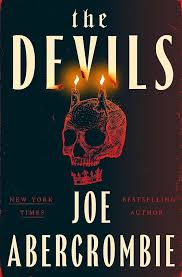
The Devils Review

Book: The Devils
Author: Joe Abercrombie
Publisher: Tor Books
Year: 2025
Rating: 5 out of 5 stars

Synopsis : “Brother Diaz has been summoned to the Holy City, where he is certain a commendation and a divine assignment await him. But his new flock is made up of unrepentant murderers, practitioners of ghastly magic, and outright monsters. The mission he is tasked with will require bloody measures from them all in order to achieve its righteous ends.
Elves lurk at our borders and hunger for our flesh, while greedy princes care for nothing but their own ambitions and comfort. With a hellish journey before hi, it’s a good thing Brother Diaz has the devils on his side.”

Review : Weighing in at a whopping total of 547 pages (in the advanced copy), before I’d cracked the spine I assumed The Devils would be slow-going, what I didn’t account for was my own reluctance to finish the book. Joe Abercrombie has crafted one of the single most enjoyable books I’ve had the pleasure to read in longer than I can remember; The Devils was perfection, could I have given it more than 5 stars, I would (being that it’s my own rating system is completely beside the point…I believe Brother Diaz would agree that some things benefit from structure). Abercrombie had me from the word ensorcelment and he didn’t let go until the final word on page 547. There’s a massive book-shaped hole in my life and, full disclosure, I will be filling it with additional Joe Abercrombie works, for surely they are just as excellent as this.

Told through the jumping narration of multiple, though not all, characters, The Devils spans, what I can only assume is, a fairly short amount of time but no shortage of adventure, daring feats, bloody scenes, laugh-out-loud funny dialogue, and is capped off with a dash of romance. Set in a world that feels juuuuuust a little too familiar, Abercrombie has crafted an ingenious fantasy novel that needed so little extra explanation that an entirely new world would beg from a reader, it felt like I was right at home. In a world separated by bickering factions of the church – one lead by a ten-year-old girl as the Pope, the other by a Patriarch, one featuring a wheel, the other a circle – not only was the geography near enough to our world that any differences only served to make me laugh, the morality of the world he’s created feels eerily similar, if not absolutely pointed. We begin The Devils by finding one Brother Diaz, a monk in the service of the Pope, being granted a new post : leader of the Church of Holy Expediency. In a world where the greatest threat to humankind comes in the form of Elf invasion, the church is determined to heal the rift between East and West factions in order to build a solid foundation against humankind’s mortal enemy, who, by the way, is overdue for an invasion that would likely be met with failure rather than success in battle. The Church of Holy Expediency seeks to fight fire with fire – if a war with devils is looming on the horizon, who better to fight devils than the church’s very own band of misfit devils?

The Devils features a cursed knight who cannot die, a jane of all trades, a not-as-decrepit-as-he-seems vampire, a true Scandinavian werewolf, a corpse conducting magician, a semi-invisible elf, and a street rat turned princess. It’s exactly the kind of good time you’d hope from a ragtag list such as this. Tasked, and magically bound, with delivering Princess Alexia (street rat by nature, princess by birth) to the throne of Troy, the crew embarks on a dangerous and bloody adventure, bound only by Papal magic…though, like every good buddy story, friendship and love are not as far off as they may seem. Between Alexia’s many murderous cousins and a leaked copy of the Papal Bull announcing her right to the throne, the crew is met with no shortage of devastatingly gore filled encounters. And YES, this book is incredibly graphic! There are so many fighting, pillaging, and all out scrambling-for-their-very-lives scenes, but…but Abercrombie has deftly wielded the pen, creating humor and humanity with each stroke. I laughed out loud so many times, even in the midst of the Viggo-Wolf ripping limbs and snuffling out the good meat, it was truly a work of art – much unlike the way our beloved Jakob of Thorn, the cursed knight who just cannot die, wields his sword, that is to say, not so deftly.

Intertwined throughout this hilarious, gripping, suspense-filled book we come to find a few profound theological delights. Not only are we told right from the start that these creatures are devils, we’re bombarded with that information throughout every step of the way. Culturally, the world Abercrombie has introduced us to seems to believe that the only people worthy of a soul’s eternal salvation are, well, people. Anyone else is an unrepentant sinner, never mind whether the Viggo-Wolf has been baptized (twice), or whether the cursed knight has spent hundreds of years attempting to earn salvation, or the semi-invisible elf actually yearns for personhood. We find, by the time we reach the final page, that Abercrombie has been tenderly carrying us through to the very heart of his point : that one group of people is not inherently more worthy of salvation than another simply because they were born a certain way. We come to realize that in Abercrombie’s world, the Devils are in fact, no different than the humans. And, while I don’t know this information yet, I suspect humans are really no different than the Elves, either – perhaps even worse.

Bereft. Devastated. Aimless. All words to describe how I feel now that I’ve finished reading The Devils. Absolutely crushed that it’s over. But fear not! Abercrombie has written us a small opening, a thread, if you will. I feel certain that there will be a second book and hopeful that there will be a third after that. While The Devils doesn’t end on a cliffhanger (not so much a spoiler, but hopefully you don’t mind this information), it does end in such a way that makes me want to know more, that has me asking questions that went unanswered, intentionally, I believe, throughout this tome. Like a dark fantasy suicide squad, Abercrombie has a cast of characters who are begging to be put through another gritty adventure and I, for one, cannot wait to read what he comes up with next. I think it’s also worth pointing out that a significant number of the books Abercrombie has written all came in the form of a trilogy, so finger’s crossed!

Advice : The only thing I can really say is that if you really, really, really dislike any mention of blood or guts or gore, you might not enjoy this book. However, if you love witty repartee, a stunning vocabulary, nuanced characters and character arcs, or a buddy comedy, I think you’ll fall as head over heels for The Devils as I did. Put this one on your calendar – May 6, 2025. Preorder it. Trust me.

Lollapolooza Review

Book: Lollapalooza
Author: Richard Bienstock & Tom Beaujour
Publisher: St. Martin’s Press
Year: 2025
Rating: 4 out of 5 stars

Synopsis : “Through hundreds of new interviews with artists, tour founders, festival organizers, promoters, publicists, sideshow freaks, stage crews, record label execs, reporters, roadies and more, Lollapalooza chronicles the iconic music festival’s pioneering 1991-1997 run, and, in the process, alternative rock’s rise – as well as the reverberations that led to a massive shift in the music industry and the culture at large.
Lollapalooza features original interviews with some of the biggest names in music, including Perry Farrell and Jane’s Addiction, Pearl Jam, Soundgarden, Nine Inch Nails, Sonic Youth, Tool, Smashing Pumpkins, Ice-T, Rage Against the Machine, Green Day, Patti Smith, Alice in Chains, Metallica and many more.
[…]
A nostalgic look back at 1990s music and culture, Lollapalooza traces the festival’s groundbreaking origins, following the tour as it progresses through the decade, and documenting the action onstage, backstage, and behind-the-scenes in detailed and uncensored and sometimes shocking first-person accounts. This is the story of Lollapalooza and the 1990s alternative rock revolution.”

Review : Lollapalooza is a tremendous body of work, indicative of the importance Lollapalooza holds in the annals of alternative, and mainstream, rock history. Bienstock and Beaujour have done a masterful job of showcasing just how revolutionary the conception of such an event was in the 1990s and the impact it’s had on the world of traveling festivals and tours as much as thirty years later. Though I haven’t reviewed many books about music, you may remember my review of Rise of a Killah last year – I found it difficult at times to connect with a book whose stories didn’t relate to me as someone who isn’t a die-hard fan of the Wu-Tang Clan; there was so much that went unsaid, without prior knowledge, some things felt hard to discern. I can definitively say Lollapalooza did not suffer from the same issues for someone, like me, who isn’t necessarily a lifelong fan of some, if not many, of the bands who played during the seminal 1991-1997 run of the festival. While there were many bands and artists whose work I’m familiar with to varying degrees, there were, of course, many whose work I’m unfamiliar with – particularly those who played on the second-stage, designated for local, indie, up-and-comers, and performance art / spoken word (at times). At no point was I lost. Bienstock and Beaujour covered an absolute mountain of information and did so in a wildly comprehensive way, anything that I might have gone “…wait, what?” about was cleanly and thoughtfully explained through hundreds of interviews, not only detailing events, but doing so in a way that felt approachable and easy to imagine.

Throughout this ridiculous honker of a book I found myself, at multiple stages, completely staggered by the sheer volume of work that went into the story telling. Laid out in a format I initially found myself disinterested in, each year is formatted through varying chapters that are told exclusively through the words of band members, backstage hands, tour founders, managers, journalists, and more. Each chapter is broken up by these exclusive interviews, which I immediately thought would leave the book feeling choppy and broken, but in fact read like a conversation with all the people who had a front row seat to the US’ first real traveling music festival. It was an incredible feat, I can’t even fathom the amount of time and effort involved in not only gathering these interviews, but putting them together in a coherent flow that jeopardized nothing in terms of story retelling. It never once mattered that I didn’t know who each person interviewed was, Bienstock and Beaujour not only included details about each interviewee at the start of every chapter (regardless of whether they’d been introduced previously or not), they also provided an alphabetical list in the front of the book detailing every person quoted throughout this 400 page compendium. I really can’t emphasize enough how impressive and monstrous Lollapalooza is.

I thoroughly enjoyed reading accounts of musicians I love, bands I’ve listened to for years, and people I’m only somewhat familiar with – the love that came out of so many people involved in the festival for 6 years is really something special. Without ruining it for you, it felt like the absolute height of nostalgia to read that so many people look back on their time with Lollapalooza with nothing but love, admiration, and joy. Described by multiple people over the course of multiple years as feeling like being part of a summer camp, the details of their exploits while not on stage, the highs of playing with their fellow touring bands, and the lows of addiction and alcoholism all set against the backdrop of teen angst, pre-internet, and exploration made for a deeply meaningful read. It was unexpected, to say the least.

So, then, why the 4 star review and not a 5? Well, Lollapalooza suffered from the antithesis of what Rise of a Killah suffered from : too much information. And I don’t mean to say that the details given were personal, though at times they were, or that they were shocking (largely, they weren’t) – what I mean to say is that by the time I reached page 300-ish, or what would be year 1996 of the festival, I was bored. There were too many overlapping stories, too many details about things I’d already read about, and as the tour was winding down, I cared a bit less about it than I did reading about 1991 – 1994. If anything, the book suffered the same fate Lollapalooza did. And perhaps that’s the shine of a great work, that the book literally mirrored what was happening in the tour at the time, but the magic was dwindling and my interest was fading. It’s easy to make me feel excited about the height of Lollapalooza in the early 90s, as grunge was gripping the nation, bands were finding their footing, and something new and exciting was happening with this new form of tour (in the US). It’s a challenge to make me excited to continue reading about the festival’s demise, the sell-out nature of alternative music into mainstream art, and the poor booking choices that ultimately led to the end of the festival, at the time; Bienstock and Beaujour didn’t succeed in this arena. Perhaps for a nostalgic Gen-X reader this will have a different feel than it did for me, but ultimately it cost a star for this Millennial reader.

Advice : If you’ve been a fan of counterculture, alternative music, grunge, or just love a music festival, I think the history involved will be of interest to you! If you love making the band or just enjoy a backstage look at all your favorite musician’s lives, this is a great read.

This Ordinary Stardust Review

Book: This Ordinary Stardust
Author: Alan Townsend
Publisher: Grand Central Publishing
Year: 2024
Rating: 5 out of 5 stars

Synopsis : “A decade ago, Dr. Alan Townsend’s family received two unthinkable diagnoses: his four-year-old daughter and his brilliant wife had developed unrelated life-threatening forms of brain cancer. As he witnessed his young daughter fight her tumor during the courageous final moths of her mother’s life, Townsend – a lifelong scientist – was indelibly altered. He began to see scientific inquiry not just as a source of answers to a given problem, but also as a lifeboat – a lens on the world that could help him find peace with the painful realities he could not change. Through scientific wonder, he found ways to bring meaning to his darkest period.
At a time when society’s relationship with science is increasingly polarized, Townsend offers a balanced, moving perspective on the common ground between science and religion through the spiritual fulfillment he found amid grief. Awash in Townsend’s electrifying and breathtaking prose, This Ordinary Stardust offers hope that life can carry on even in the face of near-certain annihilation.”

Review : Alan Townsend begins This Ordinary Stardust by talking about just that : stardust. He begins by explaining that, while he doesn’t love the cliche, “When viewed in our most elemental form, people are trillions of outer-space atoms, moving around temporarily as one, sensing and seeing and falling in love” (1). This outlook will go on to permeate the entirety of the narrative, from Townsend’s own work as a biogeochemist in Amazonian and South American fields, to the life he creates and grapples to understand with his wife, Diana, and young daughter, Neva. He meticulously creates a narrative in which we are immersed in the beauty and fragility of life, both planetary and human, where we cannot look away even for a second, even when it grows difficult. Townsend lets us in on the fact that he doesn’t subscribe to organized religion early on, but does pepper the book with words from the bible and the talmud – showing us how science and religion aren’t as far apart on the scale as one might assume.

Bouncing back and forth between the past and the present in the early pages of the book, Townsend eventually settles fully into the present around the three quarter mark. He lays the groundwork for us, showing us the work that he did as a scientist (literally) in the field, studying the impact of logging in the Amazon on fields, on the remaining plant and animal life, later studying similar things in South America. He introduces us to his wife as he was introduced to her: shit-eating-grin, brimming with life, never stopping her scientific inquiry into bacteria, never slowing down for anyone. We come to know and love Diana as he sees her, a force to be reckoned with, someone who is not only destined for greatness, but becomes the greatness she was destined for. I knew from reading the back cover that this would be a difficult book to read, especially as I grew to love Diana more.

Fortunately, the majority of the book is comprised of lyrical prose, of the excitement that comes from a scientific mind experiencing the natural world, and of Townsend’s own deep connection to the Universe. We discover early on that Neva, at a mere four years old, was diagnosed with a brain tumor that grows near the occipital lobe. We spend time with the family as they navigate a scary and unexpected circumstance with a daughter who is as bright, inquisitive, and stubborn as her mother. As they navigate the fragility of life, Townsend muses over the way Diana dives into the realm of science as a means to maintain a level of control and distance from the situation, never stopping to question, working to better understand the available options and proceed in the best way possible. Townsend takes the opportunity to discuss the way the brain exists when it’s presented with the space for curiosity, how it perseveres, and the way plasticity comes into the picture, quoting scientists and C.S. Lewis alike.

After the majority of Neva’s tumor has been removed, tragedy hits their family again, this time with a blow to Diana and another, completely unrelated, brain tumor. Unfortunately for Diana and her family, the tumor(s) she’s diagnosed with have no known cure. Though there are several experimental therapies and trials she can take part in, the brain tumor(s) that Diana suffers from are detrimental – most people do not survive the year. Townsend finds himself in the intersection of caring for a young daughter who has had her own experience with a brain tumor, and caring for a wife who is dying. It is science which bridges the gap for him, leading him through the understanding that while science is not perfect and there’s no certainty, there’s a degree of stability to it that weaves it’s web into our lives and threads itself through all the ways we interact with the world. In a quote from Mary Oliver, “All things are meltable, and replaceable. Not at this moment, but soon enough, we are lambs and we are leaves, and we are stars, and the shining, mysterious pond water itself” (3) Townend reflects that it’s through science that we find, what he calls, “no purer love” (7).

As the book wound its way down, I found myself reading more and more slowly – being less and less quick to pick it back up, not because I didn’t enjoy it but because I was delaying the inevitable. It was challenging to read the last quarter of this book and that’s because Townsend did such a remarkable job. Of course I fell in love with Diana, the spunky, big-hearted, stubborn, amazing, wonderful woman that she was. Of course my heart was broken when she left. Of course. And in truth, this is the kind of story I might normally avoid specifically because of the heartbreak. But I’ve finished the book and have no regrets at all. Townsend has created a beautiful gift to the world with This Ordinary Stardust. So has Diana.

Advice : This is a must read. If you enjoy the natural world, this book is definitely for you. If you enjoy science but find yourself gravitating away from dry lectures or cite-laden books, this one ticks all the boxes. Run to grab it as soon as it’s available.

The Fury Review

Book: The Fury
Author: Alex Michaelides
Publisher: Celadon
Year: 2023
Rating: 2.5 out of 5 stars

Synopsis : “This is a tale of murder. Or maybe that’s not quite true. At it’s heart, it’s a love story, isn’t it?
Lana Farrar is a reclusive ex-movie star and one of the most famous women in the world. Every year, she invites her closet friends to escape the English weather and spend Easter on her idyllic private Greek island.
I tell you this because you may think you know this story. You probably read about it at the time – it caused a real stir in the tabloids, if you remember. It had all of the necessary ingredients for a press sensation: a celebrity, a private island cut off by the wind…and a murder.
We found ourselves trapped there overnight. Our old friendships concealed hatred and a desire for revenge. What followed was a game of cat and mouse – a battle of wits, full of twists and turns, building to an unforgettable climax. The night ended in violence and death.
But who am I?
My name is Elliot Chase, and I’m going to tell you a story nine any you’ve ever heard.”

Review : When I requested an ARC of The Fury, I didn’t realize it was by an author whose work I’d previously reviewed before. If you’ve been here for a while, you may remember when I reviewed The Maidens and gave it a withering 2 out of 5 stars (though I don’t check GoodReads for reviews, I know several others who read and disliked the execution of The Maidens), The Fury was written by none other than Maidens author, Alex Michaelides. Now, we already know I serve some hot takes on this blog, which is largely why I choose not to check other reviewers opinions prior to writing my own, but I was fairly astonished to find that The Maidens has been optioned into a television series by Mirimax. Small rant aside, I was grateful to get into a new book after trudging through my last review copy, and while The Fury didn’t garner more than 2.5 stars, in my opinion, it was at least a compelling read.

A few things right off the bat really started to rub me the wrong way, contributing at least in part to my 50% positive review. First of all, The Fury is narrated by a singular character who I found immediately off-putting. It’s possible that was Michaelides intention, but given the number of twists and turns throughout the book and the sheer effort he took to convince the reader that the narrator, Elliot, was someone they should be sympathetic to, leads me to believe that it wasn’t at all. Elliot is instantly pretentious and annoying, someone I had zero interest in reading through the eyes of for an entire book, which was unfortunate given that he was exactly who we’d spend the entire book reading through. Rather than laying out exactly who each character in the story was, what their relationship might have been, and allowing us to simply come to the conclusion that Elliot was an unreliable narrator, he began almost immediately by interjecting his own telling of the story to make cheeky comments about how much he’d tried to keep his own opinions out of the story but obviously hadn’t. There’s no room for the reader to do any work, Elliot does it all for us. Rather than reading and inferring, assuming the reader will be smart enough to come to their own conclusions, Michaelides treats us like we’re too dumb to read critically and tells us what’s going on. Personally, I take offense to this style and find it pandering at best, patronizing at worst.

The Fury, set on a remote Greek island, centers around Elliot’s friend and so-called soul mate of a friend, Lana Farrar. Through a series of twists and turns, Elliot convinces Lana to confront both her husband and best friend when she finds out they’ve been having an affair. What happens when she does, however, is a twisted nightmare of toxic relationships, bad choices, and manipulation. However, as we read through the book, we come to find that we’re getting only a fraction of the story from Elliot, revealing only tidbits of information to lead the reader down a path of his own design – which, had it been executed well, would have been intriguing and maybe even exciting to read. However, like I mentioned before, Elliot tells us right from the beginning that he’s an unreliable narrator and it was within the first chapter that I had already solved the murder.

Spoilers Ahead

The question, though, is which murder did I solve? Because this damn book has so many plot twists – arguably TOO many – that it isn’t until we reach the end that we find out who really died and who really murdered them. But, good news for me, the murder I solved in chapter one was, in fact, both the correct murder and correct murderer. Bad news for Michaelides.

When it comes to a murder mystery, or a murder retelling I suppose, in this case, I don’t want plot twist after plot twist after plot twist. I want a singular twist that I can’t see coming from a mile away. I feel so strongly that had Michaelides trusted us as an audience, I would not have seen the murderer coming from the jump. It would have been more interesting, better executed, and a surprise to read. Instead, it became contrived and boring. Michaelides had an infuriating habit of leaving each chapter on an ambiguous teaser, which I don’t mind if done appropriately and sparingly, but when you end every. single. chapter. with words like “He was just a kid, playing make-believe. And kids shouldn’t play with guns.” (59) it not only loses its impact but it loses its appeal. There were so many reasons for me to genuinely dislike this book, it’s hard to cram them all into a single review, but I think I’ve covered the most grievous here. It was compelling, I’ll give Michaelides that much, I kept turning pages, but it was a poor book. And for that I give it 2.5 out of 5 stars.

Advice : Sigh. I suppose if you enjoyed The Maidens you might actually enjoy The Fury. If, however, you don’t enjoy being patronized or a mystery you can solve from the very beginning, I don’t think this will be the one for you. It’s probably worth checking out from the library if you’re curious about it, but by no means should you waste money on this one.