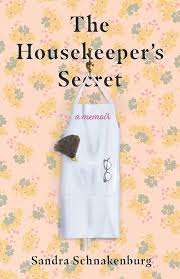
The Housekeeper’s Secret Review

Book: The Housekeeper’s Secret
Author: Sandra Schnakenburg
Publisher: She Writes Press
Year: 2025
Rating: 3.5 out of 5 stars

Synopsis : “A catholic family in 1960s Chicago headed by a narcissistic and demanding father takes on Lee, a housekeeper with a mysterious past. Lee becomes like a second mother to the Krilich children, especially Sandy. After Lee’s death, Sandy begins a determined quest to find out her dear friend’s backstory – and proceeds to uncover one shocking fact after another, even as the story of her own family drama, and the heartwarming role Lee played in the Krilich’s lives, unfolds.”

Review : While this book’s title and synopsis might lead you to believe the entirety of the novel will be spent uncovering a housekeeper’s secret(s), the truth is only about 20% of the book was spent actually delving into Lee’s past. While I don’t particularly think the information Schnakenburg was able to gather about Lee, her beloved housekeeper, is broad enough to fill an entire book, I do find it hard to wrap my head around how little of the book was actually devoted to Lee’s life and how much of it was devoted instead to our writer. I don’t find this problematic as far as storytelling goes, Schnakenburg, nee Krilich, had an extraordinary childhood filled with trauma, neglect, abuse, and a near fatal accident – but the title of the book is The Housekeeper’s Secret and we didn’t begin to dive into Lee’s secret until the book was nearly over. The title and the content didn’t match up.

Like I said, though, I found the story of Schnakenburg’s upbringing to be enough to keep me turning pages, wanting to know how things would evolve in the lives of Sandy’s family members, forced to endure a grueling childhood with a demanding and demeaning father with a roiling anger problem and no regard for the wellbeing of anyone in his path. I found Schnakenburg’s portrayal of her father to be quite interesting – in fact, I believe her storytelling of his abuse throughout her childhood to be far too lenient and more forgiving than I would hope. We spend, as I mentioned, about 80% of The Housekeeper’s Secret growing up with Sandy in a hellish nightmare world of a home, growing with her from the time she’s no more than a toddler until she’s an adult with children of her own. It’s throughout this memoir-like progression that we come to find Sandy’s relationship with her father, and the relationship he shares with her 5 additional siblings and mother, is strained at best. He is, to put it bluntly, a menace. Demanding 7 different types of juice each morning, forcing Schnakenburg’s mother into situations that endanger her life (more than once), forcing a six-year-old to utilize hedge-trimmers with zero supervision, and having a second family are only some of the stories we read in this book – it is well and truly a nightmare. And yet, Schakenburg attempts to humanize her father, explaining that he suffered the loss of a childhood friend in a drowning accident, as if this singular trauma might explain the evil that he unleashed upon his family; it’s particularly glaring when you consider that Schakenburg’s mother suffered from a terrible fear of drowning, so much so that she never learned to swim, and her husband forced her onto multiple boating trips, one in which the threat of drowning was quite real when their boat suffered damage and began to take on water.

*Spoilers Ahead*

When we do finally make our way to Lee’s story, a story she told the children for years she wanted to write (but spent no time actually writing down, nor telling to anyone to transcribe), the story we end up with is one of tremendous tragedy, horror, and loss. It is hard to endure, yet necessary to read. Lee, a Black woman growing up in the 1940s, was brutally attacked, beaten, and sexually assaulted by multiple men while walking to the bus after work. She was left for dead. Because it was winter and there was snow on the ground, she managed to survive the night, but suffered incredibly bodily damage as well as a traumatic brain injury. Being unable to fully recover and in a family that was enduring their own physical ailments and diagnoses, Lee was sent to a sanatorium for care. While there’s significantly more to Lee’s story, I’d like to leave it here and encourage you to read this book if for no other reason than the necessity of hearing a story like Lee’s – a story that deserves to be heard and told. The history of women’s medical treatment is one we should never take lightly, especially as we find ourselves simply not all that far removed from the most egregious “treatment” and experiments performed – often for diagnoses that are now easily managed with medication, therapy, and simple kindness. Women of color, even more so.

I sobbed through Lee’s story, wishing so much that there was more information available, that we could see retribution for the actions of the men in her life who treated her with such unimaginable disregard, wishing Schnakenburg could have dug up and revealed names so we might know them for who they were. It’s the human response, I believe, to reading a story like Lee’s. You want to see justice done, you want to see more come from it than 20% of a book about an abusive father, you just want more. I think it’s commendable that Schnakenburg took up the mantle of this task, but I wish there was less about Schnakenburg herself (perhaps saving it for a separate memoir) and more about Lee. As we meet Lee’s children toward the end of the book, Schnakenburg and her siblings share stories about Lee that were never mentioned at any other point in the book and I can’t help but think this book would have better served Lee’s memory had it included more stories of Lee’s life, even on where she was an employee of a family that was not her own. Schnakenburg dips her toes into the realm of white saviorism at the end, when she learns one of Lee’s children fell victim to the system as an orphaned child born in a sanatorium, suggesting that this child would have been better off in Schnakenburg’s home where her horrifically abusive father ruled with an iron fist of unpredictability. In fairness, I think her intentions were noble in this moment, believing the child would have been better off with Lee, and I agree, but again, I feel she’s been far too forgiving of her father and a bit short sighted, considering how deeply she had previously detailed his abuses. There were moments that left me gasping for air for the sheer horror of it all, moments where I sobbed, and moments where I cringed. Lee’s story is a tragedy that deserves to be heard.

Advice : It’s worth noting that if you choose to read this book it does speak about verbal abuse, emotional abuse, manipulation, gang rape, power dynamics, torture, water torture, sexual assault, traumatic brain injury, a car accident / bicycle accident, and drowning. This book is not for the faint of heart, but if you’re a woman I think it’s a deeply important and impactful story to read.

Boudicca’s Daughter Review

Book: Boudicca’s Daughter
Author: Elodie Harper
Publisher: Union Square & Co
Year: 2025
Rating: 4.5 out of 5 stars

Synopsis : “Boudicca was an infamous warrior, queen of the British Iceni tribe, and mastermind of one of history’s greatest revolts. Her defeat in c. 60 CE by the conquering forces of the Roman Empire spelled ruin for her people, yet still Boudicca’s name was enough to strike fear into the hearts of her enemies.
But what of the woman who grew up in her shadow – her daughter Solina – who has her mother’s looks and cunning and her father’s druidic gifts, but a spirit all her own? Solina’s desperate bid for survival takes her from Britain’s battlefields and sacred marshlands to the glittering facades and treacherous politics of Nero’s Rome, where she must decide what it truly means to be Boudicca’s daughter.”

Review : Boudicca’s Daughter is an intense, 400+ page work of historical fiction that left me crying at times, enraged at others, and sent me down a google rabbit hole to find the truth. In all honesty, I’m not sure where I sit on the fence of historical fiction, and in all likelihood it’s probably closer to the “I’m not sure this is something we should do” side of things than not. In this instance, so little is known about Boudicca’s actual daughters – yes, plural – that the story could be filled in however Harper chose to see fit. It’s an interesting conundrum that a woman who held such a role in history, whose two daughters were deeded the rights to rule the Iceni tribe once their ruling father passed, made so little a mark as to have left two nameless daughters to the annals of time. I appreciate Harper’s work here in bringing these very real people back to life, even if created purely from imagination. We might suppose that some of what came to pass in this book could have been real, truthfully, Harper put in a great deal of work to get the historical facts correct; the rest, however, is mere speculation. While Harper suggests in her letter to the reader that humanity is largely the same even spanning across thousands of years, I suspect she’s written the characters we find here with more grace, humility, and kindness than might necessarily be warranted them.

Boudicca’s Daughter breaches the real world and enters into a historical fiction narrative complete with love, betrayal, and blood sacrifices that play out into the real world. I grew to love Solina, our protagonist, as we encountered her throughout four dramatic stages of her life. My biggest complaint about our time spent with Solina in the Iceni tribe is that so little of the book is spent in such a broad, wild place and so little time is truly spent on Boudicca’s actual assault on the British Empire. Much time passed during this first quarter of the book, yet the way it was written lead me to believe it was short-lived and perhaps even not so wide of a battle – history informs me that by the time the battles were over, nearly 100,000 people had been killed, British and Roman alike. Harper addresses the grey area that a war inevitably brings with it and asks the reader to critically think about who might bear the weight of the word guilty in a time when cultures are combining, the Roman Empire is conquering multiple people groups, and the masses are doing what they must do to survive. Where does the line get drawn and who holds the weight of responsibility for such a line? Can anyone be truly blameless in war or is everyone at equal rights to blame for the bloodshed? Harper weaves a thread of guilt and shame throughout the entirety of this novel, reminding us that the manner of human life is such that nuance is a necessity and survival is often the only option even in a world like Rome.

*Spoilers Ahead* We are drawn through time with Solina following the death of her mother, carrying the belief that she is truly the last remaining Iceni alive in the world; witnessing her ultimate defeat at the hands of a Roman General, Paulinus; watching her eventual enslavement to Poppaea Sabina, Nero’s wife; and finally her escape and eventual marriage to none other than Paulinus himself – her very captor. I struggle a bit to find the nuance between true devotional love and stockholm syndrome, but I do think Harper does the work necessary to convince the reader that Solina is truly in a headspace to care for the man who ultimately enslaved her, sold her to Nero, and murdered her entire bloodline. It’s hefty to put it all out there like that. This is ultimately why I find myself hemming and hawing on the fence of historical fiction, wondering if there’s truly a place for this genre when the pillage and mass murder of an entire people group at the hands of a brutal colonial empire is tamed to such a degree that we find ourselves in a love story between captor and captive. Does this do justice to the reality of the world? Or are we finding ourselves in an idealized version of history that makes people out to be much kinder, gentler, and more loving than the truth of history might reveal? It’s impossible to know, as we may only speculate upon the truth.

Boudicca’s Daughter held me captive for the entire 400+ pages, at no point did I find myself wanting to stop reading. I found myself roiling with rage over the injustices of the time, watching parallels between ancient Rome and our current world unfold, and simultaneously hoping for a happy ending in which captor and captive might live on forever. It’s well written and beautifully researched, weaving enough real history into the fiction that it feels as though it might as well be true, but again, we have to remember that it also, more than equally, is likely not. This is a struggle I seem to find impossible to ignore. At the end of the day, I enjoyed it for the entertainment value, but felt it could have possessed stronger anti-colonizer themes and less blurred lines between love and insufficient power. All told, it felt worth the week it took me to read it.

Advice : It’s worth mentioning that Boudicca’s Daughter talks extensively about blood, both in battle and in ritual, it discusses sexual assault, PTSD, captivity, forced castration, and suicide. I feel strongly that if you enjoy Outlander, you’ll enjoy this read.

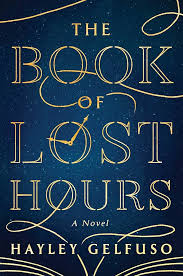
The Book of Lost Hours Review

Book: The Book of Lost Hours
Author: Hayley Gelfuso
Publisher: Atria Books
Year: 2025
Rating: 5 out of 5 stars

Synopsis : “Nuremberg, 1938: Eleven-year-old Lisavet Levy is hidden by her father from approaching forces in a mysterious place called the time space, a library where all the memories of the past are stored inside of books. Trapped, she spends her adolescence walking through the memories of those who lived before. When she discovers that government spies are entering the time space to destroy volumes and maintain their preferred version of history, Lisavet sets about trying to salvage the past, creating her own book of lost memories.
Until one day in 1949, when she meets an American timekeeper named Ernest Duquesne, who offers her a chance at another life, setting in motion a series of events that puts her own existence – and that of the time space itself – in peril.
Boston, 1965: Amelia Duquesne is mourning the death of her uncle and guardian, Ernest, when she’s approached by Moira Donnelly, the head of the CIA’s highly secretive Temporal Reconnaissance Program. Moira tells her about the existence of the time space – accessed only by specially designed watches whose intricate mechanisms have been lost to history – and enlists her help in recovering a strange book her uncle had once sought. But when Amelia enters the time space, she discovers that her uncle may not have been the man she thought – and that the government may have another reason to bring her there.”

Review : Lisavet Levy lives in the Time Space. In the history of time, it seems that no one has ever simply lived in the Time Space – the place outside concrete reality where all memories live and are recorded, where souls who pass go to be placed into books, where our recollection of events are housed. And yet, for over a decade, Lisavet Levy lives within the Time Space. In a world where special watches and only a few select people may generate a doorway into such a sacred place, the governing bodies of countries all across the globe enter and tamper with the Time Space, effectively changing the way people view the world according, literally, to the victor. It’s within the Time Space that Lisavet Levy realizes government agents and soldiers are entering her temporal reality and burning memories, literally destroying the memories of hundreds, if not thousands, of people. In the real world, as a reader, The Book of Lost Hours speaks, at least in part, to the dangers of propaganda and misinformation campaigns. And while we may be in a world without a literal Time Space, nearly one hundred years in the future, the threat of mis (and dis) information looms large. Gelfuso touches on a topic that is near and dear to many of our hearts with her stunning book, reminding us of the importance of preserving the memories of those who perhaps did not fare as well as the victor may have, as we know that indeed, history is written by the victor.

While The Book of Lost Hours is a chilling look into how governing bodies (presidents, say) go about changing and challenging the agreed upon version of events, it is at it’s core a hauntingly beautiful love story that spans not just years and countries, but memories and timelines as well. Lisavet meets Ernest Duquesne in the Time Space and while they court each other in the memories of others, Lisavet begins to change Ernest’s mind about burning and changing the memories of those he’s sent into the Time Space to discard. **Spoilers Ahead** And though Lisavet, as a form of self preservation, must eventually erase all memory of herself and their love from Ernest’s mind, the seed she planted in his mind takes root. By the year 1965, there’s a full-blown revolution occurring within the CIA, even spanning across the globe; soldier’s preserving memories they’d been sent to destroy, thwarting the notion that memories and history must be warped to fit a specific turn of events. Through sheer bad luck and, perhaps, inevitability, Lisavet finds herself captured and under the control of the director of the CIA, Jack, a man who sees her merely as an asset and something to be used to further bolster the American agenda within a growing Cold War. It is outside the Time Space that Lisavet and Ernest meet once again, and again find themselves falling in love – though one of them remembers the past while the other doesn’t.

Jumping between the perspective of Lisavet and Amelia, Ernest’s niece, we piece Lisavet’s story together, from her time within the Time Space to her time spent in the real, concrete world. With several twists and turns that, while easy to spot, don’t detract from the storyline, we navigate a growing divide in the external world and a literal growing chasm in the Time Space, torn apart by Amelia’s mere presence in the world. With just a hint of string theory and quantum physics, The Book of Lost Hours presents a framework whereby we might imagine memories as a collectively agreed upon idea rather than a set in stone foundation of events that well and truly happened. It’s a lot to chew on and offers a unique perspective into the idea of time, memories, and consciousness – all while addressing the very real implications of disinformation. With parallels to our own world, it’s hard to miss the roadsigns. If we aren’t careful, we’ll wrap ourselves up so tightly in a web of lies we’ll never be able to find our way back to the truth again – if we haven’t already.

Advice : This book comes out tomorrow (8/12)!! I think you should grab it. If you enjoy Outlander, time travel of any kind, libraries, and a little bit of science fiction, I think you’ll really love this one. If you’re not interested in a love story, or don’t like books, well, this is probably not for you and what are you even doing on my blog in the first place?

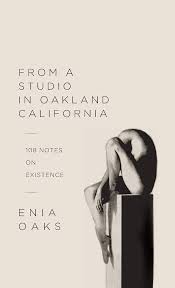
From a Studio in Oakland California Review

Book: From a Studio in Oakland California : 180 Notes on Existence
Author: Enia Oaks
Publisher: Self Published
Year: 2025
Rating: 3.5 out of 5 stars

Synopsis : “This collection of poems and essays is for those who sit at the crossroads of past and future, wondering which way to turn. Those who have bravely restarted and are building new homes from within themselves. Those who believe in the grand experience of life and living it fully, even when it asks everything of them. Those hurting, healing, or transforming. For the ones who are seeking meaning or a deep exploration of the layers of existence.”

Review : Enia Oak’s debut book, From a Studio in Oakland California : 108 Notes on Existence is not to be read quickly, blown through, or breezed by; it’s made to be savored, slowly devoured, and meditated upon. It does not surprise me one bit to find this book of 108 missives to be a meditation – it’s spiritual in nature. Written in short blurbs, poems, and ideas, FASIOC is filled with logical life advice, imparted wisdom, and personal exploration. It is quite literally packed to the cover with information on how and why and when to grow, on the choices we make as humans, the way we stretch out for someone else to witness our lives, and how we might best look inward to see and gently tend our inner child as fully formed adults.

While Oaks’ synopsis / letter to the reader calls this book a “collection of poems and essays”, I would more likely call this an open letter to someone who’s going through therapy and doing the work to heal. Based on Oaks’ description, I was initially confused by the layout and conversive tone her poems and essays take. They don’t necessarily read as poems, certainly not so when you take the totality of the book under review, but they do read as essays directed toward the reader. Like I said, it reads like an open letter, not like a collection of poems. It really comes down to the naming of the thing, for me – if they weren’t named as poems, I wouldn’t take issue or feel surprised as a reader, but because I was expecting poetry, I found myself a bit taken aback and disconnected as I got into the meat of the book. I do feel that Oaks might have benefitted from a more formal editor / publisher rather than going the self-published route, it’s truly worth mentioning that I have dog eared this book from start to finish. While there are aspects that I feel read in a discordant way, small mistakes, and grammatical errors I wish weren’t included, Oaks has a distinctive point of view that has a place in this world. This book feels important for so many people.

I found Oaks’ work to be most successful in her most experimental forms, where we might call the style a poem (but again, I struggle to view most of these works as poetry), or where the style seems completely unique to the inner workings of Oaks’ mind. Most of the book is written in a direct way to “you”, perhaps at times the reader, perhaps at times the writer, perhaps at times our collective inner child. It’s less a work of interpretation for the reader, and more directions on how to live your life as told by a therapist – of whom Oaks is not, which is worth saying. I found so many pieces of this book aligning with my own lived experience, and while this did not feel profound, it did feel familiar. There were many reasons Oaks’ collection garnered 3.5 stars, but I want to remind you, reader, that that’s more than 50% and I did genuinely enjoy reading this one.

Advice : This book is already available to buy! If you’ve spent time in therapy I suspect you will enjoy this book. If you like a collection of small works that are quick and easy to read at your own pace with no deadline or need to speed your way through, I think you’ll enjoy this.