This Ordinary Stardust Review

Book: This Ordinary Stardust
Author: Alan Townsend
Publisher: Grand Central Publishing
Year: 2024
Rating: 5 out of 5 stars

Synopsis : “A decade ago, Dr. Alan Townsend’s family received two unthinkable diagnoses: his four-year-old daughter and his brilliant wife had developed unrelated life-threatening forms of brain cancer. As he witnessed his young daughter fight her tumor during the courageous final moths of her mother’s life, Townsend – a lifelong scientist – was indelibly altered. He began to see scientific inquiry not just as a source of answers to a given problem, but also as a lifeboat – a lens on the world that could help him find peace with the painful realities he could not change. Through scientific wonder, he found ways to bring meaning to his darkest period.
At a time when society’s relationship with science is increasingly polarized, Townsend offers a balanced, moving perspective on the common ground between science and religion through the spiritual fulfillment he found amid grief. Awash in Townsend’s electrifying and breathtaking prose, This Ordinary Stardust offers hope that life can carry on even in the face of near-certain annihilation.”

Review : Alan Townsend begins This Ordinary Stardust by talking about just that : stardust. He begins by explaining that, while he doesn’t love the cliche, “When viewed in our most elemental form, people are trillions of outer-space atoms, moving around temporarily as one, sensing and seeing and falling in love” (1). This outlook will go on to permeate the entirety of the narrative, from Townsend’s own work as a biogeochemist in Amazonian and South American fields, to the life he creates and grapples to understand with his wife, Diana, and young daughter, Neva. He meticulously creates a narrative in which we are immersed in the beauty and fragility of life, both planetary and human, where we cannot look away even for a second, even when it grows difficult. Townsend lets us in on the fact that he doesn’t subscribe to organized religion early on, but does pepper the book with words from the bible and the talmud – showing us how science and religion aren’t as far apart on the scale as one might assume.

Bouncing back and forth between the past and the present in the early pages of the book, Townsend eventually settles fully into the present around the three quarter mark. He lays the groundwork for us, showing us the work that he did as a scientist (literally) in the field, studying the impact of logging in the Amazon on fields, on the remaining plant and animal life, later studying similar things in South America. He introduces us to his wife as he was introduced to her: shit-eating-grin, brimming with life, never stopping her scientific inquiry into bacteria, never slowing down for anyone. We come to know and love Diana as he sees her, a force to be reckoned with, someone who is not only destined for greatness, but becomes the greatness she was destined for. I knew from reading the back cover that this would be a difficult book to read, especially as I grew to love Diana more.

Fortunately, the majority of the book is comprised of lyrical prose, of the excitement that comes from a scientific mind experiencing the natural world, and of Townsend’s own deep connection to the Universe. We discover early on that Neva, at a mere four years old, was diagnosed with a brain tumor that grows near the occipital lobe. We spend time with the family as they navigate a scary and unexpected circumstance with a daughter who is as bright, inquisitive, and stubborn as her mother. As they navigate the fragility of life, Townsend muses over the way Diana dives into the realm of science as a means to maintain a level of control and distance from the situation, never stopping to question, working to better understand the available options and proceed in the best way possible. Townsend takes the opportunity to discuss the way the brain exists when it’s presented with the space for curiosity, how it perseveres, and the way plasticity comes into the picture, quoting scientists and C.S. Lewis alike.

After the majority of Neva’s tumor has been removed, tragedy hits their family again, this time with a blow to Diana and another, completely unrelated, brain tumor. Unfortunately for Diana and her family, the tumor(s) she’s diagnosed with have no known cure. Though there are several experimental therapies and trials she can take part in, the brain tumor(s) that Diana suffers from are detrimental – most people do not survive the year. Townsend finds himself in the intersection of caring for a young daughter who has had her own experience with a brain tumor, and caring for a wife who is dying. It is science which bridges the gap for him, leading him through the understanding that while science is not perfect and there’s no certainty, there’s a degree of stability to it that weaves it’s web into our lives and threads itself through all the ways we interact with the world. In a quote from Mary Oliver, “All things are meltable, and replaceable. Not at this moment, but soon enough, we are lambs and we are leaves, and we are stars, and the shining, mysterious pond water itself” (3) Townend reflects that it’s through science that we find, what he calls, “no purer love” (7).

As the book wound its way down, I found myself reading more and more slowly – being less and less quick to pick it back up, not because I didn’t enjoy it but because I was delaying the inevitable. It was challenging to read the last quarter of this book and that’s because Townsend did such a remarkable job. Of course I fell in love with Diana, the spunky, big-hearted, stubborn, amazing, wonderful woman that she was. Of course my heart was broken when she left. Of course. And in truth, this is the kind of story I might normally avoid specifically because of the heartbreak. But I’ve finished the book and have no regrets at all. Townsend has created a beautiful gift to the world with This Ordinary Stardust. So has Diana.

Advice : This is a must read. If you enjoy the natural world, this book is definitely for you. If you enjoy science but find yourself gravitating away from dry lectures or cite-laden books, this one ticks all the boxes. Run to grab it as soon as it’s available.
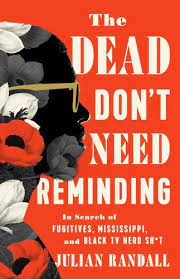
The Dead Don’t Need Reminding Review

Book: The Dead Don’t Need Reminding
Author: Julian Randall
Publisher: Bold Type Books
Year: 2024
Rating: 5 out of 5 stars

Synopsis :The Dead Don’t Need Reminding is a braided story of Julian Randall’s return from the cliff edge of a harrowing depression and his determination to retrace the hustle of a white-passing grandfather to the Mississippi town from which he was driven amid threats of tar and feather.
Alternatively wry, lyrical, and heartfelt, Randall’s voice bursts off the page with verve, humor, and poet’s eye for detail. In this book, Randall transforms pop culture moments into deeply personal explorations of grief, family, and the American way. He envisions his fight to stay alive through a striking medley of media ranging from Spiderman and Jordan Peele movies to BoJack Horseman and the music of Odd Future. Pulsing with life, sharp, and wickedly funny, The Dead Don’t Need Reminding is Randall’s journey to get his ghost story back.”

Review : The Dead Don’t Need Reminding is one of those books you read the way you eat a great meal, slowly, purposefully, savoring every single bite. Comprised of essays, TDDNR is a lyrical work of pop culture references, self inquiry, depression, chronic pain, and what it means to exist within a queer, Black body in America. Randall weaves a narrative that’s steeped with grief, tugging on a thread that unravels to reveal ancestral history, the kind that dips through an entire body, tethering each generation to the last, reminding us what it is to search for yourself amongst the dead. I devoured this book quickly, at first, then slowly, so slowly, asking the narrative to slow down, to keep from ending. You know how it is.

My copy of The Dead Don’t Need Reminding is now filled with dogeared pages, underlined, read again and again. It is one of those books you never stop reading. Filled with longing, Randall takes the reader on his journey through life-long destabilizing depression, suicidal ideations (and intentions), chronic pain that interjects throughout the narrative in the way only chronic pain can do, racism, and an endless running list of cultural references he uses to bind us to a better understanding of his own inner (and outer) world. Randall explains that he thinks in quotes, in lyrics, in movies and tv shows, using examples from BoJack Horseman, Spiderman, Kanye West (Ye), Drake, Odd Future, and more to open his heart and mind to the page, to the reader. Even without a complete knowledge of the totality of his references, the impact is striking. I enjoy reading about the things other people enjoy, particularly if it’s done in a way that doesn’t require me to have the references handy at all times, and this is that book. Randall takes quotes and clips and concerts and makes them sing on the page, brings them to life for a reader who maybe doesn’t have every single quote or clip or concert in their own mind. They do now. It works.

Speaking with so much ache, Randall winds us through a collection of essays into the heart of his grief, into the empty crater of depression, and into the humid search for an ancestral burial ground – a gravesite in Mississippi, proof of life.

I’ve struggled with how to write this review. How do you review a book you can’t quote, not yet? How can I review this book without showing it to you, without flipping to a dogeared page and reading an underlined verse? How do I explain the depth this book sunk me into? It is a stunning masterpiece, exploring boyhood tenderness that transmits itself into adulthood tenderness, fear, longing, and the desire to live – the choice to live – while haunting a family line in search of ghosts.

Advice : Run. Don’t walk. You’re going to want to read this one.

Shanghailanders Review

Book: Shanghailanders
Author: Juli Min
Publisher: Spiegel & Grau
Year: 2024
Rating: 5 out of 5 stars

Synopsis : “The year is 2040, and wealthy real estate investor Leo Yang – handsome, distinguished, a real Shanghai man – is on the train back to the city after seeing his family off at the airport. His sophisticated Japanese-French wife, Eko, and their two eldest children, Yumi and Yoko, are headed for Boston, though one daughter’s revelations will soon reroute them to Paris.
While the years rewind to 2014, Shanghailanders rotates perspectives, drawing readers into the shared and separate lives of the Yang family, parent by parent, daughter by daughter, and through the eyes of the people in their orbit. As their world shifts and brings change for each of the Yangs, universal constants remain : love is complex, and family will always be connected by blood, secrets, and longing.”

Review : Shanghailanders is a complex work of creative genius, told not just from shifting perspectives, but also from an unwinding timeline, the book spans from 2040 to 2014, with each subsequent chapter unwinding time just a tiny bit more. Min’s first novel, Shanghailanders is a breathtaking debut novel filled with family history, peeling back the curtain, giving us a glimpse into the Yang family’s dynamic; toxicity, growth, rejection, and all the layers the meld together to form a family. Beginning and Ending with Leo, the patriarch of the Yang family, Min has bookended her work with a man whose chapters hardly revolve around his inner world at all. I found it fascinating that throughout the entirety of the novel, Min chose to only reveal the Yang family through three male-centered chapters, two of which are Leo, the third being the family’s driver – all three of whom serve only to point us back toward the matrilineal family line.

Shanghailanders is a novel that addresses the fragility of time both in narrative and construct, giving us the smallest glimpses into the years that make up a family, revealing small clues and inward peaks that create the structure the Yangs have crafted their world(s) into. Speaking broadly of time, of bloodlines, and of familial connection, Min paints a much more detailed picture with the narrative, showing rather than telling us that Leo, and likely Yoko as well, has an anxiety disorder that causes apocalyptic dread, that drives his need to see his daughters sinking into independence and stability, that, at times, pushes his family to the brink, threatening to shatter their bubble; that Yuki, the youngest, at sixteen is facing the loss of innocence and the heartache of love lost; that while each family member feels tethered to the other, neither feels the thread of love as connection, that love is not a given. This is a novel filled with longing, with logic, with dread, and the potent, ever present realization that time is a fragile filament that tugs at us all. 

I think the most successful aspect of this book is the format, rewinding through the narrative from 2040 until, finally, 2014. Taking us briefly through the years of improved technology, covid, and finally into those pre-pandemic years where the children are barely formed, where love is new, and anxieties aren’t quite realized yet. Each chapter invites us into a new realm of the Yang family, masterfully written, weaving webs so delicate behind the scenes that we cannot see each thread until the final page has turned. Each chapter left me craving more, desperately wishing the timeline was reversed, that I could follow this family into further detail, into more solid ground, wishing and hoping I would be given glimpses into the characters and storylines I most enjoyed. Alas, with each passing chapter, each character faded, each storyline slipped away, and I was transported to younger versions, the groundwork of each prior chapter laid out ahead of me. The longing I felt. Perfection.

Advice : This is a truly remarkable work created with a unique vision. If you enjoy epics, this might just be for you. Spanning 26 years in the reverse, this scratches the epic itch while fulfilling a creative interest and need. I’d mark this one on the calendar.

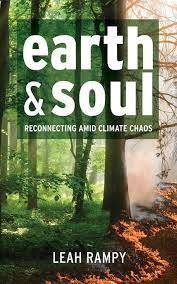
Earth & Soul Review

Book: Earth & Soul : Reconnecting Amid Climate Chaos
Author: Leah Rampy
Publisher: Bold Story Press
Year: 2024
Rating: 2.5 out of 5 stars

Synopsis : “Facing directly into the devastation of climate chaos and biodiversity loss, Rampy leads her readers on a soul journey through grief and loss to also claim the beauty, joy, and possibilities available when we reconnect with Earth. As we follow the author’s compelling personal experiences and engagingly lyrical stories of whales, cedars, sparrows, and more, we see the necessity and urgency of learning from the wisdom of our kin in the natural world. Writing at the intersection of spirituality, ecology, and story, Rampy charts a course for living deeply connected to Earth in ways that are both vitally important for and uniquely suited to these times. Even now when the worlds as we once knew it is ending and a new story lies beyond what we can envision, we hold the potential to lay stepping stones toward a diverse and vibrant world of oneness and mutual flourishing.”

Review : I have so many conflicting thoughts as I sit down to review this book. It gives me no joy to give a book about climate change a 50% review, particularly as the publicist for this book sent this book to me because of my own work in the world of sustainability. I wanted to love Earth & Soul, but I didn’t. Let’s start at the beginning : Leah Rampy, while boasting a PHD, does not have a background in biology, climate sciences, or ecology – her doctorate is in curriculum. While I don’t think it’s necessary for an author to hold an advanced degree, I do believe it hinders the work and the words she’s trying to communicate. Because her field of study has nothing to do with the subject matter, Rampy relies heavily on the works of others, paraphrasing (and citing) books I have been privileged enough to have read in the past. While this might function well in an academic paper or blog post, I find the distillation of the work of others to be an unfortunate book choice. I don’t think there’s anything wrong with a book filled with cited sources, don’t get me wrong! I love a well researched book. Where I take issue is how a story is told; Rampy rarely sheds light on her own experiences, choosing instead to simply share what others have written.

Rampy barely pulls the curtains back on her own life, something I think does a true disservice to the impact this book could have made. As I mentioned, she relies heavily on the work and words of others to bolster her narrative rather than allowing her own connection and experiences with Earth to drive the narrative forward. Referencing Robin Wall Kimmerer’s Braiding Sweetgrass eight times in 180 pages, Rampy clearly seeks to emulate Wall Kimmerer’s foundational work. Unfortunately, it reads as someone who’s read Braiding Sweetgrass and is relaying it to a friend who doesn’t want to read it themselves. As I have recently finished reading Braiding Sweetgrass myself, I found this particularly glaring. Rampy references indigenous wisdom and knowledge, which I appreciate a great deal as the scientific world is finally coming to understand just how much indigenous wisdom could have helped us over the last several hundred years; I couldn’t help but feel that I would rather be reading about indigenous wisdom right from the source, rather than distilled by a white woman. For reference, there was a singular moment in this book that brought me to tears and it was, unfortunately, a retelling of a Wall Kimmerer story. I found the writing style to be choppy and stilted, there was little flow to this narrative, though in the few places where it did flow (interestingly enough, found during the few brief descriptions of Rampy’s own personal experiences with the Earth), it was quite enjoyable to read.

Rampy’s style seems to be tell, rather than show, which you may know I find an incredibly condescending method of writing. In a chapter entitled “Kith and Kin”, Rampy uses the words kith and kin a combined total of twenty six times over the course of a mere fifteen pages, beating us over the head with the words rather than showing us what they mean to her. The words will go on to haunt the remainder of the book, interspersed so often than you cannot get away from them. I would rather be shown what kith and kin might look like than be told over and over again what it might mean – the impact is lessened this way, becoming more of an annoyance than a moment of understanding. In other books I’ve reviewed, I’ve found the occasion for telling vs showing often comes from an author’s disbelief that the reader would be intelligent enough to figure things out for themselves, to Rampy’s credit, Earth & Soul did not read this way. It did, however, read as though Rampy didn’t know how to show us rather than telling us, and perhaps that comes from her time spent as a lecturer; perhaps she will learn that as she grows as an author, but for now it leaves me continually frustrated by the way she steals the powerful impact this book could have made right out from under herself. 

As someone who is invested in the world of sustainability, I found frustration with this book. Rampy discloses at regular intervals that she has lead, what she refers to as, Pilgrimages all over the world. However, she never once discusses what kind of carbon impact she has on the planet by flying to multiple locations all across the globe with groups of people – in a time when many people are assessing their own carbon impact and coming to the conclusion that regular flight travel has a negative impact on the climate, I find it to be a stark omission. I also wish Rampy would have addressed the privilege that comes from having access to around the world flight travel, of the kind of people who might have the disposable income to go on such a journey, the people who are paying money to gaze upon nature without being tasked with making their own sustainable choices. It’s entirely possible that I’m pegging this all wrong, but Rampy doesn’t discuss any part of her climate footprint or the privilege that comes from these trips, so I can only tell you how it feels, which is…not good. During an early discussion revolving around meditating on nature, Rampy shares an anecdote from one such pilgrimage in which someone left a strand of yarn around an area of Earth with a sign telling people to stop and enjoy. Unfortunately, all I could think about was how that person had littered – sewing continued frustration on my end, as someone who works very hard to keep people from littering and to clean up litter that exists in nature already.

Likewise, Rampy twice discusses the use of cairns, both as a suggestion for the reader and as an example of what her pilgrimages entail. Again, as someone who works in the realm of sustainability, I find it problematic and ignorant on Rampy’s part to suggest readers create cairns. I have learned, and you can find this on many signs in many forest nation wide, to take only photographs and keep only memories, meaning you are to leave nature as you found it (or in my personal opinion, better than you found it). Creating cairns is frowned upon within the sustainability and naturalist worlds for (largely) two reasons : the first being that cairns created by park rangers exist for a specific reason, they are made to mark trails and creating your own can make a negative impact on carefully constructed cairns used for designating directions; the second being that many creatures, like salamanders, take shelter under or lay their eggs under stones, removing them from where they exist already may either damage eggs, damage habitat, or create fewer available spaces in which an animal may find shelter or lay their eggs. 

I left this book deeply frustrated. Rampy spends much time discussing the horrifying facts, figures, and statistics of climate change and biology loss, but she spends precisely zero time discussing who’s at fault for climate change. She doesn’t offer any suggestions for moving forward, ways in which we can reduce our carbon footprint, how we might engage with our local government to facilitate change, or what we can implement into our own lives in order to start the process of making change – all of which I suspect would lead to some unpleasant realizations of her own. She doesn’t discuss the greed, resource lust, or corporate entities who have created this world we find ourselves living within and I find that to be another disservice to what she’s attempting to accomplish. At the end of the day, yes, we have to find ways as individuals to create a world that flourishes around us, but the climate issue is not an individual problem and cannot be addressed as such. Rampy fails in this arena.

Advice : This is a first attempt, I believe that’s clear. This book doesn’t read like something that’s meant for those of us who are already working in the world of sustainability, greatly aware of the impacts of climate change on the natural world. It does read like someone who was not so much a believer in climate change and has since changed their mind, which seems fairly evident in Rampy’s own confessions throughout the book – another frustration as she professes to spending her time teaching others about the climate despite not having a background in the sciences. I think, if you are like me, you would benefit from reading Braiding Sweetgrass by Robin Wall Kimmerer instead. I believe Earth & Soul is directed toward people who have not spent much time thinking about the climate and are beginning to change how they interact with the world – this book will lead them toward other resources that will impact them on a much deeper level.